BOOKS: In Praise of Shadows by Jun’ichirō Tanizaki
In Praise of ShadowsIn Praise of Shadows by Jun’ichirō Tanizaki
My rating: 5 of 5 stars

Amazon.in Page

Tanizaki’s essay on Japanese aesthetics doesn’t just show the reader the simple, rustic, and weathered traits of Japanese beauty, it fully submerges them in an otherworldly place ruled by different principles of seeing. So enamored with this pre-modern Japanese aesthetic was Tanizaki that we are convinced he would give up all present-day conveniences to see the world this way (but, alas, he recognizes the impossibility of maintaining a household or business in today’s world that way.)

While the book is principally a tour of this Japanese shadow world, moving from architecture to toilets to lacquerware to Noh plays to skin tones to hotels (with other stops along the way,) it is also a critique of modernity, and particularly a modernity shaped by the West by virtue of Western countries building a lead in a number of key technologies. The most crucial of these technologies, and the one Tanizaki most decries, is electric lighting, which does away with the artistic beauty that derives from the interplay of varied toned shadows (and occasionally a little bit of light.) [I should say, he’s not bashing the Western technology or ways, but rather how poorly they work with maintaining Japanese aesthetic ways.]

I’d highly recommend this book for all readers. If you’re interested in aesthetics, art, architecture, culture, or “things Japanese,” then all the more so, but I can’t remember the last time description pulled me into a book as hard as this one. The essay can be a bit rambling and shifts from euphoria to rant and back, rapidly, but that is part of its magic.

View all my reviews

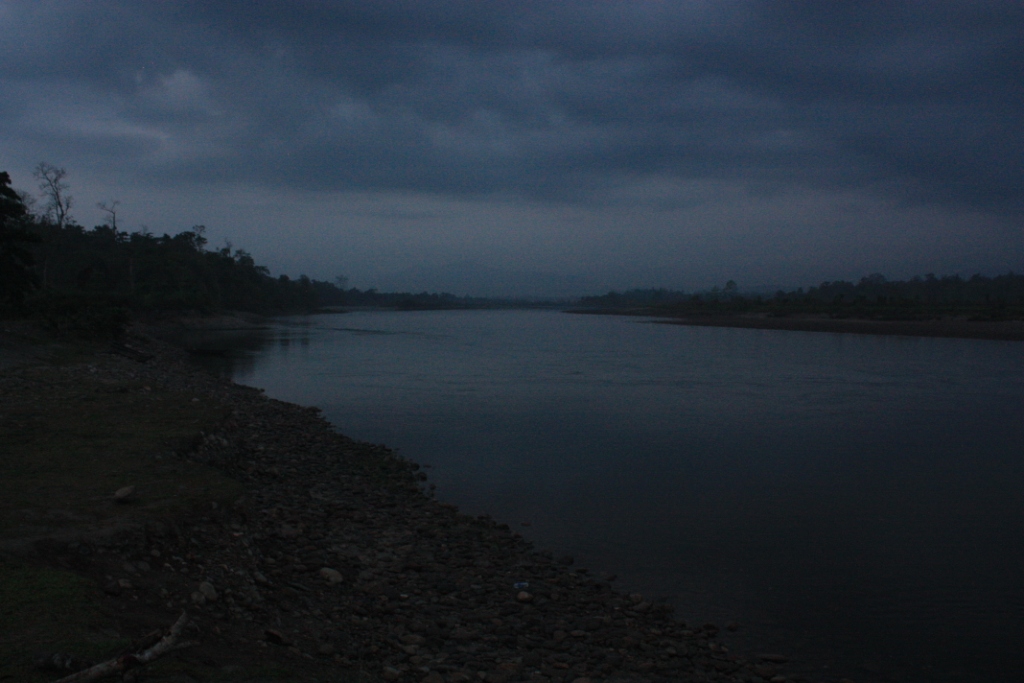
Dark River [Lyric Poem]

flow on, Dark River;
  slip through the night.

midnight's thick clouds
  block the moonlight.

your voice drowned out
  by insect chirr.

a Huck Finn raft
  drifts by at a blur:

the rafters unseen;
  their secret stays hush...

but for those red eyes
  in the underbrush.

Light & Color [Haiku]

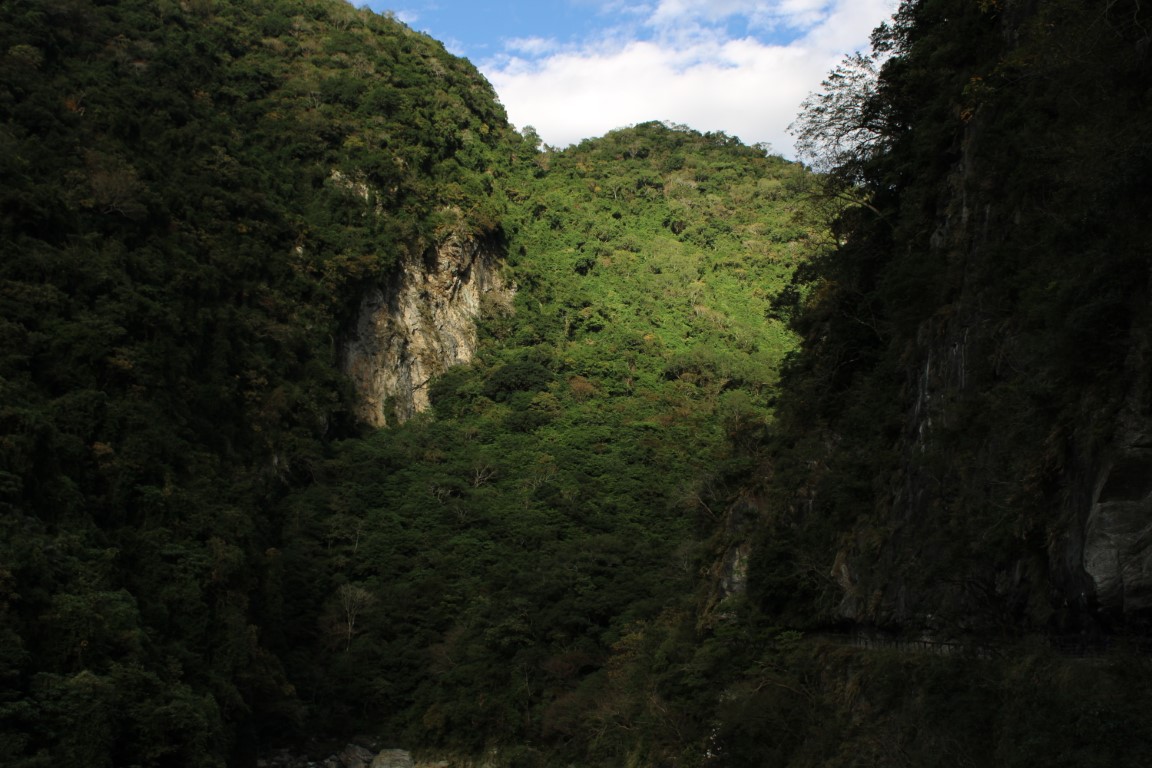
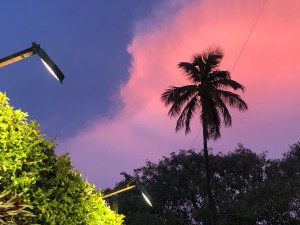
light makes greens greener,
and clouds glow brightly; its lack
makes the blues bluer

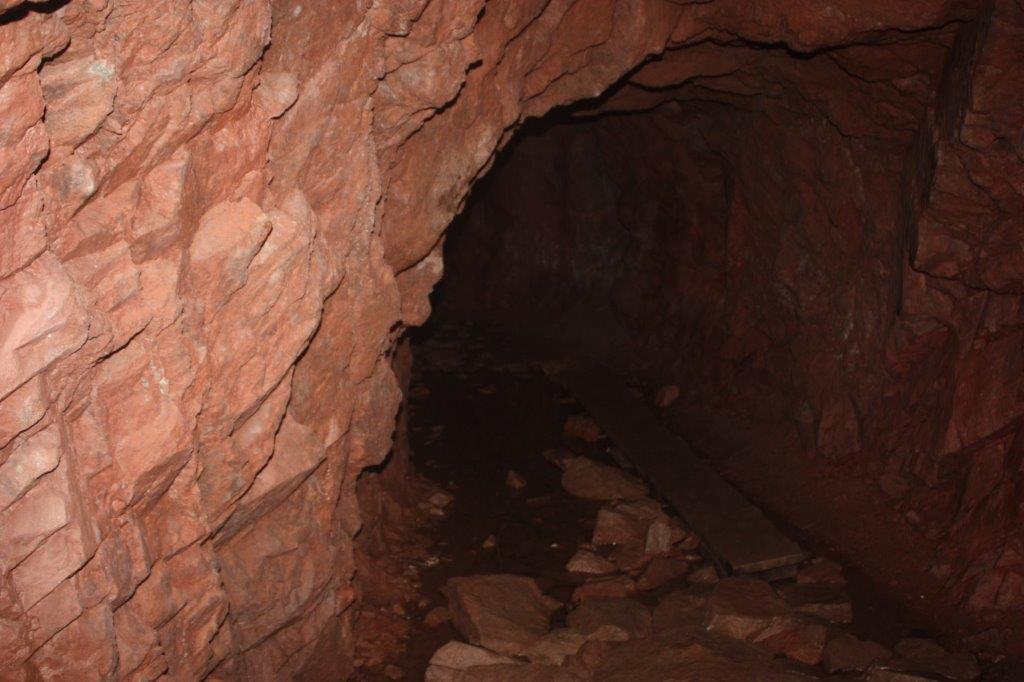
Covert Cave [Lyric Poem]

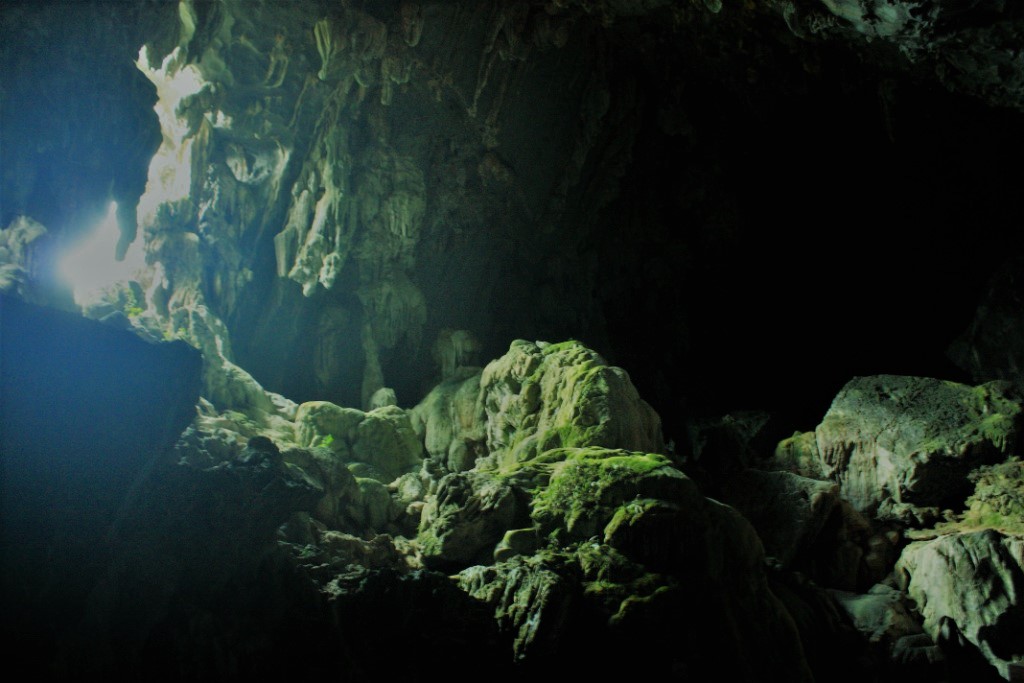
Do you know how deep the darkness goes?
 No. Chiaroscuro black conceals
  all but what's divulged by echoes,
   and figments spastic minds reveal.   

Sundown Ship [Haiku]

as the sun sets,
a ship moves out to sea
what's ocean dark?

Shadow of Night [Haiku]

a park at night.
the shadows are darker
because of the light

Dark Cave [Haiku]

bats squeak & poop:
unseen in the dark, but
each sound amplified

BOOK REVIEW: The Art of Darkness by S. Elizabeth

The Art of Darkness: A Treasury of the Morbid, Melancholic and MacabreThe Art of Darkness: A Treasury of the Morbid, Melancholic and Macabre by S. Elizabeth
My rating: 5 of 5 stars

Amazon.in Page

Release: September 6, 2022

As the title suggests, this book collects a diverse group of artworks that share the common theme of the macabre. While most of these works are paintings, a few photos and sculptures are included. It’s also predominantly Western (European and North American) art, but some exceptions exist, notably several Japanese works are included. Where the collection really shows its breadth is in the styles of art and eras included. The works range from more than half-a-millennium old to some produced within the last couple years, with the expected variations in styles and media, given the centuries covered. The collection is also varied with respect to the popularity of the pieces and artists. You’ll likely see some familiar works (e.g. Fuseli’s “The Nightmare,” Bosch’s “The Garden of Earthly Delights,” and Dalí’s “The Face of War.”) However, most of the works were new to me. (Granted, I’m a visual arts neophyte.)

The pieces are arranged into four topical divisions, each containing three chapters. The subjects include realist content such as: bodily ailments, crime, dark takes on nature, and architectural ruins. However, much of the book delves into surreal and supernatural subject matter, including: nightmares, hallucinations, gods, monsters, ghosts, and magic.

The book lets the art do the heavy lifting, but it does have brief chapter introductions and captions for each piece that includes not only the title, artist, and (if known) the year the art was released, but also some interesting tidbits about artwork and / or artist. These write ups are concise, intriguing, and well-written, and offer some fascinating insights. The book also presents numerous quotes from poets, artists, and other intellectuals.

I learned a great deal from reading this book and discovered some new favorite artworks, art that is beautiful or grotesque but often a combination of both — but always evocative. If you’re interested in how artists depict the darkness in the lives and souls of humanity, you should definitely give this book a looksie.


View all my reviews

The Crossing [Free Verse]

A ship
crosses the ocean,

in the darkness:
darkness, black & endless

no moon,
no stars,
just clouds -- thick & low
clouds that can't be seen

The ship has lights,
but those lights know
an event horizon

Lights sometime 
glint against the waves,
those roiling & undulating
waves,

and the lights bounce off
the ship's hull

But no one can see them,
because if anyone could see them,
the seers would be seen--
unless theirs is a ghost ship,
piloted by literal ghosts,
or some other agent of observation

Maybe there is fog --
not enveloping the ship,
(such mist would be felt
on the skin of those on deck)
but, rather, a fog between 
where the ship is,
and where is should be

For it is surely off course,
listlessly drifting,
all hope arrayed against edges:

edges of ice
&
edges of the world

Not that the world is flat,
but, perhaps, it's not fully sculpted:
maybe nothing lies outside
the range of the seen:
outside the bounds of experience

It sounds crazy, 
but all kinds of crazy
form in a mind
submerged in darkness

Morlock State of Mind [Lyric Poem]

Living like a Morlock,
outside the shaft of light.
Lured beyond walls of rock.
Mesmerized by blue sky.

Loving the thought of blue,
but burnt by the mere sight.
Praying for an Eloi view,
but feeling it's not my right.