There once was a man from Austria
  prone to coffee house nausea.
     “Our cafés are held dear,
     but I can’t go near…”
 said that lonely, skinny man of Austria.
AUSTRIA LIMERICK
Reply

There once was a man from Austria
prone to coffee house nausea.
“Our cafés are held dear,
but I can’t go near…”
said that lonely, skinny man of Austria.
What is your favorite drink?
If amount consumed is any indication, that would have to be water – with coffee as a second runner up. And the rest of the pack is a muddled mess in which no one stands out, judging from the fact that the aforementioned are the only beverages that I drink on a daily basis. (Gin or beer are at most once a week beverages and average less than that, if this was meant to imply alcoholic drinks.)
Certainly, water is the only one that I: a.) can’t do without, and b.) could live a comfortable and healthy life drinking exclusively.

Bangalore’s Urban Solace Cafe (https://www.facebook.com/UrbanSolaceCafe) does something cool, and kind to poets, for World Poetry Day. They have a “Pay with a Poem” event allowing people to buy a cup of coffee with an original poem today. So, if you’re in the Ulsoor Lake neighborhood, show them some love. My submission is below.
FOR THE LOVE OF COFFEE

It’s said we each have one true love.
    I fear I may have two.
  Oh Coffee, dearest black coffee,
    I love your rich brown hue.

I love your lava-like hotness,
    and how you energize.
  Some have said you’re bad for my heart,
    but that’s a pack of lies.

I’ll consume you in the morning,
    but cautiously at night.
  For if I take you in the eve,
    there'll be Aubades at first light.

ordered black coffee,
 they brought a plate of cookies,
  well-played, love won.

A multiethnic gourmand of Bratislava
liked to go downstairs for a hot java,
then over to Hungary
for torte topped with berry,
and on to Vienna for a slice of baklava.

one coffee plant
sticks out while all others
fade into dusk
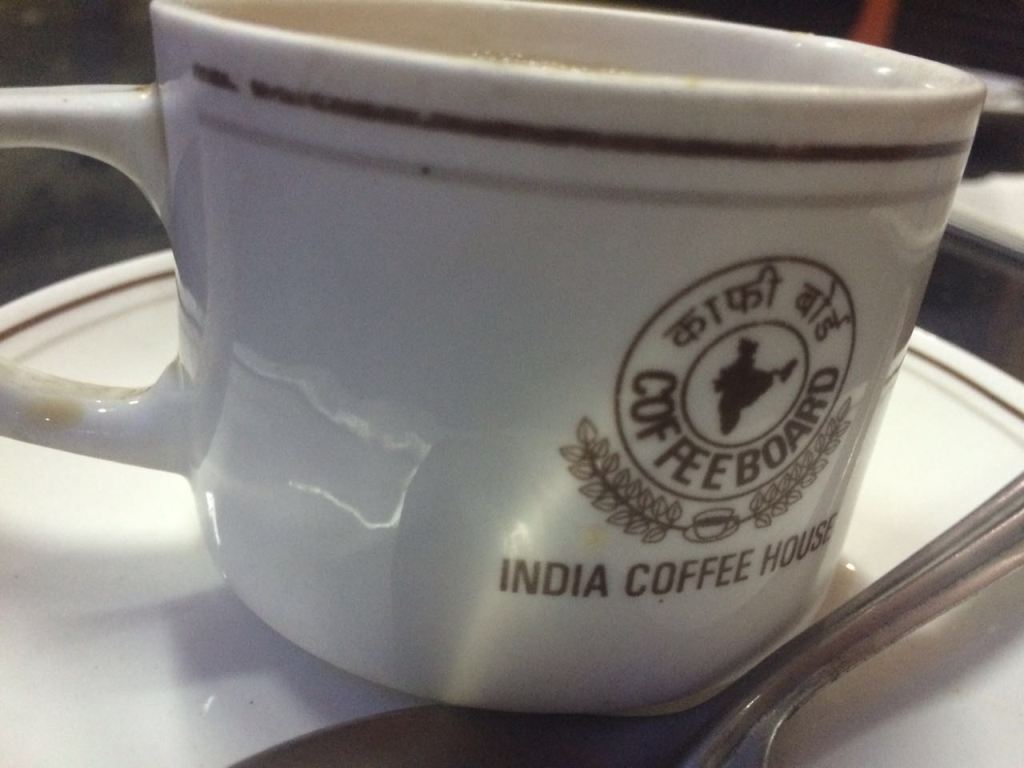
coffee flecks swirl
in a steaming cup

cyclonic do-si-dos,
swinging and folding,
merging into clusters

between the cyclones
there are highspeed byways
cutting across the surface

a jitter of the table
seems to stop the dance,
but then it resumes

entropy falls to
eventually follow its imperative --

entropy rising:
using order
to turn all that energy
into a lukewarm
cup of joe

this same fluid clockwork
played out in
primordial soup
to begin the dance of life

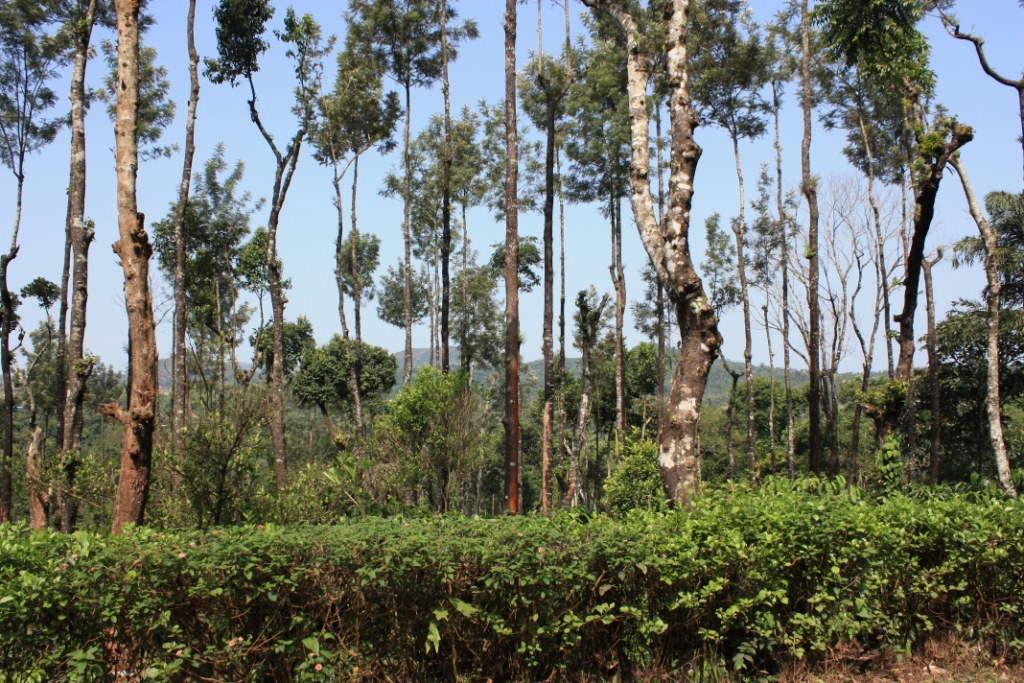
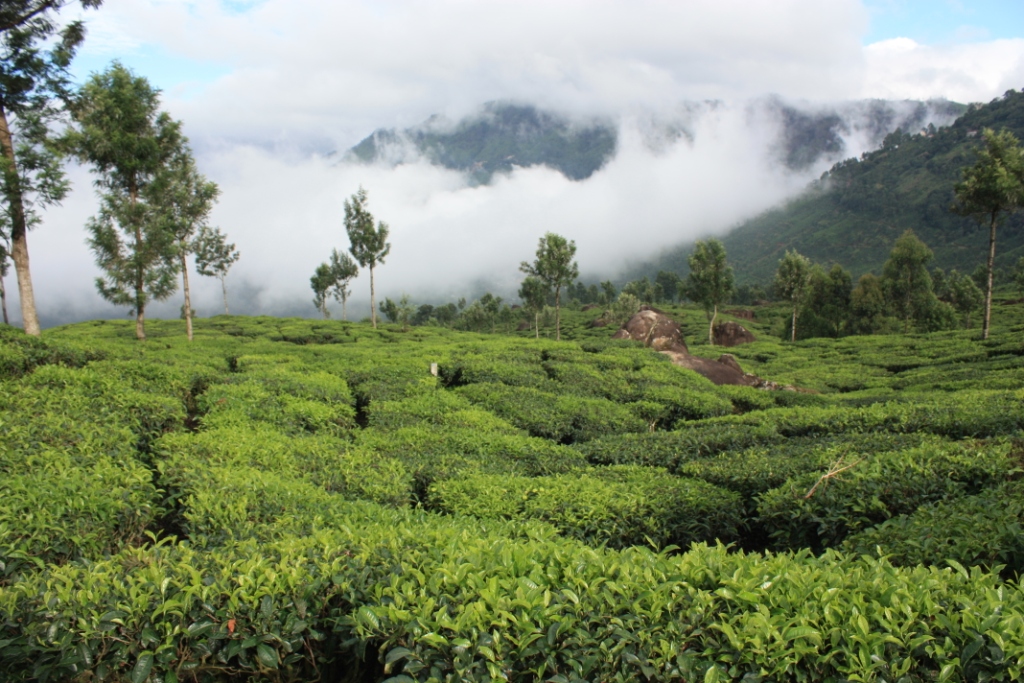
coffee estate.
one yellow plant stands out
from a wall of green
 A Brief History of Vice: How Bad Behavior Built Civilization by Robert Evans
My rating: 5 of 5 stars
This book’s title and subtitle suggest its central theme, but it doesn’t tell the whole story. As the title suggests, drugs, sex, and sundry bad behavior aren’t just the abhorrent actions of a marginalized few who society seeks to reign in. In some cases, culture and civilization are built on said behaviors. Evans devotes a fair amount of space to discussing research on vices’s role in the growth of civilization. These hypotheses and theories run a gamut from the non-controversial and well-established to more sweeping claims such as that the agricultural revolution was largely driven by the dictates of beer production (i.e. both the need to produce a lot of grain and to be homebodies through the fermentation process) and that the dawn of religion may be linked to the ingestion of mushrooms of the magic variety. Despite the book’s light and humorous tone, it should be noted that the author treats the latter type of claims with the requisite skepticism.
But this isn’t just a book of history, anthropology, and evolutionary biology as pertains to the origins of vice and its linkage to civilization and culture; it also offers humorous anecdotes of the author’s experiments into how to replicate some of the vices of the ancients – as well as offering step-by-step directions for readers to conduct their own such investigations. As might be expected, there’s a lot of humor in the book. Just the idea of debauchery building civilization offers plenty of opportunity for the subversion of expectations that makes comedy, but then one adds in stories of people (and occasionally other species) making decisions under the influence of mind and mood altering substances (or even under the influence of horniness) and one enters territory ripe for hilarity.
The book consists of 15 chapters that cover both expected and unexpected topics. Not surprisingly, discussion of drugs – legal and illicit — takes up a large portion of the book. [I should make clear that the discussion of illegal substances is purely historical, and the “how-to” sections describe “experiments” that were legal in the author’s jurisdiction and that will be for most readers.] Ten chapters are about various consciousness and mood altering substances including: alcohol (ch. 1 & 4), psychedelic substances (ch. 7, 8, and 10), tobacco and marijuana (ch. 9; treated together because historically they had more in common than in their modern use / legal status), the ephedra shrub and derived products ranging from Mormon tea to Methamphetamine (ch. 11), coffee and caffeine (ch. 12), designer drugs ranging from ayahuasca [made from two different plants that don’t live together and which only work when used together] through pain killers and on to the dangerous scourge of synthesized substances created in labs to get around drug laws for a few days until they will be added to the schedule of illegal substances.) The final chapter (ch. 15) is devoted to the search for the mythical salamander brandy of Slovenia (claimed to have hallucinogenic qualities owing to a toxin emitted by the submerged reptile.) I should point out that I have oversimplified with this division of chapters for simplicity’s sake. Some of the chapters dealt with more than one type of substance. For example, Chapter 10 is really about drug cultures and how they kept people safe in, for example, shamanic tribal societies, and how the loss of such culture is part of the reason we have a more severe problem with substances in modern society.
No investigation into the role of vice on civilization would be complete without discussing sex, though there are only two chapters about it. The first, chapter 6, discusses prostitution / sex work. There’s a widespread tongue-in-cheek reference to “the world’s oldest profession” that hints that sex work is both ancient and that past civilizations sometimes viewed these activities in a much different light than do we in modern, Western society. The second chapter on sex, chapter 13, addresses a different question altogether, but one which has captured the attention of many a scholar (as well as being fruitful territory for humorists), and that’s why there’s such a vast range of sexually titillating activities. It’s not difficult to figure out the evolutionary advantage of extreme pleasure being linked to sexual intercourse. However, it’s much less clear why there are such a huge range of fetish behaviors that are intensely arousing for some while ranging from being boring to disgusting for others. [It’s not cleared up by thinking that there is just a tiny fraction of the population that is into everything. A person who gets excited by wearing a head-to-toe rubber suit while being failed with a halibut might find a foot fetish utterly disgusting.]
For those who are counting, that leaves three chapters on miscellaneous forms of vice. Chapter 2 discusses music, particularly as a lubricant of social activities, and it presents an intriguing theory that Stonehenge may have been built for its acoustic qualities – i.e. to facilitate ancient raves. Chapter 3 explores celebrity worship, an activity which we tend to think of as both recent and as harbinger of doom for humanity, but which actually has a long history – so long that it may date back further than humanity, itself, does. That leaves chapter five, which delves into a grab-bag of bad habits that would today be collectively labeled “douchiness.” This includes narcissism, inexplicable overconfidence, and a tendency toward lying, bragging, and delusions about self or others.
The book has a range of graphics from photographs to diagrams. Some are for educational purposes (e.g. to help the reader conduct their own experiments) and some are mostly for comedic effect. The “side-bar” discussions of how to reproduced the results of the ancients (and the author, himself) are presented in text-boxes for the sake of clarity. There are one or two of these text-boxes in most chapters. As mentioned, the subjects for these “hands-on” activities are chosen to avoid running afoul of the law.
I enjoyed this book. It’s at once amusing and thought-provoking. I think the author hits a nice medium between doling out humor and educating the reader. I’d recommend reading it (though not necessarily conducting every one of the experiments) for anyone who finds the subject intriguing.




 Tiger Riding for Beginners