“Real” [Poetry Style #18] by Sikong Tu [w/ Audio]

Plain and simple words are chosen,
Even to express tangled thoughts.
Then one comes upon a hermit,
And one glimpses the heart of Dao.
The clear stream burbles its soft song
Amid the shady ancient pine grove.
A woodsman passes with his cordwood;
A stranger listens to a lute song.
A strong feeling takes one over,
Bringing with it bliss and wonder,
And one's easy link with heaven
Is tender as the sound of water.

NOTE: The late Tang Dynasty poet, Sikong Tu (a.k.a. Ssŭ-k‘ung T‘u,) wrote an ars poetica entitled Twenty-Four Styles of Poetry. It presents twenty-four poems that are each in a different tone, reflecting varied concepts from Taoist philosophy and aesthetics. Above is a translation of the eighteenth of the twenty-four poems. Translated titles vary — e.g. Herbert A. Giles titled this translation “Actualities.”

“Fascinated” [Poetry Style #16] by Sikong Tu [w/ Audio]

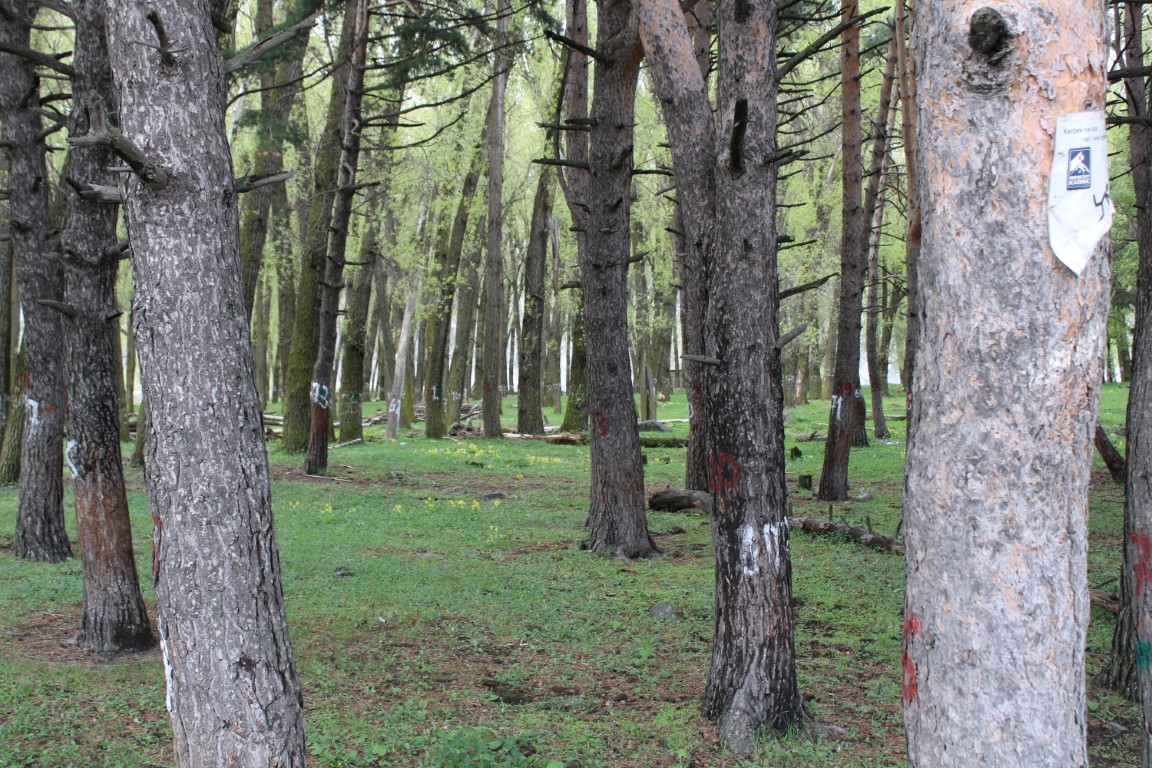
The scent: copper-carpeted pine forest;
A stream rushes through: swirling, burbling;
Blue sky and snowcaps peek through the treetops.
In the distance, fishermen are trawling.
A young lady with flowing hair and gown
Passes gracefully through the thick woodlands.
Eyes move when she moves and stop when she stops,
Following her transit down the valley.
The mind shows not its usual chaos,
But is effortlessly anchored to her.
As if to a huge rising moon.
As if to blazing autumn hues.

NOTE: The late Tang Dynasty poet, Sikong Tu (a.k.a. Ssŭ-k‘ung T‘u,) wrote an ars poetica entitled Twenty-Four Styles of Poetry. It presents twenty-four poems that are each in a different tone, reflecting varied concepts from Taoist philosophy and aesthetics. Above is a translation of the sixteenth of the twenty-four poems.

“Lost in Fog” by Qin Guan [w/ Audio]

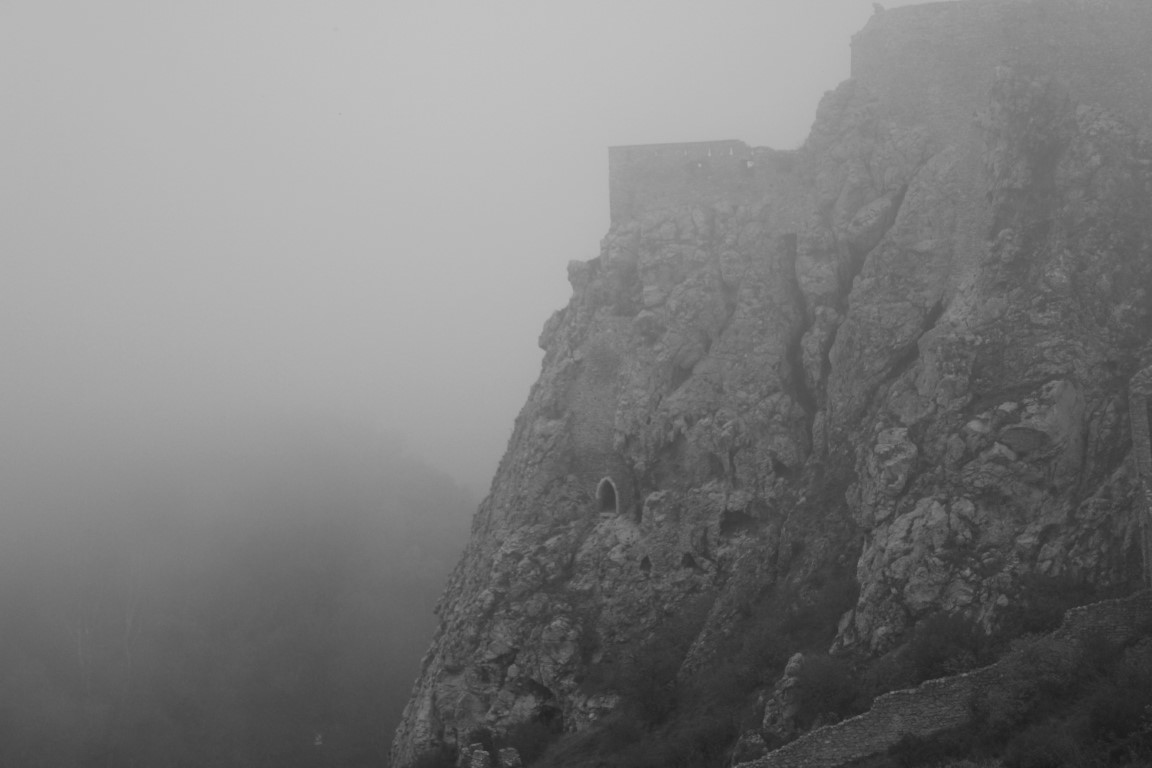
The tower has vanished in the fog;
The boat is hidden in moon-shadow;
The perfect peach field cannot be found.
I'm shut in by the cold rain of Spring.
I hear the cuckoo's call at sunset.

Apricot blossoms sent by my friends
In letters received through the post
Cause an assault by countless memories.
A lonely river rounds the mountain,
But why should it flow toward my lost world?

“Finely Woven” [Poetry Style #14] by Sikong Tu [w/ Audio]

The building blocks of everything --
Too fine to feel or see or smell --
Dance their way into hardened shapes
Via forces, invisible.
And so water flows, flowers bud,
But - also - dew evaporates.
This expansive path stretches on --
It's slow-going through dark lands.
It can't be spoken of smartly.
It can't be pondered fruitfully.
It's Early Spring green in sunlight,
Or like the snow seen by moonlight.

NOTE: The late Tang Dynasty poet, Sikong Tu (a.k.a. Ssŭ-k‘ung T‘u,) wrote an ars poetica entitled Twenty-Four Styles of Poetry. It presents twenty-four poems that are each in a different tone, reflecting varied concepts from Taoist philosophy and aesthetics. Above is a translation of the fourteenth of the twenty-four poems. Translated titles vary: Giles calls it “Close Woven” and others have titled it, “Fine.”

“Tacit” [Poetry Style #12] by Sikong Tu [w/ Audio]

Without a word,
The gist is grasped.
With no wails or soft sobs,
Sadness spreads heart-to-heart.
There is an enigmatic Prime Mover
With whom each of us either sinks or floats.
Dregs of rustic wine in a fine strainer.
Buds on the cusp of bloom turned back by cold.
Dust motes spreading by Brownian motion.
Sea spume floating and tumbling onto shore.
Shallow, deep, cohering, or scattering.
Of ten thousand, any sample will do.

NOTE: The late Tang Dynasty poet, Sikong Tu (a.k.a. Ssŭ-k‘ung T‘u,) wrote an ars poetica entitled Twenty-Four Styles of Poetry. It presents twenty-four poems that are each in a different tone, reflecting varied concepts from Taoist philosophy and aesthetics. Above is a translation of the twelfth of the twenty-four poems. Translated titles vary: Herbert Giles entitled this one “Conservation,” whereas Tony Barnstone and Chou Ping called it “The Implicit Style.”

“Renunciant’s Song” by Su Shi [w/ Audio]

The night is clear, even pristine --
A nightscape in silver moonlight.
"Yes, please! Pour me a bowl of wine.
Don't skimp! take it up to the brim."

And why should I chase wealth and fame
When it is sure to end in vain?
Events pass like a horse's sigh,
A spark on stone, or dream travel.
I can put out my ideas,
But who'll accept them as the truth?
Why shouldn't I just live happily
And innocently, like a child?
I could go back to carefree days
When life's trifles weren't torturesome.
Just me, my lute, a pot of wine,
And the stories drawn by the clouds.

NOTES: Song Dynasty Poet, Su Shi, was also known as Su Dongpo. The translated title of this poem also varies. In Deep, Deep the Courtyard, translated by Xu Yuanchong, it is entitled, “Song of Pilgrimage.”

“Natural” [Poetry Style #10] by Sikong Tu [w/ Audio]

Stoop anywhere and pluck it up,
But if you look 'round - it's not there.
Any path may lead you to it.
A stroke of the brush becomes Spring,
And the flowers are in full bloom. --
It's like seeing a new year dawn:
Snatch at it and you won't have it.
Seize it by force and you'll be poorer.
Be like the old mountain hermit --
Like duckweed gathered by stream flow.
Find calm amidst storms of feeling
By knowing Heaven's harmonies.

NOTE: The late Tang Dynasty poet, Sikong Tu (a.k.a. Ssŭ-k‘ung T‘u,) wrote an ars poetica entitled Twenty-Four Styles of Poetry. It presents twenty-four poems that are each in a different tone, reflecting varied concepts from Taoist philosophy and aesthetics. Above is a translation of the tenth of the twenty-four poems.

“Good Things” by Qin Guan [w/ Audio]

Spring rains spur roadside flower growth,
and wildflowers creep to the mountain's base.
Hiking deep up the valley along the stream,
I see and hear hundreds of orioles.
Looking skyward, a cloud becomes a dragon or snake,
But then breaks up, giving way to blue sky.
Lying in the forest under hanging vines,
I can't tell north from south.

“Strong” [Poetry Style #8] by Sikong Tu [w/ Audio]

Walk with a mind that's clear and unburdened, 
With life force that flares -n- flows like rainbows,
Traversing the witch's gorge through the mountains --
Among the floating clouds and blowing winds.
Drink up the spiritual; dine on the real;
Let them ever build up in your body.
Emulate the health and might of the gods,
Preserve your energy through harmony.
Be one with Heaven, be one with the Earth.
See in yourself divine transformations.
Know all this to the utmost -- be all this,
And hold on to it 'til the bitter end.

NOTE: The late Tang Dynasty poet, Sikong Tu (a.k.a. Ssŭ-k‘ung T‘u,) wrote an ars poetica entitled Twenty-Four Styles of Poetry. It presents twenty-four poems that are each in a different tone, reflecting varied concepts from Taoist philosophy and aesthetics. Above is a translation of the eighth of the twenty-four poems.

BOOKS: “Water Margin” by Shi Nai’an

Outlaws of the marsh (the Water Margin)Outlaws of the marsh by Shi Nai’an
My rating: 5 of 5 stars

Amazon.in Page

Water Margin is one of the four classic Chinese novels. The English language translations of the novel go by many names, but in Chinese it’s called Shui Hu Zhuan (i.e. 水滸傳.) The book tells a tale of war and brotherhood in a world in which a person’s virtue and his station in life are often topsy-turvy. It’s one of the most engaging pieces of fiction I’ve read in some time. While it’s a sprawling epic (close to a thousand pages in the unabridged translation,) it draws the reader in and keeps one reading by way of clever plotting and intense intrigues.

The story revolves around 108 individuals of varied checkered pasts who end up together as a band of outlaws in the Liangshan Marsh (hence, one of the most common translated titles is “Outlaws of the Marsh.”) Under the leadership of an exceptionally virtuous and beloved leader, Song Jiang, these outlaws are united into, first, a band of outlaws and, later, (having been pardoned by the emperor) as an incomparable military force that quells threats to the nation.

About the first half of the book consists of the individual stories of the most central of the 108 outlaw chieftains. The next quarter of the book describes their time together as outlaws and, particularly, how they repeatedly defeated government attempts to crush their band. The final quarter of the book is about the band’s Imperial service: first in defeating Tartar invaders from the North and then in crushing a kingdom that arose in the south by uprising of a self-declared king.

If the reader is thinking that 108 primary characters is too many to contend with, I would say that: a.) there are a small set of characters that are so substantially discussed and developed that you’ll be able to always keep them straight; b.) not all of the 108 are crucial to keep straight to follow the flow of the story, but c.) yes, it is not easy to keep them all straight — particularly for a non-Chinese reader who will find a number of the names quite similar (e.g. Wu Yong and Wu Song.)

I should note that the book can be extremely visceral, too much so for some readers. This intensity largely has to do with the stories involving one of the chieftains, Li Kui. Li Kui is the worst. He has a horrific temper, a blood lust, is completely out of control, and almost always turns anything he touches into a bloody mess. His only saving grace is that he recognizes in Song Jiang’s virtue something that must be followed, such that he does his level best to do anything Song Jiang tells him to and (often more importantly) not do whatever he is told not to do. Many readers will hate Li Kui, finding him completely despicable. However, there is a good chance that thinking about why Li Kui is kept around and tolerated after constantly fouling things up will be a productive thought exercise for those who can get through the gore. One may want to consider that question in relationship to the fascinating fact that Song Jiang, the undisputed leader who all the men insist take the position of head chieftain, is the only member of the band who has no kung fu. The other 107 chieftains are all martial arts masters-extraordinaire, most with specialties in particular weapons or tactics.

I won’t say there aren’t clunky plot devices and repetitive elements, but they didn’t bother me much for a few of reasons. Firstly, this novel is from the fourteenth century, and — given that — the readability and emotional resonance of the book is phenomenal. Secondly, I have no way of knowing how much the cheapening plot devices are a product of the original versus of the translation. Finally, those elements are more than made up for by skilled story crafting.

I’d highly recommend this book for all readers who can feasibly get through an 850-page novel with hundreds of characters. Martial artists and travelers may find it of particular value.


View all my reviews