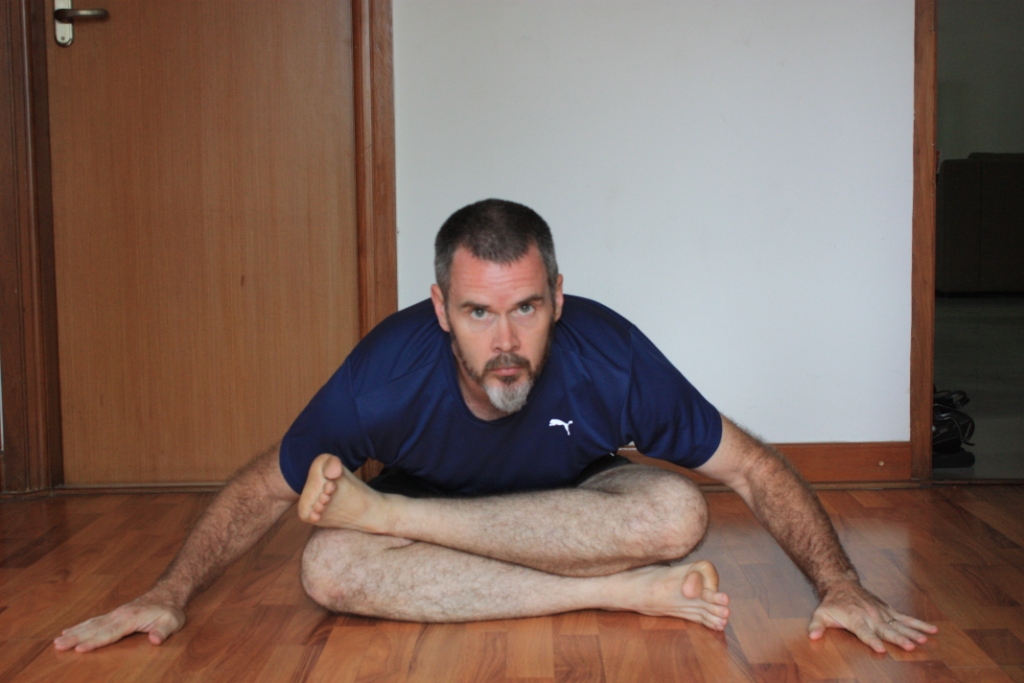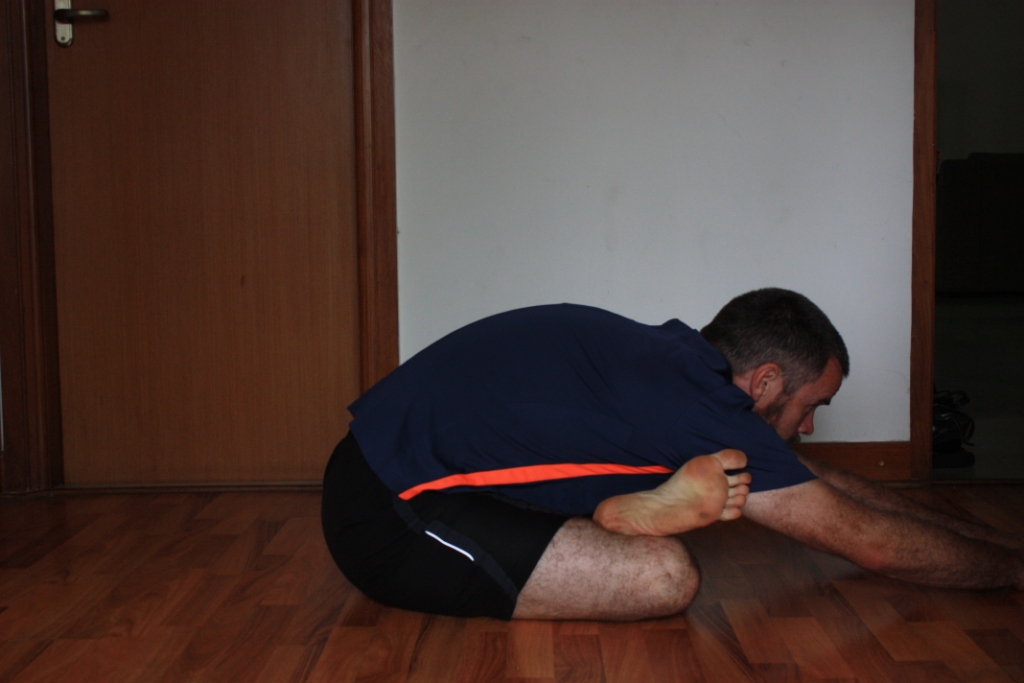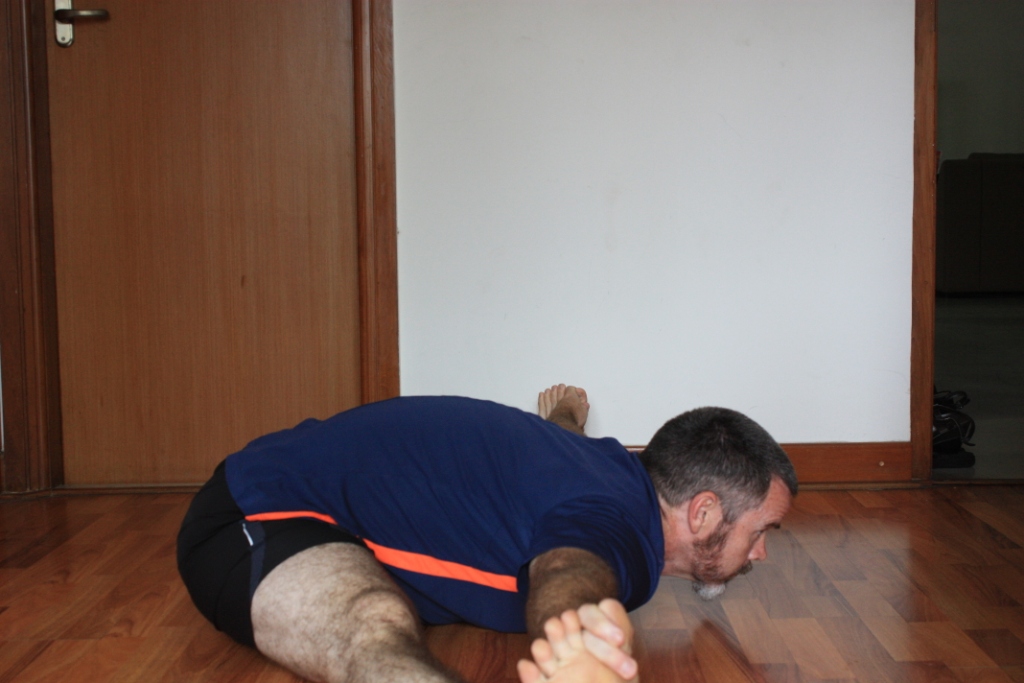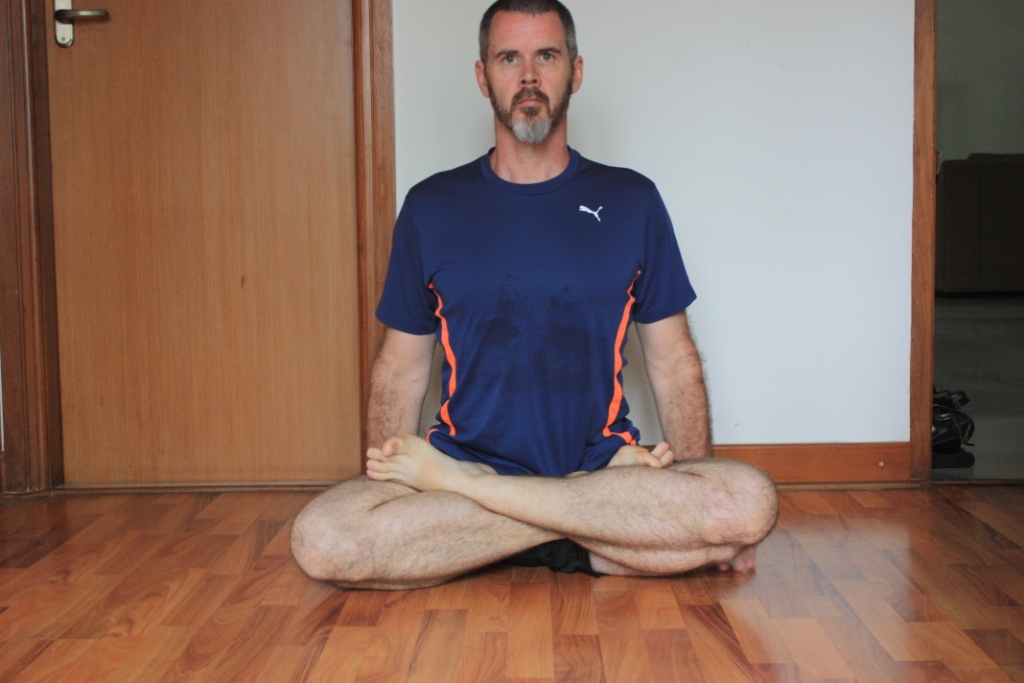
Rested. Definitely. I believe one has to think of rest and recovery as part of the process of living. If one thinks of it as just wasting time between “doing things,” then one isn’t going to get the most out of body and mind.
Tag Archives: body
Machine Flow [Free Verse]
This machine can flow,
moving over, around,
& through.
Skin conforms to the contours
of musculature.
Muscle binds to bone,
muscle that thickens
and lengthens and ripples
and pulses.
Bones that flex and recoil.
But that machine can flow --
over, around, and through.
It can cause air to pop
and water to slosh
and earth to tremor.
It crawls through liquid,
slices through gases,
and slams the solids,
but can move over, around,
and through.
BOOK REVIEW: Move by Caroline Williams
Move: How the New Science of Body Movement Can Set Your Mind Free by Caroline WilliamsMy rating: 5 of 5 stars
Amazon.in Page
This book presents a pop science accounting of some of the more interesting scientific literature on the benefits of moving one’s body – be it through dance, martial arts, walking, or otherwise. That being active is an important element of maintaining a healthy mind and body will come as no surprise. Still, there are a number of specific points this book makes that may come as a surprise to many, such as that those who do an hour of intense exercise a day but otherwise live desk warrior lives may not be as well off as they think.
As the topic (and the scientific literature from which the book draws) is huge, the author focuses specifically on the mental benefits of physical movement, both attitudinal / psychological benefits and cognitive benefits such as improved creative thinking or memory. I found the book’s organization to be beneficial, and – in particular – believe it was a smart move to include chapters on breath and rest – topics that are integral to a life of movement, but which might not spring to mind. Particularly, the chapter on breath discusses findings on synchronization of breath and movement more than does many books on breath or movement, as well as offering extensive discussion of the benefits of 3 and 6 breath per minute (bpm) breathing.
There are a lot of books out there on this subject – though usually they focus either on exercise or on a particular approach to movement. Those who read extensively on the topic may not find much that is new in this book. However, I think “Move” holds its own, and also distinguishes itself in some of its fine points of emphasis. Certainly, if one is looking for a book to introduce someone to the benefits of movement, this is a prudent choice.
View all my reviews
Balance & the Value of Learning to Fall
I saw something sad in the park this morning. A boy was trying to learn to ride a bicycle, but I could see that he never would — not with his present approach. Why? He had one training wheel, and the bike was leaning about 15-degrees off vertical as he struggled to use the bicycle as a tricycle. I could see that the metal arm that supported the training wheel was starting to bend from the strain — thus making the lean ever more pronounced. [Incidentally, with two training wheels, I think he might rapidly learn to ride because he’d experience tipping from one side to the other, through the balance point.]
I’ve told yoga students before that there are three timelines for learning inversions (upside-down postures, which all require one’s body to learn to balance 180-degrees out of phase with the balance we all mastered as toddlers.) The first timeline is if you are willing to learn break-falls (i.e. how to safely land when — not if, it will happen — one loses balance.) If so, one can learn any inversion (that one is otherwise physically capable of performing) in an afternoon. Second, if one gets near (but not up against) a wall, and only uses the wall when one is falling towards over-rotation, then one can learn the inversion in a month — give or take. Finally, one can lean up against the wall for a million years and one will not spontaneously develop the capacity to independently do the posture. Why? Because one’s center of gravity is outside one’s body, which means one is in a perpetually unstable state, and one cannot stabilize into a balanced position from a state of falling (and leaning is just falling with a barrier in the way.)
Finding balance requires that the body be able to adjust toward any available direction to counteract the beginning of a fall in the opposite direction. I was fortunate to have studied a martial art that required learning break-falls from the outset, this made learning balances (not just inversions, but also arm balances, standing balances, etc.) much easier because there was no great concern about falling. I knew my body could fall without being injured.
Without falling there’s no learning balance, and if you only fall into the under-rotated position, you are still not learning to achieve stable balance. At some point, you will need to experience the dread fall towards over-rotation.
Time to ditch the training wheels.
POEM: Sensation
5 Ways to Fake It til You Make It
5.) Adopt a power posture: There’s been a lot of research in recent years suggesting that posture isn’t a one-way street–i.e. body doesn’t necessarily have to follow our mental state. One can reverse the flow, improving one’s mental state by adopting a strong and confident posture.
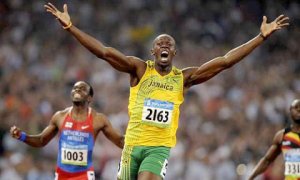
One of the most thorough discussions of this phenomena is in Amy Cuddy’s book Presence, which famously mentions the “Wonder Woman” pose. However, another widespread example is using the up-and-outward fist pumping posture that is widely seen among humans and even other primates (i.e. with arms outstretched as Usain Bolt is seen above.)
4.) Master eye contact: This is dreadfully difficult for an introverts such as myself. We tend to look anywhere but the eyes.
If one is traveling in risky places, it’s important to have a grasp of the fine art of eye contact. If one doesn’t make any eye contact, then one risks looking zoned out–potentially inviting aggression. If one rapidly looks away, offering too short an eye contact period, one appears intimidated–potentially inviting aggression. However, if one’s eye contact is too long, it may trigger some primal fight impulse, or–at a minimum–suggest you have taken more interest in the individual–which may invite aggression. This means one has to balance a fine line that says, “I see you, you know I saw you. Now I’m going to do me and let you do you.”
3.) Adopt the opposing viewpoint: Say you find yourself obsessing about some perceived slight or wrong. While you want to address this issue, you want to be calm enough to avoid saying or doing something you’ll regret. You want to be seen as a sensible individual while being persuasive. The key is seeing both sides, and taking a moment to realize that your opposition is probably not the black-hearted villain of his own story. He likely has some reason for his behavior. Maybe it’s even a reason you can empathize with, given your own experience–i.e. being overworked and distracted, facing a decision that only allows for a best worst option, etc.
2.) Visualize it: It may seem as though anything that occurs solely in the mind can’t have that much force, but–in fact–it can. Visualizing can help one get over one’s anxieties. By systematically considering how events will unfold, one can break the cycle of worst-case scenario creation that the brain readily falls into. This will make an activity seem less intimidating and more manageable.
1.) Start small: Often when a person would like to be more kind or compassionate, she’s flummoxed or overwhelmed by the scale of the problem. She sees problems that she can’t make a dent in. So schedule one small act of kindness in a week or maybe a bigger one monthly, or as is possible. Do it, see its value, and be content.
One also sees a need for starting small with advanced physical practices. If you can’t do a yogasana or martial arts move, figure out what capacity building or modifications one needs to get to the end goal. Then take it on bit-by-bit. There are many videos on how to systematically build up to challenging maneuvers like the press handstand or planche, moves that almost no one can do with out a great deal of prep work.
BOOK REVIEW: The Body Has a Mind of Its Own by Blakeslee and Blakeslee
The Body Has a Mind of Its Own: How Body Maps in Your Brain Help You Do (Almost) Everything Better by Sandra Blakeslee
My rating: 5 of 5 stars
This book examines the role of the nervous system in movement and bodily activity. It describes how one’s body is able to perform extraordinarily complex maneuvers that we often take for granted because they feel effortless. It investigates some of the ways in which the interface between body and brain go awry, as well as the various effects this can have. It also offers insight into how we can be deceived because we are experiencing the world less directly and more through the shaping activities of the brain than we feel is true.
The book contains ten chapters, plus a little forward and back matter. The first chapter is entitled “the body mandala” and it provides an overview of how the nervous system can be thought of as a series of maps layered upon maps that routes various input from outlying areas to the brain and commands from the brain to the outlying areas. A “mandala” is a symbolic representation of the universe [from Hindu and Buddhist traditions], and this notion is repeatedly revisited throughout the book.
Chapter 2 explores the mapping of the homunculus and its ramifications. If you’ve ever seen a 2-D or 3-D image /model of a human being that has gigantic lips and hands and disproportionately small torso and thighs, you’ve seen said homunculus (as the term is used in neuroscience.) The reason it’s scaled this way is that body part size is reflective of space in the nervous system dedicated to said parts and not their actual size. If you’ve ever seen one of those maps–called cartograms–in which the size of a country reflects a statistic, say, population (thus India, China, and Singapore are much larger than their physical size, but Canada is much smaller than its), you get the drift. This chapter also answers the question everyone wants to ask (and many do) which is “why–if the lips are so large because of their dedicated territory in the brain—are the genitals unexpectedly small in the homunculus?
Chapter 3 describes how body maps can be in conflict and what effect this can have. It talks about why people who lose weight often still feel fat and move in ways that are not reflective of their actual figure. It also gets into anorexia (and the lesser known bigorexia) which reflect mismatches between perceived body image and actual body schema.
Chapter 4 investigates a fascinating phenomenon in which visualization can often result in strength and performance gains. Said gains aren’t on the same scale as among those who actually exercise or practice, but the fact that one can make gains without moving a muscle is certainly intriguing. Of course, the takeaway is that one can get the best of both worlds by augmenting physical conditioning and practice with visualization—one has a more finite number of feasible physical training hours in a day (i.e. there are diminishing returns on physical training at some point.)
Chapter 5 is the first of two chapters that deal with problems related to improper interaction between the nervous system and the body. Here we learn about “the yips” that plague golfers and other occupational dystonias. When one begins practicing any physical activity, the objective is to build up muscle memory so that the movements can be completed purely unconsciously. This works through neuroplasticity—the fact that sequences of neurons that frequently fire together become more strongly linked—but neuroplasticity can have a dark side at the extremes.
Chapter 6 considers the way in which the system of maps can fail such that one fails to recognize one’s own limbs, one recognizes extra ones, or the like. Chapter 7 is about peripersonal space—i.e. the physical bubble of space that one needs to feel comfortable, and which varies both culturally and individually.
Chapter 8 delves into the role that upcoming technology may have in changing how we look at the body-brain connection. Mirror neurons are the subject of the penultimate chapter. You’ve probably heard of these neurons which fire when we see someone else perform an action. Usually there is an inhibitory signal to keep our body from actual mimicry, but sometimes you may find yourself unconsciously mimicking the position or body language of another person when one is engaged in an engrossing conversation. (Yawning contagiousness is a featured example.) Mirror neurons play a role in how we learn so quickly, how we sometimes anticipate the behavior or emotions of others, and deficient activity in these cells has been speculated to be responsible for autism.
Chapter 10 describes the role of the insula in human activities. The insula has been found to be involved in emotion and rewards system by which humans are motivated to engage in a number of bodily activities.
The book has many graphics to clarify technical points, many of these being line drawings of the brain and other physiological structures. There is also a glossary of key scientific terms.
I found this book to be fascinating. It was highly readable despite its technical subject matter, and it described these systems and the research about them in a clear manner. I’d highly recommend it—particularly if one is interested in movement, fitness, and optimal human performance.
5 Hyphenated Yogas That Miss the Point of Yoga
The laissez-faire and easy-going yoga community has spawned some phenomenally ridiculous mergers. I have “yoga” as a term on Google News, and almost every week I get fed a new example. I’m not saying every new approach to yoga is bad, but there’s one disturbing trend–i.e. the distraction yoga.
In the title, I refer to “hyphenated yogas,” but what I’m really ranting about is “distraction yogas.” A distraction yoga is one in which an element is brought into the practice so that one doesn’t have to keep one’s mind on one’s breath, alignment, and / or mental state. (Because who wants to think about that shit when one can be thinking “Wow, that kitten sure is cute.” or–believe it or not–“This beer has hoppy undertones.”)
Now before I get accused of hating puppies or beer, let me point out that nothing could be further from the truth. What I’m ranting against is the notion that you can marry any two good things and make a great thing. If you don’t believe me, please allow me to dip my nachos in your banana split. See, there are plenty of things that are awesome independently that make abominations when forced together.
I’ll include links as I go, lest you think I made this stuff up for hilarity’s sake.
5.) Beer Yoga: This is one of the most recent and intriguing distraction yogas. I’m not saying that one needs to follow a strict Vedic approach to life to practice yoga, but–come on–could you stop drinking for a couple hours to pretend your body is a temple (or at least that it’s not sitting in a trailer park with the windows busted out.) Unless “calf slaughter-yoga” catches on, it’s hard to imagine a less yoga-like practice than consuming intoxicants during the practice of yoga. By the way, there’s also a marijuana yoga, but I’ll lump these together as intoxicant yogas.
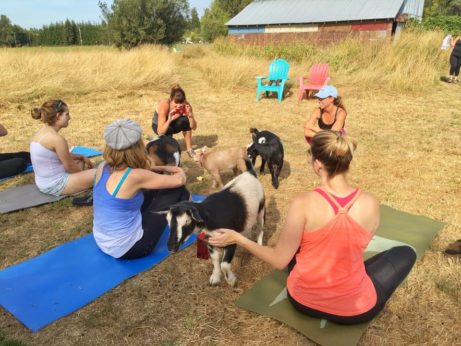
4.) Goat Yoga: This is one of many “animal yogas.” Like the others, the point is to have cute creatures around. How it’s supposed to help one’s yoga, I can’t fathom. Actually, I can fathom the suggested logic, probably something to do with calming and engendering feelings of compassion and well-being. But, ultimately it’s distraction by cuteness. Note: you can also do yoga with cats, dogs, horses, and probably river otters.
3.) Karaoke Yoga: Talk about distraction–nothing better than pounding music and reading a prompter to keep one’s mind off that ache in one’s hamstring.
2.) Rave Yoga / Club Yoga: This might be a cheat because it’s similar to the previous one on the list, and I’m trying to lump these together so as to not be too repetitive. However, it’s not exactly the same, and is the perfect example of a distraction yoga. (There’s also Harmonica yoga and other musical yogas, but I won’t double-dip anymore.)
1.) Tantrum Yoga: It wasn’t easy to determine whether I’d include this one or not. On the one hand, it’s not a distraction yoga in the sense that the others are. On the other hand, it takes the award for being least yoga like on the grounds that it’s not about dispassionately witnessing one’s emotional state but rather feeding one’s negative emotions. Note that I don’t group laughter yoga into the same class. I’m not sure whether laughter yoga is beneficial (or to what degree it’s a yoga), but I know that many people benefit from it because it bolsters positive emotional states.
Now, one may have noticed that there are many seemingly strange (hyphenated) yogas that I haven’t mentioned. I haven’t said a thing about surf board-yoga, stripper pole-yoga, or acro-yoga–and I specifically excluded Laughter Yoga from the wrath of my rant. That’s because this isn’t a rant about people being innovative or non-traditional, it’s about people missing the point of what yoga is supposed to be (i.e. a means to quiet the mind.) I don’t know whether I can see myself doing yoga on a surf board or a stripper pole, but I’m certain that one has to give it one’s full attention–it’s not about finding a distraction to make yoga more palatable to hipsters.
BOOK REVIEW: The Sensual Body by Lucy Lidell
The Sensual Body: The Ultimate Guide to Body Awareness and Self-Fulfilment by Lucy Lidell
My rating: 3 of 5 stars
This is a book about body awareness. It explores the subject by presenting tidbits from a range of movement and posture systems.
The book is divided into three parts. The first is a brief overview of the subject of bodily awareness. This section discusses what it means to be aware of the body, how body and mind / emotion are connected, and it sets up the need for the practices described throughout the rest of the book. The second part deals with a series of solitary activities that one can do to improve one’s quality of posture and movement. It forms the bulk of the book. The nine chapters of this portion of the book can themselves be divided in two. Three of them deal in aspects of bodily awareness: breathing / voice-work, grounding, and sensation. These sections borrow and adapt from established systems in a generic sense (e.g. the section on grounding uses a number of techniques drawn from yoga.) The other six chapters each deal with a system of bodywork, including: self-massage, African dance, Tai Chi, Eutony, Kum Nye, and running.
I’ll describe two of these specifically because they aren’t household names. I suspect most readers can imagine what the following look like: self-massage, African dance (even if it’s from a Paul Simon video), Tai Chi (from old folks in the park), and running. However, it’s probably reasonable to assume that some readers will have no idea what Eutony or Kum Nye are. Eutony is a system developed by a Danish teacher, Gerda Alexander, during the 20th century to use explorative movement to work toward more efficient movement. As far as I can discern, the founder is no relation to F. Matthias Alexander who developed–the more famous–Alexander Technique (AT is mostly well-known among actors, actresses, and would-be entertainers.) However, Eutony might be put in the class of techniques like the Alexander Technique and Feldenkrais that were developed last century and work toward improved use of the human body. However, the approach seems much different from Feldenkrais, which is highly structured, while Eutony is apparently not.
Kum Nye isn’t well-known either, but not because it’s a johnny-come-lately, rather because it’s ancient and obscure. Kum Nye is a Tibetan system of yoga. A lot of the techniques shown seem to be designed to help one gain the suppleness needed for extended sitting in meditation, but there are also “flying” techniques and other standing techniques that will help loosen one up, perhaps to free one up for more meditation.
The third part is shorter: three chapters presenting systems of partner-work. The first chapter is on Aikidō. For those unfamiliar, this is a Japanese martial art founded by Morihei Ueshiba that emphasizes harmony and flow. The chapter features a few basic drills from that martial art. The next chapter is on relating to others in a general sort of way, e.g. body language, emotion, etc. The last chapter is about massage.
Graphics are utilized heavily throughout the book. These include color photographs and drawings. Given what the book tries to do–showing these various approaches to movement–the graphics are essential. In the unlikely event that there are any prudes who read my reviews, you may want to make a note that there is a fair amount of nudity throughout the book. It’s not gratuitous or raunchy, but if you’re one of those people freaked out by nudity, this is probably not the book for you (nor the subject to be studying, for that matter.)
The book’s strengths are its valuable subject, its organization, and its use of graphics. Its weakness is in the number of approaches that it examines. There are too many for one to get any great insight into any particular system, but it’s too few if the goal is to give the reader a menu of movement and bodywork systems from which to find on right for them. I guess I wasn’t really clear what the objective was. If it is to show the reader a variety of paths so they can find the one best for them, the menu is too small. However, if it’s to show the reader one path consisting of all these elements, then it’s muddled. Among Western health and fitness purveyors there’s a tendency to think that if you take anything that’s good and ram it together with anything else that’s good, you’ll get something great. This is clearly not true; sometimes you get a pudding sandwich. This book feels a lot like a pudding sandwich.
If you are looking for a limited survey of movement and body awareness systems, and are okay with the list mentioned, you should check this book out. It also has some good general information about body awareness, though it’s a bit pedestrian for experienced practitioners.
Saving the Knees: Preventing Knee Injuries in the Martial Arts
The knee is a hinge joint. It’s designed to flex and extend with the thigh bone (femor) and the shin bone (tibia) in the same plane. A healthy joint can tolerate a certain amount of torquing or poor distribution of the body’s weight on occasion, but repetitive movements of that nature and /or severe uncontrolled movements can lead to permanent damage. Healthy knees are stable when straight (extended), but become slack when bent (flexed.)
Knee damage among martial artists is all too common, and the causes may or may not be self-evident. Martial artists whose practice includes kicks that require pivoting on a support leg or which involve landing leaping maneuvers may be intimately aware of the risks. However, the first martial art that I ever trained in had no twisting / pivoting kicks and few leaps (that were rarely practiced), but knee injuries were epidemic. The culprit in this case was low postures which required the thigh to be turned out (externally rotated and abducted) with the knee deeply flexed.
Well, I should say those postures were the culprit in conjunction with lack of flexibility and/or strength in all the right places. This isn’t to say that the individuals who developed knee problems weren’t strong or flexible, but the areas that needed work weren’t necessarily the big muscle groups that leap to mind when workout time comes around. Emphasis on the big muscle groups (quadriceps and hamstrings) with neglect of the muscles involved with adduction, abduction, external rotation, internal rotation and stabilization can create some problems. If you’re a runner or a weightlifter (with good form) you may be able to get away with such a stretching and strengthening emphasis. [Note: I’m not advocating such an approach for anyone. What I’m saying is that if your knee is only worked with the knee straight below the hip and pointed forward in a hinge fashion, your risks are not the same as someone who works with a flexed knee with the thigh turned out. The likely injuries are different.]
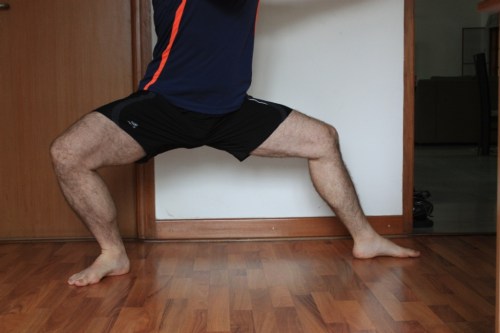
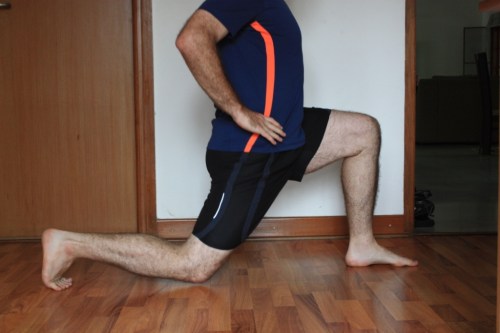
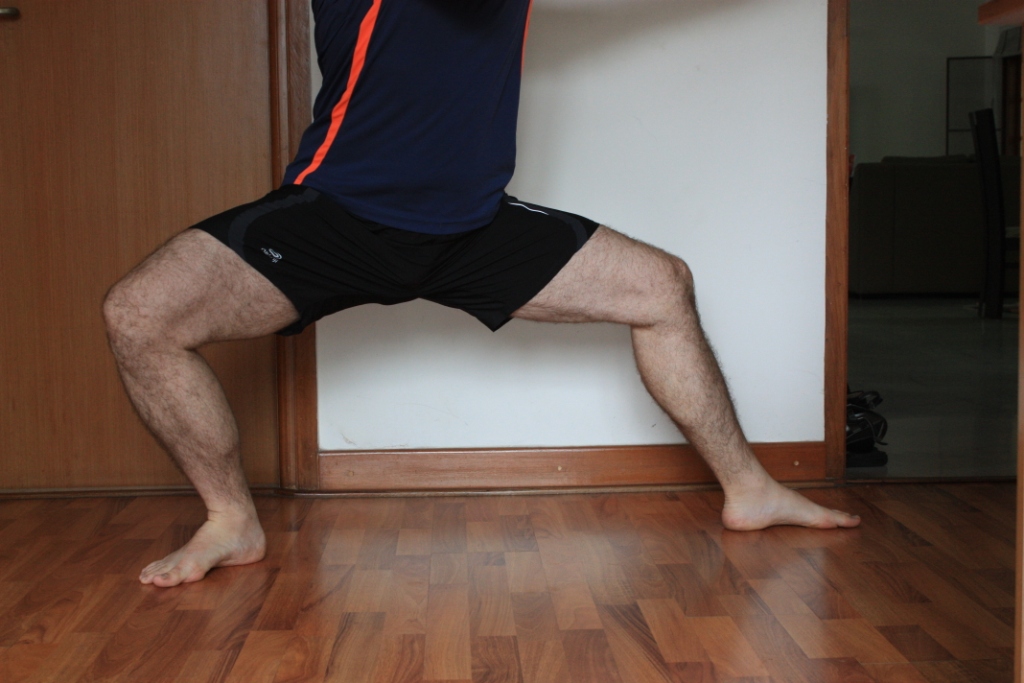
Note: Knees pointing the same direction as the toes. (The back knee might be a little far back but that’s an issue for the ankle health post.)
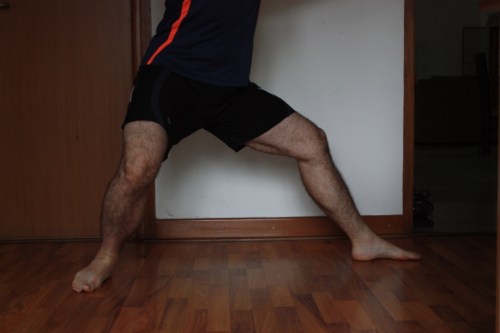
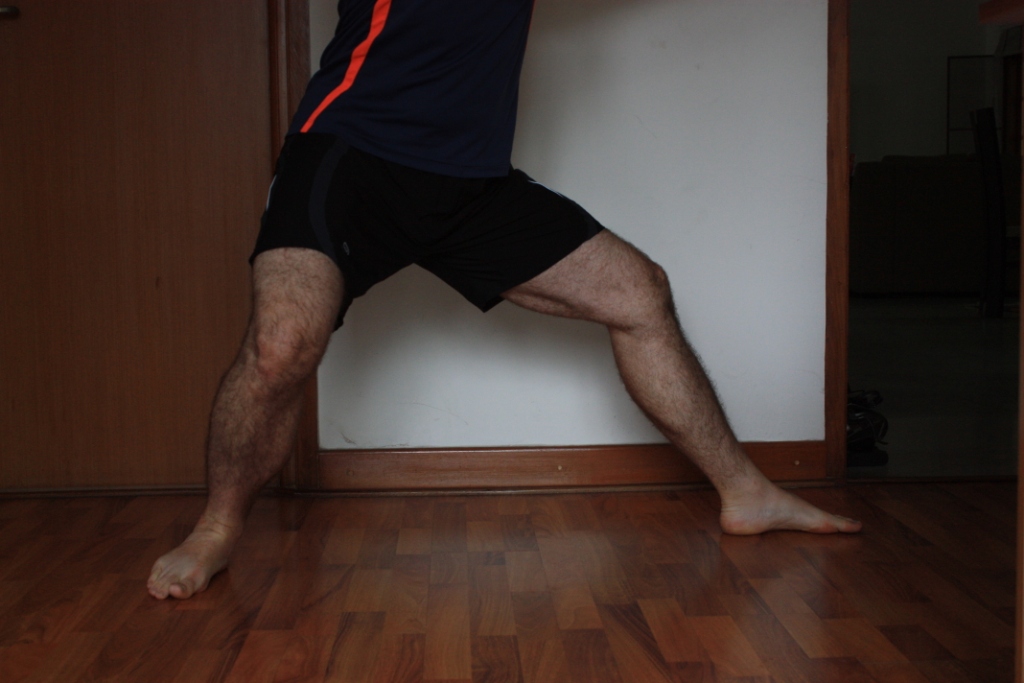
WRONG: Note: if one dropped a line down from the knee it would be well inside the foot. That means the ligaments are having to work too hard and your skeleton isn’t doing enough
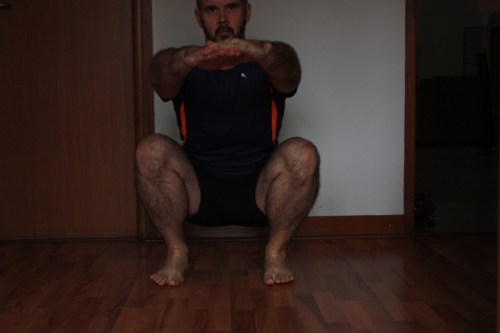
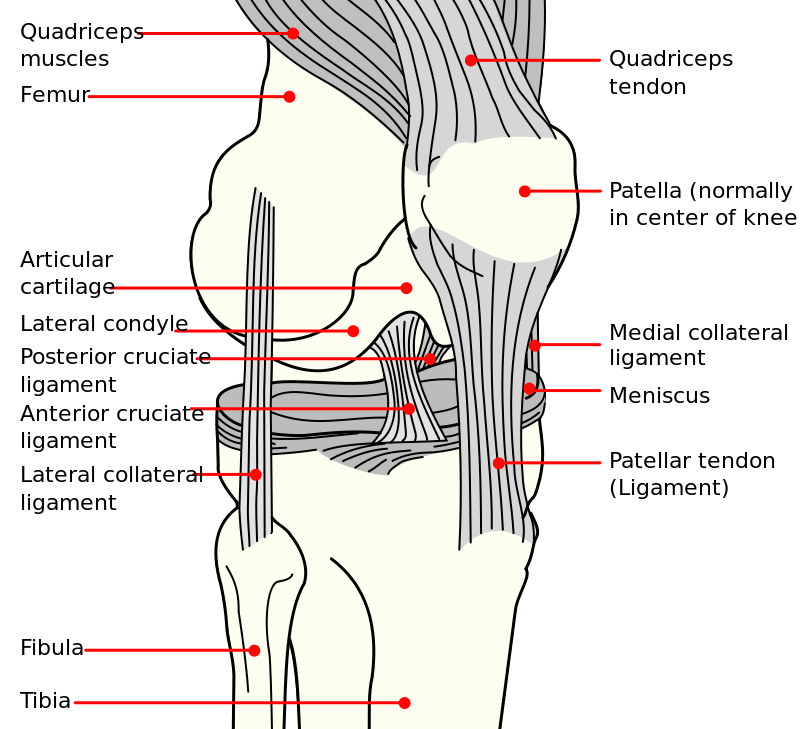
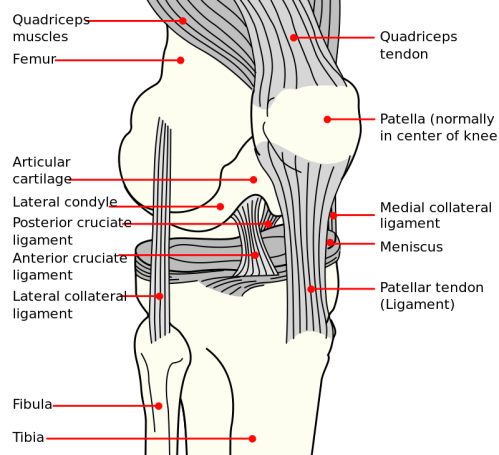
To do a posture like the one above, one needs the flexibility to keep the knee wide enough so that it points the same direction as the toes. The joint shouldn’t be wrenched or torqued with load on it. The four ligaments (Anterior Cruciate Ligament [ACL], Posterior Cruciate Ligament [PCL], Medial Collateral Ligament [MCL], and the Lateral Collateral Ligament [LCL]) and the surrounding musculature keep the joint snug during movements. And, as mentioned earlier, when the knee is deeply flexed it’s more sloppy than when extended.
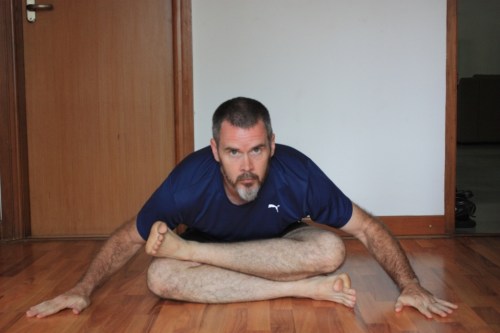
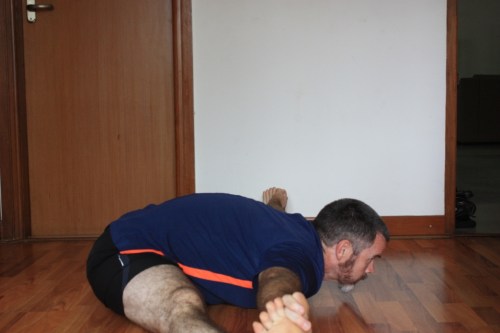
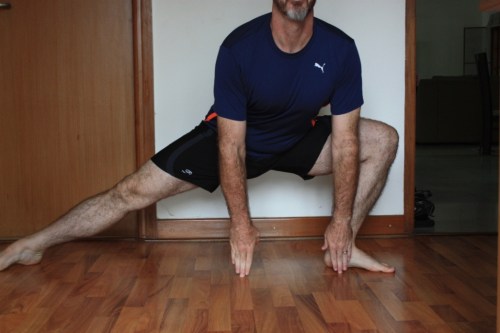
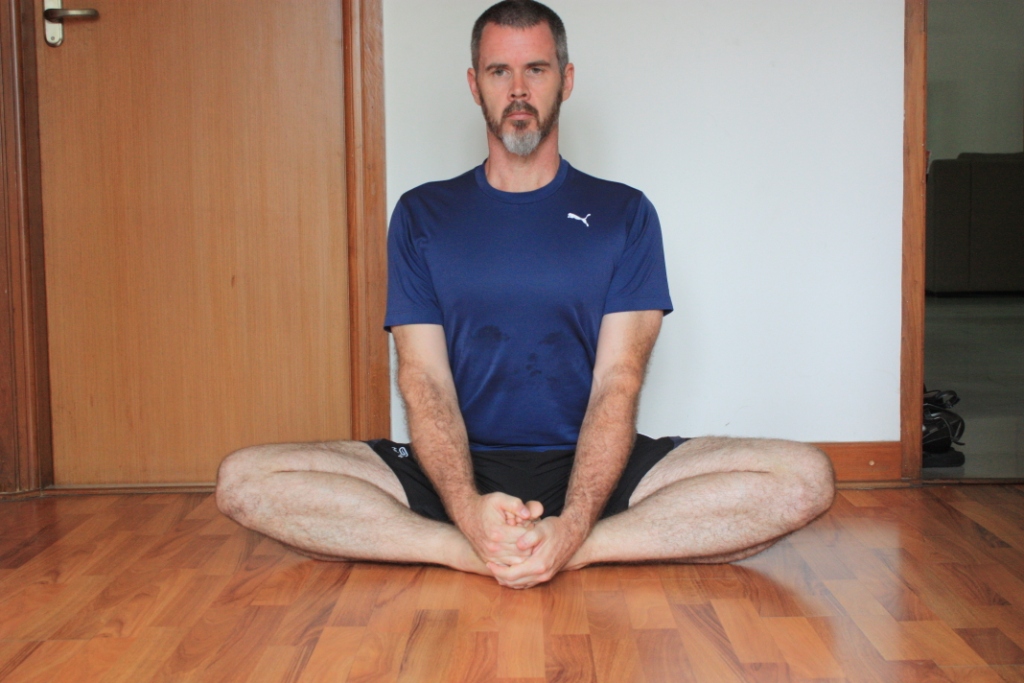
-Increase flexibility in the muscles that internally rotate and adduct the thigh: When one goes into a wide-legged stance, one’s thigh is pulled away from the body’s center-line (abducted) and the thigh externally rotates. If the muscles that act in the opposite direction (pulling the thigh back on center and rolling the thigh inward) are too tight to allow the knee to move into proper position, then the load of the body weight will be going into the ground through a kinked joint. Furthermore, one will end up torquing through the joint as one moves. Below are a few hip openers that will help one achieve the requisite range of motion.
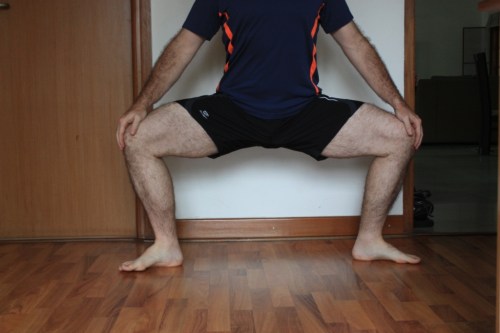
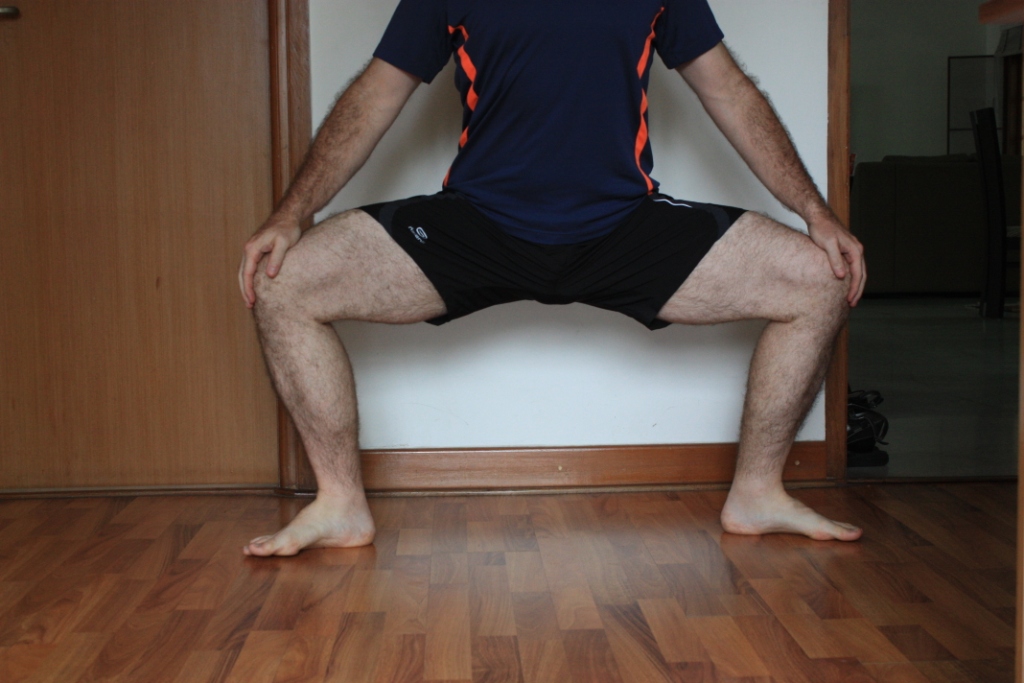
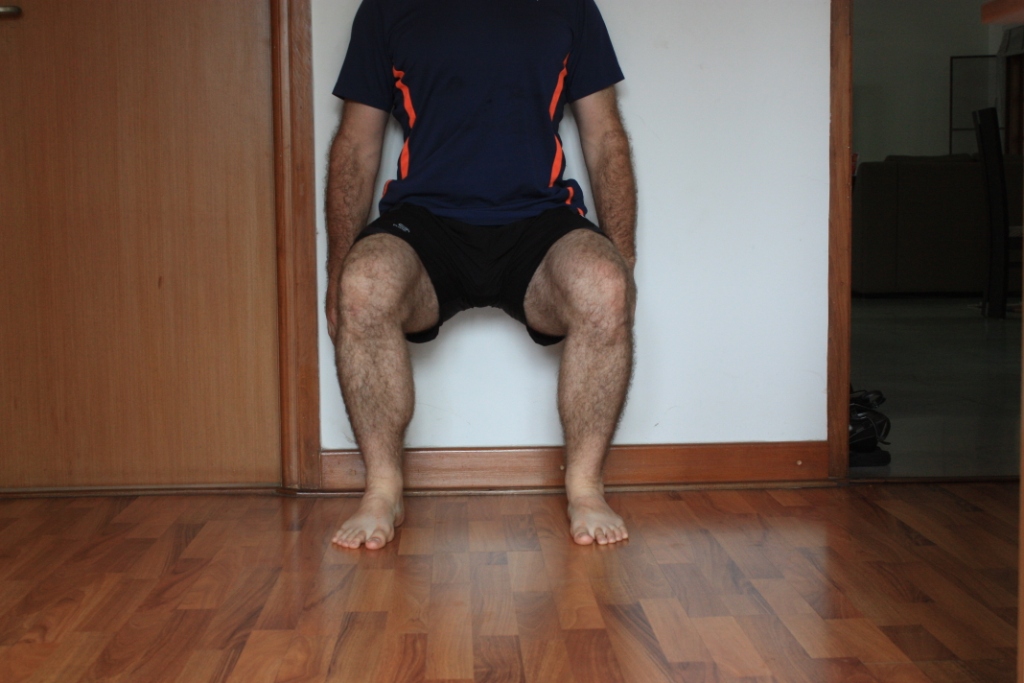
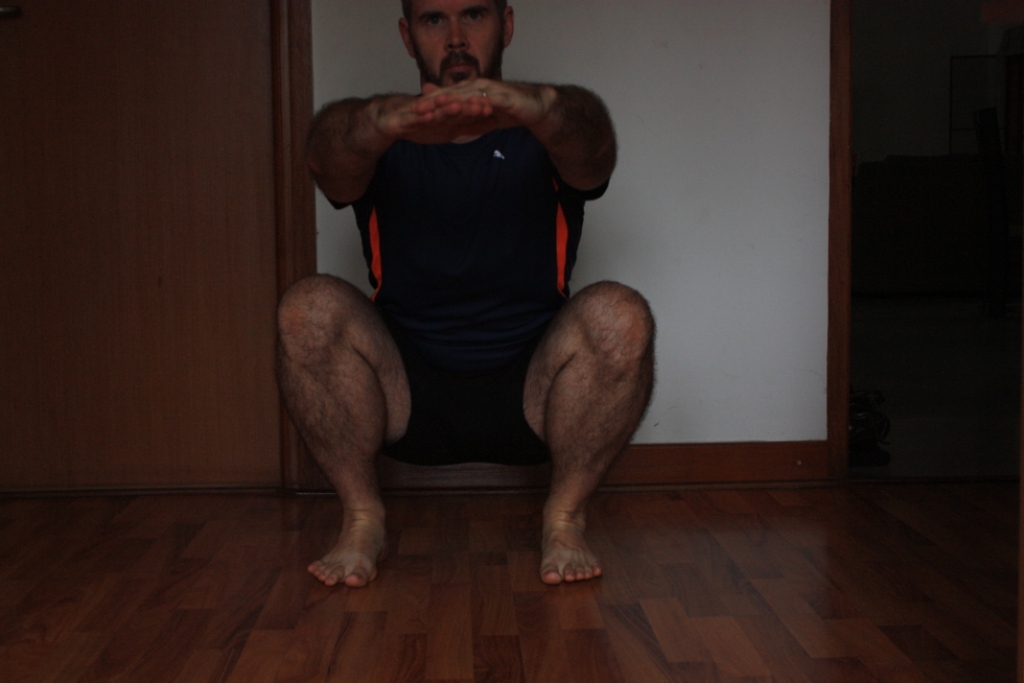
Utkatakonasana (often called goddess pose) variations will show you whether you’re getting your knees and toes in line.
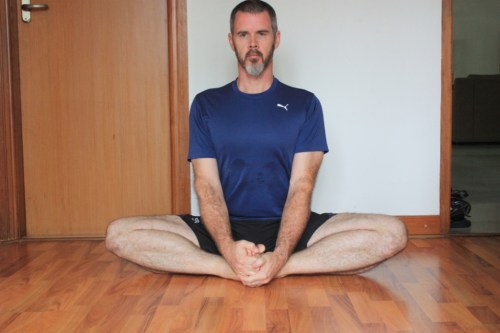
Place one foot on top of the opposite knee (and vice versa for the other side) carefully shift weight forward. This puts an intense stretch on the hip-joint to help rotate the thigh sufficiently
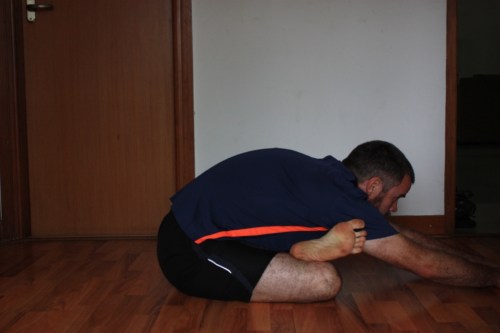
Upavistakonasana: put legs at about 90 degrees relative to each other, and then lean forward with a flat back placing the stomach, chest, and chin on the floor (in that order.)
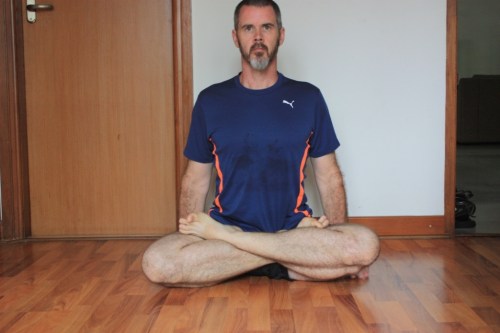
Padmasana (lotus): If you meditate in padmasana, you probably already have the range of motion necessary. Note: if padmasana hurts your knees, you need to go back to hip openers and discontinue the practice.
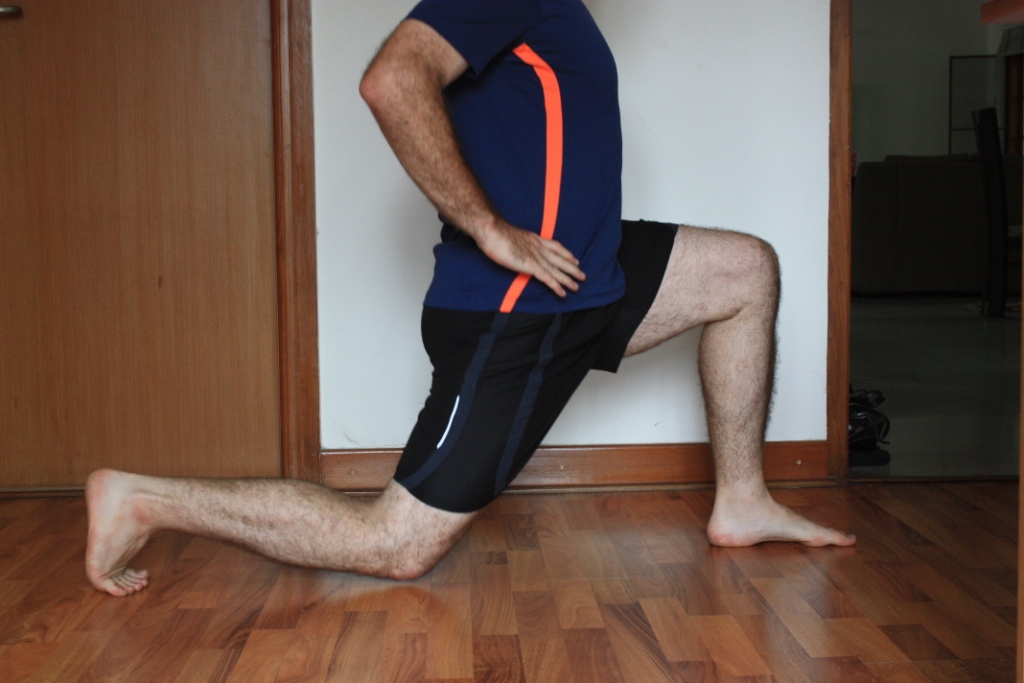
-Strengthen the muscles that stabilize the knee-joint. One begins this process with the usual suspects of leg exercise. One just needs to focus intently upon alignment. Here are a few of the exercises you may already be doing.
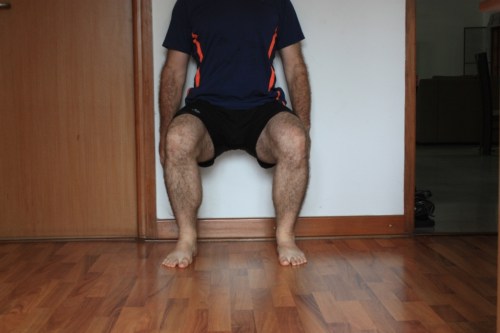
The basic lunge: can be done stepping forward, backward, or both (the latter in an alternating fashion)
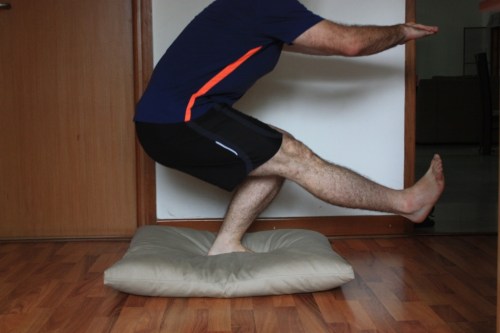
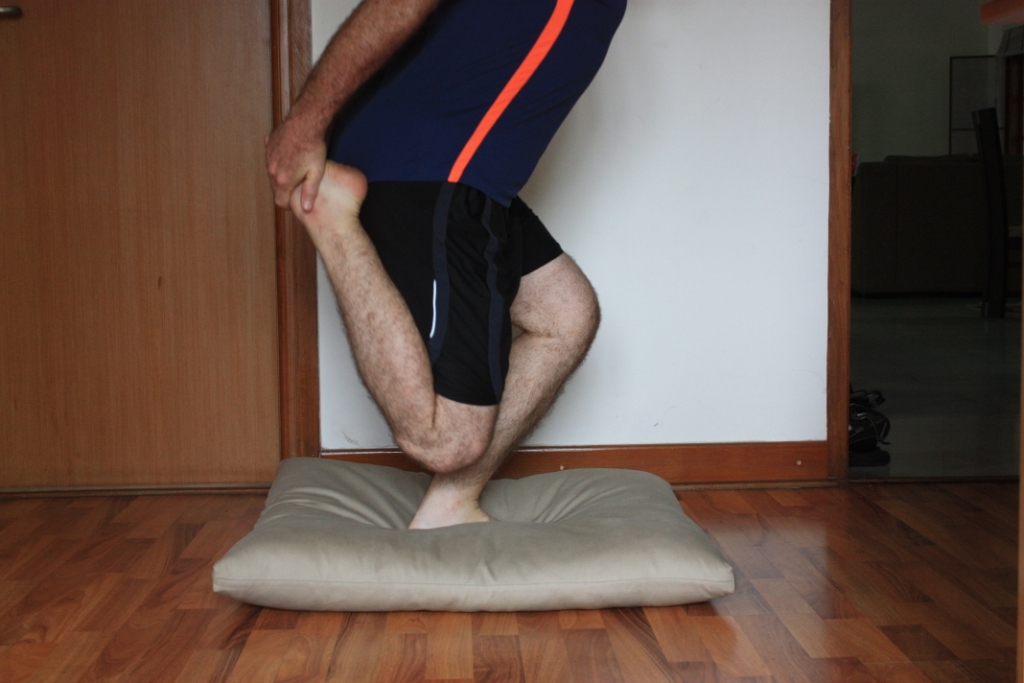
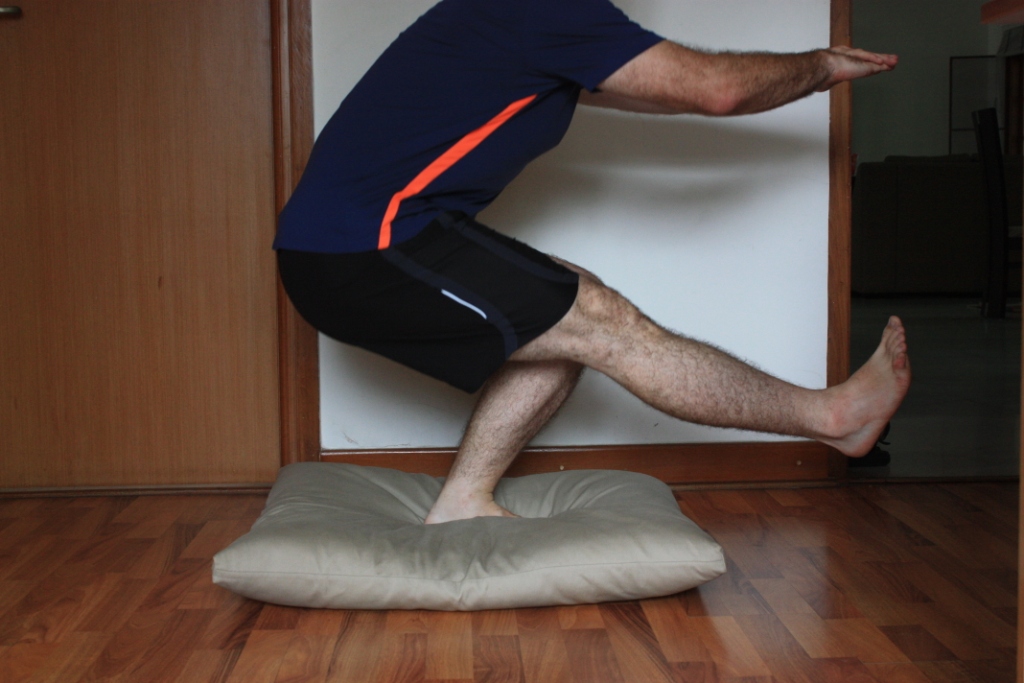
As one needs more challenge, one can achieve it in the usual ways (single-legged, unstable surface, add weight, or combinations thereof.) Below are a couple of variations that combine single-limbed work with an unstable surface.
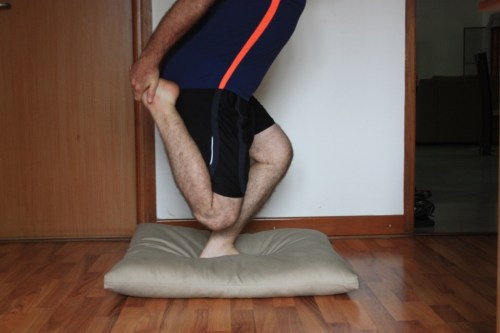
-Save static stretching for after the joint has warmed up. It used to be common to begin a workout with static stretching. While few do this anymore, it’s a practice that needs to be replaced. Stretch warm.
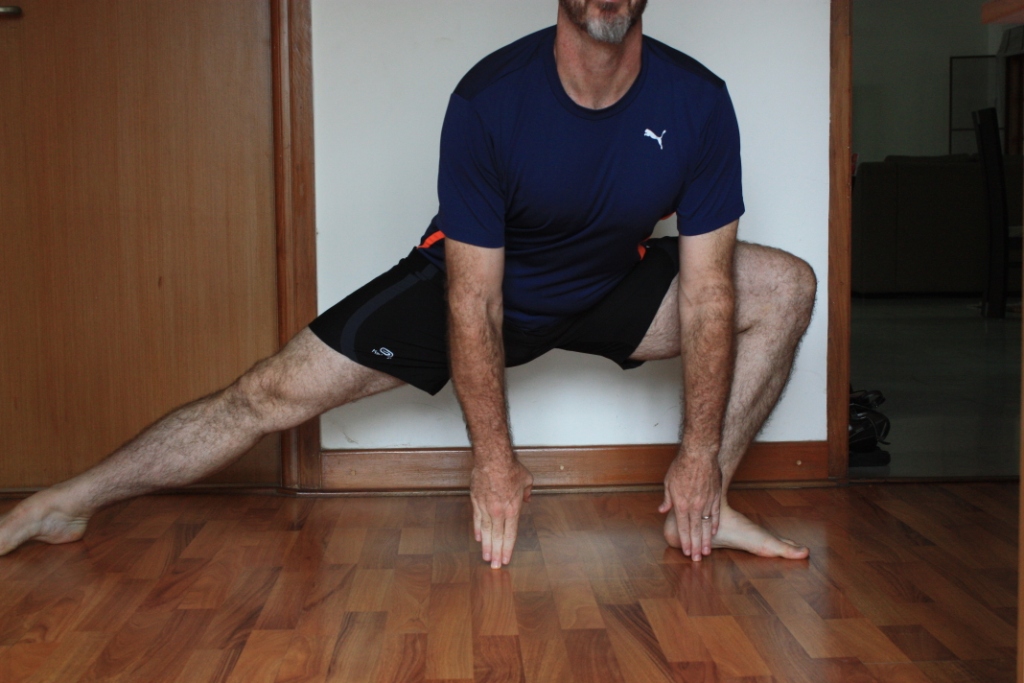
-Don’t neglect the opposing muscle groups: When I said that one needs to increase flexibility in adductors and internal rotators, that doesn’t mean to ignore the opposing muscles. Nothing good comes of stretching or strengthening in an unbalanced fashion. Your musculature works as a team with agonists, antagonists, and stabilizers all working in conjunction to produce effective movement.
-Don’t go overboard with stretching: If your aim is to be a contortionist, then by all means go ahead. However, highly flexible martial artists need to be concerned about joint laxity. Laxity is when the joint gets so loose that it’s vulnerable to popping out-of-place. A martial artist needs a balanced style of fitness. Extreme flexibility results in weakness and lack of joint robustness, just like extreme strength training produces a body that lacks range of motion and stamina.
Most importantly, don’t ignore pain when it’s still at the minor twinge point. If you have knee pain you’re doing something that joint doesn’t like. One should reevaluate your movement and, if necessary, considering stepping back from your current practice to work on capacity building exercises.