

Taken on New Years Day 2020 in Doha.

 A Portrait in Poems: The Storied Life of Gertrude Stein and Alice B Toklas by Evie Robillard
My rating: 4 of 5 stars
Available March 3, 2020
This work provides a biographical sketch of Gertrude Stein, her partner Alice Toklas, and their life together in Paris. The vehicle is free verse poetry, although it reads more like a children’s book than poetry. That may sound as though I intended it as a burn, but that’s not the case. The marketing materials for this book present it as a child-friendly picture book, if not entirely marketed in the children’s literature market. What I mean to say is that the writing is simple, literal, and isn’t filled with complex metaphor or cryptic description that one might expect in adult works of poetry.
The book is illustrated in a child-centric manner as well, with whimsical, unintimidating, and colorful art.
I didn’t know much about Stein, and had only heard the title of the book, “The Autobiography of Alice B. Toklas” in which much of this book’s source material presumably resides, and so this was a nice background, without getting too deep in the weeds.
If you’re a Stein fan and are interested in introducing a kid to her biography, or if you have your own limited but adult interest in her life, this is quick read to get you up to speed.
 Poems to See by: A Comic Artist Interprets Great Poetry by Julian Peters
My rating: 5 of 5 stars
Available March 31, 2020
This anthology of twenty-four classic poems is set apart by the artwork used to convey the illustrator / anthologist’s view of each poem. The poets are all virtuosos, including: Dickinson, Angelou, Cummings, Langston Hughes, Auden, Seamus Heaney, Wordsworth, Shelley, Yeats, Poe, and Eliot. The poems are sometimes, but not always, among the most anthologized of the respective poet’s work. I would say that most poetry readers will probably find something that they haven’t read, but – even if not – it’s worth re-reading them as you enjoy the artwork.
The illustrator, Julian Peters, makes a bold decision to use the widest variety of artistic styles in an attempt to more aptly capture the tone of each poem. I recently reviewed a similar book, Chris Riddell’s “Poems to Live Your Life By,” and that book used a consistent style through out (which isn’t to say that tone and reality / surrealism didn’t change.) I’m not an artist, and don’t really have a vocabulary to describe the various artistic styles employed, but will attempt to give one some insight. There is the obvious shift between monochrome and color strips, but even within each of those categories there is great variation. Some monochrome strips were mostly gray, while others were exclusively black-and-white. Color works ranged from shocking dayglo to subdued pastels to dominant single color (e.g. blue) pics. Various poems were represented by a modern comic book style art, an old fashion comic strip approach, those which looked like paintings, those that were highly realistic, those that were surreal, those that were retro-chic, and even one [for Maya Angelou’s “Caged Bird”] that was in a quilt-like style.
I enjoyed this work tremendously. Most of the poems were short works, single pagers, and the fact that I’d read possibly all of them before wasn’t a problem because these are the kind of poems that should be revisited. Only the postscript poem, Eliot’s “The Love Song of J. Alfred Prufrock” was of substantial length.
I’d highly recommend this book for poetry readers, particularly those interested in are of imagery and how it’s conveyed and perceived.
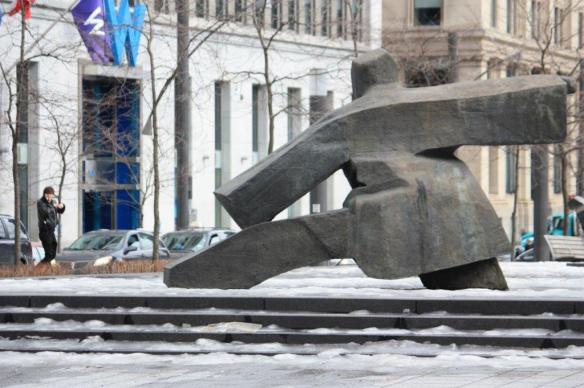
Taken in Montreal in March of 2011
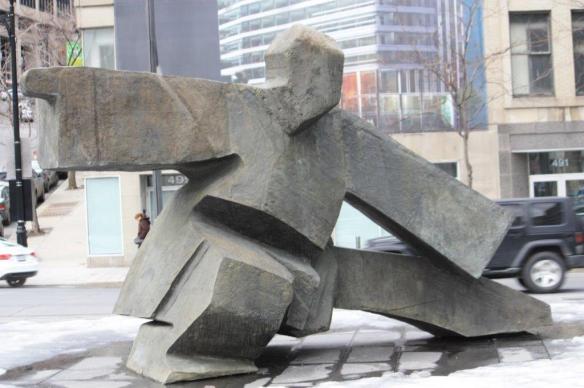
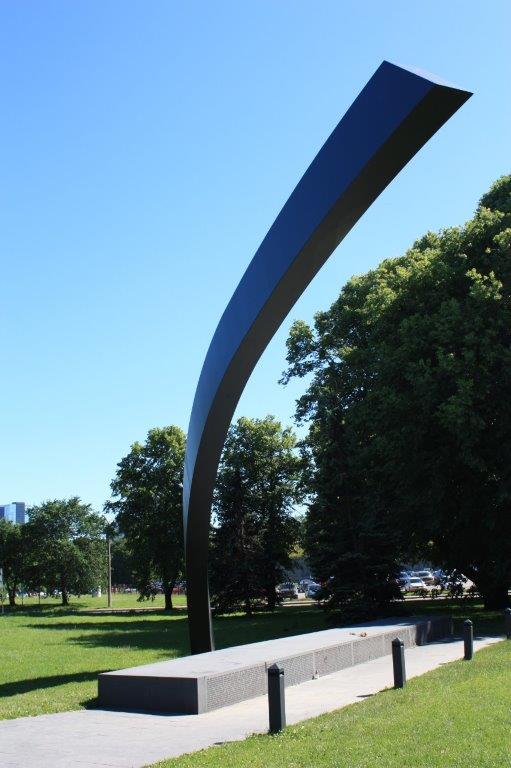
This sculpture by Ju Ming is apparently called “Single Whip,” though it reminds me more of “Snake Creeps Down” because of it’s downward slope of the arms. At any rate, it can be found in Victoria Square in downtown Montreal.
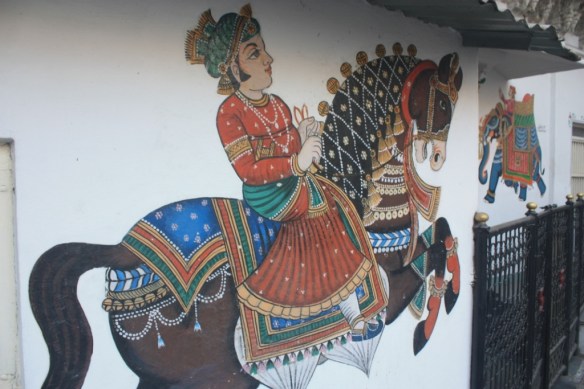
Taken on November 23, 2018 in Udaipur

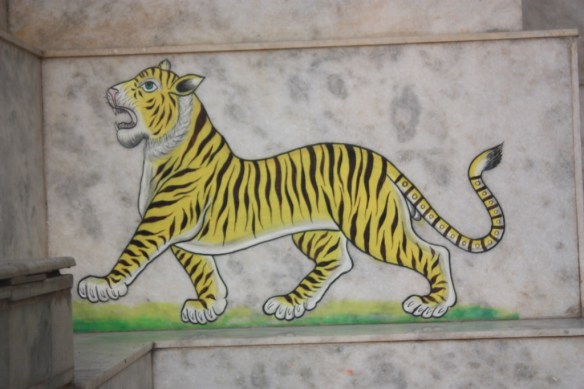
This post requires some explanation. First, miniature paintings, as a style of Indian art, aren’t necessarily small (though they can be.) Rather, the “miniature” refers to use of fine detail and the use very fine brushwork. (Sometimes involving one hair-width brushwork.)
The historical basis of all these paintings in Udaipur was that they used to be used to adorn houses involved with weddings. Not only did they lend festive decor, but they also made it easier to find the right house.
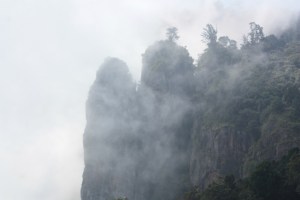
enshrouded in cloud,
a Chinese painting transplanted to India,
gnarled evergreens grow from cracked granite
like the bonsai that twists into a broad bloom of foliage,
i’d have thought the great white space, simple shapes, and gorgeous deformity
wouldn’t appeal to the Indian mindset —
so taken with vibrancy and fullness,
and yet crowds throng round,
staring in wonder,
ensnared by the same scene as
Shen Zhou when he painted, “Poet on a Mountaintop”
or
Fan Kuan as he painted, “Travelers Among Mountains and Streams,”
like two lovers fixated on one moon.

Taken in April of 2018 in Kathmandu






 Tiger Riding for Beginners