
Taken in October of 2014 at Angkor

Taken in October of 2014 at Angkor

Taken in March of 2014 at Namdroling Monastery.

Taken in April of 2014 in Bangalore.
 Saw a dog doing its business in the fountain of a swanky office building the other day. If that doesn’t capture the spirit of Bangalore, I’m not sure what does.
 The Rise of Superman: Decoding the Science of Ultimate Human Performance by Steven Kotler
My rating: 5 of 5 stars
This is NOT a book about the comic book hero. It’s a book about a mental state called “the flow” and how adventure and extreme athletes have used it to make tremendous strides in their sports. The characteristics of the flow include extreme focus, time dilation / time distortion, a vanishing sense of self, extremely high performance, fearlessness, and a falling away of everything non-essential to the task at hand.
Kotler is by no means the first author to write about the flow. The term was inaugurated by a book entitled Flow first published in 1990 by a University of Chicago Psychology professor named Mihaly Csikszentmihalyi. Csikszentmihalyi coined the term in the process of conducting a study on happiness. He found that happy people tended to engage in activities in which they could immerse themselves and find the zone. Contrary to the early part of Kotler’s book–in which it sounds like adventure athletes cornered the market on flow–Csikszentmihalyi says that said activity could be work or hobby and that the flow is to be found in poetry writing, yoga, martial arts, copy writing, or potentially any activity in which the skill level and challenge are both high.
(To be fair, Kotler does get around to recognizing that extreme athletes neither invented nor exclusively exploit the flow. However, his—well-taken—point is that such athletes are unusually good at finding, and dropping deep into, the flow in part because risk-taking behavior is an important trigger. And for free climbers [rock climbers without ropes], mega-ramp skateboarders, and bodysuit skydivers sometimes there are only two possible states of existence—the flow and being scraped off a rock.) It should be noted that some of the elements of flow sound a lot like the states that have been described by various mystical religious traditions for centuries, e.g. the dissolution of a feeling of separation between self and the rest of the universe. Warning: religious readers may find it disconcerting to read that there are scientific explanations for states that were once attributed to communion with god or the like.
While I’ve given Kotler’s book high rating, I haven’t yet given one reason to read it—and I do recommend people read it. First, while Csikszentmihalyi is the “father” of flow research, his methods were decidedly low tech–i.e. surveys and interviews—but Kotler reports on more recent studies involving neuroanatomy, neuroelectricity, and neurochemistry. Second, while Kotler delves into the science of the flow, he does so in a manner that is approachable to non-scientists. Finally, all of the narrative accounts of extreme athletes interspersed with the more technical commentary make for a very readable book, even if one is not particularly knowledgeable of—or interested in—such sports. I gave this book a high rating both for its food-for-thought value, and because of its high readability.
I will admit that I was not so enamored of the book when I first began it, and other readers may find the same irritation. For one thing, Kotler’s adoration of extreme athletes comes off sounding like diminishment of mainstream athletes and others involved in “flowy” activities. A prime example of this is seen in Chapter 1. Kotler gives us an endearing description of how gymnast Kerri Strug won the gold in the 1996 Olympics by sticking a landing on a shattered ankle. However, he then comes off a bit douchey when he suggests that Strug’s achievement pales in comparison to Danny Way’s skateboard jumps at the Great Wall of China.
For another thing, in his zealousness to prove that extreme sports practitioners are full-awesome while mainstream athletes are “meh,” Kotler makes some comparisons that seem apples and oranges to a neophyte such as me. If they are fair comparisons, he certainly doesn’t explain why they should be considered so. The best example of this is when he states that Olympic divers took decades to achieve increases in rotation that extreme skiers and skateboarders surpassed in much less time. This seems unreasonable for two reasons. First, divers have a very standard distance in which to achieve their acrobatics. In other words, they don’t get to build a “mega-platform” that’s 50% taller like Danny Way creates “mega-ramps” that were bigger than ever before. Of course, if you can increase the distance between yourself and the ground you can increase your spins, rotations, or whatever much more quickly (yes, your danger goes up vastly, I’m not diminishing that.) Second, the divers gained zero advantage from technological improvements, but the same cannot be said for skiers and skateboarders. In other words, if you go from skis made of oak to ones made of carbon nanotubes (that are 50 times stronger and 1/100th of the weight) of course you’re going to make gains faster.
Perhaps, I’m overstating Kotler’s disdain for mainstream athletics, but that’s what happens when one uses a national hero as a set up to show how much more awesome a relatively unknown skateboarder is (among skateboarders Way is extremely well-known but he’s not a household name as the Olympian was–at least for a short time in the late 90’s.) I suspect that Kotler was just trying to convince a general audience that the athletes he’s speaking about aren’t pot-smoking knuckleheads who are as likely to be seen on America’s Funniest Home Videos crushing their nads on a handrail as setting a new world record. These men and women are serious people engaged in serious activities, and they give it their all. They do deserve more respect for that than they are probably given by broad sectors of the populace. Perhaps, the importance of what these folks are achieving does need to be conveyed because the demographic that reads books and the one that follows extreme sports probably has wide wings of non-overlapping area. (I’m not saying skateboarders are illiterate or bookworms don’t skate–just that the Venn diagram has substantial areas of mutual exclusivity.)
As I indicated above, in each chapter we get both some insight into the nature of the flow and its triggers and stories of adventure / extreme athletes that serve as examples of what’s being discussed. In chapter 2 we learn what the flow looks like in terms of brain waves (i.e. high theta/low alpha, or between meditation and a relaxed / resting state of wakefulness.) In chapter 3, we learn about the neuroanatomy of the flow in terms of what areas of the brain it lights up, and what areas shut down–which is more important to flow states. In chapter 4, we learn about the neurochemistry of the flow and that a cocktail of dopamine, norepinephrine, endorphins, anandamide, and serotonin makes up the chemistry of flow, but, critically, not so much with the adrenaline. The subsequent chapters deal with triggers of the flow, and what conditions best set up achievement of this state of mind.
Chapter 9 stands out as an important, but quite different, portion of the book. It deals with the downside (or dark side) of the flow. This has a lot to do with the fact that the aforementioned internal substances (and the flow state in general) are quite addictive. While it’s unfair to say, and unlikely, that the extreme athletes Kotler writes about (i.e. the ones at the top of their games) are drug addicts as some might assume of skate boarders, snow boarders, and the like, it may not be unreasonable to say that they have a kind of monkey on their backs—albeit a perfectly legal one rooted in their own neurochemistry.
As I’ve said, I recommend this book for anyone who is interested in this state of mind. One needn’t be interested in extreme sports to get a lot out of the book.
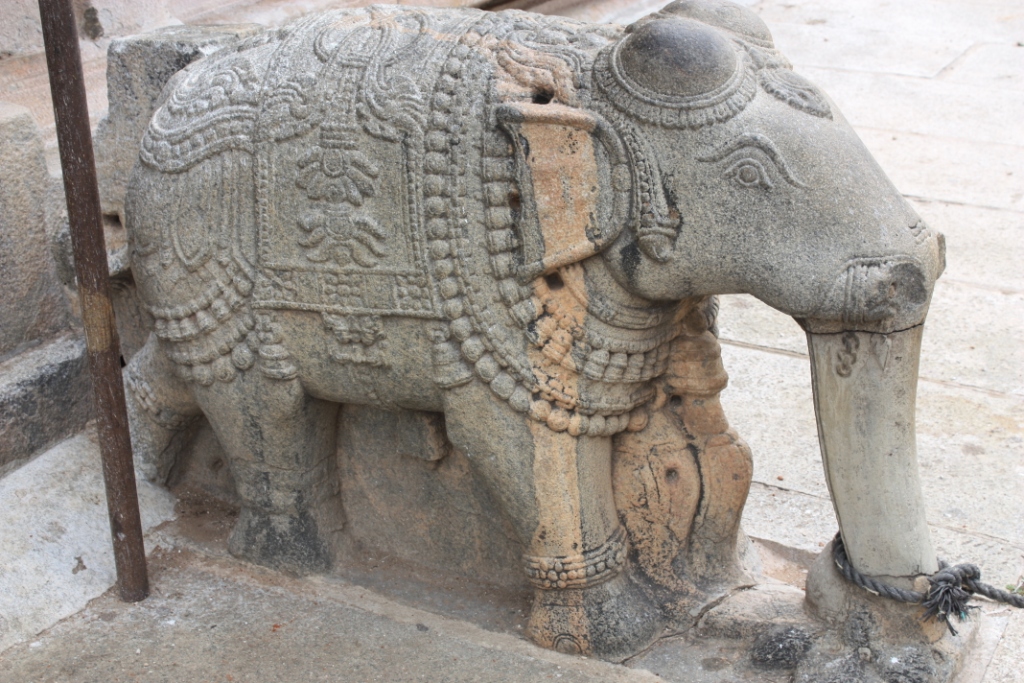
Taken in November of 2013 in Mysore
 The Wild Life of Our Bodies: Predators, Parasites, and Partners That Shape Who We Are Today by Rob Dunn
My rating: 4 of 5 stars
Dunn’s book addresses a host of intriguing questions such as:
-Why are there diseases that disproportionately attack those in the richest parts of the world while being almost non-existent in poor countries?
-Why is obesity at epidemic proportions among modern humans?
-Why—while people have diverse tastes overall—do there seem to be universal preferences for sweet, salty, and fatty foods?
-Why are so many people’s lives wrecked by constant stress and worry?
-Is the Appendix really a vestigial organ with no apparent purpose?
As the subtitle suggests, this book is about the role that other species have played in human evolution and the way we look, behave, and think today. The message of The Wild Life of Our Bodies is that humanity’s proclivity to see itself as an island–uninfluenced by other species–has its cost.
The book is popular science–approachable to a layman but with the usual disdain for gratuitous assertions and shoddy reasoning that define the scientific though process. That being said, Dunn does put some editorial opinion out there in ways that might appear as fact in a slipshod reading. The most prominent example being Dunn’s suggesting that what best defines humanity is not our intelligence or ability for abstract representation (or even our physical appearance), but that we are the only (first?) species that has killed other species off not purely of self-defense or for food, but to exercise control over our ecosystem. I doubt this would strike a majority of impartial scientists as a fair and unbiased way to define humanity. Granted, this point not what The Wild Life of Our Bodies is about, and whether one thinks this it is fair or not is not critical to whether one will find the book to be of value. However, the idea (and the fact) that humans have zealously killed off other creatures is certainly relevant to the discussion at hand.
If “terraforming” is the term for how an alien race might environmentally engineer Earth to make it suitable for them to live here, perhaps we could call humanity’s assault on other species “bio-forming” of the planet—choosing a roster of species that strikes our fancy. All the time humans were trying to make ourselves more comfortable by getting rid of inconvenient species, we remained ignorant to the downside.
Dunn covers a broad range of mismatches between who we are evolutionarily and how we live in the modern world. The Wild Life of Our Bodies suggests that, like the pronghorn antelope, humans are in many cases over-designed because of the loss of species (parasites, predators, symbiotes, etc.) that helped to make us who we are today. (One question that once puzzled biologists was why pronghorns were so much faster than every species they faced.)
While it sounds good to be over-designed (at least relative to the alternative), it’s not without cost. In our case, we had guts that were supremely adapted to having parasites, but the lightning fast (on an evolutionary timescale) elimination of those parasites has left us with bodies that attack a non-existent enemy and this has resulted in a number of new diseases. We are used to diseases that succeed in the poorest—and, hence, least hygienic areas– but disease that mostly attacked in the cleanest places on Earth have puzzled us for some time. Crohn’s disease is a prime example. “Rewilding” (i.e. putting parasites back into) the guts of Crohn’s patients has shown positive results.
Dunn lays out a couple of the theories as to how the loss of our intestinal bacteria may result in a number of first-world ailments. Interestingly, some of these diseases aren’t even digestive in nature, and might seem to have no logical connection to gut bacteria. However, our body’s systems are a system-of-systems—i.e. they are integrally linked. One issue is that some parasites have been able to mask their presence, and our bodies have learned to present a heightened response to account for this veiled threat. Today our systems can’t tell the difference between our squeaky clean guts and a gut full of these sneaking parasites so it drops the immune system version of an A-bomb.
This is one example of why some diseases don’t exist in the third-world where the body knows what parasites it’s up against. One might say, “Yes, but these ailments of over-reactive systems can’t be as bad as the effects of the parasites.” That’s often not true. Most people with internal bugs (we all have them to some degree), don’t even realize it. The fact that people with Crohns’ are willing to have predators implanted in them speaks to this issue.
There has been concern for years about downside of the rampant use of anti-bacterials, antibiotics, and antiseptics, and this is a topic Dunn addresses as well. For example, there seems to be little evidence that such agents in soap do any particular good, but they decidedly do bad (encouraging drug resistant species.)
Perhaps the single greatest change in the nature of homo sapiens life resulted from the agricultural revolution, and Dunn delves into how this seminal event changed our bodies. With paleo-dieting all the rage, it will come as no surprise that there have been some major changes to the human diet since our hunter-gatherer ancestors roamed the Earth. Once again, we have bodies built on an evolutionary timescale, and they don’t necessarily cope well with our new diets.
One problem is that we have strong hardwired drives for foods that were a rarity in our species’ past, but which we now produce in abundance. For example, we eat far too much refined sugar because our bodies are wired to love sweet, but that kind of food was rare to our pre-agricultural ancestors. Hence we have the existence of diabetes, and its greater prevalence where high-sugar diets are common. Many people are also saddled with an evolutionary advantage to store fat because their ancestors come from a clime where food was not abundant year round. The problem is that now there’s a grocery store on every corner and this once great advantage is contributing to burgeoning waistlines.
I gave this book a high rating on the grounds that it presented a lot of food for thought, and that’s what I most value in non-fiction. Some of the theories may turn out to be incorrect, but this book offers one a lot to think about and clear explanations of the bases for what can otherwise seem a little outlandish. There is also some wit in places that contributes to heightened readability.

Taken in November of 2014 in Mysore on Chamundi Hill.

Taken in December 2013 in Mysore.

Taken in October 2013 at Angkor, Cambodia.

Taken in October of 2013 in Agra.
Happy election day India.


