BOOK REVIEW: Light on Pranayama by B.K.S. Iyengar

Light on Pranayama: The Definitive Guide to the Art of BreathingLight on Pranayama: The Definitive Guide to the Art of Breathing by B.K.S. Iyengar
My rating: 4 of 5 stars

Amazon page


This is B.K.S. Iyengar’s A-Z guide to breath and breathing exercises (pranayama.) It’s meant to do for pranayama practice what “Light on Yoga” did for asana (postural) practice. That is, it presents all the classic techniques, offers variants to meet individual needs, and provides the background necessary to put pranayama into the context of a balanced yoga practice.

Let me begin by discussing the book’s organization, and this book is organized to the n-th degree. There are parts, sections, chapters, and even the paragraphs are numbered (though–near as I can tell–the latter serves no purpose for a typical reader and may be more for the help of the writer and his assistants. It does create a somewhat biblical scheme, so maybe it was assumed there would be a need to quote this guide “chapter and verse,” as they say in Bible study.)

The bulk of the book consists of the first of two parts, and Part I is divided into three sections. The first of those sections is “The Theory of Pranayama,” and it puts pranayama in the context of yoga’s entirety. If you’ve read other B.K.S. Iyengar titles, much in these nine chapters will be familiar (e.g. discussion of the eight limbs.) However, chapter 4 offers a nice description of the anatomy and physiology of respiration. There are many anatomical drawings and diagrams in it to help convey the complex information. There’s also additional information about the traditional Indian notions of breath encapsulated in the concepts of prana, nadis, and chakras.

Section II is entitled “The Art of Pranayama” and it covers those topics necessary regardless of what technique of breath exercise one is practicing. It includes seated postures, mudras, bandhas, inhalation, exhalation, retention, etc. This section, too, has nine chapters. The final section of Part I describes the various techniques of pranayama. The chapters of this section are arrayed in lists, and they systematically build from the basic technique towards more advanced variations (e.g. by inserting retentions.)

Part II covers meditation (dhyana) and the corpse pose (savasana.) With respect to the former, it suggests how one’s body, mind, and sense organs should be conducted in the act of meditation. In the case of the chapter on corpse pose (after cross-legged seating position, this being the most common position for practice) there’s an extensive look at the details of that pose.

There are a number of helpful features incorporated into the book. In addition to the drawings mentioned in Chapter 4, there are black-and-white photos throughout to clarify the textual instructions. There is also a glossary of Sanskrit terms and an Appendix of courses of pranayama (i.e. recommendations as to how to sequence breathing techniques for optimal results with guidance as to how many sets or repetitions of each to use.)

My major criticism is one I’ve offered about previous books from this author and others. There’s a muddle of science and mythology that makes it hard to know how much weight to give particular instructions. It may be that a given piece of advice (e.g. a contraindication) is based on repeated observations of the physical or mental effects, or on a sound understanding of anatomy & physiology. In which case, it makes sense to heed such advice. However, advice can also be based on myths and the desire to preserve a way of thinking about the human body which is wholly unsupported by evidence. In which case, if one has no dog in the fight to preserve egos, it makes sense to disregard said advice. I suspect the vast majority of statements of what to do (or not to) fall into the first category, but some may fall in the latter, and it’s not easy to tell which is which.

I would recommend this book for students and teachers of yoga. It’s a good reference for one’s pranayama practice.

View all my reviews

BOOK REVIEW: Let Every Breath by Scott Meredith

Let Every Breath: Secrets of the Russian Breath MastersLet Every Breath: Secrets of the Russian Breath Masters by Vladimir Vasiliev
My rating: 3 of 5 stars

Amazon page


This book presents an introduction to breath exercises employed by the Russian martial art called Systema. Systema is one of a number of drill & spar-centric (as opposed to technique-centric) martial arts that have developed in modern times in an attempt to cast off the unrealistic and needlessly complicated elements that tend to grow within traditional martial arts (e.g. Krav Maga is a well-known exemplar of such a martial art.) Among the unique aspects of this system is its focus on, and approach to, breath—and breath is crucial in the martial arts, in a fight, and in life.

I had mixed feelings about this book. I’ll begin with positive aspects and then get into what I found off-putting. First, the book offers a clear explanation of principles and drills that are straight forward and will increase one’s awareness of breath. That is laudable. Are these particular principles and drills the end-all-be-all that will take one to heights that no other approach to breathing could (as the book suggests?) No. But is it a solid approach to breath that will yield benefits by making you more aware of breath while helping you to use it more effectively? Yes. Second, the book doesn’t have a lot of competitors in the “breathing for martial arts” space, and so it fits into a substantial void. (Note: the book doesn’t get into martial arts / self-defense drills or techniques, and doesn’t claim to.)

Now, here’s the other half of the open-faced shit sandwich. You’ve likely already gotten a hint of my problem with the book. This will seem like a two-part criticism, but it condenses into one problem with the book’s attempt to sell the reader on Systema. The starting point, as another reviewer noted, is that this system isn’t as completely novel and unmatched as is presented. Is that a damning indictment? It wouldn’t be. Just because this approach shares concepts applied elsewhere and is constrained by the nature of the human body doesn’t mean that it can’t offer its own unique value-added. The problem is that we are told how unique and completely peerless this system is so often that it becomes a bad info-mercial.

I get it. Systema is a product that has to compete in an intense market place with the likes of Krav Maga, MMA, Total Combat Systems, Defendu, and a ton of other self-protection oriented martial arts. It’s Pepsi, and it has to carve out a market share by convincing us of the unlikely fact that Coke products aren’t even in the same ballpark. The problem is that when it dismisses systems like yogic pranayama and Taoist chi gong, it does so in a way that shows virtually no understanding of those systems. When the author is telling us how the Systema approach to breath is superior to pranayama, he describes an asana (posture-oriented) class. If you’re going to convince us that the several thousand year old yogic tradition completely missed an approach to breath so groundbreaking that it will take one on an e-ticket ride to self-perfection, at least have some idea of the scope of what the yogis learned and how they present those lessons to their students.

The second half of this rant is that there is a lot of hagiography to delve through before one gets to the meat of the subject. Now, in general, authors of martial arts books tend to pay homage to their teachers and lineage. It’s not unreasonable that there is some near-deification of teachers in this book. However, at some point it becomes hard to tell whether the book exists to inform readers or as a monument to someone’s ego. This book gets disconcertingly close to the line. (The arrogance issue is made worse by confusion about authorship. It’s said that Meredith wrote the book, but Vladimir Vasiliev takes the by-line. This creates an odd situation because the book tells us how Vasiliev is both an exceptional human being, and humble as well. You can see my problem. Without evidence to the contrary, I can easily accept that Vasiliev is exceptional. I can also believe that he is humble. But when a book with his name on it tells me both of these things, I’m forced by the dictates of logic to reject at least one of them [and doubt is cast upon both.])

If you are looking to expand your understanding and awareness of breath, you may want to give this book a try. I certainly wouldn’t endorse every claim it makes, but there are some interesting ideas presented.

View all my reviews

5 Novels in Translation That You Should Read

Reading translated novels is a good way to gain insight into the culture and history of a country in a way that is both entertaining and that exposes the deep nuances of national character. I’ve selected works that both highlight aspects of culture and / or history and that are pleasant reading–some are humorous and others are adventures, but none are drudgery.  (Includes two Nobel Prize winners and one guy who gets nominated every year only to have the prize handed to folk-rock musicians or the like.)

[The hyperlinks go to my review of said book in GoodReads.]


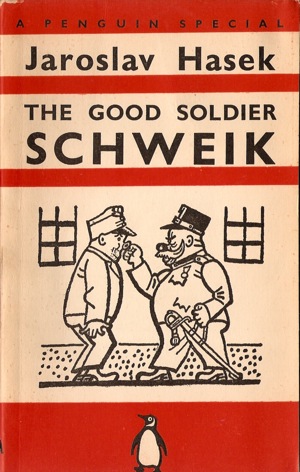
1.) The Good Soldier Švejk by Jaroslav Hašek (Czech): The lead character in this farcical comedy is a bumbling, but likable, idiot who is drawn into military service. The book highlights the fact that in times of war the greatest acts of idiocy are not perpetrated by greatest idiots.

goodsoldiersvejk_en


2.) After Dark  by Haruki Murakami (Japan): One can’t go wrong with Murakami. I almost picked Norwegian Wood, which is more a work of realist literary fiction, but this novel about what happens when the trains stop running in Tokyo may shed a little more light on Japan. (anti-pun not intended.)

afterdark_murakami


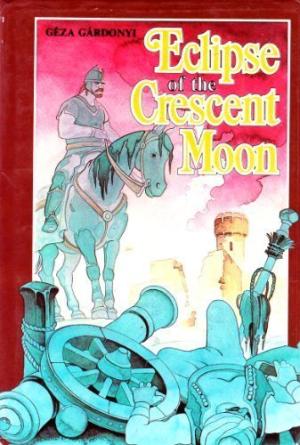
3.) Eclipse of the Crescent Moon by Géza Gárdonyi (Hungary): The story of how a small Hungarian castle village held out against a siege by the Ottoman juggernaut.

eclipseofthecrescentmoon_gardonyi


4.) Death in the Andes by Mario Vargas Llosa (Peru): When three men disappear from a small mining village in the Andes, the Army sends a Corporal and his deputy to investigate.

death-in-the-andes_llosa


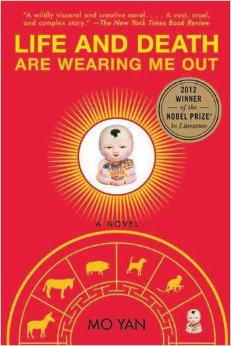
5.) Life and Death are Wearing Me Out by Mo Yan (China): A wealthy land owner is executed during the Communist revolution and must live out several lives as various animals in the service of the family of his [former] beloved hired-hand. The books shows the generational change between when China first became Communist through the reform period that led to a more market-friendly approach.

lifedeath_moyan

BOOK REVIEW: Cold Days by Tibor Cseres

Cold DaysCold Days by Tibor Cseres
My rating: 5 of 5 stars

Amazon page


During the Second World War, there was a massacre conducted by the Hungarian military in the Yugoslavian town now called Novi Sad (known as Újvidék under the Hungarians.) The operation was meant to be a cleanup of Yugoslavian partisans, but the casualties were primarily innocent civilians. The novel is called “Cold Days” (i.e. literally translated from the Hungarian “Hideg Napok”) because the killings took place during a cold snap in January of 1942. Cseres bases his novel on this real world event, but he tells the story through the lens of four fictional military men who are sharing a cell for their respective actions in Novi Sad.

The novel weaves five narrative lines into an overall arc. Four of these are the personal stories of each of the four soldiers during the massacre and the time leading up to it, and the fifth takes place later when they are all together in the cell. The four characters have no connection before being placed in the same cell—or so it seems. At most, the officers know of each other. The five lines come together in the end and the reader sees how the four lives are no longer in strict isolation, but are connected by the events of that day—in some cases more severely than others.

Captain Büky is the highest ranking of the prisoners and is a straight-laced military man except that he takes issue with the order than keeps married men from bringing their families to station at Novi Sad. Prior to the massacre and some killings that instigated it, it’d been a routine assignment. Lieutenant Tarpataki is a new assignee, and his principal trouble is that he arrives to find that he hasn’t been assigned housing or a billet. Lieutenant Pozdor gets his men taken from his control by the police chain of command and is left hiding out trying to avoid being assigned some remedial task. Corporal Szabo is both the only enlisted man in the group and the only one who is directly involved with the violence, though a Cpl. Dorner takes the lead and Szabo is a follower.

If that cast doesn’t seem like the kind of villainous blackguards one expects of a massacre crew, I think that that is part of what the author is trying to convey. Run-of-the-mill men stumble down slippery slopes into treachery during times of war. Sometimes the worst go unpunished, while others take the fall. The author also shows that sides can matter little when it comes to such events. Anyone can suffer loss when events tumble out of control as they did in January of 1942 on frigid day in Novi Sad.

This book is translated from Hungarian. It’s sparse and simple writing, and readability is high. It’s a short book of only about 120 pages.

I’d recommend this book for those interested in tales of the horrors of war. It may have interest to history as well as fiction readers.

View all my reviews

BOOK REVIEW: Death in the Andes by Mario Vargas Llosa

Death in the AndesDeath in the Andes by Mario Vargas Llosa
My rating: 5 of 5 stars

Amazon page


Three men disappear from a small mining village in the Peruvian Andes. The army sends two investigators, Corporal Lituma and his adjutant Tomás, to get to the bottom of the apparent murders. Suspects include Sendero Luminoso (“Shining Path”) guerilla-terrorists and a number of locals. For some of the locals, there’s another possibility, the various demons and deities attributed to each of the mountains in the Andes.

“Death in the Andes” follows the time that the investigators spend in this remote village. There are two major story lines taking place at once. One narrative arc revolves around the investigation and day-to-day living in a tiny town under primitive living conditions. The second story line comes by night as the deputy, Tomás, recounts his love affair with a girl who was out of his league in almost every way—except, perhaps, with respect to virtuous living. The girl was in a relationship with an abusive gangster at the start, a condition that Tomás found untenable. His love-driven reaction creates all manner of drama, and that drama serves as the only entertainment to be had in this remote village.

The book is literary fiction, but it’s not purely about the characters. As suggested, there’s a strong narrative element. While the book is in a realist genre, i.e. nothing in it feels like it couldn’t happen in our universe, the fact that the story takes place in an area of the Andes where the Shining Path is strong and mother nature is harsh means that there’s plenty of tension and suspense.

This is book is translated from Peruvian, and it seemed to me that the translator did a fine job of capturing the feel of the rural Andes. A few Spanish terms are used for terms like terrorists and avalanches to create a feel of a unique character of these concepts relative to this place. However, there are only a couple of these terms and so context is sufficient for the reader to readily keep them straight even if one is not gifted in picking up foreign terminology.

In general, the book is quite readable. The most challenging part of reading it is when Tomás is telling his story because you have a three-way conversation going on over two time periods at once. (i.e. Tomás voices himself and his girl as he tells their story, but then Cpl. Lituma chimes in periodically with questions—or, more commonly, commentary.) However, the author uses dialogue tags throughout to avoid confusion. One just needs to be attentive in one’s reading of these sections.

I enjoyed this story. I picked up this book both because Llosa won the Nobel Prize in Literature in 2010 and I like to read something by winners, but also because I’ve trekked in the Peruvian Andes and translated literature often offers one a unique form of insight into a place. This was no exception.

I’d recommend this book for readers of fiction. If one is looking to broaden one’s horizons into literary fiction and /or translated fiction, this book is a good place to start. It offers humor and intrigue as well as deep characters and an infusion of geography and culture.

View all my reviews

5 Works of Fiction That Teach Life Lessons

Every novel or short story has lessons to teach. After all, stories are nothing more than problems resolved. Sometimes fiction teaches one how to do it right, and in other instances how to do it wrong–but there’s always a lesson.

But some works of fiction teach more than others (and more effectively.) It’s a great challenge to merge entertaining and thought-provoking story lines into one piece. Below are five books that I found both illuminating and engrossing.

[The hyperlinks in the titles go to my book review.]


1.) Ishmael by Daniel Quinn: Ishmael asks one to reevaluate what one thinks one knows about the world based on a lifetime of viewing it through the lenses of culture and anthropocentrism.

ishmael_quinn


2.) The Journeys of Socrates by Dan Millman: The “Socrates” in question is Millman’s [probably fictional and / or composite] teacher from the “Peaceful Warrior” books–not the Greek philosopher. This book shows us how a person whose life has been scarred by tragedy can attain peace of mind.

journeyofsocrates


3.) The Little Prince by  Antoine de Saint-Exupéry: The Little Prince teaches one to reevaluate what one thinks is important, and encourages one to see the world through a more child-like lens.

littleprince

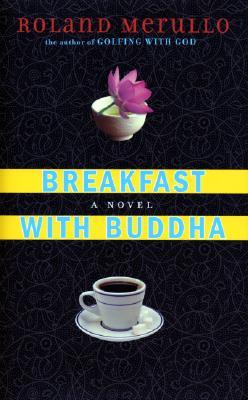
4.) Breakfast with Buddha by Roland Merullo: How can the average Joe reshape the way he [or she] views life so as to live a happier one?


breakfastwithbuddha


5.) Veronika Decides to Die by  Paulo Coelho: A young woman who attempts suicide is told by her doctor that she damaged her heart and has only five days to live.

veronika


Happy reading.


BOOK REVIEW: Hindu Myths by A.L. Dallapiccola

Hindu MythsHindu Myths by Anna L. Dallapiccola
My rating: 3 of 5 stars

Amazon page


Having moved to India, we picked up this book to try to wrap our heads around the vast Hindu pantheon and the myriad myths involving them. There are a huge number of tomes on the subject of Hindu mythology, but far fewer concise commentaries that look useful. We were always on the lookout for a book that would offer a sort of “Hindu Mythology for Dummies” –the quick down-low, if you will.

I can’t say that this book clarified the topic. However, I’m not sure any book could. Hindu mythology is a subject of enormous scope, while being defiant against reducibility. I was about to compare it to the challenge of writing a concise book for neophytes on quantum mechanics, but then I realized that such a book could probably be done much more effectively. For as strange as the world behaves at a subatomic scale, there’s a means to order the story and to simplify it in a way that leaves intact the gist. Along with dry descriptions of ordinary sounding events, one reads stories like that of the deity that popped out of another’s belly-button on giant lotus flower. That’s when the myths become hard to imagine–if one hasn’t been hitting the psilocybin.

That said, I did learn some interesting elements of myth from reading Dallapiccola’s book, and I think it has as effective an organizational scheme as one can hope for. After an Introduction that exposes the reader to Vedas, Puranas, and the Hindu trilogy (Vishnu, Shiva, and Brahma), there are three chapters that revolve around creation, preservation, and destruction. [For those unfamiliar, those three deities map to those processes—Brahma the creator, Vishnu the preserver, and Shiva the destroyer.]

After those three, there are another three chapters. Chapter four deals with myths about delusion, and in addition to describing Vishnu’s role in delusion (maya) it tells a couple of tales (the story of Madhu and Kaitabha, and the story of King Harishchandra.) Chapter 4 discusses the topic of grace and describes the birth of the Ganga, tells the tale of Arjuna and the Hunter, the story of Vishnu and Prahlada, and then offers a bit of insight into Shaiva saints, temple myths, and animal devotion. The last chapter is a brief overview of Hindu Mythology in modern times—especially its inclusion in popular culture.

There is a map (i.e. an India map showing major cities and crucial historical sites) and many pictures throughout the book. The pictures include photos of sculptures as well as reproductions of paintings that are of the deities and key mythical events. As far as ancillary features go, there is a half-page “Further Reading” section and the book is indexed.

This book is only 80 pages, and offers a quick overview. Whether it hits the most crucial material, I can’t rightly say. As I mentioned, there are some interesting tidbits in the book. I’d recommend it for someone looking for a quick overview. However, one should note that there are books that are more oriented toward story and less toward a scholarly level of precision in language that may be more useful for one—depending upon one’s needs.

View all my reviews

BOOK REVIEW: The Enormous Crocodile by Roald Dahl

The Enormous CrocodileThe Enormous Crocodile by Roald Dahl
My rating: 4 of 5 stars

Amazon page


The story arc of “The Enormous Crocodile” is a familiar one. It’s a variation on a theme seen in “Little Red Riding Hood” and “Three Little Pigs” to name a couple of well-known examples. First, there is a bad guy who wants to eat some helpless and / or unwitting victims. In this case, the enormous crocodile is the gluttonous cad—rather than a wolf–and the helpless victims are the local children. Second, the villain is thwarted at the last possible moment.

While it’s a tale that’s been told many times in many ways, Dahl does a good job adding his own imprint to it. An important element of the story is that the crocodile angers, alienates, and attacks several of the other jungle creatures on his way into town to find a victim or victims. Because of this, these animals conspire to thwart the crocodile’s clever plots, and this ultimately contributes to his downfall. It’s with the crocodile’s clever plots that Dahl most fully engages the imagination. The croc uses various disguises to try to lure children to within snapping distance.

It should be pointed out that the illustrations by Quentin Blake are as crucial as Dahl’s words. The color drawings really bring the book to life, and serve to make feasible the clever plots of the crocodile. (e.g. When the croc scoops up coconuts and fronds and stands on his tail in mimicry of a coconut tree, it’s the illustration that makes this seem believable—not to mention capable of being visualized by a small child.)

If you’re looking for a short young children’s story that can be read in 15 minutes or so, this is a good one.

View all my reviews

BOOK REVIEW: Just So Stories by Rudyard Kipling

Just So StoriesJust So Stories by Rudyard Kipling
My rating: 4 of 5 stars

Amazon page


“Just So Stories” is a collection of 12 children’s stories. The theme that runs through the dozen stories is that they are mostly tall-tale answers for questions that children might have. All but two of them focus on animals and nature, and the two divergent stories deal with the origin of written language. Since it’s such a small collection and the titles tend to synopsize the stories, I’ll include the table of contents below, which may give one greater insight into the nature of the stories.

1.) How the Whale Got his Throat
2.) How the Camel Got his Hump
3.) How the Rhinoceros Got his Skin
4.) How the Leopard Got his Spots
5.) The Elephant’s Child
6.) The Sing-Song of Old Man Kangaroo
7.) The Beginning of the Armadillos
8.) How the First Letter Was Made
9.) How the Alphabet Was Made
10.) The Crab that Played with the Sea
11.) The Cat that Walked by Himself
12.) The Butterfly that Stamped

The edition that I have (i.e. 2006 Scholastic Junior Classics Edition) has a number of black-and-white graphics (block print and line drawn style)—one or two per story. Given the genre, I imagine most editions have some kind of pictures, but your edition’s graphics may vary. A number of the stories include short poetry—usually at the end. The poetry is part of the original Kipling product and so are likely included in all unabridged editions.

I’d recommend this book for those looking for short stories that are relatable to young children.

View all my reviews

BOOK REVIEW: The Hidden Life of Trees by Peter Wohlleben

The Hidden Life of Trees: What They Feel, How They Communicate—Discoveries from A Secret WorldThe Hidden Life of Trees: What They Feel, How They Communicate—Discoveries from A Secret World by Peter Wohlleben
My rating: 5 of 5 stars

Amazon page


I picked up this book because it was on one of those “Best Science Books of 2016” lists, and it turned out to be the most important book I read last year. Like most of humanity, I’ve been guilty of thinking about trees largely as objects. Don’t get me wrong. Like others, I never forgot the basics of biology and always remembered that trees are alive because they grow, reproduce, and whatnot. I’ve also never failed to realize that without trees to suck up carbon dioxide and exude oxygen, we couldn’t exist—though I’ve probably not been sufficiently grateful. Still, because of the molasses-like time flow of trees, their immobility, and the fact that many can live for decades after someone chainsaws off a limb, it’s possible to feel they have more akin with rocks than with we members of the animal kingdom. (Note: trees don’t always respond as well as people think to random “trimmings.” As will be a recurring theme, our misunderstanding of this has a lot to do with time perception. If your dog’s head was in the way of the TV screen, and you cut it off with a chainsaw. You’d immediately realize that you’re a homicidal maniac and an idiot because the dog would be dead right then and there. When there’s a branch in front of your window and you hack it down, the tree may stay green for a couple of years [a blink on its time scale] and by the time it dies you’ll have completely forgotten that it was your action that lead to its demise.)

The author, Peter Wohlleben is a German forester, and this book was originally released in German before being translated to English (as well as other foreign languages.)

Wohlleben systematically dismantles the barriers between trees and us by showing the many ways in which they’re more like us than we could possibly fathom at a mere glance. The subtitle’s dual question of “What They Feel, How the Communicate” reflects just a couple of aspects of how trees are more like us than we realize. There are also chapters that investigate how trees share from strongest to weakest, and how the tough love parenting strategy of trees produces robust offspring. (Experience of time may be the way in which humans have the most trouble relating to trees. We believe there is benefit in virtually everything coming to us faster, whereas trees benefit greatly from growing slowly. Slow growth makes for sturdier trees.)

Moving back to that question of communication, one may be dubious that trees communicate because we can neither hear them nor see their gestures. But not only do trees communicate with other trees, some species communicate with members of the animal kingdom as when a tree under attack from insects releases a scent that attracts birds that feed on the attacking insects.

Wohlleben does a great thing by showing us how trees should be more relatable to us than we imagined. However, the lesson needn’t stop there. One might also take away a broader lesson that we shouldn’t assume that our frame of reference maps to the sum of reality. That maybe we should have sufficient humility to recognize the impressive intelligences of species we view too simplistically. There have been a number of books that have come out in recent years that have noted the ways in which monkeys, ravens, owls, and even octopi are much more astute than we give them credit for. Seeing this extended to the plant kingdom takes the discovery to a new level of mind-blowingness.

This book consists of 36 short chapters, each of which deals with a specific topic of interest (e.g. forest etiquette, social interdependence, climate effects, hibernation, illness, and how trees survive under challenging conditions—droughts, introduction of competitors, etc.) There are a few graphics throughout the book, mostly line drawings of trees with the species identified. The book does have notes. However, it’s really set up more like a book of short essays by a naturalist than it is your usual work of popular science.

I’d highly recommend this book for anyone who breathes oxygen.

View all my reviews