FIVE WISE LINES [November 2025]

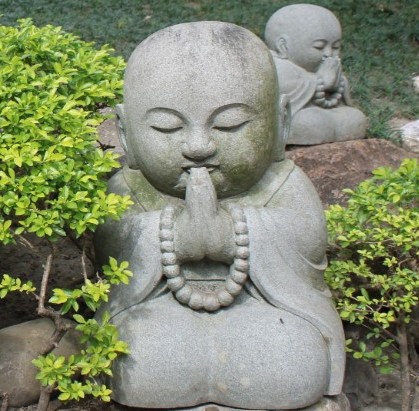
Taken at Fo Guang Shan, near Kaohsiung in Southern Taiwan.

A thing is mighty big when time
and distance cannot shrink it.

Zora Neale hurston; Tell my horse

…if you want to be elected, it is better
to be Mean than to be Funny.

hunter s. thompson; Better than sex

And whosoever shall compel thee to go a mile,
go with him twain.

jesus; Matthew 5:38-40

The only gamblers who will talk openly
are the ones who don’t make money.
The successful ones keep their mouths shut.

Kit chellel; lucky devils

To live a creative life,
we must lose our fear of being wrong.

joseph chilton pearce

PROMPT: Famous or Infamous

Daily writing prompt
Who is the most famous or infamous person you have ever met?

The most famous people I’ve met are famed for their scholarly or political contributions to society, which is to say 98% of the population have never heard of them.

What I am really sad to say is that I’ve never met anyone truly infamous. I keep hoping one of those scientists will turn evil, but they just stay nerdy.

PROMPT: Disagree

Daily writing prompt
What public figure do you disagree with the most?

These days? Trump — hands down. Beyond a few of his stated policy objectives, there is more and more I disagree with every day. (I emphasize “stated” because there is so little that’s coherent in his actions to prove he is really interested in advancing said objectives.) For example, I do agree that the swelling deficits (budget and trade) are something that should be treated as unsustainable. I’m not of the “a current account deficit is just a capital account surplus, so turn that frown upside-down” ilk. However, erratic and untargeted tariff policies that hurt successful sectors (e.g. agriculture and services) and which will only put the toothpaste back in the tube (bring [human] factory labor back to the US on a huge scale) by crashing the US into Third World status are not the way.

I disagree with this inexplicable monomaniacal obsession with heavy industry, while injuring those sectors that have done well in recent decades.

I agree with… Powell, that there is a high chance of stagflation if the Fed takes a loose money stance. The problem is… Trump. Ordinarily, it would be good to dump some money on an economy that is struggling. But the problem is that Trump is like a salesperson that would like to sell customers something, but he also enjoys chasing them around the store with an axe. The problem is that people and companies don’t make big purchases when they are afraid and the future is uncertain. (This is why even getting investment in robotic factories isn’t happening.) There’s uncertainty because of the tariffs. There’s uncertainty about whether companies will have to pay bribes to Trump, personally. There’s uncertainty about whether the legal and institutional frameworks that have so long made America an appealing place to invest and innovate will survive. So, if the Fed injects money but consumer confidence and investment are flat because of said uncertainty, then that money will be purely inflationary. [Remember, inflation is too much money chasing too few goods. More money needs to meet more demand for stuff.]

I disagree that one can have one’s cake and eat it, too. Specifically, tariffs need to be either for revenue generation or for policy negotiations, they can’t be both, but Trump talks like he doesn’t understand this. If tariffs are going to be the new primary source of government income, they need to bring in money sustainably. If they are a negotiating tool to lever policy, you need to be ready to negotiate them away in return for your own objective wins.

I definitely disagree with the ignoring of Supreme Court decisions. It’s particularly disconcerting to see him ignore 9 – 0 decisions, which means that even his own appointees could not find a hairsbreadth of wiggle room in the law by which his actions could be viewed as lawful.

I disagree with picking a raft of pretty-idiots / talking-heads for positions that require high levels of emotional intelligence and — you know — intelligence intelligence. If it weren’t for the fact that America has the most awesome and professional military in the world, I’d be especially afraid that Hegseth was going to destroy it. But while I think the US Military will be around long after he’s gone, I’m suspect he will have done damage to morale and operational efficiency.

I disagree with favoring dictators over longtime allies. [While I would agree that it’s good that Europe is taking on more of the burden of their own defense, I’m concerned that trashing relations to do so will not prove a sound approach.]

I disagree with all the attempts to play from the Putin-Orban Populist Dictators’ Playbook.

While I’m not at all averse to seeing cuts to the Federal bureaucracy, I do disagree with — you know — firing people before you understand what they do and whether it’s critical to health and safety, the necessary conduct of governance, or oversight against fraud and abuse.

I disagree that one should talk about making loophole end-runs around Constitutional prohibitions.

But, I ramble on…

PROMPT: Discuss

Daily writing prompt
What topics do you like to discuss?

Virtually anything but myself. Philosophy, literature, science, economics, public policy, meditation, martial arts, health / well-being, travel, nature, culture, food, the end of the world as we know it, etc.

I do have some blind spots where I could not speak intelligently (e.g. large swathes of history, sports, and pop culture.)

PROMPT: First Thing

Daily writing prompt
Jot down the first thing that comes to your mind.

We’re all screwed. Embrace the chaos or head for the hills.

There is a class of problems that brute force solutions, even when they nudge the needle in the desired direction, always end in devastation.

One can’t drive an aircraft carrier like a jet-ski and expect anything other than a bunch of drowned sailors and destroyed planes.

[Guess who’s been reading the news.]

BOOKS: “The Cultural Revolution: A Very Short Introduction” by Richard Curt Kraus

The Cultural Revolution: A Very Short IntroductionThe Cultural Revolution: A Very Short Introduction by Richard Curt Kraus
My rating: 4 of 5 stars

Publisher Site – OUP

The decade-long Cultural Revolution in China is generally looked upon as a bleak time and place to be alive. This brief guide reflects on the political, economic, and cultural dimensions of Mao’s attempt to root out capitalist and middle-class influence from Chinese society. The book also reflects upon other events in China during the period (e.g. detente) and how they related to the Cultural Revolution. It also explores how China came out of the Cultural Revolution.

The author makes efforts to be diplomatic and evenhanded about the event. Some readers will find this beneficial to their purposes and may even see the occasional glimmer of a bright side to a dismal period in human history. However, one should not expect to gain any visceral insight into the sadness and chaos of the era. While there was discussion of not only the end of the Cultural Revolution but what China’s continued path looked like, it didn’t get much into whether there was a long shadow to the revolution and what that shadow might look like.

I found the book informative though there were dimensions into which I would have liked to gain more insight (e.g. it doesn’t go much into the influence on religion, nor on more peripheral arts,) but that’s the challenge of such a concise guide. Also, the author is of a political science background, and this informs what elements are given more or less discussion.

View all my reviews

PROMPT: Elections

Do you vote in political elections?

Not as religiously as I did in my youth. Counter to the general trend of younger people hollering and protesting but not showing up to the polls, and thus not influencing change because politicians are cued into to the older crowd that tends to show up hell or high water.

PROMPT: Power

If you had the power to change one law, what would it be and why?

It would be whatever law gave one person the power to unilaterally change a law. That would be a terrible thing.

PROMPT: Political Views

How have your political views changed over time?

While pretty much the same place on the spectrum, they have softened with the realization that abstract principles may have value for understanding, but for a system of governance to work it must be in tune with human nature ( which is far too messy for dogmatic principles.) In short, my political views have become more pragmatic.

Most importantly, I have come to believe that the governance we get comes of a dialectical battle of ideas, and – therefore – a wide diversity of views in the fray is beneficial. Far from wishing our political opponents would go away, we should hope they force us to do our best by putting their best argument out there in the most astute and persuasive way. It will always be messy, with some cover hog temporarily stealing the warmth, but ultimately it’s better (less bleak and cold) than sleeping alone.

It does require sound and strong rule of law, select depoliticized domains (i.e. the military and judiciary,) a willingness of people to accept that ideas they hate can only be defeated by engagement and persuasion (not by silencing or canceling – i.e. intellectual courage is essential,) but it will yield something better (if often messier) than any political ideology.

BOOKS: The Canceling of the American Mind by Greg Lukianoff & Rikki Schlott

The Canceling of the American Mind: Cancel Culture Undermines Trust and Threatens Us All―But There Is a SolutionThe Canceling of the American Mind: Cancel Culture Undermines Trust and Threatens Us All―But There Is a Solution by Greg Lukianoff
My rating: 5 of 5 stars

Amazon.in Page

This book presents an in-depth exploration of cancel culture in its many varied manifestations, from both the left and the right of the American political spectrum. The biggest part of the discussion is with respect to the educational system, and particularly higher education. Sadly, this is because the institutions that used to be among the most formidable bulwarks of free speech, expression, and academic freedom have increasingly become untenable to multiple points of view. (The authors point out that there have been more dismissals of faculty members for cancel culture speech and expression issues than there were during the McCarthy era for political stance.)

However, the book doesn’t restrict itself to education, but also investigates cancelations in journalism, publishing, the scientific community, standup comedy, and the medical and psychiatric communities. The authors also present cases of the effect that wokeness and other expression limiting activities are having in these areas. One of the most disturbing revelations to me was the role of wokeness in psychotherapy and the negative effect it may have on people getting the help they need.

The book presents a series of cases in detail to advance the discussion. It also has a couple chapters that examine the tactics that are used to apparently “win” debates by silencing / demoralizing the opposition while avoiding any actual contest of ideas. The authors go through tactics favored by the Right as well as those by the Left. (Though it’s clear that, in a race to the bottom, both sides adopt the approaches of the other side that seem to be effective. e.g. the Left is getting into book banning (historically a Conservative tactic) and the Right is getting into cancelling and shout-downs (usually Progressive tactics.)) I think it was smart to have two authors, one from the left and one from the right, in order to help ensure balance in the project. That said, as the Left has been in the cancel culture vanguard, they come up more often.

Some have called this a sequel to “The Coddling of the American Mind,” with which it shares a co-author, Greg Lukianoff. I don’t know that I’d think of it that way. While it does address some of the same issues as background, psychology and child development are not at the fore in this book (Jonathan Haidt – the other co-author of “Coddling” is a psychologist,) but rather are the legal, cultural, and political issues.  

This is probably the most important book I’ve read this year (and, being late November, it’s likely to retain that status) and I’d highly recommend it for all readers.

View all my reviews