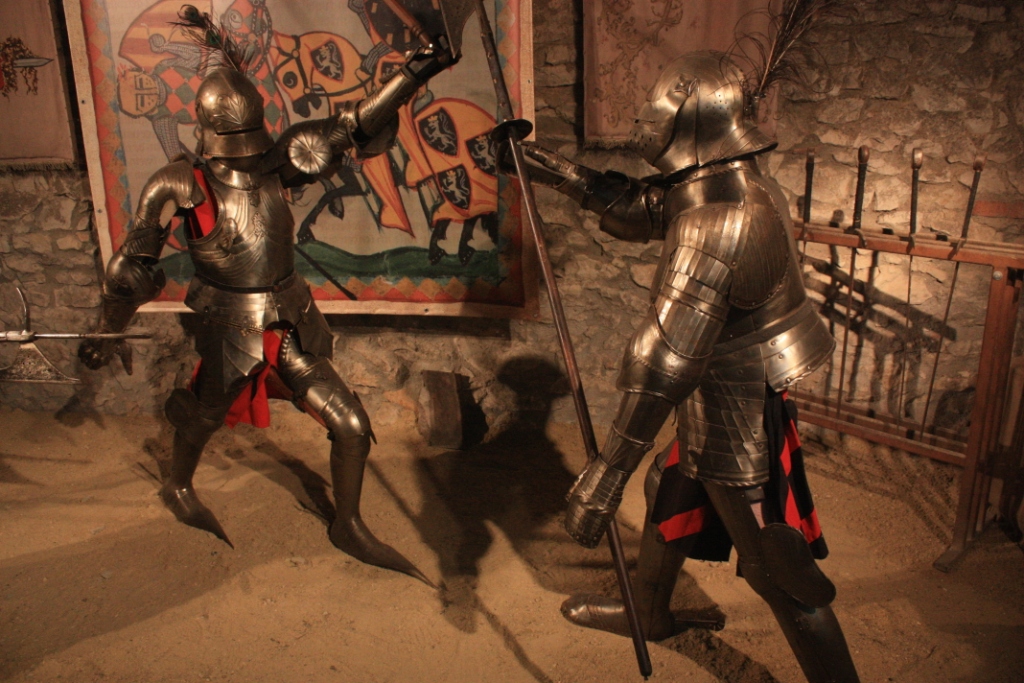
This day is call'd the feast of Crispian. He that outlives this day, and comes safe home, Will stand a-tiptoe when this day is nam'd, And rouse him at the name of Crispian. He that shall live this day, and see old age, Will yearly on the vigil feast his neighbours, And say "Tomorrow is Saint Crispian." Then will he strip his sleeve and show his scars, And say "These wounds I had on Crispian's day." Old men forget; yet all shall be forgot, But he'll remember, with advantages, What feats he did that day. Then shall our names, Familiar in his mouth as household words -- Harry the King, Bedford and Exeter, Warwick and Talbot, Salisbury and Gloucester -- Be in their flowing cups freshly rememb'red. This story shall the good man teach his son; And Crispin Crispian shall ne'er go by, From this day to the ending of the world, But we in it shall be remembered -- We few, we happy few, we band of brothers; For he today that sheds his blood with me Shall be my brother; be he ne'er so vile, This day shall gentle his condition; And gentlemen in England now a-bed Shall think themselves accursed they were not here, And hold their manhoods cheap whiles any speaks That fought with us upon Saint Crispin's Day.
Category Archives: plays
BOOKS: The Importance of Being Earnest by Oscar Wilde
The Importance of Being Earnest by Oscar WildeMy rating: 5 of 5 stars
Amazon.in Page
This play is an amusing cautionary tale on the dangers of “Bunburying” and / or leading a double life. “Bunburying,” a term coined by Wilde in this play, is the act of concocting meetings with a fictitious friend to get out of tedious familial (and other social) obligations. Don’t want to go to Aunt Bessie’s potluck? Tell her that your friend with a plausibly absurd name (e.g. Bunbury) has ruptured a disc in his back and desperately needs your assistance. Bunburying is the specialty of one of the two bachelor characters this story is built around, a man named Algernon. The other, Jack, goes by the name Ernest when he is in London, and has to invent the story that he has a brother when his town and country dichotomy of personalities starts to be seen through by those other than Algernon.
This humorous tale revolves around both Algernon and Jack finding desirable fiancés while being tangled in the web of their own duplicity. Much of the humor comes from the interactions of Algernon and Jack, two men who are quite alike, though Jack thinks himself more respectable. Algernon is more at ease with his own scamp-like nature and plays a role similar to that played by Lord Henry in Wilde’s novel, The Picture of Dorian Gray. That is, Algernon offers many a quotable line that at least has the appearance of wisdom — if, often, a kind of nihilistic wisdom.
This play is definitely worth reading.
View all my reviews
Five Wise Lines from The Importance of Being Earnest by Oscar Wilde
The truth is rarely pure and never simple. Modern life would be very tedious if it were either, and modern literature, a complete impossibility!
Algernon
Oh! it is absurd to have a hard and fast rule about what one should read and what one shouldn’t. More than half of modern culture depends upon what one shouldn’t read.
ALgernon
It is awfully hard work doing nothing. However, I don’t mind hard work where there is no definite object of any kind.
Algernon
One has a right to Bunbury anywhere one chooses. Every serious Bunburyist knows that.
Algernon; [fyi: “Bunburying” is the use of appointments with ficticious individuals to get out of one’s duties and obligations.]
One should always eat muffins quite calmly.
Algernon
Five Wise Lines from Macbeth
“There’s no art to find the mind’s construction in the face.”
Duncan in Act I, Scene 4
“Bloody instructions, which, being taught, return to plague the inventor.”
Macbeth in Act I, Scene 7
“when our actions do not, our fears do make us traitors”
Wife of Macduff in Act IV, Scene 2
“Then the liars and swearers are fools, for there are liars and swearers enough to beat up the honest men and hang them up.”
Son of Macduff in Act IV, Scene 2
“Life ‘s but a walking shadow, a poor player, that struts and frets his hour upon the stage and then is heard no more. It is a tale told by an idiot, full of sound and fury signifying nothing.
Macbeth in Act V, Scene 5
Five Wise Lines from Shakespeare’s Hamlet
We fat all creatures else to fat us and we fat ourselves for maggots… a king may go a progress through the guts of a beggar.”
HamLet to Claudius in Act IV, Sc. 3
One may smile, and smile, and be a villain.
Hamlet to Queen Gertrude in Act I, Sc. 5
I could be bounded in a nutshell and count myself a king of infinite space, were it not that I have bad dreams.
Hamlet to rosencrantz & Guildenstern in Act I, sc. 2
Brevity is the soul of wit.
Polonius to claudius & gertrude in act II, sc. 2
A knavish speech sleeps in a foolish ear.
hamlet to rosencrantz in act IV, Sc. 2
BOOK REVIEW: Iphigenia in Aulis Adapted by Edward Einhorn [from Euripides]
Iphigenia in Aulis: The Age of Bronze Edition by Edward EinhornMy rating: 5 of 5 stars
Amazon.in Page
This illustrated play is an adaptation of Euripides’ drama of the same name. The title character, Iphigenia, is the daughter of King Agememnon and she’s lured to Aulis by her father to be a human sacrifice, but under the fraudulent claim that she’s to be married to Achilles. [Because, you know, people tend to not show up if you invite them to be murdered, but they’re much more amenable if you invite them to marry a hunky half-god.]
It’s a simple and straightforward story, but one that is never-the-less evocative and dramatic. Agememnon’s will to kill his daughter falters for a time and when his wife, Klytemnestra, scores Achilles’ support for the cause of saving her daughter, it’s unclear how things will unfold. It’s a story that encourages one to reflect upon fate and the virtue of sacrifice, while showing that different chains of causality applied to the same event can radically alter the perception of justness. When Iphigenia’s death is seen as the means to get back Helen (who eloped with Paris to Troy,) it’s vile and despicable. However, when it is viewed as the means to get the fleet moving in order to restore the honor of those assembled nations pledged to fight, that’s a different matter.
I found this play to be compelling and well worth reading.
View all my reviews
BOOK REVIEW: The Medea by Euripides [Trans. Gilbert Murray]
The Medea of Euripides by Gilbert MurrayMy rating: 5 of 5 stars
Amazon.in Page
Project Gutenberg
This tragedy follows up the myth of “The Golden Fleece.” That hero’s journey culminated in three trials which Jason (of Jason and the Argonauts) must complete in order to acquire the golden MacGuffin. Jason succeeds in large part because (arguably, entirely because) Medea, daughter of the fleece’s owner, i.e. King Aeetes, gives Jason some potions to make the trials a cinch. She does this in exchange for Jason’s everlasting love.
And, herein, lies the heart of this play’s conflict. Jason – like many heroes of Greek Mythology – is kind of a jerk. In flashing forward to the beginning of this play, we find Jason has traded Medea in for a younger and higher stature wife (i.e. a princess whose father doesn’t despise and disown her). [Note: Technically, Medea may not be married to Jason because of legalities, but she did bear him two boys.] To add insult to injury, Jason’s new father-in-law (King Creon) insists that Medea and her two boys be exiled, effective immediately.
What makes this play so fascinating is that we have sympathy for Medea’s plight, but then her inner monologue turns to the nuclear option she will employ – killing Jason’s new princess-wife and, more disconcertingly, her own children. Medea goes back and forth about her plan, showing reluctance to kill her boys, at least. So, the reader (viewer) ends up finding Jason loathsome because he steadfastly refuses to accept any blame for how poorly things have gone, but – on the other hand – he’s being more reasonable. (i.e. He talks kindly and isn’t murdering anyone.) It’s a fascinating reflection on the battle between rationality and passion.
I’d highly recommend this play. It’s a short and straightforward story, but it does present a great deal of food-for-thought.
View all my reviews
Shakespeare’s Tragedies, Condensed: Part, The Second
I Oh, in Titus Andronicus, every noteworthy character dies, one 's raped, loses her tongue and hands -- she's the only one we don't despise. II Brutus's downfall is said to be being too mellow of a guy, but he does partake in the stab-fest -- so maybe just poor at ally. III Othello trips on jealousy when Iago plants a hankie. Iago gets all of the blame, but it's not like it was her panties.
Shakespeare’s Tragedies Condensed to a Quatrain of Bad Poetry: Part, The First

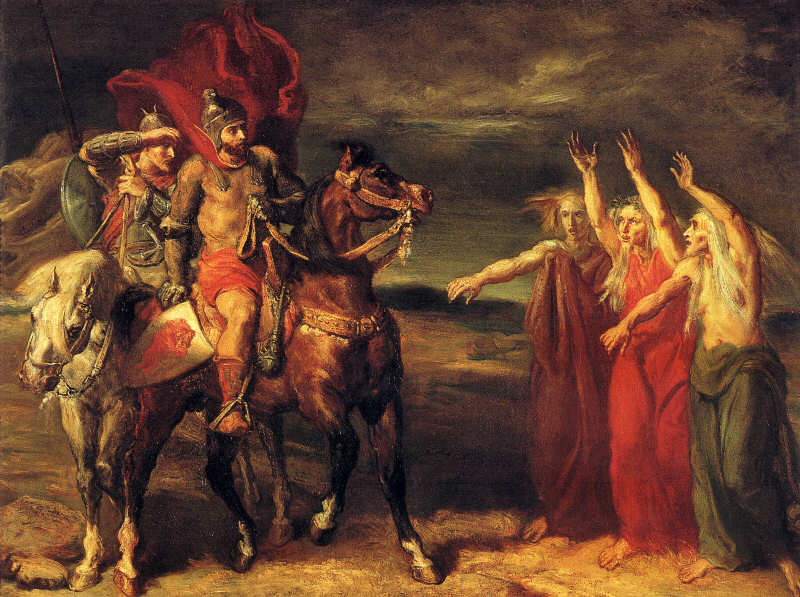
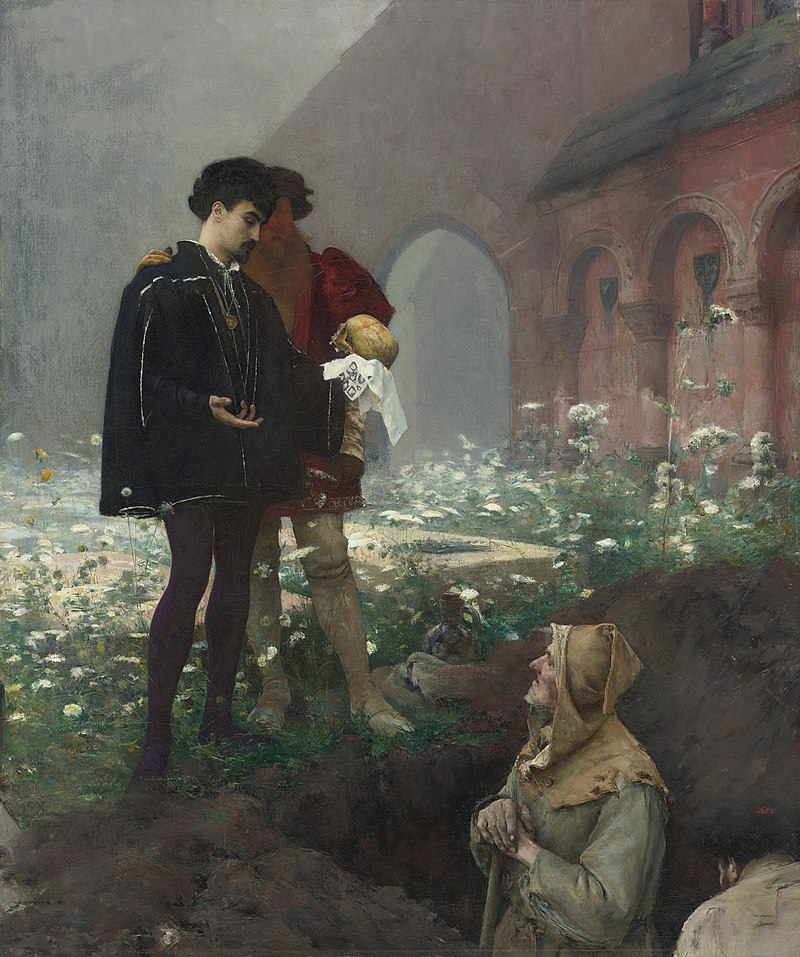
I Macbeth believed the Witches 'cause they said what he wanted to hear. Then he jumped the gun because his ambition outstripped good sense and fear. II Hamlet thought he saw a ghost-dad, but realized he might just be nuts. Still, his uncle was schtupping his mom, about that there's no ands, ifs, or buts. III Oh, Romeo, your timing sucks - be it in breaking up a fight, or being too quick to put vile to lip when a pause would make timing right.
BOOK REVIEW: Henry VIII by William Shakespeare
King Henry VIII by William ShakespeareMy rating: 5 of 5 stars
Amazon.in Page
This play takes place over a period of time, for want of a better measure, straddling the first two [of six] marriages of Henry VIII. It doesn’t reach the ill-fated end of Anne Boleyn, but rather finishes with the baptism of the girl child she birthed [Elizabeth, who will later be Queen.] [Of course, the failure to produce a male child was the downfall of Katherine of Aragon’s Queenship, so the birth of Elizabeth doesn’t bode well.]
In as much as a history has a theme, this one would be the conflict between the aristocracy and the clergy. This is first, and most extensively, seen through the rise and fall of Cardinal Wolsey, who wins the favor of the King in the Cardinal’s conflict with the Duke of Buckingham, but later Wolsey gets ousted after an aristocratic cabal diverts the Cardinal’s mail to the King. Henry discovers that Wolsey has recommended denial of an annulment of Henry’s marriage to Katherine, despite the fact that Wolsey was telling the King to his face that the marriage’s end had his endorsement. Later, we find aristocrats (the King’s Council) taking on the Archbishop of Canterbury, Cranmer, but Henry sides with the Archbishop as he once had with Wolsey.
The play’s major events are the execution of Buckingham, the divorce from Katherine, the marriage to Anne Boleyn, and the birth of Elizabeth.
This isn’t the most compelling of the Shakespearean histories, but it does have its intrigues. No doubt it would be a bolder play in the absence of the authoritarian nature of monarchy, but it’s still worth reading.
View all my reviews