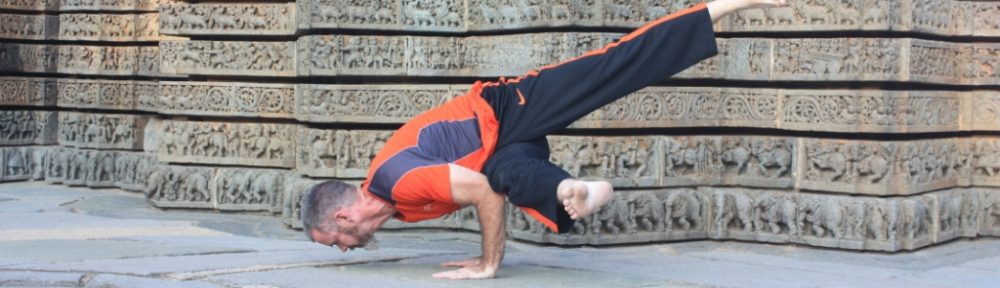
DAILY PHOTO: Paprikahaus
Reply
Bushido: The Soul of Japan by Inazo Nitobe
My rating: 4 of 5 stars
On the whole, people are ambivalent about feudal times. On the one hand, it was a horrible time to be alive for 99.5% of the population. Chances are that if you’d lived during that time you’d be toiling ceaselessly on the land with no hope of improving your lot in life. Everything was determined by heredity, with merit having little to do with anything. This added insult to injury because that person you’d have had to suck up to was as likely to be putz as not.
On the other hand, there is widespread nostalgia for those times because one can’t help but feel that they were the golden days of virtue. As Ralph Waldo Emerson said, we think that society is ever advancing, but, in reality, we advance like a wave–losing as much on the backside as we gain on the front.
Inazo Nitobe’s book gives us an accounting of the chivalric virtue practiced by the samurai, the warrior class of feudal Japan. Bushidō means the way of the warrior. Nitobe lived after Japan’s feudal era, in the late 19th and early 20th centuries. Nitobe was an educator, and the book has a feel of erudition. Interestingly, the author was a Quaker and received education in the West, and, therefore, is able to contrast the Japanese worldview with that of Westerners.
The book is built around discussion of the seven virtues of bushido: justice, courage, benevolence, politeness, sincerity, honor, and loyalty. Each of these virtues has a chapter devoted to it (Ch. 3 through 9.) But first the book introduces bushido as an ethical system, and then it explains the effect that Buddhism, Shintoism, and Confucianism played in the development of this system.
Later chapters outline the education and training of a samurai, the importance of stoicism, the institution of suicide (seppuku), the symbolism of the sword in Japanese society, the role of women, the role of bushido as an ethical system in the present-day (his present), and its proposed role in the future. It is interesting that the book begins by discussing those things that influenced the development of bushidō, and it ends with discussion of how bushidō influences the larger world.
Our views of virtue have changed, but at some level remain consistent. The seven virtues are all still considered virtuous, but we don’t regard them in the same way today. In some cases we are undoubtedly better off with today’s views, but that’s not always the case.
Consider the seventh precept, loyalty. We still value loyalty, but in today’s world the rule of loyalty has an ever-present Shakespearean addenda: “to thine own self be true.” In other words, we no longer believe in loyalty that is blind as was valued in the days of old.
Sincerity, by which Nitobe generally means honesty, is also seen in a different light today. As depicted in the Jim Carey movie, Liar Liar, there’s a widespread view that it’s better to fib and make someone feel better than it is to tell the truth and hurt that person’s feelings.
One of the most intriguing chapters is the one that deals with seppuku. This is a concept that has never been well-understood in the West, and it’s a major point of cultural disconnect. While the Japanese have tended to see suicide as a means to restore honor that was lost in failure, in the West we tend to see it as a more pathetic and cowardly affair. I’ve recently been reading Ian Fleming’s You Only Live Twice, and this is one of many points of diverging attitudes between “Tiger” Tanaka and James Bond.
Bushidō is definitely worth a read. It’s thought-provoking, and is one of those books to be read slowly and conscientiously.
My rating: 5 of 5 stars
Apology is Plato’s account of the trial of Socrates. This brief work presents Socrates’ defense of himself as well as his reaction to the death sentence verdict against him. Of course, it is all through the lens of Plato, as Socrates left us no written works.
Socrates was charged with impiety and corruption of the youth. He acknowledged both that he was eloquent and that he was a gadfly of Athens (the latter being a role for which Socrates believes he should be valued.) However, he denied both of the formal charges.
Socrates refuted the charge of corrupting the youth first by denying that he had taken money in exchange for teaching. Taking money was a component of this charge. Socrates’ claim is supported later when Socrates tells the court that he can only afford a very small fine, even in the face of the alternative–a death sentence.
Socrates says that he sees nothing wrong with taking money for teaching–if one has wisdom to share. Socrates says that he has no such wisdom, and suggests the philosopher/teachers that are taking money aren’t in error for taking money, but rather because they really don’t have wisdom themselves.
This is summed up nicely by this pair of sentences, “Well, although I do not suppose either of us knows anything really beautiful and good, I am better off than he is–for he knows nothing and thinks he knows. I neither know nor think I know.”
While Socrates raised the ire of the Athenian leaders with what they no doubt believed to be his arrogance, in fact it wasn’t that he thought himself wiser than they, but that he thought they were deluded in thinking themselves wise.
Socrates’ lesson remains valid today. It is the scourge of all ages to think that have finally attained true understanding of the world. Our posterity may know more, but we know all of the essentials and are rapidly converging on a complete picture of our world. We think our generation to be humanity’s sage elders, when, in fact, we are the impetuous teen whose growth spurt has made him cocky. I would propose to you that in all likelihood, even today, the sets of “that which is true” and “that which humanity ‘knows'” form a classic interlinking Venn Diagram. That is, some of the body of knowledge that we take to be proven true is, in fact, false. This occurs because we cannot accept that there are things we are not yet prepared to know, so we use sloppy methodology to “prove” or “disprove.” This one reason we have all these conflicting reports. E.g. coffee is good for you one week, and carcinogenic the next.
Socrates uses the method that today bears his name, i.e. the Socratic method, to challenge the arguments of Meletus, the prosecutor. The Socratic method uses questions as a device to lead the opposition to a conclusion based on premises they themselves state in the form of their answers. Socrates proposes that if it is he alone who is intentionally corrupting the youth, they would not come around–for no one prefers to be subjected to evil rather than good.
Socrates denies the suggestion that he does not believe in the gods, and in fact indicates that the very suggestion by virtue of the charges against him is a contradiction. What Socrates is guilty of is encouraging those who come around him to develop their own thoughts on god, and not to subordinate their thought to anyone–an idea the leaders found disconcerting.
Socrates goes on to say why he is unmoved by the death sentence. He wonders why it is thought he should beg and wail, when he doesn’t know for sure that an evil is being done against him.
The moral of the story is that those in power fear and will attempt to destroy advocates of free thinking.
This book should be read in conjunction with a couple other Platonic Dialogues, Crito and Phaedo.
I’m speed-walking down the sidewalk off Sukhumvit Road like one of those elderly mall-walkers. Like the mall-walkers, there’s an irony to my speedy step. I’m on vacation. I have no particular place to be, and no particular time by which I need to be there. Unlike the mall-walkers, my path is perilous. I have to weave around street-food vendors deepfrying springrolls or grilling satays (and fight my stomach’s urgings), evade the grasping taunts of idle tuk-tuk drivers, and wave off T-shirt vendors selling shirts featuring elephants, thaiboxers, and Singha beer.
I don’t know why I’m moving so quickly. It feels natural. It’s the pace of the city. To walk slow would be to swim against the current. If you want the truth, I walk fast because in the back of my mind, in the deep recesses of irrationality, I feel that if I slow down the city will collapse into me, forming a black-hole. It will start with a few tuk-tuk drivers, a beggar, a prostitute, and a few street vendors converging on me. They will create a gravity, attracting more vendors, beggars, drivers, and hookers. If I don’t walk fast, I fear that I will be crushed in the center of a dense mass of humanity.
Leaning against the marble wall of a bank façade, a master of timing, an Indian man blinks, touches his forehead, and grimaces–as if my approach causes him some sort of psychic pain. I brace myself for the scam. He steps away from the wall into my path, gently extending an arm.
He says, “Sometimes, you think too much.” He’s trying to convince me that he has insight into my soul by making a statement that, while perfectly correct, contains no information content whatsoever. He’s smooth in behavior and handsome of feature. I bet he makes a mint in his chosen profession.
An instantaneous battle rages inside of me. On the one hand, I’m an introvert– or perhaps a sociopath– something like that. Whatever my affliction, interacting with strangers is draining. On the other hand, I’m curious about everything. I know the man is a scam artist. It’s not that I was never on the turnip truck, but I fell off a couple of decades ago, and while it took me several bounces to come to a stop, I eventually became quasi-worldly. While I know he’s a scam artist, I don’t know what kind. I so desperately want to know that I stop.
After a greeting, he says, “I can tell your future. There are two women in your life, I can tell you how it will work out.” His speech is clear, and well-spoken, like he was born in Mumbai, but moved to Cincinnati when he was 15. He is, in all respects, a smooth operator.
However, he’s wrong already. As I said, I’m not exactly a people person. It takes all my mental energy to even be monogamous, as opposed to nul-agamous. The idea that I’m maintaining two relationships would be a bit laughable to anyone who could really “see into my mind.” Whenever I hear about one of these guys who has two separate families, I always think, “How many hours a day did the good Lord grant you?” Because I can’t fathom living that way and not being in an utter state of exhaustion every minute of every day. I’d be a wreck.
However, I give him points for playing the odds. I’m a middle-aged man with a gray goatee walking down the street in Bangkok. I’m probably the only one fitting that description who hasn’t fallen desperately (and pathetically) in love with an “eighteen year old” bar girl who the man secretly thinks is 16, but who, in reality, is 29.
Incredulity must show in my face, because he changes tack. “Let me show you proof of my abilities.”
He extracts a flip-style pocket-notepad from the inner pocket of a tweed sport-coat that is grossly out-of-place in steamy Bangkok, but which lends credibility. He scribbles down something on a page so that I cannot see. He then tears off the strip of paper containing his writing. He wads the paper up.
“I want you to think of the English-language name of a flower. Have you got it?” he asks.
“Yeah,” I reply.
“Now think of a number between six and nine. Have you got it? Now think of them together.”
In my mind I see, Tulip 7.
He hands me the wadded up scrap. I unravel it. It reads, “Tulip 7.”
He then opens his day-planner and asks me to put in any amount that I feel is fair and he will tell me about my future.
What he doesn’t know is that I’m the exact wrong person to pitch his act to. As a skeptic, I make Descartes look like gullible. (After all, Descartes developed a “proof for the existence of God”–granted everyone deserves a nadir of thought, and that was clearly Descartes’.) The most fundamental thing that studying Economics and Political Science taught me was that humans are completely incapable of making meaningful predictions. I’d seen this guy’s act before from a guy named Professor Bruce Bueno de Mesquita, but instead of getting a few baht on the streets, the political scientist got millions of American tax dollars for convincing the CIA that he could tell the future.
As I walk away, he says, “You have an ailment. I can tell you about it.”
I think, Good one, that’s a true test of my powers of skepticism, and I continue to walk, thinking out how the mentalist scammer did his trick… and wondering if I have cancer.
Thanks for joining me on the veranda. If you don’t know what I’m talking about, this post flows from a book review I did on Elie Wiesel’s Night, which can be seen here. But don’t wander off just yet.
I married into a family of holocaust survivors.
Being sufficiently narcissistic, I haven’t been able to avoid thinking of the profound impact this had on my life. I am married to the most extraordinary woman in the universe [my apologies to all other women, I’m sure you’re someone else’s most extraordinary woman] by virtue of the strength of a man who wrestled his way to the top of a pile of corpses, bleeding profusely from multiple shrapnel wounds, clawing his way out of a pit, and cleaning the gashes with his urine. That man was married to a woman, tiny of body but colossal of mind, who was in the group force marched from Budapest to Mauthausen. After the war, they had a child–my mother-in-law. Yada-yada-yada. I have marital bliss.
Not being completely narcissistic, I’m reminded that every one of our lives have been shaped by strong people who lived through close calls. Each of us comes hither as a gift from men and women who passed through a hail of bullets that bore no name. Some, like my wife’s grandfather, were riddled by bullets bearing their name, and still refused to heed their deadly whisper. Every holocaust survivor survived by a thin margin. Every battlefield veteran’s life is an execution order rescinded. Every prisoner of war was one germ away from an unmarked grave.
No pressure or anything, but that sounds like a heavy debt we all bear.
Telling this story in greater detail is one of my bucket list tasks. It’s a project I’ve had on the back burner for far too long. There are several reasons for this. The most feeble of which is a hope to find the right timing. Sadly, there are so many such stories that I fear it will be lost amid a sea of sorrow. Then there is my need to develop grace with language sufficient to do the story justice. In a way the two novels I have drafted, and whose mess I am now painstakingly trying to dance into shape, are practice exercises. Wish me luck.
On the plus side, my wife’s uncle had the foresight to have her grandfather speak his story onto about 20 tapes before he died. With today’s technology, there’s no excuse for anyone’s life-altering story to go untold. So I guess if there is a moral to my rambling post it’s this: don’t let anyone in your life with a spectacular story pass from this world without it being heard.
“I” am a collection of cells.
some expressly invited by “my” genes
others are interlopers, “my” guts their cross-town bus
but these interlopers defend “me” daily
fending off worse marauders
thankfully
so “I” let them stay inside “me”
“my” greatest shame? “I” am a slave owner.
the mitochondria in “my” cells are trapped and forced to serve “me”
all this begs one fundamental question,
am “I” really just a “me?”
or a whole society?
If “my” parts
needn’t be fully integrated
where do “I” end and “you” begin?
can “I” say that “I” have been everywhere?
well, everywhere on this tiny, spherical-ish speck of galactic dust?
Ishmael: An Adventure of the Mind and Spirit by Daniel Quinn
My rating: 4 of 5 stars
A man answers an ad that says, “Teacher seeks pupil. Must have an earnest desire to save the world. Apply in person.” Expecting to find a charlatan, the man is surprised to find his new teacher is, in fact, a gorilla.
Like Socrates, this gorilla, Ishmael, uses questions to guide his pupil toward crucial knowledge. Ismael teaches his student to challenge some of his most deep-seated beliefs such as, the world was made for humans, humans are the ultimate culmination of biology, humans are inherently separate from (and above) nature, and that humans are fundamentally flawed in such a way as to make ruination of the planet inevitable.
The core of the book differentiates two human cultures. The author calls them the “takers” and the “leavers,” but they correspond to what we might call “us” and the “aboriginal peoples.” Takers are specialized, agricultural, and technologically advanced (if you’re reading this review on a computer and not chiseled on a cave wall, you, my friend, are a taker.)
The lives of “Leavers” aren’t that different from those of humans 10,000 years ago. They are tribal as opposed to (to borrow Desmond Morris’s term) super-tribal. [In a tribe everyone knows everyone else. Morris suggests that things go to shit –re: war, crime, and deviant behavior– in super-tribal societies.] Leavers live like animals in that they tend towards equilibrium within their ecosystem. Takers do not.
If you long for thrillers or potboilers, this isn’t the book for you. It’s a thinking person’s book. The nice thing about Ishmael’s use of the Socratic method is that one can think through the questions in parallel to the narrator’s discovery. In this way, the reader can install himself or herself into the conversation.
At the most generic level, the book’s value is in showing one how much one takes for granted. We can’t see forests for trees.
One may agree or disagree with the author, but either way one will be subjected to powerful food for thought. Some of the discussion may evoke a visceral emotional reaction that one may have trouble reconciling with logic, such as the discussion of the morality of feeding the starving.
The downside of the book is that the dialogue can be strained in places and it can get a bit repetitive. The latter serves to reinforce key concepts, but some of them feel as though they are reinforced inordinately. In making the narrating protagonist struggle, Quinn creates a lead who seems a bit dense sometimes. Also, as I indicated, the journey is by-and-large in the mind, and so the tension is limited. There is some drama when the narrator shows up one day to find that Ishmael has been evicted. However, this is resolved without too great a difficulty and they resume lessons with Ishmael’s irritability being the only change to be seen. There is drama at the end that will remain unspoiled herein.
I’d recommend this book as a thought-provoking exercise for the mind.
I began reading the Best American Essays of 2012 and was disappointed by the first essay entitled, The Foul Reign of Self-Reliance by Benjamin Anastas.
Self-Reliance: In or out of the canon?:
Anastas rails against the essay Self-Reliance by Ralph Waldo Emerson. The only nice thing he has to say about Emerson (as a parenthetical insert) was that the philosopher spoke out against slavery and the poor treatment of American Indians. Anastas suggests Emerson’s essay should be eliminated from the canon of required reading. This desire to censor ideas that he (or his collective) find objectionable is a telling indicator of why he finds Emerson so vile. In my ideal world, students would read Emerson and Marx and Jefferson and Socrates and Confucius and eventually even the likes of Hitler and they’d make up their own minds about what ideas were sound and which were suspect. I’m confident that on the whole that a free-thinking people will overwhelming reject the poorest and most vile of ideas. Obviously, not all will draw the same conclusions as I about which ideas are best, but I prefer the company of such people to those who completely agree with me but have turned their thinking caps off. Anastas seems to favor control of the flow of ideas to those society or teachers or some collective finds agreeable.
An undeniably powerful idea:
About all that Anastas and I agree on is that the thesis of Emerson’s Self-Reliance is powerful. By a powerful idea, I mean one that has the ability to grab a reader by the collar and demand his or her attention –whether they like it or not. Where Anastas sees Emerson’s ideas as perniciously powerful, I see them as sagely powerful. While we seem to be in near complete disagreement, I don’t want to go into a point by point refutation. I want to focus on what I believe is Anastas’s central point, that our current political dysfunction is the fault of Emersonian thinking. On this I think Anastas is shows perfection in his wrongheadedness.
The reason I don’t bother arguing point by point is because much of my difference of opinion with Anastas comes down to being on radically different places on the Borg-Anarchist continuum. Reasonable people may disagree. I have a set of beliefs that inform my position on the Borg-Anarchist continuum that range from my opinion on free will to ideas about the value of optimizing (minimizing) what I would call “social friction” (others have used that term in another way.) That’s neither here nor there, Anastas may have his own justification for his views, though he doesn’t lay them out. For example, he uses the phrase, “excessive love of individual liberty” without indicating what he believes would be the appropriate amount to love liberty, let alone how he drew his conclusion. It may be that he doesn’t have a rationale, but rather has suborned his views to some collective that he believes is representative of society (that would be the true anti-Emersonian approach.)
The Borg-Anarchist continuum:
I should explain what I call the “Borg-Anarchist continuum” for those who are neither Star Trek fans nor wonky. Humans are inescapably both individualistic and social creatures. We know that people get morbidly depressed when they feel they aren’t valued as individuals (Tom Hanks at the beginning of Joe Versus the Volcano), but it’s also true that people go nuts when they are completely isolated from others (Tom Hanks in Castaway.) [Please, don’t draw conclusions about which is “better” on the relative merit of those two movies.] This leads to one of our most fundamental dilemmas. Where our individuality bumps up a social unit, how does one reconcile theses conflicts?
We can imagine a continuum where at one end are the Borg and at the other end are Anarchists. Borg were a powerful enemy in the Star Trek universe. The Borg were a collective in which any given individual was inconsequential and all gave themselves fully to the objective of the collective (i.e. universal domination.) Anarchists are those who feel there should be no authority over the individual. Virtually no one fits into the extreme camps because they’re both blatantly flawed. No one would have any incentive to do anything in Borg world, and an anarchy will inevitably devolve into chaos. No one would invite the Borg or Anarchists to their cocktail party. In practice, one might think of a Communist-Libertarian continuum. Communists believe the state owns the means of production and should be able to regulate ideas as intimately personal as religion, but they don’t attempt to completely stamp out all vestiges of individuality (e.g. people still have names instead of the Borg’s “4 of 7.”) Libertarians believe that authority over the individual should be minimal, but that there’s a role for governance in punishing the illegitimate use of force or the use of fraud.
Yes, I realize that in being one-dimensional, a Republican and a Democrat could occupy the exact same space on the continuum (i.e. wanting the same amount of governance, just not in the exact same domain.)
Is political dysfunction a product of Emersonian thought?:
So, let’s go back to the issue of blaming political dysfunction on Emersonian ideals. It’s my belief that we have political dysfunction because politicians aren’t following Emerson’s advice, rather than that too many are doing so. Let’s consider Anastas’s argument.
“’A man is to carry himself in the presence of all opposition,’ Emerson advises, ‘as if every thing were titular and ephemeral but he.’ If this isn’t the official motto of the 112th Congress of the United States, well, it should be.”
Anastas is saying that the idea that one shouldn’t bend to the ideas of other men, as suggested by Emerson, is the cause of the problem. However, this requires us to believe that politicians engaged in free thinking consistently come down in the perfectly bifurcated set of positions required for grid-lock to take hold on a wide range of issues. This is dubious. I find it much more probable that politicians do not think freely, but rather they subordinate their opinion to their party and to what the people of their district think. That, my friends, is the source of the problem. Politicians are doing exactly what Anastas wants, which is subordinating their opinion to the majority in their districts. The two-part problem is that: a.) districts are drawn to have clear winners. b.) our society has abandoned the Emersonian idea and taken party and sect as a substitute for thinking. We’ve created a two-party grid-lock machine, and we’re surprised that it works.
Yes, Emerson tells us to be obstinate in holding to ones own beliefs in the face of other people. If every politician did this, our political field would be much richer with many sets of opinions and not just the two captured by the party platforms of the two ruling parties. (At least it wouldn’t hold sway always on anything important.) What Emerson does not ask of us is to be obstinate in the face of new or better information. Anastas’s own selection of quotes says as much.
“Speak what you think now in hard words,” Emerson exhorted, “and tomorrow speak what tomorrow thinks in hard words again, though it contradict every thing you said today.”
In other words, Emerson is suggesting that one should be able to change one’s mind (one just shouldn’t do this in deference to the views of other people.) One should changes one’s mind when one has new or better information or one’s thinking about the subject is clearer. Changing one’s mind has a bad rap in our political system. There’s a kind of changing of one’s mind that should leave us with a bad taste in our mouths, and that’s pandering. However, not all mind-changing is pandering. If we ask a politician why he changed his mind and he says, “Because I learned X, and that new information made me conclude Y,” then that person should be applauded. The ideas of people of party and sect don’t change regardless of new information. This stagnancy is part of the problem as well. An individual can change his or her mind rapidly but an ideological organization is never swift. When people subordinate their thinking to their sect, this is when we end up unable to get out-of-the-way of slow-moving freight train problems like many that we face today.
The animus that characterizes our political domain is not a function of Emersonian thinking. While Emerson may not address it because it isn’t part of what he’s trying to get across in this essay, it stands to reason that if everyone thinks for themselves people will draw different conclusions. The Maytag repairman is not the loneliest person; the loneliest person in the world is a free-thinker who can’t get along with people who don’t share his exact slate of thinking across a range of subjects. Thinking for oneself is not only consistent with tolerance, it breeds it. It’s only when one conforms one’s thinking to that of a collective that one can afford to act like people who think differently from one are pure evil.
Other thoughts on the subject:
For another post of mine about Emerson’s Self-Reliance see here.
Also, Emerson was not the only one in the 19th century who was dismayed by the trend toward subordinating political views to party, Mark Twain had a lighter essay on the subject called Corn Pone Opinions.