BOOK REVIEW: Antifragile by Nassim Nicholas Taleb

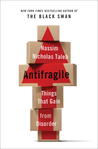
Antifragile: Things That Gain from DisorderAntifragile: Things That Gain from Disorder by Nassim Nicholas Taleb
My rating: 4 of 5 stars

Amazon page

Nassim Nicholas Taleb has a gift for uncovering simple and fascinating topics that have remained buried–not because they are unfathomable, but–because of the institutional blinders and group-think present in academia (at least within the social sciences.) I don’t mean to diminish what Dr. Taleb does by saying these are simple ideas, it takes a great intellect to not only recognize the ideas others have missed but to clarify them for a broad audience and to unravel the challenging ideas that must be made clear as one moves beyond the crux of the idea. Furthermore, it takes a bold writer to push these ideas out into the open against brute institutional antagonism. (If Taleb hadn’t written books that were highly readable and that presented the ideas in a manner readily digested by a broad audience, he’d likely still be being completely ignored by academicians.)

By “simple” I mean ideas that can be captured in a single sentence—often a pithy one at that. In his second book (his first work for popular audiences), Fooled by Randomness, the idea was that randomness is more pervasive than most people imagine and that false explanations are often built for chance occurrences. Black Swan told us that statistical forecasting fails catastrophically when one has “800 pound gorillas” in the data set (e.g. if one is comparing countries—a situation in which one will virtually always be in, as Taleb calls it, “Extremistan.”) The book in question, Antifragile, is built around the notion that some entities get stronger when subjected to stressors and disorder.
One can see many “antifragile” elements in one’s own body. A muscle subjected to exercise often gets tiny tears in fibers, but when the body does its repair work those fibers will be stronger than ever before. Wolff’s Law tells us that bones subjected to an increased load will increase their density. In fact, our bodies are testaments to the concept of antifragility on many levels. For this reason, Taleb uses many examples from the field of medicine—in addition to those from disciplines more closely related to his own, e.g. finance, economics, and risk. A lot of the medical discussion deals with the proclivity of Western medicine towards interventionism (in contrast to the “first, do no harm” motto often heard.) An example with which many people are familiar is that of the over prescription of antibiotics. While there are obviously cases for which antibiotics are necessary and beneficial, prescribing them willy-nilly robs the body of antifragility (i.e. if the body defeats the infection itself, it has inborn resistance.)

As with other of Dr. Taleb’s writings, I found Antifragile to be interesting as well as informative. The author does a good job of providing examples to elucidate and bolster his arguments and puts it all together in a readable package. He also does a great job of pulling examples and discussions from a number of different fields. This book doesn’t read like it’s about an Economics or Business subfield as much as it’s a book that can teach you something applicable to whatever your field might be. The book also covers a number of other critical but related ideas, such as the value of heuristics in decision-making, how antifragility can be increased (and fragility reduced), and the ethical issues involved.

My primary criticism is that the book overdoes the jabs at scholars and economists. I can understand where Taleb might have some pent-up rage against many academics. He has certainly had to weather a lot of equally petty assaults from the academics who loath him. The work of many a social scientist and economist looks pretty silly to those who grasp the concepts Taleb is presenting. Still, we got it. Halfway through the book, one wonders why Taleb is still so vigorously and maniacally whipping such a skeletal horse. While it’s hard to imagine anyone less strong-willed than Dr. Taleb could get these messages out in the face of the institutionalized opposition he faced, the flip side is that he will probably strike you as a pretentious jackass on occasion.

The book is organized into seven sections (each of multiple chapters.) It begins by describing antifragility and then proceeds through relevant concepts like optionality, nonlinearity, via negativa, and ethics. The book has handy appendices for those who prefer graphic or mathematical representations. (Like all popular science / social science works, there’s an attempt to keep the overly technical and visually intimidating material out of the body of the work.) There is also a works cited section.

I’d recommend this book for those interested in wonky type books.

View all my reviews

READING REPORT: March 6, 2015

This will be a brief reading report. I finished just one book this week, as well as purchasing only one book.


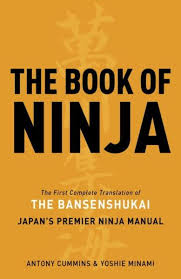
Bansenshukai

The book that I finished was a translation of the Bansenshukai, which is a 17th century ninja manual written / compiled by Fujibayashi Sabuji. The Japanese title means “10,000 Rivers Flow into the Sea,” but this English translation by Anthony Cummins and Yoshie Minami was re-titled The Book of Ninja. I ran into a hard-copy of this book in a Kuala Lumpur bookshop, but ended up purchasing the much cheaper Kindle e-book. I read about half of the book months ago, and only got around to finishing it this week.


There’s much that will forever remain unknown about the ninja and their medieval practices. The Bansenshukai is one of three well-known manuals that survived into the modern era–along with the Ninpiden and the Shoninki (each of which also has at least one English translation.) It should be noted that these manuals were generally written after the heyday of ninja activity, and still the most common sentence in this book is some variant of the phrase “There is an oral teaching”, meaning that important details have been kept out to preserve secrecy. This is a book of tradecraft, don’t expect thrilling exploits of the ninja, much of the book deals with minutiae about medieval lock picking and recipes for incendiaries. While the English translation title may beckon images of black-clad ninja stealthily rolling over the top of a wall to dispatch an unsuspecting sentry via death from above, the bulk the material is much more mundane. This is a great book for people who geek out on Japan’s Warring States period or who are doing research regarding this topic (I fit in both categories as my novel takes place in part in medieval Japan.)


FreeWill

The book I bought is Sam Harris’s Free WillHarris is a neuroscientist who studies issues that have historically been considered the domain of religion and spirituality, but he does so from a scientific point of view. What one believes about free will is likely to form the bedrock of one’s personal philosophy of life, so this is a very important topic, and I have high hopes for learning something new from this book.


The only other book that took a significant portion of my time is one that I introduced earlier:

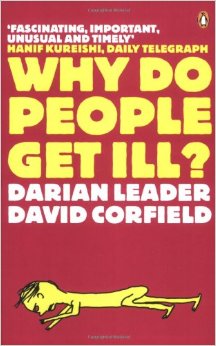
WhyDoPeopleGetIll_Leader&CorfieldLeader and Corfield explored the immune system and issues related specifically to cancer in the chapters that I read this week. It was a pleasant turn for the book into a more scientific and less psychobabbly landscape. I continue to be intrigued by this book and it’s title question.


That’s it for now. I’ll be posting reviews for The Book of Ninja as well as last week’s Antifragile in the upcoming week.

BOOK REVIEW: The Pyjama Game by Mark Law

The Pyjama Game: A Journey Into JudoThe Pyjama Game: A Journey Into Judo by Mark Law

My rating: 4 of 5 stars

Amazon page

Mark Law’s book contains two types of book in one volume, unified by the theme of judō. On the one hand, it’s a microhistory of the martial art and sport of judō–and, no, it’s not redundant to say the martial art and the sport because while these aspects overlap they aren’t identical. On the other hand, the book presents a personal account of Law’s experience as a judōka who began his practice at the ripe age of 50. The two elements of the book are interwoven together, and aren’t forced into distinct sections by the book’s organization. The history is obviously organized in a chronological fashion, but personal accounts are peppered throughout, and sometimes stories appear in history chapters.

As a history of judō, Law begins with the pre-history of the art in its ancestor martial art of jujutsu, he travels through the arts influence on off-shoots like Sambo and Brazilian Jujutsu, and he examines how the art has contributed to mixed martial arts—the 800 pound gorilla of present-day combative competitions. Particular emphasis is given to Kanō Jigorō’s role as founder of the art and the evolution of judō as an Olympic sport. Interestingly, besides founding Kodokan Judō, Kanō’s other claim to fame was in being the first Asian member of the International Olympic Committee (IOC). However, he never saw judō become an Olympic event, and—ironically–at least a few among those close to him doubted that Kanō would’ve been pleased with his art’s inclusion in the international games.

While Japan dominated judō when the sport first entered the domain of international competition, it wasn’t long before there were a number of other countries including the Netherlands, Russia, the United Kingdom, France, Cuba, and Korea that were producing first-rate judōka. Law devotes considerable discussion to the global blossoming of this sport, including entire chapters on some of the more prominent nations. The book discusses the double-edged sword that Japan faced. On one hand, the Japanese were heart-broken when other nations started beat them at their own game. On the other hand, it was clear that this had to happen for the sport to retain a global following. (Otherwise, the sport might have gone the way of baseball—being pulled out of the Olympics because only a handful of North American, Caribbean, and East Asian nations had any interest in it.

There are also chapters on women’s judō, a development that no doubt faced a good deal more misogyny than many sport’s bi-genderifications. There’s always been resistance to encouraging women’s participation in combative activities—even judō, a martial art whose dangerous edges were supposed to have been rounded off through rules, equipment (e.g. sprung flooring), weight classes, and close monitoring. Law discusses the hard fought evolution of the women’s side of the sport.

As a personal narrative, Law talks about the lessons he learned from training in judō and from testing for rank—an arduous process that requires beating other rank-pursuers in randori (free-form grappling, i.e. the grappling version of sparring.) Many of these lessons will be familiar to anyone who has practiced a martial art (e.g. while it’s more intimidating to fight someone who’s much more experienced in the art, it’s usually vastly more safe—both because senior players are more in control of their bodies and because they have less need to prove anything—i.e. they won’t injure an opponent to protect a fragile ego), but much of this discussion is specific to the culture and practice of judō.

If you’re interested in the history and development of judō, I’d recommend this book. I found the book to be at its most interesting when it addresses the history and globalization of the sport. However, those who haven’t practiced martial arts may find Law’s personal insight to be useful—particularly if you’re considering taking up judō and all the more if you intend to take it up past mid-life.

It should be noted that—judging by the identical table of contents and subtitle—this book was also released under the title Falling Hard: A Journey into Judo. The book does is annotated and provides references. Law is a journalist, and the niceties of that discipline are followed throughout.

View all my reviews

READING REPORT: February 27, 2015

I finished three books this week.

Antifragility

The first of these is Antifragile, the latest offering by Nassim Nicholas Taleb, whom you may know from Black Swan and Fooled by Randomness fame. While it’s his latest book, it came out a couple of years ago and I started it over a year ago.  The premise is that some entities become stronger when exposed to stressors and disorder,  and there are ways to nurture this tendency to be antifragile. While the ideas and many of the examples are fascinating, I put it down for a long time because Taleb is prone to rambling diatribes. After about the 1oooth time reading about how much he loathes the 98% of professors (we get it already), you may be ready to set it down as well.  [To be fair, Taleb probably gets a hundred death threats a year from enraged social science scholars whose life’s work will appear ridiculous to anyone who understands the gist of Taleb’s arguments in this and his preceding two books.] Taleb is a first-rate thinker who has delivered some very important messages about the misapplication of statistics, I’m not sure why he feels compelled go all Howard Stern about it–though it does probably sell a few extra copies and I suspect he is genuinely that way.


pyjamagameMark Law’s The Pyjama Game is in part a micro-history of the martial art and sport of judō, and in part is an accounting of his own experiences in taking up judō at the ripe age of 50. For me the history and evolution of judō is where the book is at its most interesting. However, if you don’t have any martial arts experience–or even if you don’t have any grappling-centric training experience–you may find Law’s discussion of testing and randori (free form training, the grappling equivalent to sparring) intriguing, or invaluable if you’re considering taking up judō, jujutsu, or sambo.


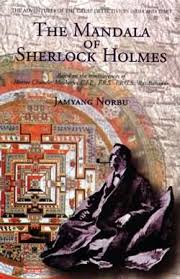
mantraSherlockHolmesThere is apparently a cottage industry of writers putting out their own Sherlock Holmes novels, and–in particular–writing about Holmes’s gap years. For those unfamiliar with the literary history of Sir Arthur Conan Doyle, at one point he got sick of writing these crime fiction novels and killed off Sherlock Holmes. However, there was such a clambering for the master detective that Doyle resuscitated Holmes. These gap years in which Holmes was believed dead have proven fertile soil for writers who wish to write their own spin on where Holmes went and what he did when he was traveling incognito. I saw a press post for a new one the other day in which Holmes goes to Japan. The Mandala of Sherlock Holmes, however, speculates that Holmes traveled to Bombay, and from there to Tibet and eventually to Shangri La. It’s an intriguing premise and offers some good travelogue type description of setting–however as a story it’s not as artfully executed as the Arthur Conan Doyle books.


I bought four books this week, two of which–in part–because they’ll help me complete the Book Riot 2015 Read Harder Challenge, which I will talk about below.


Dinosaurs_wo_Bones

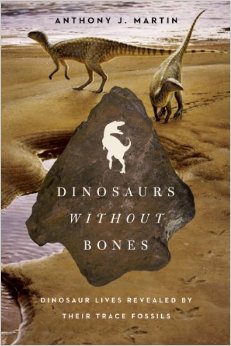
Admittedly, I bought this book, Dinosaurs Without Bones,  not because the subject jumped out at me (though I’m sure it will prove thrilling) but rather because I knew the author about a billion years ago (I know; I should take geological time more seriously when mentioning a book of this subject.) At any rate, we trained at the same martial arts school in Atlanta, Georgia. That disclaimer being made, the topic looks fascinating and I’m eager to learn more about paleontological detective work.


GoldfinchThe Goldfinch won the 2014 Pulitzer Prize for Literature, and so it meets an unchecked requirement for the Book Riot Challenge (recent award winner of one of the major literary prizes.) Honestly, if it weren’t for my desire to complete the challenge, I might have read Tartt’s The Secret History first. The latter books seems a little more up my alley, but I”m eager to see what this critically acclaimed novel has to offer. If it’s engaging, I’ll go back and pick up her first novel.


AMillionShadesofGray

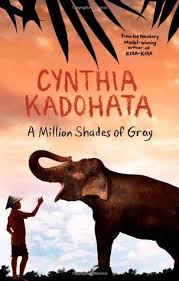
No A Million Shades of Gray isn’t a mommy porn book 20,000 times more intense than E.L. James’ book. On the contrary, it’s an intriguing YA book about a teenage elephant handler who escapes into the jungle with his elephant to escape war-torn Vietnam. This book will hit on an unchecked category on the Book Riot Challenge (i.e. YA book)


Life of Pi

Life of Pi is a book that I intended to read long before the movie came out, but still haven’t gotten around to it. It was cheap on Kindle, and so I picked it up. I’ve seen the movie, so it’ll be interesting to compare, given how visual the movie was.


I’m almost halfway through the Book Riot 2015 Read Harder Challenge. The 19 books I’ve completed thus far this year include books in 11 of the 24 categories, including:


3.) Short story collection or anthology: a.) 999: New Stories of Horror and Suspense, and b.) I Have No Mouth And I Must Scream


6.) By someone of another gender: a.) Tears in Rain, and b.) Principles of Tibetan Medicine


7.) Takes place in Asia: a.) Quarantine in the Grand Hotel, and b.) The Mandala of Sherlock Holmes


10.) A micro-history: Yoga Body: The Origins of Modern Postural Practice


12.) A science fiction novel: a.) Tears in Rain, b.) The Martian


17.) A collection of poetry: Leaves of Grass


18.) A book that was recommended: Key Muscles of Hatha Yoga


19.) A book originally published in another language: a.) Tears in Rain (Spanish), b.) Quarantine in the Grand Hotel (Hungarian)


20.) A graphic novel or comic book collection: The League of Extraordinary Gentlemen (Vol. 1)


23.) A book published in 2014: The Martian


24.) A self-improvement / self-help book: Zen Mind, Strong Body


BOOK REVIEW: Yoga Body by Mark Singleton

Yoga Body: The Origins of Modern Posture PracticeYoga Body: The Origins of Modern Posture Practice by Mark Singleton

My rating: 3 of 5 stars

Amazon page

I was excited to stumble across this book because it proposed fresh insights into the history and development of posture-centric yoga. Singleton’s premise is that yoga as it’s practiced in studios around the world today (i.e. practices focused heavily on asana, or postures) has almost nothing to do with historic yogic traditions and is to a large extent European (or Western) fitness practices fed back to the world with a patina of Indian-ness instilled by a few Indian fitness teachers (e.g. T. Krishnamacharya and students.) This is a bold and stunning hypothesis. The problem is that Singleton leaves plenty of room to doubt his thesis. I’m not saying that I’m certain Singleton is wrong, but after reading the book I’m no more inclined to believe his hypothesis than when I first read the book blurb.

The book consists of nine chapters:
1.) A Brief Overview of Yoga in the Indian Tradition
2.) Fakirs, Yogins, Europeans
3.) Popular Portrayals of the Yogin
4.) India and the International Physical Culture Movement
5.) Modern Indian Physical Culture: Degeneracy and Experimentation
6.) Yoga as Physical Culture I: Strength and Vigor
7.) Yoga as Physical Culture II: Harmonial Gymnastics and Esoteric Dance
8.) The Medium and the Message: Visual Reproduction and the Asana Revival
9.) T. Krishnamacharya and the Mysore Asana Revival

One can see the flow of the book in this chapter listing. It begins by describing the ancient yogic traditions (e.g. Jnana yoga, Bhakti yoga, and Karma yoga.) Singleton then goes on to put immense weight on very few voices that were speaking globally about yoga in the late 19th century—largely European but notably including Swami Vivekananda. (This, by the way, is where I noticed the most glaring weaknesses of the book. There seems to be an assumption that what the most vocal people were saying during this time was the truth, the whole truth, and nothing but the truth.) One will note that the late 19th century is an arbitrary point to make the critical juncture for a study of yoga—this era’s sole importance seems to be in that that’s when Europeans started entering the scene (and documenting it in English and Western languages to a large extent.) I understand that there may have been a dearth of information previously; however, I’m also skeptical of equating the sum of truth with the sum of what is documented.

The book then shifts into the early 20th century when Singleton proposes the proto-postural yoga is beginning to coalesce with both Western and indigenous Indian influences. Singleton writes extensively about this period, and presents what he believes is the path by which postural practice evolved over a short time into modern yoga as we know it. The book ends in the mid-20th century with an extensive discussion of T. Krishnamacharya and his pack of brilliant students (i.e. B.K.S. Iyengar, Pattabhi Jois, T.V.K. Desikachar, and Indira Devi) who are responsible for a lot of how yoga is practiced today (for virtually all of modern yoga by Singleton’s reckoning.)

It should be noted that this book is put out by an academic press, Oxford University Press, and there’s all the front and post matter that one would expect of a scholarly press publication. This includes an introduction, notes, and a bibliography.

So, you might be wondering how I could have so much doubt about the veracity of the book’s central claim—a book written by a Cambridge educated scholar and published by Oxford University Press. It’s, after all, chocked full of facts that are designed to bolster Singleton’s argument. I’m certainly not suggesting that Singleton lied or presented false facts (however, I have–and will further–argue that he frames facts throughout the book to diminish those statements and facts that run counter to his argument while wholeheartedly accepting statements that validate his argument—even when the people whose statements he leaves unchallenged would seem to have their own agendas. I don’t know, perhaps T. Krishnamacharya was—as Singleton intimates though never explicitly accuses—lying when he claimed to have received his sequence and approach from a scripture he was taught by a Himalayan master. However, interestingly, he would be lying to minimize his role in the development of yoga rather than to increase his fame. This stands in contrast with the European authors who Singleton readily accepts who were seeking to build their bona fides as experts in the esoteric systems of India and the Himalaya, who arguably had a lot to gain from being seen as having a full understanding of these systems.)

The best way to understand the root of my skepticism is to tell a make-believe story. Imagine a race of aliens came down to Earth. For whatever reason, they want to understand (presumably among many other things) the Roman Catholic Church. One astute alien scholar notes that, after having reviewed not only the entire Bible but a vast canon of theologian discourse, there is scant mention of sitting or kneeling. However, when cameras came around, there came to be clear evidence of pews and kneelers in the church. The aliens conclude that Catholics had always stood during worship, but with the advent of the camera they began to sit and kneel. The aliens, having big and bulbous butts, conclude that the Catholics have become concerned that their own big, bulbous butts will be captured for posterity (pun intended) by the cameras and have, thus, opted to adopt postures that would more adequately provide cover. In the present day, sitting and kneeling are the bulk of what Catholics do with their bodies when [overtly] practicing their religion, and so it must be those postures–rather than abstract notions like achieving “grace” are now the most critical part of the practice. (Besides, the earliest photos of kneelers came from Protestant churches, so perhaps Anglicans taught Catholics how to kneel.)

If you haven’t figured it out, in my little scenario, the late 19th century Europeans who were writing the English language tracts that formed the heart of Singleton’s research material are the aliens with big, bulbous butts. I would propose that the Europeans aren’t viewing yoga completely objectively but through the lens of their own experience and desires. Furthermore, they are also only giving weight to what they see and hear (which may or may not be a full picture.) I would further argue that just like Catholics don’t devote much text to discussing sitting and kneeling in the documents of the Vatican library doesn’t mean there isn’t a long history of those practices. Postural practice is:

a.) not the critical end result that everyone is concerned with even if it takes up the bulk of one’s time in [overt] practice. It’s certainly true that there are a vast number of yoga practitioners whose only interest is in the fitness aspect of the practice. However, there are also many who spend most of their yoga reading time learning from Vedas and reading yogic philosophy even though the bulk of their practice time is asana.
b.) extremely difficult to convey via text but readily conveyed through demonstration and hands-on teaching. If you were a Catholic and wanted to teach someone kneeling, would you write them a three paragraph text description of the process, or would you just demonstrate how to kneel and correct any glaring (albeit unlikely) deficiencies in form.

At no point does Singleton get into the postural details of individual asana. He mentions another scholar that supposedly has done some of that work, but Singleton feels it’s not critical. However, it’s very hard to prove what he’s trying to prove without getting into that level of detail. Yes, there will be similarities between various systems of stretching because of the nature of the body. For example, European stretching systems had a forward bend that looks reminiscent of paschimottanasana (the body folds that way and stretching the hamstrings is one of the most important functions in any stretching regimen), and it shouldn’t be surprising or revealing if the first photograph of this posture was in a European gym (the fact that Scandinavians had cameras before Himalayan yogis isn’t a sound basis to conclude that Himalayan yogi’s learned to bend forward from Scandinavians.) A there are a lot of postures that two systems might reasonably independently discover, but one also can’t rule out that the Indian yogi taught the Europeans and not the other way around. (I know it’s hard to comprehend in the era of FaceBook, but failure to be documented does not equal failure to be true. The farther one goes into the past, the less of what happened is going to be documented, and some cultures are going to be more likely to document events than others. e.g. Would our aliens be right or wrong if they concluded that 85% of humans are females between the age of 12 and 24 years old because 85% of the selfies posted on the internet are among that group. )

Singleton’s book does have some graphics. They didn’t always help his case, however. I was struck by how few of the fine details of the European postures correspond to practice as we know them, while some of the very old paintings look almost exactly like present day asana. (If one accepts that the fact that they didn’t have the greatest grasp of capturing perspective back then isn’t indicative of how flat the postures and people were back then.) I’ll readily admit that I wouldn’t definitively count Singleton wrong on my subjective observation of the pictures, but it does leave me with a lot of room for doubt.

I suppose the next question is why I didn’t completely pan the book. Three stars isn’t a tragic rating. I thought the book contained a lot of good information and food for thought (even if it fell far short of proving its central hypothesis.) I particularly enjoyed the chapter on T. Krishnamacharya and his now-famous student body. I’ll also say that part of why I came away from the book with such a muddled perception of this history is that Singleton doesn’t hide facts that are damning to his case, but rather presents them and then tries to marginalize them. A prime example would be the Hatha Yoga Pridipika (HYP), a 15th century text that mentions a number of the asana considered classic yoga postures today (some of which form the core of a Hata practice)—though admittedly HYP emphasizes the importance of only four seated postures.

I can’t say that Singleton didn’t help give me pause to wonder about the truth of the received understanding of yoga’s evolution. I’ve practiced yoga in places as varied as India, the U.S., Thailand, and Hungary, and I found it shocking how similar the practice is around the world. This bodes well for the argument that yoga as it’s practiced today has coalesced recently. By way of contrast, there are many myths about how one martial art is the ancestor of another but the two systems often look nothing alike. (e.g. I’ve studied Kalaripayattu, which many believe was the ancestor art taken to China by Bodhidharma through Southeast Asia, but which today looks nothing like Kung fu or Muay Thai. Furthermore, Kung fu styles usually look quite unlike the Korean and Japanese martial arts that they are said to have inspired.) If the latter among these martial arts did come from the earlier, they evolved apart quickly. While the evolution into different martial art forms is quite possible, it raises the question of why yoga should be so similar internationally. A skilled yoga teacher would likely give a given student the same alignment adjustments for, say, Warrior I, regardless of whether the teacher was in Prague, Manila, Tokyo, or San Diego.

I can’t say that I’d endorse Singleton’s argument. It would take much more precise information for me to buy it (and it’s likely that said detailed historical information doesn’t exist.) However, if you’re interested in the history of yoga, you might want to check out this book. Your conclusions may differ from mine, but even if they don’t I suspect you’ll learn a thing or two of interest. Yoga Body was reasonably priced as a Kindle book when I bought it.

View all my reviews

READING REPORT: February 20, 2015

This week’s Reading Report will be short. I didn’t complete any books this week.


Most of my reading was divided between two books that I’ve mentioned in earlier reports. The first is Zen and the Brain by James H. Austin. This is probably the most expensive book that I’ve purchased since the ridiculously overpriced textbooks of college. While I’ve been known to pan decent books for being overpriced (e.g. most recently Zen Mind, Strong Body by Al Kavadlo), I will say that I’ve found this book to be worth it. There are vast numbers of books on the fascinating findings of neuroscience research. Also, there is a vast canon on Zen, meditation, and the quieting and mastering of the mind. However, there are only a small (though growing) number of books that deal with the intersection of these two subjects, and none covers the subject in as much depth as Austin’s work–as far as I’ve seen. The chapters I’ve been reading of late deal with emotions, visceral drives, and memories–all relevant issues for one who is seeking personal development in a scientifically-minded manner. The next chapter will deal with GABA. I’m looking forward to this because I know there is scientific evidence that yoga can reduce depression through its effect on GABA levels, and I look forward to having a better understanding of how this works.

Zen&Brain


The second book that’s consumed a lot of my time over the past week is The Pyjama Game. I’m about 2/3rd of the way through this book and will finish it in the upcoming week. It is in part a micro-history of judō and in part an account of what it’s like to be a practitioner of the martial art of judō. While the micro-history chapters are chronological, they’re interspersed with chapters that are more of a personal accounting of the author’s experience (and the experience of individuals with which he interacted with first-hand–i.e. other amateurs.)  The era that was covered in my reading of the past week was an interesting one. It chronicled judō’s shift from a time in which Japan completely dominated the sport to one in which Russians, Europeans, and Americans started to make headway and—in some ways–unique contributions to the art. This includes judō‘s rise to Olympic status, and how the sport has progressed since that time.

pyjamagame


There were another couple of books that I read substantial parts of as research for the novel I’m writing. The first of these is The Taiheikiwhich is–as was the style in medieval Japan–a mix of part history and part literature. It tells the story of Emperor Go-Daigo’s retention of power, largely through the efforts of valiant loyalist warriors–most notably the famous Kusunoki Masashige.

Taiheiki


The second research work is entitled Fighting Techniques of the Oriental World: AD 1200 – 1860As my novel takes place partly in 14th century Japan, China, and Southeast Asia, this reference comes in handy for learning about the activities of warriors across several nations.

FightingTechniquesOrientalWorld


I purchased three books this week. In a way, I was successfully (and happily) suckered. For those who haven’t realized, Amazon is very clever. If you look at a book once or twice, the price will often rise a little when you go back. This drives a few suckers to buy it at a higher price before it rises to some imagined peak price. I’ve noticed this on enough occasions to believe that it’s not just coincidence. Furthermore, as one trained as an economist, I know this is a sound pricing strategy. What I’d not yet experienced is that if one keeps periodically checking on the books–but not buying–the prices will creep back down to a new low, probably only a tiny bit under the first price you saw. I bought three books that I’ve been looking for both on Kindle and at my local bookstore, but which have stayed above my reservation price.


The first, and most expensive, was Buddha’s Brain, which is along similar lines to the aforementioned Zen and the Brain. The book is by a neuroscientist who specializes in neuroplasticity, and who examines how one can go about “rewiring” one’s brain to be happier and more well-adjusted.

BuddhaBrain


The second book is called The Relaxation Response. It was the cheapest book of the three and is much older than the book Buddha’s Brain. In it Dr. Benson (Harvard MD) describes the relaxation response as the body’s counterpoint to “fight or flight” mode. In this state of relaxation, the body–among other things–goes to work on repairing what ails it. There’s a lot of evidence that a human body can repair most of what can ail it if it gets enough rest–i.e. sufficient break from stress.

Relaxation Response


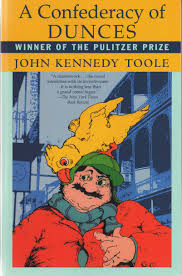
My final purchase was A Confederacy of Dunces. This book is considered to be one of the best comedic novels in American literature. It’s also a book that all depressed writers (which is to say all writers struggling to get things published) should read for the cautionary tale of the novel’s tragic back story. The author, John Kennedy Toole, committed suicide (at least in part) because he couldn’t get it published. His mother then took up the torch, shopping it around. It took her seven years, but she finally got it published after convincing the novelist Walker Percy to look at it, and having achieved his recommendation. In 1981 it won the Pulitzer Prize for fiction.

confederacy of dunces

BOOK REVIEW: Zen Mind, Strong Body by Al Kavadlo

Zen Mind, Strong Body: How To Cultivate Advanced Calisthenic Strength--Using The Power Of Zen Mind, Strong Body: How To Cultivate Advanced Calisthenic Strength–Using The Power Of “Beginner’s Mind” by Al Kavadlo

My rating: 3 of 5 stars

Amazon page

This book discusses issues related to a calisthenics-centric approach to fitness. The first thing that one should be aware of is that the book has no such unifying theme as would be suggested by the title. Really, this is a sort of “best of” collection of Al Kavadlo’s blog posts, but—of course—that makes for a really unsalable title. The title is a take-off on Shunryu Suzuki’s Zen Mind, Beginner’s Mind, which is quoted in the front matter. Don’t expect Zen or the mind to formally enter the picture in a major way. I will say that Kavadlo has a Zen approach in that he emphasizes simplicity and paying attention to what one is doing throughout (so many people try to drown out their workouts with music or entertainment.)

I had mixed feelings about this book. On the pro side, Kavadlo is clearly knowledgeable and has a sound and pragmatic approach to fitness. Not only is he not trying to sell you on supplements and fitness fads, he tries to discourage such profit-driven nonsense. You’ll get some good information and sound advice from reading this book. You’ll find out why Kavadlo eschews dietary supplements, how he prepared for a marathon and a triathlon, what advantages calisthenics hold over other strength building activities, and how to avoid injuries.

So what’s the problem with the book? The first problem is rooted in the fact that I paid full price for the book soon after it came out, and–at said price—it’s overpriced for what it is—a rehash of blog posts. It looks like Amazon has dropped the Kindle price. As I said above, I respect Kavadlo’s approach to fitness, and think that he offers some useful insights, but the question is whether you couldn’t get the same insights for less–I think you can. At half the price I paid for this book, I would have been much happier with it. Alternatively, if they had beefed it up a bit—particularly with useful graphics—I might have found it a good buy at the price I paid. The bottom line is it’s a thin book of blog quality material.

My second problem is that they waste too much space with pictures of Kavadlo standing around shirtless in front of random minor NYC landmarks. I understand that a cut, muscular body is the ultimate resume for a personal trainer. However, I suspect that even the ladies and gay men will at some point say, “Enough with the standing around shirtless photos, Al.” For us heterosexual males, the number of these shots is way over the top.

Now, I’m not saying that the number of photos is excessive. They could have used some of that photo space for instructional photos of how to better do the exercises, or to build up to the more challenging exercises. Kavadlo has an excellent YouTube channel, so I know it would be possible to get more photos of him actually doing exercises. (They do have some pics exercise pics, particularly in the sample workout section at the back.)

The book’s 26 chapters are arranged in four parts that deal with background information, calisthenics, cardiovascular workouts, and diet respectively. There is a section at the back that presents a series of sample workouts divided into beginner, intermediate, and advanced levels.

As for my recommendation, I’d say that if you are interested in fitness and see this book at a price of around $4, buy it. However, if it’s at $10, it’s overpriced for what it is. Of course, your views of a fair price may vary. (I should note that I purchased it in Kindle e-book format.)

View all my reviews

READING REPORT: February 13, 2015

Welcome to a special Friday the 13th edition of the Reading Report. What’s so special about it? If you’re not deluded by superstition, then not much. If you are superstitious, reading this post may cause you to suffer a plague of locusts (or whatever plagues your particular geographic area.)


Now that we’ve gotten rid of the illiterate ninnies, we can get down to discussing books.


I finished two books this week–one nonfiction and one fiction. I’ll be posting book reviews within the next couple weeks.


The nonfiction book was called Yoga Body: The Origins of Modern Posture Practice. The author’s intriguing and controversial thesis is that yoga as it’s practiced in studios around the world today nothing to do with traditional Indian yoga, but, instead, owes it’s existence to European calisthenics and bodybuilding systems and the Indians that borrowed from them. I didn’t find the author’s argument compelling for a number of reasons that I’ll get into in my review. This isn’t to suggest that I’m certain he’s wrong. He may be right, but the way he constructed his argument left a great deal of room for doubt.


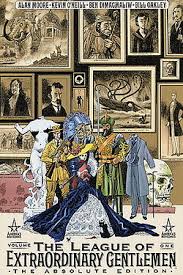
TLEG_Vol1

The fiction book was a graphic novel entitled The League of Extraordinary Gentlemen (Vol. 1). For those of you who haven’t seen the movie featuring Sean Connery, this comic book gathers together a team of protagonists from 19th century science fiction and adventure novels. The team consists of Mina Harker (of Bram Stoker’s Dracula), Allan Quatermain (of H. Rider Haggard’s King Solomon’s Mines), Captain Nemo (a Jules Verne recurring character), Dr. Jekyll/Mr. Hyde (Robert Louis Stevenson’s title characters), and Hawley Griffin (of H.G. Wells’ The Invisible Man). One needn’t have read all those classic stories to follow this book, but being a fan of 19th century tales of the fantastic definitely makes it more fun. The story depicted in this volume has nothing to do with the movie plot.


mantraSherlockHolmes

I’m more than halfway through a couple of books that I mentioned in earlier Reading Reports, they are Why Do People Get Ill? and The Mandala of Sherlock Holmes.  I read chapters 7 through 9 of the former book, which had to do with the expression of symptoms, the heart as a symbol and that symbol’s expression in illness, and the impact of mother’s experiences on infants and children. In the latter book, Holmes has arrived in Tibet, and the plot thickens. The author is Tibetan, and so has some unique insights. However, some chapters advance the story with action, and others are almost like travelogue.


I’m still early into reading two books that I’ve previously mentioned. The first is Zen and the BrainIn this book I’ve transitioned out of the part explaining Zen and the author’s experience of that tradition, and am now into the part that lays down the basic neuroscience. While the author writes in a readable style, for a neuroscientist, this is still challenging reading because of its scientific nature and the complexity of the brain. However, the chapters I read recently both raise some fascinating questions and provide useful information. The chapter I just finished dealt in part with the neurochemistry of addiction. I like that this book is divided up into short chapters. This is beneficial for taking in such complicated information. I need frequent think-breaks to ruminate on what I’ve read.


pyjamagame

The second is The Pyjama Game. After a slow start, the last two chapters have contained some fascinating information. One of these chapters dealt with the history of jujutsu, particularly as Japan transitioned from medieval to modern. The other chapter outlined Kanō Jigorō‘s development of judō.


I bought three books this week.


The first is entitled Healing Moves, and is by a married couple consisting of a fitness writer and a cardiologist. This book addresses a topic that is a prevailing theme in my nonfiction reading as of late, which is what movement, exercise, and physical activity can do to improve one’s health (not just one’s fitness.)

HealingMoves


The second book is Greatest Ever Boxing Workouts.  This book presents information about what boxers like Mike Tyson, Manny Pacquiao, and Floyd Mayweather do to prepare for fights. It’s a follow-up to an earlier book that included fighters like Muhammad Ali and Roy Jones Jr.

BoxingWorkouts


Finally, I just got a short story collection on Kindle Daily Deal the other day entitled Lovecraft’s Monsters.  This isn’t a collection of H.P. Lovecraft stories, but rather is an anthology of stories inspired by Lovecraft’s work.

LovecraftsMonsters

BOOK REVIEW: How Pleasure Works by Paul Bloom

How Pleasure Works: The New Science of Why We Like What We LikeHow Pleasure Works: The New Science of Why We Like What We Like by Paul Bloom

My rating: 3 of 5 stars

Amazon page

Paul Bloom’s book is about why we take pleasure in peculiar actions, proclivities, and objects. These are the pleasures that aren’t readily or directly explained by our evolutionary hardwiring. Evolution has programmed us to experience pleasure with sex and eating to encourage procreation and nourishment. In other words, those who experienced pleasure with sex had sex more often, and passed on their genes more successfully. Those who had a healthy appetite, ate more, became stronger, survived, and passed on their genes.

However, just because the pleasure of sex is readily understood through biology, doesn’t give us insight into the panoply of activities that people find pleasurable in a sexual way that have no value for procreation whatsoever. Bloom uses the example of masochism, but there are all sorts of kinky fetishes out there that one might also consider. It’s the peculiar pleasures that Bloom tries to explain. This is not to suggest that Bloom’s book is entirely about food or sex. He addresses each of those subjects with a chapter of its own, but they aren’t the sum total of the book. Both he and I, no doubt, rely heavily on food and sex because they are such fundamental pleasures and ones whose domains have blossomed far beyond the dictates of biology.

So what does the book address besides food and sex? It examines why people collect things that were once owned by famous people? Bloom sites a study showing that Joshua Bell anonymously playing violin in the subway in street clothes can barely garner a collective $32 in an afternoon, even having been passed by people who will pay $200 each to hear him later that evening as he wears a tuxedo in a concert hall, though playing the same songs on the same $3.5million violin. Why do we sit around watching television and movies? If any of these pleasures seem self-evident, I would encourage you to ask yourself why they should be? It’s by no means clear that we should value something more highly because of who previously owned it, and it’s certainly not clear why we should get value by watching others play act lives that seem more interesting than our own.

The theory that Bloom presents is called essentialism. It’s the idea that each of these things that give us pleasure represents the essence of something or someone in our minds. So a person who pay’s 500 times the going rate for a used guitar solely based on the fact (x-factor) that it once belonged to John Lennon is, according to Bloom, imagining that there’s some sort of essence of Lennon that rubbed off onto the guitar. Yes, the guy buying the guitar could be buying it entirely based on economic considerations, but the only reason there’s an economic benefit (economic rents in economist terminology) to be made is that there are people out there (many of them) who desire to possess a famous artist’s instrument even though it costs them far more than an equivalent guitar not owned by a famous person. Things become even clearer when one looks at an item like JFK’s tape measure—i.e. a mundane item that is not tied to the man’s fame. (Said tape measure sold for an absurd amount.)

Bloom discusses art forgeries to elaborate this concept of “essence” versus the intrinsic value (i.e. the beauty of the art.) There are many cases of paintings being sold for millions because they were believed to be painted by a certain “artistic genius” and then they become trash when it’s discovered that they were painted by a nobody—a nobody who’s genius was clearly sufficient to convince all the experts that he was some other genius for a while, mind you. If what we cared about was the beauty of the painting, its value would have nothing to do with its origins. In this example, it might seem to be all about rarity (a dead artist paints no more, and, thus, has a limited stock of paintings), but there is reason to believe that’s not the whole story.

We can see the value of these essences ubiquitously. There have been a number of blind taste test experiments that show that oenophiles (wine lovers/experts) can’t tell nearly as much about a wine’s delicate intricacies when they don’t have its label on hand. Famously, there was the CEO of Perrier who couldn’t pick his own company’s water out of a blind line up of waters, though insisting it was a superior product. (It took him five tries out of seven waters.) Even after that event there were people willing to spend twice as much for Perrier because it gave them some pleasure that was completely delinked from its taste or nutritional characteristics.

Bloom’s thesis is interesting, and he presents a lot of fascinating examples in this book. What the book doesn’t really explain is how come certain essences act heavily on some people and not at all on others. It also seems like a theory that begs for another level of explanation. Why should such essences exist, i.e. what is their root cause? The latter may prove difficult given the degree to which individuals vary in their peculiar pleasures from one to the next.

I found this book to be intriguing, and would recommend if for people with interests in the oddities of human behavior.

View all my reviews

READING REPORT: February 6, 2015

I polished off three books this week. That’s not as impressive as it might seem; they were all slim volumes. I’ll do reviews on these books in the near future, but a few words about each will suffice here.

The first was Zen Mind, Strong Body; a book about which I had mixed feelings. It’s by a calisthenics expert named Al Kavadlo, who is a personal trainer, author, and YouTube phenom. On the positive side, Kavadlo is a sharp guy with many useful insights into bodyweight exercise and fitness in general. Additionally, Kavadlo eschews the snake-oil salesmanship that is rampant in the fitness world.

On the other hand, the book is basically a rehash of blog posts, and the “new / first time seen pictures” aren’t useful for learning the exercises because they’re mostly just the author standing in random places with his shirt off. Furthermore, there’s no such consolidating theme to the book as is suggested by the title. I think it just has that title (a take-off on DT Suzuki’s classic work on Zen) because “The Best of Al Kavadlo’s Blog Posts” doesn’t scream “buy me.” I thought a little extra value-added could have been provided for the people who paid for the book, but you will learn from it.

The second book was Quarantine in the Grand Hotel. This novel brings satire and humor into a locked-door mystery. It was written by a Hungarian author in the 1930’s, but remains a readable and enjoyable book.

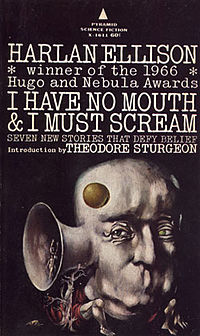
IHaveNoMouthThe third book was the short story collection by Harlan Ellison that I mentioned I would begin this week. I Have No Mouth and I Must Scream consists of seven stories that are nominally in the genre of science fiction, but could also be classified as tales of the strange. This book was first published in 1967. Ellison writes stories in a readable style, though one that can sometimes be called “trippy.” If I were going to award a “book of the week” for the book that I found most engaging, it would be this one.

I only got a couple of chapters each into the Mo Yan novel Life and Death Are Wearing Me Out and the epic poem The Aeneid. The former is readable has a fascinating premise, but the latter–not unexpectedly– is a little more of a chore to read (but is a classic and seems worth the difficulties.)

Having finished off some nonfiction in the preceding week, I made room to resume reading a book that I started a couple of months ago entitled Why Do People Get Ill? A two-man team consisting of a psychoanalyst and a neuroscientist joined together to write this book. It examines the role that stress and the mind play in illness. Yes, things like germs (i.e. bacteria and viruses) cause illness. However, that’s not the whole story, and a couple of key questions remain. First, how come some people can be repeatedly exposed to causative factors and their bodies knock out disease leaving them asymptomatic. Second, how come others readily come down with ailments–sometimes even when they haven’t been exposed to causative factors. To put matters in scholarly terms, germs may be a necessary condition for disease, but they are rarely a sufficient condition.

WhyDoPeopleGetIll_Leader&Corfield


I didn’t do much yoga or martial arts specific reading this week. However, today I finally began The Pyjama Game, which is a book about Judō that I mentioned in one of my previous Reading Reports.

I purchased four books this week, all on Kindle and mostly on sale.  Those books, which I’m sure to be discussing and reviewing on later dates are:

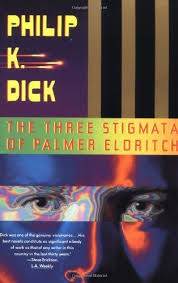
TheThreeStigmata

The Three Stigmata of Palmer Eldritch: Because I’m a huge PKD fan, and this is said to be one of his best books–of his books that I haven’t yet read. This was in the Kindle Monthly Deals.

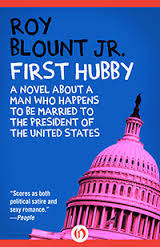
FirstHubby

First Hubby: This will be my first Roy Blount Jr. book, but I did enjoy him on that NPR game show (i.e. Wait Wait… Don’t Tell Me!) This was also a Kindle Monthly Deal as I recall.

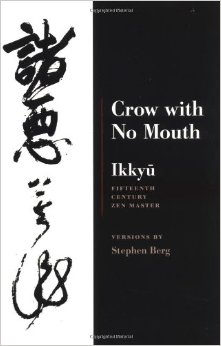
Ikkyu_Berg

Ikkyu: Crow with No Mouth: This is the story of a Zen master who lived in Kyoto in the 15th century. He sounds like a fascinating man, and was also a skilled poet. This one wasn’t on sale, but neither was it expensive at the usual price.

TheElementsThe Elements: This book is a Kindle Daily Deal as I’m writing this. I love me some science. I did have to look through the sample pages before buying. Even though it was inexpensive, I was concerned that it might not have much usefulness on my black&white, base-model Kindle because the graphics are an important part of the book. However, it looked like there was enough text explanation to be worth the $2.00–even if the graphics don’t show up well.

And that was my week in books.