BOOK REVIEW: The Tibetan Yogas of Dream and Sleep by Tenzin Wangyal Rinpoche

The Tibetan Yogas Of Dream And SleepThe Tibetan Yogas Of Dream And Sleep by Tenzin Wangyal
My rating: 5 of 5 stars

Amazon page

I stumbled upon this book in a used bookstore, and didn’t know what to expect–but was intrigued. It’s a book on the Tibetan Bön approach to dream yoga and sleep yoga, written by a Bön lama (monk.) Dream yoga is a term used in Buddhism and other Eastern traditions to refer to what is called lucid dreaming in Western scientific circles. My review will focus on the more than 3/4ths of the book that deals in dream yoga (lucid dreaming.) The 40-ish pages that deal with sleep yoga are outside my wheelhouse. The author suggests that that part is for initiates who are familiar with certain background concepts. I’m not an initiate, and—in fact—I have no idea whether there is any merit to sleep yoga practice. Lucid dreaming is a well-studied and documented phenomena, but, as far as I know, what the author calls sleep yoga remains unstudied. All I can say is that the part on dream yoga is readily comprehensible, despite much of it being couched in spiritual terms, but a lot of the section on sleep yoga is arcane and ethereal.

As it happens, I was pleasantly surprised with the portion of the book about dream yoga. Having read a number of books dealing with the subject recently, I wasn’t sure whether I would learn anything that was both new and useful. But I was exposed to ideas that were new, useful, and mind-blowing. There were a few ideas for helping one to achieve lucid dreaming—mostly through practices carried out during the day—that I’d not seen in other works, at least not put in such clear terms. Also, while there is a lot of reference to the Bön and Buddhist spiritual traditions, this didn’t result in the explanations being needlessly complicated or arcane. There is a lot of information that one doesn’t need if one is a secular practitioner, but many readers will find it interesting, even if it’s not necessary to advance their practice.

The book is organized into six parts: 1.) The Nature of Dream, 2.) Kinds and Uses of Dreams, 3.) The Practice of Dream Yoga, 4.) Sleep, 5.) The Practice of Sleep Yoga, and 6.) Elaborations. The last part has information pertinent to both dream yoga and sleep yoga.

There are some graphics in the book including photos, line drawings, and tables. Most of these aren’t essential, but some make it easier to imagine what the author is describing (e.g. when he discusses sleeping positions.) The book has a glossary and bibliography. The former is useful, and the latter doesn’t hurt (but it’s only one page and offers only a handful of citations.) The glossary is mostly of foreign terms, but includes English terms specific to the religious traditions discussed. It offers both Tibetan and Sanskrit variants of the word if they exist, which is a nice feature. There is also an appendix which summarizes the crucial practices elaborated upon in the book.

I’d recommend this book for those interested in developing a lucid dreaming practice. I will say that it may not be the best first book to read on the subject, unless you are a practitioner of Bön or intend to be. (For that, I would recommend Charlie Morley’s “Lucid Dreaming: A Beginner’s Guide…” which I recently reviewed.) However, this book makes an excellent follow-up once one has read a book that is couched in simpler terms (i.e. not specific to a certain spiritual tradition) and which reports on the science. I found that the book gave me a number of new ideas, and—in fact—offered some insightful ideas.

View all my reviews

BOOK REVIEW: Lucid Dreaming by Charlie Morley

Lucid Dreaming: A Beginner's Guide to Becoming Conscious in Your DreamsLucid Dreaming: A Beginner’s Guide to Becoming Conscious in Your Dreams by Charlie Morley
My rating: 4 of 5 stars

Amazon page


Lucid dreams are those in which the dreamer is aware he or she is in the dream and can interact with the dreamscape. Most people experience lucid dreaming only as a happy accident. Some people dream lucidly in their youth, but never as an adult. Some people become aware they’re dreaming under specific conditions, e.g. on a certain medication. However, lucid dreaming has been practiced in some traditions for centuries, most notably by Tibetan Buddhists (though chapters 5 & 6 demonstrate that it’s much broader than just the Tibetans.) Furthermore, having confirmed lucidity in dreams in sleep laboratories, scientists have moved to advance our understanding of the phenomena using the scientific method and by taking advantage of the latest brain imaging technologies.

Charlie Morley has written a couple books on the subject as well as giving a well-received TEDx Talk on the subject. Morley studied under a Tibetan lama as well as studying up on the science of the phenomenon.

There are eight chapters in this book. The first three chapters constitute part one, the basics. This part introduces one to the subject of lucid dreaming, considers some of the reasons why people get into it, and explains how to recognize one is in a dream. The remaining five chapters form the second part, which is about going deeper with one’s practice. The second part explores what one may see in a dream, and how one can use the experience of being lucid for self-improvement. Lucid dreaming is one of the few access points to one’s subconscious mind. The second part also charts the development of lucid dreaming in both the West and the East, as well as offering suggestions about how nutrition may help in one’s practice.

The book is written as an instructional manual, and offers “toolboxes” of techniques to help advance one’s lucid dream practice by teaching one to remember one’s dreams, understand the phases of sleep, recognize one is in a dream, achieve lucidity, and know what to do once one is lucid in a dream. These are handy summaries of the lessons taught in greater detail in the text. All of the chapters but 5 and 8 have one of these toolbox summaries. There are also frequent text boxes of strange but true facts about lucid dreaming, tips from experienced lucid dreamers, case studies, and stories used to make relevant points about lucid dreaming. There are no graphics, but they aren’t missed.

I found this book to be useful and interesting. It’s readable and logically organized. I’d recommend it for anyone interested in developing a lucid dreaming practice—particularly if one is starting from scratch. There are a number of books on the subject, but many will be too ethereal to be of value to a new practitioner, but Morley writes in an approachable fashion and organizes the book to help one get into a practice as efficiently as possible.

View all my reviews

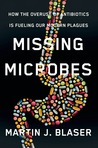
BOOK REVIEW: Missing Microbes by Martin J. Blaser, MD

Missing Microbes: How the Overuse of Antibiotics Is Fueling Our Modern PlaguesMissing Microbes: How the Overuse of Antibiotics Is Fueling Our Modern Plagues by Martin J. Blaser
My rating: 4 of 5 stars

Amazon page

This is one of several popular human biology books of recent years to take note of the fact that your body’s cells are outnumbered 10 to 1 by the bacteria that live in and on you—mostly in your digestive tract—and that our penchant for killing microbes has begun to show signs of harm as well as good. Since the germ theory took hold, we’ve been slaughtering all the little buggers we could, but increasingly we’ve learned that this isn’t without costs. In essence, we’ve been throwing out the baby with the bath water when it comes to our bacteria, while at the same time creating super-bugs.

As a first-worlder who’s been living in the developing world (India), I sometimes get ask if I get sick here a lot or at all. My stock response is to ask the asker whether they have Crohn’s Disease, IBS, Type II diabetes*, or any of the other diseases of affluence seen mostly in the first world. (*Type II diabetes is becoming much more prevalent in the developing world, notably in India where they like their deserts about 9000 times sweeter than, say, a fudge brownie. Furthermore, the disease has disproportionate effects in such countries because of limited treatment availability and late diagnosis.) In many cases, these developed world diseases are being tied to the killing off of our good gut bacteria.

Doctor Blaser’s book focuses on how overuse of antibiotics creates problems. For those who say, “I don’t get no stinkin’ antibiotics when I’m sick. I just suffer it out. Ergo, I don’t need to read this book,” there remain facts of which you should be aware. One such fact is that some of the antibiotics injected into the animals that become our food can act against our own personal microbiome. Yet another is that antibacterial soaps and gels are ubiquitous. Furthermore, the increased popularity of C-sections has starved infants of a source of good bacteria, and made them more prone to certain childhood illnesses.

“Missing Microbes” is organized into 16 chapters. The first discusses many of the “modern plagues” that have come about through the wholesale war on bacteria. The next couple chapters look at the role of microbes on the planet and in our bodies. There is a discussion of increasingly successful pathogens as well as the drugs that came along to take care of them. There is a discussion of over-prescription of antibiotics by dentists and doctors, their use in agriculture, and the transfer of good bacteria from mother to child and how rampant use of C-section negates this transfer. There are a couple of chapters on H. pylori and the lessons learned from trying to eliminate it after it became tied to ulcers. (In one of the most famous stories in modern medicine, a researcher swallowed a beaker of H. pylori to prove his theory to a skeptical audience of physicians.) Asthma is discussed as an example of an illness one might not expect to come about from destroying gut bacteria. One of the effects covered over two chapters is getting bigger (re: fatter as well as taller.) Staving off disease under crowded conditions isn’t the only reason modern agriculture uses antibiotics, it also makes for big, meaty animals—which when eaten by people may make big, meaty (actually, fatty) humans. Blaser then talks about how bad the situation might get (using the term “antibiotic winter,”) before discussing solutions. It’s, of course, true that humanity has gained a lot from antibiotics, and so putting the genie back in the bottle is not a solution. A nuanced approach is called for, and that’s what the author discusses.

I found this book to be informative, and would recommend it to anyone wanting to learn more about the risks presented by overuse of antibiotics.

View all my reviews

BOOK REVIEW: Yoga Assists by Sharon Gannon and David Life

Yoga Assists: A Complete Visual and Inspirational Guide to Yoga Asana AssistsYoga Assists: A Complete Visual and Inspirational Guide to Yoga Asana Assists by Sharon Gannon
My rating: 4 of 5 stars

This is an illustrated guide to making yoga assists, or what are often called corrections or adjustments. The style is Jivamukti Yoga, and the book is written by its founders. The postures will be familiar to practitioners of any form of Hatha Yoga, but the action of the teacher (or assistee) may be quite unlike what one is used to.

This book offers some valuable information for any teacher of yoga, though many—probably most—will find the overall approach unsuitable. (If it is suitable, more power to you; you’ll want to read and re-read this book.) However, even if you’re not likely to use this style of teaching, there’s worthwhile technical information to be gained.

I’ll explain why this won’t be everybody’s cup of tea. First, many of the assists are highly invasive, by that I mean they involve being at an intimate distance with the student for an extended period of time. If you primarily teach experienced students who know and trust you, these invasive assists may be helpful. However, if you’re teaching beginners in studio sessions, one may need to be selective about what one uses and what one doesn’t. The ultimate goal is “chitta vritti nirodhah” (calming mental turbulence) and not to contort the student’s body into a perfect version of the posture. If, instead of facilitating the student’s look inward, you make them feel awkward and self-conscious, you’ve missed the mark. If everybody in question has achieved a monkish state of mind, this won’t be an issue, but history (and many a lawsuit) suggests that this is often not the case.

The second issue follows from the discussion above. By manipulating the student toward some objectively perfect version of the posture, you may encourage them to think that is important—that it’s important to you and that it should be important to them. This may have adverse ramifications such as driving away students who are far from the perfect expression of the pose or making it difficult for them to internalize santosha (contentment with where one is presently.) Being so hands-on may be at odds with one’s philosophy. Not only does it discourage contentment and gradually advancement toward better form, it also detracts from the notion that it’s about the student looking inward. (In other words, so much hands-on assistance thrusts the teacher onto the spotlight of what should as much as possible be the student’s private time and space.) Corrections are needed to avert injuries and to help the student improve, but this level of contact is more intense than required for those goals.

Still, I found this to be an informative and worthwhile read. It’s not every assist in the book that is invasive, and the ones that are still have their use with students with whom one has built trust and rapport, and particularly in workshop settings. The assists are optimized to be stable and safe, which is why they are often close and handsy—at least for those of us who were taught to start with verbal instruction, move to non-touching gestural instruction, and—only when necessary–put hands on the student (and then with care to be at an angle so as to not make the student uncomfortable.) Overall, the book does a fine job of presenting the necessary information.

The authors use both photographs and line drawn diagrams to convey the details of the assists. The organization is logical. After a section of general background, the book proceeds through poses using the standard groupings with which Hatha teachers will be acquainted (standing, forward bends, twists, back bends, inversions, and relaxation poses.) There is textual explanation in a form consistent from one asana (posture) to the next to support the graphics. The poses are the most common of the classic asana, and they cover a good number of the basics that one will teach in classes. They also provide some insight into how to apply the same principles to intermediate and advanced poses that aren’t included.

The book does have its faults. One of them is to wedge in irrelevant information. This can be seen from the get-go with an introductory “Go Vegan” rant. There’s also a bit of a tendency to muddle science with pseudo-science, but all that matters for the most part is basic anatomy–and that’s handled well enough. This isn’t so much criticism as forewarning, but you may find some of the commentary to be like those YouTube parodies of yoga classes—you know the ones that are hilariously far out. But just occasionally.

I’d recommend this book for yoga teachers or intermediate / advanced students who want to increase their understanding of alignment.

View all my reviews

BOOK REVIEW: Kokoro Yoga by Mark Divine

Kokoro Yoga: Maximize Your Human Potential and Develop the Spirit of a Warrior--the SEALfit WayKokoro Yoga: Maximize Your Human Potential and Develop the Spirit of a Warrior–the SEALfit Way by Mark Divine
My rating: 4 of 5 stars

Amazon page

Like many yoga practitioners, I’m never sure whether to be dismayed, amused, or pleased by the explosion of new styles of yoga. It’s nothing new. Yoga has been branching out since its early days. But today’s flavors tend toward the frivolous, usually involve shoving yoga together with something else generally likable, and said two things are in some cases largely inconsistent. There’s marijuana yoga, dog yoga, karaoke yoga, and tantrum yoga. I wouldn’t be surprised if there was a Häagen-Dazs Yoga. Hell, if I was a bit less lazy and more unscrupulous I’d have made a mint from my patented SELFIE YOGA (™ -pending), which involves modifying impressive looking poses so that an individual can take their own pics for FaceBook. (You’re welcome; to whomever the driven sleeze-bag is that turns that idea into a thing.)

I, therefore, tend to approach books like Mark Divine’s “Kokoro Yoga” with a measure of skepticism. That said, I found that this book offered a respectable vision of yoga that might even succeed in bringing a new demographic into the fold. Divine is a former Navy SEAL who developed a fitness empire called SEALFIT, a system that combines fitness ideas from the famous Special Operations unit with ideas from civilian sports and exercise science, such as high intensity interval training (HIIT.)

Incidentally, “kokoro” is the Japanese word for heart / mind (heart and mind were inexorably entwined for Japanese in the era in which the term came into being.) Divine mentions that “Warrior Yoga” would have been his first choice, but that was already taken. The author appeals to warriors with this approach to yoga. He does this in several ways. Firstly, and encouragingly, he doesn’t neglect the mind, but rather puts it front and center by emphasizing the need for mental strength and clarity. My biggest problem with the plethora of new yogas is that they usually forget that it’s ultimately about calming the mind, and instead of providing an environment conducive to looking inward, they embrace or create all sorts of distractions (loud pop music, mirrors everywhere, nudity, animals, ice cream, circus clowns, etc.) Divine doesn’t just make a new fitness fad, he argues for the need for all of the eight limbs of yoga—not neglecting yama and niyama—and emphasizes how yoga served as a calming and clarifying tool for him and not just as a means to be more bendy.

Second, he adds components to balance out the dimensions of fitness. If you are a yogi / yogini, and you want a yoga body; yoga is all you need. However, if you are a martial artist, cop, or soldier, you also need strength, speed (then, by definition, power), and cardiovascular endurance, as well as those aspects yoga offers (e.g. breath control, flexibility, core strength, posture, and mental clarity.) Again, I’m often dismayed by attempts to round out yoga with functional strength building and cardiovascular endurance. I understand the desire to combine them into one workout. Besides the fact that some people need a more balanced approach to fitness, not everybody has time to do multiple workouts multiple times a day. Still, one can’t just ram these components together willy-nilly because if one needs to be in a space to observe one’s breath while being still and one is coming out of having done 100 burpees, it’s probably not going to work so well. I haven’t yet done any of the sequences from the book, but it looks like this shouldn’t a problem, at least not for individuals who are moderately fit. I’m less confident about the value of mixing in elements of chi gong and “cardio kickboxing,” which is suggested by the system. It’s certainly not that I’m opposed to either chi gong or functional martial arts training, but there’s a lot of important detail in those activities and this format risks some horrible half-assery. (Yes, sometimes you get chocolate in peanut butter and get a Reese’s cup, but more often you get sausage in the pudding. Two things being great, by no means ensures they will be great together.)

Finally, Divine puts his approach in the language of soldiers, using concepts like “strategy” and “tactics” and eschewing Sanskrit terminology. The book begins with an anecdote about going into a combat zone as a Reserve officer, which describes his use of yoga to help him get his mind in the right place. He also talks extensively about his practice of martial arts.

There are eight chapters and three appendices to the book. They proceed from the aforementioned story through a look at the general approach, looking at the eight limbs of yoga, before getting into the details. The penultimate chapter sums up research on some of the benefits of yoga, and the last chapter offers advice about how to set up one’s sadhana (personal practice) with the Kokoro Yoga approach in mind. The appendices offer information about functional conditioning exercises, combat conditioning, and module building.

Overall, I think this is a useful book that provides some interesting thoughts on yoga. You may or may not find that it’s the approach for you, but it’s worth checking out. The photos are well-done—though some readers may wish there were more related to the functional conditioning exercises (but he’s got other books for that, it seems.)

I’d recommend this book for those interested in how a yoga practice might be integrated with other aspects of fitness without losing track of the core yogic objectives.

View all my reviews

BOOK REVIEW: The Relaxation Response by Herbert Benson

The Relaxation ResponseThe Relaxation Response by Herbert Benson
My rating: 4 of 5 stars

Amazon page


I read the 25th anniversary edition of this seminal work on stress reduction, which was released in 2009. Obviously, that makes this an oldie, but it’s clearly a goodie as well. The new addition has a substantial introduction, providing updated information.

The body’s “fight or flight” response to stressful conditions has long been recognized and it’s virtually a household term. However, despite the equally alliterative name and the fact that Dr. Benson’s original book came out well over 30 years ago, the relaxation response remains a lesser known phenomena. Decades ago, Herbert Benson, a Harvard physician, recognized that patients’ coping ability influenced their health outcomes–specifically with respect to hypertension (a.k.a. high blood pressure.) This led him to investigate how a state of reduced stress could be achieved, and whether this could have a positive impact on health outcomes.

Benson and his co-investigators found that Transcendental Meditation (TM) could trigger the relaxation response, and from that they further uncovered specific aspects of TM that were generalizable in achieving this state (i.e. an object of concentration and a passive / non-judgmental attitude.) From this it followed that activities such as yoga, chi gong, walking, and some types of exercise could achieve the same physiological state as meditation. There was scholarly pressure to establish that the relaxation response was more than a placebo effect. In proving that the relaxation response didn’t hinge on a patient’s beliefs and that it had a predictable effect (and hence it was inconsistent with the placebo effect) Benson also realized that maybe doctors shouldn’t be so dismissive of the placebo effect—people were getting better, after all, and there was some mechanism by which that wellness was achieved that would be worth understanding.

In the first chapter, Benson describes an epidemic of hypertension, the fight or flight response, and its opposite number: the relaxation response. The next chapter delves into the specifics of hypertension and related topics like cholesterol consumption. Chapter 3 makes a connection between stress and the proclivity to develop hypertension. The following chapter lays out various approaches to achieving a more relaxed physiological state, including: biofeedback, yoga, zen, progressive relaxation, and hypnosis. Chapter 5 is about altered states of consciousness, and, specifically, the meditative state. Various age-old methods of achieving a meditative mind are examined. That’s followed by a chapter which lays out the results of relaxation response training in reducing hypertension and drug use. Chapter 7 is an explanation of how to achieve the desired state that generalizes beyond the specific approach of TM. The last chapter is a brief summary.

I found this book to be both interesting and informative. It’s useful both as a practical guide to practice and an explanation of related information.

I’d recommend “The Relaxation Response” for anyone who is interested in learned to de-stress. It’s a classic, and the new edition offers substantial updates.

View all my reviews

BOOK REVIEW: Discovering the Power of Self-Hypnosis by Stanley Fisher

Discovering the Power of Self Hypnosis: The Simple, Natural Mind-Body Approach to Change and HealingDiscovering the Power of Self Hypnosis: The Simple, Natural Mind-Body Approach to Change and Healing by Stanley Fisher
My rating: 4 of 5 stars

Amazon page


For many, hypnosis is the domain of stage artists who make people cluck like chickens. As with the feats of stage magicians, few give much consideration to wherein the trick lies, but they assume there’s a trick. In scholarly circles, hypnotic practices have been on a roller-coaster ride. Hypnosis was once mainstream psychology but then fell into disrepute but now there’s a resurgence of interest as neuroscience answers questions about what is happening in the brain during a trance state. Doctor Fisher’s book is an attempt to demystify the subject, and to explain how a personal practice can be used to achieve a wide range of benefits.

Fisher’s book culminates in a description of how to build one’s own self-hypnosis exercise to work toward change in one’s own life. However, there’s a lot of track that needs to be laid in anticipation of that final chapter (Ch. 9.) The first chapter counters seven of the most common myths about hypnosis. Given the aforementioned misapprehensions about hypnosis, this seems like a wise place to start to get readers on board. Chapter 2 starts where Fisher’s personal involvement with self-hypnosis began, with the use of it to prepare patients for surgery and surgical recovery. Here we get our first look at the technique of self-hypnosis as well as a discussion of cases of self-hypnosis used for surgical patients. Cases are central to Fisher’s approach, and are used throughout the book to inform the reader about how self-hypnotic methods worked for particular individuals in the pursuit of various goals. Chapter 3 explains what the trance state is and how it’s achieved.

Chapter 4 explains the process by which we make choices with an eye toward helping to disrupt destructive impulse behavior. In the next chapter the reader learns about how the state of mind can contribute to physical illnesses, and how changing the state of mind can help improve one’s health. Chapter 6 is about reevaluating ingrained beliefs that don’t serve us well. This includes the notion that one can’t change one’s behavior because it’s just how one feels, as well as the belief that one can simply quash one’s emotions through force of will. Chapter 7 examines cases involving a number of common problems resulting from stress and the pressures of everyday life.

The penultimate chapter offers comparison and contrast with a range of alternative methods that are used to achieve the same goals—some more advisable than others. The alternatives include: therapy, meditation, biofeedback, exercise, somatic desensitization, and drug use.

As indicated, the final chapter offers an outline for building one’s personal self-hypnosis practice to achieve one’s own goal. There are three sections to this chapter. The first is a simplified set of exercises to evaluate one’s capacity to enter a trance—including both a survey and physical methods (e.g. degree of eye roll.) Susceptibility to hypnosis varies widely. The subjects one sees at a stage show tend to be those rare specimens who are highly suggestible. Often, part of the act is separating them from the crowd. There are also those who can’t be hypnotized under any circumstance. Most of us are in the meaty middle, having some, limited capacity to be hypnotized. The second section offers advice about how one might go about setting up the suggestive part of one’s exercise, i.e. the core of the exercise carried out once one has induced a trance. The final section lays out three different methods of inducing a trance. The first of these is the eye roll-based method one is introduced to in Chapter 2, and the others are variants that may work better for some.

I found this book to be informative and useful. It gives the reader both the necessary background to understand how one’s subconscious mind can influence one’s life and how positive ideas are introduced through it, as well as a practical guide to setting up one’s own personal practice.

I’d recommend this book for anyone who wants to learn about self-hypnosis.

View all my reviews

BOOK REVIEW: Thing Explainer by Randall Munroe

Thing Explainer: Complicated Stuff in Simple WordsThing Explainer: Complicated Stuff in Simple Words by Randall Munroe
My rating: 3 of 5 stars

Amazon page

Allow me the awkward start of explaining two things before offering my lukewarm reception of “Thing Explainer.” First, I loved “What If?” (this author’s previous book.) I thought that book was brilliant, gave it my highest rating, and eagerly anticipated Munroe’s next book (this one.) Second, I didn’t deduct because this book is a pain to read on an e-reader (at least the basic model I have.) That’s on me. I should’ve known better, and accept full responsibility. All I will say on the matter is to recommend that–if you still do want to read this book—you get a hard copy. [If you have an awesome reader, your results may vary.] The hard copy is large-format, and that’s useful because the graphics are so crucial and the text can be hard to read (some of it is light text / dark background and some is dark text / light background.)

The author uses only the most common 1,000 words of the English language to explain the operations of many modern technologies (e.g. laptops and helicopters) and scientific ideas (e.g. the workings of a cell or the sun.) It’s an intriguing question, and I can see why Munroe was interested in it. Can one convey the inner workings of objects like nuclear power plants or a tree with a rudimentary vocabulary? You can. Munroe does. However, the next question is, “Should you?” I come down on the side of “no.”

One might say, “But this is a book for kids [or people with a child-like grasp of language], you aren’t the target demographic.” Perhaps, but the book doesn’t do children any favors because the brainpower needed to puzzle out what the author is trying to convey through imprecise language can be more than is necessary to expand one’s vocabulary. [e.g. What do “tall road” or “shape checker” mean to you? If you went straight to “a bridge” and “a lock,” you may be more in tune with Munroe’s thinking than I, and thus more likely to find this book appealing.] For adults, it’s like reading essays by an eighth-grader who’s in no danger of being picked for the honor roll. Without the combination of the book’s graphics and a general background in science and technology, I suspect the book would be a muddle. I’m not against explaining ideas in simple terms, but I felt the book takes it too far and it becomes a distraction.

On the positive side, the graphics are great—sometimes funny while providing enough detail to get the point across without bogging one down. Also, Munroe’s sense of humor comes through here and there throughout the book (though it’s hampered by the lack of vocabulary.)

The book includes the list of words used as an Appendix (though you obviously won’t find the word “Appendix.”)

If it sounds like something that would interest you, pick it up. It’s hard to say that I’d recommend it, generally speaking. It’s funny and educational, but it’s also distracting and tedious. I neither hated it, nor loved it. I give it the median score of “meh.”

View all my reviews

BOOK REVIEW: The Science of The Hitchhiker’s Guide to the Galaxy by Michael Hanlon

The Science of the Hitchhiker's Guide to the GalaxyThe Science of the Hitchhiker’s Guide to the Galaxy by Michael Hanlon
My rating: 4 of 5 stars

Amazon page

There are a lot of “The Science of…” books out there using science fiction as a means to explain science. It’s easy to see the appeal for both readers and writers. For one thing, it makes complex and technical subjects approachable and palatable. For another, it provides a series of examples with which most readers will already be familiar. Triggering memories of a beloved book can’t hurt sales.

This “Science of” book is a little different in that it uses a work of absurdist humor as its muse. [In the unlikely event that you’re unfamiliar with Douglas Adams’ “The Hitchhiker’s Guide” series, you can access a review here.]One may wonder whether the book delves into this absurdity by contemplating the efficiency of infinite improbability drives (faster than light engines that run on unlikelihood) or the value of melancholy robots. It does and it doesn’t. For the most part, it relates the wildest creations of Adam’s mind to the nearest core notion that has scientific merit. [Though it does have a chapter on babel fish (an ichthyologically-based universal translator), but that’s a technology that’s already in the works—just not in fish form, but rather a phone ap.]

For the most part, the book explores science and technologies that are popular themes in the pop science literature. These include: the existence of intelligent extraterrestrial life, artificial intelligence, the end of the world, the beginning of the world, time travel, teleportation, cows that don’t mind being eaten (presumed to take the form of lab-grown meat, and not talking cows who crave flame-broiling), the simulation hypothesis (as related to Adams’ Total Perspective Vortex), parallel worlds, improbability (only tangentially related to the infinite impossibility drive, i.e. focused on understanding extremely unlikely events), and the answer to the ultimate question. There is also a chapter that I would argue is more in the realm of philosophy (or theology, depending upon your stance) than science, and that’s the question of the existence of a god or gods. (This isn’t to say that the question of whether god is necessary to explain the existence of the universe and our existence in it isn’t a question for science. It is. But Hanlon mostly critiques the numerous arguments for why there must be a god, and it’s easy to see why because they provide a lot of quality comic fodder.)

The book contains no graphics, but they aren’t missed. It has a brief “further reading” section of other popular science books, but it isn’t annotated in the manner of a scholarly work. It is well-researched and highly readable, not only because it hitches its wagon to Adams’ work but also because it’s filled with interesting tidbits of information and its own humor. The book was published in 2005, and so it’s a little old, but most of the technologies it explores are so advanced that the book has aged well. (But if you want the latest on a particular aspect of science fiction-cum-science, you may want to look at a more recent book.)

I’d recommend this book for fans of “The Hitchhiker’s Guide to the Galaxy,” and those interested in popular science generally. (Having read the five books of Adams’ “Hitchhiker’s Guide” trilogy will make the book more entertaining—though it’s not essential to make sense of it.)

View all my reviews

BOOK REVIEW: Nutrition: A Very Short Introduction by David A. Bender

Nutrition: A Very Short IntroductionNutrition: A Very Short Introduction by David Bender
My rating: 4 of 5 stars

Amazon page

Do you want to know what percentage of your diet should be carbohydrates because your personal trainer is telling you it’s zero? Do you know whether you need vitamin B12 supplements? How much energy does your huge human brain use? What the hell is Kwashiorkor? If these types of questions are of interest to you, you might be interested in this book.

There’s nothing particularly fancy or exciting about this book, but it’s still a useful book for a couple of reasons. First, it sticks to the science on the subject, and diet and nutrition is one of the most myth and disinformation riddled subjects around because there are so many people trying to shill their fad diets and because there are so many who desperately want to believe that they can cut pounds and still eat a case of Twinkies every week through some scientific loophole [psst, you can’t.] Here and there throughout this book, there are quick deconstructions of these myths and lies. (i.e. I should point out that some of this dietary “wisdom” will result in weight loss—but it won’t necessarily result in a net health gain. e.g. If you cut out carbs, you’ll lose weight—but your brain will also be starved of the glucose that it needs to conduct its business and will have to engage in slow and costly processes to get it from elsewhere.) Second, the book is short and to the point. If you don’t have a lot of time to devote to reading up on nutrition, this may be the book for you.

The book consists of eight chapters:

Chapter 1: Why eat? (deals with appetite and satiety, and not just the less-than-profound question of why a human body needs energy.)

Chapter 2: Energy Nutrition (gives the basics of food as an energy source—as opposed to food as building blocks.)

Chapter 3: Protein Nutrition (teaches one about food as building blocks.)

Chapter 4: Over-nutrition and Problems of Overweight and Obesity (addresses the causes of being overweight as well as explaining how to counteract those causes. One nice feature of this chapter is it gives a quick and dirty summation of the various types of diets, tells which are supported by science, and explains which have undesirable unintended consequences.)

Chapter 5: Diet and Health (explains many of the ways nutrition influences health. Contrary to popular belief, weight isn’t the only way [or, necessarily, the most critical way] in which dietary problems can adversely affect health. In other words, it’s possible to be stocky or curvy and in good overall health, or, alternatively, one can be svelte and running up on death’s door. This chapter also describes first-world ailments that are sometimes called diseases of affluence.)

Chapter 6: Under-nutrition (Marasmus, cachexia, and kwashiorkor. Don’t know what those words mean? Think they are towns in a sword and sorcery fantasy novel? You’ll know after finishing this chapter.)

Chapter 7: Vitamins and Minerals (Most of the dietary suggestions in the book up to this point are put in terms of macro-nutrients [i.e. carbohydrates, fats, and proteins], but this chapter focuses on micro-nutrients. There’s a reason micro-nutrients are addressed so late in the book, and that’s that most people who are getting sufficient macro-nutrients from actual food [as opposed to the “stuff” sold at McDonald’s or in convenience stores] get all they need of micro-nutrients. But there can be issues with micro-nutrients such as iron, calcium, vitamin D, and Vitamin B12 depending upon one’s unique life situation. In other words, unless your doctor tells you that you need a supplement, you probably don’t.)

Chapter 8: Functional Foods, Super Foods, and Supplements (Probiotics, prebiotics, synbiotics, super foods, and supplements. One area that gets short shrift in this book is the importance of one’s gut bacteria—which has become a huge part of the discussion of late. There is a little mention of it in this chapter, but not much.)

There are few graphics in the book, but there are many tables. I didn’t feel anything was missing in terms of graphics. None of these “Very Short Introduction” guides offers much by way of bibliography, and the “Further Reading” section tends to favor textbooks over popular works. This book is no exception in either regard.

I’d recommend this book for anybody who wants a quick low-down on the science of nutrition. As mentioned, the one area I thought it might have delved into in greater depth was the role of gut microbes. However, overall, I think it was well-organized and provided interesting food for thought (pun recognized, but not intended.)

View all my reviews