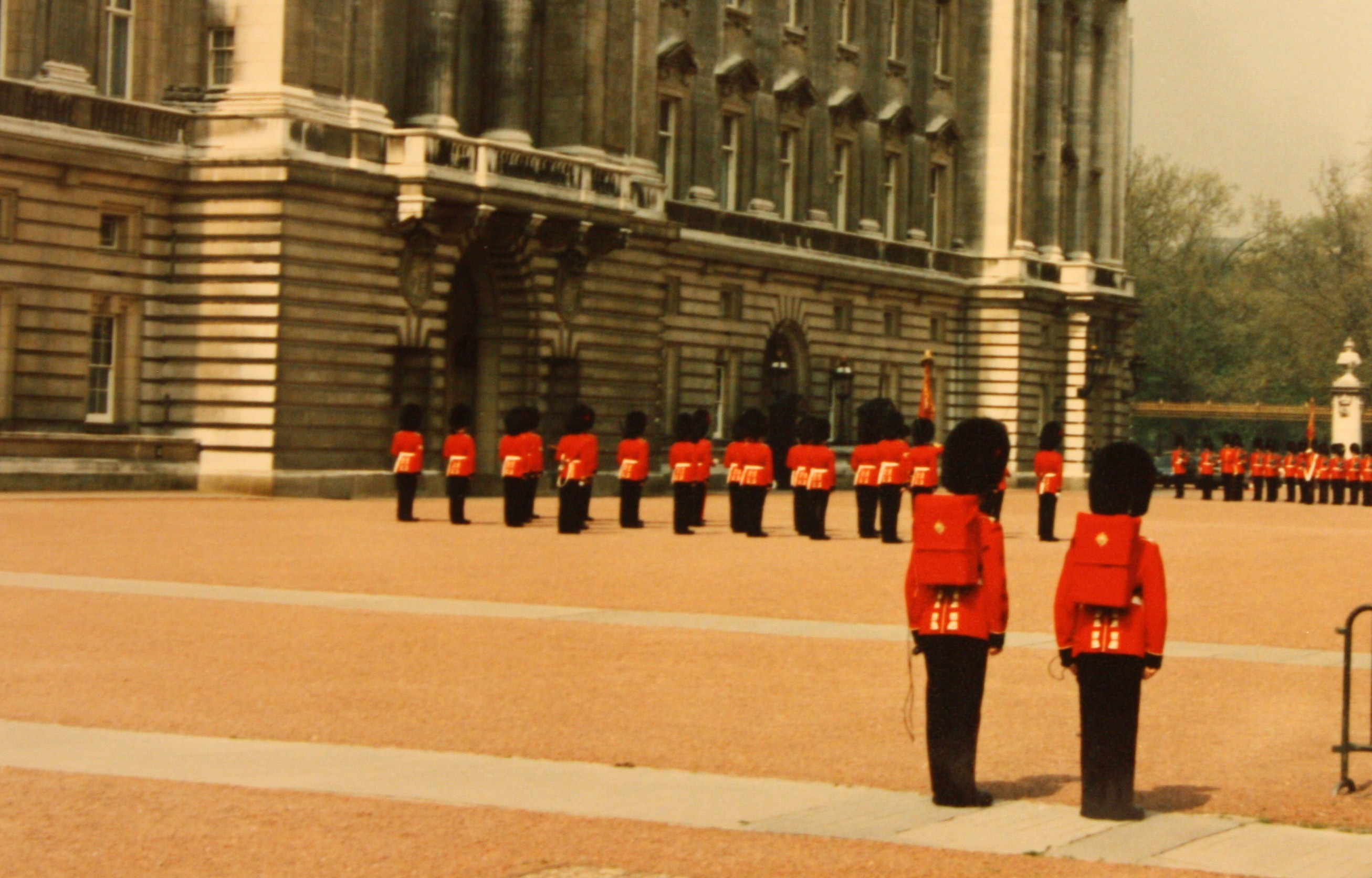
I wander thro' each charter'd street,
 Near where the charter'd Thames does flow,
 And mark in every face I meet
 Marks of weakness, marks of woe.

In every cry of every Man,
 In every Infant's cry of fear,
 In every voice, in every ban,
 The mind-forged manacles I hear.

How the Chimney-sweeper's cry
 Every black'ning Church appalls;
 And the hapless Soldier's sigh
 Runs in blood down Palace walls.

But most thro' midnight streets I hear
 How the youthful Harlot's curse
 Blasts the new born Infant's tear,
 And blights with plagues the Marriage hearse.
Crazy. He stumbles, flops, gets up,     and trudges on again.
 He moves his ankles and his knees     like one wandering pain,
 then sallies forth, as if a wing     lifted him where he went,
 and when the ditch invites him in,     he dare not give consent,
 and if you were to ask why not?     perhaps his answer is
 a woman waits, a death more wise,      more beautiful than this.
Poor fool, the true believer:     for weeks, above the rooves,
 but for the scorching whirlwind,     nothing lives or moves:
 the housewall's lying on its back,      the prunetree's smashed and bare;
 even at home, when darkness comes on,     the night is furred with fear.
Ah, if I could believe it!     that not only do I bear
 what's worth the keeping in my heart,     but home is really there;
 if it might be! -- as once it was,      on a veranda old and cool,
 where the sweet bee of peace would buzz,     prune marmalade would chill,
 late summer's stillness sunbathe     in gardens half-asleep,
 fruit sway among the branches,     stark naked in the deep,
 Fanni waiting at the fence     blonde by its rusty red,
 and shadows would write slowly out     all the slow morning said --
 but still it might yet happen!     The moon's so round today!
Friend, don't walk on. Give me a shout     and I'll be on my way.
Bolond, ki földre rogyván     fölkél és ujra lépked,
s vándorló fájdalomként     mozdít bokát és térdet,
de mégis útnak indul,     mint akit szárny emel,
s hiába hívja árok,     maradni úgyse mer,
s ha kérdezed, miért nem?     még visszaszól talán,
hogy várja őt az asszony     s egy bölcsebb, szép halál.
Pedig bolond a jámbor,     mert ott az otthonok
fölött régóta már csak     a perzselt szél forog,
hanyattfeküdt a házfal,    eltört a szilvafa,
és félelemtől bolyhos     a honni éjszaka.
Ó, hogyha hinni tudnám:     nemcsak szivemben hordom
mindazt, mit érdemes még,     s van visszatérni otthon,
ha volna még! s mint egykor     a régi hűs verandán
a béke méhe zöngne,     míg hűl a szilvalekvár,
s nyárvégi csönd napozna     az álmos kerteken,
a lomb között gyümölcsök     ringnának meztelen,
és Fanni várna szőkén      a rőt sövény előtt,
s árnyékot írna lassan     a lassu délelőtt, --
de hisz lehet talán még!     a hold ma oly kerek!
Ne menj tovább, barátom,     kiálts rám! s fölkelek!
NOTE: Originally titled, ERŐLTETETT MENET, and dated September 15, 1944 (in Bor, Serbia,) this poem was found on Radnóti’s person after his execution by fascists in 1944. The translation used is that of Zsuzsanna Ozsváth and Frederick Turner: i.e. Radnóti, Miklós. 2014. Foamy Sky: The Major Poems of Miklós Radnóti. ed. & trans. Zsuzsanna Ozsváth and Frederick Turner. Budapest: Corvina Books, pp. 228-229.
If you can keep your head when all about you
   Are losing theirs and blaming it on you,
 If you can trust yourself when all men doubt you,
   But make allowance for their doubting too;
 If you can wait and not be tired by waiting,
   Or being lied about, don't deal in lies,
 Or being hated don't give way to hating,
   And yet don't look too good, nor talk too wise:

If you can dream -- and not make dreams your master;
   If you can think -- and not make thoughts your aim:
 If you can meet with Triumph and Disaster
   And treat those two imposters just the same;
 If you can bear to hear the truth you've spoken
   Twisted by knaves to make a trap for fools,
 Or watch the things you gave your life to, broken,
   And stoop and build 'em up with worn-out tools:

If you can make one heap of all your winnings
   And risk it on one turn of pitch-and-toss,
 And lose, and start again at your beginnings
   And never breathe a word about your loss;
 If you can force your heart and nerve and sinew
   To serve your turn long after they are gone,
 And so hold on when there is nothing in you
   Except the Will which says to them: "Hold on!"

If you can talk with crowds and keep your virtue,
   Or walk with Kings - nor lose the common touch,
 If neither foes nor loving friends can hurt you,
   If all men count with you, but none too much;
 If you can fill the unforgiving minute
   With sixty seconds' worth of distance run,
 Yours is the Earth and everything that's in it,
   And -- which is more -- you'll be a Man, my son!
I will arise and go now, and go to Innisfree,
   And a small cabin build there, of clay and wattles made:
 Nine bean-rows will I have there, a hive for the honey-bee,
   And live alone in the bee-loud glade.

And I shall have some peace there, for peace comes dropping slow,
   Dropping from the veils of the morning to where the cricket sings;
 There midnight's all a glimmer, and noon a purple glow,
   And evening full of the linnet's wings.

I will arise and go now, for always night and day
   I hear lake water lapping with low sounds by the shore;
 While I stand on the roadway, or on the pavements grey,
   I hear it in the deep heart's core.
Tell all the truth but tell it slant --
   Success in Circuit lies
 Too bright for our infirm Delight
   The Truth's superb surprise
 As Lightning to the Children eased
   With explanation kind
The Truth must dazzle gradually
   Or every man be blind --
Amazon.in Page
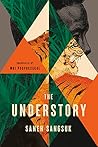
An elderly monk tells stories from his life to the kids living in a small [and fictitious] Thai village. This is one of those works of literary fiction that you have to give a chance. The pacing, the subject matter, and the approach of the first part of the book is such that anyone without an intense interest in Thai village life or the thoughts of a Thai monk on the state of Buddhism in India (almost non-existent) will find it a bit of a slog. However, as the story shifts to the young man’s (pre-monk) life, adolescence through life as a newly married man expecting his first child, it becomes an intensely gripping story.
In the early parts, there’s a lot of violation of that old chestnut, “show, don’t tell” and — like much literary fiction — it’s not clear that there will be a story (versus exposition, character development, and description of events of a non-story like nature.) However, this transitions into the evocative story of how the narrator came to be a monk after a tragic farming householder experience. I can’t even give an accurate description of how far in I think the book makes this swing because my reading pace in the second part was so much quicker and more compelled than early on.
The book has hints of supernatural elements in it but can be read as realism in an environment of intense superstition.
I’d highly recommend this book for those who enjoy literature in translation. Give it a chance to win you over. It will, soon enough.
Full fathom five thy father lies,
   Of his bones are coral made;
 Those are pearls that were his eyes:
   Nothing of him that doth fade,
 But doth suffer a sea-change
   Into something rich and strange:
 Sea nymphs hourly ring his knell.
          Ding-dong!
     Hark! Now I hear them,
          Ding-dong, bell!
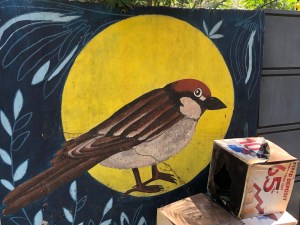
Hundreds of cold sparrows dive into the empty courtyard,
   cluster on plum branches and speak of sun after rain at dusk.
 They choose to gather en masse and kill me with noise.
 Suddenly startled, they disperse. Then, soundlessness.
NOTE: This translation from: Barnstone, Tony & Chou Ping. 2005. The Anchor Book of Chinese Poetry. New York: Random House. p.422.
Amazon.in Page
Release Date: November 14, 2023
This is the fourth volume in a series of translated Japanese short creative writing (mostly poems and short stories.) The series (and this edition, in particular) features some of the best-known Japanese authors (e.g. Haruki Murakami and Meiko Kawakami.) Beyond a few major pieces at the beginning, this edition has a theme of music that runs through it.
Among my favorite pieces were: the novel excerpt Yoshiwara Dreaming about a young girl who is sold into the redlight district and becomes a helper in a brothel; Transformer: Pianos which is a work of surrealist fiction; The Zombie is Haruki Murakami’s fresh take on the zombie story; I also enjoyed many of the inclusions in the section entitled Eight Modern Haiku Poets on Music.
It’s a varied collection of writings. Not only does it include all forms of creative writing — prose and poetic — but the broad selection of writers and translators ensure that there is a diversity of styles and genres. That said, there isn’t a great diversity in quality level. It’s all strong writing, though some works will appeal to any give reader more than others. There’s something for everyone.
I’d highly recommend this volume for readers of literature in translation.














 Tiger Riding for Beginners