BOOK REVIEW: A Tale for the Time Being by Ruth Ozeki

A Tale for the Time BeingA Tale for the Time Being by Ruth Ozeki

My rating: 5 of 5 stars

Amazon page

A struggling novelist named Ruth finds a watertight package containing a Hello Kitty lunchbox washed ashore on an island off the coast of British Columbia. Ruth’s initial assumption is that it’s debris from the March 11, 2011 tsunami that scoured a large swath of coastal eastern Japan out to sea. However, her husband, Oliver, who has more expertise in these matters, tells her that it’s unlikely that the box could cross the Pacific so quickly and that it would be jettisoned out of the currents that consolidate plastic rubbish into large debris fields like the Great Pacific Garbage Patch. When the lunch box’s contents turn out to include a teenage girl’s journal and a number of letters, it seems as though the mystery might be solvable.

The journal is written by a Japanese girl in turmoil named Nao. Nao grew up in American, her father working for a Silicon Valley computer firm until he lost his job. A major factor in Nao’s depression is that she has to return to her ethnic homeland of Japan as a stranger. Her formative years were spent in America, and she is out-of-place in Japan and—as a result—she falls victim to vicious bullying. Furthermore, her father is unable to find a job in Japan and becomes suicidal. The household has to tighten its proverbial belt because Nao’s father, Haruki #2, isn’t working and Nao’s mother has limited earning potential. (FYI: the “#2” refers to the fact that Nao’s father had an uncle for whom he was named who’d been a scholar forced to serve in a kami kaze squad during the war.)

Nao also becomes suicidal, but she is firm in her conviction that she will not fail like her father has done on two occasions. There’s one thing that she must do first and that’s to pen the story of her great-grandmother Jiko. Jiko is a centenarian Buddhist nun and the family matriarch on Nao’s father’s side of the family. Nao stays a summer with Jiko, and the old nun in all her wisdom becomes an anchor in the girl’s tumultuous life. With a level of narcissism appropriate to a teenager, Nao ends up telling us a story that’s more autobiographical than an account of Old Jiko.

A Tale for the Time Being interweaves two storylines. One line is Nao’s journal entries and letters from the lunchbox. The other line is Ruth’s journey as she reads the journal and becomes obsessed with discovering more about Nao and her family members. Eventually, Ruth’s investigation turns up information about Haruki #1 and Haruki #2 that Nao apparently didn’t know, and that both Ruth and the reader hope the girl will learn. Nao comes to idolize Haruki #1 in part because he was committed to his fate as a kami kaze. It’s not that she believed in the kami kaze objective (she identifies more as American than Japanese), but she sees Haruki #1’s commitment in contrast to her father’s behavior. Nao’s myth about her great-uncle turns him into a counterpoint to the father that she loves but thinks a pathetic loser. In a way, this novel is a cautionary tale about drawing conclusions about the virtues and vices of others without knowing their whole story.

Ozeki does a great job of creating characters multi-dimensional enough for us to become intrigued by. Just as Ozeki has her same-named secondary protagonist, Ruth, sitting on the edge of the seat wanting to find out what happened to Nao and her family, we—too–are pulled into that mystery. The challenging approach of weaving Ruth’s story into the journal’s contents works well.

Ozeki hints that there may be something supernatural about the world in which her characters inhabit. There’s a member of a species of crow that shouldn’t be on the American side of the Pacific who shows up at about the same time as the lunch box. Also, we can’t tell whether some of Nao’s stories are the wishful delusions of a tormented girl or whether they reflect some kind of subtle magic. It’s a similar approach to that of other literary fiction authors such as Haruki Murakami.

I’d recommend this novel. It’s gripping and readable.

View all my reviews

BOOK REVIEW: After Dark by Haruki Murakami

After DarkAfter Dark by Haruki Murakami

My rating: 5 of 5 stars

Amazon page

[Note to readers unfamiliar with Tokyo: There are a couple of facts about the city that one must understand for this book to make sense. First, while Tokyo is a city that’s always moving, the trains don’t run between roughly midnight and five am (your results may vary by station.) Second, because many people live far out in the suburbs and the cost of living is high, taxis aren’t an option for much of the population. These two facts add up to a slew of business for those industries that cater to the population caught out “after dark” (i.e. after the trains stop running–not after sundown) including: all-night diners, love hotels, c-stores, bars, pachinko parlors, bowling alleys, and manga bookstores.]

This novel takes place in Tokyo during the wee hours of a single night. Murakami satisfies a form of voyeuristic impulse by giving us a peek into the lives of a few of the people out and about while the masses are home slumbering, or—at least–whiling away insomnia-ridden hours in the privacy of their own homes.

The protagonist is a young college student named Mari. As she sits in a 24-hour Denny’s reading, Mari immediately triggers curiosity. She isn’t typical of the disheveled, boozy, or garish crowd out “after dark.” In a post-witching hour world of drunken salaryman, micro-miniskirted hostesses, tattooed yakuza gangsters, and nightlife-savvy travelers, the bookish young woman stands out. We soon learn that Mari didn’t miss the last train on accident, but rather is staying out all night on purpose to be out of the house. This further raises the level of intrigue.

In the Denny’s, Mari is approached by a gregarious young man named Takahashi who is grabbing a quick snack before going back to his nighttime hobby of jamming in a jazz band. Takahashi introduces himself as someone who already knows Mari from a party. He’s a couple years older than the young woman, and was a classmate of Mari’s sister, Eri. The party at which he met Mari was mostly attended by kids the age of Eri and himself, and Mari was just along for the ride with her more popular sister.

Eri is another major character in the book, although her mysterious presence is mostly in a sleeping state. Eri, unlike the plain Mari, is drop dead gorgeous, and has been doing modeling jobs since she was a child. Takahashi is but one of the young men infatuated with Eri—though we get the feeling that Takahashi realizes that Eri isn’t in his league. He’s a pragmatist—if begrudgingly so. The rest of the book hinges on this chance encounter between Mari and Takahashi.

Suspicions that the grim hours of circadian disruption are the domain of crime and vice are confirmed when a bulky former female wrestler turned love hotel manager, named Kaoru, rushes into the Denny’s seeking Mari. Kaoru is an acquaintance of Takahashi (who has since left the diner to play jazz) and she is seeking Mari because Takahashi told her that Mari spoke fluent Chinese. A Chinese prostitute was beaten up at the love hotel, the Alphaville, and Kaoru needs to talk to the foreign woman to get to the bottom of the matter. Kaoru’s investigation is in part driven by the fact that the Chinese hooker’s John dashed on the hotel bill, but the former wrestler also has a soft spot for the beaten girl and wants to do the right thing by her—though Kaoru knows the police can’t be involved because the Chinese working girl will, at a minimum, be deported by the authorities, or, worse, be punished by the Chinese mafia who pimp her.

As with a few of Murakami’s other books, this book might be labeled “slipstream.” Slipstream is a genre that blends mainstream literary fiction with supernatural elements / speculative fiction. However, the scenes that aren’t realist generally involve the sleeping Eri in her room by herself. So, it may be that Murakami is just conveying the hazy and illusory world of sleep and life at the edge of sleep. I’ll leave it to the reader to make their own interpretations of this. There are also coincidences that could strain credulity, but this may just be an attempt to convey that the world of Tokyo “after dark” is a small pond.

I’d highly recommend this novel. Murakami gives us likable characters and one can see why said characters are draw to each other despite their very different existences. Then he puts them into situations that demand resolution. It’s a short, readable, and interesting novel.

View all my reviews

BOOK REVIEW: Crow with No Mouth: Ikkyu Translated by Stephen Berg

Crow With No Mouth : Ikkyu : Fifteenth Century Zen MasterCrow With No Mouth : Ikkyu : Fifteenth Century Zen Master by Ikkyu

My rating: 5 of 5 stars

Amazon page

Ikkyū Sōjun was the Howard Stern of Zen masters. Born in 1394, he lived through most of the 15th century. Ikkyū served as a temple’s abbot for less than two weeks before he quit in disgust, vowing to move into a red-light district—apparently he wanted to live among people he found more honest and less hypocritical. The Zen master despised the corruption and snobbery of monastic politics.

Crow with no Mouth is a collection of Ikkyū’s verse, which is largely in the Zen tradition–featuring natural subjects and simple wisdom in a sparse style. Of course, as per my comments in the preceding paragraph, there are a few poems on topics such as cunnilingus and debauchery—so it’s not what one would call a child-friendly collection (unless one enjoys explaining the sexual exploits of a lecherous monk to one’s child.) The more explicit poems may seem like a diversion from the Zen path, but perhaps not. Maybe Ikkyū offered them as a way to train the mind, to observe one’s reaction to shocking commentary as a means of changing one’s way of thinking.

A few of my favorite lines of a more traditional nature include:

-“you can’t make cherry blossoms by tearing off petals to plant; only spring does that”

-“sometimes all I am is dark emptiness; I can’t hide in the sleeves of my own robes”

-“it’s logical: if you’re not going anywhere any road is the right one”

-“the edges of the sword are life and death; no one knows which is which”

-“even in its scabbard my sword sees you”

-“a flower held up twirled between human fingers; a smile barely visible”

-“in war there’s no time to teach or learn Zen; carry a strong stick; bash your attackers”

Here are a few of those jarring lines that I mentioned above:

-“that stone Buddha deserves all the bird shit it gets”

-“all koans just lead you on but not the delicious pussy of the young girls I go down on”

-“ten fussy days running this temple all red tape; look me up if you want o in the bar whorehouse fish market”

-“my dying teacher could not wipe himself; unlike you disciples who use bamboo; I cleaned his lovely ass with my bare hands”

-“don’t hesitate get laid that’s wisdom; sitting around chanting, what crap”

-“who teaches truth? good/bad the wrong way; Crazy Cloud knows the taste of his own shit” [Crazy Cloud was Ikkyū’s name for himself.]

When he left the monastery, Ikkyū shredded the certificate that served as his monastic credential. Some of his students found it, and pieced it back together. That led to the following verse:

-“one of you saved my satori paper I know it piece by piece; you pasted it back together; now watch me burn it once and for all”

Ikkyū’s verse asks us to reevaluate what it means to be sacred or profane. The orthodox view would be that Ikkyū fell from the sacred life of a monk. However, Ikkyū tells us that one can degrade what is important by raising the wrong things to sacred status. Conversely, some of what we believe to be profane is just rooted in habitual and ill-reasoned ways of thinking.

I’d recommend this work for those who love the spare form of Japanese poetry, and who don’t mind a hard jolt to their psyche occasionally.

View all my reviews

READING REPORT: March 13, 2015

Welcome to a special–not really–Friday the 13th edition Reading Report. Were I one to plan ahead, I might have read something horrifying for this week, but I’m afraid there’s nothing to inspire dread… well, I don’t really know what your dread threshold is, but unless you have phobias about good posture or classic literature, I think you’re safe.


I bought The New Rules of Posture this week, and spent a lot of my reading time with my nose in it. It’s one of those books that has one periodically getting up to try some movement or postural experiment, but I’m about 2/3rds of the way through nonetheless. It’s written by a dancer turned Rolfer, and offers good insights on the subjects of posture and breathing for those of us who are interested in evaluating and improving such things. The line drawings, many anatomical in nature, are helpful and the readability is high for a such a book. I suspect I’ll finish it in the upcoming week and will have a review up within a couple weeks.

NewRuleofPosture


I finished only one book this week, Why Do People Get Ill? I’ve mentioned this book in earlier reports, and will soon be doing a review, so I won’t spend much time on it now. It’s essentially about the roles that stress and the inability to articulate one’s feelings about illness play in catching a disease as well as its progression.

WhyDoPeopleGetIll_Leader&Corfield


As one can see, I’ve been on a body-mind nexus reading kick lately. I’m trying to educate myself about anatomy, physiology, and related biological sciences as a means to improve  the operation of body and mind. In addition to the featured titles above, some of the other books I’ve been reading during the past week include: Zen and the Brain (there was a fascinating chapter on indigenous opioids–i.e. morphine-like substances produced within the body–among this week’s chapters), The Trigger Point Therapy Workbook, and The Sensual Body.

Zen&Brain

TriggerPtTherapy

TheSensualBody


Moving beyond the body / mind books, I did do some reading that wasn’t research related. I’m about 40% through The Painted Word, having read the entries for the letters D, E, and (part of) F. My favorite word from the week was “dromomania” which means an intense passion for travel or wandering. As in, “I, Bernie Gourley, have a bad case of dromomania.”

Painted Word


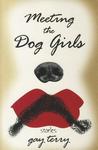
The short story collection that I’m currently reading (I try not to neglect this medium) is Meeting the Dog Girls. I read about half-a-dozen stories this week (most of them are short, and a few of them–it could be argued–don’t really constitute stories), and I’m about 20% of the way through. Absurdism is a prevailing theme, though in some stories more than others. So far, I’m enjoying this collection. It’s mostly light and easily digestible reading, but has some intense moments.

Meeting the Dog Girls


With respect to novels, I slipped away from Mo Yan’s Life and Death are Wearing Me Out, and resumed reading Victor Hugo’s Les Misérables–a book which I started a while back. I’ve got to admit that reading 19th century literature can be a struggle, and–at the risk of offending–Hugo could’ve used a modern-day editor. (I realize that an alternative interpretation is that modern-day people–myself included–could use an attention span.) I’m only about 10% in, but I got through a powerful moment during which the gendarmes bring Jean Valjean before the Bishop. If you’ve read it (or seen one of the movie or theatrical adaptations) you’ll know what I’m talking about.

LesMiserables


The only other book I spent any significant time was The Taiheiki, and if–like me–you think reading a translation of 19th century French literature can be a challenge, try reading a translation of 14th century Japanese literature. As I’ve mentioned, this book is research for the novel I’m working on. The challenge is the vast cast of characters. It’s a blend of history and fiction, and if you don’t know who was allied with whom during the war between Emperor Go-Daigo and the Hojo, it’s hard to figure out who you should be rooting for–unless it’s talking about the legendary warrior Kusunoki Masashige or one of the few other really well-known samurai.  (Kusunoki was the lord of a small and inconsequential province and his name would likely have been lost to history–despite being a brilliant General–had he not become Japan’s national paragon for the virtue of loyalty.)

Taiheiki

BOOK REVIEW: The Mandala of Sherlock Holmes by Jamyang Norbu

The Mandala of Sherlock Holmes: The Adventures of the Great Detective in India and TibetThe Mandala of Sherlock Holmes: The Adventures of the Great Detective in India and Tibet by Jamyang Norbu

My rating: 2 of 5 stars

Amazon page

I gave this book the lowest rating that I’ve ever given a book I reviewed. However, there’s a selection bias at work. I don’t finish (and rarely start, for that matter) books that are so horrible that they’d get a lesser rating. Ergo, any book that I finish and review has some redeeming qualities. I’ll leave it to the reader to determine whether these redeeming qualities will outweigh the deficiencies of story in this book.

The Mandala of Sherlock Holmes takes our beloved detective out of London and onto a trip from Bombay to Shangri La by way of Shimla (India) and Lhasa (Tibet.) It’s one of several pieces of Great Hiatus fan fiction out there. (I recently saw an addition that took Holmes to Japan.) Fans of Sherlock Holmes will be aware that Sir Arthur Conan Doyle became tired of the character at one point and killed him off (along with Professor Moriarty) at Reichenbach Falls. Holmes was “revived” several years later due to popular demand (and—perhaps—Doyle’s need for funds), leaving fans / authors to speculate what the detective did during his time in hiding (i.e. the so-called Great Hiatus.) This particular work tells us that Holmes spent his time in the Himalayas. It’s as good a setting as any, given that fascination with the esoteric Himalayan world was building in the West during this time. In an interesting feature, Norbu’s book brings in a fictional character from Rudyard Kipling’s Kim, Hurree Mookherjee, to serve as Holmes’s sidekick. (FYI: Kim was published during the Great Hiatus years.) The story involves shadowy plots against both Holmes and a young 13th Dalai Lama (this was the predecessor of the current Dalai Lama) that are incidental to obtaining a powerful mandala.

I’ll begin with the strengths of the work before I tear into what I found objectionable about the book. The author, Jamyang Norbu, clearly did his research, and there are some fascinating tidbits and insights into that era of South Asia history. As a Tibetan, Norbu, paints an intriguing travelogue of the territory that Holmes and Hurree traverse. Also on a positive note, I’d rate the readability of this work to be high. It doesn’t follow the 19th century so closely that it falls into the purple prose and general verbosity of that century’s literature, and I think that’s a good thing. The author manages to create a bit of the feel of 19th century literature without falling off the abyss.

The book’s negative qualities are disproportionately loaded toward the back of the book. (Part of what keeps one reading and engaged is that it seems like the book could turn out well.) Let me begin with one minor character defect of the book which is that not all of the chapters advance the story; a few are descriptive like travelogues. However, most of said chapters are so short that it’s not that problematic.

I should note that one star that might’ve been obtained for originality must be forfeited because there’s no shortage of books following the same general premise.

But the story’s major flaw is that devolves into supernatural speculative fiction done poorly. Let me say, I’m not against the supernatural genre in theory. However, as with stories about Superman, these tales are exceedingly easy to do poorly and extremely difficult to do well. In the real world, tension is easily created because the reader knows many of the limits that characters face, and a good writer forces his characters up against some of those limits. However, when characters seem to be limited by the laws of physics, but then just start pulling magic rabbits out of their hats, the tension drains. We assume our protagonist will prevail and the antagonist will be thwarted. The odds stacked against our hero(es) don’t matter if one expects they’ll pull out a—proverbial or otherwise–magic wand and claim a cheap victory. If one wants to do the supernatural well, one needs to not only make the antagonist stronger (which Mr. Norbu does), but one has to know what everybody’s limits are. Otherwise, it’s just a cheap spectacle. [I should point out that Hurree does engage in a non-magical action that is critically timed during a key moment of the story, and some readers may feel that this absolves the novel of its ham-handed introduction of the supernatural.]

There’s another problem with the degree to which the book hinges on the supernatural, and that is specific to the domain of Holmes. The supernatural is usually something to be debunked in the Holmesian domain. Sir Arthur Conan Doyle’s Holmes is a product of the dawning of the age of rationality, and he is a man of science. [Want to know more? See this Tor article entitled “No Ghost Need Apply.”]Doyle’s Holmes may accept the possibility of the supernatural and apparently supernatural elements may make appearances, but Holmes is always looking for an explanation rooted in logic and favoring the possible. While Norbu goes to great lengths to capture the flavor of Holmes in many aspects, he abandons the character altogether in favor a world that looks neither like our own nor the one Arthur Conan Doyle created.

The disappointment of this book is that it looks like it’s on a trajectory to hit its mark, but then sails wildly off target.

If you like supernatural fiction and you don’t mind that magic suddenly pops up to shape the climax of the book out of the blue, by all means pick this book up. Otherwise, I can’t say that I’d recommend it for Holmes’ fans.

View all my reviews

READING REPORT: February 27, 2015

I finished three books this week.

Antifragility

The first of these is Antifragile, the latest offering by Nassim Nicholas Taleb, whom you may know from Black Swan and Fooled by Randomness fame. While it’s his latest book, it came out a couple of years ago and I started it over a year ago.  The premise is that some entities become stronger when exposed to stressors and disorder,  and there are ways to nurture this tendency to be antifragile. While the ideas and many of the examples are fascinating, I put it down for a long time because Taleb is prone to rambling diatribes. After about the 1oooth time reading about how much he loathes the 98% of professors (we get it already), you may be ready to set it down as well.  [To be fair, Taleb probably gets a hundred death threats a year from enraged social science scholars whose life’s work will appear ridiculous to anyone who understands the gist of Taleb’s arguments in this and his preceding two books.] Taleb is a first-rate thinker who has delivered some very important messages about the misapplication of statistics, I’m not sure why he feels compelled go all Howard Stern about it–though it does probably sell a few extra copies and I suspect he is genuinely that way.


pyjamagameMark Law’s The Pyjama Game is in part a micro-history of the martial art and sport of judō, and in part is an accounting of his own experiences in taking up judō at the ripe age of 50. For me the history and evolution of judō is where the book is at its most interesting. However, if you don’t have any martial arts experience–or even if you don’t have any grappling-centric training experience–you may find Law’s discussion of testing and randori (free form training, the grappling equivalent to sparring) intriguing, or invaluable if you’re considering taking up judō, jujutsu, or sambo.


mantraSherlockHolmesThere is apparently a cottage industry of writers putting out their own Sherlock Holmes novels, and–in particular–writing about Holmes’s gap years. For those unfamiliar with the literary history of Sir Arthur Conan Doyle, at one point he got sick of writing these crime fiction novels and killed off Sherlock Holmes. However, there was such a clambering for the master detective that Doyle resuscitated Holmes. These gap years in which Holmes was believed dead have proven fertile soil for writers who wish to write their own spin on where Holmes went and what he did when he was traveling incognito. I saw a press post for a new one the other day in which Holmes goes to Japan. The Mandala of Sherlock Holmes, however, speculates that Holmes traveled to Bombay, and from there to Tibet and eventually to Shangri La. It’s an intriguing premise and offers some good travelogue type description of setting–however as a story it’s not as artfully executed as the Arthur Conan Doyle books.


I bought four books this week, two of which–in part–because they’ll help me complete the Book Riot 2015 Read Harder Challenge, which I will talk about below.


Dinosaurs_wo_Bones

Admittedly, I bought this book, Dinosaurs Without Bones,  not because the subject jumped out at me (though I’m sure it will prove thrilling) but rather because I knew the author about a billion years ago (I know; I should take geological time more seriously when mentioning a book of this subject.) At any rate, we trained at the same martial arts school in Atlanta, Georgia. That disclaimer being made, the topic looks fascinating and I’m eager to learn more about paleontological detective work.


GoldfinchThe Goldfinch won the 2014 Pulitzer Prize for Literature, and so it meets an unchecked requirement for the Book Riot Challenge (recent award winner of one of the major literary prizes.) Honestly, if it weren’t for my desire to complete the challenge, I might have read Tartt’s The Secret History first. The latter books seems a little more up my alley, but I”m eager to see what this critically acclaimed novel has to offer. If it’s engaging, I’ll go back and pick up her first novel.


AMillionShadesofGray

No A Million Shades of Gray isn’t a mommy porn book 20,000 times more intense than E.L. James’ book. On the contrary, it’s an intriguing YA book about a teenage elephant handler who escapes into the jungle with his elephant to escape war-torn Vietnam. This book will hit on an unchecked category on the Book Riot Challenge (i.e. YA book)


Life of Pi

Life of Pi is a book that I intended to read long before the movie came out, but still haven’t gotten around to it. It was cheap on Kindle, and so I picked it up. I’ve seen the movie, so it’ll be interesting to compare, given how visual the movie was.


I’m almost halfway through the Book Riot 2015 Read Harder Challenge. The 19 books I’ve completed thus far this year include books in 11 of the 24 categories, including:


3.) Short story collection or anthology: a.) 999: New Stories of Horror and Suspense, and b.) I Have No Mouth And I Must Scream


6.) By someone of another gender: a.) Tears in Rain, and b.) Principles of Tibetan Medicine


7.) Takes place in Asia: a.) Quarantine in the Grand Hotel, and b.) The Mandala of Sherlock Holmes


10.) A micro-history: Yoga Body: The Origins of Modern Postural Practice


12.) A science fiction novel: a.) Tears in Rain, b.) The Martian


17.) A collection of poetry: Leaves of Grass


18.) A book that was recommended: Key Muscles of Hatha Yoga


19.) A book originally published in another language: a.) Tears in Rain (Spanish), b.) Quarantine in the Grand Hotel (Hungarian)


20.) A graphic novel or comic book collection: The League of Extraordinary Gentlemen (Vol. 1)


23.) A book published in 2014: The Martian


24.) A self-improvement / self-help book: Zen Mind, Strong Body


BOOK REVIEW: The League of Extraordinary Gentlemen (Vol. 1) by Alan Moore

The League of Extraordinary Gentlemen, Vol. 1The League of Extraordinary Gentlemen, Vol. 1 by Alan Moore

My rating: 4 of 5 stars

Amazon page

For those unfamiliar with this series or the movie featuring Sean Connery, this graphic novel assembles a team of heroes from 19th century science fiction and adventure novels. Specifically, the team includes: Mina Harker (of Bram Stroker’s Dracula), Allan Quatermain (of H. Rider Haggard’s King Solomon’s Mine series), Captain Nemo (of 20,000 Leagues Under the Sea and other Jules Verne novels), Dr. Jekyll/Mr. Hyde (of the Robert Louis Stevenson novel featuring their names), and Hawley Griffin (of the H.G. Wells novel, The Invisible Man.) The team’s principle nemesis is Professor James Moriarty of Arthur Conan Doyle’s Sherlock Holmes series.

Interestingly, this book follows the same general plot progression as the movie, but is much different in tone, settings, and character details. The plot progression of which I refer is that the team is assembled (with no small amount of mutual animosity) and they bond into a team as they face a grandiose threat of steampunk industrialization run amok. That plot progression aside, you’ll find an entirely different story otherwise. First, those who favor gender equality will appreciated that Mina Harker is in a leadership role in this volume, the role played by Quatermain in the movie. (That being said, this isn’t a group of individuals who take readily to being led.) Second, those who like darker, grittier tales will find this book more appealing than the movies. Allan Quatermain is found by Harker wasted in an opium den. Griffin is captured after having moved into a girl’s school to use his invisibility to lecherous advantage and the head mistress of said school is decidedly dominatrix like. I generally liked the grittier tone better, though it was hard to reconcile Griffin’s abhorrent behavior with heroism—anti-heroes are a challenge, particularly one who can disappear at will. Third, the team in the book is smaller and more manageable, with the movie having taken on two more characters (Dorian Gray and Tom Sawyer.) Finally, the book doesn’t get around so much. The movie features at least four major settings—not counting the high seas, but the book takes place mostly in Victorian London.

You don’t have to have read all the classic works from which the characters derive to get the story, but it does make it a little more fun. (Yes, I realize that I’m using “classic” for books–some of which–were considered the pulp fiction of their day. However, if your book is still in print after 100 years, I’d say you deserve the status and respect.) Those who’ve read the books will get some subtleties that aren’t critical to the story but are kind of nifty. That being said, don’t expect the characters to match their originals perfectly. The novels covered are wide-ranging, some rely on supernatural elements and others are more realistic, some are futuristic while others reflect the times more accurately. One can’t bring all these individuals into one world and have them be exactly as they were in their original domains.

There are some extra features at the end including a short story featuring a time traveling Allan Quatermain and some art from the series.

I’d recommend this book for those who read comics and graphic novels—especially if they’ve read the stories of at least a few of the 19th century characters. (If you haven’t read any of the novels, you should probably go back and hit some classics before you read anything else. Just my opinion.) It’s an intriguing concept, and it’s done well.

The movie trailer is here.

View all my reviews

READING REPORT: February 20, 2015

This week’s Reading Report will be short. I didn’t complete any books this week.


Most of my reading was divided between two books that I’ve mentioned in earlier reports. The first is Zen and the Brain by James H. Austin. This is probably the most expensive book that I’ve purchased since the ridiculously overpriced textbooks of college. While I’ve been known to pan decent books for being overpriced (e.g. most recently Zen Mind, Strong Body by Al Kavadlo), I will say that I’ve found this book to be worth it. There are vast numbers of books on the fascinating findings of neuroscience research. Also, there is a vast canon on Zen, meditation, and the quieting and mastering of the mind. However, there are only a small (though growing) number of books that deal with the intersection of these two subjects, and none covers the subject in as much depth as Austin’s work–as far as I’ve seen. The chapters I’ve been reading of late deal with emotions, visceral drives, and memories–all relevant issues for one who is seeking personal development in a scientifically-minded manner. The next chapter will deal with GABA. I’m looking forward to this because I know there is scientific evidence that yoga can reduce depression through its effect on GABA levels, and I look forward to having a better understanding of how this works.

Zen&Brain


The second book that’s consumed a lot of my time over the past week is The Pyjama Game. I’m about 2/3rd of the way through this book and will finish it in the upcoming week. It is in part a micro-history of judō and in part an account of what it’s like to be a practitioner of the martial art of judō. While the micro-history chapters are chronological, they’re interspersed with chapters that are more of a personal accounting of the author’s experience (and the experience of individuals with which he interacted with first-hand–i.e. other amateurs.)  The era that was covered in my reading of the past week was an interesting one. It chronicled judō’s shift from a time in which Japan completely dominated the sport to one in which Russians, Europeans, and Americans started to make headway and—in some ways–unique contributions to the art. This includes judō‘s rise to Olympic status, and how the sport has progressed since that time.

pyjamagame


There were another couple of books that I read substantial parts of as research for the novel I’m writing. The first of these is The Taiheikiwhich is–as was the style in medieval Japan–a mix of part history and part literature. It tells the story of Emperor Go-Daigo’s retention of power, largely through the efforts of valiant loyalist warriors–most notably the famous Kusunoki Masashige.

Taiheiki


The second research work is entitled Fighting Techniques of the Oriental World: AD 1200 – 1860As my novel takes place partly in 14th century Japan, China, and Southeast Asia, this reference comes in handy for learning about the activities of warriors across several nations.

FightingTechniquesOrientalWorld


I purchased three books this week. In a way, I was successfully (and happily) suckered. For those who haven’t realized, Amazon is very clever. If you look at a book once or twice, the price will often rise a little when you go back. This drives a few suckers to buy it at a higher price before it rises to some imagined peak price. I’ve noticed this on enough occasions to believe that it’s not just coincidence. Furthermore, as one trained as an economist, I know this is a sound pricing strategy. What I’d not yet experienced is that if one keeps periodically checking on the books–but not buying–the prices will creep back down to a new low, probably only a tiny bit under the first price you saw. I bought three books that I’ve been looking for both on Kindle and at my local bookstore, but which have stayed above my reservation price.


The first, and most expensive, was Buddha’s Brain, which is along similar lines to the aforementioned Zen and the Brain. The book is by a neuroscientist who specializes in neuroplasticity, and who examines how one can go about “rewiring” one’s brain to be happier and more well-adjusted.

BuddhaBrain


The second book is called The Relaxation Response. It was the cheapest book of the three and is much older than the book Buddha’s Brain. In it Dr. Benson (Harvard MD) describes the relaxation response as the body’s counterpoint to “fight or flight” mode. In this state of relaxation, the body–among other things–goes to work on repairing what ails it. There’s a lot of evidence that a human body can repair most of what can ail it if it gets enough rest–i.e. sufficient break from stress.

Relaxation Response


My final purchase was A Confederacy of Dunces. This book is considered to be one of the best comedic novels in American literature. It’s also a book that all depressed writers (which is to say all writers struggling to get things published) should read for the cautionary tale of the novel’s tragic back story. The author, John Kennedy Toole, committed suicide (at least in part) because he couldn’t get it published. His mother then took up the torch, shopping it around. It took her seven years, but she finally got it published after convincing the novelist Walker Percy to look at it, and having achieved his recommendation. In 1981 it won the Pulitzer Prize for fiction.

confederacy of dunces

READING REPORT: February 13, 2015

Welcome to a special Friday the 13th edition of the Reading Report. What’s so special about it? If you’re not deluded by superstition, then not much. If you are superstitious, reading this post may cause you to suffer a plague of locusts (or whatever plagues your particular geographic area.)


Now that we’ve gotten rid of the illiterate ninnies, we can get down to discussing books.


I finished two books this week–one nonfiction and one fiction. I’ll be posting book reviews within the next couple weeks.


The nonfiction book was called Yoga Body: The Origins of Modern Posture Practice. The author’s intriguing and controversial thesis is that yoga as it’s practiced in studios around the world today nothing to do with traditional Indian yoga, but, instead, owes it’s existence to European calisthenics and bodybuilding systems and the Indians that borrowed from them. I didn’t find the author’s argument compelling for a number of reasons that I’ll get into in my review. This isn’t to suggest that I’m certain he’s wrong. He may be right, but the way he constructed his argument left a great deal of room for doubt.


TLEG_Vol1

The fiction book was a graphic novel entitled The League of Extraordinary Gentlemen (Vol. 1). For those of you who haven’t seen the movie featuring Sean Connery, this comic book gathers together a team of protagonists from 19th century science fiction and adventure novels. The team consists of Mina Harker (of Bram Stoker’s Dracula), Allan Quatermain (of H. Rider Haggard’s King Solomon’s Mines), Captain Nemo (a Jules Verne recurring character), Dr. Jekyll/Mr. Hyde (Robert Louis Stevenson’s title characters), and Hawley Griffin (of H.G. Wells’ The Invisible Man). One needn’t have read all those classic stories to follow this book, but being a fan of 19th century tales of the fantastic definitely makes it more fun. The story depicted in this volume has nothing to do with the movie plot.


mantraSherlockHolmes

I’m more than halfway through a couple of books that I mentioned in earlier Reading Reports, they are Why Do People Get Ill? and The Mandala of Sherlock Holmes.  I read chapters 7 through 9 of the former book, which had to do with the expression of symptoms, the heart as a symbol and that symbol’s expression in illness, and the impact of mother’s experiences on infants and children. In the latter book, Holmes has arrived in Tibet, and the plot thickens. The author is Tibetan, and so has some unique insights. However, some chapters advance the story with action, and others are almost like travelogue.


I’m still early into reading two books that I’ve previously mentioned. The first is Zen and the BrainIn this book I’ve transitioned out of the part explaining Zen and the author’s experience of that tradition, and am now into the part that lays down the basic neuroscience. While the author writes in a readable style, for a neuroscientist, this is still challenging reading because of its scientific nature and the complexity of the brain. However, the chapters I read recently both raise some fascinating questions and provide useful information. The chapter I just finished dealt in part with the neurochemistry of addiction. I like that this book is divided up into short chapters. This is beneficial for taking in such complicated information. I need frequent think-breaks to ruminate on what I’ve read.


pyjamagame

The second is The Pyjama Game. After a slow start, the last two chapters have contained some fascinating information. One of these chapters dealt with the history of jujutsu, particularly as Japan transitioned from medieval to modern. The other chapter outlined Kanō Jigorō‘s development of judō.


I bought three books this week.


The first is entitled Healing Moves, and is by a married couple consisting of a fitness writer and a cardiologist. This book addresses a topic that is a prevailing theme in my nonfiction reading as of late, which is what movement, exercise, and physical activity can do to improve one’s health (not just one’s fitness.)

HealingMoves


The second book is Greatest Ever Boxing Workouts.  This book presents information about what boxers like Mike Tyson, Manny Pacquiao, and Floyd Mayweather do to prepare for fights. It’s a follow-up to an earlier book that included fighters like Muhammad Ali and Roy Jones Jr.

BoxingWorkouts


Finally, I just got a short story collection on Kindle Daily Deal the other day entitled Lovecraft’s Monsters.  This isn’t a collection of H.P. Lovecraft stories, but rather is an anthology of stories inspired by Lovecraft’s work.

LovecraftsMonsters

BOOK REVIEW: Quarantine in the Grand Hotel by Jenő Rejtő

Quarantine In The Grand HotelQuarantine In The Grand Hotel by Jenő Rejtő

My rating: 4 of 5 stars

Amazon page

[Note: This book is published by Corvina Books, which is a Hungarian publisher that—among other things—specializes in translations of Hungarian literature (into mostly English and German.) I bought the book on a recent trip to Budapest. I mention these two facts because this seems to be an expensive and / or difficult to acquire work outside of Hungary. A cursory Amazon search brought up copies only at an exorbitant rate. In Hungary I paid 2500 forint (about $9 USD at the time), which I would consider on the high side of what the book is worth. It’s a good book, but it’s a 160-page pulp-fiction paperback novel written about 80 years ago.]

Quarantine in the Grand Hotel is a murder mystery set on a fictional resort in Indonesia (or thereabouts.) However, it’s not your typical dour mystery. It’s as much of a satirical humor novel as it is a mystery. I was hooked with the first paragraph, which reads, “When Maud returned to her room, she saw a man emerge from her wardrobe. Dressed in pyjamas and wearing a bright green lampshade on his head, the stranger beamed a friendly smile at her.” From that point, I had to know who the man in the pyjamas is and how he got there, and that information doesn’t come immediately or without false leads.

The premise is that the resort is quarantined and a murder takes place there (actually two murders.) It’s not a creative premise. The hotel setting allows the author to bring together an international cast of characters (suspects) some of whom would believably have secrets or be leading double lives. Where the creativity comes in is both in the humor, and in the skilled reveals. Rejtő used cliff-hanger chapter closings to good effect. He also plants false information, e.g. in the form of false confessions designed to protect loved ones that may or may not have actually committed a crime.

Rejtő (who wrote under the nom de plume “P. Howard”) was a Hungarian journalist and author. He wrote this and most of his books in the 1930s. He died in a forced labor camp in axis-controlled Soviet territory during World War II. He’d displeased the Hungarian Arrow Cross Militia (i.e. the Hungarian fascists) and was sent to a labor camp at the front.

I’d recommend this book for those who like light, humorous novels. If you’re a hardcore mystery fan, it might seem a little silly and ham-handed. If you are looking for a novel that offers insight into Hungarian literature, I don’t think this one is for you. The setting is not Hungarian, the major characters are not Hungarian, and I would hazard to say that most people wouldn’t know that this translation wasn’t written by a British, or other English-language country, author.

View all my reviews