BOOK REVIEW: Modern British Poetry ed. by Louis Untermeyer

Modern British PoetryModern British Poetry by Louis Untermeyer
My rating: 4 of 5 stars

Amazon page (not the same edition)


This is an anthology of 183 poems written by 77 British authors. Given the title, “Modern British Poetry,” the first thing that should be stated is that the original work came out around 1920, and so the bulk of these poems are from the 19th century. That may fit perfectly with your classification of modern poetry, but if you’re looking for present-day poets, this isn’t the book you’re after.

However, the good news is that you might still find some unexpected treasures. Often collections of public domain poetry like this gather poems that are ubiquitous and which are probably already on the shelves of most poetry readers in various collections and anthologies. But of the almost 80 poets included, only a handful will be household names for a general reader—particularly if you aren’t from the UK and thus didn’t get exposed to the more obscure British poets. Of course, there are a number who have stood the test of time: Thomas Hardy, Robert Louis Stevenson, Oscar Wilde, A.E. Housman, William Butler Yeats, Rudyard Kipling, G.K. Chesterton, Alfred Noyes, D.H. Lawrence, Edith Sitwell, and Robert Graves spring to mind. Furthermore, the poems chosen aren’t a straightforward “greatest hits” list. (e.g. “If” isn’t among the four Rudyard Kipling entries.)

As one might expect of a 230 page anthology that contains 183 poems (plus author bios and the occasional footnote), the poems selected are brief. In a few cases, excerpts from longer works are included, but for the most part these are poems that fit comfortably on a single page. This is great for someone trying to get a feel for the various poets and for those who enjoy more compact works over epic poems—which, if we’re being honest, is most of us.

The anthologist, Louis Untermeyer, includes brief bios for each of the poets in front of their entries in the anthology. Generally, each included poet has between one and four poems. While the poems are organized by poet, the poets seem to be organized chronologically (at least as near as I can tell; it begins with Thomas Hardy [1840 – 1928] and ends with Robert Graves [1895 – 1985.])

I read a Kindle version of this work and found it to be far better organized than most of these public domain compilations. It not only had an index that would take one to individual poems or poet bios, but it also contained a hyperlinked index. Unfortunately, I obtained the book some time ago and I couldn’t find the same edition when I looked for it while doing the review. Most of the Kindle editions now seem to bundle Untermeyer’s “Modern American Poetry” with his “Modern British Poetry” but the edition I had was just the British poets.

I recommend this book for poetry readers. In addition to having some exemplary short form poetry from both well-known and forgotten poets, it happens to contain the first poem I ever memorized in it—a powerful little poem by John McCrae entitled “In Flanders Fields” (if you don’t know it, read it; it’s war poetry at its finest.)

View all my reviews

BOOK REVIEW: District and Circle by Seamus Heaney

District and CircleDistrict and Circle by Seamus Heaney
My rating: 5 of 5 stars

Amazon page


“District and Circle” is a collection of 44 poems by the Nobel Laureate Seamus Heaney that was released in 2006.

One feels the essence of the 20th century across this collection. There are a couple of poems that refer to World War II, not from the perspective of crucial events and violent clashes, but as it was experienced in “the District” (e.g. “Anahorish 1944.”)

There are also a number of poems that make industrialization romantic or—at least, in some way–evocative. Heaney writes of mechanical devices and processes in a way that many great nature poems are composed (e.g. the first poem in the collection “The Turnip-Snedder.”) In fact, it’s almost like industrial haiku. It doesn’t share the brevity of Japanese form, but it removes the extraneous and deals in only what one can experience with the senses. In that way, one can feel the heft of these objects. They aren’t cheap, flimsy plastic, but wood and iron and brass. There are also some lovely nature poems.

Heaney’s use of language is resplendent. It’s not just the description, but the sound. I’ve even found myself thinking, “I don’t know what that word means, but—damn–it sounds gorgeous right there.”

The poems range from several words to a few pages in length, with most fitting on a single page. It’s about 80 pages of beautifully composed poetry.

I’d recommend this book for all poetry readers.

View all my reviews

BOOK REVIEW: The Memoirs of Sherlock Holmes by Arthur Conan Doyle

The Memoirs of Sherlock Holmes (Sherlock Holmes, #4)The Memoirs of Sherlock Holmes by Arthur Conan Doyle
My rating: 5 of 5 stars

Amazon page


This is the second collection of short stories and the fourth book overall in the canon of Sherlock Holmes. It includes eleven adventures of the great detective as narrated by his partner, Dr. John Watson.

Below, I’ll describe the premise of each of the stories:


“Silver Blaze” A race horse goes missing and its trainer is found dead. The eponymous race horse is favored to win an upcoming race, so Holmes faces a race against time to see that the horse can compete.


“The Yellow Face” A man begins to suspect the wife that he’s never had cause to doubt before. Only he doesn’t know exactly what he suspects her of, but it seems to revolve around visits to a nearby cottage that has been recently occupied by an unknown and mysterious resident. Note: this is one of my favorite Sherlock Holmes stories both because it displays the humanity of the character in that his initial guess proves wrong, and in it shows how the author was ahead of his time in his worldview.


“The Stock-Broker’s Clerk” When an out-of-work clerk, recently hired by prestigious firm, is given an offer of much more money but finds himself doing only busy work, he gets suspicious and calls on Sherlock Holmes.


“The ‘Gloria Scott’” Holmes is visiting a college friend when the friend’s father is visited by a gruff ex-sailor. When the family patriarch uncharacteristically bends over backwards to make the sailor happy, it’s unclear why. When the old man dies upon reading a letter, the mystery becomes all the more intriguing.


“The Musgrave Ritual” A butler is fired for digging around in the family papers, despite the fact that the document he’s discovered with is nothing more than a series of cute questions constituting an old family ritual.


“The Reigate Puzzle” Burglaries in the countryside culminate in the murder of a coachman. The family that employed the coachman is neighbor to a close friend of Watson.


“The Crooked Man” A couple who’ve been married for thirty years without any known incidents of domestic unrest get in a raucous fight, and the man–a career military officer–ends up dead. The wife is the only suspect.


“The Resident Patient” A benefactor agrees to fully fund a new doctor’s practice provided that he is allowed to live on-site as a resident patient. The mystery begins when the resident patient begins to be inexplicably nervous.


“The Greek Interpreter” An interpreter is kidnapped and forced to translate a mysterious conversation between his kidnappers and a disheveled Greek man. Despite handsome compensation and threats of what will happen if he should tell anyone of the job, the interpreter feels obliged to get to the bottom of the imprisoned Greek man’s case by hiring Holmes.


“The Naval Treaty” A member of the Foreign Service has a crucial treaty stolen while he goes to check on the service of his tardy coffee. The loss of the treaty spells professional death for the young man unless Holmes can solve the case. The commissionaire and his wife are initially the sole suspects.


“The Final Problem” Perhaps the best known story of the collection, it was intended to be the end of Sherlock Holmes. The story involves an uncharacteristically shaken Holmes, his arch-nemesis, and a trip to Reichenbach Falls.


This collection includes some essential Sherlock Holmes stories, as well as some classic Holmsian cases and quotes. For 19th century literature, it’s highly readable. Definitely a must read for fans of Sherlock Holmes.

View all my reviews

BOOK REVIEW: Norse Mythology by Neil Gaiman

Norse MythologyNorse Mythology by Neil Gaiman
My rating: 5 of 5 stars

Amazon page


This is the telling of a select group of Norse myths with the signature humor and down-to-earth prose of Neil Gaiman. It’s a fascinating collection of stories and is well-ordered so that the reader is often familiar with references to past events from earlier stories.


After an introduction that explains how Gaiman first became interested in Norse mythology both through the comics and then actual mythologies, there are a couple of chapters that largely provide background before delving into the chosen Norse myths in great detail. One of these chapters gives extended “bios”—if you will—for three of the most prominent characters: Odin, Thor, and Loki. Then there are a couple of chapters that both convey the timeline and of the spatial dimensions of the nine realms of the world the Norse created.


There is a brief story of how Odin lost his eye in the pursuit of wisdom that’s entitled “Mimir’s Head and Odin’s Eye.”


It’s from this point on that the stories are substantial and complete. The first of these stories is entitled “The Treasures of the Gods” and it’s about of how Loki created a competition among dwarf master craftsman. Loki does this in order to keep Thor from beating him with Mjöllnir after the god of mischief stole the hair of Thor’s wife, Sif (one of the items to be judged by the gods was stipulated to be a set of hair that would reattach and be as beautiful as Sif’s original hair.) The competition was Loki’s way of using a clever ploy to make the fix without it costing him anything and while at least sticking it to the dwarfs a little. The story is also well positioned as some of the items that are gifted to the gods in the competition are seen repeatedly in later stories. Loki creating mischief is a recurring theme not only in Norse mythology, but in this collection of myths specifically as they make for some particularly humorous tales.


“The Master Builder” is about a builder who shows up right as the Asgardians need a wall built. He claims that he can build it improbably quickly in exchange for the sun, the mood, and the hand of Freya (the most beautiful Norse goddess) in marriage. While all the other gods consider the price too high—not the least of whom being Freya—Loki convinces them that it’s an impossible task and that they can get free foundations if they give the builder a set timeline (a fraction of what he stated) and set another limitation or two. When they are on the verge of losing, the gods—suspecting the builder isn’t what he appears—agree to cheat.


“The Children of Loki” concerns a second family that Loki that is kept secret from the Asgardians. The three are an odd bunch: a girl who is half beauty / half corpse, the creature that becomes the Midgard serpent, and Fenrir wolf. Most of the story deals with the wolf child and the fact that they will only release the creature if they know that they can later bind it, but its strength is such that it seems to be able to break any binding. This story also explains why the Norse god Tyr has only one hand.


“Freya’s Unusual Wedding” This story revisits the idea of someone trying to negotiate Freya’s hand in marriage. Freya proves unwilling to take one for the team in order to fix the problems of other gods—in this case Thor’s hammer, Mjöllnir, has gone missing and the thief says he will give it back as a wedding gift. This time it is Heimdall—rather than Loki—who hatches a clever plot that will save the day.


“The Mead of Poets” This story revolves around a god of wisdom named Kvasir who comes into being after a strange treaty agreement between the Aesir and the Vanirs. Kvasir is killed and his blood is used to brew mead that is said to give imbibers the ability to write great poetry. This time it is Odin who saves the day and retrieves the mead. It also offers a humorous explanation of from whence bad poetry comes.


“Thor’s Journey to the Land of the Giants” Thor travels with Loki, and—eventually—with a bondservant named Thialfi (how Thialfi comes to be with them is part of a prank that Loki pulls that is explained at the story’s beginning.) The three were each subjected to a competition to see whether they were worthy, and it appears they weren’t.


“The Apples of Immortality” This is another tale that begins with a traveling trio including Thor and Loki. When Loki gets himself into hot water, he agrees to hand over the Apples of Immortality, which go hand-in-hand with the goddess who oversees them, Idunn. Without Idunn’s apples the Asgardian gods age and die like humans. Loki first has to hatch a plot to surrender Idunn, and then he’s forced by the angry and aging gods to carry out a plan to get her back.


“The Story of Gerd and Frey” This is a love story in which the god Frey (brother to the aforementioned Freya) is smitten with a woman named Gerd. Frey promises his magical sword, capable of defeating any attack, to his manservant in order for him to ask for Gerd’s hand.


“Hymir and Thor’s Fishing Expedition” Thor needs to borrow the huge mead cauldron of a giant to make a massive banquet happen. Thor goes on a fishing trip to help grease the wheel with the giant, who is very attached to the cauldron. Thor shows both his legendary strength and dimwittedness, but ultimately wins a bet that will grant him ownership of the cauldron.


“The Death of Balder” Balder is one of the most beloved Norse gods, and he dies as the result of one of Loki’s vicious mischiefs. To call it a prank would seem to trivialize it, but that seems to be how Loki views these acts. When the overseer of the underworld (where the dead who didn’t die gloriously in battle go), Hel, agrees that she will release Balder if all the creatures of the world agree that he was beloved, Loki outdoes himself.


“The Last Days of Loki” Adding insults (literally) to the injury of having been responsible for the death of Balder, Loki heads off into exile, but is pursued by the Asgardian gods.


“Ragnarok: The Final Destiny of the Gods” Here we have a description of how the Asgardian end of days is to play out. The Norse gods aren’t immortal, but Ragnarok is the end of a cycle, but not the end of all existence.


As I mentioned, the first couple chapters offer more backstory than the extensive myths through the rest of the book. This works well as it gives the reader the necessary background in a readable and palatable fashion. Another nice feature is a glossary that includes all the named characters and major places mentioned throughout the book. The section of mini-bios at the front only covers Odin, Thor, and Loki, and so it’s beneficial to have a list of all the various other gods–a number of whom (e.g. Freya, Frigg, Heimdall, Tyr, etc.) play major roles in one or more of the stories.


I’d highly recommend this book. It’s extremely readable, humorous, and educational to boot.

View all my reviews

BOOK REVIEW: Blood Meridian by Cormac McCarthy

Blood Meridian, or the Evening Redness in the WestBlood Meridian, or the Evening Redness in the West by Cormac McCarthy
My rating: 5 of 5 stars

Amazon page


There are no likable characters in this book, at least not ones that survive to a chapter’s end. There are, however, many enthralling characters. The book is set in the borderlands in the mid-19th century and it follows the exploits of a violence-prone teenage kid, called “the kid,” who ends up among his ilk in a band of men who are nominally hunting down violent Indian tribes for bounty, but which soon devolves into what it really is–a gang of outlaws.


While the kid is considered the lead because the story follows him from its beginning to its end, the most intriguing character is arguably the judge (Judge Holden.) He’s not the gang’s leader, but neither is he led. He comes across as a co-leader to Glanton, and is so much the ultimate villain that he’d be cliché in the hands of a writer less masterful than McCarthy. What makes him such an ultimate villain? For starters, he’s physically imposing, but he’s also physically abnormal in a way that sits counter to that might—specifically, he has something like alopecia that makes him pink and hairless over his entire body. (He’s described as looking like a gigantic baby when nude.) He’s also an incredibly smart man over multiple dimensions of intelligence. He speaks so eloquently that one can almost become convinced that he’s noble, despite his vile and ruthless behavior. [His soliloquies remind me of those in the books of the Marquis de Sade, except much more compelling and focused on war as opposed to domination. But he puts non-virtuous behavior on a footing of being inevitable in the state of nature.] Still, he’s as rational as he is ruthless. When he’s acting on his best behavior you’d think him the stalwart professional that his nickname implies, but when he’s vicious he’s vicious without shame or guilt.


Having discussed only characters, and knowing that this is literary fiction, one might wonder if there’s a story. In fact, there is a story—sort of an anti-hero’s anti-journey, if you will. The Glanton gang starts out with victory and accolades and while they face challenges (e.g. running out of gunpowder) they are a strong force through most of the story. However, they aren’t always the hunters, but sometimes become the hunted. As the story reaches toward its climax, the tables begin to turn and one begins to wonder whether there can be a peaceful end for men of violence.


The prose is beautiful and evocative, and at the same the writing style is sparse. The descriptions paint the scenes for one in vivid detail. You’ll likely learn some new words, but it’s not so much that there’s a choice to be pretentious with vocabulary, but rather the fact that it’s historical fiction necessitates a specialty vocabulary.


I’d recommend this for readers of fiction, but keep in mind that it is brutally violent and offers a depressing commentary on man’s inhumanity to man.

View all my reviews

POEM: Great Characters in Literary History I

Call me Ishmael.

And if you write me

send it by fish mail,

addressed: high seas.

BOOK REVIEW: The Cat’s Pajamas by Ray Bradbury

The Cat's PajamasThe Cat’s Pajamas by Ray Bradbury
My rating: 5 of 5 stars

Amazon page


This is a collection of 20 short stories by Ray Bradbury written between 1946 and 2004. Bradbury was the master. Besides his imaginative gift for storytelling, he was a torch-bearer for language that was both beautifully crafted and highly readable. Bradbury often used words poetically but without detracting from story. I believe he did so through sparing and careful use. I also appreciate the way Bradbury smoothly moved between genres, and the fact that his stories could have a moral without being moralistic.

I’ll list the stories in this collection with just a few words about each.


1.) “Chrysalis”: An unlikely friendship develops. A story about race.


2.) “The Island”: The dangers of isolation. Tension skillfully ratcheted up.


3.) “Sometime Before the Dawn”: Why does the neighbor cry late at night?


4.) “Hail to the Chief”: What if Senators wagered America at an Indian casino?


5.) “We’ll Just a CT Natural”: This is one of my favorites, but it doesn’t have a complex story or involve clever sci-fi elements. It’s just a woman waiting for a visit from a man who she used to nanny, but who’s made it big as a writer. Two simple questions keep one glued to this story. Will he show up? If not, how will she handle it?


6.) “Olé, Orozco! Siqueiros, Sí!”: This is a commentary on what is art in the modern art scene.


7.) “The House”: A couple buys a fixer-upper, but there are mixed feelings between them.


8.) “The John Wilkes Booth / Warner Bros / MGM / NBC Funeral Train”: How time travel would spawn a history-entertainment complex.


9.) “A Careful Man Dies”: A hemophiliac author who’s writing a tell-all meets his match.


10.) “The Cat’s Pajamas”: A couple of lonely cat people vie for ownership of a stray that they happen upon simultaneously.


11.) “Triangle”: As in, “love triangle.” A take on the story of X loves Y, but Y is indifferent to X; while Z loves X, but X is indifferent to Z.


12.) “The Mafioso Cement-Mixing Machine”: It’s a metaphorical cement mixer, but it’s useful for—as a mobster might say—“takin’ out da trash.”


13.) “The Ghosts”: The children are enchanted with them, but their father wants to drive them off. The difference between how children and adults see the natural world, in a nutshell.


14.) “Where’s My Hat, What’s the Hurry”: A man goes through his little black book to find a woman more responsive to the “city of love” than his wife has been.


15.) “The Transformations”: This is another story about race and walking in the shoes of another.


16.) “Sixty-six”: This is a prime example of the genre-fluidity of Bradbury. It’s a murder mystery, but not just a murder mystery.


17.) “A Matter of Taste”: Human space explorers travel to a distant world and meet a species that is wise, benevolent, helpful, but they can’t get past the alien’s creepy appearance.


18.) “I Get the Blues When it Rains”: The fickle nature of nostalgia.


19.) “All My Enemies Are Dead”: A man tries to console a friend who believes it’s time to die upon seeing the obituary of the last of his enemies.


20.) “The Completist”: Having everything may include things one doesn’t want.


I’d highly recommend this collection for readers of short fiction. While some of the stories are over sixty years old, they’ve aged well.

View all my reviews

5 Novels in Translation That You Should Read

Reading translated novels is a good way to gain insight into the culture and history of a country in a way that is both entertaining and that exposes the deep nuances of national character. I’ve selected works that both highlight aspects of culture and / or history and that are pleasant reading–some are humorous and others are adventures, but none are drudgery.  (Includes two Nobel Prize winners and one guy who gets nominated every year only to have the prize handed to folk-rock musicians or the like.)

[The hyperlinks go to my review of said book in GoodReads.]


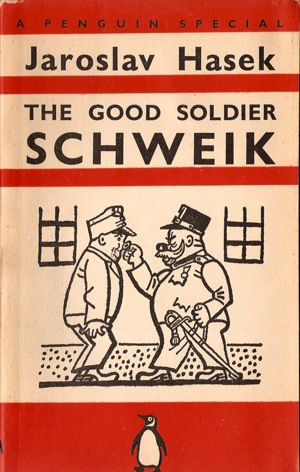
1.) The Good Soldier Švejk by Jaroslav Hašek (Czech): The lead character in this farcical comedy is a bumbling, but likable, idiot who is drawn into military service. The book highlights the fact that in times of war the greatest acts of idiocy are not perpetrated by greatest idiots.

goodsoldiersvejk_en


2.) After Dark  by Haruki Murakami (Japan): One can’t go wrong with Murakami. I almost picked Norwegian Wood, which is more a work of realist literary fiction, but this novel about what happens when the trains stop running in Tokyo may shed a little more light on Japan. (anti-pun not intended.)

afterdark_murakami


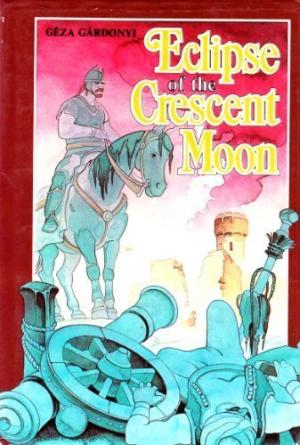
3.) Eclipse of the Crescent Moon by Géza Gárdonyi (Hungary): The story of how a small Hungarian castle village held out against a siege by the Ottoman juggernaut.

eclipseofthecrescentmoon_gardonyi


4.) Death in the Andes by Mario Vargas Llosa (Peru): When three men disappear from a small mining village in the Andes, the Army sends a Corporal and his deputy to investigate.

death-in-the-andes_llosa


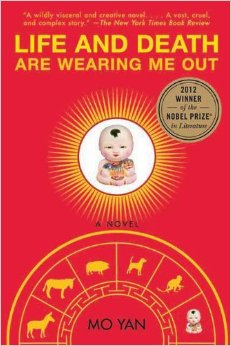
5.) Life and Death are Wearing Me Out by Mo Yan (China): A wealthy land owner is executed during the Communist revolution and must live out several lives as various animals in the service of the family of his [former] beloved hired-hand. The books shows the generational change between when China first became Communist through the reform period that led to a more market-friendly approach.

lifedeath_moyan

BOOK REVIEW: Cold Days by Tibor Cseres

Cold DaysCold Days by Tibor Cseres
My rating: 5 of 5 stars

Amazon page


During the Second World War, there was a massacre conducted by the Hungarian military in the Yugoslavian town now called Novi Sad (known as Újvidék under the Hungarians.) The operation was meant to be a cleanup of Yugoslavian partisans, but the casualties were primarily innocent civilians. The novel is called “Cold Days” (i.e. literally translated from the Hungarian “Hideg Napok”) because the killings took place during a cold snap in January of 1942. Cseres bases his novel on this real world event, but he tells the story through the lens of four fictional military men who are sharing a cell for their respective actions in Novi Sad.

The novel weaves five narrative lines into an overall arc. Four of these are the personal stories of each of the four soldiers during the massacre and the time leading up to it, and the fifth takes place later when they are all together in the cell. The four characters have no connection before being placed in the same cell—or so it seems. At most, the officers know of each other. The five lines come together in the end and the reader sees how the four lives are no longer in strict isolation, but are connected by the events of that day—in some cases more severely than others.

Captain Büky is the highest ranking of the prisoners and is a straight-laced military man except that he takes issue with the order than keeps married men from bringing their families to station at Novi Sad. Prior to the massacre and some killings that instigated it, it’d been a routine assignment. Lieutenant Tarpataki is a new assignee, and his principal trouble is that he arrives to find that he hasn’t been assigned housing or a billet. Lieutenant Pozdor gets his men taken from his control by the police chain of command and is left hiding out trying to avoid being assigned some remedial task. Corporal Szabo is both the only enlisted man in the group and the only one who is directly involved with the violence, though a Cpl. Dorner takes the lead and Szabo is a follower.

If that cast doesn’t seem like the kind of villainous blackguards one expects of a massacre crew, I think that that is part of what the author is trying to convey. Run-of-the-mill men stumble down slippery slopes into treachery during times of war. Sometimes the worst go unpunished, while others take the fall. The author also shows that sides can matter little when it comes to such events. Anyone can suffer loss when events tumble out of control as they did in January of 1942 on frigid day in Novi Sad.

This book is translated from Hungarian. It’s sparse and simple writing, and readability is high. It’s a short book of only about 120 pages.

I’d recommend this book for those interested in tales of the horrors of war. It may have interest to history as well as fiction readers.

View all my reviews

BOOK REVIEW: Death in the Andes by Mario Vargas Llosa

Death in the AndesDeath in the Andes by Mario Vargas Llosa
My rating: 5 of 5 stars

Amazon page


Three men disappear from a small mining village in the Peruvian Andes. The army sends two investigators, Corporal Lituma and his adjutant Tomás, to get to the bottom of the apparent murders. Suspects include Sendero Luminoso (“Shining Path”) guerilla-terrorists and a number of locals. For some of the locals, there’s another possibility, the various demons and deities attributed to each of the mountains in the Andes.

“Death in the Andes” follows the time that the investigators spend in this remote village. There are two major story lines taking place at once. One narrative arc revolves around the investigation and day-to-day living in a tiny town under primitive living conditions. The second story line comes by night as the deputy, Tomás, recounts his love affair with a girl who was out of his league in almost every way—except, perhaps, with respect to virtuous living. The girl was in a relationship with an abusive gangster at the start, a condition that Tomás found untenable. His love-driven reaction creates all manner of drama, and that drama serves as the only entertainment to be had in this remote village.

The book is literary fiction, but it’s not purely about the characters. As suggested, there’s a strong narrative element. While the book is in a realist genre, i.e. nothing in it feels like it couldn’t happen in our universe, the fact that the story takes place in an area of the Andes where the Shining Path is strong and mother nature is harsh means that there’s plenty of tension and suspense.

This is book is translated from Peruvian, and it seemed to me that the translator did a fine job of capturing the feel of the rural Andes. A few Spanish terms are used for terms like terrorists and avalanches to create a feel of a unique character of these concepts relative to this place. However, there are only a couple of these terms and so context is sufficient for the reader to readily keep them straight even if one is not gifted in picking up foreign terminology.

In general, the book is quite readable. The most challenging part of reading it is when Tomás is telling his story because you have a three-way conversation going on over two time periods at once. (i.e. Tomás voices himself and his girl as he tells their story, but then Cpl. Lituma chimes in periodically with questions—or, more commonly, commentary.) However, the author uses dialogue tags throughout to avoid confusion. One just needs to be attentive in one’s reading of these sections.

I enjoyed this story. I picked up this book both because Llosa won the Nobel Prize in Literature in 2010 and I like to read something by winners, but also because I’ve trekked in the Peruvian Andes and translated literature often offers one a unique form of insight into a place. This was no exception.

I’d recommend this book for readers of fiction. If one is looking to broaden one’s horizons into literary fiction and /or translated fiction, this book is a good place to start. It offers humor and intrigue as well as deep characters and an infusion of geography and culture.

View all my reviews