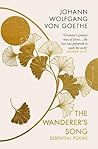
BOOK: “The Wanderer’s Song” by Johann Wolfgang von Goethe [trans. by John Kent]

The Wanderer's Song: Essential Poems (Pushkin Press Classics)The Wanderer’s Song: Essential Poems by Johann Wolfgang von Goethe
My rating: 4 of 5 stars

Publisher Site — Pushkin Press Classics

This is a new translation of select poems of Johann Wolfgang von Goethe. It’s a clever and varied set of poems by one of German literature’s all-time greats, a polymath of the 18th and early 19th centuries.

It can be a challenge for a general poetry reader to relate to this work. Over two hundred years since most of these poems were composed, the collection reflects a worldview quite different from that which one finds today. That said, the translations are readable and pleasant and don’t feel strained or clunky, and the collection has instances of sublimity. Having no background in German Literature, I can’t say how true the translations are to source material, but they stood solidly as poems in their own right. The book does offer a substantial introduction by the translator for individuals who are particularly interested in the German literature, translation decisions, or the life of Goethe.

I would recommend this for poetry readers, even though casual readers may find it a bit archaic. If you like the Romantic poets, and haven’t given Goethe a try, it’s well worth the time investment.

View all my reviews

“On a Journey” by Hermann Hesse [w/ Audio]

Don't be downcast, soon the night will come,
When we can see the cool moon laughing in secret
Over the faint countryside,
And we rest, hand in hand.

Don't be downcast, the time will soon come
When we can have rest. Our small crosses will stand
On the bright edge of the road together,
And rain fall, and snow fall,
And the winds come and go.

James Wright Translation

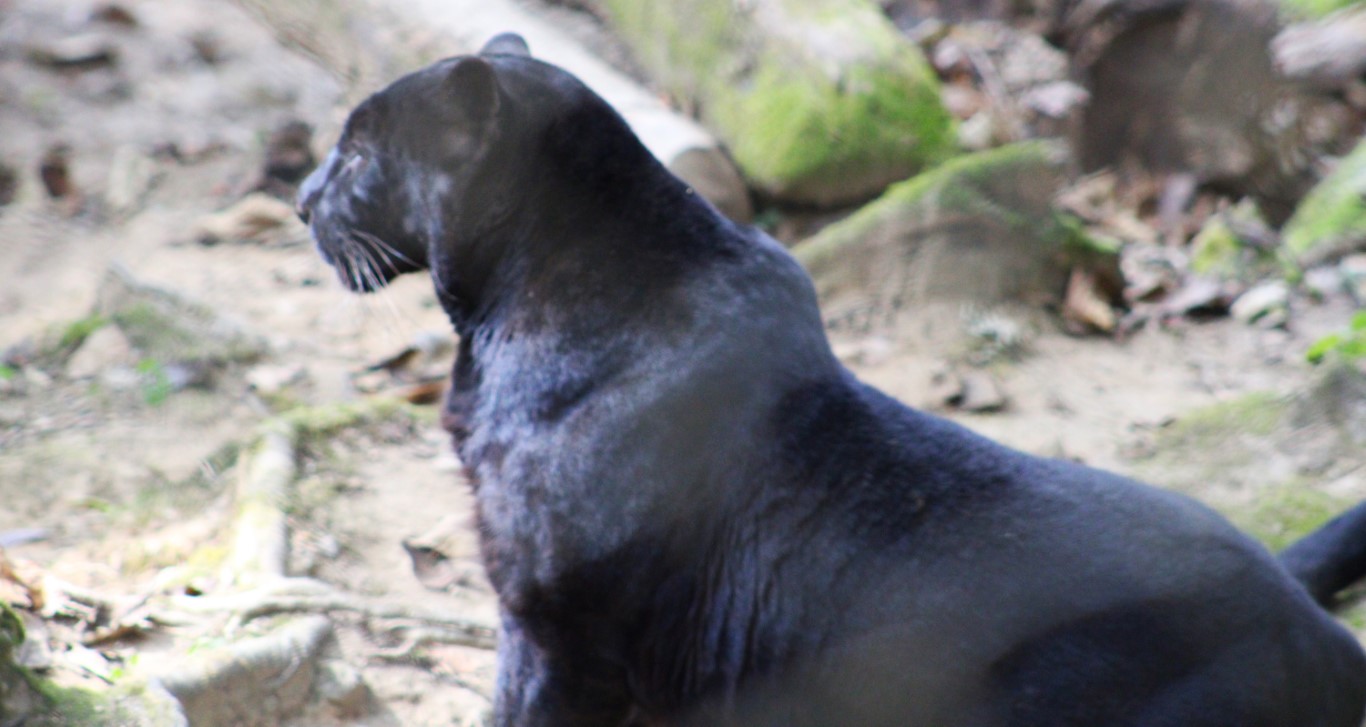
Black Cat by Rainer Maria Rilke [w/ Audio]

A ghost, though invisible, still is like a place
   your sight can knock on, echoing; but here
 within this thick black pelt, your strongest gaze
   will be absorbed and utterly disappear:

just as a raving madman, when nothing else
   can ease him, charges into his dark night
 howling, pounds on the padded wall, and feels
   the rage being taken in and pacified.

She seems to hide all looks that have ever fallen
   into her, so that, like an audience,
she can look them over, menacing and sullen,
   and curl to sleep with them. But all at once

as if awakened, she turns her face to yours;
   and with a shock, you see yourself, tiny,
 inside the golden amber of her eyeballs
   suspended, like a prehistoric fly.

NOTE: This translation by Stephen Mitchell. Originally titled, “Schwarze Katze,” the poem in German is:

Schwarze Katze

Ein Gespenst ist noch wie eine Stelle,
dran dein Blick mit einem Klange stößt;
aber da an diesem schwarzen Felle
wird dein stärkstes Schauen aufgelöst:

wie ein Tobender, wenn er in vollster
Raserei in Schwarze stampft,
jählings am benehmenden Gepolster
einer Zelle aufhört und verdampft.

Alle Blicke, die sie jemals trafen,
scheint sie also an sich zu verhehlen,
um darüber drohend und verdrossen
zuzuschauern und damit zu schlafen.
Doch auf einmal kehrt sie, wie geweckt,
ihr Gesicht und mitten in das deine:
und da triffst du deinen Blick im geelen
Amber ihrer runden Augensteine
unerwartet wieder: eingeschlossen
wie ein ausgestorbenes Insekt.

Kafka Clerihew

The Bohemian writer Franz Kafka,
 more conflicted than Queen Jocasta,
  wrote tales, absurd -n- surreal...
   yet how factual they feel.

BOOK REVIEW: Crabwalk by Günter Grass

CrabwalkCrabwalk by Günter Grass
My rating: 5 of 5 stars

Amazon.in Page

This story is narrated by its lead character, Paul Pokriefke, a journalist who was on the ill-fated ship, the Wilhelm Gustloff, being born on a rescue ship immediately after his pregnant mother was among the small proportion of survivors to escape that most deadly maritime disaster in history. The sinking of the Gustloff is the book’s center of gravity, it’s around that event – and the events that led to it and that sprang from it – that the story swirls.

The strange title, “crabwalk,” can be taken in a number of ways. For example, the author uses the term when he advances the story by moving in some direction that isn’t chronologically forward. However, the central crabwalk is the failure of a segment of the German population to move forward in the aftermath of the Second World War. This is shown through the narrator’s son, Konrad Pokriefke, a neo-Nazi of sorts who has an obsession with the sinking of the Wilhelm Gustloff and the incident by which that huge ship got its name (Gustloff being a Swiss Nazi who was assassinated by a Jewish student named David Frankfurter.) For much of this story, Konrad’s obsession plays out on the internet, in chatrooms and on websites that Paul covertly monitors – Paul being estranged from his son, a misfortune that he often blames on his own fatherless upbringing.

One confounding element of the story is the apparent cold rationality of Konrad Pokriefke. To clarify, the young man doesn’t exhibit sound reasoning, but he has this rationale in his mind (nutty as it may be) and he is dispassionate about doing what he believes he needs to do. Konrad isn’t the red-faced, spittle-flying Neo-Nazi. At first, it felt implausible for Konrad to have such a set of views and to be so coolheaded about them. That said, I suspect the author wrote it that way intentionally, and eventually it came to feel true – if horrifying [i.e. the idea that this cold version of hatred might be more sustainable than the intensely angry variety and that it might also retain more hatred in the face of interaction with “the enemy” (it being harder to maintain generic hatred of people with which one has an up close and personal interaction.)]

I found this book, which mixes factual events with fictional characters, to be compelling and thought-provoking. It did have a slow burn at the start, but it makes up for it with greater intensity as the story climaxes.


View all my reviews

BOOK REVIEW: Rilke: The Last Inward Man by Lesley Chamberlain

Rilke: The Last Inward ManRilke: The Last Inward Man by Lesley Chamberlain
My rating: 5 of 5 stars

Amazon.in Page

This book surveys the influences on Rainer Maria Rilke’s poetry, and makes the argument that Rilke was the last vestige of a mystically spiritual [Romantic or Romantic-esque] poetic line. Poetry was becoming more political and more influenced by nihilistic philosophies that eschewed inward investigations of meaning and self-realization, constructs that were seen as artificial and empty. Rilke bucked the trend, and while he did become an important poet, Chamberlain believes he paid a price.

The book discusses the influence of sexuality, spirituality, and artistic obsessions on Rilke’s poetry in great detail. It also talks about his life as an influence, both his family life (or lack, thereof) and the key years he spent in Paris. The last couple chapters tie the story together by clarifying what Rilke achieved and how it contrasted with prevailing trends.

If you’re interested in understanding more about the philosophical and spiritual forces impacting Rilke’s work, this is an interesting read. It’s not a biography, strictly speaking, but does unavoidably discuss Rilke’s life in some detail (though always through a literary / philosophical lens.)


View all my reviews

BOOK REVIEW: Duino Elegies by Rainer Maria Rilke [Trans. Vita & Edward Sackville-West]

Duino ElegiesDuino Elegies by Rainer Maria Rilke
My rating: 5 of 5 stars

Amazon.in Page

Out: February 22, 2022 [In some markets it may be out already.]

This is a reissue of the original English translation of Rilke’s elegies composed on the karst cliffs of northeast Italy in the early 1920’s. The book consists of ten medium-length, angel-laden elegiac poems. [Yes, dude was just that into angels.] The translator’s notes are posted as an epilogue and the volume has a new preface. It should be noted that the translators suggest one think of it as one long elegy in ten parts.

I’m far from qualified to comment on the skill of translation from the perspective of how well it catches the meaning and nuance of the original poems. However, the Sackville-Wests’ words are evocative and impactful in their own right, and I enjoyed and was moved by this collection of poems. [In their notes, the translators say they decided it was most productive to try to artfully paraphrase rather than getting too caught up in strict literal translation.] I’d highly recommend this book for poetry readers.


View all my reviews