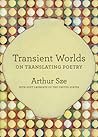
BOOK: Transient Worlds by Arthur Sze

Transient Worlds: On Translating PoetryTransient Worlds: On Translating Poetry by Arthur Sze
My rating: 5 of 5 stars

Publisher Site — Copper Canyon

Release Date: April 14, 2026

Just as people are fond of saying, “the book is always better than the movie,” there is an idea — widely accepted as truism — that goes, “a translation can never be as good as its source poem.” I don’t buy either of those views, but there’s certainly truth to the notion that a poetic translation can never perfectly echo style, tone, sound quality, and meaning at once. Each language is unique, and the more different two languages are the more one has to make decisions about what one will emulate and what one will craft. It’s also true that any translation will represent a drift away from the culture of the original (which is not identical to being worse.) In short, any poetry translation that seeks to be good had better be a work of art unto itself.

The current US Poet Laureate (as of this writing,) Arthur Sze, has written a book to help readers intelligently navigate the troubled waters of poetic translation. Sze certainly has insight, having not only translated Chinese poems himself, but also being Professor Emeritus at the Institute of American Indian Arts, he has multiple cultural lenses with which to view poetry.

This book consists of fifteen chapters exploring poems and poetry excerpts from around the globe — and their translations. The twelve diverse source languages include: Chinese, Navajo, French, Ancient Greek, Hebrew, Danish, and Russian. The original poets include Tao Qian, Guillaume Apollinaire, Homer, Kobayashi Issa, Pablo Neruda, Marina Tsvetaeva, Aime Cesaire, Najwan Darwish, and Mirabai. Many of the chapters include multiple translations, offering the reader a means to see how different translators take to the task. Others offer only a single translation but turn their attention to specific considerations of translation. In one case, there is an interview with the translator. I enjoyed this varied approach to the exploring the topic. It made for a book with zero monotony and many facets.

If you are a poet or a poetry reader who enjoys reading poetry from varied languages or source languages, I’d highly recommend this book.

View all my reviews

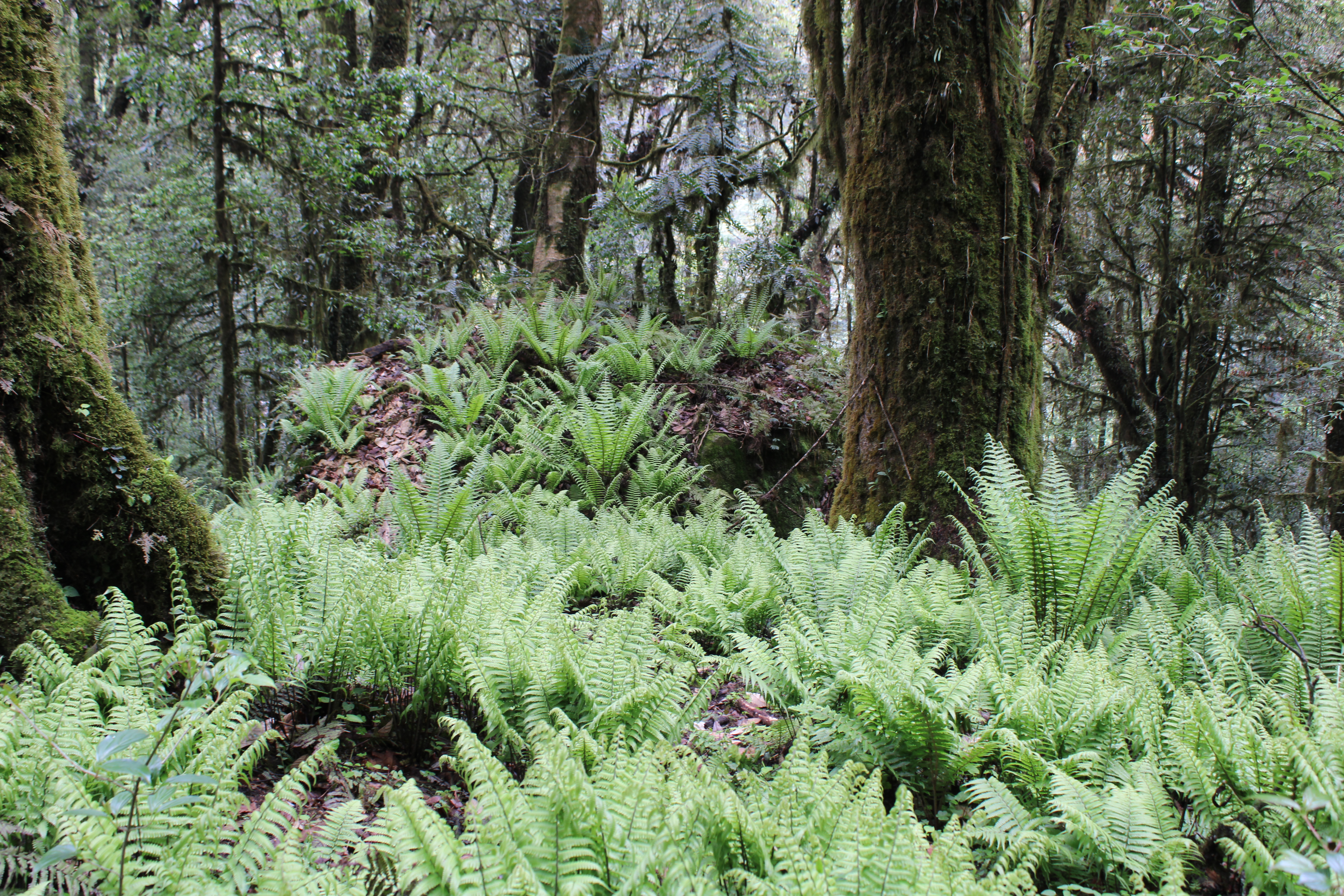
“Thou Strainest Through the Mountain Fern” (A Fragment) by William Wordsworth [w/ Audio]

Thou strainest through the mountain fern,
A most exiguously thin
Burn.
For all thy foam, for all thy din,
Thee shall the pallid lake inurn,
With well-a-day for Mr. Swin-
Burne!
Take then this quarto in thy fin
And, O thou stoker huge and stern,
The whole affair, outside and in,
Burn!
But save the true poetic kin,
The works of Mr. Robert Burn'
And William Wordsworth upon Tin-
Tern!

“Song” by James Joyce [w/ Audio]

My love is in a light attire
Among the apple trees,
Where the gay winds do most desire
To run in companies.

There, where the gay winds stay to woo
The young leaves as they pass,
My love goes slowly, bending to
Her shadow on the grass.

And where the sky’s a pale blue cup
Over the laughing land,
My love goes lightly, holding up
Her dress with dainty hand.

“The Fish” by William Butler Yeats [w/ Audio]

Although you hide in the ebb and flow
Of the pale tide when the moon has set,
The people of coming days will know
About the casting out of my net,
And how you have leaped times out of mind
Over the little silver cords,
And think that you were hard and unkind,
And blame you with many bitter words.

“Wanderers” by Walter de la Mare [w/ Audio]

Wide are the meadows of night, 
And daisies are shinng there,
Tossing their lovely dews,
Lustrous and fair;

And through these sweet fields go,
Wanderers amid the stars --
Venus, Mercury, Uranus, Neptune,
Saturn, Jupiter, Mars.

'Tired in their silver, they move,
And circling, whisper and say,
Fair are the blossoming meads of delight
Through which we stray.

Note: the word “shinng” seems to be spelled that way in all sources. I don’t know whether it was a typo, dialectic, or a heterodox spelling.

Sonnet 53 by William Shakespeare [w/ Audio]

What is your substance, whereof are you made,
That millions of strange shadows on you tend?
Since every one hath, every one, one shade,
And you, but one, can every shadow lend.
Describe Adonis, and the counterfeit
Is poorly imitated after you;
On Helen's cheek all art of beauty set,
And you in Grecian tires are painted new.
Speak of the spring and foison of the year:
The one doth shadow of your beauty show,
The other as your bounty doth appear;
And you in every blessèd shape we know.
In all external grace you have some part,
But you like none, none you, for constant heart.

“Daybreak” by John Donne [w/ Audio]

STAY, O sweet, and do not rise!
The light that shines comes from thine eyes;
The day breaks not: it is my heart,
Because that you and I must part.
Stay! or else my joys will die
And perish in their infancy.

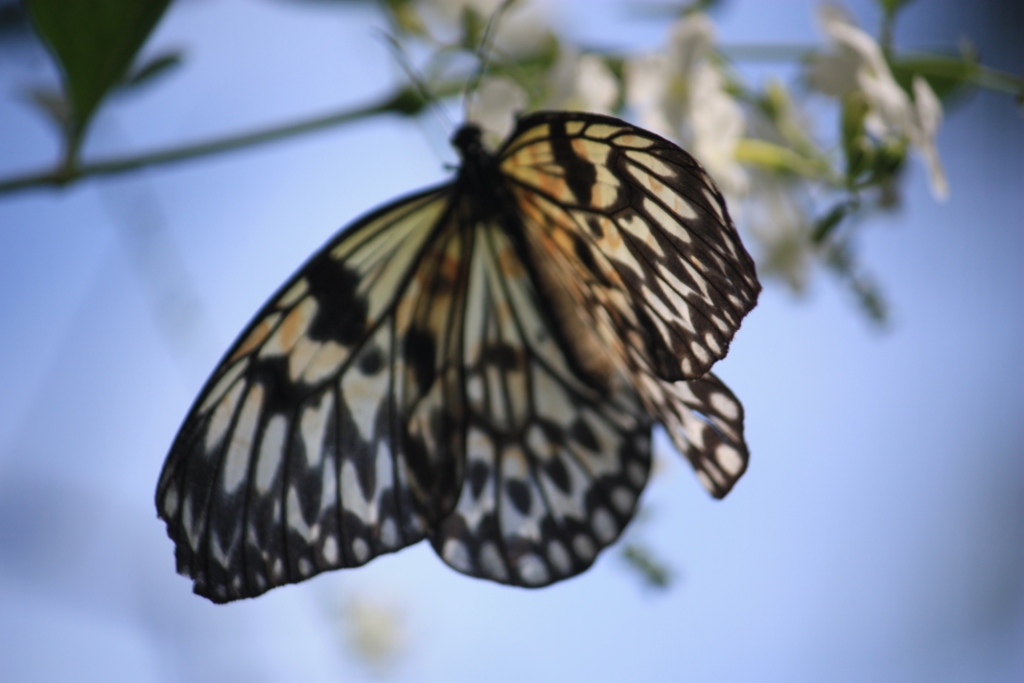
“To a Butterfly” by William Wordsworth [w/ Audio]

Stay near me—do not take thy flight!
A little longer stay in sight!
Much converse do I find in Thee,
Historian of my Infancy!
Float near me; do not yet depart!
Dead times revive in thee:
Thou bring'st, gay Creature as thou art!
A solemn image to my heart,
My Father's Family!

Oh! pleasant, pleasant were the days,
The time, when in our childish plays
My sister Emmeline and I
Together chased the Butterfly!
A very hunter did I rush
Upon the prey:—with leaps and springs
I follow'd on from brake to bush;
But She, God love her! feared to brush
The dust from off its wings.

“Quantum Mutata” by Oscar Wilde [w/ Audio]

There was a time in Europe long ago,
When no man died for freedom anywhere,
But England's lion leaping from its lair
Laid hands on the oppressor! it was so
While England could a great Republic show.
Witness the men of Piedmont, chiefest care
Of Cromwell, when with impotent despair
The Pontiff in his painted portico
Trembled before our stern embassadors.
How comes it then that from such high estate
We have thus fallen, save that Luxury
With barren merchandise piles up the gate
Where nobler thoughts and deeds should enter by:
Else might we still be Milton's heritors.

“Adieu, Adieu! My Native Shore” by Lord Byron [w/ Audio]

Adieu, adieu! my native shore
Fades o'ver the waters blue;
The night-winds sigh, the breakers roar,
And shrieks the wild sea-mew.
Yon sun that sets upon the sea
We follow in his flight;
Farewell awhile to him and thee,
My native Land-Good Night!
A few short hours, and he will rise
To give the morrow birth;
And I shall hail the main and skies,
But not my mother earth.
Deserted is my own good hall,
Its hearth is desolate;
Wild weeds are gathering on the wall;
My dog howls at the gate.