PROMPT: Childhood Book

Daily writing prompt
Do you remember your favorite book from childhood?

I remember an adaptation or condensed version of Defoe’s Robinson Crusoe. The castaway theme probably resonated with my introverted nature.

BOOK REVIEW: Mindfulness in Wild Swimming by Tessa Wardley

Mindfulness in Wild Swimming: Meditations on Nature & Flow (Mindfulness series)Mindfulness in Wild Swimming: Meditations on Nature & Flow by Tessa Wardley
My rating: 4 of 5 stars

Amazon.in Page

Release Date: June 13, 2023

As the title suggests, this is a book about combining mindfulness and swimming in natural bodies of water. It’s part of a large series of “Mindfulness and …” books, and this particular volume is a re-release of a title that came out a couple years back.

While the book does provide an overview the basic methods and considerations for both mindfulness meditation and wild swimming, it’s largely a peptalk or enticement to take up wild swimming as a means to improve awareness (as well as to bolster physical health and mental well-being.) That said, some of this peptalk is artfully, almost poetically, written, and the book is a pleasure to read.

The book discusses solo swims versus those in a group, and it even explores using onshore experiences to bolster mindfulness — e.g. using the sensory experience of the water as a focal point for practicing awareness. The around- (v. in-) water discussions are probably in part because the book uses seasons as a secondary mode of organization, and long and leisurely winter swims in lakes and rivers aren’t an option for people in many parts of the world.

I picked up some interesting food-for-thought in the book, and — as I say — it made for enjoyable reading.

View all my reviews

PROMPT: Three Books

Daily writing prompt
List three books that have had an impact on you. Why?
Leaves of Grass by Walt Whitman

This poetry collection teaches that most challenging of human skills: how to be insanely confident that you can do anything without being a jerk about it. (Also, how to see beauty beyond the societal consensus of what’s beautiful.)

Zhuangzi by Zhuangzi

The virtues of a carefree, spontaneous, minimalist, and down-to-earth approach to living explained through tiny stories.

The Tragedies of William Shakespeare by William Shakespeare

A master class in things that can turn a life into a tragedy.

Titus Andronicus: Live by the sword = tragedy (An eye for an eye, and everyone dies.)

Romeo & Juliet: Grudges (+ Lust) = tragedy

Julius Caesar: handing your adversary the mic (/ the fickleness of crowds) = tragedy

Hamlet: indecisiveness = tragedy (i.e. On or off the crazy-bus.)

Othello: jealousy = tragedy

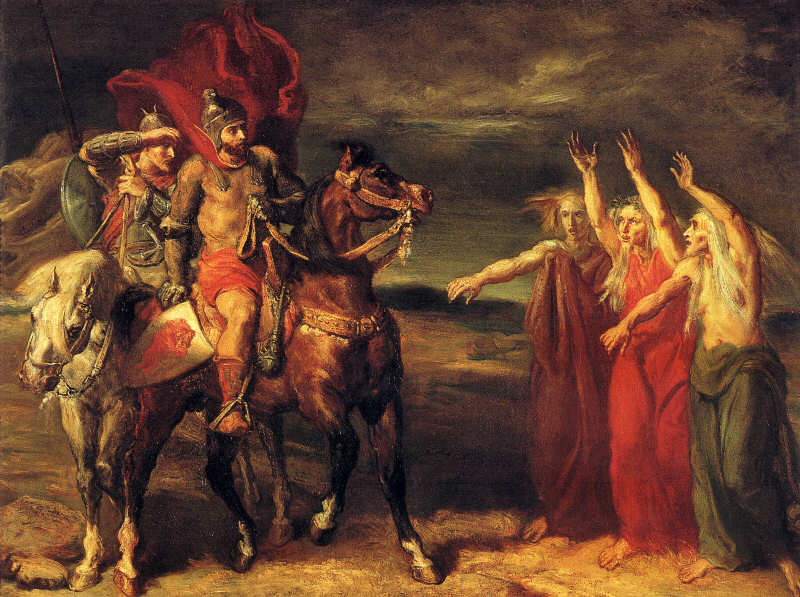
Macbeth: excessive ambition = tragedy

King Lear: needing gratuitous signs of affection = tragedy

Timon of Athens: expectations of reciprocity = tragedy

Anthony & Cleopatra: mixing one’s love and work lives = tragedy

Coriolanus: a crotchety old warrior in peace time = tragedy

BOOKS: The Mind of Adi Shankaracharya by Y. Keshava Menon

The Mind of Adi ShankaracharyaThe Mind of Adi Shankaracharya by Y. Keshava Menon
My rating: 4 of 5 stars

Amazon.in Page

This book does a good job of that at which the title hints, offering the reader insight into the philosophy of Adi Shankaracharya. Along the way, Menon presents clear descriptions of Indian philosophical concepts such as Maya, Avidya, Antahkarana, etc., and also compares and contrasts Shankaracharya’s philosophy with those of other philosophers (from both the East and West) as a means to clarify ideas that can be subtle and complex.

That said, what the book isn’t is an unbiased and objective look at Shankaracharya’s ideas. While Menon doesn’t go as far as to support the supernatural myths of Shankaracharya’s life (which are only discussed in the Appendix,) and he skirts that 800-pound gorilla of Hindu philosophic controversy, caste, he does present the philosophy as an advocate for Shankaracharya rather than as an indifferent scholar who merely wishes to deliver arguments and ideas while inviting thought among his readers.

While the book deals with epistemology, ethics, and various aspects of metaphysics, the biggest single subject is Self. I found the explanation of this topic to be fascinating. I had previously understood that among the major differences between Shankaracharya and Buddha was on this question. While I still find the Buddhist approach to Self (or, more properly, lack of Self — i.e. Anatta) to be the more compelling and parsimonious explanation, I feel that I was provided with about as clear an explanation of the Hindu (generally) and Shankaracharyan (specifically) views on Self as one could wish for.

I’d recommend this book. If you’ve come away from reading about subjects like “Maya” (Is it illusion? Is it NOT illusion?) this book can definitely help offer clarification, and (as books on philosophy go) it’s readable and not too jargon-laden. That said, if one is looking for a book that is not advocating a philosophy but, rather, objectively providing ideas and contrasting explanations, this book may bias your views.

View all my reviews

BOOKS: The Slow Traveller by Jo Tinsley

The Slow Traveller: An intentional path to mindful adventuresThe Slow Traveller: An intentional path to mindful adventures by Jo Tinsley
My rating: 4 of 5 stars

Amazon.in Page

Out: June 13, 2023

This book, gorgeously illustrated with photographs, consists of a series of essays on a different approach to travel, an approach familiar to travelers but not so much to tourists, an approach that is the antithesis of leaping from one postcard panorama to the next, packing a couple weeks’ vacation with maximum sights seen.

Most of the chapters / essays look at a specific mode of travel – i.e. the road trip, hiking / pilgrimage, train travel, and water travel. However, a few of the chapters tack from different angles to look at local food-centric travel, sheltering with permanent structures like bothies and teahouses, and urban slow travel.

There are some interesting insights in this book, it has stunning photography, and I even picked up some book recommendations. If you’re interested in changing your approach to travel to go deeper / less broad, this book is worth reading.

View all my reviews

BOOKS: Echo & Critique by Florian Gargaillo

Echo and Critique: Poetry and the Clichés of Public SpeechEcho and Critique: Poetry and the Clichés of Public Speech by Florian Gargaillo
My rating: 4 of 5 stars

Amazon.in Page

Out Now (May 10, 2023)

This book examines seven poets’ attempts to halt the proliferation of clichés, euphemisms, doublespeak, etc., words and phrases that not only corrupt the language but are often used to disguise bad behavior or to camouflage dismaying truths. It focuses on a technique, echo and critique, in which the poet employs one or more of these disconcerting words or phrases (or clever variants of them,) but does so in a way that reveals the chicanery within them.

The poets whose work is discussed are: Auden, Randall Jarrell, Langston Hughes, Claude McKay, Robert Lowell, Josephine Miles, and Seamus Heaney. These poets go head-to-head with cliché and doublespeak in the form of bureaucratese, propaganda, political speak, and business talk — with particular emphasis on war, race, and politics.

The book makes some interesting points. There are more readable discussions of the subject of corruption and manipulation of the English language, though none that I’m aware of on this particular approach to combating it. This volume is largely aimed at scholars, and not so much the popular readers. That said, I found it well worth reading.

View all my reviews

Five Great Yarns from Kahlil Gibran’s The Madman

The MadmanThe Madman by Kahlil Gibran
My rating: 5 of 5 stars

Project Gutenberg Page

The Madman is a collection of poems and short fiction (often micro-fiction) of a philosophical nature. The protagonist claims he became a madman when a thief broke into his house and stole his masks, the masks that people wear to fit into society and appear “normal.” Beyond the thread created by this mad character, the entries meander along, each with its own moral and with little discernible overarching plot.

There are many clever stories in this collection, offering food-for-thought on religion, philosophy, and psychology. I’ll discuss five of my favorites:

“The Sleepwalkers” A mother and daughter are both sleepwalkers. When they are somnambulating, they speak to each other in horribly cruel terms, but when they wake up, they display (at least a veneer of) love and affection. Besides demonstrating the nature of the aforementioned masks, the loss of which gets one designated “crazy,” this story encourages the reader to discern the differences between conscious and subconscious mental activity.

“War” This one presents an analogy for war in which a thief breaks into the wrong building, walks into a machine, pokes his own eye out, and then takes the building owner to court seeking “justice” for his lost eye. The craftsman / shop-owner says he can’t lose an eye because he won’t be able to do his work, but he knows a neighboring craftsman who could have his eye removed without great loss of productivity. This story builds upon the well-known “An eye for an eye…” Bible verse with the added absurdity of violence being doled out randomly and without concern for whether the victim had anything to do with the events in question.

“The Wise King” A disgruntled witch poisons a city well with a substance that makes drinkers insane. The King avoids the well water and is spared insanity. However, the townspeople begin to plot against the king because, in their insanity, they believe him (as one who acts differently) to be insane. The king eventually drinks the well water in order to come back into synch with his subjects. This entry speaks to the arbitrary nature of classification of sane and insane, an idea that has been discussed in modern times by mental health experts such as R.D. Laing.

“The Two Cages” A bird is caged next to a lion. The bird’s confidence provides the central lesson, knowing they’re both imprisoned separately, the bird refers to the lion as “fellow prisoner.” The power dynamic has changed from that of the jungle. Perhaps, the bird has even happily exchanged its freedom — either for safety or to tear the lion down a little.

“The Eye” In this story, the other sense organs mock the eye after it comments upon how grand a mountain is. The ear can’t hear the mountain and the skin can’t feel the mountain. Therefore, the other senses assume that the eye is either lying or is delusional. This tale speaks to the risk of denying something based on one’s own limited perception.

This book was originally published in 1918 and is in the public domain (most places.) It’s definitely worth the short time investment required to read it.

View all my reviews

Ikkyū’s Poetry: The John Steven’s Wild Ways Selection / Translation

Wild Ways: Zen Poems of IkkyuWild Ways: Zen Poems of Ikkyu by Ikkyu
My rating: 5 of 5 stars

This is the John Stevens selection and translation of poetry from Ikkyū’s Crazy Cloud Anthology. Ikkyū was what might be called a mad sage of the Rinzai sect of Zen Buddhism. He once showed up at a temple in his vagabond rags and was turned away, when he came back the next day in the ceremonial robes that revealed him as a preeminent monk and was subsequently treated like royalty, he took the robes off and told the abbot that it was apparently the robes that were honored and deserving of a meal. Ikkyū was known not only for his rejection of dogmatic and highfalutin approaches to Buddhism, but also for his love of sex, brothels, meat eating, and poetry. Much of the poetry touches on those two subjects (disdain for dogma and pretension and love of pleasure,) though there are also poems that explore nature and the kind of imagery one might be more likely to expect in Japanese poetry.

Ikkyū mostly wrote in quatrains, using a Chinese style of verse. Though Ikkyū was no more dogmatic about following poetic protocols than he was following monastic precepts, and often went with the flow.

I read the Stephen Berg translation, Crow with No Mouth several years ago. I would put this one on par with that one. There are actually several translated selections from the Crazy Cloud Anthology poems that are available. If you are interested in Ikkyū’s poetry, this is as good a place to start as any. It should be noted that while some of the poetry is around sexuality, it’s not particularly graphic but more suggestive.

View all my reviews

Orwell’s Politics and the English Language

Politics and the English LanguagePolitics and the English Language by George Orwell
My rating: 5 of 5 stars

Available online at The Orwell Foundation

In this essay, Orwell decries a scourge of weak writing in the English language, writing marked by cliched phrases, imprecise descriptors, meaningless words, and pretension. In short, he tells us that writing is becoming simultaneously more verbose and less meaningful.

While the essay isn’t as fun to read as George Carlin’s rants on the same subject, it’s a clear and well-organized discussion of this flaw. Orwell presents the problem, offering examples of random unreadable passages and discussion of where each goes awry. He also contrasts a clear and concise Biblical passage with how its message would sound translated into this corrupt modern form of the language. (That’s the most comedic portion of the essay.) Next, Orwell offers writers simple questions they might apply to making their writing less bloated and more impactful. The key insight of the essay is that thought corrupts language, but language also corrupts thought.

The essay is almost eighty years old, but the problem persists — particularly among politicians, a class of people who love to both sound impressive but without saying anything definitive, anything that might pin them down. That said, since Orwell we’ve developed new linguistic afflictions unique to the internet age, and the essay could probably use updating. Still, it’s an excellent place to start one’s reflection on what’s going wrong in the English language.

View all my reviews

BOOK REVIEW: The Rope Artist by Fuminori Nakamura

The Rope ArtistThe Rope Artist by Fuminori Nakamura
My rating: 5 of 5 stars

Amazon.in Page

Release Date: May 2, 2023

This is a hard-boiled detective novel centered around the mysterious death of a kinbaku artist, kinbaku is a Japanese art of tying up a person with rope, the practice sprung from the need to bind prisoners of war and criminals, but it came to be associated with the BDSM (Bondage, Domination / Submission, & Sado-Masochism) activities of kinky sex. The death of the rope artist, Kazunari Yoshikawa, is but the first of a few fatalities that are somehow connected, though the reader only learns how by following the story through to the end. There are several novel elements of the story that grab the reader’s attention, including: sex worker doppelgangers and a man with a missing finger and no known name.

I was engrossed by this novel. It captured my attention from the beginning. The psychology on display in the story is at once fascinating and bizarre. The story is told via three perspectives. The first is a junior detective, Togashi, who is a bit libido-driven and prone to ill-considered decisions. As a main character, one anticipates some of Togashi’s decisions because one knows what drives him, he’s a sucker for a pretty woman, but what the reader doesn’t know is when and how it will blow up in his face. The other main perspective is that of another detective, Hayama, who is the antithesis of Togashi. Hayama is immune to libidinous temptations and is solid as a rock where Togashi is nervous and neurotic. (The third perspective is Yoshikawa’s epistolary confession [no one has completely clean hands in this book.])

If you like crime fiction that’s a bit edgy, you may want to look into this book. That said, a warning for sensitive readers, it is sexually explicit and, while it’s not so sex-centered as to be primarily classified erotica, sex of various types occurs throughout the book.


View all my reviews