BOOK REVIEW: Pilgrimage: A Very Short Introduction by Ian Reader

Pilgrimage: A Very Short IntroductionPilgrimage: A Very Short Introduction by Ian Reader
My rating: 4 of 5 stars

Amazon page


Reader compares and contrasts the ways and motives of pilgrims around the world, from Muslims on hajj to Elvis fans going to “Graceland, Graceland, in Memphis, Tennessee” [name that tune.] The author’s specialization is Japanese pilgrimages and so trips such as the circuit around Shikoku’s eighty-eight Buddhist temples are well-represented among the examples used. However, he also visits and revisits popular Hindu pilgrimages such as Kumbh Mela and Amarnath, Christian pilgrimages to Lourdes and Santiago de Compostela, and even secular pilgrimages to locations such as the Vietnam War Memorial.

The book consists of six chapters. Chapter one offers a fly-over of the topic in the context of it being a worldwide phenomena. Cultures from around the world engage in similar behavior when it comes to spiritual travel. Chapter two investigates forms, themes, and meaning in pilgrimage, and how they vary across different religions. This helps one define the topic and differentiate pilgrimage from similar activities – to the degree that that can be done. Chapter 3 delves into the pilgrimage as a search for the sacred, and it uses many examples from around the world to consider the varying perspectives.

Chapter 4 reflects upon the differences in modes of transport, motivations, and how the latter influences the former. Obviously, technology has radically changed the face of pilgrimage. There usually remain purists who wish to continue in the old ways (i.e. traveling mostly on foot) and others who’d just as soon use jet airplanes and air-conditioned buses. This leads to conflicts in the pilgrim community where walkers see those who travel in comfort as lacking commitment, and those who travel in comfort may see the old-schoolers as hikers who are more interested in walking than praying.

The penultimate chapter examines pilgrimage as a form of tourism. While it may be considered sacrilegious to some to equate the two activities, they certainly share in common not only the activity of travel but also such behaviors as the collection of souvenirs (e.g. relics, scrolls, and amulets.) The final chapter looks at how pilgrimage has spread into the secular domain with war memorials, nature trails, and the birth or death homes of popular personages from politics or entertainment.

The book contains many monochrome photos and a “further reading” section in the back.

I found this book to be interesting. As a secular traveler who often crosses paths with pilgrims, I was fascinated to gain insight into their head-space and to reflect upon the role that religion and spirituality played in the dawn of travel.

View all my reviews

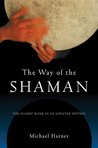
BOOK REVIEW: The Way of the Shaman by Michael Harner

The Way of the ShamanThe Way of the Shaman by Michael Harner
My rating: 4 of 5 stars

Amazon page


From tripping on ayuhuasca in Peru to sucking the evil spirits out of patients, Harner offers an overview of shamanic methods and practices. While it would seem like such an undertaking would be a thick tome given the wide variety of cultures in which Shaman are a fixture, Harner suggest that there is a remarkable similarity of methods used by these “medicine men” be they in the Americas, Central Asia, or the South Pacific. Of course, at a tight level of granularity there are differences, and Harner gives examples of such differences here and there – usually using examples of the Shamanic practices he has studied in South and Central America. However, this book is more the high altitude over pass of the landscape.

There are seven chapters. The first couple of chapters both set up the book and hook the reader with a detailed discussion of Harner’s ayuhuasca — and other mind / mood altering substance – experience. It should be pointed out that not all Shaman use psychedelics and Harner describes in detail alternative approaches to achieve altered states of conscious that involve a combination of drumming and meditative practices.

Chapter three discusses altered states of consciousness, and what Harner calls the “Shamanic State of Consciousness” (SSC) which is the altered state that is pursued by medicine men in their practice. Chapter four describes the concept of power animals and the role that they have in health and illness. (i.e. from the Shaman’s view, an illness might be seen as the result of lacking such a “spirit animal.”) The final three chapters discuss practices such as how the Shaman can acquire a power animal for the patient or how he / she might extract a malevolent influence.

I found an interesting corner being turned in this book. In the opening chapters it reads much like an anthropologist’s scholarly account. Even talking about tripping on psychedelic substances, it’s all with the grounded feel of a scientific mind. However, in the latter half of the book, it reads as though Harner truly believes that the altered state of consciousness is actually a sort of parallel dimension with an intrinsic reality unto itself. I don’t know whether this is a tactic to feather it in for skeptical readers or if it reflects Harner’s own internal journey. (It’s definitely a hard line to walk when writing a book that one hopes to be read by both scientific rational skeptics and religious true believers.) At any rate, the book gets a bit wilder as it goes along. In the beginning, the reader might think the book a discussion of how a powerful placebo effect is achieved, but by the latter chapters it seems one is considering how malevolent spirits can be trapped or extracted from a patient.

As for ancillary material, there are line-drawn illustrations, annotations, a bibliography, and two appendices. The first appendix is about drumming and gives details about what kind of drums and rattles the would-be Shaman should seek. (Drumming plays a major role in achieving the proper state of mind.) The second is a detailed description of a game played by the Flathead Indians. I should note that I read the 3rd edition of this book. The original was published in 1980.

I found the book intriguing as one interested in how people of various cultures achieve altered states of consciousness, how they experience such states, and why they pursue them in the first place. I’d recommend it for a reader who is curious about Shamanic practices – even one who, like me, is a complete neophyte to the subject.

View all my reviews

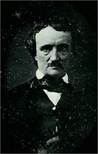
BOOK REVIEW: The Complete Poetical Works of Edgar Allan Poe

Complete Poetical WorksComplete Poetical Works by Edgar Allan Poe
My rating: 5 of 5 stars

Amazon page

Gutenberg page


The title is self-explanatory with respect the book’s content. However, if one is just expecting all of Poe’s poems bound together, one may be pleasantly surprised by some relevant bonus material in the form of scenes from plays and a few essays on poetry.

The works included are divided into seven sections. The first is entitled “Poems of Later Life” and includes many of the author’s most famous works such as: “The Raven” and “Annabel Lee.” The book then follows an inverse chronological order with the section entitled “Poems of Manhood” coming next. Next there are scenes from a drama entitled “Politian” that emulates classic Greco-Roman plays. Then there are the poems written in Poe’s youth. There are two more sections of poetry with only a few pieces each. The first is the “doubtful poems’’ – i.e. poems that may or may not have been penned by Poe. The last chapter of poetry consists of Poe’s prose poems. Finally, there is a section consisting of three essays about poetry. This is a nice inclusion as it offers the reader insight into Poe’s thoughts on poetry. For example, Poe believed in a poetry Goldilocks zone. That is poems that were too long would not be able to maintain the emotional experience, but one’s that were too short would not be able to convey meaning.

I enjoyed this book. Not all the poems are of the caliber of “The Raven” by any means, but the book is insightful nonetheless, and there’s a mix of Poe’s trademark darkness with pieces that might strike the reader as decidedly uncharacteristic. As I said, it’s fun to have Poe’s essays on poetry next to his poems so that one can consider his verse in that light. The inverse chronological order provides an interesting way to view the evolution of a poet – Benjamin Button style. (Plus it offers one some strong momentum by starting the reader off with some of Poe’s most exceptional work.)

There’s a brief biography in the front of the book, and there are a surprising number of detailed notations for a collection of poetry. That’s all the ancillary matter. There are editions with illustrations, but the edition that I read didn’t have them (i.e. the version on offer from Gutenberg Project .) Amazon seems to have editions both with and without illustrations. (I don’t think they would offer much value-added.)

I’d recommend this for poetry readers and poets interested in Poe’s approach to the art.

View all my reviews

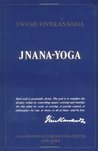
BOOK REVIEW: Jnana Yoga by Swami Vivekananda

Jnana-YogaJnana-Yoga by Swami Vivekananda
My rating: 4 of 5 stars

Amazon page


For those for whom the term “Jnana Yoga” is unfamiliar, it’s one of the three original branches of yoga. Jnana yoga is the path of knowledge, which sounds more scholarly than apropos and so maybe the alternative translations of path of self-realization or of wisdom might be more informative. For the most part, Jnana yoga isn’t about reading books and collecting facts, although studying texts is traditionally a part of the approach, it’s more about turning inward and expanding understanding through practice and personal inquiry. The other two branches are bhakti yoga, which is the path of devotion followed by pious true believers, and karma yoga, which is the path of [unselfish] action or charitable work.

This is a hard book to rate. As a book about yoga and the philosophy thereof, I give it four stars and might even give it five in a gleeful moment. However, if I were to rate it as a book specifically on jnana yoga, I’d give it two. The book reads more like a bhakti yogi’s take on jnana yoga than a book on jnana yoga itself. In other words, Swami Vivekananda devotes a lot of space to telling the reader what they should take on faith and relatively little to discussing how one can glean one’s own insight through practice and introspection. I realize that if I were a bhakti yogi, my perspective would be different and I’d likely see the book as insufficient in its efforts to suggest that the reader should sing the praises of the almighty. But I’m not, and I obtained a book entitled “Jnana Yoga” thinking I would learn about the titular subject and so I was a bit disappointed at the approach of the book. There are some insights into jnana yoga here and there, but it’s not the focus. It’s telling that Chapter one is entitled “the necessity of religion” and that it begins by explaining why the existence of God must be taken as axiomatic.

There are sixteen chapters in the book. The general flow goes: a few chapters on “maya” (which is typically translated as illusion / delusion, but which Vivekananda argues is best thought of in a different light, which he goes on to explain in detail), some chapters on the cosmos and its nature, and the last few chapters are on atman (i.e. the self, sometimes translated as “soul.”) It should be said that these topics are consistent with a consideration of jnana yoga. Jnana yogis concern themselves with these big questions such as the nature of reality, the universe, and the self. However, the approach of saying that this is what the Vedas say (and thus it’s the reader’s truth) is inconsistent with the path of the jnana yogi. Swami Vivekananda is clearly highly knowledgeable and he does bring up some thought-provoking approaches. There are occasional errors on matters of science, but one must keep in mind that it was written before the turn of the twentieth century and so the state of knowledge has changed considerably in the intervening years, and so I don’t discount for them — especially, because one is often surprised by the author’s level of understanding of the science.

The book is straight text. The edition that I read had some annotations, but the book neither has nor needs any ancillary material.

My recommendation would be contingent on what the reader is looking for in a book. If one is seeking a general understanding of yogic thought on the nature of reality, the universe, and the nature of self, then this is an insightful book. If, however, one is interested in the path of the jnana yogi and what it entails, I’d suggest you look elsewhere (e.g. Swami Saraswati’s “Sure Ways to Self-Realization.”)

View all my reviews

BOOK REVIEW: Rasputin by Maria Rasputin and Patte Barham

Rasputin: The Man Behind the Myth - A Personal MemoirRasputin: The Man Behind the Myth – A Personal Memoir by Mariia Grigor’evna Rasputina
My rating: 5 of 5 stars

Amazon page


This was an impulse buy made at my local used bookshop. How could I not pick it up? There are few historic figures with as much swagger, and who are as steeped in mystique and myth, as Grigori Rasputin. This Russian mystic has been fictionalized as a villain by Disney and in the “Hell Boy” universe. If one knows anything about this holy man, it’s that he proved exceedingly hard to kill and that he is believed to have had great sway with the Tsar and his wife (i.e. the Tsarina) in large part owing to the apparently miraculous effect his presence had on the healing of their hemophiliac son, Alexei. (Skeptics will note that it’s widely believed Rasputin did – in fact – save the boy, but probably not through communion with a deity. Instead, he did it through a combination of luck in keeping the doctors from giving the boy aspirin [its blood-thinning nature wasn’t yet recognized], old folk wisdom [i.e. stressing the kid out with a dozen poking / prodding doctors is as likely have a deleterious effect on health as a positive one] and a placebo effect arising from the holy man’s larger-than-life charisma.)

It’s always hard to know what to expect with a biography written by a family member. In this case, the lead author is one of Rasputin’s daughters, Maria. While there is the same potential for bias in an autobiography, in a relative’s biography one never knows whether the writer will deify or vilify they subject – but one strongly suspects they will do one of the two. This is made all the more difficult in this book on the life of Grigori Rasputin because the author is at once exceedingly forthcoming about the man’s drinking and womanizing but simultaneously rails against Rasputin’s enemies and always holds that he was fundamentally virtuous and pious (outside of sleeping around, sousing it up, and taking bribes [which the author claims were redistributed Robin Hood style and which it’s further suggested didn’t result in promises to intercede with the Tsar / Tsarina that he wouldn’t have agreed to on the grounds of virtue and merit alone.]) It should be noted that there was a journalist co-author who may have rounded of the coarse edges of personal bias, though – as I suggested – Maria Rasputin comes across as being at ease with her father’s less godly proclivities.

The book begins in media res with a description of the night that Rasputin left his home and daughters never to return. This intro presents his daughter’s perspective as she experienced that night at the time – i.e. without any of the insight of later investigations and research that comes later at the book’s end. It’s a skillful set up for the book, and in general this book avoids becoming bogged down in minutiae of personal interest as is common in biographies. The book then proceeds chronologically from sparse coverage of Rasputin’s youth with particular emphasis on the events and indications that he wasn’t the typical farm boy through to the aftermath of his death. In between the book charts the rise of Rasputin from peasant farmer to personal friend to the royal couple who visited them freely while abandoning all the protocol that was required of others on visits to the Tsar’s court.

I did do a bit of research out of curiosity about how biased or neutral the book was. In general, it seems to be a reasonably accurate portrayal of events. While I did find information that seems to conflict with the author’s presentation, it doesn’t appear to be a matter of an attempt to propagandize but rather a result of differences of perspective. One type of bias revolves around the belief in supernatural powers that can readily be seen in the case of Tsarevich Alexei mentioned above. Maria Rasputin was clearly a believer that her father had powers, and so she presents the healing as being divine (though she does state that keeping the doctors away probably had a role and she says that her father never claimed responsibility for cures but always said thanks should be given to God.) Another example is the belief of the authors that Rasputin was still alive when he was thrown into the river that is based on abrasions on his wrists as if he was struggling in the water, but supposedly there was no water in his lungs. (With respect to the claim of Rasputin being hard to kill, after healing up from having been disemboweled with a knife, on the night of his assassination Rasputin was [allegedly] poisoned, shot multiple times, castrated, and then dumped into a frozen river. The author suggests it was the drowning that finally got him, but the more common view is that the gunshot to the head had already done the deed – and furthermore, the assassins probably in some way fouled up the poisoning because there wasn’t any posthumous evidence of it. It should be noted that the authors, too, suggest that the assassins must have gotten it wrong with the initial attempt to poison Rasputin because of the lack of evidence of poison – i.e. they make no supernatural claims on that issue.)

Concerns about bias aside, the book is highly readable. It is fascinating throughout and it complies with Elmore Leonard’s advice to novelists to “cut out all the parts people skip over.” The author captures the political intrigue as well as Rasputin’s mix of seedy and saintly sides that combine to make his story so fascinating. We see his ups and downs as he became immensely popular (always with powerful enemies) and then how he lost influence in World War I when his pacifism conflicted with the jingoistic outlook of the day.

I would highly recommend this book to anyone who is interested in the life of Grigori Rasputin.

View all my reviews

BOOK REVIEW: Tantric Yoga by Gavin and Yvonne Frost

Tantric Yoga: The Royal Path to Raising Kundalini PowerTantric Yoga: The Royal Path to Raising Kundalini Power by Gavin Frost
My rating: 4 of 5 stars

Amazon page


Whenever I review a book about tantra, I have to start by clarifying which tantra I’m talking about. For tantra is one of those concepts that everybody thinks they know the meaning of, but few agree about what it is exactly. There are at least three broad interpretations of tantra. Among old-school Indian Tantrics, tantra involves the use of practices and rituals to elevate one’s consciousness, and at least some of said practices involve activities that mainstream religions (i.e. Hindu, Buddhism and others) consider vices. Two alternatives can be considered in contrast to that baseline view. The first of these is the mainstream religious view of tantra that keeps the unobjectionable practices and dismisses those practices that the fly in the face of religious prohibitions, saying that they are just misunderstandings or misinterpretations and not to be taken literally.

The second view, and the one relevant to his book, is the modern and mostly Western notion of tantra as being all about sex. This isn’t to suggest that these modern Tantrics are just guided by base desire and are only seeking tips to be better in the bedroom. Most of them see tantra as a road to an altered state of consciousness, but that alpha and the omega of that route is in sexual activity. I’d like to read a book dealing in the first view, but either that is dying out or those kind of tantrics don’t write books. This has left me with books on the alternative perspectives. I’ve already reviewed one on the mainstream religious perspective, and so here is one on the modern / Western sex-centric approach. It should be noted that the authors are aware of the differences in strains and refer to the branch they are offering as “Reconstructed Yoga” or “Neo-Tantric Yoga.”

The book that Frost and Frost deliver is designed to be one-stop shopping for those who would like to join or start a “tantric house.” A tantric house is sort of like an ashram, but smaller and focused on the “Neo-Tantric Yoga” (sexually-oriented) practices. Needless to say, there is a great deal of protocol to consider when living under such conditions. The book is logically organized. It starts with sort of philosophical and conceptual background and progresses to delving into the specific details of various practices. The ten chapters are arranged into three parts that deal, respectively, with basic precepts, preparation, and the details of the practices.

I should point out that it’s not just in the emphasis on sexually-based practices that this book differs from the traditional view of tantra. One of the best examples of this can be seen in the first sentence of a preface entitled “How to Use this Book” which says, “Many believe that teaching requires gurus, but that belief became obsolete centuries ago with the invention of printing. This book will be your personal guru…” In the old-school view of tantra, the importance of an actual teacher is considered paramount both because ritual and practice are so central to the activity and because there is so much opportunity to lose oneself in the weeds.

The book includes a great deal of ancillary matter. There are many black-and-white line drawings and diagrams. There are two appendices. The first appendix delves into the logistics of a tantric house from pet ownership to floor plans to issues to consider in considering applicants (needless to say many of these items wouldn’t be appropriate – or legal – to ask about when considering a prospective roommate or employee.) The other appendix is offered for gay participants because the rituals described throughout the book anticipate heterosexual coupling. There is a short bibliography and some brief assorted front matter as well.

This book is well written and organized for delivering what it’s intended to deliver. While it covers a lot of background information, it’s put together in a “how-to” format. This means that there are a lot of step-by-step instructions that could be useful if you intend to carry out the practices, but aren’t the most pleasant reading if one is trying to get a feel for the subject and / or to compare and contrast it to approaches with which one might be more familiar. There is certainly some intriguing food-for-thought peppered throughout, but it’s a how-to manual through-and-through.

I’d recommend this book for anyone who is interested in getting insights about life in a tantric household – particularly if one is interested in the details of ritual as well as the logistics and practical issues of such living. I’m sure there are more entertaining accounts of living in such a house, but which will not provide as much systematic explanation.

View all my reviews

BOOK REVIEW: The Forest Unseen by David George Haskell

The Forest Unseen: A Year's Watch in NatureThe Forest Unseen: A Year’s Watch in Nature by David George Haskell
My rating: 5 of 5 stars

Amazon page


The premise of this book is simple but the result is fascinating. The author, a naturalist, picks a small patch of old-growth forest in Tennessee and visits it three or four times per month over the course of a year. He then writes an essay on something that he observed in (on, above, below, etc.) that patch that he calls “the mandala.” (FYI- A mandala is a symbolic representation of the universe, or an aspect thereof, that some Eastern religions use for meditative purposes.) While botany and zoology form the heart of Haskell’s subject matter, the subjects vary and include geology, behavior (animal and human), light, medicinal use of plants, and more.

Using a full year as his scope, Haskell catches some of the rare and ephemeral forest happenings. He drills down and offers the reader insight into what is happening beneath the bark and fallen leaves, providing background and context through his research that supplements his observations. In some of the articles we learn how the mandala may have changed over the centuries. In others we learn about happenings at scales too small for us to observe directly.

Haskell’s descriptions are often beautiful and always necessary as he conveys all through words. There are no graphics, and so the reader benefits from vivid descriptions. The chapters / essays stand alone nicely, so one doesn’t have to read the book straight through, but can rather pick the book up once in a while over an extended time — as it was written. Reading this book over the course of a year wouldn’t be a bad way to go about it, particularly if one lives in an ecosystem similarly forested.

There is a bibliography, but that’s about the extent of ancillary matter. It’s a simple book and that sparseness resonates well with the book’s theme and style.

I enjoyed this book and think nature lovers will find it intriguing and enjoyable.

View all my reviews

BOOK REVIEW: Gagamba by F. Sionil José

Gagamba The Spider ManGagamba The Spider Man by F. Sionil José
My rating: 5 of 5 stars

Amazon page


This short novel revolves around a real world event, the devastating earthquake that struck Luzon, wreaking havoc on Manila, in July of 1990. The novel is written in an unusual format. The chapters could be described as character sketches offering insight into various people who were in (or next to) the Camarin building when it collapses in the earthquake. Rather than the usual narrative approach, F. Sionil José offers captivating slices of the lives of these individuals that include insight into what brought each of them into the doomed building.

In the book, the Camarin Building houses a popular Spanish food restaurant called “the Ermita” that attracts wealthy movers and shakers both for its cuisine and for the ladies-of-the-evening who ply their trade there. The book presents an interesting contrast between the powerful military officers, businessmen, politicians, and expats who came there to dine and the common folk who work or live in the shadow of the building. The latter includes the character for which the book is named. Gagamba means spider in Tagalog, and it’s the nickname of a beloved man who sells lottery tickets outside the Ermita (because his deformity gives him an appearance reminiscent of a spider.) We see how all become equal in the cross-hairs of Death.

What makes these stories about the victims all the more intriguing is that we know from the book blurb that two of the characters (in addition to Gagamba) will survive the building collapse. The author does a good job of creating characters who are intriguing and who we want to know more about. There is the military officer who is aide to a high-ranking General but who is made a lucrative proposal from a superior officer to mule drugs (this being pre-911 days in which VIPs and their assistants might plausibly be exposed to little to no screening.) There’s a Filipino-American who is taking a priest and family friend out for a fancy dinner. The priest’s ominous discomfort with the setting of the meal – a feeling that we can’t tell is (as he says) because he’s uncomfortable with the cost or because he has an unspoken discomfort with the vice know to occur there – makes one wonder. There’s a homeless couple who lived in the alley beside the Camarin with their infant child.

I enjoyed this book. I think it offers some insight into Filipino culture and the chaotic nature of disaster. I’d highly recommend the book for readers of literary fiction, particularly if one also has an interest in foreign literature.

View all my reviews

BOOK REVIEW: The Lathe of Heaven by Ursula K. LeGuin

The Lathe of HeavenThe Lathe of Heaven by Ursula K. Le Guin
My rating: 5 of 5 stars

Amazon page


This book’s lead character, George Orr, runs afoul of the law for borrowing the prescription cards of friends and acquaintances. But Orr isn’t a run-of-the-mill junky out to get prescription painkillers. Instead, he’s taking medications to keep from dreaming, because Orr’s dreams change reality—sometimes in subtle, and sometimes in drastic, ways. Of course, the world would be chaotic if the dreams only changed the present, but they also retroactively change the past to be consistent with the new present. Orr is the only one who remembers both the new and old timelines, but he’s not happy with these god-like powers–especially given the chaotic and unpredictable possibilities that arise from the subconscious mind. Not unexpectedly, Orr is reluctant to tell anyone this because they will think he’s mad.

Orr gets assigned to voluntary therapy with a psychologist who specializes in sleep disorders. Orr tells Dr. William Haber about his unique condition, but, once the doctor recognizes Orr is telling the truth, Haber draws the opposite conclusion from Orr. Haber thinks that Orr should be using his “power” to make the world a better place, rather than being scared of it and trying to avoid it. Haber presents the classic example of good intentions gone awry. While the doctor does use the hypnotically induced sessions to improve his own career situation, the worst outcomes result from the doctor’s attempts to help Orr (without Orr’s approval or prior knowledge) to improve the world. The law of unintended consequences is ever-present, and the dreams guided by Haber often result in “out of the frying pan and into the fire” situations.

This is an interesting premise in a highly readable book. The contrast between Orr and Haber reflects a broader societal tension between those who think they can engineer a utopian future and those who think that one’s attempts will always blow up in ways that one can’t anticipate. It should be noted that the title comes from “The Book of Chuang Tzu” and the virtue of “wu-wei” or “actionless action” in contrast to the corresponding vice of trying to manhandle the world into a desired state is central to the story.

I enjoyed this book. It’s a short novel with a clear theme that is thought-provoking. I’d recommend the book for fiction readers, and highly recommend it for readers of sci-fi and speculative fiction.

View all my reviews

BOOK REVIEW: A Christmas Carol by Charles Dickens

A Christmas CarolA Christmas Carol by Charles Dickens
My rating: 5 of 5 stars

Amazon page


There’s a famous quote that has been attributed to various individuals, including both Mark Twain and Blaise Pascal. The wording varies, but the gist is: “Sorry for writing you a long letter, I didn’t have time to write a short one.” While it’s a witty comment, the humorous subversion of expectations doesn’t mean there’s not an underlying truth. It takes work and / or brilliance to convey an idea persuasively with few words. “A Christmas Carol” is an outstanding example of a tight story that powerfully conveys its theme.

Ebenezer Scrooge is a cranky banker who wants nothing to do Christmas. He won’t give his employee, Bob Cratchit, time off so that Cratchit can spend the holiday with his family—including his ailing son Tiny Tim. He chases off charities. He won’t even accept an invitation to attend the Christmas party thrown by his nephew, Fred. Then one night, he’s visited by the ghost of his recently deceased business partner—Jacob Marley. Marley, who was as cheap and crotchety as Scrooge, is burdened with horrifying chains, and the ghost warns Scrooge that if the old man doesn’t change his ways, he—too—will end up wandering through eternity in a similar set of chains. Before disappearing, Marley tells Scrooge to expect visits from three more ghosts.

The three subsequent visits with the famous ghosts of Christmas past, present, and future don’t require much discussion. First of all, the names of the ghosts (e.g. Ghost of Christmas Past) are self-explanatory. Secondly, this story is iconic in pop culture and it’s been remade in every medium in every way imaginable from modern adaptations (e.g. “Scrooged”) to “Simpsons” episodes. At any rate, the first ghost shows Scrooge that there was a time when he wasn’t such a curmudgeon while reminding him that he once had an employer, the beloved Mr. Fezziwig, who was a much better to Scrooge than Scrooge is to Bob Cratchit. The second ghost takes him to see the Cratchits and their meager but blissful Christmas festivities and then to his Nephew’s party as well. The final apparition, The Ghost of Christmas Future, takes Scrooge to the end of his own line. In the wake of the four ghost visits, Scrooge makes some changes to avoid the fate he’s been shown.

The Puffin Classics version that I read has an introduction by Anthony Horowitz and some artwork. That said, I don’t think it matters much what version one reads. It’s about the story.

I’d highly recommend this book for all readers.

View all my reviews