Unknown's avatar

About B Gourley

Bernie Gourley is a writer living in Bangalore, India. His poetry collection, Poems of the Introverted Yogi is now available on Amazon. He teaches yoga, with a specialization in pranayama, and holds a RYT500 certification. For most of his adult life, he practiced martial arts, including: Kobudo, Muay Thai, Kalaripayattu, and Taiji. He is a world traveler, having visited more than 40 countries around the globe.

DAILY PHOTO: Sparkling Ferry

Taken on July 24, 2021 on Linganamakki Reservoir

BOOK REVIEW: The End of Trauma by George A. Bonanno

The End of Trauma: How the New Science of Resilience Is Changing How We Think About PTSDThe End of Trauma: How the New Science of Resilience Is Changing How We Think About PTSD by George A. Bonanno
My rating: 5 of 5 stars

Amazon.in Page

Out: September 7, 2021

The central idea of this book is that not everyone who’s exposed to traumatic events has long-term mental health effects. On average, two-thirds of those who suffer traumas show resilience. Bonanno’s experience working in the mental healthcare sector in New York City in the aftermath 9/11 impressed this truth upon him. The anticipated mental health tsunami never came; most people recovered and moved on with their lives.

It is hard to predict who that one-third is who will suffer long-term mental trauma. While there are some traits that correlate more to resilience and others to a proclivity to be traumatized, the fact that humans are complex and there are many confounding variables makes it immensely difficult to anticipate the impact of a trauma.

Given this difficulty, it’s beneficial to figure out how one can increase any victim’s resilience, and that’s the task the book engages. Bonanno discusses an optimal mindset for resilience that he calls the “flexibility mindset,” and he details a corresponding sequence (i.e. the “flexibility sequence”) that he suggests is the best known approach to reducing the adverse effects of trauma. As the key word, “flexible,” suggests, this approach requires adaptability. It’s not a one-size fits all approach, but rather hinges upon determining what coping strategies a person has access to, and then evaluating the degree to which they are working.

If found this book to be full of food-for-thought. I thought there could have been more elaboration of the dangers and limitations of distraction as a coping mechanism. To be fair, there is a discussion of this as he presents another therapist’s experience with, and thoughts upon, the “flexibility” approach, but that’s a bit late in the book. That said, I learned a great deal in reading this book, and thought it offered some excellent insights.

View all my reviews

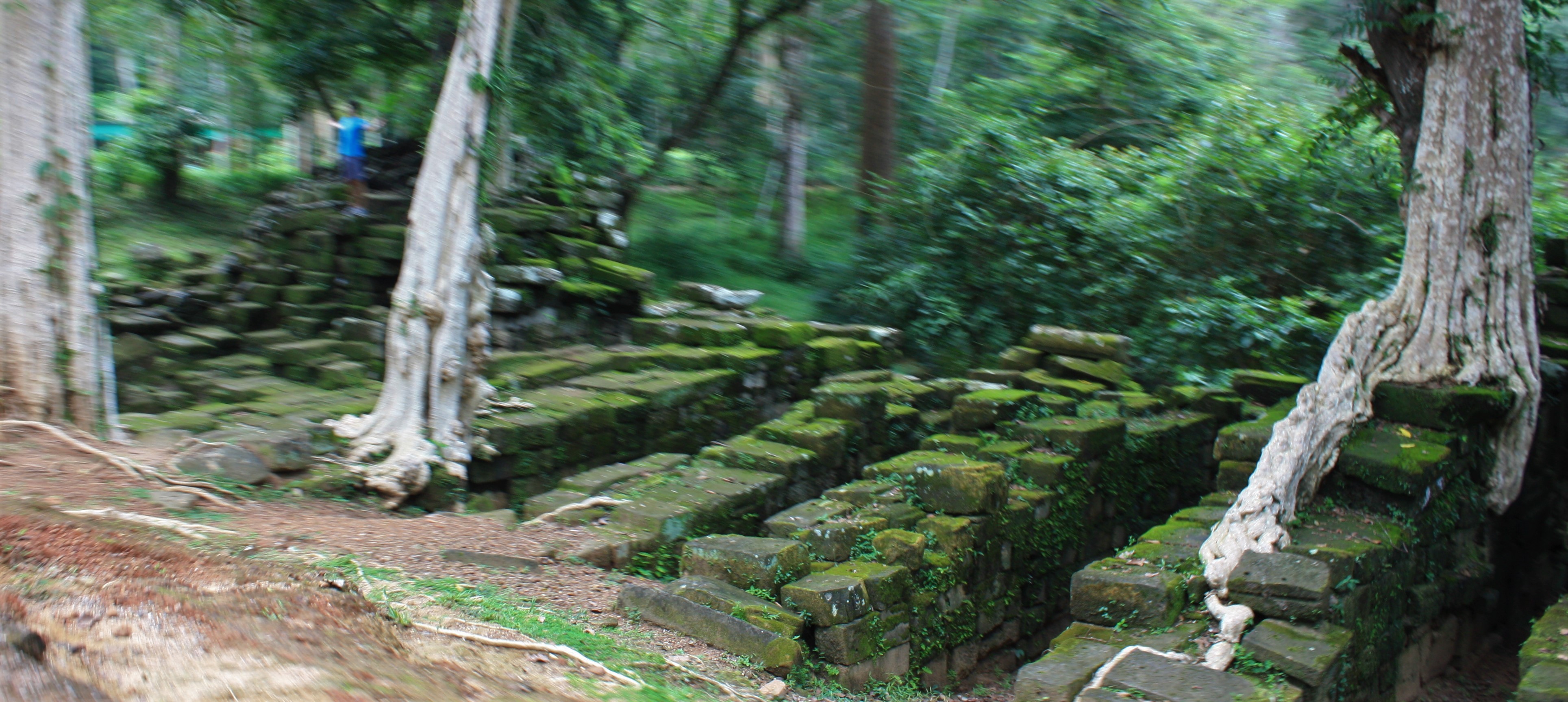
DAILY PHOTO: Ta Prohm Strangler

Taken in October of 2012 at Angkor, Ta Prohm

BOOK REVIEW: Crueler than Dead, Vol. 1 by Tsukasa Saimura

Crueler than dead, vol.1 (Crueler than dead, #1)Crueler than dead, vol.1 by Tsukasa Saimura
My rating: 4 of 5 stars

Amazon.in Page

Out: October 12, 2021

A teenage girl regains consciousness in a bland institutional setting to discover that she has been part of medical experimentation. Her mission, should she choose to accept it, is to get a vile of vaccine tested on her and the young boy who will be her traveling companion (as well as, on a bunch of people who didn’t survive) to a stadium in the heart of a Tokyo, a city overrun by Zombies. This is a manga-style graphic novel (i.e. black-and-white panels read right to left.)

I found the work to be in the meaty middle among the vast Zombie subgenre – neither among the best nor the worst. What I think the book did well was set up stakes for intense action. They have to journey to the center of the world’s most populous city to the only un-Zombified people known to remain living. So, the stakes are the continued existence of our species. What the book doesn’t do so well is maintain pace and a clear narrative thread. Textless panels are used to make transitional jumps and it’s not clear to me that most readers will follow the flow smoothly.

If you enjoy Zombie stories and manga comics, you may want to look into this one. It has a video game like aesthetic and feel which may (or may not) appeal to gamers more than the average reader. If you find Zombies overplayed and are looking for only the best of the best in Zombie stories, you’re unlikely to find that here.

View all my reviews

Aphorisms for Our Age of Anxiety

1.) No one has ever been mocked, insulted, or beaten into the best version of themselves.

2.) The brain sticks little value labels on everything, labels that have no real existence - but very real consequences.

3.)Whatever else one may be, life insists one be a philosopher.

4.)One can't fathom another's malfunction while discounting that person's fears. 

5.)Hold nothing that drags you down. 

6.)Before going crazy, contemplate your crazy. 

7.) Any dope can see the beauty in beautiful things, a strong mind sees the beauty in all things.

8.) To know a thing's name and classification is to know nothing.  

9.) Don't discount the profound power of imaginary worlds. Read.

Vertigo Green [Haibun]

Life overtakes all. Moss coats stone; vines smother shrubs; trees straddle walls. All growing in splotched patterns of green -- a million shapes of leaf in a million subtly different shades. My world is awash in green. My mind is soothed by deep greens, and fired by the bright light-greens of fresh growth. My periphery swirls and blurs with green.


a mossy stone 
becomes my focal point,
the fringe blurs

DAILY PHOTO: 3 Views from Atop Phnom Bakheng

Sunset on Phnom Bakheng in October 2012
Angkor Wat from Phnom Bakheng; October 2012
Cambodian canopy; October 2012

BOOK REVIEW: Introducing Jesus: A Graphic Guide by Anthony O’Hear

Introducing Jesus: A Graphic Guide (Introducing...)Introducing Jesus: A Graphic Guide by Anthony O’Hear
My rating: 4 of 5 stars

Amazon.in Page

This book offers concise answers to some of the key questions that circle about the life of Jesus and the religion spawned by his existence. It tells the reader what is known about the life of Jesus, providing insight into what life events are well supported and which are only described in accounts written long after the fact (e.g. the gospels.) It describes which factions believed Jesus was a god and which didn’t. It describes opposing views of what Jesus was (i.e. if he wasn’t just a run-of-the-mill human being, was he wearing a human suit or was he some sort of divine hologram.) A lot of the book is more about Christianity than Jesus, proper, exploring how the religion came into existence, how it changed, why it became schismatic, and how it was influenced by other domains of human activity (e.g. governance and philosophy.)

As the subtitle suggest, the book uses graphics throughout – primarily drawings and monochrome artworks depicting Jesus, events from his life, and other characters in his story (e.g. apostles, disciples, and such.) Besides graphics, the only ancillary matter is a “Further Reading” section that discusses Bible versions and scholarly works on Christianity and the life of Jesus.

I found this book to be concise, interesting, and informative. If you’re looking for an outline of Jesus’s life that offers insight into the evolution of Christianity from a non-theological point of view (i.e. having no dog in the fight of whether Jesus was a god) you may want to give this guide a look.

View all my reviews

BOOK REVIEW: Henry VI, Part 3 by William Shakespeare

King Henry VI, Part 3King Henry VI, Part 3 by William Shakespeare
My rating: 5 of 5 stars

Amazon.in Page

Here we witness a tug-of-war for the British monarchy that plays out to a decisive conclusion (eventually.) It begins with Henry VI as king, but the Duke of York has gained the upper-hand. Henry makes a deal that, upon his death, succession will pass back to the Duke’s line, but not before. The Duke reluctantly agrees, but the deal makes everyone else furious. Margaret (Henry’s Queen) is upset because her son has lost his right to succession. The Duke’s sons are also displeased because they think their father should strike while the iron is hot, rather than risking that Henry’s strength and popularity will rise.

The Queen’s displeasure leads her and Clifford (enemy to the Duke, who killed Clifford’s father) to go on the offensive to reacquire the line of succession. They kill the Duke’s youngest son, a child, and then the Duke, himself. This would strengthen Henry’s position, but fortune doesn’t shine for long on anyone in this play, and soon the Duke’s sons capture Henry and Edward (the Duke’s eldest son) is crowned. But then Edward lusts after the first woman he meets as King, the widow Lady Grey, and being rebuffed in his plan to make Grey his “side piece,” he proposes to her. Unfortunately, Edward has already dispatched the Earl of Warwick to propose to the sister of the French King. This leads to the humiliation of Warwick (not to mention the French King’s sister,) and Warwick (with French troops) goes back and dethrones Edward. This, too, is short-lived. Edward consolidates support, captures Henry, and defeats Warwick. As the play ends it might seem stability has been achieved, but we know Edward’s brother, Richard, has ambitions.

While this one of Shakespeare’s earliest plays and it’s constrained by events, it’s worth a read. It has a lot to say about how arrogance, lust, and timidness can all precede a downfall.

View all my reviews