Unknown's avatar

About B Gourley

Bernie Gourley is a writer living in Bangalore, India. His poetry collection, Poems of the Introverted Yogi is now available on Amazon. He teaches yoga, with a specialization in pranayama, and holds a RYT500 certification. For most of his adult life, he practiced martial arts, including: Kobudo, Muay Thai, Kalaripayattu, and Taiji. He is a world traveler, having visited more than 40 countries around the globe.

TODAY’S RANDOM THOUGHT: Warrior


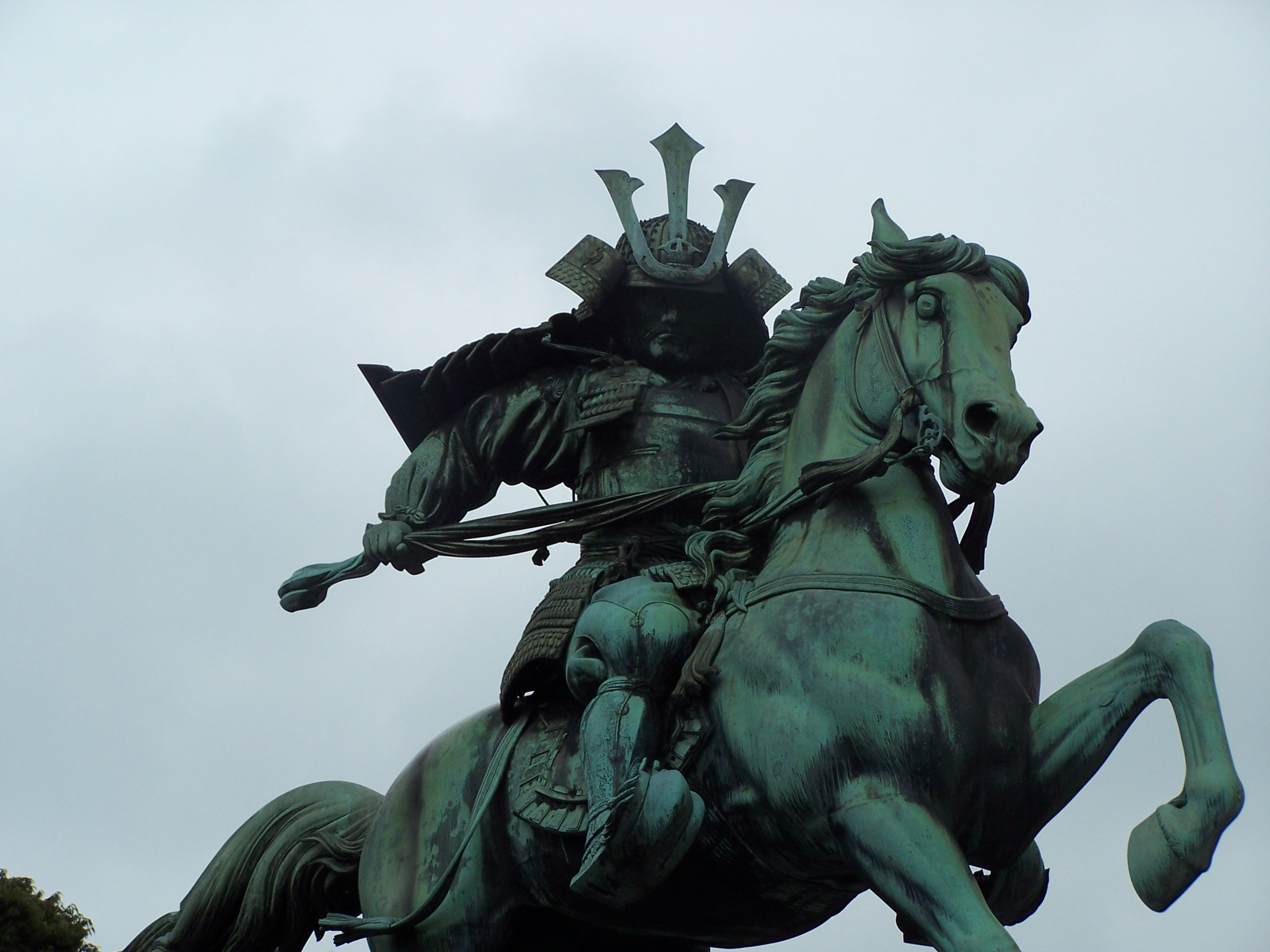
Statue of Kusunoki Masashige, famous Royalist supporter, taken outside the Imperial Palace in Tokyo in 2008.

Statue of Kusunoki Masashige, famous Royalist supporter, taken outside the Imperial Palace in Tokyo in 2008.

The defining characteristic of a warrior isn’t the ability to fight. Thugs and mercenaries fight. It’s  subordinating one’s most base instinct to survive to virtuous behavior. It’s not being ruled by fear, anger, or pride, but consciously opting to do the right thing.

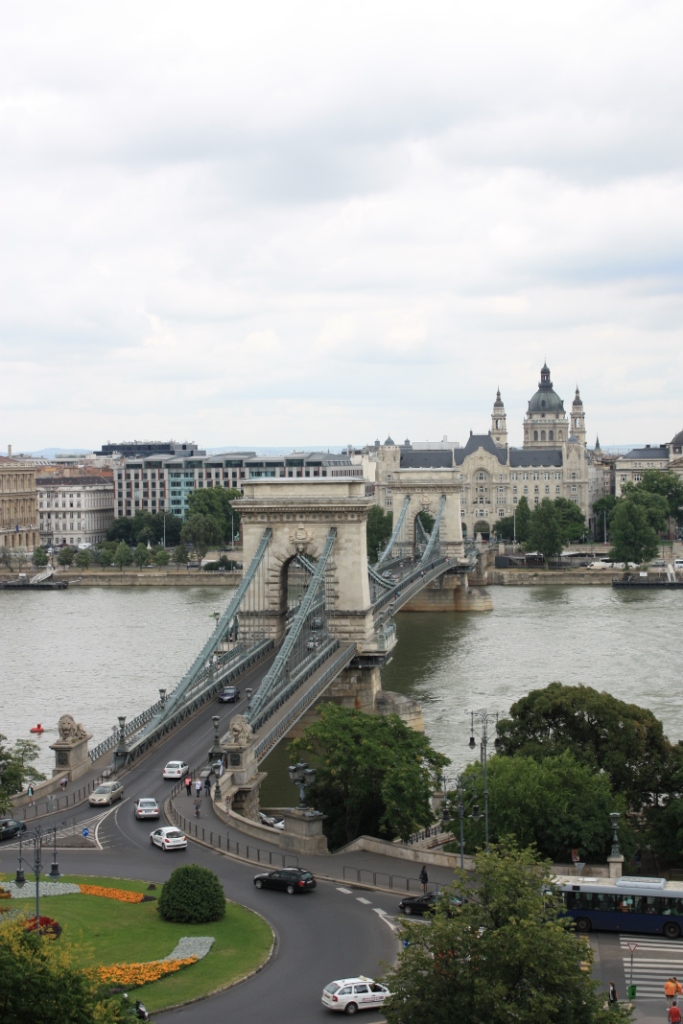
DAILY PHOTO: Chain Bridge

Taken in the summer of 2011

Taken in the summer of 2011

This bridge is one of Budapest’s iconic sites.

TODAY’S RANDOM THOUGHT: Chasing MacGuffins

What's the "Rabbit's Foot?" Source: Paramount

“What’s the ‘Rabbit’s Foot?'” “I don’t know, but I’m going to shoot her in the head if you don’t give it to me.” Source: Paramount

Critics often bemoan the effectiveness of MacGuffins. A “MacGuffin” is an object so intrinsically valuable that people are willing to kill for it, die for it, or chase each other across the universe for it… and this is the important bit…without knowing precisely why said object is so valuable. In other words, it’s a plot device designed to propel plots forward that would have no reason to advance otherwise. Its exact characteristics are unimportant, and sometimes even its general characteristics remain unrevealed.

Prime examples from the cinema include “the case” from Pulp Fiction, the “Maltese Falcon” from the same-named movie, the “one ring” from Lord of the Rings, the sword “Destiny” from Crouching Tiger, Hidden Dragon, the “Rabbit’s Foot” from Mission Impossible III, the “Tesseract” from The Avengers, or “Genesis” from Star Trek II: The Wrath of Khan.

So, why would people kill, die, or chase after something that they didn’t understand? That’s what the aforementioned critics say, but I have my own theory as to why MacGuffins work well and frequently.  MacGuffins work because people are used to spending their lives chasing something that they don’t precisely understand. Call it bliss or legacy or a missing part of oneself. If one spends one’s life chasing after a key that may or may not achieve one’s desired goal, it would be hypocritical to not have sympathy for characters who do the same.

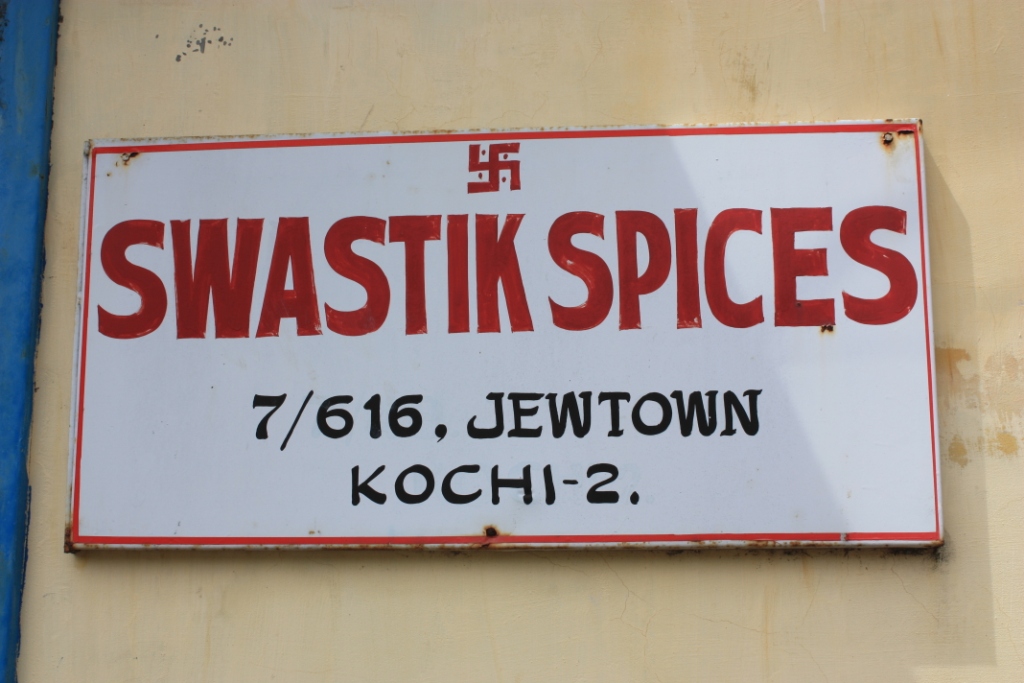
DAILY PHOTO: Getting One’s Symbols Crossed

Taken on July 7, 2014 in Kochi (Cochin.)

Taken on July 7, 2014 in Kochi (Cochin.)

Centuries before the Nazis hijacked the swastik “twisted cross” emblem, it was part of Hindu, Jain, and Buddhist iconography. Throughout South Asia, the symbol generally expresses a wish for well-being (the word “swastik” literally means “well-being” in Sanskrit.) Of course, there are specific religious meanings that vary with the belief system that is utilizing the symbol.

One has to remember this when one is in a Jewish neighborhood in South Asia–such as this one in Kochi–because, otherwise, the prominent swastikas can be disconcerting given the Nazi’s inexplicable expropriation of this symbol.

TODAY’S RANDOM THOUGHT: Hitler’s Final Victory

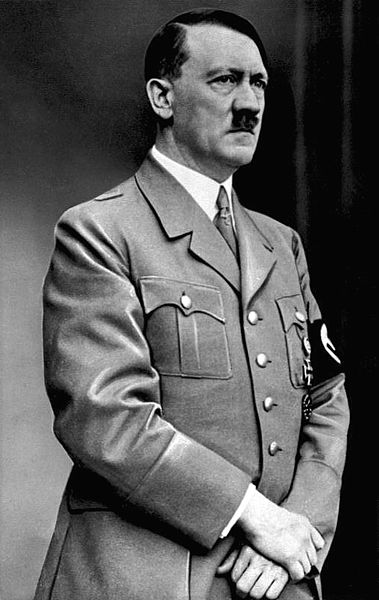
Source: German Federal Archives

Source: German Federal Archives

Hitler killed the short-stache (a.k.a. the “toothbrush mustache.”) Imagine that, almost 70 years after his death, he still holds power over people’s decisions about facial hair.

This is a misplaced take-away lesson. It’s the unbridled narcissism, the icy hatred, and the irrational exuberance in the power of evil of Hitler that should be abandoned (yet, somehow, those intangibles still quietly exist.) It’s not the superficial aspects of Hitler that should be shunned, but the ones at the bastard’s core.

I’m not saying the toothbrush-stache was a good look. On the contrary–as one who has had a mustache his entire adult life and has worn a beard now for several years–I’m a little offended by the lack of commitment to one’s choice of facial hair that the toothbrush-stache represents. (Incidentally, I feel the same about the sole patch and mutton chops.) In my mind, one should go full-stache or go home to shave.

Still, there being no accounting for taste, I think those individuals who would otherwise find the short-stache appealing (i.e. you know, indecisive types who wear culottes and eat with sporks) should revive the toothbrush mustache as a big fuck-you to Hitler–don’t let tyrants boss you around from the grave.

Toothbrush mustache admirers of world, unite!  (No, I won’t be joining you.)

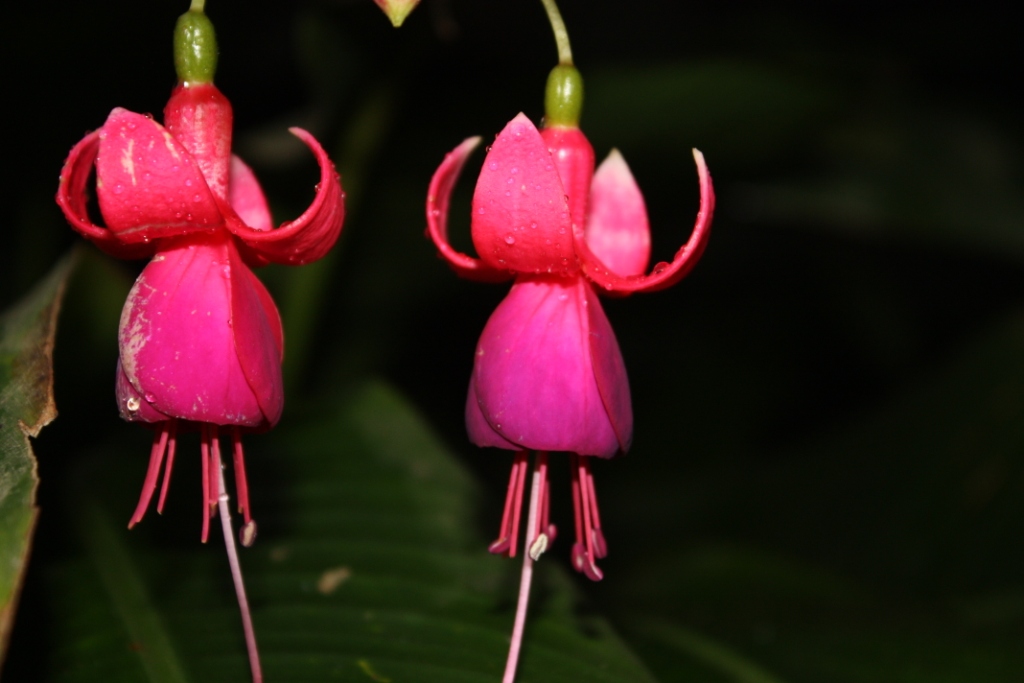
DAILY PHOTO: Flamingo Flower and Lady’s Eardrops

Taken on July 6, 2014 in Munnar.

Taken on July 6, 2014 in Munnar.

Taken on July 6, 2014 in Munnar.

Taken on July 6, 2014 in Munnar.

TODAY’S RANDOM THOUGHT: Death as the Good Drunk

I don’t think Death should be depicted as a cowled, faceless Grim Reaper.

Instead, I think Death should be the wise drinking buddy who can hold his liquor.  Not the one who acts like an idiot an encourages friends to do the same. Rather, the one who spurs you to ask out a girl who’s way out of your league, and keeps you classy if (when) she declines.

DAILY PHOTO: Down to the River

Taken on July 12, 2014 in South Karnataka.

Taken on July 12, 2014 in South Karnataka.

IMG_1241This is a popular riverine hot-spot in South Karnataka.


BOOK REVIEW: A History of the World in 6 Glasses by Tom Standage

A History of the World in 6 GlassesA History of the World in 6 Glasses by Tom Standage
My rating: 4 of 5 stars

Amazon page

Get Speechify to make any book an audiobook

Standage’s book takes a fascinating look at the effect that six key beverages had in the unfolding of world events, as well as how the beverages themselves made friends and enemies. The drinks in question are beer, wine, spirits, coffee, tea, and cola. There are two chapters for each of these drinks. They follow a chronological order based upon when the respective drink rose to prominence, but within the discussion there is overlap of time periods. For example, both the chapters on spirits and tea consider the effect of those beverages on the American Revolution (i.e. the Whiskey Rebellion and the Boston Tea Party, respectively.)

As the author points out, there’s a natural subdivision to the book, which is that the first three beverages are alcoholic and the last three are caffeinated. There’s another way of looking at it, and that’s the means used to achieve a drink that wasn’t a health hazard. The first three drinks achieve germ-killing by fermentation, the next two by boiling, and the last through technology.

The era of beer is associated with the Agricultural Revolution and the growing importance of cereal grains. Geographically, the region of focus is the Fertile Crescent and Egypt. Among the more interesting points of discussion is the role of beer (along with the related commodities of cereal grains and bread) in the development of written language.

The era of wine is associated with the civilizations of ancient Greece and Rome. Readers of the classics will be aware that wine was much celebrated among the Greeks and Romans, so much so that they developed gods of wine in their mythologies (Dionysus and Bacchus, respectively.) Of course, wine played no small role in Christian mythology as well–e.g. Jesus turns water to wine.

Spirits are related to the Colonial period, though they were first developed much earlier. The author emphasizes that these were the first global drinks. While beer and wine were robust to going bad, they could spoil in the course of long sea voyages.

Alcohol of all kinds has always attracted opposition. This conflict, of course, owes to the fact that people under the influence of alcohol frequently act like idiots. One might expect that the transition to discussion of non-alcoholic beverages would correspond to the end of controversy, but that’s not the case. Each of the beverages brought controversy in its wake. There were attempts to ban coffee in the Islamic world where its stimulative effect was conflated with intoxication. Coca-Cola became associated with capitalism and American influence, and drew its own opposition because of it. It seems there’s no escape from controversy for a good beverage.

The most fascinating discussion of coffee had to do with the role of cafés as corollaries to the internet. Centuries before computers or the internet as we know it, people went to cafés to find out stock values and commodity prices, to discuss scholarly ideas, and to find out which ships had come and gone from port.

The role of tea in world history is readily apparent. Besides the aforementioned Boston Tea Party, there were the Opium Wars. This conflict resulted from the fact that the British were racking up a huge tea bill, but the Chinese had minimal wants for European goods. Because the British (through the East India Company) didn’t want to draw down gold and silver reserves, they came up with an elaborate plan to sell prohibited opium in China in order to earn funds to pay their tea bill. Ultimately, Britain’s tea addiction led to the growing of tea in India to make an end-run around the volatile relations with China.

The book lays out the history of Coca-Cola’s development before getting into its profound effect on international affairs. A large part of this history deals with the Cold War years. While Coca-Cola was developed in the late 19th century, it was really the latter half of the 20th century when Coke spread around the world—traveling at first with US troops. The most interesting thing that I learned was that General Zhukov (a major Soviet figure in the winning of World War II) convinced the US Government to get Coca-Cola incorporated to make him some clear Coca-Cola so that he could enjoy the beverage without the heart-burn of being seen as publicly supporting an American entity (i.e. it would look like he was drinking his vodka, like a good Russian should.) General Zhukov was perhaps the only person to stand in opposition to Stalin and live (the General was just too much of a national hero to screw with.)

There’s also an interesting story about how the cola wars played out in the Middle East. Both Coke and Pepsi wanting access to the large Arab market, and were willing to forego the small Israeli market to pave the way for that access. When Coke finally had to relent due to public outrage and accusations of anti-Semitic behavior, Pepsi slid in and followed Coca-Cola’s policy of snubbing Israel in favor of the Arab world.

I enjoyed this book, and think that any history buff will as well. One doesn’t have to have a particular interest in food and beverage history to be intrigued by stories contained in this book.

View all my reviews

DAILY PHOTO: Bharachukki Falls

Taken July 12, 2014 in Chamarajanagara District of Karnataka State in India.

Taken July 12, 2014 in Chamarajanagara District of Karnataka State in India.

IMG_1068

The falls were thin, but flowing, in South Karnataka yesterday.  Here are a couple of photos of the Bharachukki Falls in Chamarajanagara District.