Unknown's avatar

About B Gourley

Bernie Gourley is a writer living in Bangalore, India. His poetry collection, Poems of the Introverted Yogi is now available on Amazon. He teaches yoga, with a specialization in pranayama, and holds a RYT500 certification. For most of his adult life, he practiced martial arts, including: Kobudo, Muay Thai, Kalaripayattu, and Taiji. He is a world traveler, having visited more than 40 countries around the globe.

BOOK REVIEW: Pirate of the Far East by Stephen Turnbull

Pirate of the Far East: 811-1639Pirate of the Far East: 811-1639 by Stephen Turnbull

My rating: 3 of 5 stars

Amazon page

Unfortunately, the first thing one notices about this book is what seems like a typo in the title. Instead of “Pirates of the Far East,” it’s Pirate of the Far East, which suggests piracy wasn’t so much of a problem in the region because there was only the one pirate—and that the author isn’t a fan of either definite or indefinite articles. I’m sure this was done intentionally, but it does read oddly and sounds tinny.

This slim book is a typical edition of the Osprey military history series. All of these books are less than 100 pages, illustrated, and focus on a specific class of warfighter over a defined period. In this case, the book presents a class of pirates called wako for the period from 811 to 1639. Wako literally refers to Japanese pirates, but–in fact–these marauders of the high seas were often mixed nationality crews. The book also provides information about counter-piracy activities and those groups of warriors, such as Shaolin monks, who fought against piracy back in those days.

This book covers a range of topics including: the life of a pirate, pirate ships, strategy, tactics, and weapons—as well as the history of these groups. The book has five actual chapters, but there are short units providing important information that would usually be appendices, e.g. a chronology, a discussion of museum exhibits, and an annotated bibliography.

The illustrations are mostly drawings, but include maps and photographs as well. Some of the art is drawn in the present-day by the illustrator Richard Hook, but some are historic pieces from art collections. The photographs also include some present-day photos of locations that were once bases of piracy, as well as photos of museum exhibits (e.g. topographic and other models.) The graphics are helpful in showing how pirates dressed/armored and were armed. The maps and drawings are particularly helpful.

I’d recommend this book, but I do think it’s overpriced at full price. At a mere 64 pages—a pamphlet more than a book–paying $10 or more seems a bit pricey despite the useful graphics and the fact that the author is among the most renowned authorities on Japanese warriors and medieval military tactics. All that said, there are relatively few books on the topic, and it’s not easy to get this information from other sources.

View all my reviews

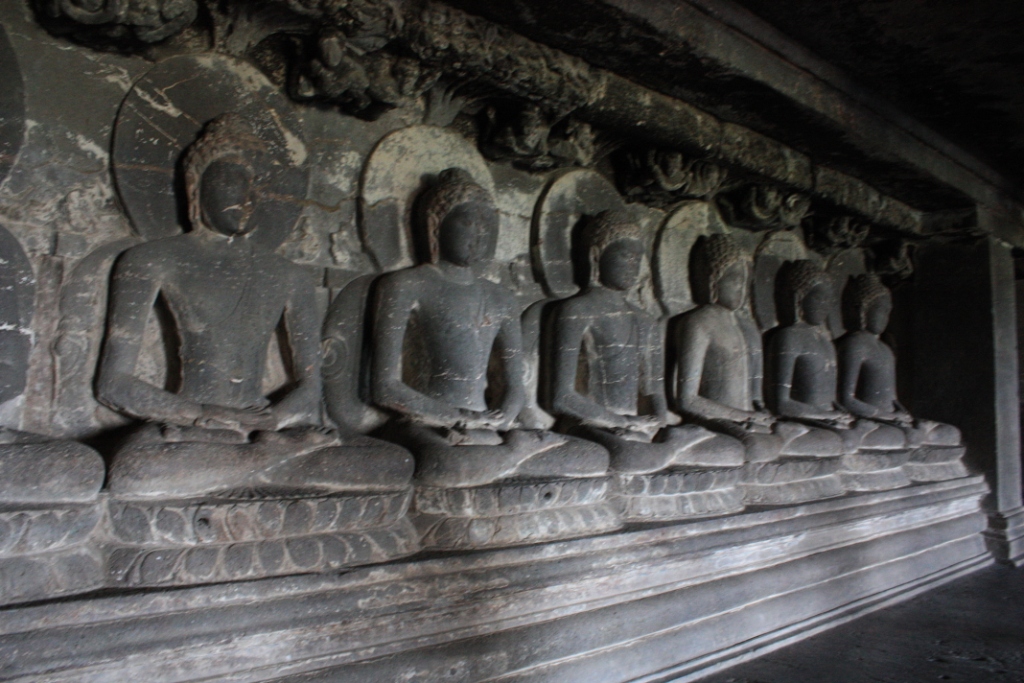
DAILY PHOTO: Seated Buddhas at Ellora

IMG_0881

Taken in the Ellora Caves on November 20, 2014. Ellora has Buddhist, Hindu, and Jain caves–in that order.

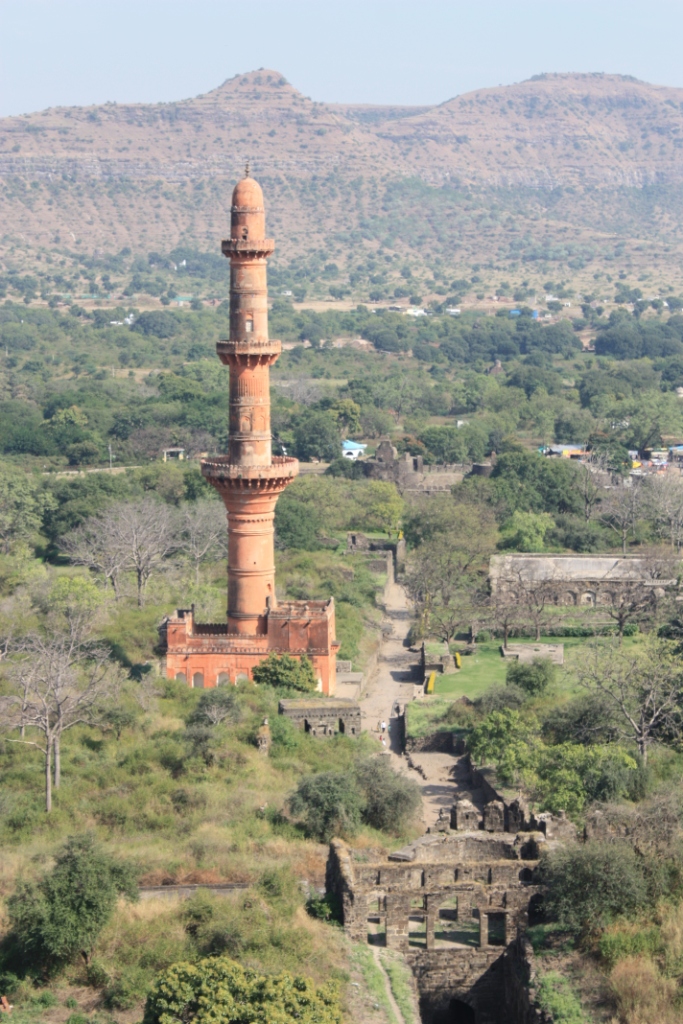
DAILY PHOTO: Out Past the Minaret

Taken on November 20, 2014 at Daulatabad.

Taken on November 20, 2014 at Daulatabad.

This is taken from the path up to the citadel at Daulatabad Fort. Daulatabad is a 14th century hill fortress that lies on the road between Aurangabad and the Ellora caves. It was the capital of the Tughlaq Dynasty.

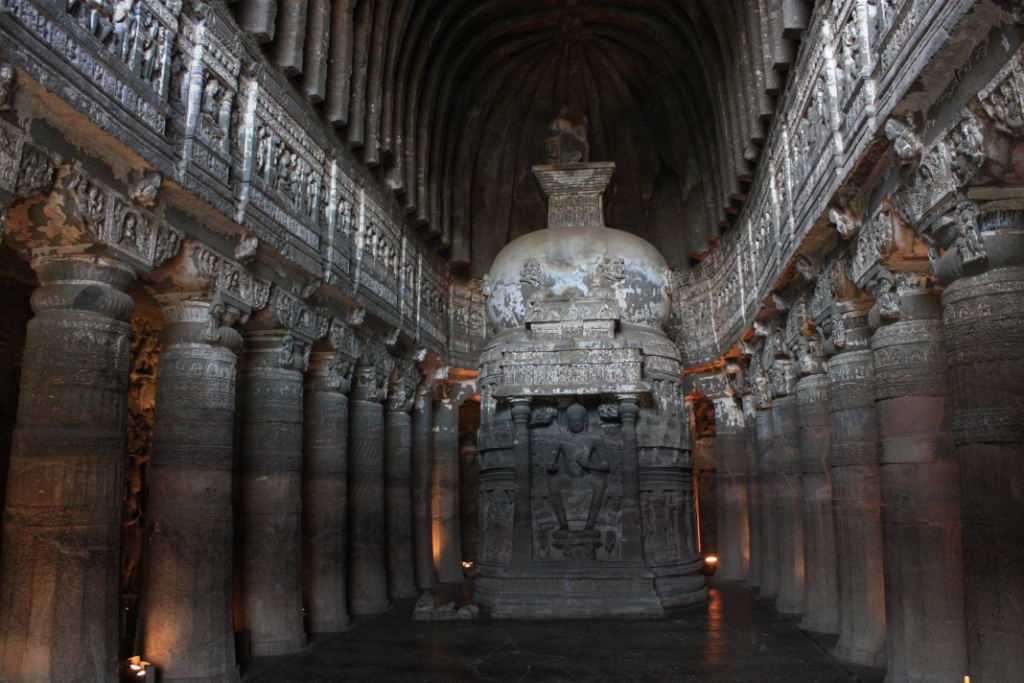
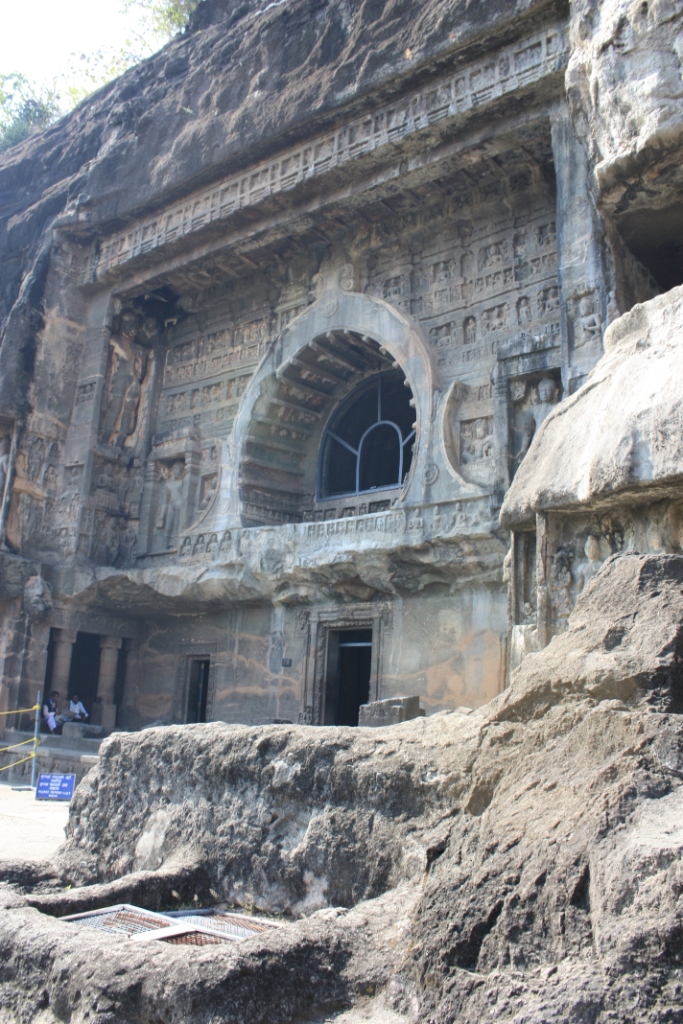
DAILY PHOTO: Ajanta Sanctuary

Taken on November 19, 2014

Taken on November 19, 2014

There are two types of caves at Ajanta; chaitya-grihas (a.k.a. sanctuary, prayer hall, or meditation hall) and sanghārāmas (a.k.a. vihāras or monasteries.) This is an example of the former, of which there are only a few. In fact, it (cave 26) is the most ornate of the Ajanta sanctuaries. Sanctuaries are distinguished by domed roofs and the presence of a stupa, which is a monument that is typically dome-shaped but need not be so flashy as this one–sometimes they are simply mounds. The sanctuaries also have fanlights (like a transom) that bring in more light than the monasteries.

IMG_0591

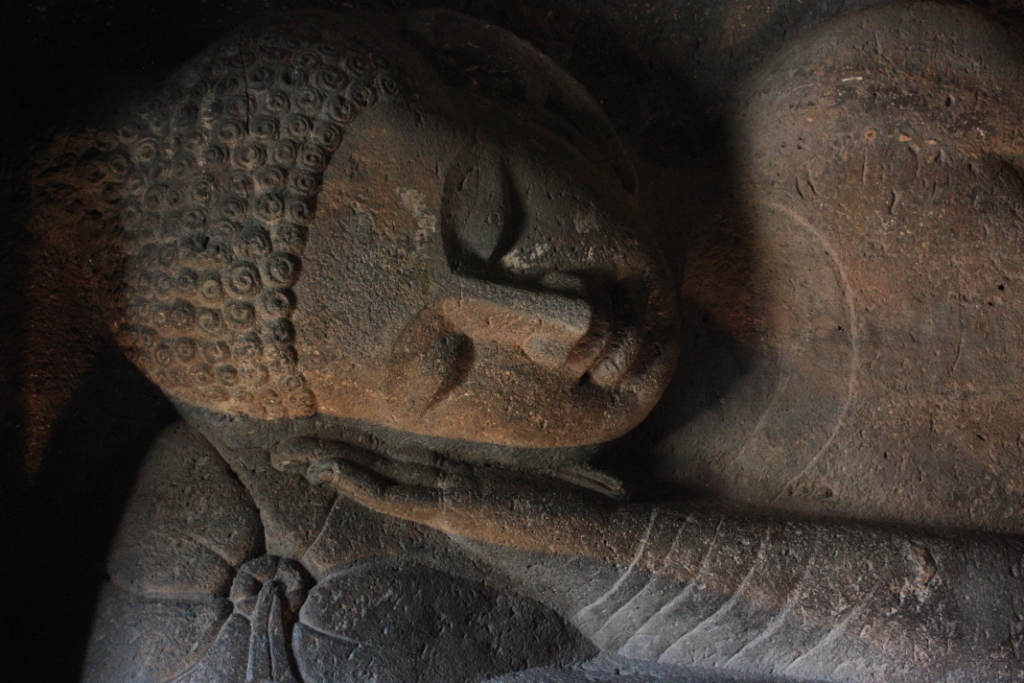
Cave 26 also houses the carving of the reclining Buddha that I’m presently using for my header image.

IMG_0605

DAILY PHOTO: Red Horns

Taken near Aurangabad Caves on November 18, 2014

Taken near Aurangabad Caves on November 18, 2014

IMG_0206

BOOK REVIEW: The Hindu-Yogi Science of Breath by William Walker Atkinson

The Hindu-Yogi Science Of BreathThe Hindu-Yogi Science Of Breath by Yogi Ramacharaka

My rating: 3 of 5 stars

Amazon page

I got this book as a Kindle freebie. It’s made available for free because it’s in the public domain, not necessarily because it was so bad that the author couldn’t even get people to pay $0.99 for it. It was written by an American named William Walker Atkinson, who also went by the pseudonym of Yogi Ramacharaka. Atkinson was an American who lived in the latter 19th and early 20th century, and authored more than 100 books. If you’re wondering why you’ve never heard of an author this prolific, it’s in part owing to his love of nom de plumes and the fact that he dodged the spotlight.

This book is short—less than 100 pages—and is organized into 16 chapters. The early chapters provide background for an audience that would’ve been fairly unaware of yogic practices, and the latter chapters are more along of a how-to book—giving instructions on various yogic breathing techniques. The first part of the book also tries to discuss the science of breath in terms of anatomy and physiology, but in layman’s terms. All in all, the book’s organization is logical.

This book’s readability is not bad, considering its era. However, it is 19th century writing, and so sentences can be long and tortuous by present-day standards. In the instructional parts, he uses bullet pointing to explain sequences.

The book runs into some problems, in my opinion, by trying to explain breath both in terms of modern science and yogic physiology. Imagine the story of the creation of the universe being told simultaneously in terms of the big bang and the Biblical account. These explanations are at odds, and any attempt to merge them into an integrated explanation will convolute the principles of one system or the other. Furthermore, explanations of respiratory and nervous system operations from Atkinson’s day are a bit out-of-date.

I would recommend this book for someone who has a scholarly interest in yoga and how it came to be introduced to the West. I can’t say that I would recommend it for its originally intended purposes of putting pranayama (breathing techniques) in the context of Western medical science or teaching the techniques of breathing. There are better books for the former (e.g. Coulter’s Anatomy of Hatha Yoga, chapter 2—though this is a much more technical account), and a teacher is needed for the latter. If one is an intermediate (or above) student of pranayama, then experimenting with Atkinson’s methods may prove interesting. However, from what I could read, it’s not clear where Atkinson learned pranayama. The fundamentals (e.g. abdominal, thoracic, and yogic breathing) seem sound, but there are other techniques that are unfamiliar to me and seem a bit unconventional. I can’t vouch for whether these are things I haven’t learned or whether Atkinson got them wrong. However, mostly there is just not enough information to communicate the fine points of the practices, and practicing pranayama is not without its risks.

View all my reviews

DAILY PHOTO: Disappearing Ganesha

Taken on November 23, 2014 at Somaiya College in Mumbai

Taken on November 23, 2014 at Somaiya College in Mumbai

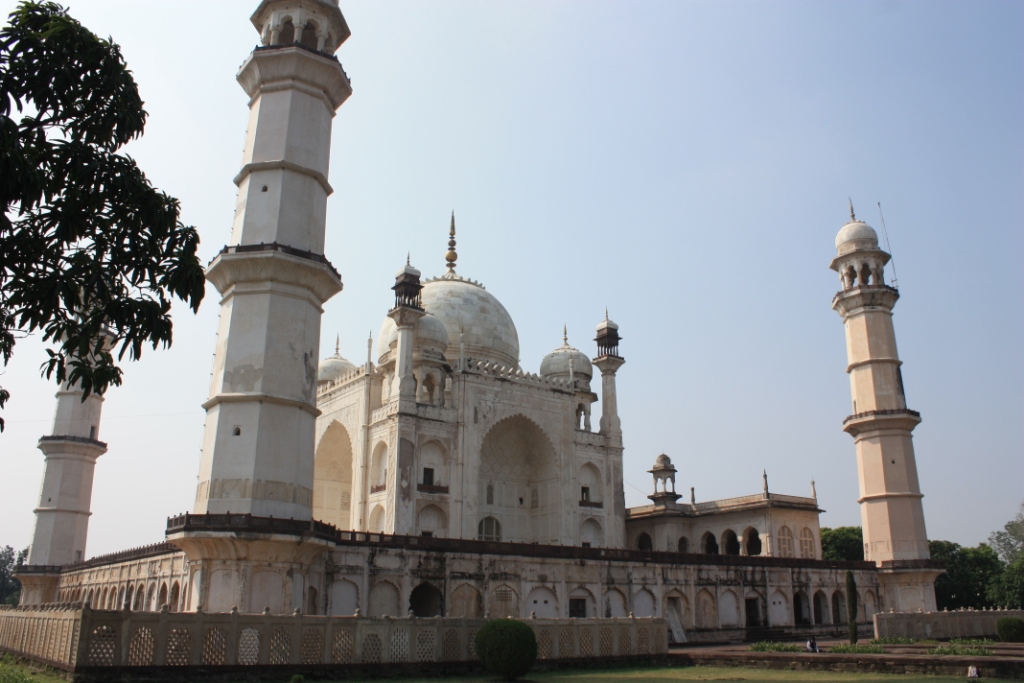
DAILY PHOTO: Bibi Ka Maqbara: or, Aurangabad’s Mini-Taj

Taken on November 18, 2014 in Aurangabad

Taken on November 18, 2014 in Aurangabad

From a distance, Aurangabad’s Bibi Ka Maqbara bears a striking resemblance to the Taj Mahal. Besides the superficial similarities, it was also build in memoriam to the wife of an important Muslim leader. However, according to my guide, the Bibi Ka Maqbara is only about 60% the height of the Taj Mahal (I suspect its width is an even smaller proportion, as it looks “skinny” in comparison to my memory of the Taj Mahal.) Also, while the Taj is done entirely in white marble, only the dome and pedestal of the Bibi Ka Maqbara are white marble. The rest is plaster. Whereas the Taj has a  great many floral scenes that are formed by inlaid semi-precious stones, at the Bibi Ka Maqbara similar scenes are painted onto the plaster in colorful paint. Aurangabad’s mini-Taj opened a mere 13 years after the Taj Mahal.


There are a couple of ways in which the Bibi Ka Maqbara surpasses the Taj. Most notably, the view from the back is much better. Aurangabad’s site has a garden at the back that rivals the front garden in size, and there are beautiful mountains in the background. (The rear of the Taj overlooks the Yamuna river bed and beyond that is not much impressive.) Second, no craftsmen were intentionally injured in the making of this monument.  (There is a tale–treated as suspect by many historians–that the Taj craftsman were crippled in various ways after the completion of work so that they would never again produce something as lovely.)

DAILY PHOTO: Aurangabadi Vendor Carts

Taken in Aurangabad on November 18, 2014

Taken in Aurangabad on November 18, 2014

I’m back from a week-long trip to Maharashtra, where I visited Aurangabad, Ajanta, Ellora, Daulatabad, and Mumbai. That’s why I’ve been delinquent in posting. However, I’ll resume by posting pics and commentary from this trip.

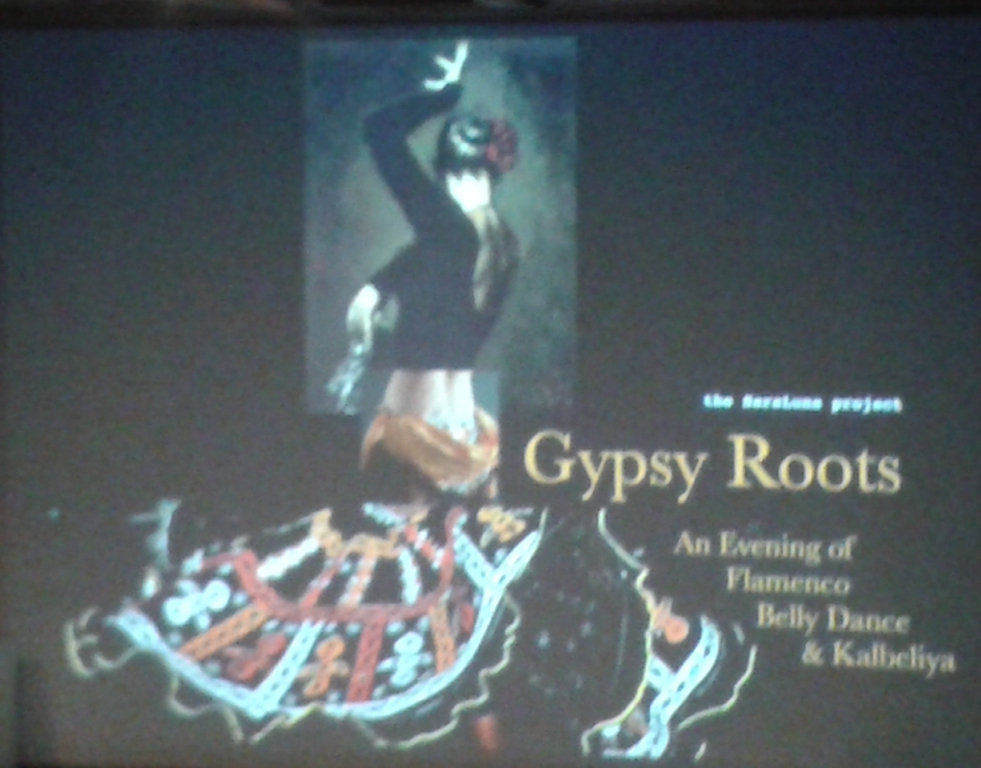
LSNED: The Many Faces of Gypsy Dance

20141115_191914

FYI: LSNED = Learn Something New EveryDay

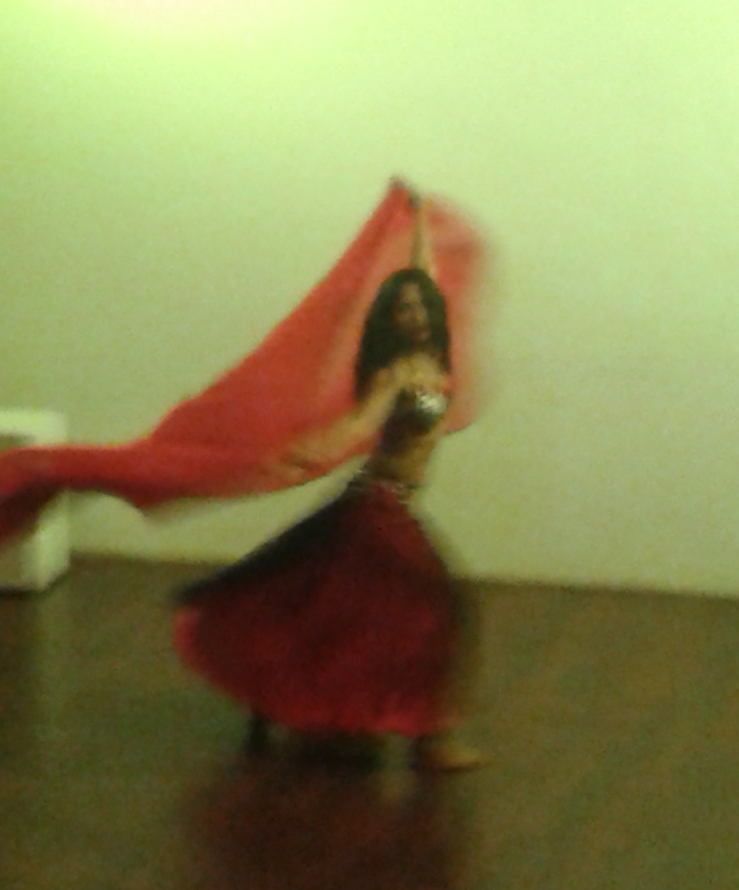
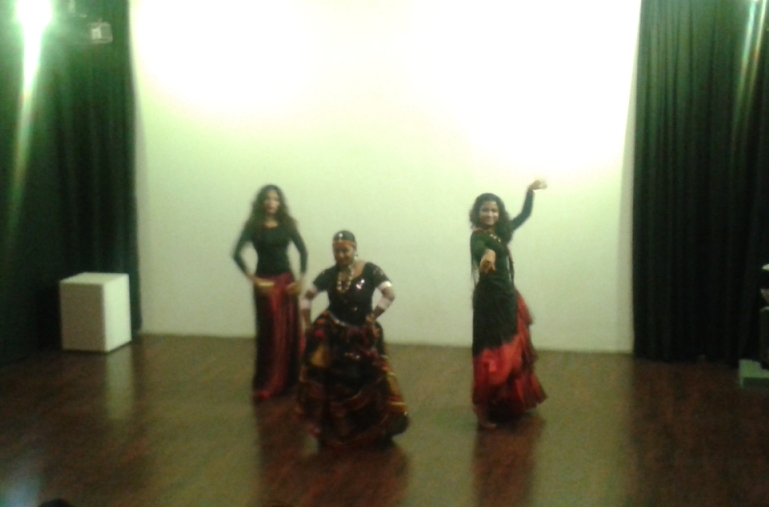
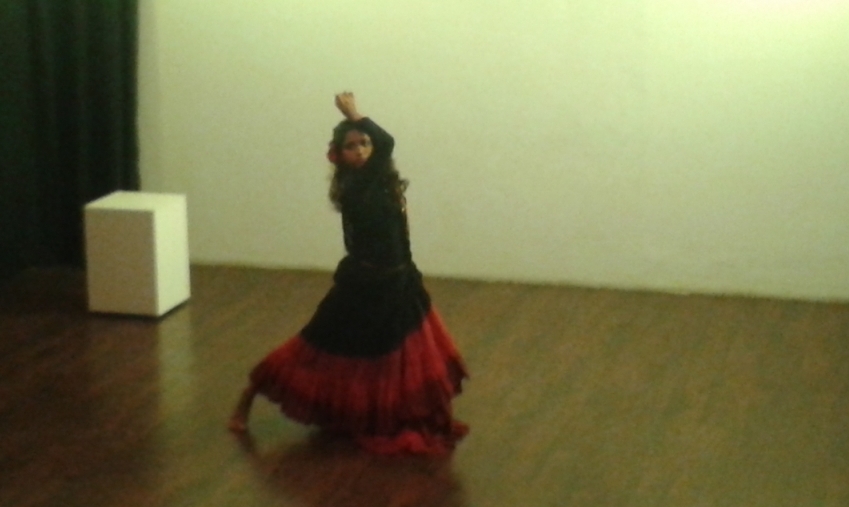
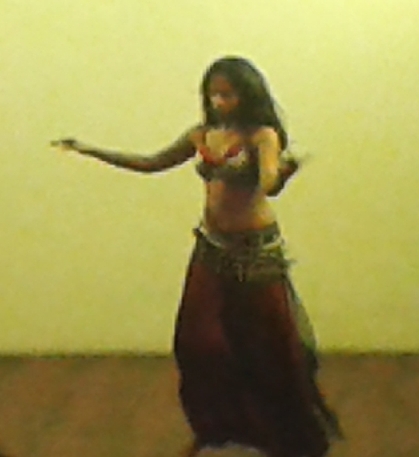
My wife, some friends, and I went to a dance performance at the KalaRasa Art House in Jayanagar last night. The dance was performed by a duo (made trio for the evening) called The SaraLuna Project, who demonstrated three dance forms with Gypsy roots: Kalbeliya Dance of Rajasthan, Egypt’s Belly Dance, and the Spanish Flamenco. I had no idea that these dance forms were connected (hence the Learn-Something-New-EveryDay [LSNED] segment,) and that they are but three styles along the long trail of Gypsy migration–though I have seen other Gypsy dance forms in Hungary.

This promises to be the first installment of a series that will cover other dance forms in this long and rich cultural heritage. The dance was sensational and it was a learning experience (complete with slides and graphics) as well as an entertaining evening. So if you’re in Bangalore and enjoy dance you should follow The SaraLuna Project.


20141115_193654


20141115_20095120141115_200149

20141115_194212