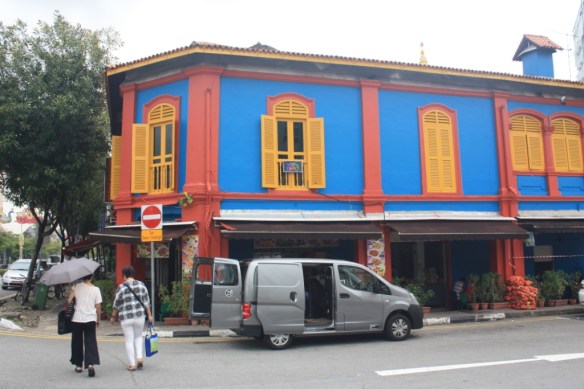
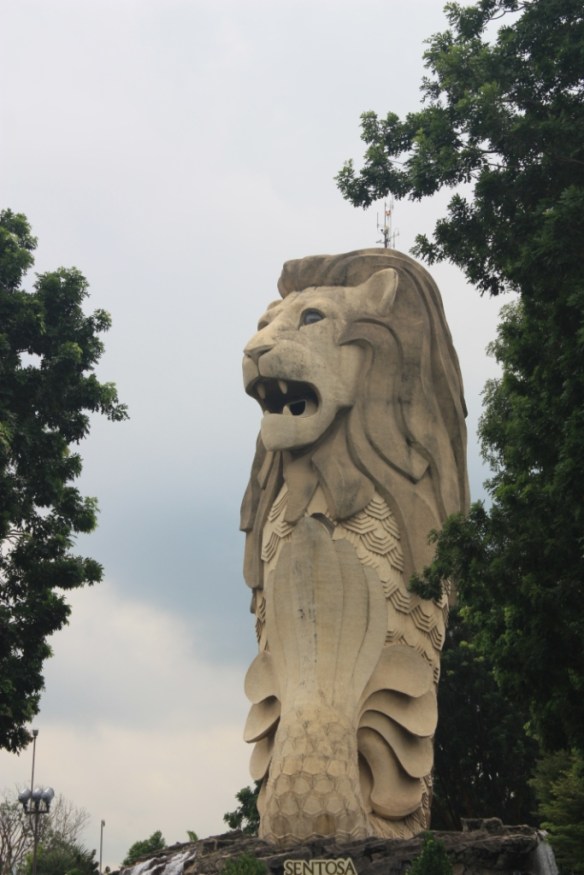
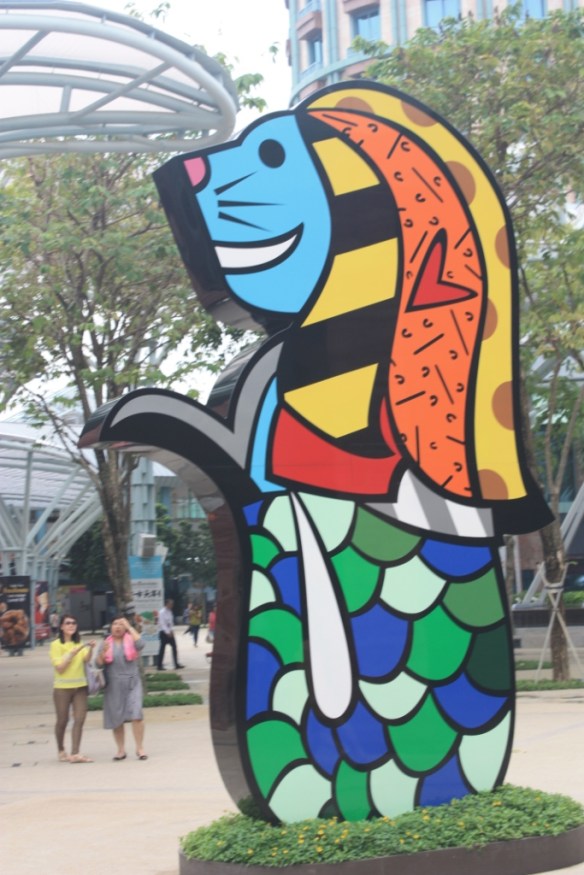
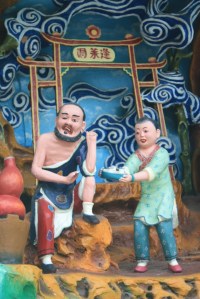
Taken on November 1, 2016 at Haw Par Villa in Singapore

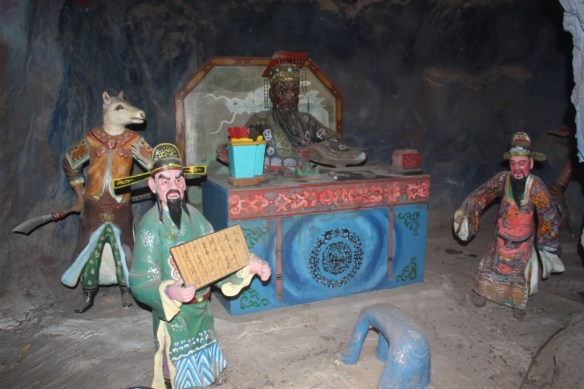




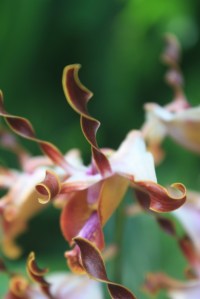
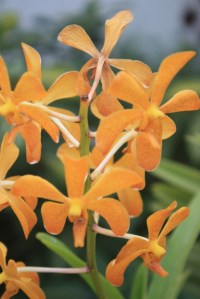
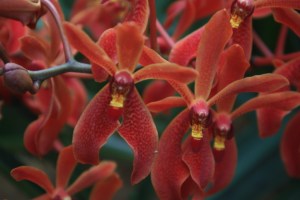
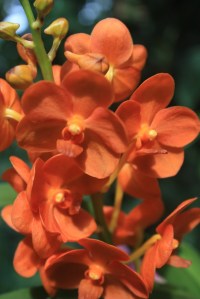
Taken on October 31, 2016 at Singapore’s National Orchid Garden





he’s not your run-of-the-mill maniac
thrice escaped and twice hauled back
steely-eyed with a devil’s grin
he invented seven new deadly sins
he watches the “can haz cheezburger” cats
and will stop to fix an old lady’s flat
he’s got two souffles baking in the oven
and is cooking meth on the stove above ‘em
 Narrow Road to the Interior: And Other Writings by Bashō Matsuo
My rating: 5 of 5 stars
Bashō was a traveler, and much of his poetry came from what he witnessed and experienced on the road. This volume contains four travelogues (each containing interspersed haiku); the most famous of these being the title piece, but also including: “Travelogue of Weather-Beaten Bones,” “The Knapsack Notebook,” and “Sarashima Travelogue.” In addition to the travel writings, there is a section of select Bashō poems. The word “travelogue” may create a misapprehension. These weren’t diaries of the minutiae of his travels. They offer a poet’s eye view of highlights and insights, and—of course—interspersed poems. [There is a term for this genre of prose mixed with poetry, haibun.]
Matsuo Bashō was born in Iga-Ueno (famously a center of ninja warriors during the Warring States Period), and traveled extensively within Japan. He lived from 1644 to 1694, during the time between the end of the Warring States Period and the Meiji Restoration that brought Japan into modernity. It was a period of relative peace ruled by a military dictatorship, lying in the long shadow of war. Zen touches are prevalent throughout Bashō’s writings, but so are references to Chinese philosophy and history, Shinto, not to mention the Japanese poets who preceded him.
In addition to the aforementioned content, the book includes some nice ancillary features. First, there is a Translator’s Introduction that helps provide necessary context about Bashō’s life and times, as well as offering insight into what was valued in Japanese poetry of this time–including influences of systems like Zen, Taoism, and Confucianism. There is an Afterword describing the last years of Bashō’s life, as well as end-notes and a bibliography. Notes are useful for this type of book because most readers face both cultural and historical barriers to understanding (myself included.) As for graphics, there is a map to help readers grasp the extent of the poet’s travels. There is also a chronology to help keep the events of Bashō’s life—most notably the timeline of his travels—straight.
I’m not sure how the translator’s (Sam Hamill) version compares to an ideal, but I enjoyed it. For example, Bashō refers to an innkeeper called Hotoke Gozaemon, which Hamill translates as “Joe Buddha.” I suspect that is an example of veering away from literal translation to communicate an essence in a way that is readily grasped by the English-language reader. Some of the haiku translations seem clunky, but it’s extremely hard to put haiku into English, so I can’t say it could be avoided. English syllables and words can be chunky and our grammar doesn’t lend itself to being sparse. I will say that a nice feature of the “Selected Haiku” section is that it includes the Romanized Japanese poem under the translation. This isn’t done throughout the haibun “travelogues,” but it’s done in that last section. The main benefit of this is allowing the reader to hear the sound of the poem, but it can also allow one to compare different translations of the same poem.
There are several translations of these same writings available (often gathered together into a single volume like this because it makes for an acceptable length book–rather than the pamphlets that the individual haibun would be.) This is the only version that I’ve read to date, and so I can’t compare it to others. However, I was quite pleased with this version and found it to be both readable and evocative.
I’d recommend this book for haiku lovers, travelers, and those who want to see what awesome travel writing can look like.
 On Love and Barley: Haiku of Basho by Bashō Matsuo
My rating: 5 of 5 stars
This is a short collection of English translations of the haiku poetry of Matsuo Bashō. Bashō is one of the seminal figures in Japanese literature, and was a fascinating person. Living in 17th century Japan, his hometown was Iga-Ueno (a city whose other claim to fame was being one of two centers of medieval black-ops warriors known as ninja,) but he was also an ardent traveler and Zen Buddhist. One will note that many of his poems are about traveling.
The name of the collection is drawn from one of the poems (labeled “152” in this collection) that reads: “girl cat, so thin on love and barley”
Translating poetry is one of the hardest language tasks imaginable—and translating haiku to English is the hardest of the hard. This is because Japanese is grammatically sparse and the number of beats per syllable is limited, while English… not so much. Therefore, if one literally translates, not only would one likely get circa-2000 Babel Fish gibberish, the Zen simplicity vanishes. One has to appreciate any haiku to English translation that gets some of the feel of haiku right while still conveying meaning. This collection does a nice job in many cases, and maybe does it as well as can be expected.
The original poems [i.e. the Japanese] aren’t included. This may not seem like an issue to a reader who doesn’t know Japanese, but it can be nice to read the original poem phonetically (Japanese is a very phonetic language—unlike English.) The sound of a poem can be as evocative as its meaning. Some haiku translations offer three versions of the poem (i.e. the Japanese characters [useful only for Japanese readers], a Romanized spelling of the Japanese poem, and the translated poem), but—except for some of the poems referenced in the introduction—this one only gives the translation.
There is a substantial introduction that both gives one insight into Bashō as a person and poet, and puts his haiku into a broader context. There are also some end-notes for many of the poems to make sense of words and phrases that may not make sense to a contemporary English reader. There are some drawings that aren’t necessary, but they don’t hurt either, making a nice way to break up the collection. The book consists of about 50 pages of poems (with 5 haiku / page, or 250+ poems), and is less than 100 pages in total.
I would recommend this collection for poetry lovers. While poetry translations can be perilous, they can also offer new insight–even if one has read multiple translations of the same poem in the past.
 Fanny Hill, or Memoirs of a Woman of Pleasure by John Cleland
My rating: 3 of 5 stars
Many people know this as the first English-language pornographic novel. It remains one of the most widely banned books in English (thus, my need to read it), though by today’s standards its 1740’s style isn’t exactly explicit in language—avoiding vulgar terms in favor of neutral terms used in double entendre. It is graphic, however, and sex is central throughout. (Fun Fact: As with many of the works of the Marquis de Sade, this book was written while the author was in prison–though in Cleland’s case it was debtor’s prison.) It’s the story of a young woman of “loose morals”—both professionally and as an amateur, if you will. The story is told through letters to another woman in which Frances Hill explains how she ended up leading the life she did.
As with de Sade’s “Justine,” the inciting incident is that Hill becomes an orphan—though in this case her parents succumb to small-pox. Also, like Justine, Hill starts out naïve, and is taken advantage of by unsavory characters. This shouldn’t suggest that the character and story are completely the same. [Note: this book was written several decades before de Sade’s.] Hill is neither as relentlessly virtuous nor as relentlessly victimized as is Justine. At various points, she has agency in her decisions, while agency is at best an illusion for Justine. Hill even develops a love interest in the book in the form of a young lawyer named Charles who is soon separated from her (providing an engine for the continuation of the story.) Furthermore, she ultimately finds herself in the hands of a man who does her a fair turn, rather than twisting her misfortune to his desires (as all the men and many of the women do in Justine’s life.)
As one might expect of a novel written in the middle of the 18th century, the prose is purple. Also, as mentioned, it’s not for those with delicate sensibilities as sex is a fixture throughout. It’s interesting to read what the state of erotic literature was in the 18th century. If you’re curious about what that first porn novel was like, I’d recommend this book—as long as you are neither a prude nor incapable of deciphering the purple prose of that era.
 Justine by Marquis de Sade
My rating: 3 of 5 stars
This is the story of a virtuous, and pretty, young woman who repeatedly falls prey to lecherous libertines. Over the course of the story, she is victimized by aristocrats, monks, and outlaws. The lead goes by the name Therese, though her given name was Justine. She is one of two sisters orphaned after their father ran afoul of a man by having an affair with said man’s wife. The story is set in France immediately before the Revolution, as it was written while de Sade was imprisoned in the Bastille in 1787.
As Therese is telling her tale of woe on the eve of her trial for murder and arson, one might question whether she is an unreliable narrator. In other words, was she as morally upright and steadfastly pious as she portrays, and were her sufferings truly through no fault of her own [beyond naïveté.] That level of complexity is beyond de Sade’s simple formulation. The lesson of his amorality tale is that Therese ends up in such a mess precisely because (by being so virtuous and pious) she fails to comply with what de Sade saw as the law of nature. His version of the law of nature is defined by the strong lording over the weak, and the ideal of “do unto others, before they can do unto you.”
What is the evidence for de Sade’s twisted amoral moral to the story? First, he includes a sister, Juliette, who follows the path of least resistance (accepting a life of vice) and ends up much better off. Second, all of the “villains” (though de Sade didn’t see them that way, I’m certain) are prone to Bond Villainesque exposition on this philosophy as justification for the vile acts they are perpetrating. This ham-handed approach can make for an annoying read. [However, if one is interested in the minutiae of the philosophy of libertinage, one may find some of the arguments interesting. While de Sade’s philosophy is rank and vile, it may have just been a wild pendulum swing from what was going on in the mainstream world at the time.]
While I certainly wouldn’t recommend the book as a treatise on ethics, morality, or philosophy, it’s an interesting story. I’ve only read one other book by this author (i.e. “120 Days of Sodom”) and can say that “Justine” is vastly better than that one.
I’d recommend it for those intrigued by the occasional amorality tale. It can’t be said to lack tension. Needless to say, it’s graphic in places, and not for readers of delicate sensibilities.
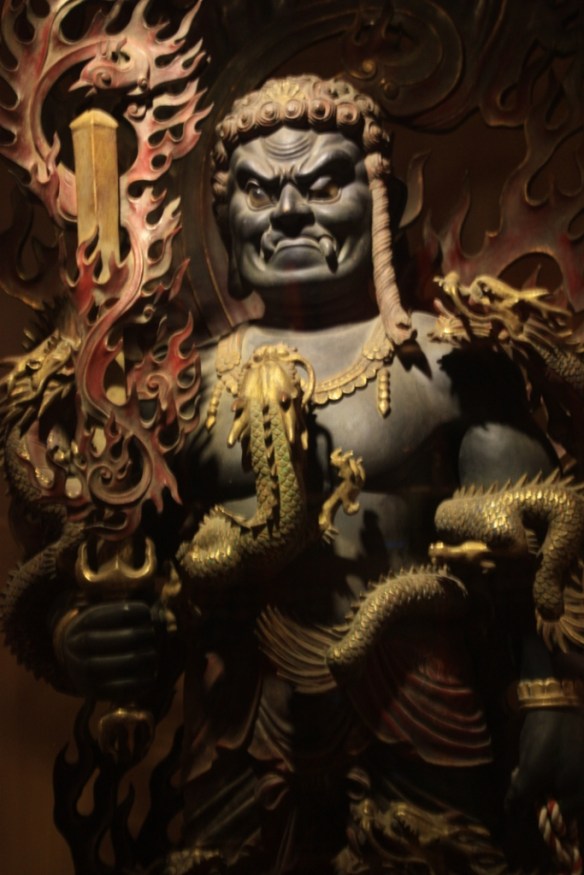
Taken on October 30, 2016 at the Buddha Tooth Relic Temple in Singapore
Fudō-Myōō is the name used by Japanese Vajrayana Buddhists for the wrathful deity otherwise known as Acala [the Wisdom King.]