a slow kick
flipped it over
jiggling
not yet rigid
soon to be brick block
unyielding and unmoving
but dissolving
as sugar cubes in hot coffee
and when no trace remained
ubiquity
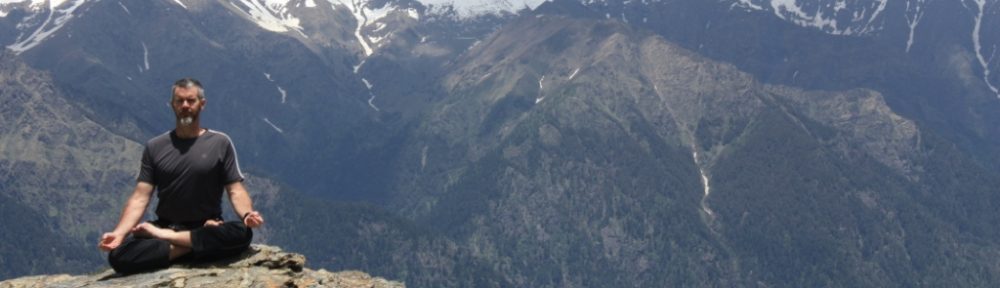

a slow kick
flipped it over
jiggling
not yet rigid
soon to be brick block
unyielding and unmoving
but dissolving
as sugar cubes in hot coffee
and when no trace remained
ubiquity
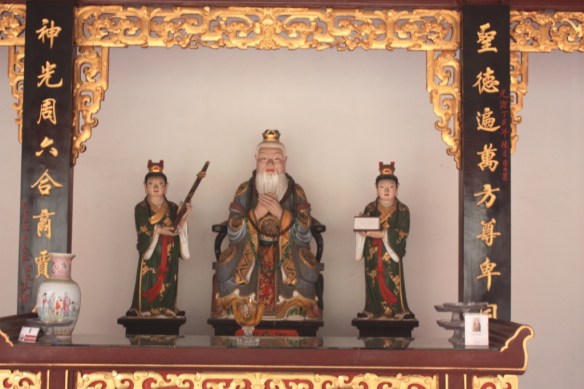
Confucius; Taken on October 29, 2016 in Singapore
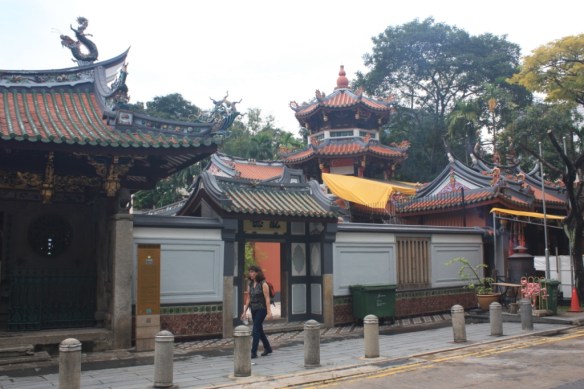
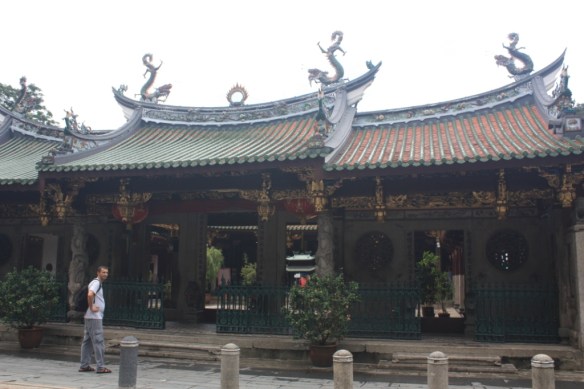
This Chinese temple sits in the heart of Singapore’s Chinatown. It’s said to be the oldest Hokkien or Hoklo temple (i.e. Han Chinese) in Singapore. It’s a temple related to Han Chinese culture generally, rather than to a particular sect or religion. While the main deity is Mazu (a.k.a. Ma Cho Po,) a maritime goddess from Chinese folklore that is sometimes associated with Taoism, there is also a Confucian shrine as well as homages to several Buddhist Bodhisattvas (a Bodhisattva is one who has achieved enlightenment but sticks around to help others out of compassion.)


Taken on November 1, 2016 in Singapore
I’ve been posting pics of Singapore’s tourist haunts, but it’s time for a glimpse into work-a-day Singapore.
The Port of Singapore is the world’s busiest transshipment port. Transshipment refers to a port that is neither the origin nor the destination of goods, but rather where they get shuffled between ships. And 20% of the world’s containers and half of the world’s crude oil travel through this port. It’s the second busiest port in the world by tonnage (FYI- Shanghai is #1, but at least in 2005 Singapore beat out Shanghai.)
I don’t have the best pics of this important aspect of the city because they were shots of opportunity. One shot that I didn’t even get a poor picture of was the ship-strewn seas viewed on descent into the airport. I’ve never seen such a high density of ships at anchor. Phenomenal.
 Life and Death are Wearing Me Out by Mo Yan
My rating: 5 of 5 stars
This strange title turns out to be a perfect summation of the book. The narrator / protagonist was a wealthy land owner named Ximen Nao who was executed when the Communists gained power in China. In heaven, Lord Yama (the judge in Chinese folklore’s version of the afterlife) sentences Ximen Nao to be sent back to Earth as a donkey, and—in subsequent lives—as an ox, a pig, a dog, and, finally and briefly, as a monkey. He’s always sent back to the family of one of his former underlings, Lan Lian, and the story follows that family over the course of several decades through the Cultural Revolution and China’s grand reforms.
The early parts (the lives of donkey, ox, and part of pig) are centered on Lan Lian’s decision to remain an independent farmer. Mao Zedong promised all farmers the right to remain independent contractors if they wished, but there was great pressure—first from the community and later from his own family—to become part of the commune. This ends up dividing the family, and ultimately Lan Lian ends up on his own. The latter part of the book (i.e. dog and monkey lives) deals with Lan Lian’s children (and eventually their children), and—particularly–with Lan Jiefang who shares a birthmark and a stubborn streak with his father. Lan Jiefang’s stubbornness is revealed as a desire to divorce his wife and to marry a younger woman. His equally stubborn wife refuses the divorce, and Jiefang and his young lover become ostracized. At the tail end of the book we see how Lan Jiefang’s son is afflicted by the same dogged determination to pursue a costly path—as a respected member of the police force he falls for a former classmate who has become a pariah.
The book mixes humor with tragedy. The animal incarnations of Ximen Nao each have its own personality, but retain some of the landlord’s character and memories. The animal stories are both part of and comedic counterpoint to the tales of woe experienced by Lan Lian’s family. Mo Yan has cameo appearances throughout the book, though in the dog’s life section he plays a more substantial role. References to Mo Yan’s character invariably come with self-deprecating humor. The author creates characters that the reader is interested in. What I call stubbornness is really a tenacious willingness to suffer for the principle of pursing one’s own happiness. In the case of Lan Jiefang and his wife, the reader is likely to be torn by the gray situation. The wife seems the more sympathetic character, but, still, one can’t help but appreciating the tenacity of Lan Jiefang and his willingness to suffer so greatly on the principle that “the heart wants what the heart wants.”
In addition to a good story with vibrant characters, this book offers a birds-eye view of China in the latter half of the 20th century. What is happening in the lives of the characters isn’t divorced from what is going on in the world, but is shaped by it. One notices this most vividly across the three generations over which the book’s story unfolds—with the middle generation (Lan Jiefang’s) serving as hinge point. When Lan Jiefang’s half-brother goes from being a Communist Party apparatchik to the wealthy CEO of a large firm, it’s a reflection of the societal undercurrents.
I enjoyed this book, and would recommend it for readers of fiction—and particularly translated literary fiction.
 Thirst by Andrey Gelasimov
My rating: 4 of 5 stars
This novel (novella) is translated from Russian, and is the story of a soldier, Kostya, who fought in Chechnya and was badly burned while trapped inside an Armored Personnel Carrier (APC.) Owing to his severe disfigurement, Kostya becomes a heavy-drinking homebody. This changes when one of his team members from the war, Seryoga, goes missing and a couple surviving team members come to recruit Kostya to the search party.
Kostya struggles with an internal conflict common in war stories. On the one hand, Kostya both rationally recognizes the logic of why his friend and teammate, Seryoga, didn’t pull him from the burning APC (i.e. Seryoga believed Kostya was dead) and he loves Seryoga like a brother. On the other hand, he can’t help but feel that if Seryoga had pulled him out sooner he wouldn’t be so hideously disfigured and his life—as he sees it–wouldn’t have been ruined. Kostya battles those feelings, even defending Seryoga’s decision based on the reasonable conclusion that Kostya was already dead. A flashback sequence interwoven into the contemporary timeline shows us the events of the APC attack, including—ominously—a discussion of what should happen in case grenade breaches the vehicle for the benefit of the FNG (F@#%ing New Guy.)
The story is short and sparse, and that complements the somber tone of the book. One reason for dragging Kostya into the search is that his father is a Lieutenant Colonel with the pull to access records. This forces Kostya to open up the estranged relationship with his father and his father’s new wife. One gets the feeling that Kostya blames his father more for his plight than he does Seryoga, adding to any pre-war problems in the relationship. There are several factors that combine to move Kostya toward a better place over the course of the story. One is the thaw in relations with his father, and–perhaps even more so—the burgeoning relationship with his step-mom, Marian, who he discovers to be a genuinely good person. A second factor is reconnecting with his military buddies. Finally, his art (Kostya has a talent for drawing) becomes more therapeutic as his friends and family begin to see it.
This is a classic brothers-in-arms story. The universality of that bond comes through in translation. With tweaks in details (and choice of liquor) this story could be about American soldiers in Vietnam or Iraq. What makes the book a worthwhile read, if nothing else, is its display of that commonality of human experience. The ways of soldiers who have a stake in each other, even if they feel little personal stake in the grand strategy that has put them where they are.
I found this story to be moving and thought-provoking. I’d recommend the book—particularly for readers of literary fiction—and it’s definitely literary fiction. The story is character driven, and not plot or action driven. The tension derives from the interaction of characters and not (except for the APC fire) outside events. Many will find the ending abrupt and anti-climactic, but it’s the story of Kostya’s journey and not of any particular destination.
 The World’s Best Street Food: Where to find it and how to make it by Lonely Planet
My rating: 4 of 5 stars
This is a combination guide to street food and cookbook. Each of the 100 entries consists of two pages. The first describes the food, how it’s eaten [that’s not always as self-evident to outsiders as one might think], its origins, where one can find a quintessential or famous example of the food, and whether there are any variants on the recipe. The second page is the cookbook entry, which lists the ingredients and describes the process by which they are combined to create the dish in question.
The foods are divided into broad categories of savory and sweet. The savory category is the larger by far, comprising 80 of the dishes—leaving 20 sweets. The dishes represent about 50 different countries of origin. A lot of these countries are well-known street food cultures such as Thailand, Vietnam, India, Mexico, and the US, but there are also a number of locales with which readers may be less familiar– such as Ghana, Malta, and French Polynesia. The dishes include a number of my favorites, such as Vietnamese Banh Mi, US Breakfast Burrito, Indian Masala Dosa, Thai Pad Thai, Hungarian Langos, and Singaporean Hainanese Chicken Rice. However, I also learned of new dishes that I’m eager to try, such as Croatian Cevapcici, Burmese Mohinga, and Chilean Sopaipilla.
WARNING: While I didn’t deduct stars for it, I will warn readers that this isn’t a good book to get as an e-book—at least unless you have a high-end tablet. It was a bit of a pain to read on my Kindle Touch, and the graphics (which I assume are beautiful in the print edition) were largely useless on my device. One could blow up the text easily enough (within limits, at least,) but the pages got grainy if one blew them up too much—and some of the text remained small when expanded.
There are photos. As I mentioned, on my device they were largely useless (grainy black-and-white) but your results may vary.
I found this book to be interesting and informative. While I wish the e-book had been easier to read, it was well-organized and offered a broad selection of dishes from a large number of countries.
I’d recommend this book for street food lovers and foodies.
 100 Films to See before You Die by Anupama Chopra
My rating: 4 of 5 stars
Full Disclosure: I’m not much of a movie-goer, and have seen a mere 16 of the titles on Chopra’s list—if memory serves, but it often doesn’t. My point being that I may not be the best judge of what films should be included in such a list.
Be that as it may, I liked this book and its list. First, I found it to be a richly diverse set of films. Given that Chopra works for Indian media, one might expect that the book would be completely dominated by Indian films (fyi–I don’t know much, but I have learned not to lump all of Indian cinema under the term “Bollywood.”) Alternatively, one might expect the list to be ruled by Hollywood because the US has been the 800-pound gorilla of moviemaking since the early days of the industry. It’s true that the US and India are well represented on the list (the US with 34 movies and India with 26,) but Hong Kong, Italy, Japan, France, Mexico, and others are suitably represented (not to mention films produced by / in multiple countries.) (Nigerians and other Africans from countries with filmmaking industries may not agree because Africa isn’t represented, but the fact that the most recent film is 2007 makes me assume the book may not be up to the latest breakthroughs. [My edition is listed as 2013, but I think that’s just the e-publishing date. I’d guess the book came out around the time of the last film on the list, but could be wrong.])
Another aspect of the book’s diversity is the age range; the films are from 1922 to 2007. They don’t seem to be heavily weighted toward the modern day—as is a common defect of such lists. Yet another dimension is diversity of the class and genre of film. By that I mean that the list includes unambiguous classics of cinema like “Citizen Kane,” but it also includes what might be considered less cerebral movies such as “Enter the Dragon” and “Kungfu Hustle.” It also includes comedies and sci-fi movies, which are often under-appreciated by critics. Still, Chopra doesn’t resort to using to box office earnings as a criterion either. Many huge money makers aren’t on the list (e.g. “Titanic.”)
The entries for each film are just a couple of pages, but, in addition to a summary, they include the awards won by the film and a piece of intriguing trivia for each entry. There are some graphics in the form of movie posters and set photos. There isn’t a photo for every entry, but they aren’t that important and, in the case of my little Kindle, the pictures couldn’t be seen well anyway.
I’d recommend this book for anyone who wants a tight list of films to be seen that prominently features international cinema.

Taken in the Japanese Garden in Singapore on October 30, 2016


