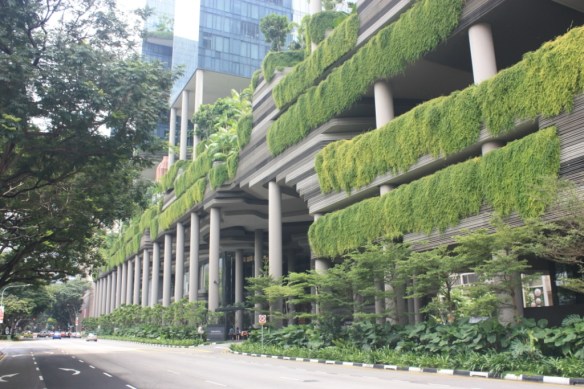
Taken on October 29, 2016 in Singapore

It seems Singapore has made great efforts to not only leave green space intact (despite great pressures) but also to fuse green space into buildings.


Taken on October 29, 2016 in Singapore
It seems Singapore has made great efforts to not only leave green space intact (despite great pressures) but also to fuse green space into buildings.
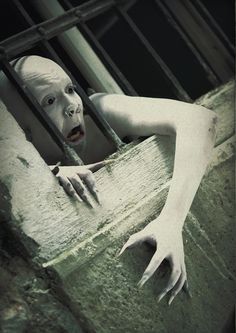
Butoh artist, source unattributable
in the moors of your mind
where lurk the moles of souls unkind
spying out your darkest dreams
amid the hum of silent screams
awakened hip deep in the mud
as chest-high waters rise in flood
you struggle but it pulls you down
in a boat, up drifts a blood-soaked clown
his hand grips a shiny new bone-saw
his other hand, a twin-hooked claw
your only hope; that you’re still dreaming
but wouldn’t you waken from your own screaming?
let me take you on a midnight ride
through endless fields of wounded pride
memories grown in the silhouette of nought
where valiant soldiers stealthily fought
you’ll see the carnage but not the fight
you’ll feel the dawn but never see the light
it all went south, FUBAR, they claimed
only smoke and shadow left to be blamed
 Sleeping, Dreaming, and Dying: An Exploration of Consciousness by Dalai Lama XIV
My rating: 4 of 5 stars
This book is a product of the 4th Mind & Life Institute Conference that took place over five days in October of 1992 in Dharamsala, India. It reads as a narrated description / transcription of the event. The Mind & Life Institute was established as a dialogue between science and Tibetan Buddhism, and is actively supported by His Holiness the Dalai Lama—who is an important figure in the book, both asking questions of the presenters and offering clarification on Tibetan Buddhist thinking on various points. The exact subject of each conference is different, but the mind is a recurring theme. Which makes sense as Tibetan Buddhist practices of the mind are as advanced as any, and it would be of great benefit to understand them better from a scientific perspective.
As the title suggests, this conference (and the book) deal with three topics: sleeping, dreaming, and dying. This may seem like a case of “one of these things doesn’t belong,” but from the Buddhist perspective on consciousness it’s a sensible enough grouping. One can think of it this way, sleeping and dying are points at which consciousness goes bye-bye. [Although, lucid dreamers retain consciousness in REM sleep, and there are unsubstantiated claims of the ability to maintain consciousness in sleep by extremely advanced practitioners.]
There is some front matter (a forward by the Dalai Lama and an editor’s Introduction) and then eight chapters. The first chapter discusses both the Western and Tibetan perspectives on “the self,” what it is, and whether it is [real or illusory.] This topic seems unrelated to the book’s theme, but it’s a way to develop a common understanding for the rest of the discussion. If participants have different views on what a person is, mentally speaking, and what consciousness is, then it’s easy to talk past each other without even realizing it. The second chapter is an overview of what was known about sleep, principally from the perspective of neuroscience (it should be noted that neuroscience was a fairly fledgling term at that time.) The next three chapters (ch. 3, 4, and 5) are about dreaming. The third chapter is a bit unique. The general approach throughout the book is to give the understanding of science and then to compare and contrast that with Buddhist thinking. However, chapter three’s discussion is led by a proponent of psychoanalysis (i.e. the Freudian approach,) which isn’t so scientific, but is a Western philosophical approach. [Chapter one is also heavily philosophical.]
Chapters four and five delve into the subject of lucid dreaming, which is referred to as dream yoga in the Tibetan Buddhist tradition. For me this was the meat of the subject, and it was the reason that I bought the book. Tibetan practices on lucid dreaming are incomparable, and at this point science’s understanding was beginning to blossoming as well.
The last three chapters are on death, and each offers a different character. The first two emphasize Western views, but in different ways. Chapter six outlines the Christian position on death—a theological rather than scientific understanding. Chapter seven explains the medical community’s view of death. This sounds straight forward, but it’s a much more technical subject than one might imagine. What organ has to stop functioning and for how long before one is actually dead. Besides all the coma patient stories, one may be aware of cases historically in which people were discovered to have been buried alive accidentally due to bad calls by doctors. The last chapter is about near-death experiences. This is an area in which there is a great potential for differing views. While science doesn’t deny that people have all sorts of fascinating experiences such as seeing bright lights at the end of “tunnels” and out-of-body experiences, scientists tend to attribute such events to material causes. [Neuroscientists can now induce out-of-body experiences by zapping a specific part of the brain.]
There are graphics in the form of diagrams and tables in the chapters that are most technical (e.g. chapter two and chapter seven,) but they are used sparingly. There’s an appendix that describes the Mind & Life Institute, as well as a glossary that explains both Tibetan and scientific terms. There are also a few pages of end notes that will help one find related material.
The weakness of this book is clearly its age. The Buddhism probably hasn’t changed much, but the science has changed a lot. Since 1992 there has been a revolution in understanding of the brain due to advances in functional Magnetic Resonance Imaging (fMRI) and other technologies.
However, despite the book’s age, there’s a lot of thought-provoking discussion, which offers plenty of room for both scientists and Buddhists to gain a better understanding of the mind and consciousness. I’d recommend this book for anyone interested in dream yoga / lucid dreaming, or—for that matter—death.
 Being Mortal: Medicine and What Matters in the End by Atul Gawande
My rating: 5 of 5 stars
This may be the scariest, saddest, and most necessary book that I’ve read in some time. In it, Dr. Gawande discusses how medicine has proven increasingly effective at extending life, but—at the same time–we are less able to care for the elderly. The traditional approach, in which the elderly move back in with their families (or live independently near them,) often proves untenable. And it’s not necessarily because people are too busy, lazy, or indifferent to put up with granny, but rather that granny is likely to end up with needs that require a professional caregiver—in some cases for virtually every aspect of her daily life. In short, we’ve done a great job of extending life, but often with a sharp dip in the quality of life at the end.
The nursing home was the solution that the health care community came up with when this problem first became apparent. While the nursing home is both necessary and effective for many, for those of sound mind and sound-ish body, the move can be highly demoralizing. People revert from being independent and autonomous adults into a child-like status in which they have little freedom or privacy. Again, if grandpa has dementia or needs to be tube-fed, there’s no way around this, but if he’s just at risk for a fall that might break his hip, then it can be humiliating.
When it comes down to the end, fear of death has led to an unwillingness to ask important questions or even consider what might be just around the corner. This has led patients to keep asking for that one treatment that just might extend their lives—and doctors have been more than willing to allow this. This may be fine in the early days of a terminal illness, but once one has gone through—say–a couple of courses of chemotherapy, the treatment one is likely to get is some trial phase experiment that is as likely to kill one cruelly as extend one’s life—and to the degree that it does extend one’s life one may suffer a set of complications far more miserably than one would in letting the disease kill one. One of the most intriguing study results cited showed that people who took up hospice palliative care (making one comfortable) were found on average to live a little longer than those who kept seeking whatever treatment they could find.
This all sounds like bad news, but the author devotes much of the book to exploring the options that have been put forth in the face of these problems. One of these is the assisted living facility as an alternative to a traditional nursing home. These facilities work for people who are of sound mind and who aren’t too bad off physically. They allow the individuals to live as they might in a condo or apartment, but there are on-sight caregivers and assistance with all the tasks around the house that might prove too challenging for an older person. The other major solution is hospice care. Not that palliative care is new, but it’s increasingly being show to be a preferable option for all concerned. Another important outcome resulted from a major insurance provider’s decision to allow individuals to pursue palliative care while they were still being treated. [Historically, one only had the option of hospice once one had given up on treatment.] At any rate, the intriguing finding was that the insurance company actually ended up paying less because more people signed up for palliative care and those individuals used expensive health care elements like emergency rooms and intensive care units (ICU) less.
While I can’t say that I enjoyed reading this book, I would recommend it for everyone. It’s very readable. The approach is case-based. Dr. Gawande talks not only about his own patients and the patients and caregivers that he interviewed (his practice is not geriatric in nature, so he spoke with several experts), but also about the end of his own father’s life. It’s a short book of about 300 pages arranged into eight chapters. There are no graphics, and endnotes are the only ancillary matter, but nothing else is necessary for this book.
Read it.
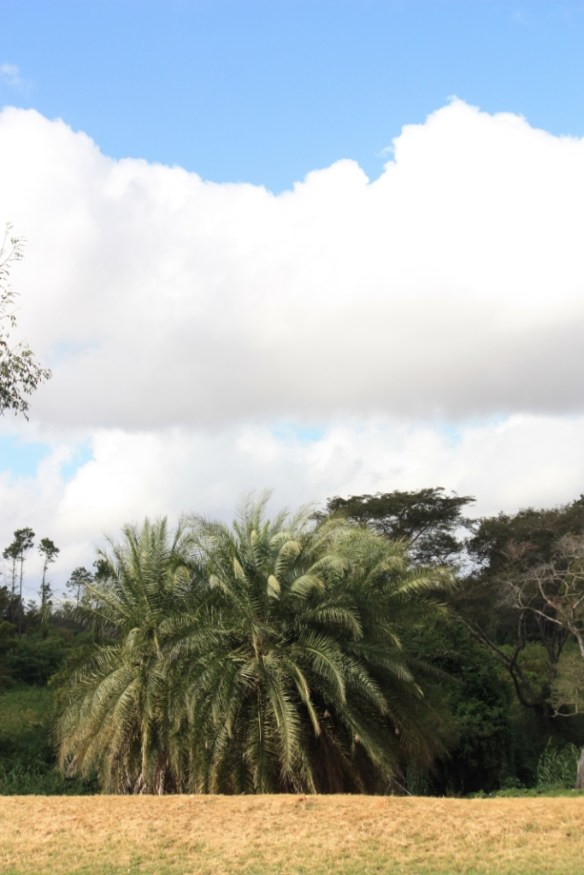
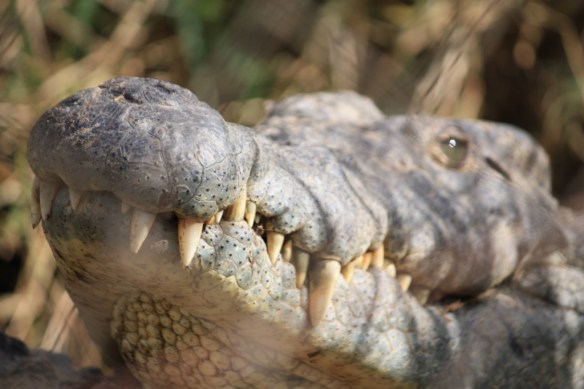
Taken in May of 2016 in Zambia
I took the photo above at Kalimba Reptile Park near Lusaka. In case, landscapes are too boring for you, here’s an alternate pic of a toothy crocodile.
Mama said, “Don’t touch that!
“That’s a Ming vase.”
[pronouncing it “vaaz”]
It probably wasn’t.
Mama calls things pricier things—e.g. Timex = Rolex.
Her gist is she can’t afford a broken one.
I’ll admit I’m no stranger to breaking stuff,
and not just flimsy stuff– cast iron, granite, you name it.
You could say breaking things is my superpower.
Anyhow, the vase is Chinese and looks old.
But my hand was already on it.
You’d think it would be cool and smooth.
But, it was tingly and, well, not solid.
My fingers seemed to sink into it–
like a hologram or a ghost.
So I nudged it a bit.
Turns out it was solid; it tipped.
I moved to catch it,
but it just hung there, tilted on air.
Well, I had to know how long it would stay tipped.
I stared, wondering if mama would snap a pic with her camera.
As I had this thought, the vase tumbled off its stand.
I grabbed for it, touching it with my fingertips
just as its lip—it was upside-down—crashed into the floor.
***
Time oozed; cracks spread through the vase and the world.
It shattered in slow motion.
A crackly light—blue and white—crinkled through the room.
Silence.
No breaking noise, nor the expected holler from mama.
Just white and blue arcs of light, becoming blinding.
***
Then I was squatting and reaching in another room.
I toppled face-first onto brown floor boards.
The vase was upright, whole, and sitting by the wall,
seeming like a person watching me fall in quite amusement.
The vase’s glistening white and blue stood out in the dark brown room.
Dust or tarps covered everything else.
It was a storehouse packed with fancy junk.
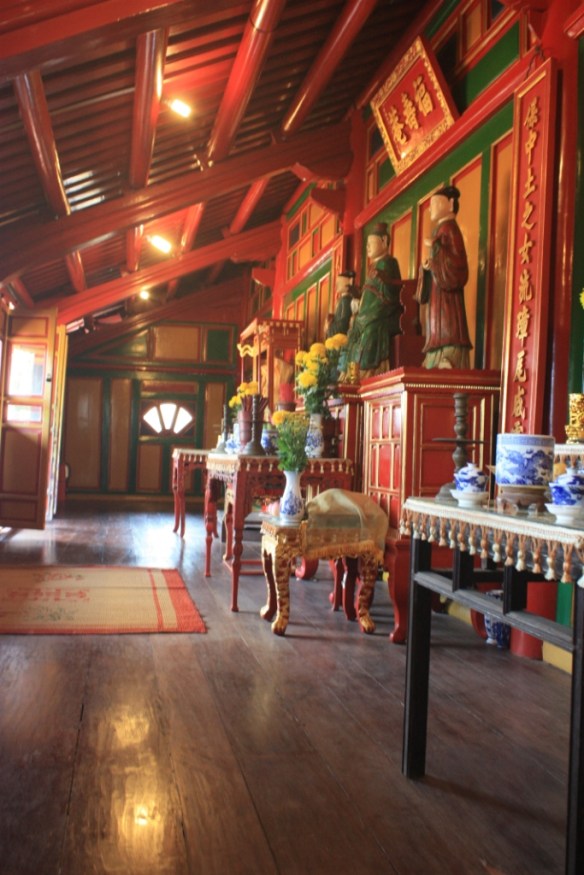
It couldn’t be confused with the temple I’d been touring with my mom.
That was bright and neat, red and gold, and had ornamental dragons.
The door flew open.
I gasped, expecting a whooping, or at least a stern talking to.
I crab-walk scurried when I saw the man who charged in.
He wore an armor that looked like rows of little roof tiles.
And he had a straight sword stuck into his belt.
I feared he’d draw the sword and poke me in my tender bits,
but he didn’t seem to see me—hard to miss as I was.
Calmed by my invisibility, my attention went to soldier’s hand.
In it I spied the spitting image of the vase I’d knocked over.
I thought the soldier would notice the resemblance,
but he didn’t notice the vase on the floor–
even though it was clean and shiny like nothing else in the room.
He put his vase on a shelf with some cobwebby bric-a-brac.
Then he spun, moving back toward the door.
He didn’t get outside before a woman barged in.
She had a lot of hair parked up on top of her head.
She was pretty, except that her skirt went from her armpits to the floor.
She was shouting in Chinese.
I don’t know exactly what she was saying,
but she was angry and her gist was that she wanted the vase.
And it didn’t seem like she just needed to hold some flowers.
Well, the soldier shoved her roughly.
She fell square on her caboose.
He drew the sword, and started shouting back.
His gist was that the vase wasn’t hers anymore.
He pointed the tip of the sword right at her face.
I shouted, but he didn’t hear me any better than he saw me–
my voice like one of those whistles that dogs hear, but people can’t.
I was going to shove him,
but shoving an angry man with a pointy object seemed like a bad idea.
Anyhow, she stood, sobbed, talking less angry and more pleading.
He backed her out the door at sword point.
The door closed to wailing sobs and rattling chains.
It occurred to me then that I was locked in a storehouse for confiscated fancy junk.
I searched my musty new cell up and down.
There were stairs to a loft, and I climbed them.
It was more storage,
but there was a door to bring things up by a pulley that dangled from the ceiling.
But it wasn’t a door, more of a piece of wood cut to cover the opening.
I unlatched it.
It fell smack down onto the head of a green, glassy doggish-liony statue.
The dog-lion’s head broke right off at the neck.
[Establishing that my knack for breaking stuff extends to worlds in which I can’t be seen or heard.]
Anyhow, I looked out to see if I was clear to escape—
forgetting that no one seemed to be able to see me.
There was just the woman—once angry, now sad.
She was kneeling in the mud in her fancy up-to-the-armpits skirt.
She sure was broken up about that vase.
You’d think it was her dog or her granddaddy.
I couldn’t see why she was so upset,
but it only seemed right to give the vase back to her.
So I went and got the vase that the soldier put on the shelf.
[Right then, my plan was to put the vase that came with me in its place, but more on that…]
I couldn’t very well chuck the vase down to her, her all teary-eyed.
So I snagged a small tarp, folded it, and put the vase into the tarp.
Taking the tarp upstairs, I called to the lady.
But she couldn’t hear me—maybe she was just too sobby.
So I took a shard of the lionish-dog’s neck, and winged it in her direction.
The green piece bounced, spattering some mud onto her skirt.
She looked over.
She scurried toward the storehouse, wiping her eyes, when she saw me lowering the vase.
Wouldn’t you know it, that slippery vase shifted in the tarp, falling out the end.
I gasped again, remembering that my superpower worked here,
but the woman caught it, hugging it to her chest.
I dropped her the tarp, and she swaddled the vase in it.
She cradled the vase like a baby,
looking up in my direction, seemingly happy and grateful.
I had to work my nerve up to jump out of that loft,
but figured I should put the other vase in place of the one I’d given away.
I was sick with sad and lonely.
I was stuck in a place where I knew no one and couldn’t speak the language.
Even if I had spoken Chinese, no one could see or hear me.
But an idea formed.
I picked the vase up, and, instead of putting it on the shelf,
I smashed it against the floor.
***
[blue and white crackly light]
And there I was once again, a tourist in a temple in a far away land,
my fingers barely touching the vase.
I yanked my hand back like that vase was a scalding pot.
Mama said she had something called “temple fatigue.”
So we went for ice cream.
Ice cream is safe.
Ice cream never banished anyone to ancient lands or to an alternate dimension.
At least, I’d like to think that…