Unknown's avatar

About B Gourley

Bernie Gourley is a writer living in Bangalore, India. His poetry collection, Poems of the Introverted Yogi is now available on Amazon. He teaches yoga, with a specialization in pranayama, and holds a RYT500 certification. For most of his adult life, he practiced martial arts, including: Kobudo, Muay Thai, Kalaripayattu, and Taiji. He is a world traveler, having visited more than 40 countries around the globe.

BOOK REVIEW: The Cat’s Pajamas by Ray Bradbury

The Cat's PajamasThe Cat’s Pajamas by Ray Bradbury
My rating: 5 of 5 stars

Amazon page


This is a collection of 20 short stories by Ray Bradbury written between 1946 and 2004. Bradbury was the master. Besides his imaginative gift for storytelling, he was a torch-bearer for language that was both beautifully crafted and highly readable. Bradbury often used words poetically but without detracting from story. I believe he did so through sparing and careful use. I also appreciate the way Bradbury smoothly moved between genres, and the fact that his stories could have a moral without being moralistic.

I’ll list the stories in this collection with just a few words about each.


1.) “Chrysalis”: An unlikely friendship develops. A story about race.


2.) “The Island”: The dangers of isolation. Tension skillfully ratcheted up.


3.) “Sometime Before the Dawn”: Why does the neighbor cry late at night?


4.) “Hail to the Chief”: What if Senators wagered America at an Indian casino?


5.) “We’ll Just a CT Natural”: This is one of my favorites, but it doesn’t have a complex story or involve clever sci-fi elements. It’s just a woman waiting for a visit from a man who she used to nanny, but who’s made it big as a writer. Two simple questions keep one glued to this story. Will he show up? If not, how will she handle it?


6.) “Olé, Orozco! Siqueiros, Sí!”: This is a commentary on what is art in the modern art scene.


7.) “The House”: A couple buys a fixer-upper, but there are mixed feelings between them.


8.) “The John Wilkes Booth / Warner Bros / MGM / NBC Funeral Train”: How time travel would spawn a history-entertainment complex.


9.) “A Careful Man Dies”: A hemophiliac author who’s writing a tell-all meets his match.


10.) “The Cat’s Pajamas”: A couple of lonely cat people vie for ownership of a stray that they happen upon simultaneously.


11.) “Triangle”: As in, “love triangle.” A take on the story of X loves Y, but Y is indifferent to X; while Z loves X, but X is indifferent to Z.


12.) “The Mafioso Cement-Mixing Machine”: It’s a metaphorical cement mixer, but it’s useful for—as a mobster might say—“takin’ out da trash.”


13.) “The Ghosts”: The children are enchanted with them, but their father wants to drive them off. The difference between how children and adults see the natural world, in a nutshell.


14.) “Where’s My Hat, What’s the Hurry”: A man goes through his little black book to find a woman more responsive to the “city of love” than his wife has been.


15.) “The Transformations”: This is another story about race and walking in the shoes of another.


16.) “Sixty-six”: This is a prime example of the genre-fluidity of Bradbury. It’s a murder mystery, but not just a murder mystery.


17.) “A Matter of Taste”: Human space explorers travel to a distant world and meet a species that is wise, benevolent, helpful, but they can’t get past the alien’s creepy appearance.


18.) “I Get the Blues When it Rains”: The fickle nature of nostalgia.


19.) “All My Enemies Are Dead”: A man tries to console a friend who believes it’s time to die upon seeing the obituary of the last of his enemies.


20.) “The Completist”: Having everything may include things one doesn’t want.


I’d highly recommend this collection for readers of short fiction. While some of the stories are over sixty years old, they’ve aged well.

View all my reviews

DAILY PHOTO: Titicaca Shoreline

Taken in the Summer of 2010 on Taquile Island

Taken in the Summer of 2010 on Taquile Island

DAILY PHOTO: Wat Arun from the River

Taken in the Summer of 2014 in Bangkok

Taken in the Summer of 2014 in Bangkok

DAILY PHOTO: A Realistic Fake Elephant

Taken in October of 2016 at the Bengaluru Airport

Taken in October of 2016 at the Bengaluru Airport

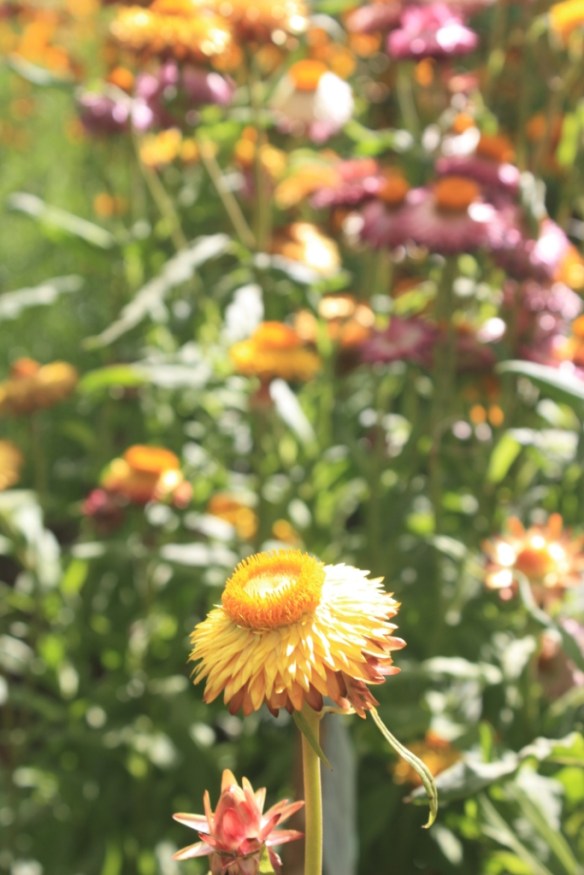
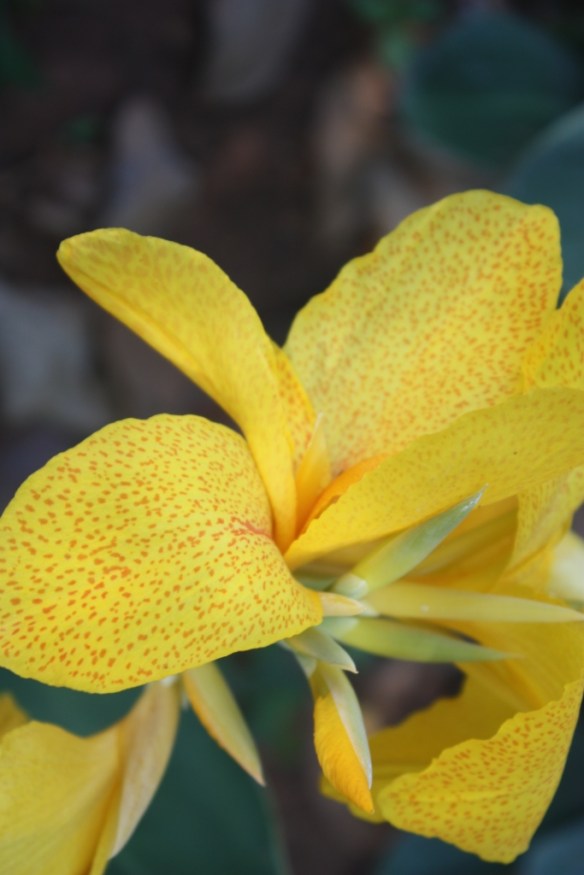
DAILY PHOTO: Flowers of 2017 Republic Day Flower Show


Taken on January 22, 2017 at Lalbagh Botanical Gardens

Taken on January 22, 2017 at Lalbagh Botanical Gardens

img_6248


img_6259


img_6271


img_6217


img_6225

BOOK REVIEW: Light on Pranayama by B.K.S. Iyengar

Light on Pranayama: The Definitive Guide to the Art of BreathingLight on Pranayama: The Definitive Guide to the Art of Breathing by B.K.S. Iyengar
My rating: 4 of 5 stars

Amazon page


This is B.K.S. Iyengar’s A-Z guide to breath and breathing exercises (pranayama.) It’s meant to do for pranayama practice what “Light on Yoga” did for asana (postural) practice. That is, it presents all the classic techniques, offers variants to meet individual needs, and provides the background necessary to put pranayama into the context of a balanced yoga practice.

Let me begin by discussing the book’s organization, and this book is organized to the n-th degree. There are parts, sections, chapters, and even the paragraphs are numbered (though–near as I can tell–the latter serves no purpose for a typical reader and may be more for the help of the writer and his assistants. It does create a somewhat biblical scheme, so maybe it was assumed there would be a need to quote this guide “chapter and verse,” as they say in Bible study.)

The bulk of the book consists of the first of two parts, and Part I is divided into three sections. The first of those sections is “The Theory of Pranayama,” and it puts pranayama in the context of yoga’s entirety. If you’ve read other B.K.S. Iyengar titles, much in these nine chapters will be familiar (e.g. discussion of the eight limbs.) However, chapter 4 offers a nice description of the anatomy and physiology of respiration. There are many anatomical drawings and diagrams in it to help convey the complex information. There’s also additional information about the traditional Indian notions of breath encapsulated in the concepts of prana, nadis, and chakras.

Section II is entitled “The Art of Pranayama” and it covers those topics necessary regardless of what technique of breath exercise one is practicing. It includes seated postures, mudras, bandhas, inhalation, exhalation, retention, etc. This section, too, has nine chapters. The final section of Part I describes the various techniques of pranayama. The chapters of this section are arrayed in lists, and they systematically build from the basic technique towards more advanced variations (e.g. by inserting retentions.)

Part II covers meditation (dhyana) and the corpse pose (savasana.) With respect to the former, it suggests how one’s body, mind, and sense organs should be conducted in the act of meditation. In the case of the chapter on corpse pose (after cross-legged seating position, this being the most common position for practice) there’s an extensive look at the details of that pose.

There are a number of helpful features incorporated into the book. In addition to the drawings mentioned in Chapter 4, there are black-and-white photos throughout to clarify the textual instructions. There is also a glossary of Sanskrit terms and an Appendix of courses of pranayama (i.e. recommendations as to how to sequence breathing techniques for optimal results with guidance as to how many sets or repetitions of each to use.)

My major criticism is one I’ve offered about previous books from this author and others. There’s a muddle of science and mythology that makes it hard to know how much weight to give particular instructions. It may be that a given piece of advice (e.g. a contraindication) is based on repeated observations of the physical or mental effects, or on a sound understanding of anatomy & physiology. In which case, it makes sense to heed such advice. However, advice can also be based on myths and the desire to preserve a way of thinking about the human body which is wholly unsupported by evidence. In which case, if one has no dog in the fight to preserve egos, it makes sense to disregard said advice. I suspect the vast majority of statements of what to do (or not to) fall into the first category, but some may fall in the latter, and it’s not easy to tell which is which.

I would recommend this book for students and teachers of yoga. It’s a good reference for one’s pranayama practice.

View all my reviews

BOOK REVIEW: Let Every Breath by Scott Meredith

Let Every Breath: Secrets of the Russian Breath MastersLet Every Breath: Secrets of the Russian Breath Masters by Vladimir Vasiliev
My rating: 3 of 5 stars

Amazon page


This book presents an introduction to breath exercises employed by the Russian martial art called Systema. Systema is one of a number of drill & spar-centric (as opposed to technique-centric) martial arts that have developed in modern times in an attempt to cast off the unrealistic and needlessly complicated elements that tend to grow within traditional martial arts (e.g. Krav Maga is a well-known exemplar of such a martial art.) Among the unique aspects of this system is its focus on, and approach to, breath—and breath is crucial in the martial arts, in a fight, and in life.

I had mixed feelings about this book. I’ll begin with positive aspects and then get into what I found off-putting. First, the book offers a clear explanation of principles and drills that are straight forward and will increase one’s awareness of breath. That is laudable. Are these particular principles and drills the end-all-be-all that will take one to heights that no other approach to breathing could (as the book suggests?) No. But is it a solid approach to breath that will yield benefits by making you more aware of breath while helping you to use it more effectively? Yes. Second, the book doesn’t have a lot of competitors in the “breathing for martial arts” space, and so it fits into a substantial void. (Note: the book doesn’t get into martial arts / self-defense drills or techniques, and doesn’t claim to.)

Now, here’s the other half of the open-faced shit sandwich. You’ve likely already gotten a hint of my problem with the book. This will seem like a two-part criticism, but it condenses into one problem with the book’s attempt to sell the reader on Systema. The starting point, as another reviewer noted, is that this system isn’t as completely novel and unmatched as is presented. Is that a damning indictment? It wouldn’t be. Just because this approach shares concepts applied elsewhere and is constrained by the nature of the human body doesn’t mean that it can’t offer its own unique value-added. The problem is that we are told how unique and completely peerless this system is so often that it becomes a bad info-mercial.

I get it. Systema is a product that has to compete in an intense market place with the likes of Krav Maga, MMA, Total Combat Systems, Defendu, and a ton of other self-protection oriented martial arts. It’s Pepsi, and it has to carve out a market share by convincing us of the unlikely fact that Coke products aren’t even in the same ballpark. The problem is that when it dismisses systems like yogic pranayama and Taoist chi gong, it does so in a way that shows virtually no understanding of those systems. When the author is telling us how the Systema approach to breath is superior to pranayama, he describes an asana (posture-oriented) class. If you’re going to convince us that the several thousand year old yogic tradition completely missed an approach to breath so groundbreaking that it will take one on an e-ticket ride to self-perfection, at least have some idea of the scope of what the yogis learned and how they present those lessons to their students.

The second half of this rant is that there is a lot of hagiography to delve through before one gets to the meat of the subject. Now, in general, authors of martial arts books tend to pay homage to their teachers and lineage. It’s not unreasonable that there is some near-deification of teachers in this book. However, at some point it becomes hard to tell whether the book exists to inform readers or as a monument to someone’s ego. This book gets disconcertingly close to the line. (The arrogance issue is made worse by confusion about authorship. It’s said that Meredith wrote the book, but Vladimir Vasiliev takes the by-line. This creates an odd situation because the book tells us how Vasiliev is both an exceptional human being, and humble as well. You can see my problem. Without evidence to the contrary, I can easily accept that Vasiliev is exceptional. I can also believe that he is humble. But when a book with his name on it tells me both of these things, I’m forced by the dictates of logic to reject at least one of them [and doubt is cast upon both.])

If you are looking to expand your understanding and awareness of breath, you may want to give this book a try. I certainly wouldn’t endorse every claim it makes, but there are some interesting ideas presented.

View all my reviews

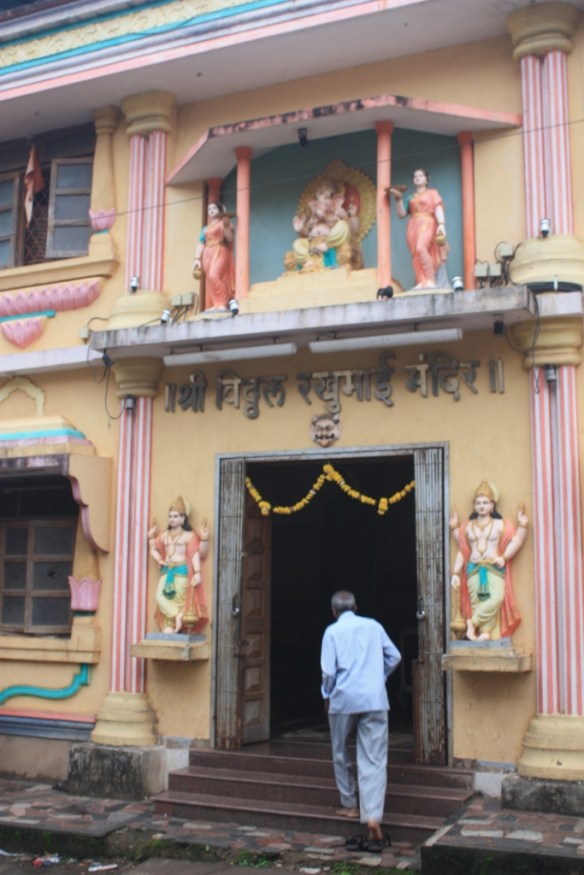
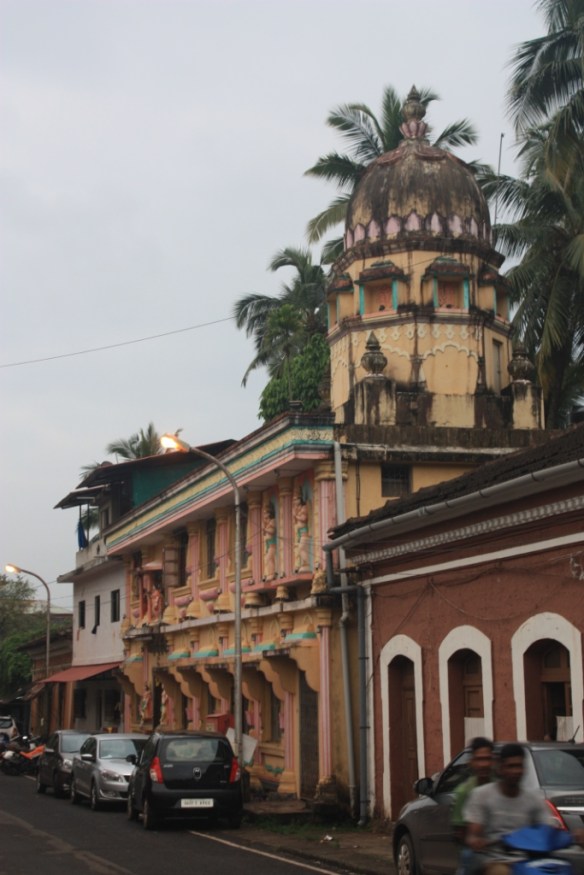
DAILY PHOTO: Hindu Temple in Panaji’s Old Quarter

img_3114

Taken in October of 2016 in Panjim (Panaji)

Taken in October of 2016 in Panjim (Panaji)


Hindu temples are ubiquitous throughout India, but in Goa they tend to be overshadowed by massive Christian churches and cathedrals. (Despite the fact that Christians only make up about a quarter of the Goan population while Hindus make up about 2/3rds.)  This was one of the more prominent Hindu temples we saw. It’s located in Old Quarter.

5 Novels in Translation That You Should Read

Reading translated novels is a good way to gain insight into the culture and history of a country in a way that is both entertaining and that exposes the deep nuances of national character. I’ve selected works that both highlight aspects of culture and / or history and that are pleasant reading–some are humorous and others are adventures, but none are drudgery.  (Includes two Nobel Prize winners and one guy who gets nominated every year only to have the prize handed to folk-rock musicians or the like.)

[The hyperlinks go to my review of said book in GoodReads.]


1.) The Good Soldier Švejk by Jaroslav Hašek (Czech): The lead character in this farcical comedy is a bumbling, but likable, idiot who is drawn into military service. The book highlights the fact that in times of war the greatest acts of idiocy are not perpetrated by greatest idiots.

goodsoldiersvejk_en


2.) After Dark  by Haruki Murakami (Japan): One can’t go wrong with Murakami. I almost picked Norwegian Wood, which is more a work of realist literary fiction, but this novel about what happens when the trains stop running in Tokyo may shed a little more light on Japan. (anti-pun not intended.)

afterdark_murakami


3.) Eclipse of the Crescent Moon by Géza Gárdonyi (Hungary): The story of how a small Hungarian castle village held out against a siege by the Ottoman juggernaut.

eclipseofthecrescentmoon_gardonyi


4.) Death in the Andes by Mario Vargas Llosa (Peru): When three men disappear from a small mining village in the Andes, the Army sends a Corporal and his deputy to investigate.

death-in-the-andes_llosa


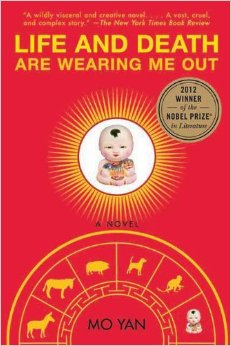
5.) Life and Death are Wearing Me Out by Mo Yan (China): A wealthy land owner is executed during the Communist revolution and must live out several lives as various animals in the service of the family of his [former] beloved hired-hand. The books shows the generational change between when China first became Communist through the reform period that led to a more market-friendly approach.

lifedeath_moyan

DAILY PHOTO: Desert Dancer and Dervish


Taken in May of 2016 in the United Arab Emirates

Taken in May of 2016 in the United Arab Emirates


a3-82


a3-72


a4-14