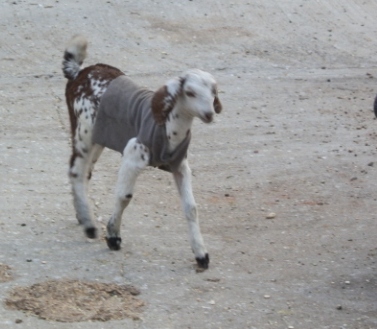
Taken in the Summer of 2010 at Chichen Itza


Taken in the Summer of 2010 at Chichen Itza
5.) Acknowledge that there is a universe in which his or her point is valid: However, tell your adversary that this is contingent upon theoretical physicists being correct that there are an infinite number of universes, each governed by a different set of laws–at least a some of which would have to be stupid. This is called the bubble-verse flummox.

4.) Challenge him or her to a duel: This will require that you carry a well-worn leather glove wherever you go. For it’s not so much the words that produce an effect as the slap across the cheek. You are going for decibels. You can’t pull this off with a cotton glove, a rusty metal gauntlet, or a stiff leather work-glove. You need the glove to have some weight and to be able to put some whip into it. This is called the Aaron Burr.

3.) Talk to your adversary as if that person were a beloved household pet. This will involve both head tousling and inquiries as to, “Who’s a good boy?” It’s called the canine gambit.

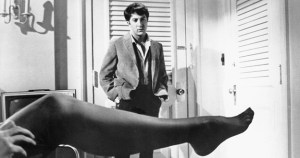
2.) Ask your adversary whether he or she is trying to seduce you. It doesn’t matter how mundane or technical the subject is (trade pacts, non-proliferation agreement, etc.), this one is almost guaranteed to shut down opposition. It’s called the Mrs. Robinson.
1.) Say, “The game is afoot!” and then just walk off. It’s very important that you don’t respond to any question about what this means or whether you’re insane. Furthermore, one must break off all contact with the adversary for several days there after. Stew time is necessary. I call this one, The Sherlock.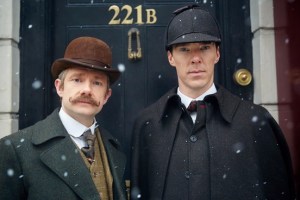
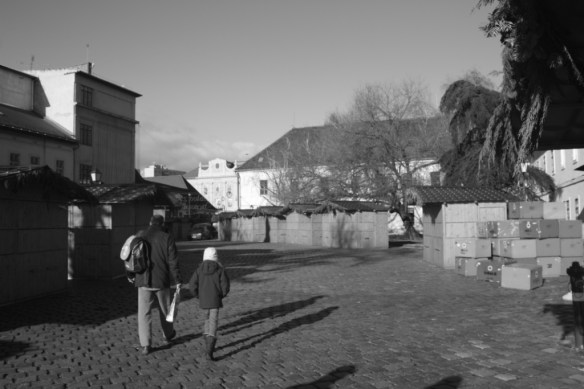
Taken in Budapest in December of 2016

Taken in Singapore’s Chinatown in October of 2016
5.) Eye contact: Train yourself to be aware of eye contact. Eye contact doesn’t come naturally for an introvert. It’s common to not only avert one’s gaze, but to zone out in the process because one’s mind is trying to anticipate the direction of the conversation and formulate a replies. There’s not enough consciousness left for monitoring the visual stream. This has a number of side-effects such as:
-missing non-verbal cues
-appearing uninterested
-staring in the wrong direction (crotches, cleavage, Hells Angels, etc.)
Just don’t let the pendulum swing too far such that one stares like a homicidal maniac.
4.) Scheduling: Bracket social and /or noisy events with quiet time. It’s not just social activity that can be draining for the introvert, being in environments with high levels of sensory stimulation will run down one’s energy even if one isn’t interacting socially. Living in India, I find that sometimes just walking down the street and minding my own business wears fairly rapidly. In moderated doses, these sensory-intensive situations are enjoyable and beneficial, but the secret is to avoid redlining. Extended periods of high stimulation may result in you being grumpy and / or dull.
3.) Readings: Come on, you’re an introvert, you know you love reading. There are a number of books that have come out in recent years to help introverts both better understand introversion and to learn to arrange their lives in a manner optimized to it. I’ll mention two of the more well-known ones.
The first is The Introvert Advantage by Marti Olsen Laney. I mention this one first because it was the first book I read on the subject, and it transformed my thinking about what it meant to be introverted. Though I’m an introvert, I didn’t really understand introvertism until I read Laney’s work.

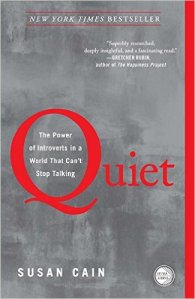
The more well-known and critically acclaimed book, however, is Quiet by Susan Cain.
2.) Introversion ≠ Shyness: Know the difference between introversion and shyness (social anxiety.) Introversion has long been considered synonymous with shyness. Even many psychologists and mental health professionals seem to believe they are one in the same–or at least they did until the recent spate of books, TED Talks, etc. It’s true that many people are both shy and introverted, but it’s more complicated than that. One can be extroverted and shy. Talk about a raw deal. The shy introvert faces forces pulling them in one direction. The shy extrovert is being pulled in two different directions at once.
1.) Embrace it: Accept your introverted nature. Given an extrovert bias, there’s a proclivity for introverts to wish they were extroverted or to even try to force themselves to be so. This is a recipe for disaster. I discussed the difference between introversion and shyness above, shyness is something that one can work on reducing through visualization, mindfulness, and–most importantly–practice interacting, but introversion is hardwired.

Taken in October of 2015 in Varanasi
The sunrise playing off the Ganges is sometimes called “the golden bridge.”



tree on one corner
on the other a shrine
they hedged their bets
stood astride the line
they sealed their letters to the holy ghost
and slipped them in the midnight post
afraid of what their friends would say
if they mailed them in the light of day
each one believed in the abstract
a realm free of the force of fact
but when that ghost began to ride
they laced their cakes with cyanide
better to be crazy amid false gods
than run the table and play the odds
 Ruby Slippers, Golden Tears by Ellen Datlow
My rating: 4 of 5 stars
This anthology consists of 22 pieces of short fiction written by 21 authors and connected by the theme of “fairy tales.” These are variations on traditional folk and fairy tales written for adult audiences. Some are more recognizable than others either because they follow the original more or less or because they start with a more or less well-known tale. (Make a note, these aren’t for bedtime reading for the kids– unless you’re willing to shell out for therapy. Some are dark and some deal in adult sexual themes.)
“Ruby Slippers” by Susan Wade: A modern, journalistic hearing of the “Wizard of Oz.”
“The Beast” by Tanith Lee: What does a woman’s new husband do when he goes out, and where does he go? A variation on the theme of “Beauty and the Beast.”
“Masterpiece” by Garry Kilworth: This is a deal-with-the-devil story in which an artist must make a perverse decision between his masterpiece or something else dear.
“Summer Wind” by Nancy Kress: This is the first of three pieces that play off the Briar Rose / Sleeping Beauty concept. A prevailing theme is one of making a less passive sleeping princess.
“This Century of Sleep or, Briar Rose Beneath the Sea” by Farida S. T. Shapiro: This is one of the few poetic pieces in the anthology. It reconsiders the Briar Rose [Sleeping Beauty] fable.
“The Crossing” by Joyce Carol Oates: This is the last of the stories built around Sleeping Beauty. It’s a period piece set neither in ancient times nor the present day.
“Roach in Loafers” by Roberta Lannes: This is a humorous retelling of the tale in which the elves come each night and save the over-burdened cobbler.
“Naked Little Men” by Michael Cadnum: This time, instead of a cockroach, it’s naked little men that come to do the work.
“Brother Bear” by Lisa Goldsmith: Part Goldilocks and part tale of marriage in the animal kingdom.
“The Emperor Who Had Never Seen a Dragon” by John Brunner: An arrogant, despicable, and dense Chinese Emperor summons an artist who draws dragons, insisting the artist introduce him to a dragon. This story goes in the “be careful what you wish for” file. It’s among my favorites of this anthology.
“Billy Fearless” by Nancy Collins: Another outstanding story. Billy is fearless and he’s suffered for it because his father and others think he doesn’t have any sense. (He’s not the sharpest tool.) But one day he finds himself in a situation in which his fearlessness might work to his advantage.
“The Death of Koshchei The Deathless” by Gene Wolfe: This is based on a Russian folk tale of the same name, but shedding the superstitious / supernatural elements to give it a bit of realism.
“The Real Princess” by Susan Palwick: The story’s basis is “The Princess and the Pea.” The story is built around a sadistic king of an impoverished kingdom and the “Real Princess” who comes to live with him.
“The Huntsman’s Story” by Milbre Burch: The Huntsman from the Snow White fairy tale, but in a brusk style and with a key difference.
“After Push Comes to Shove” by Milbre Burch: A poem on the Hansel & Grettel theme.
“Hansel & Grettel” by Gahan Wilson: This short story re-imagines the two children not as impoverished waifs but rather as wealthy trust-fund kids who travel the world, ending up at a fancy resort that represents the siblings’ second brush with stumbling into some place that could be bad for them.
“Match Girl” by Anne Bishop: A little abused orphan girl finds her fire. This is a prime example of a story not for the kiddies; it’s got a bit of an S&M undertone.
“Waking the Prince” by Kathe Koja: This is a variation on “Sleeping Beauty” with an obvious change in gender roles and the modern outlook that comports with said change.
“The Fox Wife” by Ellen Steiber: Based on Japanese folklore in which foxes are clever and conniving souls. A samurai’s trophy wife becomes possessed by fox spirit. This was among my favorites. It’s also one of the longer pieces.
“The White Road” by Neil Gaiman: A poem based on the English fairy tale of “Mr. Fox.”
“The Traveler and the Tale” by Jane Yolen: This one is a bit different. It’s a sci-fi tale that suggests fairy tales are injected into society in order to have some effect on behavior.
“The Printer’s Daughter” by Delia Sherman: This is also one of my favorites. It’s a take on the Pinocchio story. What’s fun about this version is that the totem brought to life is made out of proofing sheets. Since the printer mostly prints booklets of bawdy tales and, on the other hand, religious tracts, the girl that comes to life can only speak in two ways: one that would make a sailor blush and the other is quoting scripture.
Short story anthologies usually don’t included much in the way of ancillary matter beyond an introduction (and sometimes an epilogue,) but this one has a several pages of recommended reading at the end for those who are interested in learning more about fairy tales and how they come to be translated into modern forms.
I’d recommend this book for those interested in fairy tales of a form suitable for adults.