BOOK REVIEW: Hippias Major [a.k.a. Greater Hippias] by Plato

Hippias MajorHippias Major by Plato
My rating: 5 of 5 stars

Amazon.in Page

Socrates questions the arrogant sophist, Hippias, about the nature of beauty. The dialogue begins, as do most, with a meeting and pleasantries. This involves Socrates’ seemingly sarcastic praise of Hippias (we’re given no indication that Hippias sees the sarcasm, but – given the degree to which the sophist is in love with himself – that’s no surprise.) It’s possible Socrates is being sincere, but given the views attributed to him elsewhere, it seems uncharacteristic that Socrates should truly think Hippias wise because the sophist rakes in cash for making eloquent speeches.

The dialogue plays out with Hippias offering a range of unacceptable “definitions” of beauty. Hippias first presents a set of examples of things which are beautiful. This, of course, is unacceptable because if there is some common property of these varied entities, Socrates believes that property should be definable such that a person could see how the trait applies to other things. There are a series of other false starts involving goldenness, goodness, usefulness, popular agreement about what is beautiful, and a combination or two of the aforementioned.

Finally, Socrates suggests a definition of that which is pleasing to the eyes or to the ears. The discussion peters out after this definition is shown to be incomplete because pleasantness to eyes and to ears still begs the need of a common characteristic, as well as the fact that there are many concepts that are called beautiful that aren’t sensory experiences at all (e.g. a beautiful idea.)

This dialogue is more satisfying than Lesser Hippias, but is by no means one of the best. However, it does encourage thought about beauty, as well as about how both members of a set can have a characteristic that each does not have individually. If you’re interested in aesthetics, check it out.

View all my reviews

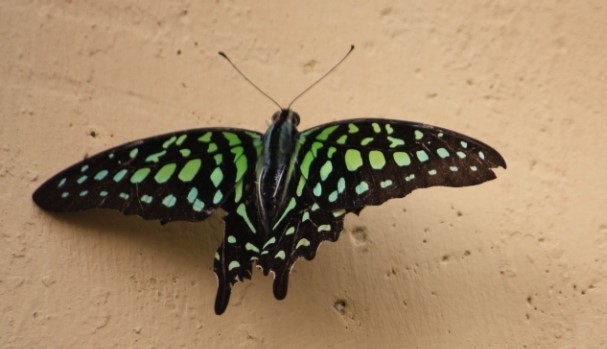
Butterfly Paralysis [Haibun]

Struggling to wiggle its wings, the butterfly warms in the morning sun. Is it like sleep paralysis - that hypnopompic impulse to flee that's stymied by stuck muscles? What's a wind gust or rapidly advancing shadow like for the butterfly? Normally, such occurrences would provoke an erratic fluttering away. But now the screaming instinct to wing away can't be answered. Does the butterfly know dread, or does it just quietly await the moment it's unfrozen?


cool morning -
a butterfly twitches,
but can't yet fly 

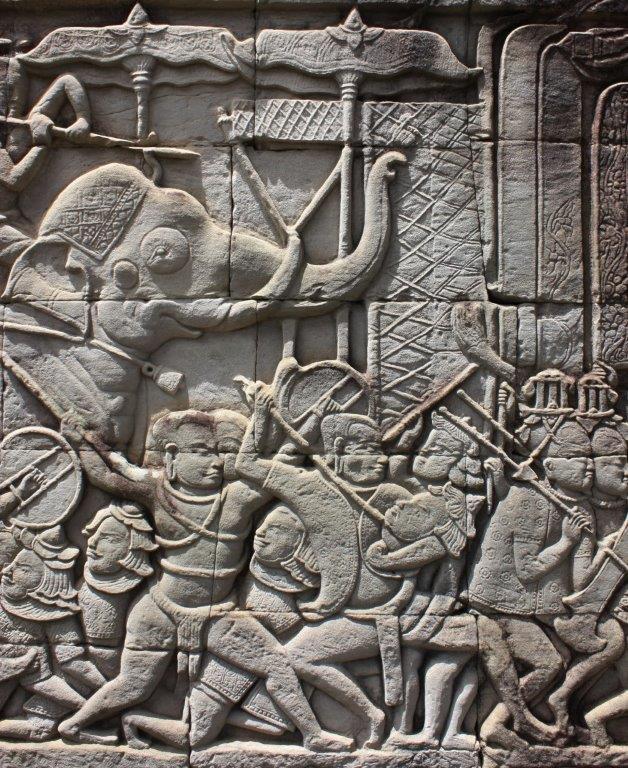
DAILY PHOTO: Ta Keo, Angkor

Taken in October of 2012 at Angkor

BOOK REVIEW: Lesser Hippias [a.k.a. Hippias Minor] by Plato

Lesser HippiasLesser Hippias by Plato
My rating: 5 of 5 stars

Amazon.in Page

Also known at “Hippias Minor,” this isn’t one of the better Socratic dialogues, but it’s amusing and somewhat thought-provoking. It’s one of two dialogues which feature the exceedingly narcissistic Sophist, Hippias, as Socrates’ philosophical sparring partner. The crux of the matter is Hippias’ claim that Achilles is fundamentally truthful while Odysseus is a liar. Socrates takes issue, showing that both heroes tell both truths and lies over the course of Homer’s works.

When Hippias is challenged on his oversimplified classification scheme, the Sophist claims that Achilles’s falsehoods are involuntary, whereas Odysseus’s lies are committed on purpose. This brings the dialogue to the issue that will play out to its end. While Hippias claims that involuntary falsities make Achilles the more virtuous man, the Sophist is led through a series of examples showing that the person who does bad voluntarily is invariably the better man. To give one of the countless examples (not countless, but I’m too lazy to count them,) Socrates suggests that the musician who plays badly on purpose is considered the better musician than one who plays badly because it’s all he or she is capable of.

While most of the dialogue is about whether it’s better to be bad voluntarily or involuntarily, it doesn’t seem that’s really Socrates’ point. In the end, when Hippias last says he doesn’t agree with Socrates, Socrates says that he’s not sure he agrees with himself. Socrates’ point might be that Hippias is full of untested claims because Hippias thinks himself smarter than everyone else.

It’s true this isn’t among the best, but it’s worth reading for this one lesson: don’t be like Hippias.

View all my reviews

Dream Door [Triolet]

I dreamt the door looked out upon treetops
and I could walk out on blue sky and cloud
and see the world as would a tall cyclops.
I dreamt the door looked out upon treetops,
but in my dream I plunged into the copse.
Sky walking proved more dream than was allowed.
I dreamt the door looked out upon treetops,
but could I walk out to blue sky and cloud?

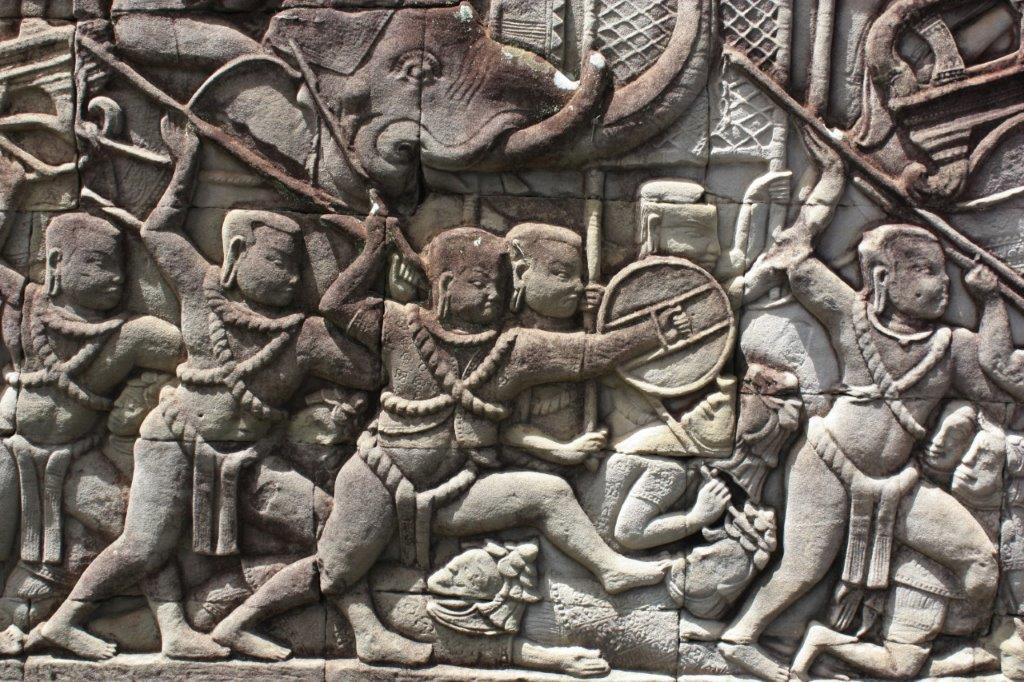
DAILY PHOTO: Battle Bas Relief of the Bayon

Take at the Bayon [Angkor] in October of 2012

BOOK REVIEW: Laches by Plato

LachesLaches by Plato
My rating: 5 of 5 stars

Amazon.in Page

Project Gutenberg

This early Socratic dialogue asks, “what is courage?” Two older gentlemen, Lysimachus and Melesias, regret that they never had their mettle tested. The seniors ask two younger men who’ve served in battle, Nicias and Laches, whether the elder men should have their sons learn the art of fighting in armor to build courage in the young men. Nicias and Laches suggest that Socrates, who showed great valor in battle, should be asked the question.

Lysimachus believes this to be a good idea because then they have a tie-breaker if the two disagree. However, Socrates leads Lysimachus to understand the folly of this approach. What if the dissenter is the only one who truly knows what courage is and how it can be pursued? Socrates admits he has no great expertise in the matter, but is willing to help determine whether Nicias or Laches is more qualified to answer the question.

Laches goes first and defines courageousness as standing one’s ground in battle. However, under Socrates’ interrogation, Laches has to admit that a man who stays in place foolishly can’t be thought more courageous than one who fights in strategic retreat.

Nicias presents a definition that is more nuanced. Nicias says that courage is knowledge of what is fearful and what is hopeful. One might expect this to please Socrates because the philosopher famously believed that ethical behavior sprang from knowing – i.e. if a man knew what was right, he would act virtuously. However, as Socrates questions Nicias a couple issues become apparent. First, Nicias admits that the courageous person must know what is fearful and hopeful in the future as well as present (and who knows that?) Second, Nicias can’t really differentiate courage from virtue as a whole.

This brief dialogue is short, focused, and well worth reading.

View all my reviews

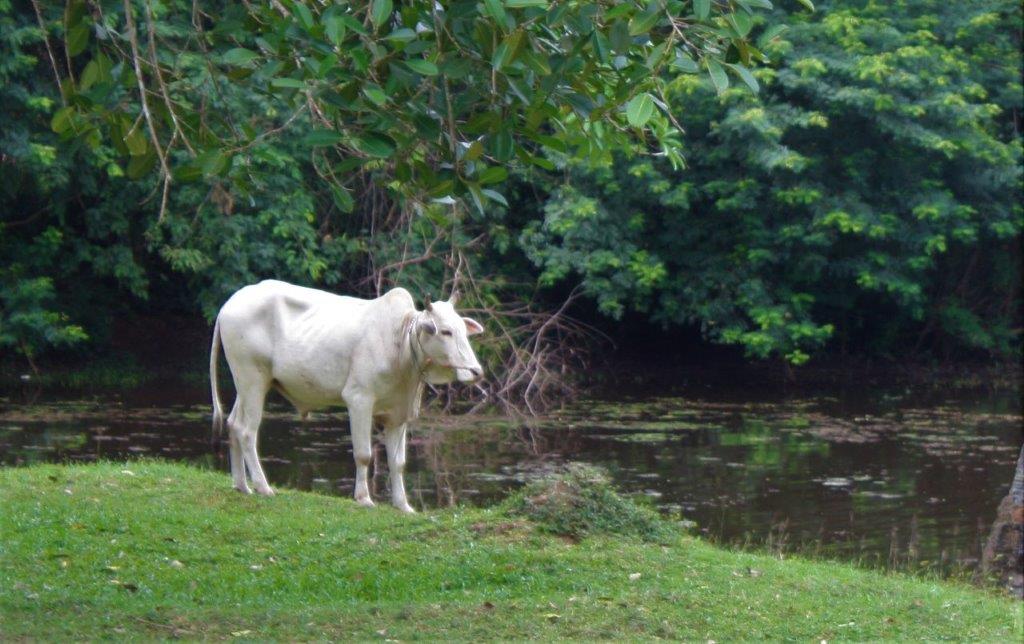
Grazing Bull [Haiku]

a grazing bull
sees its pond reflection,
but resumes forthwith

Puducherry Limerick

A fishmonger of old Puducherry
struggled to find a spouse to marry.
It wasn’t what you think-
unless you think it fish stink-
that made the prospective mates wary.

DAILY PHOTO: Bellandur Street Scene

Taken on August 1, 2021 in Bangalore.