Wetlands [Haiku]

Photograph of an egret in the wetlands near Sapelo Island in coastal Georgia.
across vast wetlands,
a single egret stalks
through the tall grass.

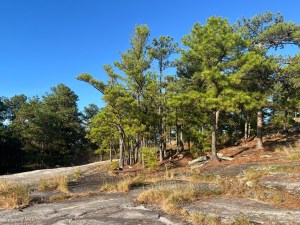
Tiny Valley [Haiku]

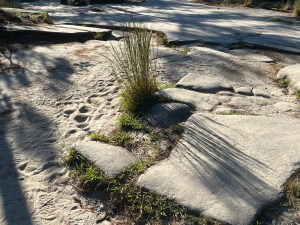
wildflowers hide
in a tiny valley
between granite slabs.

Bright, if Withered [Haiku]

withered daisies
approach season’s end,
but retain charm.

A Duck in Winter [Haiku]

Photograph of the Danube River on a dreary December day with a duck at the river's edge.
a duck preens at river's edge; 
unruffled by the dreary winter vibe.

Ephemeral View [Haiku]

in a one step span
reflected flowers come
in and out of view.

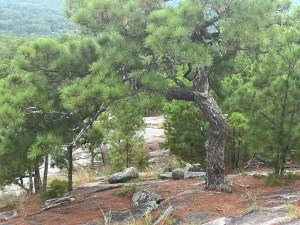
Summer Gust [Haiku]

malformed tree 
stands rigid against
a Summer gust.

Caterpillars [Haiku]

caterpillars
on each branch;
leaves, but memories.

Burble [Haiku]

water sound…
heard before it’s seen:
tiny waterfall.

BOOK: “The Lifetime Reading Plan” by Clifton Fadiman

The Lifetime Reading PlanThe Lifetime Reading Plan by Clifton Fadiman
My rating: 4 of 5 stars

Google Books Page

By the standard of most people (even most readers,) my reading life is insane, both in terms of the volume that I read and the variety of kinds of writing I consume. But – still – whenever someone comes out with one of these “100 must-read books” lists, there’re always many titles that I haven’t read. This has led me to reflect on what constitutes “essential reading,” (if such a thing exists) and what more systematic readers would consider the crucial texts to read to be a well-read person. And that lead me to this book, which is one man’s attempt to assemble such a syllabus of readings.

Fadiman arranges his 103 recommendations into seven sections: 1.) The Beginning (writings from the ancient world;) 2.) The Middle Ages; 3.) Plays; 4.) Narratives; 5.) Philosophy, Psychology, Politics, and Essays; 6.) Poetry; and 7.) History, Biography, and Autobiography. He also provides an annex of six recommendations to give a rudimentary overview of subjects not addressed in the listed works (e.g. art, mathematics, science, World History, American History, and how to read a book.) Note: When I refer to Fadiman’s ‘103 recommendations,” I’m not talking about 103 books. In many cases, Fadiman recommends one read all (or at least multiple instances of) a given author’s writings. I wouldn’t want to give the impression that one could knock out the whole syllabus in 111 books (inclusive of the annex recommendations;) it is a “lifetime” reading plan – after all.

The first edition of this book came out in 1960 and the third (and – as far as I know – final) edition came out in 1988. Fadiman’s selection is far less diverse than one might expect of such a book today. The author freely admits the book is Western-centric, but that’s not the whole story. While Fadiman’s selection is completely Western, it’s also highly Anglo-American (Anglo / American, if you prefer) with a few French, German, Russian, and Latin American authors scattered into the mix. Furthermore, the feminine voice is all but absent with only four females among the recommendations (including George Eliot who famously took a man’s name to be able to publish the work she probably couldn’t have as Mary Ann Evans [her birth name.])

One the one hand, this book did offer insights into many authors and books, including giving a few recommendations I’d never even heard of before. On the other hand, I wouldn’t call it a recipe for being a well-rounded intellect. It’s far too siloed for that purpose. That said, if you’re looking some readings to round out the Western portion of your reading list, I’d recommend you give this book a look. However, as a “lifetime reading plan,” I think it would leave the reader with some pretty broad blind spots.

View all my reviews

Desert [Haiku]

Photograph of mountainous desert with bare soil high in the Andes.
hard, compact earth
where nothing grows;
bird hops, then flies off.