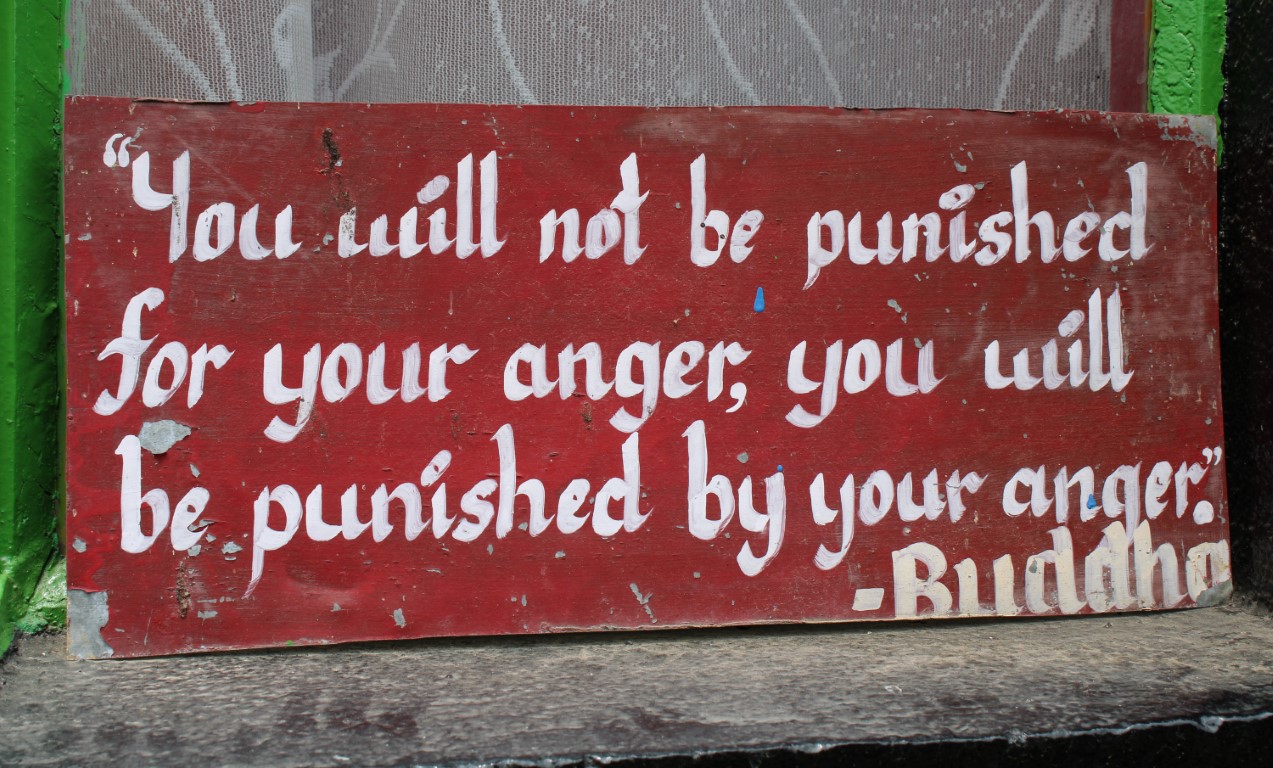
1.) If you spend more time each day faultfinding than feeling grateful, your philosophy is fucked. 2.) Drop useless ideas as one would drop a flaming marshmallow. 3.) If you shop recreationally, consider square dancing or kung fu. 4.) No idea should be beyond critique, but you don't have to be an ass about it.
Tag Archives: Wisdom
BOOK REVIEW: Alcibiades I & II by Plato
Alcibiades I and II by PlatoMy rating: 5 of 5 stars

Amazon.in Page
While these two dialogues feature Socrates questioning Alcibiades (a youth – apropos of nothing – for whom the philosopher has the hots,) they’re different. While it’s not certain that either was written by Plato, it’s much more widely accepted that the first dialogue was so authored. I found the first part to be the more engaging read.
In Part I, Socrates urges Alcibiades to put off going into politics (as the young man is about to do) until he’s more enlightened on the subject at hand – i.e. justice, expediency, and virtue as it pertains to matters of war and peace. In the second part, Socrates convinces Alcibiades that the subject of prayers should not be taken lightly, leading the young man to delay his sacrifice and prayer to a time he can be wiser about it.
The first part is more piquant. In it, Alcibiades on occasion seems to be holding his own (rather than being a talking head.) A great example of this can be seen after Socrates makes clear that Alcibiades’ education in language, the lyre, and wrestling hardly qualify him to advise Athens on matters of war and peace. Alcibiades turns the tables and asks whether it isn’t possible that he could attain the requisite knowledge of justice other than through formal education. Socrates admits that he could by discovery, but just when Alcibiades thinks he has the point, Socrates argues that the only way Alcibiades could make a discovery was if there was a time that the youth didn’t think he already knew. Socrates goes on to show that – even as a child – Alcibiades labored under the impression that he knew what was just.
The most interesting topic of the second dialogue is the question of whether lack of wisdom and madness are the same thing. In Phaedrus, Socrates explores several varieties of divine madness, and I wondered how closely this dialogue might echo that one. (It doesn’t because it’s more about madness that’s not so divine, but Socrates does refute Alcibiades’ equation of the two concepts.)
Definitely read First Alcibiades, and if you have time, the second one makes some intriguing points as well.
View all my reviews
The Traveler’s Worldview in 14 [More] Quotations
Though we travel the world over to find the beautiful, we must carry it with us, or we find it not. - Ralph Waldo Emerson Love all, trust a few, do wrong to none. -William Shakespeare, All's Well That Ends Well Life is like riding a bicycle. To keep your balance, you must keep moving. -Albert Einstein Some beautiful paths can't be discovered without getting lost. -Erol Ozan Live as if you were to die tomorrow. Learn as if you were to live for ever. -Mahatma Gandhi There are only two ways to live your life. One is as though nothing is a miracle. The other is as though everything is a miracle. -Albert Einstein The journey itself is my home. -Matsuo Bashō No matter where you are, you're always a bit on your own, always an outsider. -Banana Yoshimoto There are no foreign lands. It is the traveler only who is foreign. -Robert Louis Stevenson One's destination is never a place, but a new way of seeing things. -Henry Miller I don't want to die without any scars. -Chuck Palahniuk, Fight Club Tell me, what is it you plan to do with your one wild and precious life? -Mary Oliver Do not chase after what is true, only cease to cherish opinions. -unnamed Zen master If any man be unhappy let him know that it is by reason of himself alone. -Epictetus BONUS QUOTATION: Respect the Gods and Buddha, but don't expect their help. -Miyamoto Musashi
BOOK REVIEW: Charmides by Plato
Charmides by PlatoMy rating: 5 of 5 stars
Amazon.in Page
Temperance is the subject of this Socratic dialogue, debated with Charmides and Critias. The opening may feel a bit icky as it’s essentially a few old men obsessing over beautiful youths (of which Charmides is one) in a way that may not explicitly be lecherous, but kind of feels that way. However, they soon get into systematic reflections of the nature of temperance. Charmides is said to have this quality in droves, but, of course, that begs the question of just what it is.
It’s worth noting, they aren’t using “temperance” in the way the English word is typically defined, i.e. the quality of knowing to what degree one should participate in varied activities, if at all. At least, they don’t get to that definition within the dialogue, but – in point of fact – they don’t arrive at any definition. However, they seem to equate “temperance” with “wisdom.” They do try out a series of alternate definitions, which Socrates systematically disassembles, including: temperance as quietness, as modesty, as “doing one’s own business,” as a science of itself and of the absence of science, and as the science of recognizing good and evil. The first couple of these are summarily dismissed, the latter ones take more effort and elaboration to tease out, but ultimately don’t produce a definition that’s both agreeable and useful.
In the process there is a discussion of epistemology as it pertains to what one can know, and whether one can have any clear understanding of one’s “known unknowns” and how they compare to the “unknown unknowns.” The relevance is rooted in a discussion of whether temperance is the ability to know what one knows and what one doesn’t.
This isn’t one of the best Socratic dialogues, but it does provide food for thought.
View all my reviews
POEM: Fairy Tale Wisdom
We watch the naked emperor like nothing is amiss, and recoil upon sight of frogs wise of what lies in a kiss. We trust the familiar too much, and the odd too little. We love a beauty even when she's selfish or she's brittle. There is a Jack for each giant, and many clever cats, and, sometimes, we cheat the man who takes out all our rats. The other foot will always fall, even when blinded by hope. Sometimes it pays to play dimwit, but not be an outright dope. Each tale tells us of ways to be a better, kinder soul in a world filled with all manner of monster, fiend, and troll.
POEM: Mustard Seeds
She’s chasing after mustard seeds
from a household that’s known no Death.
With eyes that droop and feet that bleed,
she’s out of the village and into the weeds.
Finding a family that’s known only life
is like finding one that’s known but good deeds.
Not finding a one, she finally concedes
knowing her suffering is not unique,
and with that realization she is freed.
POEM: The Gift of Mysteries
The Truthlands are chartless and vast.
I crave understanding.
I’ve tripped through time on jagged lines
in search of mind-expanding.
I’m like a dog in hot pursuit,
both seeking to sink teeth,
and terrified that I’ll be tossed
and die ground underneath.
I’m chasing down a map to Truth,
but it’s the search I seek.
I’m not discouraged that my chance
is little more than bleak.
[In truth, I’m proud to have had such
a winning losing streak.]
5 Profound Pieces of Kung Fu Panda Wisdom (That May Seem Dumb)
5.) Po’s Wu Wei: In his fight against Tai Lung at the end of the first film, Po takes a hard hit from his Snow Leopard nemesis, and through ripples of undulating flab returns a devastating strike that sends Tai Lung flying. While I wouldn’t recommend one try it at home as demonstrated in animated form, the idea of not resisting, but rather redirecting forces is an old school approach. It also reflects the ancient Taoist wisdom of wu wei, effortless action.
4.) “But I realized having you in Po’s life doesn’t mean less for me. It means more for Po.” In the third movie, there’s a scene in which Mr. Ping (Po’s avian dad by adoption) explains to Po’s panda dad, Li, how he came to grips with Li’s presence (which at first made Mr. Ping insecure and envious.) The lesson is to be careful in assigning a situation zero-sum status (one person’s gain requires another’s loss) without having reason to believe it reflects the reality of the situation.
3.) “There is just news. There is no good or bad.” This bit reflects an old Taoist story about a farmer and his neighbor. One day the neighbor sees the farmer has a beautiful new horse. The farmer tells the neighbor that it’s a wild horse that the farmer found at the back of his property. The neighbor says, “That’s good news.” The farmer says, “Good news? Bad news? Who’s to say?” The next day when the neighbor stops by the farmer tells him how his son got a broken arm trying to break in the wild horse. “That’s bad news,” says the neighbor. “Good news? Bad news? Who’s to say?” The next day the army comes by, conscripting young men, but the farmer’s son is not forced to go to war because the young man has a broken arm. The story goes on like that.
2.) “If you only do what you can do, you’ll never be more than you are.” In the third movie, after Master Shifu explains to Po how he knew that Po would fail on his first day as a teacher, the Master utters this bit of wisdom. It’s a warning to avoid loitering in one’s comfort zone.
1.) “The secret ingredient of my secret ingredient soup…. The secret ingredient is … nothing… To make something special you just have to believe it’s special.”: For some reason, people love to get attached to trappings and secret wisdom, even to the point of losing sight of what’s important.
It reminds me of a story about Dr. Herbert Benson. Benson famously wrote a book entitled, “The Relaxation Response“ about the effects of relaxation on health. Back in the sixties, students of the Maharishi Mahesh Yogi (famously, the Beatles’ guru) asked Benson to do a study of the health effects of their teacher’s system of meditation. The Maharishi taught transcendental meditation, an approach in which students focused on mentally repeating a mantra that is “given” to them personally by the teacher. (I put the word “given” in quotes because the Maharishi actually charged a significant amount of money for these mantras.) Anyhow, after much badgering, Benson agreed to do the study. One has to realize that, while today such a study would be considered quite respectable, in those days a study of the effect of meditation on health would have been akin to a study of voodoo.
So, Benson conducted the study and — lo and behold — he found that patients who practice meditation do have better recoveries and less ill effects. The Maharishi and his people now love Herbert Benson. They sing his praises. But Benson is interested in science and couldn’t care less whether any particular guru’s system of meditation is validated. So he repeats the study with all participants using the word “one” as their mantra, and he gets the same result. Subsequently, other forms of meditation are studied, and with similar outcomes. Needless to say, the transcendentalists love affair with Dr. Benson was short-lived.
BOOK REVIEW: Light on the Yoga Sutras of Patanjali ed. by B.K.S. Iyengar
Light on the Yoga Sūtras of Patañjali by B.K.S. Iyengar
My rating: 5 of 5 stars
The “Yoga Sutras” are 196 aphorisms about yoga that were penned by a sage named Patanjali around 400 CE (i.e. AD.) Unless you’re a Sanskrit scholar with expertise in the history of yoga and the region that birthed it, it’s hard to gain anything from reading the Sutras directly. The Sutras are written in a terse style in a sparse language, and so most readers aren’t equipped to interpret them – which takes not only knowing the language but have some understanding of the context in which they were written. This means the Sutras are most commonly packaged into a book-length manuscript that includes not only the translation but also analysis and commentary.
There are many such books available, but the challenge is to find one that: a.) comes as close to the original meaning as possible without either misunderstanding or tainting the meaning with the translator’s and / or commentator’s worldview / ideas / ego; b.) is approachable to a modern reader. With respect to the latter, it’s easy to find free translations on the web, but often these were produced over a century ago, and can make for challenging reading for today’s readers. While it may seem like it would be closer to the source material, it can also be thought of as injecting another layer of culture in between the original and the present-day reader.
The Sutras are organized into four sections. The first section introduces the reader to yoga and explains the state of mind called Samadhi. The second section outlines the eight-fold practice of yoga called Ashtanga Yoga. The eight limbs include the two aspects of yogic ethics, yama and niyama, as well as postural yoga (asana,) breath exercises (pranayama,) sensory withdrawal (pratyahara,) concentration (dharana,) meditation (dhyana,) and the aforementioned Samadhi. The third section focuses on the super-normal abilities yogis are said to achieve, along with a warning that the pursuit of these abilities can become a fatal attraction with respect to one’s growth. The final section discusses the liberation, that is the ultimate objective of the practice of yoga.
The organization of this volume makes it suitable for readers of a wide range of levels of experience and scholarly understanding, and allows a reader to benefit from a shallow or deep approach to reading / research of the Sutras. It includes the original Sanskrit, then a Romanized alphabet phonetic write up of the original Sanskrit Sutra, and then a listing of the various meanings for each of the Sanskrit word. Then it has the English translation of the Sutra as literal as possible. Finally, there is B.K.S. Iyengar’s commentary and analysis. Sometimes these elaborations are just a few lines and sometimes they’re a few pages, but most commonly each is about one page. I like the approach of providing the original as well as information that facilitates the reader systematically piecing together his or her own understanding of each Sutra. I think it shows both humility and eagerness to support students on the part of the editor.
There are various appendices, indexes, and a glossary to make the book more useful.
This isn’t the first book of translation and commentary of the Sutras that I’ve read. However, it is the most readable, approachable, and useful that I’ve read. I would highly recommend this book for all practitioners of yoga.
POEM: The Endrow, or: How To Survive a Cornfield
I was once a kid in the corn.
News at Eleven ran a story
about a child found dehydrated
and on death’s door — deep in a field.
Any farm-boy will tell you,
you can’t get lost in a cornfield —
not truly lost.
Pick one of the two directions
that your row runs,
and walk.
When the rows re-align at right angles,
that’s the endrow —
you’re almost out.
Sure, it sucks if you hit the river,
because then you’ve got to walk
all the way back past where you started,
moving in the opposite direction.
But a kid has a lot of walk in him.
The only way to get lost in a cornfield
is to panic, and lose all faith
in the logic of a field.
In nature, one may walk oneself in circles
’cause one leg is stronger than the other,
and nature’s chaos is omnisymmetric
to an order-loving human brain.
But, in a field, the rows run true,
and the only way to walk in circles
is to feed your fear
and lose faith in the straightness of rows.
One can’t teleport a harvester into a field,
it needs to be driven there on a road.
Find your endrow, find your road.