POEM: Neurochemical Grace

Dopamine Model; Source: Wikipedia


I’m grateful for the ability to be grateful.

For gratefulness causes dopamine and serotonin levels to rise.


I’m grateful for the fine people in my life.

For delightful company causes oxytocin and vasopressin spikes.


I’m grateful for my health.

[Or am I healthy because I’m grateful?]

For gratitude correlates to superior health across several indicators.*


I’m grateful for my food,

which is well-balanced to provide the brain glucose,

while offering all the

vitamins, minerals, and amino acids

my neurochemistry needs.**


*Sansone, R.A. and Sansone, L.A.2010. Gratitude and Well Being. Psychiatry. 7(11): 18-22.

**Gibson, G.E. and Blass, J.P.1999. “Nutritional and Functional Neurochemistry.” Basic Neurochemistry: Molecular, Cellular, and Medical Aspects, 6th ed. NCBI: Bathesda, MD.

BOOK REVIEW: Stealing Fire by Steven Kotler and Jamie Wheal

Stealing Fire: How Silicon Valley, the Navy SEALs, and Maverick Scientists Are Revolutionizing the Way We Live and WorkStealing Fire: How Silicon Valley, the Navy SEALs, and Maverick Scientists Are Revolutionizing the Way We Live and Work by Steven Kotler
My rating: 5 of 5 stars

Amazon page


“Altered states of consciousness” conjures visions of rogue scientists hitting hallucinogens and then sealing themselves up in sensory deprivation tanks until they either have a breakthrough or a breakdown. This book may touch on such activities, but it’s about something else. It’s about the states of consciousness in which the part of the mind that is critical, overly cautious, and always creating worst case scenarios fades into the background, allowing one to be more effective, happier, and to drop one’s neurotic tendencies. Kotler and Wheal refer to this as ecstasis, borrowing from the Greek word meaning “to get outside oneself.” They differentiate it from the Flow of Mihaly Csikszentmihalyi with which it clearly has overlap. (One of the authors, Kotler, wrote a great book on the exploitation of Flow by extreme athletes entitled “The Rise of Superman.”) [I’d love to see a Venn diagram of how they see these states overlapping, but—alas—one isn’t provided, though there is some discussion of it.]


The book is organized into three parts. The first part consists of three chapters and it both explores what ecstasis is and why it’s so hard to find. The story of how the Navy SEALs designs training to build group Flow states on command is illuminating as is the second chapter’s discussion of how Jason Silva found ecstasis through freewheeling philosophizing. The third of the chapters describes three prominent barriers to achieving these states of mind. These barriers are among the reasons for the rarity of these altered states even though they’re available to everyone.


The heart of the book is the second part which describes four avenues by which people pursue these altered states of consciousness: psychology, neurobiology, pharmacology, and technology. The chapter on psychology uses a dialogue series between Oprah and Eckhart Tolle as a stepping off point, probably more because of what it tells us about the scale of yearning for ways to get outside of one’s head than because of the dialogues’ value in facilitating that condition. Positive psychology as recipient of a mantle once held by religion and spiritualism is an important theme in this chapter.


The neurobiology chapter isn’t just about the biology of the brain and nervous system; it’s about the integration of brain and body. In it, we learn about how expressions, postures, and gestures can influence our state of mind.


Many apparently believe that the story of pharmacology is a much bigger part of this book than it actually is, but it’s a part that’s hard to ignore. As one who seeks non-pharmacological approaches to Flow (I’m more about yoga, meditation, and movement) I still found this chapter fascinating, and perhaps most so in its discussion of other species’ pursuit of chemically induced highs [particularly that of dolphins.]


The technology discussed covers a range of approaches from biofeedback devices designed to help one navigate one’s way into the zone, to gear to help one engage in trigger activities at lower risk. For example, the mix of defiance of gravity and high-speed gliding experienced wing-suiting seems to be a potent trigger for ecstasis. It also seems to kill anyone who keeps doing it long enough. So the question is whether one can create the sensation and still achieve the trigger without inevitably experiencing an untimely demise.


The grimness of that last paragraph is an apropos lead-in to discussion of the book’s final part, which considers how one can organize one’s pursuit of ecstasis without running into the many pitfalls that coexist with it—from becoming a pleasure junky to dropping out of life to killing oneself. The first of three chapters in the final part discusses the Burning Man festival phenomena in great detail as well as other avenues by which people find themselves drawn into the pursuit of altered consciousness. The next chapter describes how both government and commercial firms have sought to exploit the bliss of these altered states. The last chapter is about how to merge daily life and pursuit of ecstasis in a balanced way so one avoids becoming a pleasure junky who runs his life aground on rocky shoals in pursuit of the next ecstasis fix.


The book is endnoted, and has some nice ancillary features—a number of which are available online with the link being given at the back of the book. An appendix that I found interesting was one entitled “Notes on Inside Baseball.” This section discussed a number of controversies that were outside the scope of the book, but which readers might wish to research in greater detail.


I found this book to be highly engaging. The authors use the narrative approach throughout to keep it interesting, while at the same time conveying complex ideas in an approachable fashion. They scour many disparate realms in search of this altered consciousness, and so there’s never a dull moment.


I’d recommend this book for anyone interested in learning more about how to shut down that perpetually critical and gloomy part of the brain so that one can achieve one’s optimal potential.

View all my reviews

BOOK REVIEW: Incognito by David Eagleman

IncognitoIncognito by David Eagleman
My rating: 4 of 5 stars

Amazon page


This is the book that started me on a fascination with the science of the subconscious mind. In it, Eagleman explains that our subconscious mind has a much bigger role than our consciousness lets us believe. We feel that the conscious mind is in charge of the whole enchilada of our mental being, but in reality the conscious is often late to the party while still managing to weave a narrative about how it saved the day. The conscious has an important role, but one much more limited than it seems, but because consciousness Is the frame through which we are aware the world, it’s easy to miss how much the subconscious handles.


The book is organized into seven chapters. The first chapter sets up the notion that the mind is like an iceberg, the subconscious is the more massive portion that lies below the waterline, and the conscious is the peak that lies above.


The second chapter explores the interface of the senses and the mind. We think that our sensory experience of the world is like looking through a spyglass, but it’s much more a secondary rendering—subject to editing and corruption. Eagleman discusses many illusions that serve to show us that our sensory experience is not as true as we feel it to be.


Chapter three investigates why it is that in some cases the more we think about a task the worse we do with it, and how biases show up even among those who swear they don’t have a racist notion in their body. A number of interesting cases, such as chicken sexing, are used to convey where our conscious mind is of no use to us. Anyone who’s practiced a martial art is aware that sometimes thinking is death.


The fourth chapter explains concepts like instinct and our perception of beauty and attractiveness. It’s entitled, “The Kind of Thoughts That Are Thinkable,” and that gives some insight into the theme.


The next chapter covers one of the most important ideas of the book, that our brains are not all on one page on any given idea. This is one thing that our conscious mind dupes us into believing, that we have a certain belief and that we are uniformly of that view. In fact, our reasoning and emotional systems often have quite different perspectives on a matter. As I mentioned earlier the people who think they don’t have a racist notion in their body. In one sense, they are correct in that they can reason that it’s illogical to think of people differently based on skin color, but such a person still often shows a marked bias when asked to make associations that are made more quickly when they are not at odds for the subconscious.


Chapter 6 gets into the policy ramifications of what has been discussed to this point. If decisions aren’t a product of the conscious mind, then are we right to send people to prison for crimes that they didn’t consciously decide to commit and couldn’t have consciously overruled? The case of Charles Whitman who took up a sniper position in the University of Texas clock tower in 1966 takes center stage in this discussion. Whitman suffered a great change of behavior that was posthumously (by autopsy) linked to the development of a tumor. Eagleman proposes that the traditional question of blameworthiness is the wrong one.


The last chapter reflects upon what it means to be a human person in light of a mind arising from material activity. A central idea is the self as an emergent property rather than the “thing” we feel it to be.


The book presents many monochrome graphics of various types to support the text. It’s also annotated and has a substantial bibliographic section.


I’d recommend this book for anyone interested the nature of the subconscious mind. Eagleman uses interesting cases to demonstrate his points. This makes it quite readable while conveying some challenging ideas.

View all my reviews

5 Books to Introduce You to Your Subconscious

In a world free of frontiers, the subconscious mind is the final frontier.


Below are a few books that I found useful. The hyperlinks forward to my review on GoodReads or the book’s GoodReads page.


Also, I’ve included three honorable mention books that I haven’t yet reviewed, but which seem both relevant and intriguing.


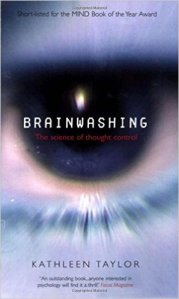
5.) Brainwashing by Kathleen Taylor: What makes some minds more malleable than others and how are minds bent to a given purpose? In learning the answers, one discovers that the bases of our beliefs are often more deep-seated than one might believe.

brainwashing_taylor


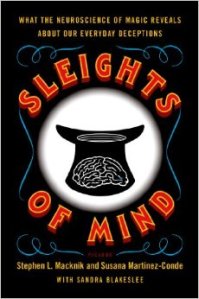
4.) Sleights of Mind by Macknik & Martinez-Conde: Magicians and mentalists are notoriously skilled at exploiting the chinks in the armor of  our minds.

sleights_of_mind


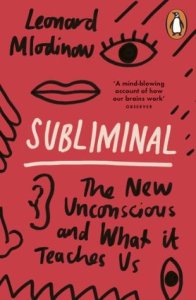
3.) Subliminal by Leonard Mlodinow: Physicist and pop science writer, Leonard Mlodinow, explores the many ways in which our behavior is more influenced from the back of the house than we feel to be the case.

subliminal


2.) The Tibetan Yogas of Dream and Sleep by Tenzin Wangyal Rinpoche: This is my nod to the fact that the Western scientific community isn’t the only entity that has something useful to say on this subject. Tibetan Buddhists have a long tradition (arguably predating Buddhism and into the Bon-era) of dream yoga (lucid dreaming) and our dreams offer the greatest portal to the subconscious.

tibetanyogas


1.) Incognito by David Eagleman: Eagleman tells us that our conscious mind represents the tip of the mental iceberg, and he explores the many ways in which we are subject to the vagaries of what exists below the surface.

incognito_eagleman


Here are a few others.


The Man Who Wasn’t There by Anil Ananthaswamy: I just finished this book. In it, the author investigates whether there really is  such a thing as the self by studying a number of diseases and phenomena of the mind that look like negations of self. (e.g. Cotard’s Syndrome in which people insist they are dead, depersonalization disorder in which life seems a dream in a literal rather than poetic sense, out-of-body-experiences in which there is a hallucination that one is outside one’s body, etc.)


The Attention Merchants  by Tim Wu: I haven’t read this one yet, but it’s said to be good and is about how our programming is exploited to keep us clicking. If you’ve ever wondered why you can’t seem to just drop social media even when it seems like a phenomenal waste of time–why it exerts such a strong pull–this book delves into what proclivities of the mind have been seized upon.


Reality is Broken by Jane McGonigal: I’m about 1/3rd of the way through this one. It has some overlap with the Wu book. In it, McGonigal asks why games have so much appeal–even to the extent of becoming addictive. As with why we keep clicking, the answer has a lot more to do with the primitive parts of our mind than the high tech subject matter might suggest.

BOOK REVIEW: The Hidden Life of Trees by Peter Wohlleben

The Hidden Life of Trees: What They Feel, How They Communicate—Discoveries from A Secret WorldThe Hidden Life of Trees: What They Feel, How They Communicate—Discoveries from A Secret World by Peter Wohlleben
My rating: 5 of 5 stars

Amazon page


I picked up this book because it was on one of those “Best Science Books of 2016” lists, and it turned out to be the most important book I read last year. Like most of humanity, I’ve been guilty of thinking about trees largely as objects. Don’t get me wrong. Like others, I never forgot the basics of biology and always remembered that trees are alive because they grow, reproduce, and whatnot. I’ve also never failed to realize that without trees to suck up carbon dioxide and exude oxygen, we couldn’t exist—though I’ve probably not been sufficiently grateful. Still, because of the molasses-like time flow of trees, their immobility, and the fact that many can live for decades after someone chainsaws off a limb, it’s possible to feel they have more akin with rocks than with we members of the animal kingdom. (Note: trees don’t always respond as well as people think to random “trimmings.” As will be a recurring theme, our misunderstanding of this has a lot to do with time perception. If your dog’s head was in the way of the TV screen, and you cut it off with a chainsaw. You’d immediately realize that you’re a homicidal maniac and an idiot because the dog would be dead right then and there. When there’s a branch in front of your window and you hack it down, the tree may stay green for a couple of years [a blink on its time scale] and by the time it dies you’ll have completely forgotten that it was your action that lead to its demise.)

The author, Peter Wohlleben is a German forester, and this book was originally released in German before being translated to English (as well as other foreign languages.)

Wohlleben systematically dismantles the barriers between trees and us by showing the many ways in which they’re more like us than we could possibly fathom at a mere glance. The subtitle’s dual question of “What They Feel, How the Communicate” reflects just a couple of aspects of how trees are more like us than we realize. There are also chapters that investigate how trees share from strongest to weakest, and how the tough love parenting strategy of trees produces robust offspring. (Experience of time may be the way in which humans have the most trouble relating to trees. We believe there is benefit in virtually everything coming to us faster, whereas trees benefit greatly from growing slowly. Slow growth makes for sturdier trees.)

Moving back to that question of communication, one may be dubious that trees communicate because we can neither hear them nor see their gestures. But not only do trees communicate with other trees, some species communicate with members of the animal kingdom as when a tree under attack from insects releases a scent that attracts birds that feed on the attacking insects.

Wohlleben does a great thing by showing us how trees should be more relatable to us than we imagined. However, the lesson needn’t stop there. One might also take away a broader lesson that we shouldn’t assume that our frame of reference maps to the sum of reality. That maybe we should have sufficient humility to recognize the impressive intelligences of species we view too simplistically. There have been a number of books that have come out in recent years that have noted the ways in which monkeys, ravens, owls, and even octopi are much more astute than we give them credit for. Seeing this extended to the plant kingdom takes the discovery to a new level of mind-blowingness.

This book consists of 36 short chapters, each of which deals with a specific topic of interest (e.g. forest etiquette, social interdependence, climate effects, hibernation, illness, and how trees survive under challenging conditions—droughts, introduction of competitors, etc.) There are a few graphics throughout the book, mostly line drawings of trees with the species identified. The book does have notes. However, it’s really set up more like a book of short essays by a naturalist than it is your usual work of popular science.

I’d highly recommend this book for anyone who breathes oxygen.

View all my reviews

5 Books to Improve Mind-Body Performance

It’s the time of year when people think about how to be better, fitter, and smarter; so I thought I’d drop a list of books that I found helpful and thought-provoking.


If you’re interested in learning more about any of these books, the hyperlinks take you to my review in GoodReads, and from GoodReads you can get to Amazon page.


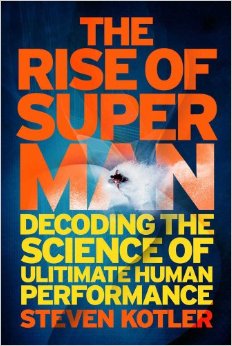
1.) THE RISE OF SUPERMAN by Steven Kotler: How do extreme athletes achieve Flow when one false move will kill them?

RiseOfSuperman


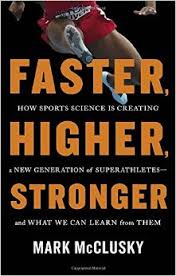
2.) FASTER, HIGHER, STRONGER by Mark McClusky: How do elite athletes squeeze the most out of the potential of the human body?

FasterHigherStronger


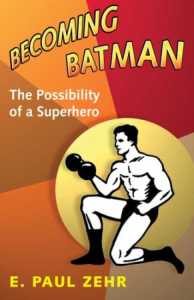
3.) BECOMING BATMAN by E. Paul Zehr: What would it take, physically and mentally, to become the Caped Crusader?

Becomingbatman


4.) FLOW by Mihaly Csikszentmihalyi: How does one achieve that state of relaxed and confident concentration in which we perform our best called Flow?

flow


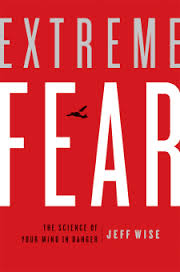
5.) Extreme Fear by Jeff Wise: How does one overcome anxiety and fear to perform one’s best?

ExtremeFear

BOOK REVIEW: Body Heat by Mark S. Blumberg

Body Heat: Temperature and Life on EarthBody Heat: Temperature and Life on Earth by Mark S. Blumberg
My rating: 4 of 5 stars

Amazon page


I picked up this book for an odd–and potentially disconcerting–reason. I sweat when I work out. I know that everyone sweats while active, but for me it’s preternatural. It’s at a level that has the potential to be a superpower, if I had any control of it. I’ve finished muaythai sessions with the ring floor looking like it’d rained inside—granted Thailand takes humidity to its heights, but still. I was hoping to gain some insight into what this anomaly was all about. After reading the book, I can’t say I have any greater insight on the issue. However, having lived in the tropics for over three years now, I’ve recently begun to notice that my level of sweating seems normal—at least within a range acceptable for our species.

There are nine chapters. The first examines the basics of heat. While the examples are zoological, the substance is largely what one would study in an introductory physics class—sans the math. Chapter 2 dips more into the biology, considering the various ways in which organisms achieve an ideal temperature. The third chapter explores the role that temperature plays in impregnation, gestation, and genetic information transfer.

Chapter 4 explains how various creatures work internally to create a comfortable temperature. It’s related to chapter 2, but the second chapter deals more with external regulation, i.e. animals’ interaction with their environments. Besides explaining the human need to control the brain’s temperature, chapter 4 explores how birds who keep their feet in chilly water manage to keep from getting hypothermia. In the next chapter, Blumberg considers various ways in which animals fight the cold. There’s an extended discussion of Brown Adipose Tissue (BAT)–a fat that is particularly useful in generating heat–that was interesting.

Chapter 6 raises an intriguing question: should one take fever reducer when one develops a fever? Obviously, a fever can become so high that one needs to combat it, but here we’re talking about a fever of a level that won’t cause any long-term harm. Chapter 7 discusses a range of heat related topics including the connection between spiciness and the feeling of heat and the evolution of language related to heat, but the chapter is mostly about the thermal dimension of sex.

Chapter 8 is about how our body regulates fat so that it can be used both as an energy reserve and as insulation, and what can go wrong with the process. The final chapter addresses the thermal dimension of sleep. If you’ve ever woken up soaked in sweat or chilled, it may have occurred to you that our thermal regulation doesn’t work as usual through sleep.

There is a point in the Introduction that reads as though the author is calling Tibetan Buddhists monks charlatans, and that seems both harsh and offensive. However, I’m willing to give him the benefit of the doubt that he used an example in unfortunate juxtaposition to his charlatan comment—which is well taken. He’s referring to monks who wrap themselves in wet sheets in subfreezing conditions. His point is that it’s not a suspension of the laws of physics that the monks don’t end up with hypothermia—true enough. The monks’ point is likely that it’s a tremendous challenge to be able to maintain a tranquil mind under such conditions, which I would argue is true as well.

There are only a few graphics, and they consist of tables, line drawings, and photos. There is an extensive bibliography that is organized by chapter.

The Kindle version of the book that I have has some formatting irregularities. However, they didn’t really detract from the reading experience, and will probably be corrected in newer editions. [But it wasn’t an ARC, so the formatting should have been finalized.]

I found this book to be interesting, and I learned a lot from reading it. It’s an important topic, but for many it won’t be a subject that one thinks of learning about in isolation. If you are interested in finding out more about the many ways in which animals (humans included) are influenced by temperature, I’d recommend you give this book a look.

View all my reviews

BOOK REVIEW: Brain Rules by John Medina

Brain Rules: 12 Principles for Surviving and Thriving at Work, Home, and SchoolBrain Rules: 12 Principles for Surviving and Thriving at Work, Home, and School by John Medina
My rating: 4 of 5 stars

Amazon page


As the title suggests, this is a book of guidance about how to get the most out of one’s mental life. Medina goes a mile wide, looking at twelve areas in which one can improve the performance of one’s brain, including: exercise, attention, memory, sleep, stress management, sensory integration, and visual acuity. It also has chapters that explain how evolution and gender affect the way in which one’s brain operates.

After an Introduction that sets up the premise of the book, there are twelve chapters. The first chapter explores the well-documented connection between exercise and mental performance, and offers insight into what type of exercise has been shown to be most helpful to the brain. The second chapter pertains to our brain’s evolutionary history. The conscious mind housed in the cortex is but the top floor of a multi-story enterprise, and understanding this has important ramifications for how one gets the most out of one’s brain. Chapter 3 explores the way brains are wired, which turns out to be flexibly and diversely. By flexibly, I mean that brains can be rewired by way of what is called neuroplasticity on the proviso that neurons that fire together wire together. By diversely, I mean that each individual’s brain is a bit different, and these differences can explain how someone gifted in one domain may be an idiot in other aspects of life. The next chapter deals with attention and explains why humans suck at multi-tasking (despite thinking they are the bomb) and why an extended ability to concentrate is essential to success.

The next two chapters both deal with memory, but with different types of memory—each having its own unique considerations. The first, chapter five, describes the peculiarities of short-term memory, that part of the memory that can hold a finite amount of data points at the forefront of our minds for a limited period. Chapter six deals with long-term memory, the part that holds vast stockpiles of information for extended periods (sometimes across a lifetime) but with lower fidelity and accuracy than we generally believe. While the rule offered for both forms of memory is simple—i.e. repetition is key—there is much to consider in the details. For starters, there are many other ways to divide up memory other than with respect to the short-term / long-term dichotomy (e.g. procedural v declarative) and differences in the way these types of memory work affect how they are both optimized.

The influence of sleep on mental performance is the subject of chapter seven. There is a vast pile of research on this subject, including a number of famous cases of extreme sleep deprivation—some of which are touched upon herein. It’s true that there is a great deal of variation in how people sleep (e.g. morning v non-morning people, and those who can power nap and those who can’t.) However, one thing remains unambiguous and that’s that we need sleep and must have full cycles of it in order to not suffer mental degradation. Chapter 8 is about how stress can kill mental performance. Of course, not all stress is the same. When one feels in control, short bursts of stress can be just the motivator one needs, but when feeling out of control stress can become crippling.

Chapters 9 and 10 are both about the senses. The first, nine, explains how one can obtain synergistic outcomes in a multi-sensory environment, and the second focuses on vision—arguably our most dominant sense. Our sensory experience is much more a product of the brain (and much less a pure representation of the outside world) than we tend to believe.

Chapter 11 reports on the gender differences that have been discovered with respect to brains. Before anyone lights a torch or sharpens a pitchfork, this isn’t the old “boys do math and girls do language” line. The differences are more nuanced, and it’s not clear in every case that the differences matter—or how. E.g. Men have bigger amygdala (involved in emotional response) and produce serotonin more quickly. While it’s not clear that these differences make a big difference, it’s know that men and women use their amygdala differently in times of stress, men activate the right amygdala and tend to remember more of the gist of events while women trip the left and remember more emotional details. The last chapter is about our human proclivity to explore, but it focuses heavily on infancy and childhood, during which the world is novel and the impulse to explore is at its height.

Each chapter ends with a summary box that both restates the rule and offers a few bullet points of key takeaway lessons, which may either be more specific guidance or summary of relevant research findings. There aren’t many functional graphics—by functional I mean as opposed to the ornamental drawings used throughout. I only remember one brain drawing. However, the reason for the dearth of graphics may be that there is a link to a 45 minute video that one can access, and the publisher probably thought that was a much more useful way to impart graphic information. It should also be noted that in the Kindle edition that I have, the references are also on-line.

I found this book to be useful. As I mentioned, it’s a broad overview. One can get books that dive more deeply into all of the topics addressed. But this is a nice mix of popular science and self-help. It’s readable, and the summaries and concise statement of rules help make the content stick more effectively.

I’d recommend this book for those who are seeking a book that covers a lot of ground, and which offers practical guidance as to how to put scientific discoveries on the brain into use in one’s own life.

View all my reviews

BOOK REVIEW: Siddhartha’s Brain by James Kingsland

Siddhartha's Brain: Unlocking the Ancient Science of EnlightenmentSiddhartha’s Brain: Unlocking the Ancient Science of Enlightenment by James Kingsland
My rating: 5 of 5 stars

Amazon page


Kingsland builds his niche by connecting the dots between the teachings of the Buddha and scientific discoveries about meditation and mindfulness. There are many books that tell the life story of Siddhartha Gautama from various perspectives (e.g. famously the books by Hermann Hesse and Karen Armstrong.) There are also a number of books reporting the science of meditation (e.g. Herbert Benson and Sat Bir Singh Khalsa.) However, it’s not so common for the subjects to be overlapped.

There’s a reason that this middle path hasn’t been more widely studied. While Buddhism is arguably the most science-friendly of the major world religions, there’s always a gulf between spiritual and scientific thinking. The writer has to figure out how to chart a course through rocky waters. Books appealing to spiritual seekers are likely to come across as insubstantial fluff to the scientifically minded reader, and books appealing to skeptics are likely to feel materialistic and cold (and, perhaps, naive) to the spiritualist. The Buddha’s teachings about the need for the practice to be experiential, rather than faith-based, offers a unique opportunity to tread this tightrope. Furthermore, the Dalai Lama’s willingness to facilitate a dialogue between science and Buddhism has been crucial as well. One can easily set aside controversial issues like reincarnation and karmic law as they aren’t essential to the value of mindfulness.

The book consists of twelve chapters. The chapters generally begin with a story or teaching from the life of Buddha, and then go on to investigate the relevant lesson in more detail with particular emphasis on any relevant scientific discoveries that support said teachings.

The story of Buddha begins in a wealthy, high-caste household with young Siddhartha Gautama being kept from seeing the effects of aging, illness, and death. When the young Siddartha, nonetheless, sees these things, it is a powerful introduction to the concepts of impermanence and suffering that will play a central role in his future teachings. Chapter 1 starts this introduction and also offers an overview of the book. Chapter two continues it. In Chapter three, Kingsland describes a little of the known history of meditation, though its origins are lost to time.

Chapter 4 is entitled “The Second Dart” and it discusses the Buddha’s teaching of the same name—the second dart being one’s mental reaction to an event (i.e. the initial dart.) Chapter 5 investigates the question of whether there is a self—and, if so, of what manner. A core idea within Buddhism is that the self is illusory.

Chapter 6 gets to the heart of the matter by explaining the mechanism of mindfulness meditation and what has come to be known as MBCT (Mindfulness Based Cognitive Therapy)—a secular approach to the use of mindfulness to improve well-being. The next chapter tells the story of how a group of fire worshippers came to follow the Buddha after he made clear that everything (their senses, thoughts, and emotions) were aflame with craving, hatred, and delusion, and that springboards into a discussion of how mindfulness is used to reduce craving and addiction.

Chapter 8 tells the story of an attempt to kill the Buddha via an angry, drunk elephant, and the Buddha’s thwarting of the plot by way of calm and compassion. As one might have guessed, the chapter is about moderating emotions, just as the Buddha controlled his fear before the elephant.

Chapter 9 takes a jaunt into evolutionary biology to question how the mismatch between what humans evolved to do and what we do in the modern world causes mental illnesses and how mindfulness can help mitigate the problem. Chapter 10 is about metacognition, or the ability to observe and reflect upon our own mental experience—i.e. thinking about thoughts. Chapter 11 is about cognition and decision-making, and the role that meditation can play in improving our performance in this domain. The last chapter discusses the Buddhist conception of death and enlightenment. It isn’t until this point that there’s a major divergence between the Buddhist and scientific viewpoints. There is a discussion of the Buddha’s teachings emphasizing that belief in ideas from on high is not so important as experience.

Six of the chapters (2, 4, 6, 8, 10, & 11) are concluded with guided meditations to offer the reader an introduction into the basics of mindfulness. These are simple practices that many readers will already be familiar with in some variant or another. (e.g. breath awareness, bodily awareness, and mindful eating.)

There are only a few graphics (e.g. maps and diagrams—mostly of the brain) but there is no need for additional graphics. The book has references annotated.

I found this book interesting and thought-provoking. It uses the stories of Buddha as well as some stories from the present day to make the reading more engaging and approachable. The discussion of scientific research is easy for a neuroscience neophyte to follow.

I’d recommend this book for anyone interested in learning more about the science behind Buddhist practices.

View all my reviews

BOOK REVIEW: The Stationary Ark by Gerald Durrell

The Stationary ArkThe Stationary Ark by Gerald Durrell
My rating: 4 of 5 stars

Amazon page


If you’re like me, you have mixed feelings about zoos and aquaria. On the one hand, it’s an awe-inspiring experience to see the mighty, ferocious, and odd creatures that don’t make it into one’s backyard (for those who even have yards.) On the other hand, one has to wonder whether the creatures on display are as miserable as one would be in their shoes. (i.e. Figurative shoes. I do know that other animals don’t wear shoes… Except for horses… but I digress.)

In this book, Gerald Durrell examines the question of what makes for a zoo that’s good for the animals as well as for its human visitors. Most of us are sophisticated enough to realize that straight-up anthropomorphization (projecting human thought processes onto animals) isn’t a sound way to get to the bottom of an animal’s experience. Animals seem much more resilient than humans, but they aren’t infinitely tolerant. While one can’t conduct a “zoo resident satisfaction survey,” there are means by which to gain insight into the animal’s state of well-being, including: its health, its appetite, and its sex drive / reproductive success.

Durrell had the experience of opening a zoo, and was himself dismayed by what he saw at many of the zoos he visited. In some cases, they were designed for optimal viewing but didn’t give adequate consideration to the well-being of the animals. However, some zoos genuinely tried to act in the best interest of the animals, but they missed the mark by projecting human thinking onto animals–instead of examining the evidence for what conditions positively (or negatively) impact the animals’ health, appetite, and sex drive.

This short book (less than 150 pages) consists of seven chapters. The first chapter presents the challenges Durrell went through in trying to open a new and different kind of zoo. Chapters 2, 3, 4, and 6, respectively, examine the issues that must be taken into account with regards to enclosures, feeding, mating, and sick animals. Obviously, these chapters don’t cover the entirety of the subject in detail, but rather combine generalities with a few interesting (and often humorous) examples from specific species. Chapter 5 gets into the challenges of keeping records in a zoo that isn’t just about entertainment but is also focused on conservation and education. The last chapter sums up Durrell’s arguments for how Zoos can be of benefit to animal species other than humans.

There are no graphics, notations, or bibliography. It’s not that kind of book, but is rather an extended essay. It does feature both humor and insight in good measure.

I’d recommend this book for those who want to better understand what features of a zoo are good (or bad) for the animals, and how zoos might be restructured to advance their roles in conservation and education.

View all my reviews