POEM: Three Tanka City

Stiff iron trusses
skeletonize a building
outlining order
wind whistles over I-beams
flexing,  moaning, and rising


Steel lugged upward
welded into false order
chaotic city
don’t pretend order reigns here
litter skitters on the wind


From: the Butterfly
To: the city residents
Sorry my flapping
caused the storm that destroyed your
lovely burgh. I didn’t know.

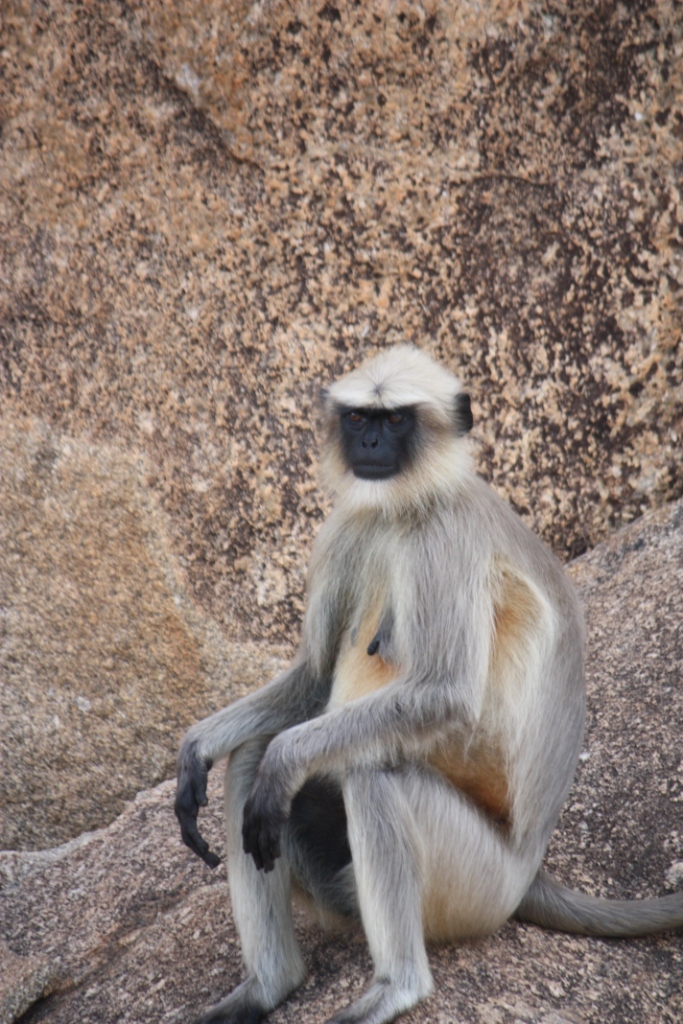
DAILY PHOTO: Gray Langur Watchmonkey

Taken Nov 3, 2013 at Hampi

Taken Nov 3, 2013 at Hampi

Gazing into the distance

he renders his assistance

to the mischievous monkeys–

making him a monkey flunky

A watchman of the langur pranks

yet not a part of their prankish ranks

He screeches warnings now and then

on sight of broom-wielding women

He neither seeks nor needs praise

just the occasional banana raise

He does it not for power or glory

just the occasional funny story

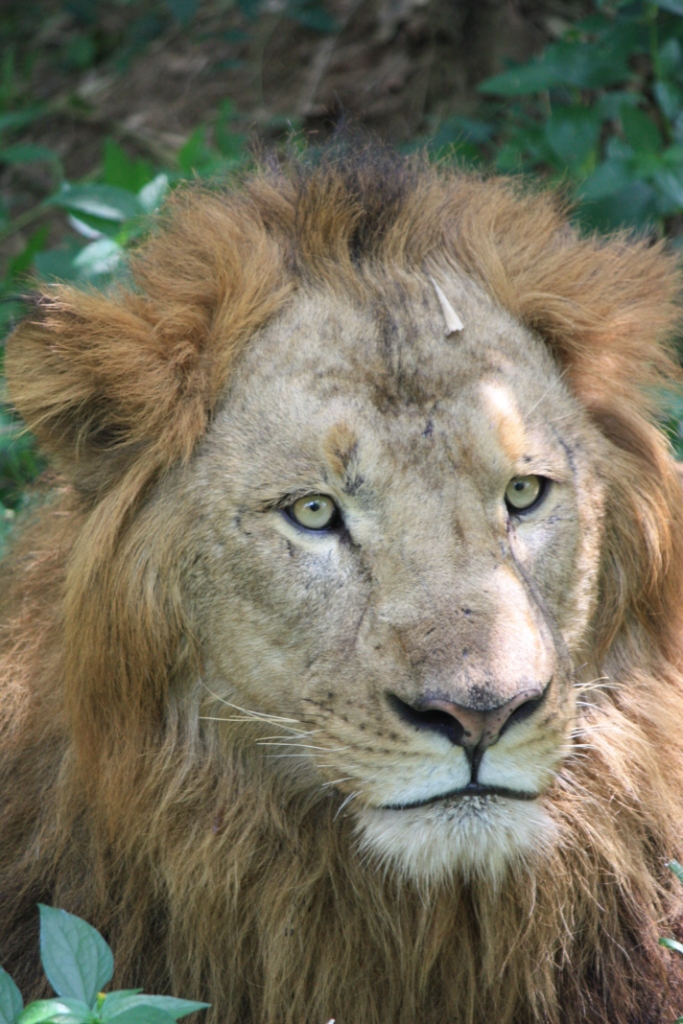
POEM: Lion Eyes (or Lionize or Lyin’ Eyes)

Taken Nov 10, 2013 at Bannerghatta National Park

Taken Nov 10, 2013 at Bannerghatta National Park

The lion is  a kingly beast

Whose eyes no lies can abide

If you don’t wish to be his feast

Please act with tact and don’t chide

He doesn’t take to teasing well

He’s still but to kill is in his blood

His placid face may look swell

But a strong heart pounds THUD-THUD…

THUD-THUD

&

another thing

He may look like a big plush toy

But he’s no fun for a girl or boy

Don’t get your kid a big feline

Unless your exit is a swift beeline

BOOK CHAT: Walking by H.D. Thoreau

WalkingWalking by Henry David Thoreau

My rating: 5 of 5 stars

Amazon page

Thoreau paints a portrait of walking in such grandiose terms that one will cease to think of putting one foot in front of the other as one of life’s mundane tasks. He’s not talking about just any walking, however. He’s not talking about the mall walkers who briskly exercise in temples of consumerism. He’s not talking about those who walk through the park with top 40 hits blaring from their iPod ear buds.

Thoreau is talking about those individuals he calls saunterers. To saunter, as to stroll, is to walk in a leisurely and aimless fashion. Thoreau’s walking is that which:
-takes place in nature.
-leaves worldly worries behind.
-is not a trivial time commitment.
-is more an exercise of the mind and spirit than of the body.

To the mall walker, Thoreau would point out the error of a missed opportunity to get away from mankind’s chaos and enjoy nature. As he puts it, “The most alive is the wildest.” and “…all good things are wild and free.” He’s also clear in that walking for exercise misses the point by injecting hurriedness into a time that should be about slowing down.

On those with iPods, cellphones, or other contrivances that distract one from the environs, Thoreau is equally clear, “What business have I in the woods if I am thinking of something outside the woods?”

Thoreau’s essay broadens as it progresses. From a commentary on the virtues of sauntering, the essay turns to the glories of nature, the character of America, and the state of thought in his contemporary society. These may seem like unrelated concepts, but there is a string of logic that connects them.

The connection to nature and the virtue of wildness should be clear. It’s nature that is the optimal backdrop of sauntering. It’s in nature that one can be set free from the troubles of the world of man and obtain a glimpse of god. It’s in nature where creativity breeds with chaos turned down and native brilliance turned up.

Thoreau’s discussion of America is tied to the theme of walking in a couple of ways. The first is as a land made for walkers. For example, he points out that a man could pitch a tent almost anywhere in North America without great risk of becoming a meal. The same couldn’t be said of India or Africa or Siberia, where man isn’t the sole predatory creature. The second is America as a place with room to venture out into uncharted territory. Thoreau points out that we may look to the East for the lessons of our predecessors, but a person should look West for opportunities to grow in one’s own right. Of course, Thoreau’s America was different from today’s America.

The end of the essay broadens out even further. Thoreau comments upon mankind and the state of ideas and thought. He echoes Socrates when he talks about that age-old question of whether it’s better to be ignorant (to know one knows little) or deluded (to think one knows a lot, but be drowning in false knowledge.) A reader may suggest that this is a false dichotomy. Why can’t one know most everything and not have a one’s body of knowledge rife with false knowledge? I can’t say, but all of the evidence suggests that if such a state exists, it’s the domain of God or gods (if such entities exist.)

Thoreau also bemoans what he sees as the decline of thinking man. What does this have to do with walking? I think Thoreau answers in the following quote:
“So it would seem few and fewer thoughts visit each growing man from year to year, for the grove in our minds is laid waste—sold to feed unnecessary fires of ambition, or sent to mill—and there is scarcely a twig left for them to perch on.”

I think that everyone should read this thin book–really an essay and not a full-scale book. The problems Thoreau notes have only gotten worse in our modern age. Far too few take the time to walk, and to acquire the benefits of sauntering.

View all my reviews

BOOK REVIEW: Gitanjali by Rabindranath Tagore

GitanjaliGitanjali by Rabindranath Tagore

My rating: 5 of 5 stars

Amazon page

Get Speechify to make any book an audiobook

Gitanjali is the most well-known work of the Bengali polymath Rabindranath Tagore. Tagore was the first non-European winner of the Nobel Prize for Literature (1913.) While Gitanjali is a work of poetry, Tagore didn’t restrict himself to this form, but also wrote stories, novels, plays, and music.

Gitanjali translates to “Song Offerings” and while the English version is a translation, it was translated by Tagore himself. Thus, there is no need to wonder whether the translator got it right or injected too much of his own worldview into the process.

This collection of 103 poems (the original Bengali has 157)displays both beautiful language and thought-provoking sentiments. This may be why the work is so beloved and stands the test of time.

I’ll share a few of my favorite passages:

“The child, who is decked out with prince’s robes and who has jeweled chains round his neck loses all pleasure in his play;…” -Poem VIII

“O fool, to try to carry thyself on thy own shoulders! O Beggar, to come to beg at thy own door!” -Poem IX

“On the day when the lotus bloomed, alas, my mind was straying, and I knew it not.” -Poem XX

“On the seashore of endless worlds children meet.” -Poem LX

“In the moonless gloom of midnight I asked her, ‘Maiden, what is your quest, holding the lamp near your heart? My house is all dark and lonesome,– lend me your light.’ She stopped for a minute and thought and gazed at my face in the dark. ‘I have brought my light,’ she said, ‘to join the carnival of lamps.’ I stood and watched her little lamp uselessly lost among lights.” -Poem LXIV

“And because I love this life, I know I shall love death as well.” -Poem XCV

The edition I have, which is published in India by Rupa Press, contains Tagore’s Nobel Prize acceptance speech as well. (The Amazon page I’ve linked to shows the edition that I read, but the cover shown above is a different version. The poems are all the same because Tagore self-translated, it is only the supplemental matter that is different.)

I highly recommend this collection of poems.

View all my reviews

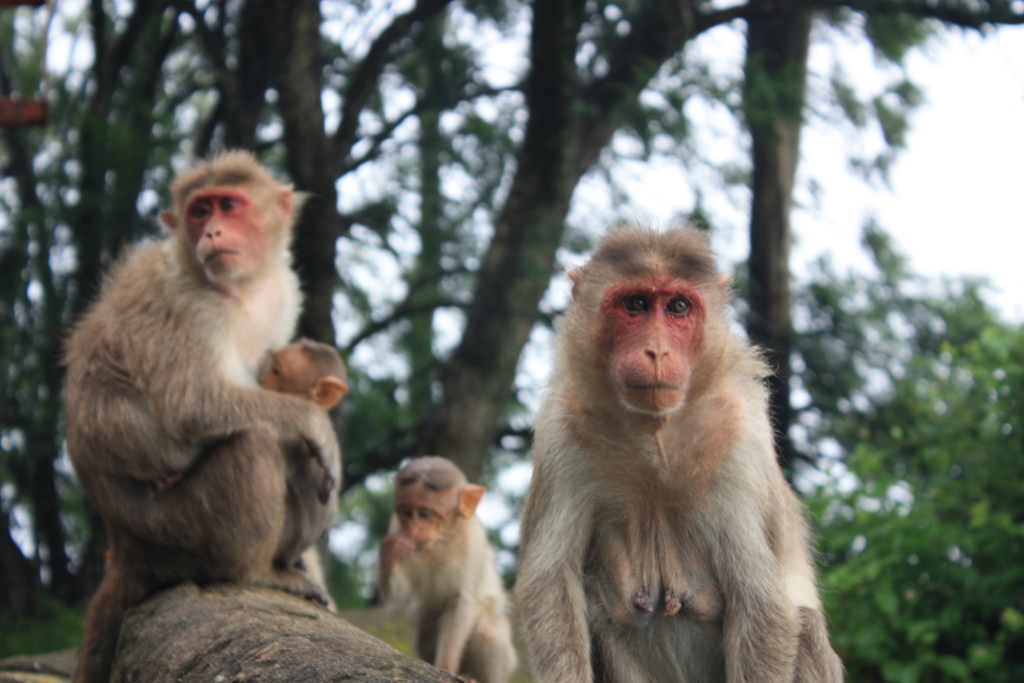
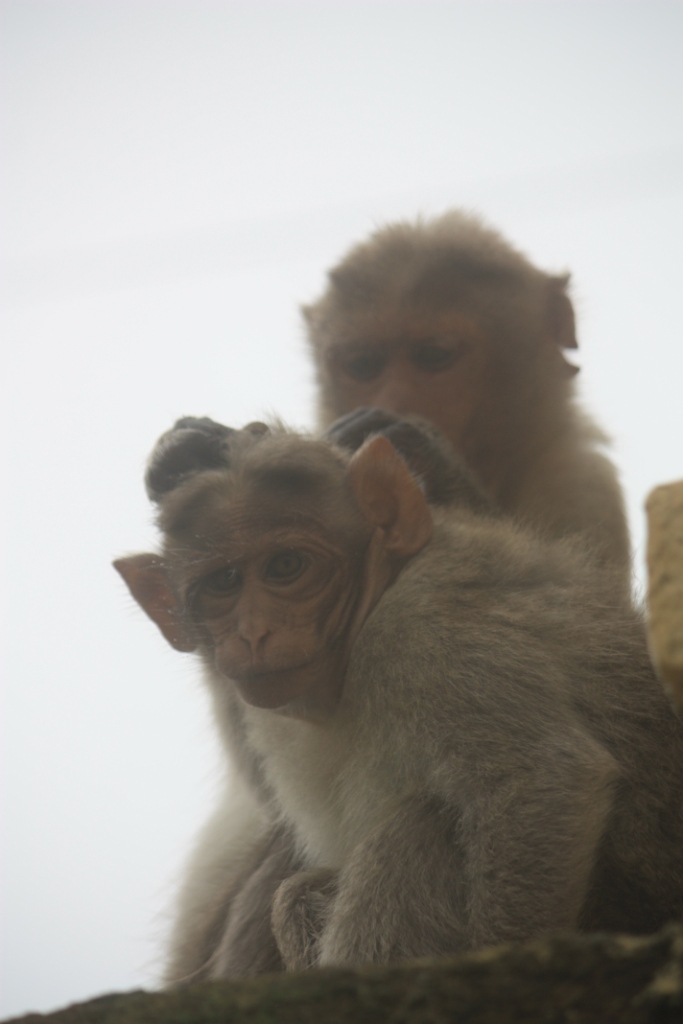
POEM: Monkeys Make Me Smile

Monkeys always make me smile

Some have hair in human styles

Oh the vanity  their locks betray

Can you spot the one with a toupee?

IMG_0507

Faces so reminiscent of our kind

Eyes suggesting intelligent minds

Into their faces they’ll one day grow

but the youngsters all look like H. Ross Perot

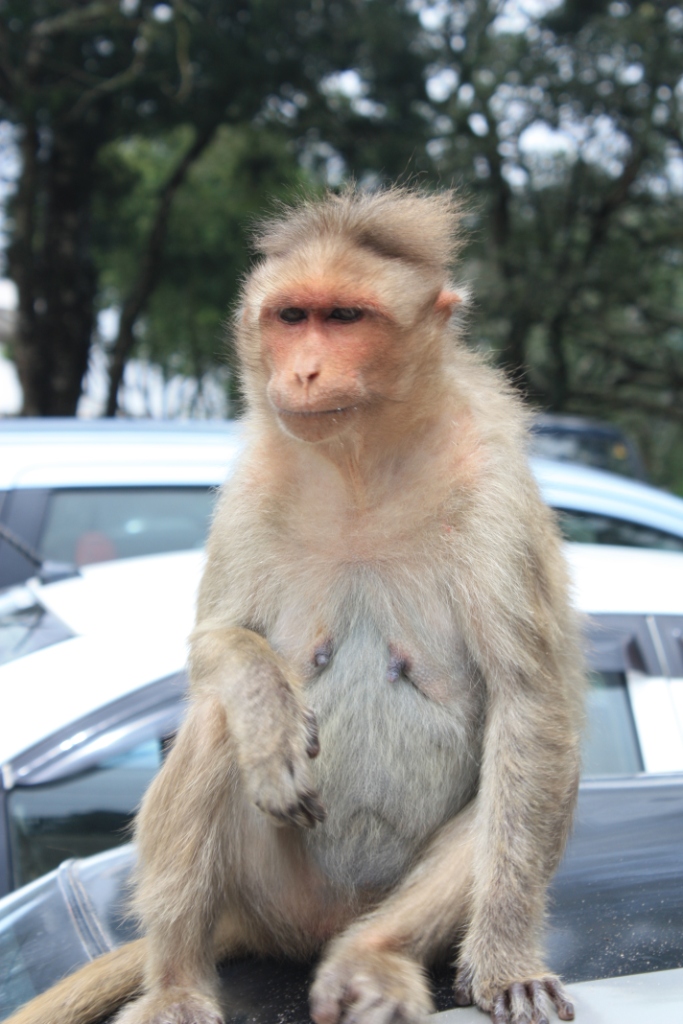
IMG_0389

They’ll sit on your car like they just don’t care

And screw the haters who stop and stare

Have you the courage to leave your mark

on the windshield of one who double parks

IMG_0734

It amuses us that they sling their poo

So we banish them to the city zoo

But what of our words so vitriolic

We’re evolved to sling poo symbolic

POEM: Everything & Its Opposite

IMG_0235They say,
“Everything,
&
its Opposite,
is true of India.”

colors so bold
and brash
please the eye
despite the clash
Then there is
that darkest side
slain daughters
burning brides

curry scents
draw the drool
flowery fragrances
from lotus pools
still,
other scents
fill the air
piss,
poverty,
death,
& despair?

honking horns
jar the brain
the piercing blare
of a freight train
then silence
but for the mind
slowing, calming
freed from grind
&
Infinite possibilities.

TANKA: Crows

a murder of crows
call from trees in unison
hidden amid leaves
invisible but noisy
what secret taunts curse us

POEM: Phantom Mind

i washed up on a foreign shore
i saw no house, but just a door
through the door, light was dim
my mind was as phantom limb


my thoughts rang false
my mind chugged leaden
white mice danced a waltz
at the edge of Armageddon


a piercing tone slapped my mind
my eyes fell out and I was blind
squirming to a surface I couldn’t see
gasping, birthed, and then set free


another night in my phantom mind


Haiku from my daily walk

Hazy hilltop morn,
a resting hiker looks like
a granite Buddha

Chicks chirp noisily
each tremor anticipates
mamma coming home