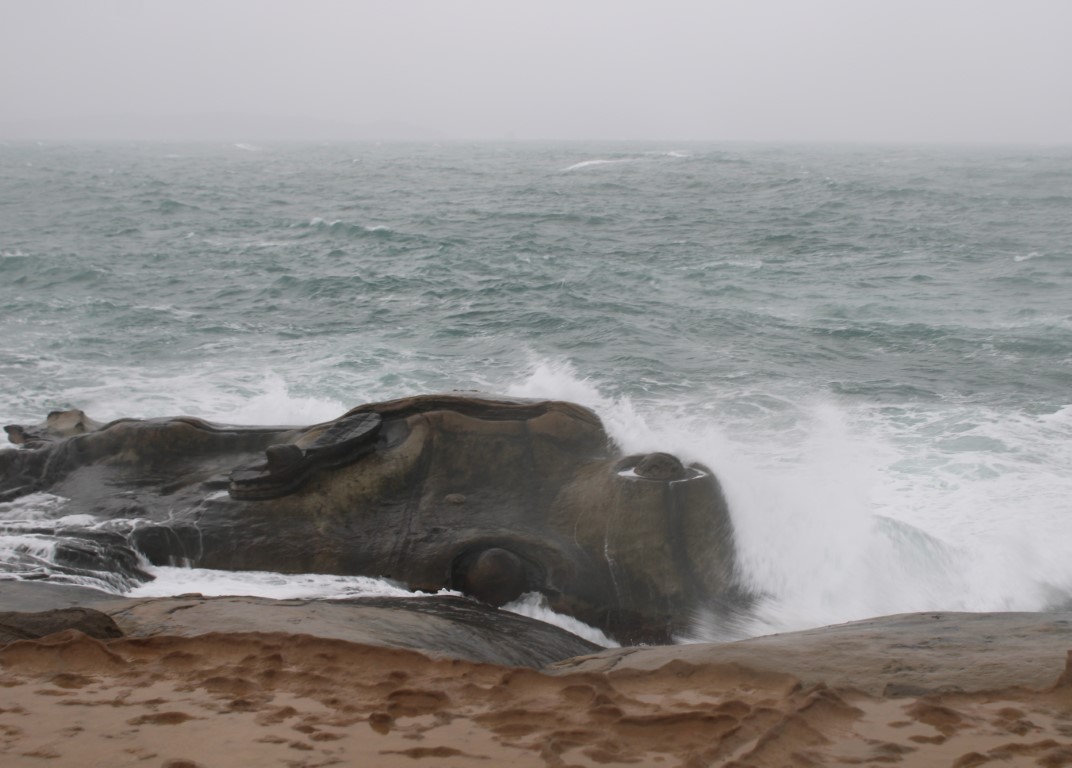
“Spritual” [Poetry Style #13 (精神)] by Sikong Tu [w/ Audio]

All wish to return,
Hoping others will come:
A clear water ride
Where strange flowers bud,
And lime-green parrots fly
The willows, to and from --
The mountain folk arrive
Deep bowls fill with wine...
To take a life beyond
And not end in ash,
But still be of nature;
Who's up to that task?

NOTE: The late Tang Dynasty poet, Sikong Tu (a.k.a. Ssŭ-k‘ung T‘u,) wrote an ars poetica entitled Twenty-Four Styles of Poetry. It presents twenty-four poems that are each in a different tone, reflecting varied concepts from Taoist philosophy and aesthetics. Above is a crude translation of the thirteenth of the twenty-four poems. This poem’s Chinese title is 精神, and it has been translated as: “Essential,” “Animal Spirits,” and “Spirit.”

Nature Reclaims [Lyric Poem]

All it takes is one thin crack, and
A fine flurry of blowing seed.
And nature takes back all that land --
Wall-to-wall with growing weeds.

BOOKS: “Color” by Countee Cullen

Color (AmazonClassics Edition)Color by Countee Cullen
My rating: 5 of 5 stars

Available on Project Gutenberg

This excellent collection of lyric poetry is by one of the greats of the Harlem Rennaissance. The poems include a range of forms and sizes from single quatrain epitaphs to poems of several pages, with those in between (including a number of sonnets) being most common. Like Dickinson, Cullen had a fondness for common meter (a.k.a. hymn meter,) and it is prevalent throughout. The topics include serious matters, such as race and death, but there is no lack of whimsicality within these pages.

The book is divided into four sections: “Color,” “Epitaphs,” “For Love’s Sake,” and “Varia.” The first is the most serious of tone. (Interestingly, the epitaphs and other poems on death often take a lighthearted, even humorous, tone.)

I’d highly recommend this collection for poetry readers. It’s fun to read, and the poems are skillfully crafted.

View all my reviews

“The Wise” by Countee Cullen [w/ Audio]

(For Alain Loch)

Dead men are wisest, for they know
How far the roots of flowers go,
How long a seed must rot to grow.

Dead men alone bear frost and rain
On throbless heart and heatless brain,
And feel no stir of joy or pain.

Dead men alone are satiate;
They sleep and dream and have no weight,
To curb their rest, of love or hate.

Strange, men should flee their company,
Or think me strange who long to be
Wrapped in their cool immunity.

Death of a Stout Tree [Common Meter]

Oh, those high waters are rising;
They've spilled their banks in flood,
Slouching toward the Tree of Life:
Its roots immersed in mud.

That tree is just so stout & straight --
Unambitious of height --
Not man nor beast could knock it down,
Regardless of their might.

But just a long soak of its roots --
A gift of too much good --
And then a well-timed gust of wind
Will turn that tree to wood.

“Forever — is composed of Nows — (690) by Emily Dickinson [w/ Audio]

Forever -- is composed of Nows --
'Tis not a different time --
Except for Infiniteness --
And Latitude of Home --

From this -- experienced Here --
Remove the Dates -- to These --
Let Months dissolve in further Months --
And Years -- exhale in Years --

Without Debate -- or Pause --
Or Celebrated Days --
No different Our Years would be
From Anno Dominies --

Magpie [Haiku]

the magpie walks
with head hung low,
fooling no one.

BOOKS: “Sweet Hunter” by Teresa of Avila; Trans. by Dana Delibovi

Sweet Hunter: The Complete Poems of St. Teresa of Ávila (Bilingual Edition)Sweet Hunter: The Complete Poems of St. Teresa of Ávila by St. Teresa
My rating: 4 of 5 stars

Publisher Website

This is a bilingual collection of the poems of Teresa of Avila, one of history’s most influential Christian mystics, newly translated by Dana Delibovi. The collection contains about thirty poems, some ecstatic and some philosophic, in both English the original Spanish.

The book also offers an overall introduction and commentaries on each of the five sections by which the poems are grouped. This provides the reader, particularly a neophyte to the history and theology that inform these poems — such as myself — with background useful to better experiencing the poems. I do enjoy bilingual editions even when they are in a source language that I don’t read because they do allow some insight into rhyme, metering, and other considerations of sound. One can observe to what degree the translator emulates form, even if one remains ignorant of the degree to which meaning is captured.

I enjoyed this collection. If you are interested in the poetry of Christian mystics, I’d recommend you give it a read.

View all my reviews

“Annabel Lee” by Edgar Allan Poe [w/ Audio]

It was many and many a year ago,
In a kingdom by the sea,
That a maiden there lived whom you may know
By the name of Annabel Lee;
And this maiden she lived with no other thought
Than to love and be loved by me.

I was a child and she was a child,
In this kingdom by the sea,
But we loved with a love that was more than love --
I and my Annabel Lee --
With a love that the winged seraphs of Heaven
Coveted her and me.

And this was the reason that, long ago,
In this kingdom by the sea,
A wind blew out of a cloud, chilling
My beautiful Annabel Lee;
So that her highborn kinsman came
And bore her away from me,
To shut her up in a sepulchre
In this kingdom by the sea.

The angels, not half so happy in Heaven,
Went envying her and me ---
Yes! -- that was the reason (as all men know,
In this kingdom by the sea)
That the wind came out of the cloud by night,
Chilling and killing my Annabel Lee.

But our love it was stronger by far than the love
Of those who were older than we --
Of many far wiser than we --
And neither the angels in Heaven above
Nor the demons down under the sea
Can ever dissever my soul from the soul
Of the beautiful Annabel Lee;

For the moon never beams, without bringing me dreams
Of the beautiful Annabel Lee;
And the stars never rise, but I feel the bright eyes
Of the beautiful Annabel Lee;
And so, all the night-tide, I lie down by the side
Of my darling -- my darling -- my life and my bride,
In her sepulchre there by the sea --
In her tomb by the sounding sea.

Monsoon Break [Haiku]

after many days 
of dreary clouds & rain:
blue skies!