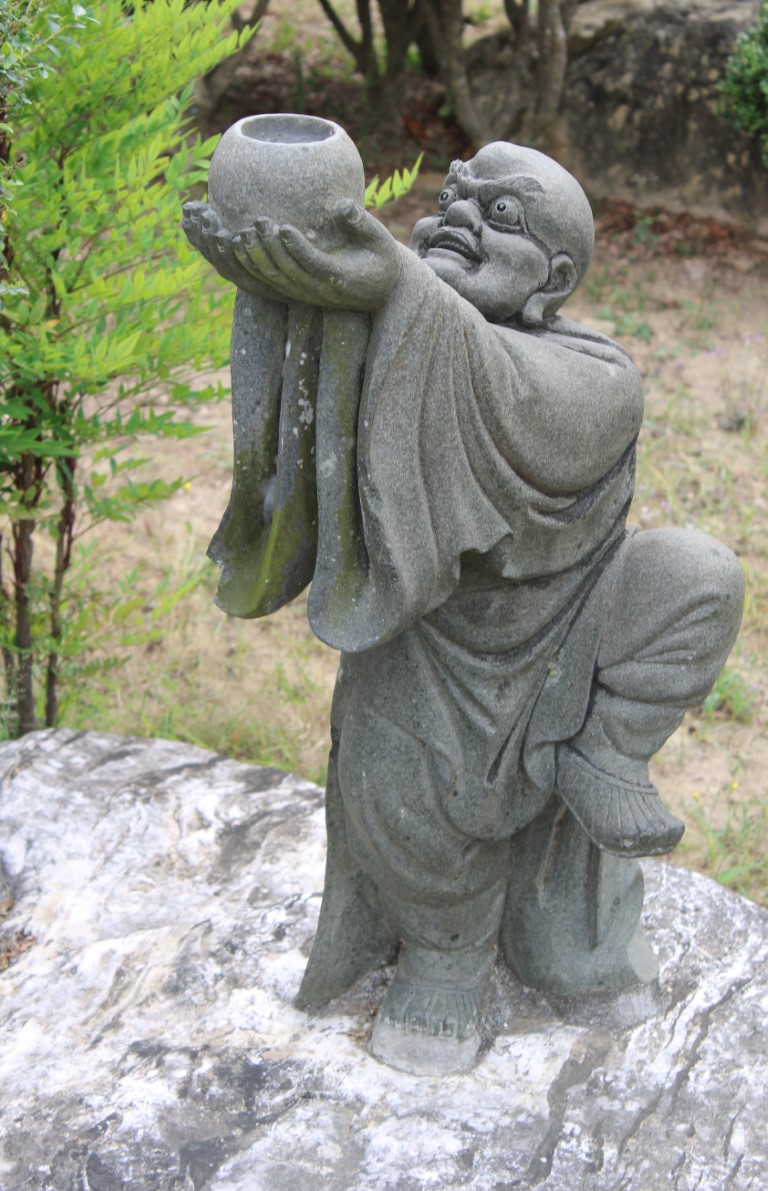
the poet's wild dance
 spills not a drop of wine,
  but for down the throat.

the poet's wild dance
spills not a drop of wine,
but for down the throat.
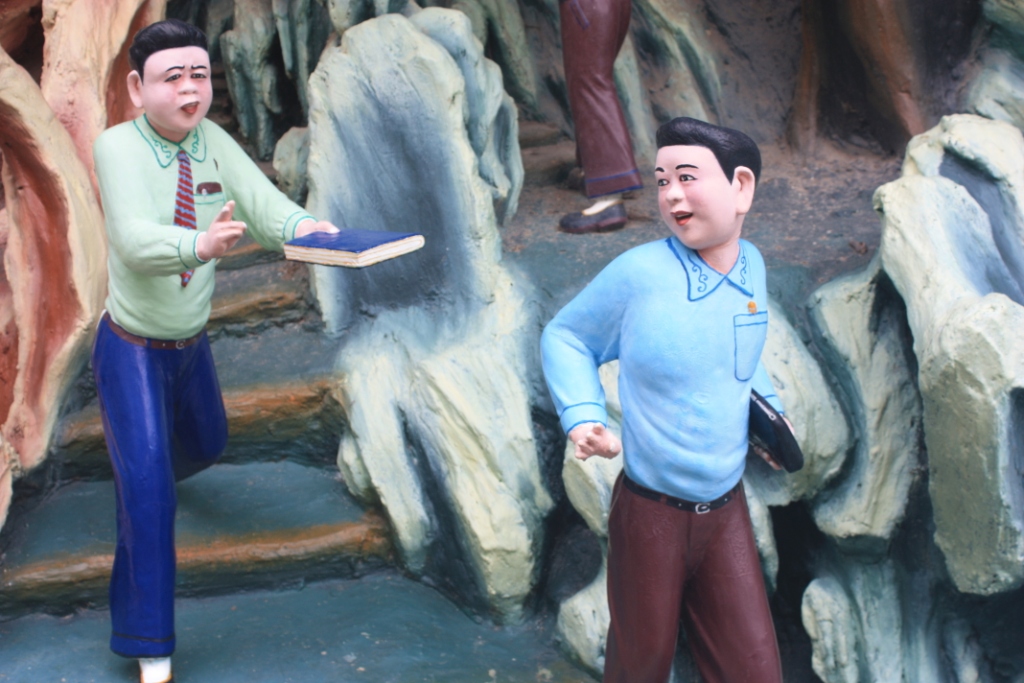
At noisy readings an angry old poet
 Would pick up one of his books and bestow it.
   When they would snicker
   He'd wish his book thicker,
 For it would flutter in air when he'd throw it.

White clouds engird the mountain.
 Stone steps climb to nothingness.
 Alone, the poet leans on his staff,
 gazing into the expanse,
 and accompanies the stream:
  bamboo flute joining murmurs
  of unseen flowing water.
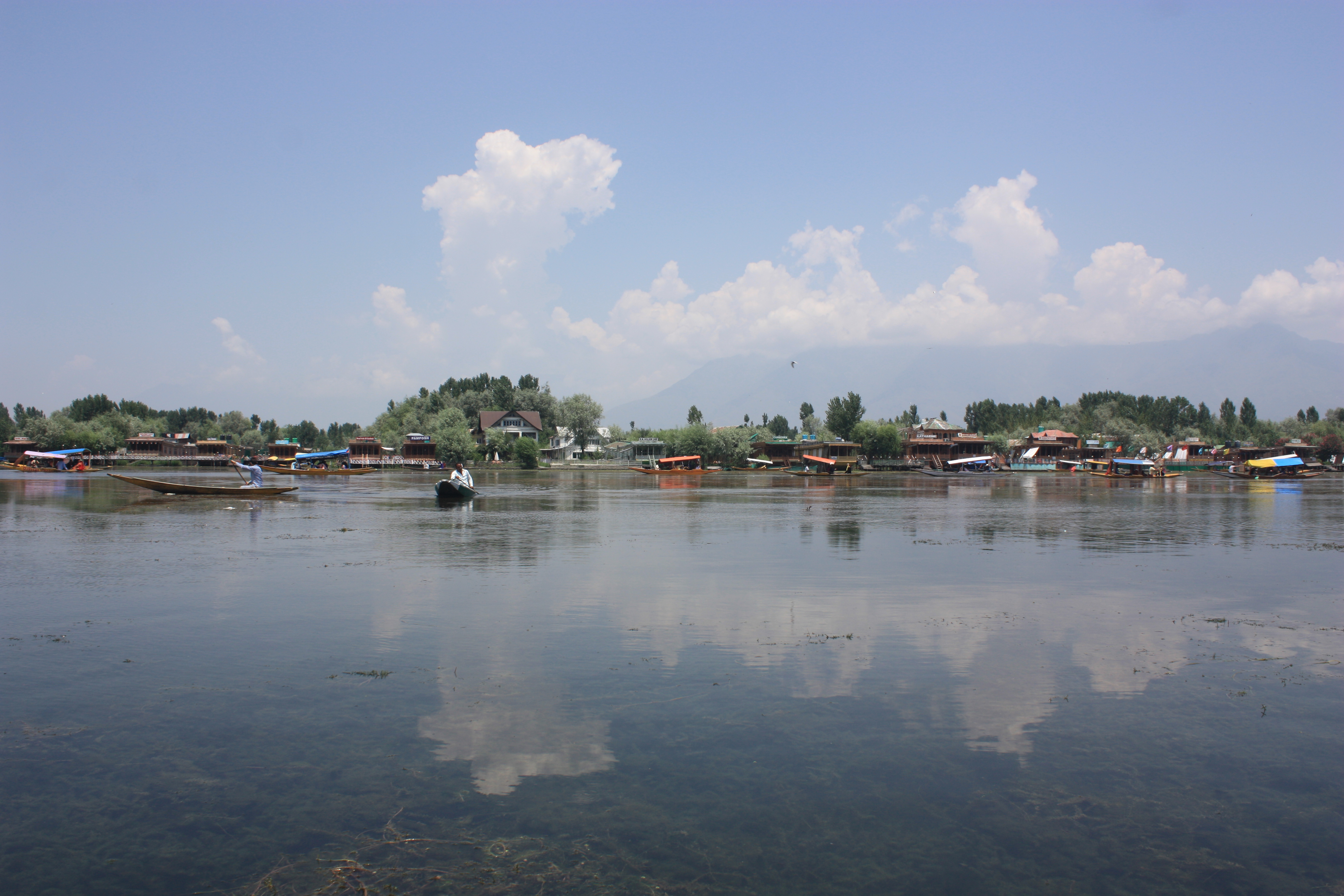
poets & artists
 sit in ornate houseboats,
  translating the clouds.
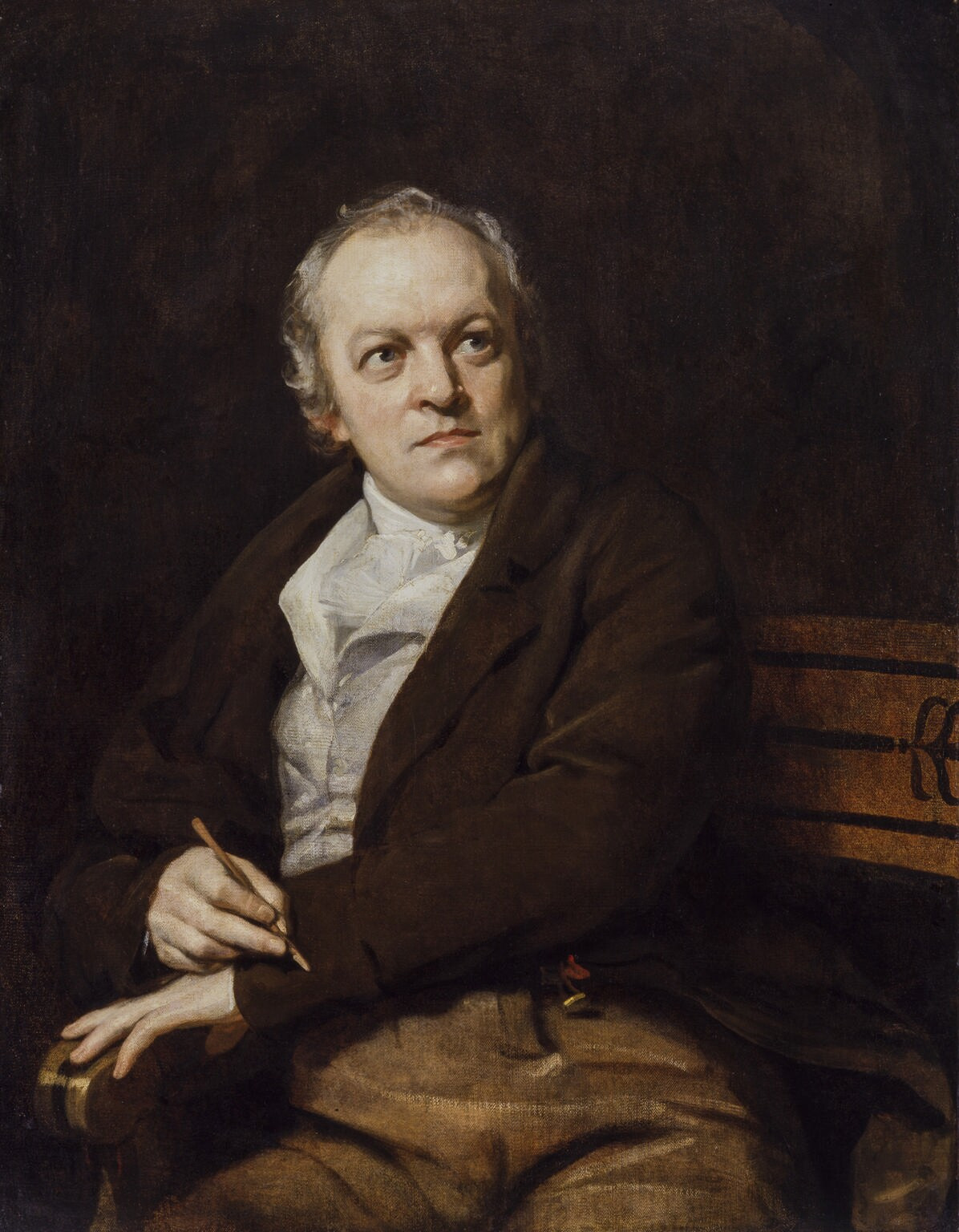
No bird soars too high, if he soars with his own wings.
william blake
The road of excess leads to the palace of wisdom.
William blake
Prisons are built with stones of Law, Brothels with bricks of Religion.
William Blake
The fox condemns the trap, not himself.
William Blake
Exuberance is Beauty.
William blake
Without Contraries is no Progression. Attraction and Repulsion, Reason and Energy, Love and Hate, are necessary to Human existence.
William Blake
If the doors of perception were cleansed, everything would appear to man as it is, infinite.
William blake
The man who never alters his opinion is like standing water, and breeds reptiles of the mind.
William Blake
I also asked Isaiah what made him go naked and barefoot three years. He answer’d: ‘The same that made our friend Diogenes, the Grecian.’
William Blake
The most sublime act is to set another before you.
William blake
NOTE: William Blake’s “The Marriage of Heaven in Hell” is available in many collections of his poetry, and is in the public domain and available via Project Gutenberg at: https://www.gutenberg.org/ebooks/45315

I exited through my old, mundane door,
 and heard a melody so blissful / sweet,
  and saw some colors never seen before.
   That song, those sights, danced me down the street.

A neon breeze both warmed and cooled my face.
 The pleasure wave that I'd once known as sin
  was flaring, with no feelings of disgrace,
   but up my spine a trill of violin.

Euphoric, I ran 'til I felt lungs burn --
 so fired with energy that my bones hummed --
  But as I felt the wheels begin to turn,
   I realized the depths must remain unplumbed.

Before my druthers, I had to go back.
 To sustain this would give me a heart attack.
My rating: 5 of 5 stars
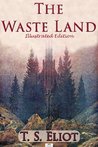
It’s for good reason that this is considered one of the greatest poems of the 20th century. Eliot’s vivid verse paints a bleak landscape in language of beauty not seen in the poem’s imagery. It will come as no surprise that this work was penned during a dark time in the poet’s life, but it wasn’t just Eliot’s personal dark hour; for many, the wounds of World War I hadn’t yet scarred over.
This poem is divided into five sections, each with an artful title. The five sections of The Waste Land are: “The Burial of the Dead”, “A Game of Chess”, “The Fire Sermon”, “Death by Water”, and “What the Thunder Said.” Some consider The Waste Land to be a collection of five poems, but there is both language and theme that connects the various parts. For example, the following verse is contained in both the first and third chapter:
Unreal City,
Under the brown fog…
The poem contains many complex references to Arthurian legends and to a broad swath of literary canon. You can learn about that from individuals more erudite than I. I will suggest a simpler theme, and that is death—not just death, but death as an eraser of legacies and influence. Eliot refers to bone almost as much as he does death, and by the time one’s body is reduced to bones one’s influence on the land of the living is minimal—even for giants among men. When he’s not speaking of bones, he’s speaking of death of masses, also a form of anonymous death.
I will pick a few lines from each of the five sections to illustrate my point.
From “The Burial of the Dead”:
Unreal City,
Under the brown fog of a winter dawn
A crowd flowed over the London Bridge, so many,
I had not thought death had undone so many
From “A Game of Chess”:
I think we are in rat’s alley
Where the dead men lost their bones
From “The Fire Sermon”:
White bodies naked on the low damp ground
And bones cast in a little low dry garret
Rattled by the rat’s foot only, year to year.
From “Death by Water”:
A current under sea
Picked his bones in whispers
From “What the Thunder Said”:
After the agony in stony places
The shouting and the crying
Prison and palace and reverberation
Of thunder of spring over distant mountains
He who was living is long dead
We who were living are now dying
With little patience
I’m not saying that Eliot’s views on death and dying are great from a philosophical or psychological perspective—on the contrary, but as a work of poetry these words should be read by all.
Neither the version linked to in GoodReads nor on Amazon is the version I read. As far as I could tell by way of a hasty search, the Kindle edition I read no longer exists.
 Poems: Three Series, Complete by Emily Dickinson
My rating: 5 of 5 stars
Three series are collected into one volume. Each series is organized into four parts: Life, Love, Nature, and Time & Eternity. The connection between these themes and the verse contained therein is generally clear, and the latter category is largely concerned with death—a popular topic for Dickinson. While Dickinson is known for being morose, her poems often manage to be both playful and dark at the same time. The best example of this odd combo of grim / playfulness may be one of her most quoted poems, The Chariot.
Because I could not stop for Death,
He kindly stopped for me;
The carriage held but just ourselves
And Immortality.
We slowly drove, he knew no haste,
And I had put away
My labor, and my leisure too
For his civility.
We passed the school where children played,
Their lessons scarcely done;
We passed the fields of gazing grain,
We passed the setting sun.
We paused before a house that seemed
A swelling of the ground;
The roof was scarcely visible,
The cornice but a mound.
Since then ‘t is centuries; but each
Feels shorter than a day
I first surmised the horses’ heads
Were toward eternity.
Dickinson’s life story is well-known, at least in broad brushstrokes. She was a 19th century poet who was introverted in the extreme, and eventually became an outright recluse. According to her own words, she didn’t take up writing poetry until she was in her 30s. This existence was facilitated by the fact that she was from a well-to-do family and had no pressing need of a husband or an income.
Dickinson’s introverted nature is touched on throughout her work, and no doubt contributes to her appeal among those similarly afflicted. The opening poem of the Second Series, another of Dickinson’s most famous, speaks to this aspect of her personality.
I’m nobody! Who are you?
Are you nobody, too?
Then there’s a pair of us! Don’t tell!
They’d banish us, you know.
How dreary to be somebody!
How public, like a frog
To tell your name the livelong day
To an admiring bog.
I enjoy Dickinson’s work, but it’s the playful nature, rather than the macabre, that appeals to me. This is accomplished by short lines, use of rhyme, or at least slant rhyme, that makes the poems melodious to the ear. I’m fond of lines such as:
Success is counted sweetest
By those who ne’er succeed
God permits industrious angels
Afternoons to play
Hope is the thing with feathers
That perches in the soul
Faith is a fine invention
For gentlemen who see;
But microscopes are prudent
In an emergency!
A word is dead
When it is said,
Some say.
I say it just
Begins to live
That day.
There is no frigate like a book
To take us lands away,
You cannot fold a flood
And put it in a drawer,–
Because the winds would find it out,
And tell your cedar floor.
He fumbles at your spirit
As players at the keys
Before they drop full music on;
He stuns you by degrees,
Deals one imperial thunderbolt
That scalps your naked soul.
For we must ride to the Judgement,
And it’s partly down hill.
While simple-hearted neighbors
Chat of the ‘early dead,’
We, prone to periphrasis,
Remark that birds have fled!
And if my stocking hung too high,
Would it blur the Christmas glee,
That not a Santa Claus could reach
The altitude of me?
This Kindle version is readable. A common complaint about good books, particularly those that are cheap or free, is that the Kindle formatting detracts from the reading experience. That is not the case here. There is a first line index at the back. This is useful as most of the poems don’t have titles, and Dickinson’s first lines are often attention grabbers.
I’d recommend this for poetry readers.

Taken September 12, 2013 near Ulsoor Lake.
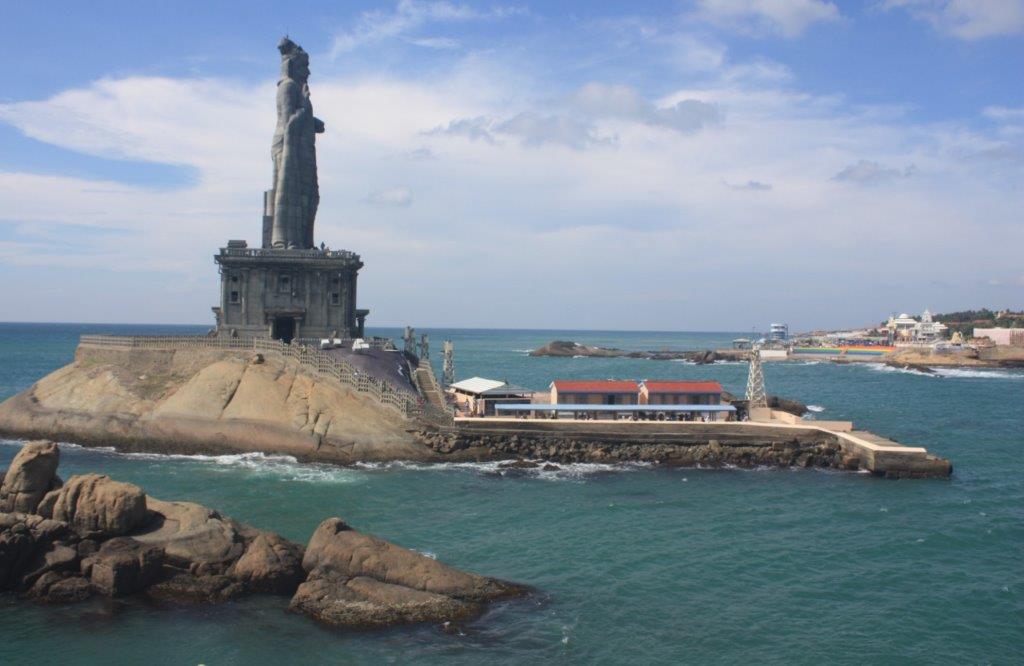
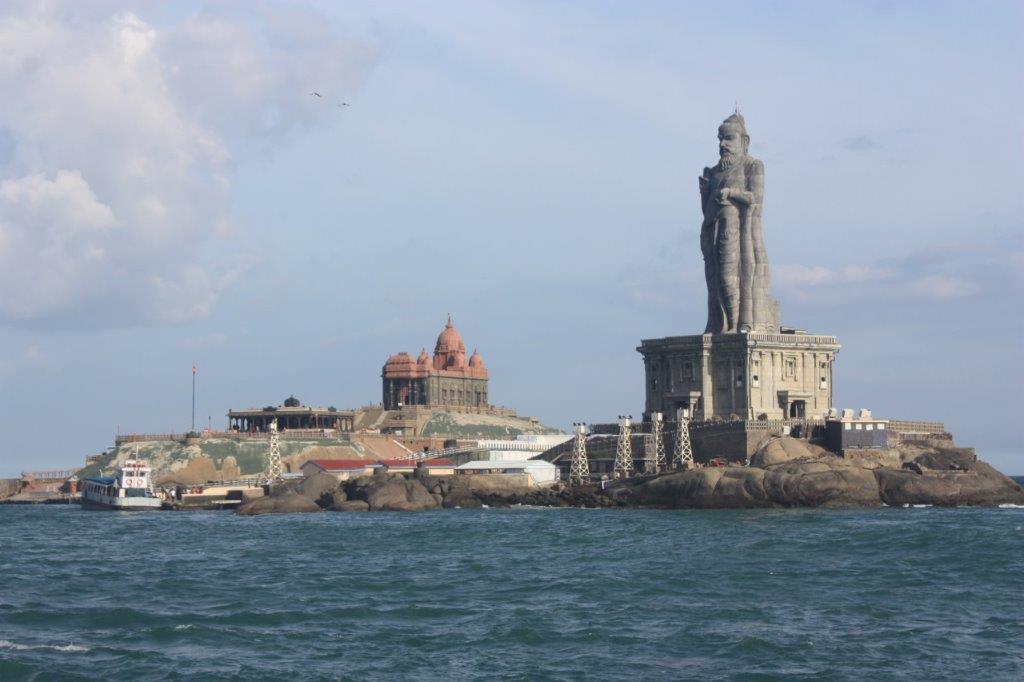
Thiruvalluvar was a Tamil poet and philosopher who is most famous for writing a tract on ethics called the Thirukkural. The Thirukkural is written as a series of couplets that comment on ethics, morality, and philosophy.
Here is a random couplet from Thirukkural:
He who with firmness curbs the five restrains
Is seed for soil of yonder happy plains






 Tiger Riding for Beginners