5 of my Favorite Books on Yoga

5.) Sure Ways to Self-Realization by Swami Satyananda Saraswati: All you need to know about meditation and more. The first half of this book examines various yogic approaches to meditation and offers in-depth explanation of said techniques. The second half puts yogic meditation into a larger context by providing a survey of meditative approaches from around the world. It’s as close to one-stop shopping for the yogic meditator as one is likely to find, and the presentation of material on topics such as Jnana Yoga and Tantra is much more balanced and illuminating than many books.


4.) Your Brain on Yoga by Sat Bir Singh Khalsa: This Harvard Medical School Guide provides an overview of the scientific evidence for the benefits of yoga practice.


3.) A Search in Secret India by Paul Brunton: Brunton traveled India looking for the needles of yogic sagacity amid a haystack of charlatans and posers, and he found a few.


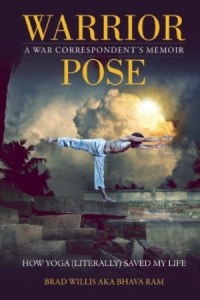
2.) Warrior Pose by Brad Willis: As the sub-title suggests, this book is about how yoga saved the life of a war correspondent who suffered from a severe spinal injury that had repercussions beyond his back — re: his state of mind.


1.) The Heart of Yoga by T.K.V. Desikachar: This book provides one-stop shopping for building one’s yoga practice, and it does so in a very down-to-earth, secular, and non-doctrinaire way. It also includes a translation and brief commentary of Patanjali’s Yoga Sutras — hence, the reason I didn’t need to include that work on this list.

BOOK REVIEW: Dead Mountain by Donnie Eichar

Dead Mountain: The Untold True Story of the Dyatlov Pass IncidentDead Mountain: The Untold True Story of the Dyatlov Pass Incident by Donnie Eichar
My rating: 5 of 5 stars

Amazon page


The Dyatlov Incident is one of the most fascinating mysteries of the 20th century. In 1959, a crew of nine seasoned hikers headed into the Siberian wilderness in late January for an intense but vigorous trek. When they didn’t return in early February as planned (and after a bit of prodding from family members) a search was conducted, and what the searchers found was so bizarre that it would be fodder for conspiracy theorists and readers of tales of the weird for decades. It wasn’t so much what killed the hikers, almost all of them died of hypothermia — though three of the members had severe blunt force trauma injuries that contributed in varying degree to the speed of their deaths.

Instead, it was that the bodies were found on the order of a mile from their tent, none of them was wearing boots or adequate attire. There were also a range of smaller anomalies, such as one individual wearing two watches, several of the team having shredded clothing, one of the hikers missing her tongue, and some of the hiker’s clothing testing positive for radioactivity. Lest one attribute the hiker’s strange and fatal behavior to drink or other mind and mood altering substances, the hikers were known teetotalers, and the little medicinal alcohol they had was all accounted for by the search party (who admittedly drank it.) So the question wasn’t what killed them, but what drove these skilled, sober, and well-led hikers out of the comfort of their tent improperly attired in the middle of the night on the night of February 1, 1959, and what explanation could account for this range of bizzarities?

I won’t get into Eichar’s well-developed and scientifically supported theory to avoid spoilers, but it’s fascinating to consider the range of theories that people came up with over the course of the investigation (and subsequent years) to explain the odd incident. The explanations run the gamut from the otherworldly (i.e. Siberian Demon Dwarves) to a range of theories that were less provocative but which also lacked explanatory power or were inconsistent with known data (e.g. avalanche or high winds literally blowing them off the mountain.) Of course, another fact played heavily into people’s conspiracy building and that was that this was the height of the Cold War Soviet Union. While life had eased a bit since the demise of Stalin (such a trek would have been prohibited under his rule) it was still an authoritarian state, plus the memory of Stalin was fresh. This led to the most widely accepted theories involving the hikers being killed because they saw a covert weapons test or stumbled into an area where the KGB was getting up to some shenanigans. (As a sign of the times, it seems that there was some attempt to thwart the investigation and /or limit the interest in the case from low-level party apparatchiks who probably assumed shadowy elements of the government were involved [though there seems to be no evidence that they were.]) Another theory proposed that the hikers were killed by a group of escapees from the Gulags that were numerous in that part of the country. (Of course, that assumes that the poorly fed and clothed prisoners would have survived the freezing temperatures better than the fit and relatively well-equipped college students.) As evidence mounted, however, it suggested outsider involvement less-and-less. For example, the side of the tent was cut open, but rudimentary forensic investigation readily proved that it must have been cut from the inside and not from the outside by a KGB agent, Gulag prisoner, local tribesman, or a Siberian dwarf claw.

The book intersperses accounts of the happenings in 1959 with chapters that describe the author’s trips to Russia to investigate, including his visit to “Dead Mountain” and the “Dyatlov Pass” in 2012. (The former name predates the Incident and has to do with the fact that the mountain is devoid of vegetation. The latter name, i.e. “Dyatlov,” is the last name of the leader of the group of hikers.) The penultimate chapter describes Eichar’s conclusion about what caused the mysterious incident and his visits to experts that lent it credence. The last chapter offers a retelling of events that takes into account both the evidence and scientific speculation about the cause of the hikers’ panicked flight from the safety of their tent into a desolate landscape on a sub-freezing night.

There are graphics throughout, mostly black and white photos from the cameras of the hikers, which were recovered and became part of the case file. Other than the photos, there is a graphic or two to help explain the theory put forth by Eichar and others. (It should be noted that there was a group of Russians simultaneously considering the same possibility.)

I was enthralled by this book and couldn’t put it down. The mystery was fascinating and the hypothesized solution was at least as much so.

I’d highly recommend this book to readers of nonfiction, though much of it has the taut structure of fiction.

View all my reviews

BOOK REVIEW: The Healer Within by Roger Jahnke

The Healer Within: Using Traditional Chinese Techniques To Release Your Body's Own Medicine *Movement *Massage *Meditation *BreathingThe Healer Within: Using Traditional Chinese Techniques To Release Your Body’s Own Medicine *Movement *Massage *Meditation *Breathing by Roger Jahnke
My rating: 4 of 5 stars

Amazon page


This book examines how four techniques – movement, massage [specifically, self-applied], breathing exercises, and meditation — can be used to facilitate a robust immune system and to stimulate the body’s innate healing capacities. Jahnke, as a Doctor of Oriental Medicine, specializes in Traditional Chinese Medicine (TCM,) but he acknowledges that these activities aren’t the exclusive domain of that system. The book is designed to be one-stop shopping for an individual seeking to build their own self-healing practice either as preventive medicine or as a part of one’s treatment regimen for an ailment or infirmity.

The thirteen chapters of the book are divided into five parts. The first two chapters form the book’s first part, and they discuss the body’s innate healing capacity and the literature on the roles of mind and self-applied activities on health outcomes.

Part II forms the heart of the book, and it consists of chapters three through seven. Chapter three offers insight into the process of building a personal practice from the four key activities including guidelines for how to organize disparate parts into a whole and how to fit it into one’s life overall. The other four chapters provide examples and techniques for each of the four components of the system: gentle movement (e.g. qiqong), self-applied massage, breathing exercises, and meditation and deep relaxation techniques.

Part III expands on the issues touched upon in Chapter 3. That is, it explores in greater detail the nature of building and deepening a personal practice.

Part IV, entitled “The Way of Nature,” provides a philosophical context for a global self-healing movement and describes how a community can be built around this endeavor. There are three chapters in this section. The last part consists of only one chapter and it describes a potential future self-healing regime. Throughout the book there is a recognized that, while modern medicine is invaluable, it’s also developed a dysfunction by undervaluing the role of the body’s innate healing factor, while not only removing the patient from of the driver’s seat but also stuffing them in the trunk as a sort of cargo in the health and healing process.

The book has line drawings to help clarify the techniques. There are several pieces of back matter (an appendix, a bibliography, and a resources section) to help make the book more useful. [The appendix is a little strange and unfocused for an Appendix. It’s almost more of a Reader’s Digest Condensed Version for someone who wants to get to brass tacks, but it does offer some interesting insight into how a community built around these ideas has formed.]

I found this book to be informative and believe it offers a great deal of valuable insight into how to not only develop one’s own preventive medicine activities, but also how to situate those activities within a community of like-minded individuals. I thought the author did a good job of presenting scientific evidence for building a self-healing practice while not becoming too bogged down technical detail and offering a way of thinking about it for those who look at such activities in more metaphysical or spiritual terms. I’d recommend this book for anyone who is considered engaging in health enhancing activities.

View all my reviews

BOOK REVIEW: Pilgrimage: A Very Short Introduction by Ian Reader

Pilgrimage: A Very Short IntroductionPilgrimage: A Very Short Introduction by Ian Reader
My rating: 4 of 5 stars

Amazon page


Reader compares and contrasts the ways and motives of pilgrims around the world, from Muslims on hajj to Elvis fans going to “Graceland, Graceland, in Memphis, Tennessee” [name that tune.] The author’s specialization is Japanese pilgrimages and so trips such as the circuit around Shikoku’s eighty-eight Buddhist temples are well-represented among the examples used. However, he also visits and revisits popular Hindu pilgrimages such as Kumbh Mela and Amarnath, Christian pilgrimages to Lourdes and Santiago de Compostela, and even secular pilgrimages to locations such as the Vietnam War Memorial.

The book consists of six chapters. Chapter one offers a fly-over of the topic in the context of it being a worldwide phenomena. Cultures from around the world engage in similar behavior when it comes to spiritual travel. Chapter two investigates forms, themes, and meaning in pilgrimage, and how they vary across different religions. This helps one define the topic and differentiate pilgrimage from similar activities – to the degree that that can be done. Chapter 3 delves into the pilgrimage as a search for the sacred, and it uses many examples from around the world to consider the varying perspectives.

Chapter 4 reflects upon the differences in modes of transport, motivations, and how the latter influences the former. Obviously, technology has radically changed the face of pilgrimage. There usually remain purists who wish to continue in the old ways (i.e. traveling mostly on foot) and others who’d just as soon use jet airplanes and air-conditioned buses. This leads to conflicts in the pilgrim community where walkers see those who travel in comfort as lacking commitment, and those who travel in comfort may see the old-schoolers as hikers who are more interested in walking than praying.

The penultimate chapter examines pilgrimage as a form of tourism. While it may be considered sacrilegious to some to equate the two activities, they certainly share in common not only the activity of travel but also such behaviors as the collection of souvenirs (e.g. relics, scrolls, and amulets.) The final chapter looks at how pilgrimage has spread into the secular domain with war memorials, nature trails, and the birth or death homes of popular personages from politics or entertainment.

The book contains many monochrome photos and a “further reading” section in the back.

I found this book to be interesting. As a secular traveler who often crosses paths with pilgrims, I was fascinated to gain insight into their head-space and to reflect upon the role that religion and spirituality played in the dawn of travel.

View all my reviews

BOOK REVIEW: The Way of the Shaman by Michael Harner

The Way of the ShamanThe Way of the Shaman by Michael Harner
My rating: 4 of 5 stars

Amazon page


From tripping on ayuhuasca in Peru to sucking the evil spirits out of patients, Harner offers an overview of shamanic methods and practices. While it would seem like such an undertaking would be a thick tome given the wide variety of cultures in which Shaman are a fixture, Harner suggest that there is a remarkable similarity of methods used by these “medicine men” be they in the Americas, Central Asia, or the South Pacific. Of course, at a tight level of granularity there are differences, and Harner gives examples of such differences here and there – usually using examples of the Shamanic practices he has studied in South and Central America. However, this book is more the high altitude over pass of the landscape.

There are seven chapters. The first couple of chapters both set up the book and hook the reader with a detailed discussion of Harner’s ayuhuasca — and other mind / mood altering substance – experience. It should be pointed out that not all Shaman use psychedelics and Harner describes in detail alternative approaches to achieve altered states of conscious that involve a combination of drumming and meditative practices.

Chapter three discusses altered states of consciousness, and what Harner calls the “Shamanic State of Consciousness” (SSC) which is the altered state that is pursued by medicine men in their practice. Chapter four describes the concept of power animals and the role that they have in health and illness. (i.e. from the Shaman’s view, an illness might be seen as the result of lacking such a “spirit animal.”) The final three chapters discuss practices such as how the Shaman can acquire a power animal for the patient or how he / she might extract a malevolent influence.

I found an interesting corner being turned in this book. In the opening chapters it reads much like an anthropologist’s scholarly account. Even talking about tripping on psychedelic substances, it’s all with the grounded feel of a scientific mind. However, in the latter half of the book, it reads as though Harner truly believes that the altered state of consciousness is actually a sort of parallel dimension with an intrinsic reality unto itself. I don’t know whether this is a tactic to feather it in for skeptical readers or if it reflects Harner’s own internal journey. (It’s definitely a hard line to walk when writing a book that one hopes to be read by both scientific rational skeptics and religious true believers.) At any rate, the book gets a bit wilder as it goes along. In the beginning, the reader might think the book a discussion of how a powerful placebo effect is achieved, but by the latter chapters it seems one is considering how malevolent spirits can be trapped or extracted from a patient.

As for ancillary material, there are line-drawn illustrations, annotations, a bibliography, and two appendices. The first appendix is about drumming and gives details about what kind of drums and rattles the would-be Shaman should seek. (Drumming plays a major role in achieving the proper state of mind.) The second is a detailed description of a game played by the Flathead Indians. I should note that I read the 3rd edition of this book. The original was published in 1980.

I found the book intriguing as one interested in how people of various cultures achieve altered states of consciousness, how they experience such states, and why they pursue them in the first place. I’d recommend it for a reader who is curious about Shamanic practices – even one who, like me, is a complete neophyte to the subject.

View all my reviews

BOOK REVIEW: Jnana Yoga by Swami Vivekananda

Jnana-YogaJnana-Yoga by Swami Vivekananda
My rating: 4 of 5 stars

Amazon page


For those for whom the term “Jnana Yoga” is unfamiliar, it’s one of the three original branches of yoga. Jnana yoga is the path of knowledge, which sounds more scholarly than apropos and so maybe the alternative translations of path of self-realization or of wisdom might be more informative. For the most part, Jnana yoga isn’t about reading books and collecting facts, although studying texts is traditionally a part of the approach, it’s more about turning inward and expanding understanding through practice and personal inquiry. The other two branches are bhakti yoga, which is the path of devotion followed by pious true believers, and karma yoga, which is the path of [unselfish] action or charitable work.

This is a hard book to rate. As a book about yoga and the philosophy thereof, I give it four stars and might even give it five in a gleeful moment. However, if I were to rate it as a book specifically on jnana yoga, I’d give it two. The book reads more like a bhakti yogi’s take on jnana yoga than a book on jnana yoga itself. In other words, Swami Vivekananda devotes a lot of space to telling the reader what they should take on faith and relatively little to discussing how one can glean one’s own insight through practice and introspection. I realize that if I were a bhakti yogi, my perspective would be different and I’d likely see the book as insufficient in its efforts to suggest that the reader should sing the praises of the almighty. But I’m not, and I obtained a book entitled “Jnana Yoga” thinking I would learn about the titular subject and so I was a bit disappointed at the approach of the book. There are some insights into jnana yoga here and there, but it’s not the focus. It’s telling that Chapter one is entitled “the necessity of religion” and that it begins by explaining why the existence of God must be taken as axiomatic.

There are sixteen chapters in the book. The general flow goes: a few chapters on “maya” (which is typically translated as illusion / delusion, but which Vivekananda argues is best thought of in a different light, which he goes on to explain in detail), some chapters on the cosmos and its nature, and the last few chapters are on atman (i.e. the self, sometimes translated as “soul.”) It should be said that these topics are consistent with a consideration of jnana yoga. Jnana yogis concern themselves with these big questions such as the nature of reality, the universe, and the self. However, the approach of saying that this is what the Vedas say (and thus it’s the reader’s truth) is inconsistent with the path of the jnana yogi. Swami Vivekananda is clearly highly knowledgeable and he does bring up some thought-provoking approaches. There are occasional errors on matters of science, but one must keep in mind that it was written before the turn of the twentieth century and so the state of knowledge has changed considerably in the intervening years, and so I don’t discount for them — especially, because one is often surprised by the author’s level of understanding of the science.

The book is straight text. The edition that I read had some annotations, but the book neither has nor needs any ancillary material.

My recommendation would be contingent on what the reader is looking for in a book. If one is seeking a general understanding of yogic thought on the nature of reality, the universe, and the nature of self, then this is an insightful book. If, however, one is interested in the path of the jnana yogi and what it entails, I’d suggest you look elsewhere (e.g. Swami Saraswati’s “Sure Ways to Self-Realization.”)

View all my reviews

BOOK REVIEW: Rasputin by Maria Rasputin and Patte Barham

Rasputin: The Man Behind the Myth - A Personal MemoirRasputin: The Man Behind the Myth – A Personal Memoir by Mariia Grigor’evna Rasputina
My rating: 5 of 5 stars

Amazon page


This was an impulse buy made at my local used bookshop. How could I not pick it up? There are few historic figures with as much swagger, and who are as steeped in mystique and myth, as Grigori Rasputin. This Russian mystic has been fictionalized as a villain by Disney and in the “Hell Boy” universe. If one knows anything about this holy man, it’s that he proved exceedingly hard to kill and that he is believed to have had great sway with the Tsar and his wife (i.e. the Tsarina) in large part owing to the apparently miraculous effect his presence had on the healing of their hemophiliac son, Alexei. (Skeptics will note that it’s widely believed Rasputin did – in fact – save the boy, but probably not through communion with a deity. Instead, he did it through a combination of luck in keeping the doctors from giving the boy aspirin [its blood-thinning nature wasn’t yet recognized], old folk wisdom [i.e. stressing the kid out with a dozen poking / prodding doctors is as likely have a deleterious effect on health as a positive one] and a placebo effect arising from the holy man’s larger-than-life charisma.)

It’s always hard to know what to expect with a biography written by a family member. In this case, the lead author is one of Rasputin’s daughters, Maria. While there is the same potential for bias in an autobiography, in a relative’s biography one never knows whether the writer will deify or vilify they subject – but one strongly suspects they will do one of the two. This is made all the more difficult in this book on the life of Grigori Rasputin because the author is at once exceedingly forthcoming about the man’s drinking and womanizing but simultaneously rails against Rasputin’s enemies and always holds that he was fundamentally virtuous and pious (outside of sleeping around, sousing it up, and taking bribes [which the author claims were redistributed Robin Hood style and which it’s further suggested didn’t result in promises to intercede with the Tsar / Tsarina that he wouldn’t have agreed to on the grounds of virtue and merit alone.]) It should be noted that there was a journalist co-author who may have rounded of the coarse edges of personal bias, though – as I suggested – Maria Rasputin comes across as being at ease with her father’s less godly proclivities.

The book begins in media res with a description of the night that Rasputin left his home and daughters never to return. This intro presents his daughter’s perspective as she experienced that night at the time – i.e. without any of the insight of later investigations and research that comes later at the book’s end. It’s a skillful set up for the book, and in general this book avoids becoming bogged down in minutiae of personal interest as is common in biographies. The book then proceeds chronologically from sparse coverage of Rasputin’s youth with particular emphasis on the events and indications that he wasn’t the typical farm boy through to the aftermath of his death. In between the book charts the rise of Rasputin from peasant farmer to personal friend to the royal couple who visited them freely while abandoning all the protocol that was required of others on visits to the Tsar’s court.

I did do a bit of research out of curiosity about how biased or neutral the book was. In general, it seems to be a reasonably accurate portrayal of events. While I did find information that seems to conflict with the author’s presentation, it doesn’t appear to be a matter of an attempt to propagandize but rather a result of differences of perspective. One type of bias revolves around the belief in supernatural powers that can readily be seen in the case of Tsarevich Alexei mentioned above. Maria Rasputin was clearly a believer that her father had powers, and so she presents the healing as being divine (though she does state that keeping the doctors away probably had a role and she says that her father never claimed responsibility for cures but always said thanks should be given to God.) Another example is the belief of the authors that Rasputin was still alive when he was thrown into the river that is based on abrasions on his wrists as if he was struggling in the water, but supposedly there was no water in his lungs. (With respect to the claim of Rasputin being hard to kill, after healing up from having been disemboweled with a knife, on the night of his assassination Rasputin was [allegedly] poisoned, shot multiple times, castrated, and then dumped into a frozen river. The author suggests it was the drowning that finally got him, but the more common view is that the gunshot to the head had already done the deed – and furthermore, the assassins probably in some way fouled up the poisoning because there wasn’t any posthumous evidence of it. It should be noted that the authors, too, suggest that the assassins must have gotten it wrong with the initial attempt to poison Rasputin because of the lack of evidence of poison – i.e. they make no supernatural claims on that issue.)

Concerns about bias aside, the book is highly readable. It is fascinating throughout and it complies with Elmore Leonard’s advice to novelists to “cut out all the parts people skip over.” The author captures the political intrigue as well as Rasputin’s mix of seedy and saintly sides that combine to make his story so fascinating. We see his ups and downs as he became immensely popular (always with powerful enemies) and then how he lost influence in World War I when his pacifism conflicted with the jingoistic outlook of the day.

I would highly recommend this book to anyone who is interested in the life of Grigori Rasputin.

View all my reviews

BOOK REVIEW: The Forest Unseen by David George Haskell

The Forest Unseen: A Year's Watch in NatureThe Forest Unseen: A Year’s Watch in Nature by David George Haskell
My rating: 5 of 5 stars

Amazon page


The premise of this book is simple but the result is fascinating. The author, a naturalist, picks a small patch of old-growth forest in Tennessee and visits it three or four times per month over the course of a year. He then writes an essay on something that he observed in (on, above, below, etc.) that patch that he calls “the mandala.” (FYI- A mandala is a symbolic representation of the universe, or an aspect thereof, that some Eastern religions use for meditative purposes.) While botany and zoology form the heart of Haskell’s subject matter, the subjects vary and include geology, behavior (animal and human), light, medicinal use of plants, and more.

Using a full year as his scope, Haskell catches some of the rare and ephemeral forest happenings. He drills down and offers the reader insight into what is happening beneath the bark and fallen leaves, providing background and context through his research that supplements his observations. In some of the articles we learn how the mandala may have changed over the centuries. In others we learn about happenings at scales too small for us to observe directly.

Haskell’s descriptions are often beautiful and always necessary as he conveys all through words. There are no graphics, and so the reader benefits from vivid descriptions. The chapters / essays stand alone nicely, so one doesn’t have to read the book straight through, but can rather pick the book up once in a while over an extended time — as it was written. Reading this book over the course of a year wouldn’t be a bad way to go about it, particularly if one lives in an ecosystem similarly forested.

There is a bibliography, but that’s about the extent of ancillary matter. It’s a simple book and that sparseness resonates well with the book’s theme and style.

I enjoyed this book and think nature lovers will find it intriguing and enjoyable.

View all my reviews

BOOK REVIEW: The Path by Michael Puett

The Path: A New Way to Think About EverythingThe Path: A New Way to Think About Everything by Michael Puett
My rating: 5 of 5 stars

Amazon page


This book is organizationally and conceptually similar to a book by Edward Slingerland that I reviewed recently entitled “Trying Not to Try.” I’ll first discuss how the books are alike before differentiating them as I believe they are both worth reading. First, both books essentially look at how the ideas of ancient Chinese philosophers—both Confucian and Taoist—can be put into practice to improve one’s life in the modern world. Second, the heart of each work consists of chapters devoted to the thinking of one particular philosopher and how the ideas of said philosopher compare and contrast to those of the others.

That said, both books create their own space in a way that justifies each’s existence. While Slingerland focuses heavily on the notion of wu-wei (effortless action) and de (the charisma of effortless action,) Puett and Gross-Loh consider a broader swath of human activity. That may make it sound like this book is more rambling and unfocused, but there is a central theme that cuts across the chapters. That theme rejects the simple and straightforward ideas given credence by modern Western society (as well as by the Chinese Mohists–i.e. followers of Mozi.) It suggests that the self is not a fixed entity but rather a collection of patterns. One needs to accept that these are just ruts that can be negated and to behave accordingly if one hopes to achieve an enjoyable life in a world that can be capricious and chaotic.

The first couple chapters of the book look at the problems of the modern world and how ideas from traditional societies—such as the China of past centuries—differed. With that context set, each but the last chapter examines an aspect of the human condition from the perspective of a particular Chinese philosopher.

Chapter three offers Confucius’s ideas about rituals and how they can be used to cultivate virtuous behavior. Chapter four presents the ideas of Mencius with regards how to live life in a world that is capricious and arbitrary.

The fifth chapters shifts from Confucianism to Taoism as it explores Laozi’s ideas about how one can influence others not by brute force but by moving in accordance with “the Way,” and how eliminating illusory distinctions is the key to developing this soft power.

The sixth chapter focuses not on the ideas of a particular author but a particular work, “The Inward Training.” This manual describes how one can increase one’s vitality (readers maybe familiar with the idea of “chi” or “qi,” as in “tai chi” or “qi gong”) by a mystical approach that cultivates the divine within one.

Chapter seven is about Zhuangzi’s ideas about accepting that our world is constantly in flux and to battle this fact is as futile as it is exhausting. The ideas discussed echo the aforementioned concept of “wu-wei” as well as modern concepts of positive psychology such as Czikszentmihalyi’s Flow and ecstasis.

The penultimate chapter returns to a Confucian philosopher, one by the name of Xunzi, who believed that humans create the patterns we live under and it’s up to us to get past said patterns and not to accept them as a given. The last chapter circles back around to propose how the ideas presented throughout the book might allow us to remake the modern world in a happier form.

The book has no graphics, but does have a small section of resources and readings.

I found this book to be enjoyable and informative. The authors use modern stories and cases to make these ideas understandable and relevant to the reader as well as to supplement stories of ancient history. The book provides food for thought and—as I said—it creates its own niche. I’d recommend it for readers interested in how ancient Chinese wisdom can relate to present-day living.

View all my reviews

BOOK REVIEW: T’ai Chi Classics by Waysun Liao

T'Ai Chi ClassicsT’Ai Chi Classics by Waysun Liao
My rating: 5 of 5 stars

Amazon page


This book conveys the teachings of three tai chi masters of old: Chang San-feng, Wong Chung-yua, and Wu Yu-hsiang. However, those masters’ treatises take up only a small portion of the book. That’s not a criticism. No doubt the treatises were cryptic and sparse, and so they are presented with commentary embedded rather than as literal translations. The treatises discuss the concepts that each of the masters thought was essential to the art, and the author conveys these complex and ethereal ideas in a way that is as understandable as possible.

Before presenting the three treatises in chapters four through six, the author offers a three chapter background on essential concepts for the tai chi student to understand. Chapter 1 presents historical background on tai chi and differentiates temple style from the family styles of tai chi, as well as giving insight into the philosophical underpinnings of the art. The second chapter offers a primer on chi, the life-force energy that is at the conceptual heart of tai chi. Chapter 3 describes jing and the means by which chi is expanded and transferred.

After the three treatise chapters, there is a final chapter that is intended to take the book from theory to practice. Most of the final chapter is a step-by-step description of a tai chi form, and consists of line drawings of the positions with bullet point descriptions of the movements. However, the chapter begins with some lists of key philosophical concepts as well as clarifying ideas about movement fundamentals.

There are line drawings throughout the book, not only to show physical positions in the practice but also diagrams to help convey the difficult concepts discussed throughout the book as well as Chinese calligraphy characters. Besides the calligraphy, these graphics are crude, looking as one might expect in a notebook. I don’t think the crude form of the graphics is a problem, and the notebook effect it creates may be an intentional aesthetic. As I don’t believe one can learn a martial art or other system of movement from a book, the fact that the graphics don’t offer much detail isn’t a problem.

I found the book to be thought-provoking and would recommend it for students of tai chi and qi gong.

View all my reviews