The title says it all. This is a book about all that can go wrong with the human body when it’s exposed to the most extreme conditions possible—including places where no human can survive without the benefit of modern technology. The medical science provides plenty of tidbits of fascinating food for thought, but it’s the stories of survival (or, sometimes, the lack thereof)—many of which the author, Kenneth Kamler, M.D., was present for—that make this a gripping non-fiction read.
There are only six chapters, addressing survival in the jungle, on the high seas, in the desert, underwater (diving), high in the mountains, and in space. There’s also a prologue that sets up the book with examples from Dr. Kamler’s experiences at high elevation (specifically Mount Everest.) Each chapter is full of illuminating stories about the threats to human life that exist in all of the aforementioned environments. The author is a hand surgeon who made a secondary specialization through expeditions to extreme environments to deal with the maladies that are largely unknown to the average person’s day-to-day existence—from pulmonary edema to exotic Amazonian parasites. A few of the chapters feature mostly stories of Kamler’s own experiences. These include the chapters on the jungle, deep-sea diving, and high altitude climbing. For other chapters Dr. Kamler draws together fascinating cases of survival and perishment in extreme environments such as living in a life raft on the high seas.
Besides considering what might kill you in extreme places, this book also reflects upon a couple of other interesting tangential questions. First, what adaptations (cultural or physical/genetic) do the locals have who live at or near these extremes that allow them to live? A fascinating example of this seen in the explanation of how Sherpas of the Himalayas differ from the Andean Indians who live at high elevations in terms of their biological adaptations to elevation. These two peoples living under similar conditions share some common adaptations, but other adaptations are quite different. On a related subject, Kamler also looks at what adaptations other species have developed to allow them to be so much more successful in some extreme environments (e.g. seals in water.)
Second, the role that x-factors like belief and will to survive play are never shunted aside as irrelevant anomalies by the author. Kamler devotes an epilogue to the subject of will to survive. Dr. Kamler was at one of the camps above base camp on the day of the 1996 Everest tragedy in which 12 perished. Kamler saw and advised on the treatments of Beck Wethers and other severely frostbitten climbers. Wethers’s story is particularly fascinating as he lay freezing in the snow overnight in a blizzard, apparently snow blind—though it later turned out to be an altitude related problem with an eye surgery (radial keratotomy)—before climbing to his feet and shambling into the wind (his only guide to where the camp might be.) Kamler considers the science of how Wethers neurons might have fired to get him to his feet against what seems like impossible odds, but concedes there’s much we don’t understand about what separates survivors from those who succumb.
I found this book to be fascinating and would recommend it to anyone interested questions of what a human is ultimately capable of. If you’re interested in medicine, biology, or survival, you’ll likely find this book engaging.
In writing this post, I realized that Monty Python provides the I-Ching of life wisdom. If they don’t say it, it may not need being said. So I’ve let them expound upon my points wherever possible.
1.) Always Usually look on the bright side: Our brains are programmed to constantly be on the look for potential problems and ruminate over solutions. This isn’t without its advantages. However, as your brain takes flight with this problem anticipation mode, it can begin to taint how one sees the world.
My high school psychology teacher told us a story of what he called the “gestalt of expectations.” The story goes like this: One is driving across southwestern America and there’s a gas station coming up, but one still has half a tank. Being from the East, one doesn’t realize how rare service stations can be in the desert, so one passes it by. Of course one runs out of gas (it wouldn’t be much of a story otherwise.) As one is walking back toward the service station, one begins to obsess over how the service station attendant is going to screw one over. After all, the unknown individual knows one is in a desperate situation. The more one walks under a burning sun, the more one inflates the gas station attendant’s ill-intentions, and one suitably escalates one’s mentally rehearsed response. Finally, disheveled and weary, one reaches the service station. A concerned-looking attendant bursts out of the station to meet one, saying, “Geez, you look beat, what can I do for you?” And that’s when one punches him right in the nose.
The good news is that one can gradually train one’s brain to take a more positive perspective. A neuroscientist, Rick Hanson, has written a few books on how one can go about this cognitive rewiring. Buddha’s Brainis probably the most well-known of these books. The book lays out the science behind the brain and negative thinking in particular, and then goes on to present suggestions as to how one can change this cycle and yield the benefits of a more positive outlook. While the title of this book makes it seems like a religious tract, it’s really secular and scientific. If you’re still concerned, you might check out the more secularly titled Hardwiring Happiness.
2.) Make rest part of the process–and an essential one at that: Duh? Yeah, it sounds self-evident, but too many people think of rest as the slacking off that one does between doing “useful stuff.” What isn’t valued is given short shrift. Don’t think of rest as a necessary evil. Equating rest with goofing off results in two problems. First, the obvious one, people don’t get as much rest as they should. Second, while one thinks he or she is resting, one may be under chronic stress (the bad kind) as one’s minds churns over what they should be doing and the adverse impacts of not doing it. Just as one should have rests built into one’s workout for maximal effect, one should have rest times built into the day, week, and year.
3.)Find your bliss, and just do “it”: You probably think that by “it” I’m referring to sex. Actually, sex isn’t a bad “it,” as its go, but it’s not the only it. Exercise, work the heavy bag, do a vinyasa (yoga flow sequence), go to work solving the problem at hand, or practice your Silly Walk. This also sounds like a “duh!” kind of statement, but far too many people wallow when they feel overwhelmed. What do they wallow in? Negative feelings. They worry that they can’t possibly hit the deadline or find the perfect solution. They worry that they’ll let someone down. They get angry at other people, the world, or a god or gods for putting them in their present predicament. They bristle at the unfairness of the universe. All of this snowballs into a stress monster–to mix my metaphors up nicely. If one can’t meditate or keep one’s mind on one’s breath, one may find relaxation in exhaustion. It’s all about inertia. It’s hard to get moving when one thinks one’s world has gone to shit, but that movement will make one feel much better–even if it doesn’t seem it can solve the problem at hand. One might need to change one’s life’s course altogether and become a lumberjack.
4.) Don’t create false monsters: Remember what Michel de Montaigne said, “My life has been full of terrible misfortunes most of which never happened.” As this is really just expanding on a point in item #1, instead of elaborating, I will offer you this Monty Python skit to consider.
5.) Exhale: Each exhalation trips the “rest & digest” circuit (i.e. the Parasympathetic Nervous System [PNS]) just a little. Granted, this subtle relaxation effect is easily overwhelmed by the countervailing forces of stressors and even the antagonistic effect of inhalation with its–also minute–fight or flight mode (of the Sympathetic Nervous System [SNS.]) Still, if you don’t know what to do, controlling your breath while elongating each exhalation is a good start. This will help in two regards. First, it helps the PNS gain a little ground. Second, it’ll break your conscious mind’s obsession with the problem (or potential problem) at hand. One’s mind will wander and one will lose track of the breath, but the more one practices quietly returning one’s attention to the breath the better off one will be. Becoming frustrated with these diversions only strengthens the stress monster–so don’t do it.
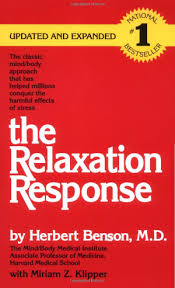
The bible of the rest and digest mode is Herbert Benson’s Relaxation Response. This book was first written over a quarter of a century ago, but it remains readily available. It’s telling that Walter B. Cannon’s work on “fight or flight” mode predates Benson’s work by such a long time. In other words, the medical and scientific community were researching the body under stress for decades before it ever occurred to anyone to think in terms of rest mode as a state that could be studied and advanced–as opposed to just being the normal state of affairs. This should give one an insight into how the human mind goes about considering problems.
6.)Recognize that stress is like cholesterol–there’s a good kind as well as the bad: Acute stress can serve one well during instances of danger. We have this response for good reason. The problem is chronic stress. When one’s body is in a stressed state, it’s not taking care of general maintenance tasks like healing itself. That’s fine in a short term, but problems compound over time. Chronic stress brings a high likelihood of illness because the body isn’t dealing with its run of the mill chores as it should be.
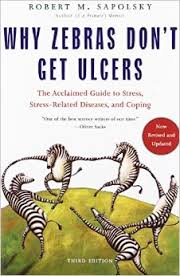
There are a number of books that expand upon this issue and which offer advice for keeping one’s stress of a healthy type. Robert Sapolsky’s Why Zebras Don’t Get Ulcersis among the best. It’s a long book and goes into great detail, but Sapolsky’s sense of humor helps to continue reading when the scientific minutiae might seem overwhelming. Another book on this topic that I found to be quite informative was Lissa Rankin’s Mind Over Medicine. Rankin is a medical doctor, and so she offers a little different perspective from that of Sapolsky. (The latter is a biologist / neurologist.)
7.) Realize that you are a speck in a vast universe and, so, how big or long-lasting can your problem be?: Yeah, it’s a double-edged sword because it’s–in a way–a demoralizing thought as well as a comforting one. Therefore, one should first watch this bit of Monty Python wisdom:
But then one can keep things in perspective through the realization that one is not yet dead.
This book’s title might suggest that it’s about the germ theory of disease or genetic anomalies, but it’s actually about why some people exposed to germs or carcinogens don’t get ill, while other people become ill at the drop of the hat—even when they have no exposure to the immediate cause of illness. (e.g. A Japanese study found that hypersensitive subjects had skin reactions when exposed to a harmless leaf when they were told that it was from a lacquer tree [i.e. that it was mildly toxic.]) It’s well established that stress plays a role in one’s level of health. Of course, it’s not merely the presence of stress, but the nature of it and how it’s dealt with that matter. Our bodies are supremely skilled at conquering invaders and repairing damage as long as our parasympathetic nervous system is engaged sufficiently for our body to do the work of fighting infection and healing. Leader and Corfield’s core argument is that it’s how we worry rather than what we worry about (or even whether we worry) that influences proclivity to become ill. More specifically, the authors propose that the inability to communicate feelings can play a significant role in one’s propensity for illness.
The authors review many interesting studies from medical literature. For example, rhinovirus may be a necessary condition for a cold, but it’s not a sufficient condition. In other words, many exposed individuals never become symptomatic. The same has been shown for tuberculosis, malaria, and a host of other ailments. (It may be true for all ailments.) Another fascinating study found that sporadic bombing in London’s suburbs correlated with higher ulcer rates than the constant bombardment in the city. This suggested that the predictability of a stressor was important vis-a-vis its health effects—apparently more important than the presence or severity of the stressor. Also, there are the many studies about the correlation between certain times / events and disease onset (the most well-known of these is that the most frequent time of death from heart attack is between 8 and 9 in the morning on a Monday.)
Leader and Corfield make a compelling argument in support of their thesis that’s rooted in an extensive review of the scientific literature on the quirky complexities of illness. I’m not certain that I’m completely convinced that what they believe is most important is what is in reality most important. (To be fair, it’s not a matter of deficiency of approach so much as the complexity of disease onset and the difficulty of establishing a hierarchy of importance.) However, the beautiful part of the scientific approach is that even if one doesn’t buy the authors’ arguments hook-line-and-sinker, the book is still a valuable read because it presents a great deal of research–as well as some interesting food for thought on the present state of the medical establishment. I suspect the authors didn’t win many friends with medical doctors, given the strong critique they present. Leader and Corfield point out, what most of us have long suspected, that the money-makers in healthcare are expensive pharmaceuticals and surgery, and that this has created a dangerous incentive. Of course, the authors’ point is that this has undermined the value that psychological approaches might have, but the same could be said to be true for postural realignment therapies or other neglected approaches to treatment. The last chapter is a searing critique of the state of the medical profession that suggests that doctors are disproportionately ill-conditioned to listen to patients and to get to the root causes of their ailments.
The book’s organization is reasonable, but could have been improved. There’s a great chapter on the immune system, but it’s chapter 11 of 15 chapters. It would have been useful to move that text closer to the front of the book so that readers would have access to this primer as they considered why the solution might be found internally rather than in the medicines and surgeries that they are conditioned to believe are in virtually all cases necessary.
Of course, I understand that the authors’ thrust is on the psychological rather than the biological/physiological front, and this undoubtedly played into the organizational decisions. It may be true that the book isn’t about how a body can knock out ailments, but why it occasionally fails to; however, understanding how we defeat illness is an important part of the backstory.
There are important chapters on heart conditions and cancer. These are important not only because those diseases are major killers, but because these are the nasty diseases that many will be skeptical of the relevance of mind-body factors. In other words, many will accept that our attitude and approach to stress may be relevant in whether one breaks out in hives, catches the flu, or gets an ulcer—but may not except that a force as powerful as cancer can be swayed by one’s mindset and behaviors.
I’d recommend this book for anyone interested in how good health can be fostered.
Full disclosure: let me first state that I’m a scientific-minded person and skeptic by nature, and if you’re expecting a review by a true believer, you may be disappointed.
A couple of questions may arise from the disclosure above. First, why do I feel I need to make such a commentary? Well, because this is a book about a system of medicine (i.e. gso-ba rig-pa) that developed within a country that was isolated for centuries and in which every aspect of knowledge was infused with and influenced by religious belief—both pre-Buddhist and Buddhist. Because of this, while some of the advice offered is surely sound, some of it is—from a skeptic’s point of view—bat-shit crazy. For example, there are herbal and dietary preparations to aid in digestion that may be completely sound and reasonable, and then there is the idea that Zombie spirits (one of 18 types of evil spirits) cause constant shivering.
The second question is, “If I’m not a believer, why read the book and review it?” For one thing, as I indicated above, I don’t think that just because the beliefs behind the “theory” of this system of medicine are baseless, it means that there is nothing in the book that is true or of value. The theory is that there are three kinds of energy (Loong, mKhris-pa, and Bad-Kan) and that excesses or deficiencies cause health problems. But it’s a 2500 year old system of healing; certainly they learned a thing or two in the process. It’s quite possible that they have learned things that scientific medicine has not. (Consider for example, Tibetan Buddhist monks have repeated and verifiably demonstrated capabilities—i.e. consciously controlling autonomic systems, that Western medicine would have thought impossible.)
The analogy that I always use is with kid’s Christmas presents. Parents hide the presents, and tell the kids that if there’s any tampering with them the kid won’t get anything but a lump of coal (you say that was just my parents?) Anyway, the kids find the packages, but are afraid to invasively tamper with them. Therefore, they feel the heft of them, they shake them, and they listen to said shakes. From that limited investigation, they develop a theory. The theory may be spot on, it may be completely wrong, or over several gifts it’s probably a combination of wrong and right. However, the question of whether the present does what it’s supposed to (i.e. bring joy) is not closely connected to the child’s theory, because it’s based on the parent’s observation of what the kid likes. That, my friends, is why systems of healing that are based on notions that are empirically wrong sometimes produce good results.
Second, while I’m a believer in science, I don’t always believe that Western medicine (rooted in science as it may be) consistently does a good job. Part of this is the fault of economists, policy types, as well as lazy patients who’ve created a system in which medicine only pays off if it can cut one open or give one an expensive medication. This leaves room for alternative systems of medicine that may not be so scientific, but that allow for the fact that changing patient behavior is often key to improving health.
I’ve taken a long time to get to the actual review, but I thought the reader should know from whence this reviewer was coming. The book is a little under 200 pages long. Its 11 chapters are logically oriented, and it’s easy to navigate the book. The author writes in a readable style, and jargon and foreign terminology aren’t a problem. It doesn’t have an index, but each chapter is broken up into many smaller subunits–so finding what one is after shouldn’t be hard.
The chapters cover the history of Tibetan Medicine, the nature of gso-ba rig-pa, the theory of Tibetan Medicine, causes of illness, human anatomy and physiology (not of the physical body as we know it), common diseases and illnesses, treatment techniques involving changing diet and behavior, medicinal treatment, representative case histories, and the nature of the Tibetan Medicine physician.
It’s not clear who the target audience for this book is. It’s not a self-help book as the implication is that the patient should see a doctor of Tibetan Medicine and not self-prescribe. Furthermore, while the book provides a good overview of Tibetan Medicine, it’s not an all-inclusive description by any means. The book seems to have been written primarily to make individuals aware of Tibetan Medicine and to give enough insight into the system that readers can differentiate it from Traditional Chinese Medicine or Indian Ayurvedic Medicine, both of which display similarities and differences.
I’d recommend this book if you’re interested in alternative approaches to healing, or if you’re interested in Tibetan culture in detail.
I’d recommend this book for anyone who holds a position of responsibility in a dōjō or a combative sport gym, including: teachers, coaches, senior students, trainers, etc. It’s intended for those involved with sport judō, but because there aren’t a lot of sport or martial art-specific books of this nature this may be one of one’s best option to get this information. I haven’t stumbled upon other books like this, but performing a search did result in similar books either generic to martial arts or for other martial arts. However, all of the others that I saw were either old / out-of-date, only available in hardcopy (usually at great expense), or were not by physicians. This book is available on Kindle and is quite inexpensive.
While it’s geared toward sport judō, many of the injuries will be common across martial arts. This is truer of grappling-oriented martial arts, but things like mat infections, students with various chronic ailments, and participants being knocked unconscious. (The latter is covered extensively, but arguably being even more of a concern for strikers.)
The book is useful in two ways. First, it discusses first aid and treatment for common injuries in the martial arts. It’s not a first aid manual, and will not replace training. (In fact, the book assumes it’s talking to someone who’s in a position where they’ve had at least minimal training / experience.) However, it may provide useful information about what injuries one should make sure to be trained in when shopping first aid courses. It also gives one ideas about differences of opinion on certain approaches to treatment or the decision as to whether a given participant is safe to participate.
Second, the book discusses whether prospective students with common chronic ailments can safely participate, and under what circumstance. In many cases, this book goes about this by saying what the judō rulebook says. While this may not be a perfect guide for practitioners of other arts, it may give a reasonable idea about how serious one should take a given disease or infirmity.
The book consists of 20 chapters. Most of the chapters cover common injuries and ailments in judō, generally arranged by anatomical systems. However, there are also chapters covering nutrition/hydration, issues for athletes going abroad / older participants / and special needs athletes, drugs and doping considerations, injury rehabilitation issues, psychological challenges, and the traditional Japanese methods of resuscitation and first aid (kappo and katsu.)
In addition to the core chapters, there is some useful ancillary material. First, there are vignettes interspersed throughout the book that could be beneficial. These vignettes reflect the benefit of having an author who is a medical doctor, a long-time judōka, and an experienced match physician. The vignettes may be more likely to stick in one’s head than the blander presentation of information, and these sidebars often address unusual cases. Also, there are two glossaries—one that deals with martial art / sports terminology, and one for medical terminology.
While written by a physician, this book is not written exclusively for other doctors or medical experts. That is to say, it’s easily readable by a lay audience. Medical jargon, when used, is explained the first time in the text, so one doesn’t need to keep jumping to the glossary.
At least the Kindle version is graphics free. That would be problematic if it was a first aid manual, but that’s not this book’s purpose.
As I said in the beginning, if you have responsibilities for the well-being of martial arts students / athletes, you should read this book.
The title of this book gives one a nutshell description. It’s a book that discusses what yoga practices are beneficial for various common ailments. These practices include not only asana (postures), but also pranayama (breathing exercises), shatkarma (cleansing practices), yoganidra (a relaxation technique), meditational practices, and dietary and other yogic lifestyle practices. The book also discusses both the medical and yogic explanations of various diseases, and provides enough background on the relevant anatomy and physiology to give a layperson an understanding of the basic causes of each disease (if known.)
The book covers about 37 classes of disease, and is arranged into seven parts by bodily system (head and neck, cardiovascular system, respiratory system, gastro-intestinal tract, joints and musculo-skeletal system, urogenital system, and a miscellaneous ailments section that deals with skin diseases and varicose veins.) Some chapters deal specifically with one disease, while others cover two or more related ailments (e.g. Bronchitis and Eosinophilia, Sinusitis and Hay Fever, or skin diseases.)
This book has a number of strengths. First, it’s grounded in a scientific view of these ailments and isn’t selling yoga as a panacea. As suggested above, the title was carefully chosen. It’s “Yogic Management of Common Diseases.” The word “Management” is a critical one. If you’re looking for a book about how yoga can single-handedly cure your Stage IV lung cancer, this isn’t the book for you. If you’re looking for a book on how yoga can help you live a better life if you have arthritis, diabetes, or are hernia prone—possibly in conjunction with medication or other medical treatments—this may be the book for you.
Second, the diseases covered seem to have been carefully chosen. The selection of common ailments is not just to appeal to a broad audience. Many of these ailments are caused by common lifestyle problems that offer relatively easy fixes. Other diseases may not offer any fix per se, and, therefore, the ability to live a high quality of life with the affliction may be valuable. Also, I know a number of the diseases covered are particularly promising candidates for a yogic solution / mitigation.
Having given the strong points, I will say there are a couple of weaknesses to the book as well. First, it’s not illustrated in any way. Given that there is a lot of discussion of biology and anatomy, there are places where a picture might be worth a thousand words. I will note that this isn’t a book for a yoga newbie. It uses Sanskrit names for practices without so much as a glossary. That said, yoga teachers and intermediate/advanced students will probably not find this much of a problem because they will have built an appropriate vocabulary or have the necessary reference close at hand. I didn’t deduct for the lack of explanation, because the book is clearly intended for established practitioners (the Introduction warns as much.)
The second weakness is that there’s no explanation of why the listed practices should work particularly well for the given disease. I think the book does a great job of explaining the nature of the disease for a non-expert reader. However, then it just lists practices by type (asana, pranayama, relaxation, diet, etc.) In some cases, the reader can easily make the connection, but in others it’s not so clear why one should do practice “X” for disease “Y.” I do realize that drawing these connections could be space-intensive and technical. The book is a nice slim 245 pages, and it could rapidly grow to an untenable length. However, I’m concerned that some of the recommendations might not be rooted in experience and observation.
I would recommend this book for yoga teachers and intermediate / advanced practitioners who are interested in yoga as a component of building a healthy body. If you are new to yoga, you will probably want to first familiarize yourself with many of the classic asana, pranayama, and shatkarma practices of yoga—otherwise you’ll have to look up terminology constantly.
It should be noted that this book is put out by the Bihar School (of Swami Satyananda Saraswati fame), and the same publisher has put out a number of books that delve much more deeply into specific ailments. (At least some of these are written by the same author, Dr. Swami Karmananda.) Also, let me say that while the school self-publishes through its Yoga Publications Trust, it puts out books on a large-scale, of high-quality, and they appear to be available globally through Amazon and the like. (Swami Satyananda Saraswati alone was extremely prolific and wrote the APMB, which is one of the seminal reference works on yoga.)
This Harvard Medical School Guide presents the findings of many scientific studies on the benefits of yoga, and it does so in a manner suitable for the layman. The book is written by Dr. Sat Bir Khalsa, a long time practitioner of Kundalini Yoga and a neuroscience researcher at Harvard, and is co-authored by a science writer trained in journalism.
I became aware of Khalsa’s work when reading William Broad’s The Science of Yoga, a book that is complimentary of Dr. Khalsa and his studies—a favor which Khalsa doesn’t return as he rejects Broad’s work as being overly sensationalist. The book does talk about Khalsa’s research, such as a study with young musicians at Tanglewood that examined how the practice of yoga increased their equanimity. That said, this isn’t merely a summation of Dr. Khalsa’s work. It’s what in academia would be called a literature review, but “literature review” implies a far more dismal reading experience than one gets from this book. It does present anecdotes in a way that is useful for a layman’s book, but would not be well-respected in an academic setting. This work isn’t designed for medical colleagues but rather to be of benefit to run-of-the-mill yoga students and teachers.
This is a very short book at only about 50 pages. The book consists of five chapters after an introduction which sets the stage and gives some relevant background on Dr. Khalsa. Chapter one delves into the effect of stress on the body and mind, and how yoga (and meditation more generally) has been shown to help counter the effects of bad stress (not all stress is inherently bad, as is addressed in the chapter.) Chapter two examines the effect of yoga on the body and in countering a number of common ailments. The third chapter considers how yoga might actually help one to be smarter and more creative. Chapter four presents the results of studies of how yoga can counter depression and improve one’s mood. Chapter five is in a different vein, and might well have been included as an appendix. The last chapter gives an overview of the various types of yoga to assist readers new to yoga on what style might best meet their needs and disposition. This is a nice feature for those new to yoga, but also for veteran practitioners who’ve practiced one style and might not be aware of the wide range of styles out there. (A few of the styles mentioned are popular in India, but I don’t think are as well-known in the West.)
For such a thin book, this work covers a wide range of topics including–but not limited to–the effects of yoga on sleep, the immune system, neural plasticity, memory, math skills, and mood. A nice feature of the book is a series of brief exercises that one can practice to help reduce stress or achieve a desired goal. These practices are generally located at the end of chapters. Finally, while this book isn’t written primarily for doctors and other scientists, it’s endnoted so those interested in tracking down the studies the book references can readily do so.
I’m a big fan of applying a scientific approach to the study of ancient methods such as yoga. I would, therefore, recommend this book for yoga teachers and students who are interested how precisely these practices can assist them. It’s extremely short and easily digested. It’s in no way overbearing with medical jargon and is readily understood by anyone with a basic education in biological science.
Before moving to India, I got a stem to stern medical checkup. This included the dreaded first prostate exam (emphasis on “prostate exam” not on “first” as I don’t suspect the process gets any more pleasant.) When my wife and I had both been on my work insurance, we had a HMO that said they didn’t do prostate exams for white males until they were 65 and older (or postmortem, if they died of prostate cancer, whichever came first.) That should’ve been a clue that they were a bunch of bean-counting quacks, but as I was less than eager to get said exam I took their word for it.
Anyhow, the area where I lived was fairly close to Emory University, and my new doctor’s office was even closer. (For those of you unfamiliar with Atlanta or Georgia–Emory has one of the preeminent medical schools in the Southeast and for some specialties the country) When I got my physical, after the preliminaries conducted by the nurse, I was next seen by what–for lack of a better term–I’ll call a junior doctor (ER went off the air too long ago for me to remember the proper terminology). This was a poised and professional young woman–I know not whether a medical student or recent graduate from Emory medical school.
She reviewed my medical history and did a few rudimentary “stick out your tongue and say ‘ahh'” kinds of things. Then she told me that my doctor–a man I’d never met before–would be into look me over and write the prescriptions for the meds that I needed for coming to an area prone to malaria and other plagues.
She then asked, “If you’d prefer, your doctor can do your prostate exam. Otherwise, I’ll do it. Do you have a preference?”
I said, “Having never met the man, and at the risk of sounding sexist, I’m going to assume that you’ve got daintier hands. Ergo, you’ve got the job.” To which she replied, “Yeeeah, me,” in the feeblest monotone voice, her tone suggesting that she might not be as thrilled by the prospect as her words would have indicated.
I had the exam. It was quick, painless, but–I’ll not lie–not without the inevitable awkwardness associated with one person having a hand–or part thereof–lodged in another person.
For those of you who know me, it goes without saying that my doctor turned out to be the most petite homuculus of a man. (You know what they say about what happens when you ASS-U-ME, U get the hand of a bigger ME in your ASS.) However, you pays your money and you takes your choice. I wouldn’t have felt comfortable asking the doctor and intern to place their palms together to see who had bigger digits.
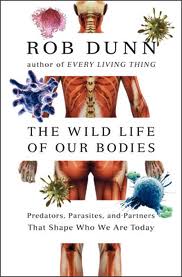
I was sitting at an outdoor cafe as I thought about how to write this post. I’d just finished reading chapter 5 of the Rob Dunn book entitled The Wild Life of Our Bodies, and was reflecting upon how interesting it was to be reading two books whose central premise–in broad brush strokes–was the same. As I was ruminating, a family of four–a couple and their two daughters, an infant and a preschooler/kindergartener–came and sat down at an adjacent table.
For a while the preternaturally-cute infant crawled around on the table top, but as the mother became concerned that the wriggly little child might fall or spill scalding coffee, she eventually set the child down. The child proceeded to crawl around on the ground–ground on which one could easily imagine pigeons trolling for crumbs. [Full-disclosure: I didn’t actually see any pigeons, or even any noticeable filth on the ground for that matter, and–while this is India–it was a major coffee chain attached to the side of a popular up-scale shopping mall, and so that particular ground was probably at least hosed down daily.] The child crawled on all-fours, except that she had the plastic number placard which told the waitress where to bring the order in one of her hands, and she would alternate between dragging it across the ground and–when she got tired of crawling–she would roll onto her rump and pop a corner of the placard into her mouth.
If reading the preceding scene made you a bit queasy, you should be reading one [or both] of books mentioned above. Doing so gave me a totally different perspective on this event. There was a point when I–like many–would have assumed the little girl would get some sort of ailment and that her parents would pay in lost sleep for letting the kid crawl on the ground in an urban public space, but I’m now more inclined to think that probably nothing will happen, and she could–theoretically–end up better off for the wear. I’m not advocating wallowing in filth, but I have come to see biological stressors in a new light. I wouldn’t go so far as to advocate letting a child crawl around sticking things in his or her mouth that have been on the ground at a cafe, but it would no longer surprise me to hear that this child lived a healthier life than children of germophobic (properly “mysophobic”) first-world moms who are about one cookie-off-the-kitchen-floor from forcing their children to live in a bubble.
The reader may be wondering two things: 1.) how these books could mitigate one’s queasiness, and 2.) what the books even have in common. If you’re familiar with Nassim Nicholas Taleb, it’s likely you associate him with criticisms of the misuse of statistical methods, and the failure to understand under what conditions the usefulness of these methods break down. While Taleb does consider a wide range of examples in his popular books Black Swan, Fooled by Randomness, and–most recently and most relevantly–Antifragile, the world of business is where Taleb’s background lies and where much of his discussion is centered. The Dunn book, one the other hand, fits squarely in the domain of biology and medicine.
Both of these books take as their core idea that there are systems that must face constant and occasionally serious challenges to grow stronger, and that the removal of these challenges can have adverse and sometimes dire consequences. Taleb looks at such systems in a broad and general sense, and coins a term, “antifragile”, to describe such systems. A system is antifragile if it gets stronger (i.e. in some way better) when subjected to stresses. This shouldn’t be confused with robustness, which is being indifferent to stressors. Robust systems can take or leave stressors, but antifragile systems need them or they become weakened. Dunn’s book deals with a specific example of an antifragile system, our guts. The biologist suggests that our war on parasites and germs has created a whole raft of problems never before seen. It’s probably not a new idea to most readers, as there are ongoing arguments about the risks of our antibacterial frenzy.
While first-world dwellers tend to take a superior view of those poor third-worlders and their myriad ailments–a number of which have been stamped out in the developed world–Westerners may not even be aware that there are a number of ailments that exist almost exclusively in the first world. Increasing evidence is developing that certain forms of diabetes and allergies are linked to “clean living.” Interestingly, while one might readily imagine how a digestive tract ailment like Crohn’s Disease is tied to insufficiently populated digestive ecosystem, there’s reason to believe that diverse issues such as autism and anxiety disorders may also be linked to loss of internal predators and the imbalances their loss causes.
It’s not entirely a coincidence that I’m reading these books concurrently. I’ve been interested in the issue in a broad sense as of late. How does the craving of comfort weaken a population? What are the risks of indiscriminately weeding the stressors out of one’s life? (As seems to be a major objective of modernity.) Of course, stressors are not eliminated, but instead stressors that are relatively feeble may become the 800 lb. gorilla of stressors.
This book is one of many that challenge the conventional approach to medical care in which a patient is a passive character who just goes to the doctor and does (or ingests) whatever the doc tells them to. In the vein of works by Deepak Chopra and Bernie Siegal, this book is written by medical doctor who has different beliefs on healing. So what’s the niche of Mind Over Medicine, given that there are already a number of prominent medical doctors preaching the same message? That message is that your body is a healing machine and will do MOST (not ALL, none of these individuals advocates abandoning modern medical science) of the heavy lifting of healing, if you create the right conditions. Rankin presents results from scientific studies as the thrust of her book. I’m not really that familiar with Siegal, but you’ll find Rankin’s work a great deal less spiritual and more scientific than the works of Deepak Chopra.
There’s a lot of scientific interest in understanding why some people experience spontaneous remissions from the most lethal of ailments while others succumb to diseases that most people weather with ease. While many people will chalk it up to divine will or chakra nudging or having one’s demons expunged, these aren’t satisfying answers for the scientifically minded individual. However, neither is the extreme skeptic’s suggestion that these are just randomly distributed flukes of nature—and it’s a waste of time to try to explain the outliers. The latter being unsatisfying because phenomena like the placebo effect are well documented.
So what conclusion does Rankin draw from the scientific literature. As suggested earlier, the conclusion is that the body is extremely good at healing what ails it, but it has to be in the right mode to have this healing take place. What’s the right mode? It has to be in relaxed mode, or, in scientific parlance, the parasympathetic system must be engaged. The problem is that when a person is under stress, the body switches into a fight or flight mode. Humanity hasn’t really come to grips with the fact that work deadlines, fears about ailments, or fears that our spouse may be cheating aren’t really the same as our ancestor’s experience of being chased by a saber-tooth tiger. When that ancestor was being chased by a tiger, his or her body shut down everything that wasn’t germane to immediate survival (e.g. digestion is interrupted, blood isn’t evenly distributed but goes to lungs and skeletal muscles, etc.) The tiger chase is over shortly, and the body returns doing its regular at-rest functions (e.g. digesting, healing, etc.) However, if we let our stressors kick us into that immediate survival mode–and just having a disease can be stressing enough in itself–then our healing can be severely or completely curtailed.
Can faith healing, karma cleansing, chakra fluffing, or sugar pills contribute to healing? Sure, but not in the way that the faithful thinks. These systems–each of which has proponents who’ll swear they witnessed first-hand the power of faith or magic or invisible energy (and they are probably not lying)–work because the person who firmly believes in these therapies is able to relax and let their bodies can do what they do.
Does this mean that those who don’t believe in religion or cosmic energy manipulation are out of luck? No. You just skip the middleman and engage in activities such as meditation, yoga, tai chi, or breathing exercises that allow you to put the body in a relaxed state. Secular meditation works just fine if practiced consistently, and particularly if one confronts, addresses, and eliminates the long-terms stressors in one’s life.
At the heart of the book is a discussion about how to go about performing one’s own diagnosis and writing one’s own prescription. As I mentioned earlier, this isn’t about cutting the doctor out. In this case one is diagnosing one’s stressors and prescribing activities to eliminate them. This doesn’t mean one should pass up medical treatment or doctor’s advice. However, it may entail switching doctors if you have a doctor that firmly believes you are incapable of getting better—you don’t need any doubts about your body’s ability to do its thing being foist upon you.
I’d highly recommend this book for scientifically-minded individuals interested in learning how they can help their bodies get into a state conducive to healing.

 Surviving the Extremes: What Happens to the Body and Mind at the Limits of Human Endurance by Kenneth Kamler








 Tiger Riding for Beginners