Tradition v. Modernity in Fitness and Movement Arts


TheScienceofYoga_BroadOne of my favorite professors (and I had a lot of them) was in the Religious Studies department of Indiana University in Indianapolis (IUPUI.) Among the lessons he taught us were the various forms of fallacious reasoning applicable to the discipline. He did so in a way that was both erudite and folksy, often in a humorous way.


While I don’t remember the formal names he gave these concepts or their technical definitions, I do remember the more colorful variations. One was the “firstist-is-bestist” fallacy in which it’s assumed that the old ways are inherently superior because bad ideas die out, and young ideas are at least as likely to be crap as not. This is sometimes called “appeal to tradition.” Over a sufficiently long time horizon this assumption may prove true (i.e. the time horizon beyond which Keynes warned we’d all be dead), but we know that wrong ideas can live on for centuries.


Another was the “outhouse” fallacy, which says that because pre-modern man didn’t have indoor plumbing they must have been complete idiots, and we should assume newer is better. This is sometimes called the “appeal to modernity.”  While there is some advantage to having access to the compiled knowledge of history, this doesn’t keep people from coming up with idiotic ideas regularly.


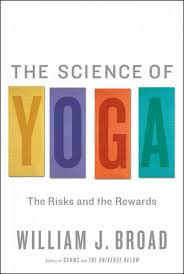
What made me think about these conflicting fallacies is that I’ve been reading a lot about the science of yoga–and other systems of movement–lately. Specifically, I was reading The Science of Yoga by William Broad. During the 20th century, yoga went from not giving a whit about science to trying to show that it wasn’t at all at odds with science–if not that it was grounded in science. (Note: this statement could be applied to many of the old ways—e.g. religions—which sought to prove themselves consistent with scientific evidence out of fear that–in the age of rationality–to be inconsistent with scientific observation would be death to old beliefs.) While the hucksters and con men seeking to bilk people out of money through shows of yoga “magic” have lost power (though some still exist and prey on the gullible regularly), this isn’t to say that science has yet won the day entirely.


Chapter two of Broad’s book discusses the findings of the scientific community on whether yoga has any merit as aerobic exercise. (The consensus is that it doesn’t.) Now, one would think that the whole yoga community would be pleased that academia has for the most part shown that yoga has a range of positive benefits that make it a worthwhile endeavor when practiced safely and conscientiously, but some have been unwilling to accept that yoga isn’t excellent cardio on top of all its unambiguous benefits. The established consensus is being ignored and a single seriously flawed study (small sample size, no control group, and—while peer-reviewed—the author was the journal editor) is cited, that one—of course—suggests that yoga meets all one’s cardio needs.


It’s easy to follow the incentives. For example, if one runs a yoga studio one would like to be able to say that yoga is a panacea for all of a person’s health needs. People are busy and lazy, and if someone else can sell them a silver bullet then they’ll lose business.  If one gives the matter thought, it becomes hard to imagine an exercise panacea. Consider a list of health goals that includes reduced stress, improved balance, greater flexibility, more strength, and enhanced cardiovascular capacity. One should see that some of these goals are at odds with each other. The first three goals—at which yoga excels–require holding a static position for a time while engaging in deep and controlled breathing. The fourth goal, strength enhancement, (which yoga achieves only in a limited way) requires repeated alternation of stressing and relaxing a muscle. And cardio, the fifth goal,–for which yoga is less than helpful–requires rapid and sustained motion so as to cause the heart to be stressed.


Of course, individuals have tried to rectify yoga’s cardio deficit by creating yoga styles that add speed and repetition. If one does five sun salutations per minute for 45 minutes, then—congratulations–you are now getting cardio and strength building. Unfortunately, you are now losing out on the first three goals of stress reduction, balance enhancement, and flexibility improvement. Those three things requiring holding poses while engaging in relaxed and controlled breathing. So the question is whether one is happy having sacrificed the benefits yoga does better than everything else in a desire to have yoga gain benefits that other exercise systems probably still do better.


The old systems of movement and exercise, be it yoga or chi kung, have shown themselves to have merit. However, the mechanisms by which that merit is achieved (or the nature of the merit) are often not what the system’s mythology suggests. There’s no need to fear science, but one should be ready to embrace what is shown true and set aside what is shown to be false.


On the other hand, this modern idea that we can have our cake and eat it too by throwing together disparate systems, which often have conflicting goals and modes of operation, needs to be reevaluated. All of these fads have been created where someone crams together tai chi and yoga or yoga and jazz dance or Zen meditation and parkour and they think they have the ultimate system based on a more complete picture of modernity, and what they’ve got is a muddle.


What we need is the tested merit of tradition without its voodoo, and the compiled knowledge of modernity without its hubris.


BOOK REVIEW: The Tao of Jeet Kune Do by Bruce Lee

Tao of Jeet Kune DoTao of Jeet Kune Do by Bruce Lee

My rating: 4 of 5 stars

Amazon page

Jeet Kune Dō (henceforth, JKD) is Bruce Lee’s “styleless style” of martial arts. Its literal meaning is “the way of the intercepting fist.” However, Lee cautions one against attaching too much significance to that name (or any name) in the book’s final chapter. Long before “Mixed Martial Arts” became a household word, Lee was constructing this fighting system that borrowed heavily from the Western traditions of boxing, fencing (conceptually speaking), and wrestling as well as from Kung-fu, Savate, and Judō/Jujutsu. While JKD employs techniques and concepts from these systems, Lee remained adamant that no good came of organized styles built on fixed forms. In fact, that might be said to be the central theme of the book. That is, each fighter should begin with sound fundamentals and build an approach that is ultimately his or her own.

The Tao of Jeet Kune Do is an outline of the martial art. In many ways, it looks like and reads like Lee’s personal notebook. It’s illustrated with crude (but effective) hand drawings of the type one would see in a personal journal, and they are annotated with hand-written notes. (My biggest criticism is that on the Kindle version the graphics are largely unreadable. I’d recommend you get the print edition if you can, which is large-format paperback as I recall.) The book combines a philosophy of martial arts with nitty-gritty discussion of the technical aspects of combat. The philosophical chapters bookend the technical ones.

As others have pointed out, there’s not much that is new in either the philosophical discussions or the technical ones. Lee’s value-added is in how he states these concepts, how he selects the concepts of value (informed largely by a love of simplicity and a hatred of dogma), and the weight lent to the lessons by Lee’s great success story—albeit in a life far too short. Lee was a man of charisma, and one who approached endeavors with gravitas.

Now, I can imagine some readers saying, “Why are you recommending a book on real fighting by a movie martial artist? Would you recommend a book on how to conduct gall bladder surgery from someone because they were on the first two seasons of ER? Would you take martial arts lessons from Keanu Reeves because his moves looked pretty nifty in The Matrix?”

I’ll admit that there is nothing about making kung-fu movies that makes one particularly competent to give advice on close-quarters combat. However, as I said, Lee seemed to devote himself entirely to everything he did. Consider the Bruce Lee physique, which seems so common place among actors today (no doubt in part chemical and in part owing to live-in Pilates coaches) was virtually unseen in the 70’s. Yeah, he probably had good genes, but he must have trained like a maniac as well. Lee’s constant mantra of “simplicity” lends him a great deal of credibility. (It should be noted that pragmatism is not a virtue in the movie-making industry.) Lee demonstrates that he’s given a lot of thought to the subject and done the training when he discusses technical concepts. For example, while he gives high praise to Western boxing and emulates boxing moves in some regards, he also notes that boxers are insufficiently cautious owing to the rules/equipment of their sport (a comment—it should be noted–that can be leveled against any sport martial art.)

The technical material is organized in four chapters. The chapter on “tools” deals with the techniques of striking, kicking, and grappling. A chapter on preparations explains Lee’s thoughts on faints, parries and manipulations. There is a chapter on mobility that discusses footwork and various types of evasions. The last technical chapter discusses the approaches to attack, focusing heavily on JKD’s five types of attack.

The Tao of Jeet Kune Do is undeniably repetitive, but that repetition has value in hammering home key concepts. It’s also consistent with the JKD philosophy of not getting into a great deal of complexity, but rather drilling home the basics. There’s an old martial arts adage that says, “One should not fear the man who knows 10,000 techniques as much as the one that has done one technique 10,000 times.” This seems apropos here. Besides, the concepts that are repeated are often worth memorizing. e.g. Simplify. Eliminate ego. Avoid fixed forms. Be natural. Don’t think about building up as much paring away.

I’d recommend this book for martial artists of any style. Non-martial artists may find the philosophical chapters interesting, but may not get much out of the list-intensive technical chapters.

View all my reviews

Animals Forms and Poses in Martial Arts

Snake

Snake

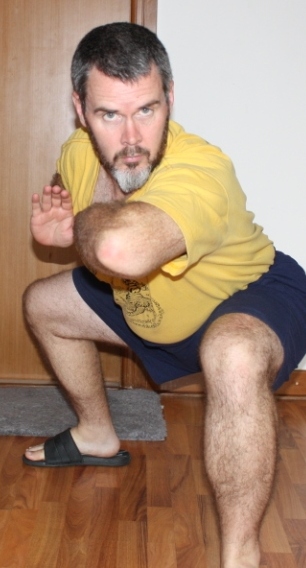
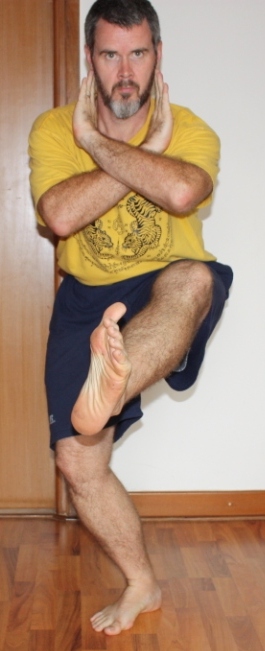
Part of the most basic of basics that I’m learning in Kalaripayattu class are 8 animal poses (Wild Boar, Elephant, Cat, Lion, Snake, Rooster, Peacock, and Horse.) While animal forms and postures are common enough in martial arts, this is an entirely new concept to me and one that I’m trying to wrap my head around.

Animal forms are most commonly associated with Chinese Kungfu. There are entire styles devoted to five animals (i.e. tiger, leopard, crane, snake, and dragon [yes, I realize dragons aren’t really animals.] Of course, from Kungfu Panda we know there are also Monkey style and Mantis style, but that’s only just the beginning.  There are many different animals that play a role in martial arts, some–like tigers–are not unexpected and others–like peacocks–are harder to imagine.

As I’ve mentioned before, old style Japanese martial arts–at least the one’s I’ve studied–invoke nature commonly, but in a more subtle form. In Japanese budō one does not imitate animal movement or positioning–except in a very limited and general sort of way.

I’m interested in why one should imitate the postures or movement of animals. After all, it’s hard to argue that a human being can move more efficiently or effectively imitating a [non-human] animal. We are uniquely bipedal mammals, and to imitate–for example–a legless reptile (for example) doesn’t seem to make a lot of sense.

One explanation I’ve heard is that these animals are natural fighters, and are, therefore, to be emulated. I don’t put a lot of stock in this explanation. Don’t get me wrong, I do believe that humans are less naturally capable of close-quarters fighting than pretty much any other animal. But it’s got nothing to do with the nature of our bodies and everything to do with the condition of our minds. Humans are emotional beasts and have trouble living in the moment. That’s why we aren’t natural fighters compared to a tiger–which doesn’t get paralyzed by fear, doesn’t get plagued by guilt, and never walks through dangerous territory with iPod earbuds in its ear, thinking about how it needs to update its Facebook page. Humans excel at making weapons that allow us to stay as far away from the enemy as possible–preferably on another continent. But close-quarters combat is an uphill struggle all the way.

Wild Boar

Wild Boar

There is an explanation that I find to be more sound, and that’s that these postures are meant to facilitate a certain mindset. Just as people condition themselves to associate certain hand mudra with certain states of mind (I know that’s not necessarily how they see it), one may use these postures to invoke a certain state of mind. This is somewhat related to what I was discussing in the preceding paragraph. Human’s are challenged to get into the right frame of mind for combat, and animal forms and postures might be one way to hasten that state. For humans there are two aspects of the problem. First, people are naturally scared of being injured or killed, and for many this becomes debilitating. Second, except some psychopaths, humans really don’t like to kill. This is true of other species by the way, we are genetically hardwired against killing our own kind. However, other animals can’t worry about it like us. (Here I mean worry in the sense that W.R. Inge described, “Worry is interest paid on trouble before it comes due.”)

Another explanation that I think has some merit is that some of these poses and forms are more about the exercise than combat effectiveness. In essence, they are like yoga; they build range of motion and strength in core muscles. One can certainly see this in the exceedingly low animal stances that require a great deal of flexibility.

The only other reason that’s popped to mind is that animal imitation is used to try to create a feeling (e.g. fear) in one’s opponent. This is closely related to the first point. One wants to create a perception of ferocity (or otherwise) in the eyes of the opponent as well as internally.

Rooster

Rooster

BOOK REVIEW: Vajramushti by Christopher Fernandes

Vajramushti; Martial Arts of IndiaVajramushti; Martial Arts of India by Christopher Fernandes

My rating: 3 of 5 stars

Amazon page

There aren’t many English language books on Indian martial arts, and most that do exist address a single style (most commonly Kalaripayattu.) Christopher Fernandes’s book, therefore, fills a void by providing an overview of martial arts on the subcontinent, and for the most part the book does an admirable job. I do have a couple of criticisms of the book that I’ll get into further down in the review.

The 350 pages of this book are arranged into 17 chapters, with the front and back matter of a scholarly work (i.e. in addition to an introduction and epilogue there are appendices and a bibliography.) The first few chapters set the historical background, and the last few chapters address topics that are related to—or interconnected with—the martial arts, e.g. pranayama (breathing), Ayurveda (traditional Indian medicine), dance, and games of martial relevance. Chapters 6 through 11 form the core of the book, and this is where one gets the book one expected. These core chapters are organized by region, and each gives an overview of one of India’s martial arts in great detail. The arts covered include: Thang ta (northeast), Gatka (author classifies as Central, but it’s commonly associated with the Sikhs [i.e. Punjab, in the Northwest]), Yudhkaushalya che Talim (Central), Silambam (south, Tamil Nadu), Kalaripayattu (south, Kerela), and Marma Adi (South). It’s not all-inclusive, but that might not be possible in a single volume. It does hit the major arts and covers a range of weapons and unarmed skills, and I suspect offers a fair representation of Indian martial arts past and present.

I have two major criticisms, and a third mild criticism. The first is purely technical and likely only applies to the Kindle edition (that’s the only edition I’ve seen), and you can probably guess my gripe. The formatting on the e-version of the book is poor. While this book isn’t as graphics-intensive as a typical martial arts book (i.e. there aren’t long sequences of technique photos) there are many graphics—and necessarily so. It would be hard to convey all the information in textual form for this type of book (e.g. consider the value of a picture of a complex weapon over a description.) What happens in Vajramusthi where the graphics are inserted is that the captions get kicked in among text. At least they italicized the captions so one can get used to this oddity, but it’s a bit hard on readability when one is reading along and there is a fractional caption randomly inserted mid-sentence. The photos also cause odd white space and very narrow columns here and there.

The second major criticism is that the book often forgets its theme. By that I mean that the author goes into far too much depth on topics that are tangential to the subject at hand and sometimes fails to indicate how the subject at hand is relevant. I’m not saying that historical background and discussions of breathing and Ayurveda shouldn’t be included, they are both quite pertinent, as are the other chapters that are more tangential. However, at one point the author provides a mini-herbal field guide that seems a bit too much information for those specific herbs, but, because it’s not an Ayurveda herbal field guide, he only covers a few. This creates a book that sometimes doesn’t seem to know what it wants to be or who its intended audience is. It’s most confusing in the early chapters that begin with the dawn of humanity. Obviously, the development of martial arts is inextricably tied into the rise of societies and states, but the author doesn’t consistently do a good job at connecting these dots so the book can maintain a consistent theme. I should point out that history buffs, dance enthusiasts, or physical education nerds may find the bonus material fascinating—and it is; it just belongs in different books. It does indicate that the author has done his research. While I’m a neophyte on the subjects covered, I believe that the quality of the information is quite good. (Although myth and fact are sometimes equated as with the discussion of Bodhidharma—a myth that many historians now believe false.)

The third criticism is classified minor both because it only comes into play in the epilogue and because if I was going to criticize every martial arts book author for this sin, I’d rarely have anything nice to say about a martial arts book. At the tail end of the book the author suggests that all the other martial arts of the world are just superficial competitive endeavors and only the Indian martial arts have depth that can lead to bettering oneself in a broad sense. This is a complete oversimplification, and especially odd for someone (like the author) who has apparently trained in other systems. (At one point there is a photo of Bruce Lee, captioned “Epitome of a Warrior,” and I can only assume from his commentary in the epilogue that the author is mocking the founder of Jeet Kune Do.) I do understand the passion that inflames the author’s sentiments, which is sadness that young Indians who study martial arts overwhelmingly look to the East—just as those in Europe and the Americas do. In Bangalore, where I live, there are two places that I know of that teach Indian arts (both Kalari) and at least eight places one can learn Muay Thai—not counting the fitness centers that have no one qualified to teach MT but do so anyway. Still, one need not take cheap shots at other martial arts in attempting to encourage people to study the indigenous arts.

While my review may come across as critical, there’s really not much wrong that a skilled editor and formatter couldn’t fix. (For example, one could get blitzed playing a drinking game whereby everyone takes a shot whenever they read the exact words “Vajramushti the classical Kshatriya Lion’s skill.”) The book’s virtues tend to outweigh its vices. If there were as many books out on the Indian martial arts as there are about those of China, Japan, or Korea, I don’t know that this one would get my recommendation in its present state, but there aren’t and so I do recommended it. It’s well-researched, contains useful graphics, and it provides insight into how the martial arts fit into the history, yogic science, and movement arts of India—if sometimes a bit too much insight.

View all my reviews

Kalaripayattu and Single Point Origin Myths

I just began my study of Kalaripayattu this morning. Kalaripayattu is an Indian martial art that is named for the training space (kalari) in which it is conducted. It’s a very different martial art from others I’ve studied, and is a great learning experience—as well as an excellent workout. Kalaripayattu is said to be one of the oldest formal martial arts that has survived into the modern era. I have no reason doubt this. The art is documented in the 11th century by a historian who attributes its development to wars between the Chola and Chera kingdoms.

However, there’s another common claim that is much more controversial, and that’s that Kalaripayattu is the “mother of all [Asian] martial arts.” With all due respect, I’m skeptical of this claim—even if we don’t take it in the literal sense (i.e. Asia is a big place and there are almost certainly places where martial arts were established before contact with the Buddhist diaspora.) I obviously don’t base my skepticism on what I have been taught—as that is, at this point, a miniscule portion of the most basic of basics.

While I can offer no definitive proof to discredit the claim, I do have specific reasons to be skeptical. The theory of Kalaripayattu as the origin of martial arts is based on the legend of Bodhidharma. The legend says that the famous monk shared martial arts with the monks of Shaolin in conjunction with the Zen (Cha’an) form of Buddhism, and from Shaolin as Buddhism spread so did the martial arts. I’ve read myths about the origins of the Japanese martial arts that I’ve studied that place the beginnings of their ancestor arts with Chinese Buddhists fleeing persecution during the T’ang Dynasty (as well as later periods.)

The first problem with this theory is that historians have found it to be unsubstantiated and dubious. While the belief that Bodhidharma introduced the Chinese to martial arts is one of the most widely believed and cited pieces of martial arts lore, Meir Shahar in his book The Shaolin Monastery [http://www.amazon.com/The-Shaolin-Monastery-History-Religion/dp/082483349X] states that the evidence doesn’t support this popular belief. Specifically, the only historical documentation of this theory is a document that was written in the 1600’s that the author claimed was “discovered” from an earlier time—the problem is that the language usage isn’t consistent with the claim that the document was from a much earlier period, and there are many verified mistakes in the document.

Even if Shahar and other historians are wrong, the evidence that Bodhidharma came from southern India and that he studied Kalaripayattu specifically seems to be non-existent. There is at least one popular theory of Bodhidharma that puts the origin of this famous spiritual leader outside of India altogether. If the aforementioned Indian historian was right and Kalari developed during 11th century wars, then it’s late for the life of Bodhidharma by some 500 years.

The challenge is that it’s difficult to compare the modern martial arts and see definitive evidence of historic connections. Some will say, “But Kalaripayattu doesn’t look like Shaolin Kung fu (or any other subsequent arts) at all.” While it’s not true that they don’t look anything alike, it’s true that they look very different. However, what one has to keep in mind is not only did Kung fu continue to evolve in order to optimize to its circumstance, its predecessor system (whether Kalaripayattu or otherwise) would have continued to evolve as well. The Kalaripayattu of today most likely looks quite different from 11th century Kalaripayattu, but we can’t know how so in any detail. This could make for some pretty rapid divergence. Others may say, “But, hey, I do see the similarities in kicks and postures and so forth.” This may be true as well, but can one be sure that one of those commonalities is causal of the other? What if it’s just the constraints of the human body that make all martial arts similar at some level of granularity?

My intent is neither to destroy origin stories nor to discredit any martial art. Obviously, Kalaripayattu has a long history, and the fact that it survived to modern times is a testament to its value over that time. Combat is a harsh evolutionary environment, and things that don’t work for the situations they face are likely to die with the people who practice those systems. However, I think it’s important for warriors to not succumb to false fables because they must see the world as it is and not as they wish it to be.

Krabi Krabong Double Swords: Coordination in Action

Earlier in the month I took a few Krabi Krabong classes during my two-week visit to Tiger Muay Thai in Phuket, Thailand. For those who are unfamiliar, Krabi Krabong is a Thai martial art that focuses on weapon fighting. However, Krabi Krabong is what one might call a comprehensive martial art. That is, there are a number of different weapons utilized, and there is also an unarmed component. (It’s apparently unclear whether Krabi Krabong was practiced in conjunction with Muay Boran [the old Thai boxing style that predates Muay Thai] or whether they were always independent. Some of the weapons used in Krabi Krabong are sword (singly and in pairs), sticks (singly and in pairs), long staff, shield (used in conjunction with sword or club), halberd, and clubs worn on the forearms called mai sawk (the latter look vaguely reminiscent of the Okinawan tonfa, but upon closer inspection are quite different and are not designed to be spun freely like tonfa.

While I saw the instructor work with both staff and mai sawk, what we learned were double club techniques that the instructor did with double sword as well. The use of twin short weapons is common in Krabi Krabong. Working with two independently operated weapons is fairly new for me. In Japanese martial arts the use of weapons in such a way isn’t that common. Miyamoto Musashi advocated using the long and short swords in unison, and there are a few sword schools that teach this. I learned the fundamentals of one such school, Jinen-ryū Ni-tō-jutsu, but never practiced enough to develop any skill with it. So it took some effort just to get the basic warm-up drills down (e.g. spinning both sticks simultaneously with each stick going in the opposite direction. It’s a piece of cake if they are both going the same direction.) Of course, in any martial art one is likely have to drill a lot of movements where one is doing two or more different things with different limbs at the same time, but it can still be a challenge finding a grove with double weapons.

In most cases what we were doing was moving one stick through a guard position as the other was attacking. This creates a set of exchanges of strike and counter that feels fast.

I learned four basic forms. The first was just alternating downward angled hits at neck level. The second alternated downward strikes first at neck level and then at knee level. (When I was looking through Youtube videos on Escrima–which I’ve heard has dual stick fighting that looks similar to that of Krabi Krabong–I did see a single-stick Eskrima drill that looked quite similar.) The third form also involved two neck and two knee strikes, but it didn’t look like the previous form because it involved a spinning maneuver such that the last two strikes were to the outside of opponent’s same knee with the first one being a forehand hit and the second being a backhand strike coming off the spin. Spinning techniques were brand new to me. Contrary to what one sees Tom Cruise do in Last Samurai, spinning maneuvers (and other “fancy” techniques) are anathema to the Japanese mindset. The fourth form was head strike – knee strike on the same side and then the same on the other. (So unlike form 2 which was head – head – knee – knee, this was head – knee – head – knee.) We then ran these forms together in various orders.

I see the value in drilling this way to ingrain coordination. However, as someone who is relatively slow but has a decent command of range, I’m not sure how comfortable I would be utilizing the approach we practiced as my go-to tactic. In other words, there was a lot of staying at a range the opponent could strike one and relying on being able to get the guard/block/parry in place. This has the advantage of keeping one in striking range as well, but you’ve got to be confident you’ll have the upper hand in speed. Of course, I saw a minuscule part of the system, so maybe there’s more making the opponent reach out for one among the techniques (or maybe we were practicing them wrong and the instructor was just worried about us getting the basic movement down.)

It was definitely an interesting, educational, and humbling experience.

BOOK REVIEW: Higher Judo by Moshe Feldenkrais

Higher Judo: GroundworkHigher Judo: Groundwork by Moshe Feldenkrais

My rating: 4 of 5 stars

Amazon page

If you’re at all familiar with Dr. Moshe Feldenkrais, most likely it’s for the system of bodily awareness and efficient movement that bears his name (i.e. the Feldenkrais Method.) You may be completely unaware that Feldenkrais was a first-rate judōka who trained under judō’s founder Jigoro Kano, and that his experience with judō played a major role in his understanding of the principles of natural and efficient movement. (It should be noted that Feldenkrais was neither a medical doctor nor a doctor in a medical / biological field, but was a physicist by training.)

Higher Judō was originally published in 1952, and was out of print for many years until a new addition was brought out in 2010 (with three new forwards and some additional back matter.) It’s not hard to imagine why the book made a comeback after such a hiatus–and 26 years after the death of Dr. Feldenkrais. The book explains the ground fighting techniques of judō, which are the basis of Brazilian Jujutsu (BJJ), and BJJ is a dominant form of ground and submission work within Mixed Martial Arts (MMA.) Given the immense popularity of MMA, and the desire of fighters to hone their technique to the utmost, it’s a good time to bring this half-century old book back to the fore.

The book consists of twelve chapters. The first half of these chapters deals with preliminaries such as principles of movement, philosophy, and basic movement exercises. The second half gets into the tactics of ground work. The arrangement for the latter chapters is largely by position of the competitors relative to each other (e.g. the mount, 12 o’clock, side control, in the guard, etc.)

The first half has few graphics, but the last half is packed with line drawings that are based on photographs (ostensibly it was cheaper or easier to reproduced the line drawings back in the day.) The line drawings offer sufficient detail so that one can see what is being done (to the degree one would be able to see it in a photo or even in person—i.e. some of the techniques are subtle and the written description becomes essential.)

The book is a good overview of the basics of ground work with a few unusual and rare techniques thrown in. Feldenkrais points out that some techniques are more important than others, and that one should drill a few of the most critical ones rather than focusing a lot of time on the more eccentric techniques. As I’ve written many times before, I don’t believe that one can learn a martial art from a book. However, if you’ve been taught these types of techniques, you’re sure to find this book an interesting reference with some ideas for approaching ground work training.

Some of the characteristics of the book could be taken as positive or negative, and I’ll leave it to the reader to decide. First, Feldenkrais avoids using names for techniques. He uses neither the common Japanese names for the techniques (e.g. there’s no reference to juji gatame, tomoe nage, or hadaka jime) nor the common English names. He goes by figure number attached to the aforementioned line drawings. Second, he has thoroughly cross-referenced the book such that you might be on the page containing figures 228 and 229, and he’ll make reference to figure 52. So the book involves a lot of turning back (I wrote in the page numbers where off-page figures were referenced so I wouldn’t have to find what page the figure was on each time.) Third, Feldenkrais is a scholar by training and is not averse getting a bit wordy and verging on abstruse. Of course, the flip-side of this is that he provides a great deal of precision in his language. That being said, I found this book readable and much less ponderous than one of his Feldenkrais Method books that I read.

I’d recommend this book for anyone interesting in gaining a better understanding of ground fighting. In the early sections of the book he provides excellent food for thought about the judō approach to movement, and in the latter half he catalogs the basics in a thorough and logical fashion.

View all my reviews

2014 Martial Arts Movies

[My 2015 Martial Arts Movies post can be visited here.]

Here are some of the known or suspected martial arts movies for the new year.


RAZE; January 10, 2014

A film to appeal to guys who make the RAARRW noise when they see two girls get in a fight, but to the extreme.

I, FRANKENSTEIN; January 24, 2014

OK, this is better labeled sci-fi as it’s based on the premise that Shelley’s monster lived into the future. However, I heard that Aaron Eckhart spent six months learning Kali for the film, so I’ll throw it in the pot. (Also, all martial arts films are cross-genre anyway.)

ENEMIES CLOSER; January 24, 2014 (US release)

A Jean-Claude Van Damme film in which two enemies must come together to avoid being killed by a common enemy.

SPECIAL ID; The Chinese release was in 2013, but there may be a US release in March 2014

This is a 2013 Donnie Yen action film that was not released in the US, but may be soon.

JOURNEY TO THE WEST; March 7, 2014

For those who liked Kungfu Hustle (and who didn’t) this one should appeal. It’s a period piece, but with the same kind of humor and visual affects as Kungfu Hustle.

THE RAID 2; March 28, 2014

This is a sequel to the 2011 Indonesian film produced by Gareth Evans.

ICEMAN; April 3, 2014

The latest Donnie Yen film. It’s about an ancient Chinese warrior who is unfrozen and kicks ass in the modern age.

TEENAGE MUTANT NINJA TURTLES; August 8, 2014

Another attempt to capitalize on the inexplicable popularity of this cartoon. But I’ll give it a chance.

THE MONKEY KING; September 14, 2014

A new play on the popular Chinese folk tale.

5 Differences Between Muay Boran and Muay Thai

IMG_4014What is Muay Boran? It’s “ancient boxing,” and is considered an ancestor to the more well-known Muay Thai. Muay Boran isn’t a single unified system. Practicing Muay Boran is a bit like practicing “Karate,” which is to say there are a number of different and distinct systems that go by that generic name—some of which bear little resemblance to others. Muay Boran was originally a combat martial art, but came to be practiced as a sport as well. The latter practice included some rules, though relatively few in comparison to Muay Thai. Instead of padded gloves, they fought with their hands and wrists bound with hemp rope.

When I was in Thailand, I had an opportunity to participate in a couple rudimentary Muay Boran classes. I’d just read about this system in the June/July 2013 issue of Black Belt magazine, and was interested in seeing for myself how the discipline was distinct from Muay Thai. I’m fascinated by how martial arts that are more jissen (real combat) oriented differ from systems whose primary objective is something else (e.g. sport, wellness, etc.)  If one looks at a sport martial art such a Muay Thai, one can see how the nature of the rules and equipment subtly shape the nature of the movement. For example, if crotch attacks are illegal and one wears a cup to handle the occasional accidental crotch shot, one won’t worry about that vulnerability and–as one focuses on gaining advantages or minimizing disadvantages–one may end up with a vulnerability that would be disconcerting in jissen martial arts.

Before anyone gets huffy, I should point out that this isn’t a criticism. Sports must have rules so that they can be enjoyably practiced (and watched.)  Given the rules that are in place, one should optimize one’s performance to being as fast, powerful, and effective as possible. In other words, it would be silly to make one’s stance optimized to protecting one’s groin if the opponent can’t attack it (plus one has a little insurance policy against accidents) and if protecting that [non-existent] vulnerability made one any slower, less powerful, or otherwise less effective. I’m also not saying that combative sports are completely ineffective as self-protection. For sports like Muay Thai or MMA there is a huge space of overlap with the no rules combative situation, and—furthermore—the athleticism developed will allow one to adjust to the non-rule environment quickly.

That being said, I’m curious about how Muay Boran is different from Muay Thai and what that might mean in terms of jissen-optimized fighting versus sport-optimized fighting. Here are a few things that I noticed both in the classes that I had at Tiger Muay Thai in Phuket, in the aforementioned Black Belt article, and from a few videos and articles that I could find on the internet from what I believe to be reputable sources. [I should disclaim that I’m far from an authority here. Full Disclosure: I’ve had 3 hours of MB training and done some reading and research.]

1.)    The basic Muay Boran guard covers the centerline. In other words, one’s hands are one fist in front of the other with both fists aligned on one’s centerline. This is as opposed to the boxing or Thai boxing guard in which either hand is to the outside of one’s head. Practitioners of Wing Chun or the system I am most familiar with, Gyokko-ryū will be familiar with what I’m talking about. I have vague theories about why protecting the centerline might be more advantageous in combat than sport. For one thing, it might help one make contact with incoming limbs in a way that supports transition into grappling. For another, it allows one to protect against coup-de-grace attacks more efficiently.

2.)    The basic stance of Muay Boran is lower and wider than in Muay Thai. I suspect this has to do with ranging and protection of vulnerabilities (e.g. the groin is harder to hit.)

3.)    While Muay Thai is considered the style of “8 weapons”: (leg (X2), knee (X2), elbow (X2), and fist (X2), Muay Boran is based on 9 weapons (i.e. it includes the good ole head-butt.) This isn’t a surprise. Without a head-butt prohibiting rule, one would expect people to use this devastating close-range weapon.

4.)    Muay Boran utilizes attacks against the limbs. In sport Muay Thai, there is little to be gained from this, but in a combative art if one can deaden limbs one gains a big advantage.

5.)    One thing that perplexed me at first is the fact that Muay Boran supposedly uses flying knees and flying elbows prolifically. (I should note these are used in Muay Thai occasionally as well, but they’re relatively rare as they are hard to land and to use without having mid-air vulnerabilities exploited.) What I found strange about this is that jissen martial arts tend to be much less flashy and rely on much simpler techniques than do sports. The old motto of KISS (Keep It Simple, Stupid) is often spoken in jissen martial art dōjōs. However, I do have a theory about why the power generated by such tactics might have made them appealing. One mindset difference between sport and jissen martial art practitioners has to do with the role of time. In combat, time is not on your side, and pacing yourself can be a lethal strategy. You want to try to land strikes that have a high probability of putting the enemy out of commission, even if at a risk. That is, of course, just a neophyte’s theory.

I enjoyed learning a few Muay Boran techniques, and I can see how it was an effective combat system.

How to Choose a Muay Thai Gym in Thailand

Tiger MT Beginner's Area. (The mats are up for cleaning to prevent Staph outbreaks.)

Tiger MT Beginner’s Area. (The mats are up for cleaning to prevent Staph outbreaks.)

So you’re going to Thailand and you want to learn a bit of Thai Boxing. Where do you go to train? This is the question under consideration in this post.

I just got back from two weeks of training at Tiger Muay Thai & Mixed Martial Arts on Phuket. This was my second experience training Muay Thai (MT) in Thailand. In October of 2012, I spent 6 days at the Muay Thai Institute (MTI) in Rangsit (a suburb of Bangkok.) The training at both places was awesome, but quite different. This got me thinking about what type of student would find each of these two places ideal. Both of these schools has a niche of students who would find it better suits their needs than the other.

First let me point out a factor that one might think is crucial that really isn’t so much, and that’s price. While I’ve only attended the two schools, I did quite a bit of web research and found that prices don’t range that widely. Particularly in Phuket, where there is a saturation of the market, everybody seems to charge around 3,000 Baht ($91USD) per week—give or take 500Baht. While 2,500 to 3,500 Baht ($76 to $106 USD) might seem like a big gap, there could be very reasonable explanations for why a gym is at the high or low end. Low cost gyms may be more remote, and thus have fewer customers. One should take into account that if one has to rent a scooter or take taxis or pay exorbitant rates for food, one might not be so happy with tuition savings. A gym at the high-end might offer more training opportunities beyond MT, may have more facilities, or may have more prestigious trainers (or just more trainers–period.) [Note: For what you pay you can probably get 24 to 28 hours of classes in per week.]

Now I suspect there are some who will say, “Hey, stop relying on the internet. Find out where locals train. There are gyms that produce winning fighters, but that just aren’t as fancy/web-savvy but are much cheaper.” This may be true, and– if one speaks Thai–that may be the way to go. However, the places that have glitzy English-language websites, usually also have trainers and staff that speak English and that can be a big advantage if one doesn’t know more than Su-was-dee-krap and Kob-Kun-krap.

Note: What I’m saying about price doesn’t necessarily apply to lodging and food. Some gyms offer accommodations and meal plans that may not be competitive with what one can do at local guesthouses and restaurants. Web research should tell you whether you are getting a decent deal staying at the gym. If you don’t mind Spartan accommodations (and I don’t) the baseline gym rooms often offer great savings. I stayed at the gym at both MTI and Tiger, and found it was a good deal (but, again, I don’t need TV, AC, or other luxuries–a bed, a fan, and my Kindle pretty much have me covered.)

Tiger had a meal plan, but I didn’t use it. However, I can’t say that I even looked at its price. I like to try as many different places as I can, and I ate at most of the restaurants and cafes on that strip. I will say there are a lot of cheap, tasty, and nutritious places to eat within walking distance of Tiger. My experiences with the restaurants on the strip were overwhelmingly positive.

So this brings us to what does matter. Some questions you should ask are:
-What is the typical student/trainer ratio?
-What styles are taught at the gym? (i.e. Only Muay Thai or other disciplines as well?)
-Are classes mixed abilities or are there skill level divisions?
-What does the typical class consist of for the level at which you will be training?
-What are the trainers like and how does that jibe with what you need?
-Where is the gym located, and how close is it to the services you’ll need?

Of course, the central question that undergirds five out of six of the questions above is, “What do you want to get out of the training?”

The MTI Gym from my room.

The MTI Gym from my room.

Student/Trainer ratio: How important this is varies radically depending upon what one wants from training. If one is going to class primarily for fitness, having a low student/trainer ratio may not be important. However, if you are looking to improve your technique, it matters greatly because you need attention to the minutest details.

I attended Tiger in peak season and MTI just before peak travel season. That said, I think I can safely say MTI probably always offers lower student/ trainer ratio. (I don’t think MTI’s student attendance is as tourism-cyclic as it has more Thai and expat students and relatively few foreign visitors at a given time. Tiger MT is probably very tourism-centric at the beginner level.) In Rangsit, there was often one trainer to every one or two students. The beginner’s class at Tiger had many students per trainer. However, Tiger offers four separate classes of Muay Thai (Beginner, Intermediate, Advanced, and Fighter), and as one moves up there are fewer students per trainer. So if you “test out” of the beginner’s class your ratio gets better.

One should note that at the extremes one may find a low student/trainer to be more a curse than a blessing. First, one will not have many different people to train with, and diversity of training partners is important to growth. Second, having eyes on you every second may become overbearing, particular if the trainer is fixing every tiny error. In such situations, one may never get into the grove.

What do they teach? The two schools I’ve attended were at opposite ends of the spectrum on this issue. MTI taught Muay Thai–that’s it and that’s all. If you just want to improve your Muay Thai, MTI is a great place for it. There’s not the distraction of tons of people coming through doing other things.

Tiger MT, on the other hand, taught about everything there is to teach. If you want to get into Mixed Martial Arts (MMA), they’ve got you covered with classes on MMA tactics, Brazilian Jujutsu (BJJ), and Boxing in addition to Muay Thai. On the other hand, if you’re a martial arts wonk, who likes to get into the evolution of the arts or understand the combat aspects, they also teach Muay Boran and Krabi Krabong. Muay Boran is the unarmed ancestor to Muay Thai, and Krabi Krabong is a weapons system.

Mixed abilities v. Tiered classes: If you are a rank amateur, an advanced practitioner, or a competitive fighter, you may be pleased with multiple tiers of classes. A beginner may be intimidated or uncomfortable training with advanced students. Advanced student may have a lackluster training experience when working with a lot of people who are well below their skill level. On the other hand, if one has a bit of confidence and fitness, one may find a mixed abilities class enjoyable because one gets an opportunity to pit oneself against more skilled or experienced training partners.

In reality there was not much difference between Tiger and MTI here, though it might look like there was. As mentioned, Tiger MT had four different classes for MT and these were held in distinct areas, but all the other courses (e.g. MMA and BJJ) were mixed abilities. At MTI, everybody was taught in one big gym. However, because there was a low student/trainer ratio, there were usually at least three or four distinct groups (sometimes groups of one or two) training concurrently and the gym was big enough for these small groups to not be in each other’s way.

Class schedule: There’s a widespread standard approach to Muay Thai teaching that goes: running laps, other warm-up exercises, drills / shadowboxing, rounds of bag work, rounds of focus mitt drills, rounds of sparring, and cool down exercises. However, the emphasis can vary tremendously from one gym to another. In particular, some schools will make great efforts to drill the basics before putting a student into sparring or teaching more complex tactics. Other schools have their beginners hit the ground running to a greater degree. Each of these approaches will appeal to a certain type of student. Some want to get into the meat of training by sparring as soon as possible even if their fundamentals are a bit shaky. Others are concerned about having solid foundations before building upward.

Of course, this is all a matter of degree. At every gym, beginning students are going to spend more time drilling than sparring—and that’s as it should be. One needs to learn the techniques well before one can have any hope of applying them in a quasi-competitive / competitive environment effectively. Usually the emphasis for beginners will be on getting the basic mechanics down, and intermediate students will spend more time pumping up the power and working on application.

Of the two places I trained, MTI took a like more time and attention with the nitty-gritty details of form and technique, and Tiger gave one a pretty broad experience from the get go, i.e. they got student into light free sparring right away.

What are the trainers like? I’m not just talking about their fight records or whether they were champions or not. Both of the places I trained at had trainers with very impressive fight careers. Also important is the trainer’s disposition. If you’re just trying to get fit and learn a move or two, an intense, scar-faced task-master who works you till you puke and kicks you till you collapse may not be for you. On the other hand, if you’re preparing for a fight or are just deadly serious about your training, the smiling old softy may leave you disheartened. Some students may want someone who is a stickler for detail, and others may want someone who will focus on getting them in better shape. Unfortunately, while you can probably get information about a trainer’s fight history online, you may only be able to get information about their disposition by visiting, trying the place out, or by talking to people who’ve trained there.

It should be noted that a common complaint about many MT gyms is that the trainers don’t seem to care. Students need to understand that they may have to be a little proactive to get the best relationship out of their trainer. Keep in mind that trainers are overwhelmingly extremely driven individuals. Often a trainer has had 200+ fights in their Thai-boxing career, and they still do their own training every single day even if they’re 40 or 50 years old. Plus, they have their own young fighters to train for competition. They will often have a very low interest in–or tolerance for–tourists who just want to half-ass the training as an alternative to jazzercise class. If you want to get their respect and prove worthy of their attention, you’ll need to gut it out day-after-day.

To put this more clearly, don’t whine about the trainer not giving a damn if any of the following apply to you.
-You join laps 20 minutes into class to avoid all the running.
-You leave early so you don’t have to do all those dreadful push-ups at the end of class.
-You take a water break right in the middle of a round of bag work.

Your trainer is someone who has probably:
a. trained until he puked
b. exercised until his muscles literally gave out
c. used the ropes to climb to his feet
If that was you, would you have a lot of enthusiasm for the half-assers?

Keep in mind, the most gregarious trainer may not be the one who’ll give you the best training experience. The guy who doesn’t say a word and seems mean as hell may take the greatest efforts to develop your skills. At MTI there was a trainer who smacked my arm every single time my guard was not perfect.

Location: I’m not just talking about whether it’s beach-adjacent or not. (Some may find nearby beaches or nightlife too tempting or distracting, while others may be into that.) There are a range of services you’ll want ready access to such as laundry, ATM, food of variety, taxi services / scooter rental, the occasional Thai Massage, and massive amounts of bottled water.

MTI was located in a Bangkok suburb. If you don’t mind a good walk, pretty much everything one might need or want was within walking distance via shopping malls, 7-Elevens, and even hardware stores. Tiger was in a less developed area, but it was on a stretch of road that was littered with MT gyms and fitness centers, and so all the essential businesses a foreign student would need were plentiful on that strip of road, and it was a short ride to Phuket Town for those things that long-term visitors might unexpectedly find that they needed.

If you are interested in martial arts, I’d highly recommend putting in some time at a MT gym while you’re visiting Thailand. It’s exhausting, but worth it. I hope this post will give you some food for thought about what to consider in picking a gym.