BOOK REVIEW: The Book of Ninja [The Bansenshukai] Trans. by Anthony Cummins and Yoshie Minima

The Book of Ninja: The Bansenshukai - Japan's Premier Ninja ManualThe Book of Ninja: The Bansenshukai – Japan’s Premier Ninja Manual by Antony Cummins

My rating: 4 of 5 stars

Amazon page

The Bansenshukai is a 17th century manual of ninja tradecraft and fieldcraft compiled by Fujibayashi Sabuji. If you’re doing related research or are a geek about historic warriors and / or spies, you’ll likely find this book intriguing–and parts of it even fascinating. However, it’s important to note that this translation’s title The Book of Ninja may conjure up expectations of stories of derring-do and assassinations set in medieval Japan. This isn’t that book. This book contains an extensive discussion of morals, guidance as to how commanders should employ ninja, how to don a disguise and impersonate your way into enemy territory, technical discussion of how to infiltrate long-obsolete fortifications, insight into how to pick medieval Japanese locks, and instructions for how to make torches and rope ladders. This book won’t teach you how to be a ninja. (a.) I suspect no book could do that, b.) This one holds back a lot of secrets, and c.) Most of the information is obsolete from a practical stand point. (However, it’s likely to have many ideas of a strategic or philosophic nature that one might find thought-provoking.)

Why is this book important and interesting (though–as I’ve suggested–some of its content seems patently boring)? We live in an era of information overload, and it’s difficult to fathom how little is truly known about the ninja of medieval Japan. We live during a time in which even the most secretive agencies document everything always (even if they sometimes manage to shred or burn that information.) In their heyday, the ninja weren’t big on writing down true and interesting information for fear it would fall into the wrong hands. Lack of documentation and false documentation were key elements of security. There are only a few manuals like this one in existence, and the Bansenshukai is considered by many to be chief among them by virtue of being the most extensive. (FYI- The other well-known manuals are the Shoninki and the Ninpiden, both of which also have English language translations available. Beyond these manuals, there are some surviving familial scrolls.) It should be noted that these manuals were written after the warring states period (though before the Meiji Restoration) when there was a fear that this information might be lost precisely because it was historically conveyed via word of mouth. And, it should be noted, throughout the work there are frequent statements to the effect of “there is an oral transmission”—meaning that key parts haven’t been written down and are only to be taught in person by hands-on instruction.

The Bansenshukai is organized into 22 volumes. The first volume is background and introductory information. The second and third volumes are more philosophical, dealing with achieving the “correct mind,” the former dealing with morality and the latter offering perspective on life and death.

The fourth through seventh volumes are designed to educate military commanders about how they might get the best use of ninja.

The next group of volumes (8 – 10) cover Yo-nin, which is the act of infiltrating enemy territory in the open through use of disguise and deception. The Japanese term yo is the same as the Chinese term yang, or sunny side—as opposed to yin (in in Japanese) which means the shady side. So these volumes offer advice for operating out in the open—in the light of day, so to speak. The previous volumes are contrasted with the next set of volumes (11-15), the In-Nin, which deals with covertly breaking into enemy houses and castles. Together the Yo-nin and In-nin chapters are likely to be the most interesting to the general reader–excepting the last of these (vol. 15, which deals with lock picking.) While I said that this book isn’t full of stories of legendary exploits, I don’t mean to suggest Fujibayashi didn’t use vignettes to reinforce his points (there are plenty of them)—just that these stories aren’t told to entertain but to educate.

The next two volumes are entitled Tenji I and Tenji II, and they discuss what the author considered the opportunities bestowed by heaven. The first of these chapters is mostly Chinese astrological hokum in painful detail. The second is a primitive primer on meteorology—which I suspect is a mix of good and bad advice based on the science of that time and place. (These people were exceptionally observant but the product of superstitious times, and so one can imagine fact and fiction being muddled together.) At any rate, I found the second chapter to have some quite interesting information of which I’d like to know more about the veracity.

The final set of volumes are on ninja tools (i.e. ninki.) These include chapters on climbing tools like rope ladders, water crossing devices like inflatable seats, breaking and entering tools, and many recipes for incendiary and explosive materials. Like the chapter on locks and lock picking, these chapters will mostly be of value to individuals with a heavy interest in the history of technology—with a particular focus on Japan and / or East Asia. In many ways the ninja were by necessity technologically advanced by the standards of that time in Japan’s history (keeping in mind that because of literally centuries of war, Japan wasn’t at the cutting edge of a spectrum of technology in the 17th century as they are today—though they made swords that at least rivaled if not surpassed those anywhere else in the world, but swords were on the way out or passé by that time in many places.)

There’s an additional text on strategy that forms an appendix to The Bansenshukai. To the front, there’s an explanation of Japanese locks of the time, written by a historian of such minutiae. There’s also front matter by the translator, providing valuable background material. Each chapter is heavily endnoted. These endnotes are generally explanatory in nature. While the text is quite readable given its era, there’s much that requires further explanation. Sometimes the notes elaborate on a statement in the text and sometimes they suggest that an explanation is unknown—either way that information can be quite beneficial. The graphics are simple drawings (I believe they come from the original text), and in some cases they wouldn’t be useful without the explanation of the text.

One will note a heavy Chinese influence in The Bansenshukai. There are frequent references to Sun Tzu and many of the vignettes use to illustrate points involve tales from China—though there are also many that feature Japanese warriors as well—e.g. Kusunoki Masashige, a samurai famous as a paragon of loyalty but who was also known for his use of ninjutsu and unconventional tactics, features prominently throughout the work—though it’s unknown how many of these tales are fact and how many legend.

If you’re still curious about the contents of this book after hearing what it is and isn’t, I’d highly recommend it. There’s a lot of thought-provoking information in the book, and if you’re doing research on the subject this book is essential reading. I should also point out that while I’ve suggested that much of the information is obsolete in the modern era, it’s not all so. There are some interesting perspectives on strategy, tactics, philosophy, and ethics in this book. [Plus, if you want to be the office ninja, it’s a must-read along with Machiavelli’s The Prince.]

View all my reviews

BOOK REVIEW: The Pyjama Game by Mark Law

The Pyjama Game: A Journey Into JudoThe Pyjama Game: A Journey Into Judo by Mark Law

My rating: 4 of 5 stars

Amazon page

Mark Law’s book contains two types of book in one volume, unified by the theme of judō. On the one hand, it’s a microhistory of the martial art and sport of judō–and, no, it’s not redundant to say the martial art and the sport because while these aspects overlap they aren’t identical. On the other hand, the book presents a personal account of Law’s experience as a judōka who began his practice at the ripe age of 50. The two elements of the book are interwoven together, and aren’t forced into distinct sections by the book’s organization. The history is obviously organized in a chronological fashion, but personal accounts are peppered throughout, and sometimes stories appear in history chapters.

As a history of judō, Law begins with the pre-history of the art in its ancestor martial art of jujutsu, he travels through the arts influence on off-shoots like Sambo and Brazilian Jujutsu, and he examines how the art has contributed to mixed martial arts—the 800 pound gorilla of present-day combative competitions. Particular emphasis is given to Kanō Jigorō’s role as founder of the art and the evolution of judō as an Olympic sport. Interestingly, besides founding Kodokan Judō, Kanō’s other claim to fame was in being the first Asian member of the International Olympic Committee (IOC). However, he never saw judō become an Olympic event, and—ironically–at least a few among those close to him doubted that Kanō would’ve been pleased with his art’s inclusion in the international games.

While Japan dominated judō when the sport first entered the domain of international competition, it wasn’t long before there were a number of other countries including the Netherlands, Russia, the United Kingdom, France, Cuba, and Korea that were producing first-rate judōka. Law devotes considerable discussion to the global blossoming of this sport, including entire chapters on some of the more prominent nations. The book discusses the double-edged sword that Japan faced. On one hand, the Japanese were heart-broken when other nations started beat them at their own game. On the other hand, it was clear that this had to happen for the sport to retain a global following. (Otherwise, the sport might have gone the way of baseball—being pulled out of the Olympics because only a handful of North American, Caribbean, and East Asian nations had any interest in it.

There are also chapters on women’s judō, a development that no doubt faced a good deal more misogyny than many sport’s bi-genderifications. There’s always been resistance to encouraging women’s participation in combative activities—even judō, a martial art whose dangerous edges were supposed to have been rounded off through rules, equipment (e.g. sprung flooring), weight classes, and close monitoring. Law discusses the hard fought evolution of the women’s side of the sport.

As a personal narrative, Law talks about the lessons he learned from training in judō and from testing for rank—an arduous process that requires beating other rank-pursuers in randori (free-form grappling, i.e. the grappling version of sparring.) Many of these lessons will be familiar to anyone who has practiced a martial art (e.g. while it’s more intimidating to fight someone who’s much more experienced in the art, it’s usually vastly more safe—both because senior players are more in control of their bodies and because they have less need to prove anything—i.e. they won’t injure an opponent to protect a fragile ego), but much of this discussion is specific to the culture and practice of judō.

If you’re interested in the history and development of judō, I’d recommend this book. I found the book to be at its most interesting when it addresses the history and globalization of the sport. However, those who haven’t practiced martial arts may find Law’s personal insight to be useful—particularly if you’re considering taking up judō and all the more if you intend to take it up past mid-life.

It should be noted that—judging by the identical table of contents and subtitle—this book was also released under the title Falling Hard: A Journey into Judo. The book does is annotated and provides references. Law is a journalist, and the niceties of that discipline are followed throughout.

View all my reviews

READING REPORT: February 20, 2015

This week’s Reading Report will be short. I didn’t complete any books this week.


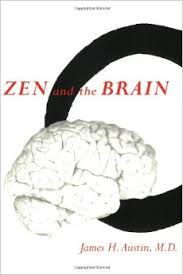
Most of my reading was divided between two books that I’ve mentioned in earlier reports. The first is Zen and the Brain by James H. Austin. This is probably the most expensive book that I’ve purchased since the ridiculously overpriced textbooks of college. While I’ve been known to pan decent books for being overpriced (e.g. most recently Zen Mind, Strong Body by Al Kavadlo), I will say that I’ve found this book to be worth it. There are vast numbers of books on the fascinating findings of neuroscience research. Also, there is a vast canon on Zen, meditation, and the quieting and mastering of the mind. However, there are only a small (though growing) number of books that deal with the intersection of these two subjects, and none covers the subject in as much depth as Austin’s work–as far as I’ve seen. The chapters I’ve been reading of late deal with emotions, visceral drives, and memories–all relevant issues for one who is seeking personal development in a scientifically-minded manner. The next chapter will deal with GABA. I’m looking forward to this because I know there is scientific evidence that yoga can reduce depression through its effect on GABA levels, and I look forward to having a better understanding of how this works.

Zen&Brain


The second book that’s consumed a lot of my time over the past week is The Pyjama Game. I’m about 2/3rd of the way through this book and will finish it in the upcoming week. It is in part a micro-history of judō and in part an account of what it’s like to be a practitioner of the martial art of judō. While the micro-history chapters are chronological, they’re interspersed with chapters that are more of a personal accounting of the author’s experience (and the experience of individuals with which he interacted with first-hand–i.e. other amateurs.)  The era that was covered in my reading of the past week was an interesting one. It chronicled judō’s shift from a time in which Japan completely dominated the sport to one in which Russians, Europeans, and Americans started to make headway and—in some ways–unique contributions to the art. This includes judō‘s rise to Olympic status, and how the sport has progressed since that time.

pyjamagame


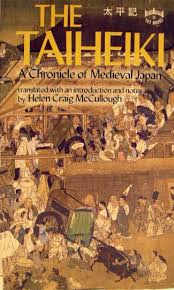
There were another couple of books that I read substantial parts of as research for the novel I’m writing. The first of these is The Taiheikiwhich is–as was the style in medieval Japan–a mix of part history and part literature. It tells the story of Emperor Go-Daigo’s retention of power, largely through the efforts of valiant loyalist warriors–most notably the famous Kusunoki Masashige.

Taiheiki


The second research work is entitled Fighting Techniques of the Oriental World: AD 1200 – 1860As my novel takes place partly in 14th century Japan, China, and Southeast Asia, this reference comes in handy for learning about the activities of warriors across several nations.

FightingTechniquesOrientalWorld


I purchased three books this week. In a way, I was successfully (and happily) suckered. For those who haven’t realized, Amazon is very clever. If you look at a book once or twice, the price will often rise a little when you go back. This drives a few suckers to buy it at a higher price before it rises to some imagined peak price. I’ve noticed this on enough occasions to believe that it’s not just coincidence. Furthermore, as one trained as an economist, I know this is a sound pricing strategy. What I’d not yet experienced is that if one keeps periodically checking on the books–but not buying–the prices will creep back down to a new low, probably only a tiny bit under the first price you saw. I bought three books that I’ve been looking for both on Kindle and at my local bookstore, but which have stayed above my reservation price.


The first, and most expensive, was Buddha’s Brain, which is along similar lines to the aforementioned Zen and the Brain. The book is by a neuroscientist who specializes in neuroplasticity, and who examines how one can go about “rewiring” one’s brain to be happier and more well-adjusted.

BuddhaBrain


The second book is called The Relaxation Response. It was the cheapest book of the three and is much older than the book Buddha’s Brain. In it Dr. Benson (Harvard MD) describes the relaxation response as the body’s counterpoint to “fight or flight” mode. In this state of relaxation, the body–among other things–goes to work on repairing what ails it. There’s a lot of evidence that a human body can repair most of what can ail it if it gets enough rest–i.e. sufficient break from stress.

Relaxation Response


My final purchase was A Confederacy of Dunces. This book is considered to be one of the best comedic novels in American literature. It’s also a book that all depressed writers (which is to say all writers struggling to get things published) should read for the cautionary tale of the novel’s tragic back story. The author, John Kennedy Toole, committed suicide (at least in part) because he couldn’t get it published. His mother then took up the torch, shopping it around. It took her seven years, but she finally got it published after convincing the novelist Walker Percy to look at it, and having achieved his recommendation. In 1981 it won the Pulitzer Prize for fiction.

confederacy of dunces

READING REPORT: February 13, 2015

Welcome to a special Friday the 13th edition of the Reading Report. What’s so special about it? If you’re not deluded by superstition, then not much. If you are superstitious, reading this post may cause you to suffer a plague of locusts (or whatever plagues your particular geographic area.)


Now that we’ve gotten rid of the illiterate ninnies, we can get down to discussing books.


I finished two books this week–one nonfiction and one fiction. I’ll be posting book reviews within the next couple weeks.


The nonfiction book was called Yoga Body: The Origins of Modern Posture Practice. The author’s intriguing and controversial thesis is that yoga as it’s practiced in studios around the world today nothing to do with traditional Indian yoga, but, instead, owes it’s existence to European calisthenics and bodybuilding systems and the Indians that borrowed from them. I didn’t find the author’s argument compelling for a number of reasons that I’ll get into in my review. This isn’t to suggest that I’m certain he’s wrong. He may be right, but the way he constructed his argument left a great deal of room for doubt.


TLEG_Vol1

The fiction book was a graphic novel entitled The League of Extraordinary Gentlemen (Vol. 1). For those of you who haven’t seen the movie featuring Sean Connery, this comic book gathers together a team of protagonists from 19th century science fiction and adventure novels. The team consists of Mina Harker (of Bram Stoker’s Dracula), Allan Quatermain (of H. Rider Haggard’s King Solomon’s Mines), Captain Nemo (a Jules Verne recurring character), Dr. Jekyll/Mr. Hyde (Robert Louis Stevenson’s title characters), and Hawley Griffin (of H.G. Wells’ The Invisible Man). One needn’t have read all those classic stories to follow this book, but being a fan of 19th century tales of the fantastic definitely makes it more fun. The story depicted in this volume has nothing to do with the movie plot.


mantraSherlockHolmes

I’m more than halfway through a couple of books that I mentioned in earlier Reading Reports, they are Why Do People Get Ill? and The Mandala of Sherlock Holmes.  I read chapters 7 through 9 of the former book, which had to do with the expression of symptoms, the heart as a symbol and that symbol’s expression in illness, and the impact of mother’s experiences on infants and children. In the latter book, Holmes has arrived in Tibet, and the plot thickens. The author is Tibetan, and so has some unique insights. However, some chapters advance the story with action, and others are almost like travelogue.


I’m still early into reading two books that I’ve previously mentioned. The first is Zen and the BrainIn this book I’ve transitioned out of the part explaining Zen and the author’s experience of that tradition, and am now into the part that lays down the basic neuroscience. While the author writes in a readable style, for a neuroscientist, this is still challenging reading because of its scientific nature and the complexity of the brain. However, the chapters I read recently both raise some fascinating questions and provide useful information. The chapter I just finished dealt in part with the neurochemistry of addiction. I like that this book is divided up into short chapters. This is beneficial for taking in such complicated information. I need frequent think-breaks to ruminate on what I’ve read.


pyjamagame

The second is The Pyjama Game. After a slow start, the last two chapters have contained some fascinating information. One of these chapters dealt with the history of jujutsu, particularly as Japan transitioned from medieval to modern. The other chapter outlined Kanō Jigorō‘s development of judō.


I bought three books this week.


The first is entitled Healing Moves, and is by a married couple consisting of a fitness writer and a cardiologist. This book addresses a topic that is a prevailing theme in my nonfiction reading as of late, which is what movement, exercise, and physical activity can do to improve one’s health (not just one’s fitness.)

HealingMoves


The second book is Greatest Ever Boxing Workouts.  This book presents information about what boxers like Mike Tyson, Manny Pacquiao, and Floyd Mayweather do to prepare for fights. It’s a follow-up to an earlier book that included fighters like Muhammad Ali and Roy Jones Jr.

BoxingWorkouts


Finally, I just got a short story collection on Kindle Daily Deal the other day entitled Lovecraft’s Monsters.  This isn’t a collection of H.P. Lovecraft stories, but rather is an anthology of stories inspired by Lovecraft’s work.

LovecraftsMonsters

10 Easy Pieces of Fitness Wisdom: and Why “Fitness Secrets” are Bullshit

A few weeks ago I did a post entitled, 10 Easy Pieces of Wisdom: and Why “Secret Wisdom” is Bullshit. That article’s premise was that understanding what one needs to do to be wise is simple, but the process of doing it is inescapably arduous–often to the point of seeming Sisyphean. (For those who aren’t brushed up on their Greek Mythology, Sisyphus was the guy who was punished by having to roll a rock up to the top of the hill only to let it roll back down, and the repeating the process ad infinitum.) I’m not saying that it’s a Sisyphean task, just that it can feel that way and one has to press forward through that feeling.


This post has the same premise, but applied to fitness. Fitness and wisdom have more in common than you might first think–they are both about improvement of the self. Unfortunately, the commonality that’s relevant here is that both invite crowds who will try to convince you they have an end-run around hard work. One of my past martial arts teachers, who was also in law enforcement, said that “cons only work on people with larceny in their hearts.” So it is that the con-men that are trying to sell “enhanced formula supplements” or “a 15 minute per week workout” can only sell to the people who want something for nothing. (Clue: what you get for nothing is nothing worth having.)


Without further ado, here are the 10 easy pieces:


1.) Know Thyself. This is a two-parter:

First, don’t let your ego write checks your body can’t cash. Some students want to jet right into the most advanced exercises. That’s like a third grader taking trigonometry; it’s ultimately less than productive. These are the individuals who tear ligaments, and who you don’t see again for six months–if ever. For virtually everyone, advanced exercises–be it a muscle-up or a yogasana like Urdhva Dhanurasana (A wheel pose, chakrasana, that is entered from a standing back bend)–require a lot of time spent in capacity building via fundamental exercises.


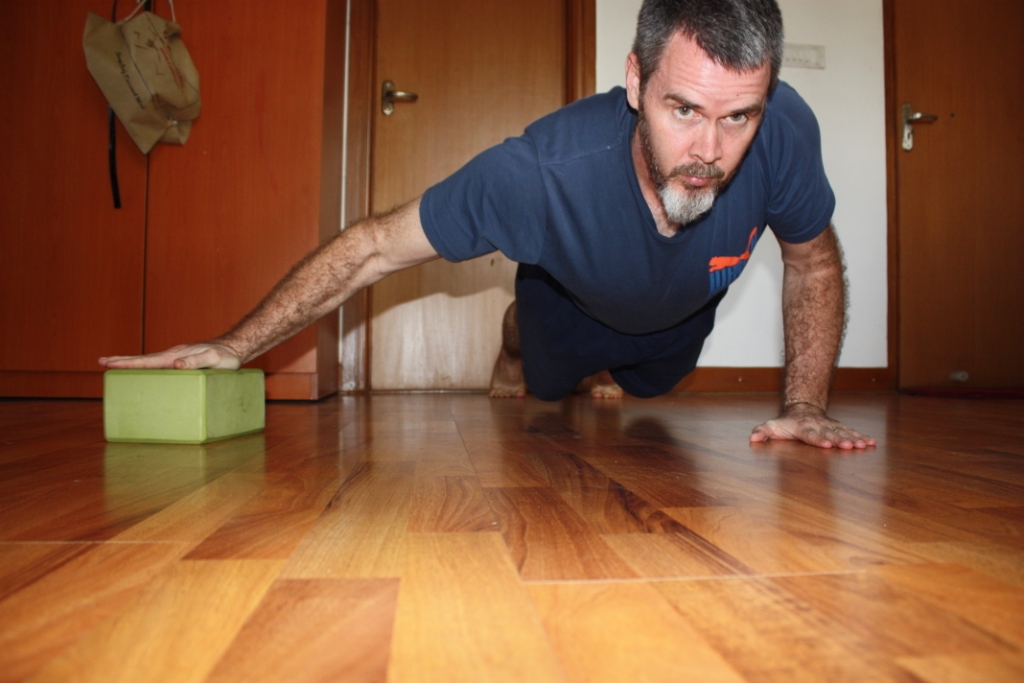
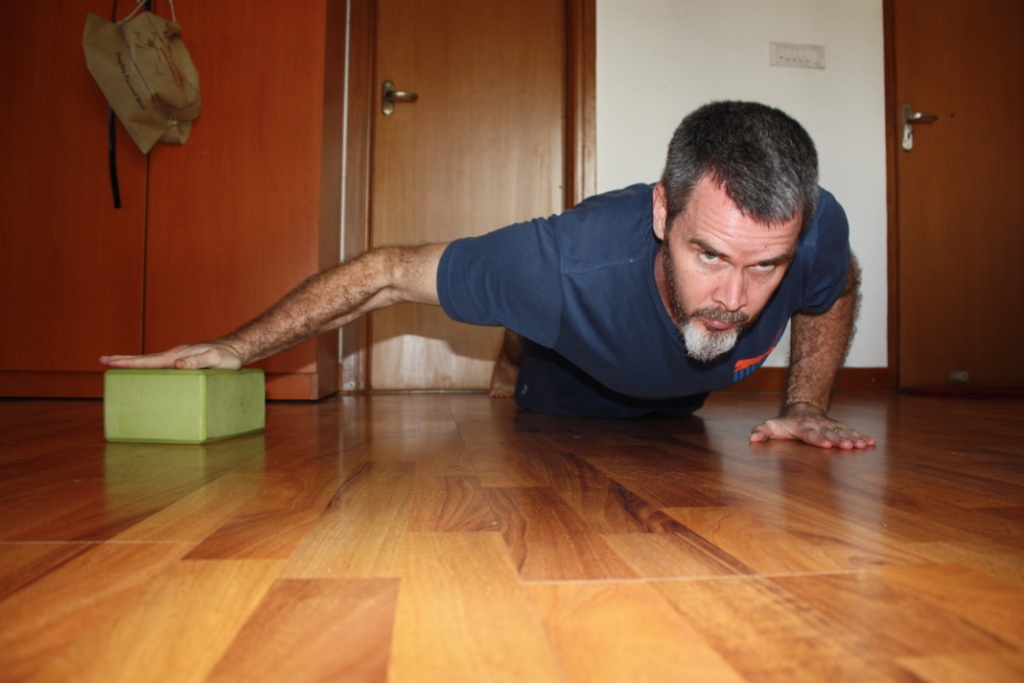
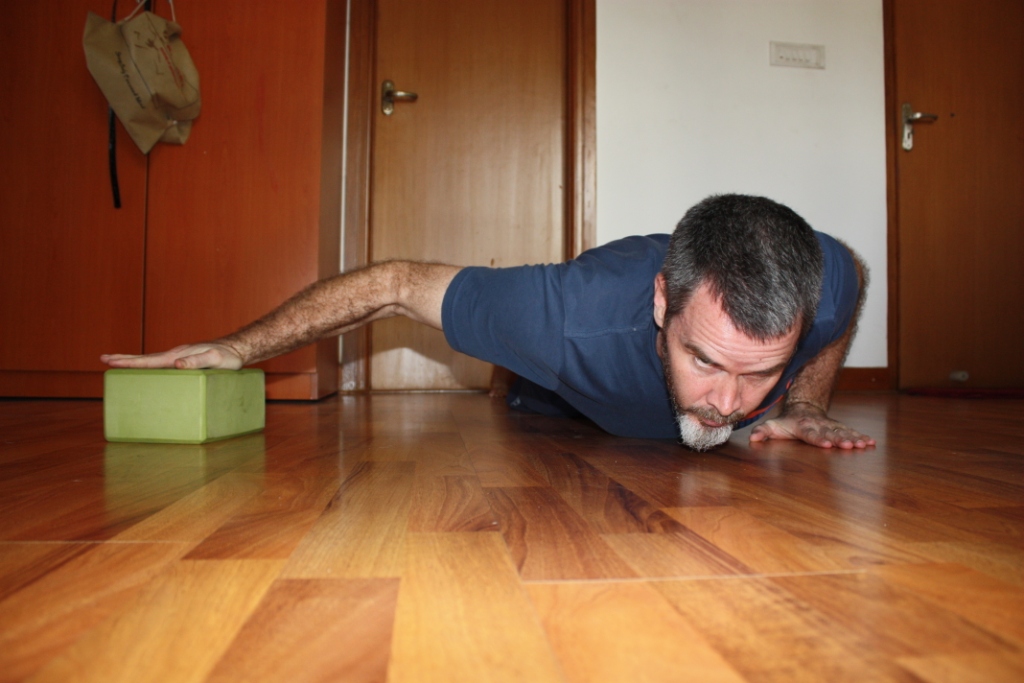
I’ll give an example, I saw someone on television yesterday doing the most horrendous single-armed push up. The only thing that kept this individual from damaging himself is that his range of motion was so tiny (he may have still injured himself.) His problem is that he heard that single-arm push-ups were cool, and he wanted to get straight to it. In reality, one needs to build into that exercise starting from a good solid standard push up, and then doing preppers (preparatory exercises) that gradually shift the load onto one arm. But maintaining form as well as one can. For example, putting one hand on a block off to the side, and gradually shifting it out to arm’s length.

IMG_3217 IMG_3218 IMG_3219


Second, on the other hand, don’t half-ass everything because you mistake discomfort for agony. This confusion cause people to greatly underestimate their capabilities. While you may think your teacher or trainer is a Sadist (only rarely are they are, really), the fact is that they are trying to give you one of the greatest gifts you can ever receive, which is the realization that you are capable of far more than you think you are–if you’re willing to gut it out through the challenging parts.


2.) Diet is the 800 pound gorilla of cutting weight. The simplified mathematics of this that adding exercise (while critically important to fitness) only marginally adds to the calories burned part of the equation. (Believe it or not one burns a lot of one’s calories just through baseline activities–breathing, walking, sleeping, etc.) However, when you cut caloric intake that’s all reduction from the intake side of the equation. However….


3.) Don’t make your goal weight loss, but rather to have a healthy and more functional body. Weight loss tends to be about external validation. That is, one wants to appear more attractive to someone else (or everybody else.) That’s a sucker’s game. People won’t necessarily notice–depending upon how often they see you and how self-absorbed they are. If you shed pounds at a healthy rate, people around you all the time don’t necessarily notice a day-to-day change.


On the other hand, as one starts feeling healthier and develops movement capacity beyond your previous capability, that can’t be taken away by anyone.


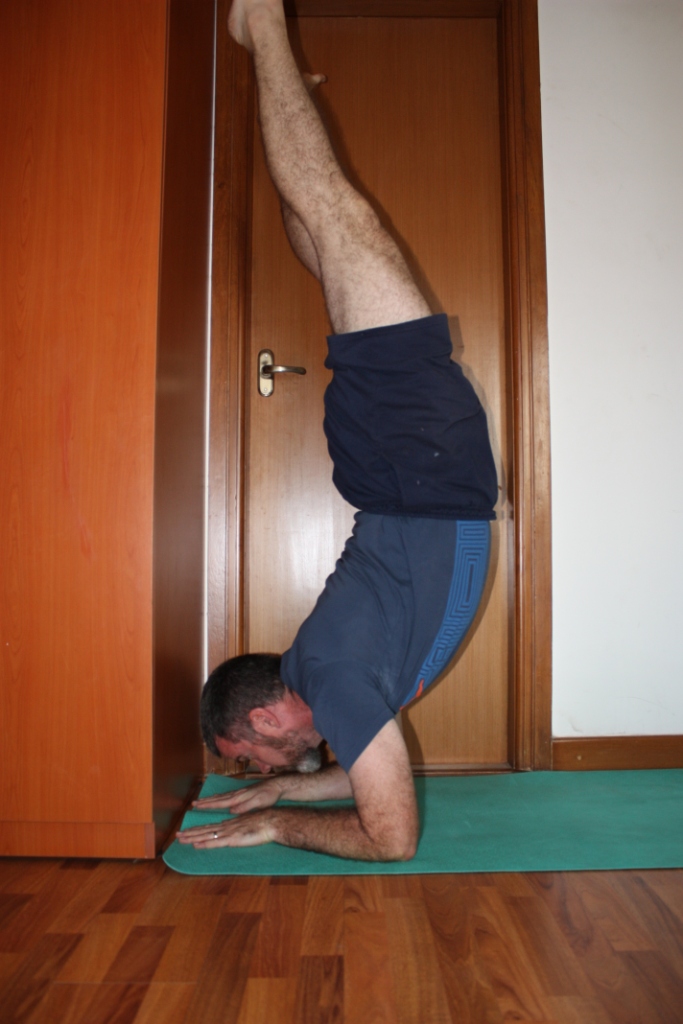
4.) When your body has been properly prepared through fundamentals, advanced maneuvers practically fall into place. I was taught a scorpion prepper  just a couple of weeks ago, and was surprised to find it was much easier than expected. I still have a lot of work to do to take it to the full pose. For example, I’m still using a wall so I don’t over-rotate in the arched back position,  but I bring my heels off the wall once I’m up. Next I’ll do away with the wall. Then it will be time to start bending my knees. My point is that  work on back stretches, core strengthening, and headstands made it relatively easy to get into the first stage.

IMG_3225


5.) Reveling in small victories can kill progress. The handstand provides a classic example. In the beginning, one starts kicking up against a wall. Even this can be a challenge in the beginning. However, as soon as it becomes doable, one should start gradually taking the training wheels off. This may begin as cautiously as pulling one leg away from the wall at a time. Then do away with the wall altogether. Then the suffering begins anew as one sheds the kick up in favor of a more controlled manner of ascent into the handstand.


6.) Don’t be quantitative.  A journalist once asked Muhammad Ali how many sit-ups he did in his training regimen. Ali said, “I have no idea. I don’t start counting until they start hurting.”

I’ve heard guys pleased with themselves because they do “sets of 100 push-ups.” This is often impressive only until you see the person actually do the exercise, and then–more often than not–you notice that they haven’t actually done one push-up. Rather, they’ve done a whole lot of mild elbow bends from a roughly plank-like position. It’s better to do 10 push-ups with a full-range of motion and controlled ascent and descent than to fool yourself with weak form.


7.) Don’t mindlessly workout. Shun the distraction of headphones, television, or cellphones . If you find working out to be so mind-numbingly boring that you need a distraction, you should re-evaluate the nature of your workouts. You should be “listening” to your body throughout the process. If your goal is to have a greater command over your body and its movement, e.g. you are a martial artist, dancer, yogi, etc., then this is particularly important.


First of all, with respect to boredom, boredom is the product of a weak mind. So you might consider working the mind out as well. Secondly, if you are truly bored, you should be upping your game.


While this may be one of my least popular points in this post, if you don’t believe me, ask Al Kavadlo.


8.) Rest is part of the process. It’s not stepping away from the process. As your body rests, your mind should be alert and taking stock of the effect of the practice on your body. Rest breaks aren’t zone out time. Also, part of having a healthy body is building a healthy parasympathic nervous system and immune system. Your body requires rest to heal, and it can heal and fight off infections tremendously effectively if you provide the right conditions.


9.) Exercises that consist of the motions you will need for your particular life are the most important.  The term “functional fitness” is ubiquitous these days, but I first read this advice in Bruce Lee’s Tao of Jeet Kune DoLee said that actions like punching, kicking, and grappling practice should make up the core of a martial artist’s workout. That doesn’t mean one should do away with general fitness activities. (Lee certainly didn’t.) Martial arts provide a prime example of an activity that requires a well-rounded form of fitness. That is, one needs core strength, good range of motion, cardiovascular endurance, and extremity strength and speed.


10.) Don’t agonize over failures. Move onward and, carefully, upward. If you aren’t (safely) failing to achieve an occasional goal, then you need to kick your way out of that box of comfort zone you’re trapped in.


READING REPORT: January 23, 2015

If I were a kid today, I’d be diagnosed with ADD in a heartbeat. I rarely read one book straight through. However, I read a lot, and that means I switching from one book to the next–reading a chapter at a time. I do try to read no more than one book of a given type/genre at a time–often unsuccessfully, as you’ll see. With this in mind, I thought I’d experiment with a weekly post on what I’ve been reading that week.

Book-Review-The-Martian

Fiction: The novel that I’m currently reading is Andy Weir’s The Martian. This book is gripping. It’s considered to be one of the best–if not the best–science fiction works of 2014, although it was self-published in 2011. This is a great example of a book that couldn’t get published despite being spectacular, and which will now make a bazillion dollars. It also explains how a 2014 novel is set to have a big budget movie adaptation come out in late 2015. This book is like the movie Gravity set on Mars, except that it’s smarter.  It taps into that visceral fear of what it would be like to die alone in space–not in a flash but with time to know you are going to die. An unlikely, but plausible sounding, set of circumstances result in astronaut Mark Watney being left for dead on the surface of Mars. But, of course, he’s not dead. Watney has to be creative to figure out how to live for four years in hopes that the next manned Mars mission will go forward as planned. It’s a roller coaster ride between him thinking he will surely die and him coming up with clever solutions. If you are into science, it’s particularly intriguing. I’m about 20% of the way through.


Foreign Fiction: I’ve also continued to read a Hungarian novel called Quarantine in the Grand Hotel by Jenő Rejtő. This is a silly (in a good way) locked-door murder mystery. I picked it up in Hungary over the holidays, and will probably finish it in the next week or so. (I’m about 2/3rds of the way through, and it’s only a 160 page book.) It’s short, highly readable, and humorous.

I also read a chapter from The Mandala of Sherlock Holmes by Jamyang Norbu. A number of authors have picked up the mantle of Sherlock Holmes from Sir Arthur Conan Doyle.  (Not to mention TV shows and movies.) This book is published in India by a Tibetan author who imagines Sherlock Holmes traveled to India and Tibet after he was believed to have been killed (along with Professor Moriarty) in Switzerland. (Going over the falls as depicted in the second Sherlock Holmes movie featuring Robert Downey Jr.) There are three parts to the book: India, Tibet, and Beyond. I’m in the last couple chapters of the first part, most of which takes place in Bombay.


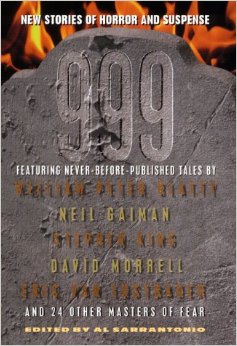
Short Stories: I’m about 85% of the way through 999: New Stories of Horror and Suspense. This is a collection of short fiction of horror / dark suspense. It features authors such as Joyce Carol Oates, Stephen King, Neil Gaiman, Eric Van Lustbader, and David Morrell.  All of the  works are short stories except for a novella/short novel by William Peter Batty. The novella is the last piece, and I’ve just started part II of it.

999_Horror&Suspense


Martial Arts: I just finished Dr. Anthony Catanese’s The Medical Care of the Judokabut I posted a review yesterday so I won’t get into that book. My next martial arts book will be The Pyjama Game by Mark Law, but I haven’t yet begun it.


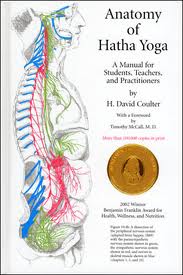
Yoga: I’ve been reading two books related to yoga this week. I just finished Chapter 2 of Coulter’s Anatomy of Hatha Yoga. This chapter dealt with the anatomy and physiology of breathing. This book is an excellent resource for yoga teachers, but it’s pretty dense–which may explain why I’m only on Chapter 3. Not only does the chapter give general information on respiration, it also provides information specific to various yogic breathing methods such as abdominal, yogic, thoracic, paradoxical, and diaphragmatic.

The second yoga book I’m reading is Singleton’s Yoga Body, which is a history of yoga postural practice (asana practice). This book presents a controversial thesis, which is that postural practice (asana) wasn’t really a part of mainstream yoga until quite recently, and that it’s as much a product of what happened in the Western world in the early 20th century as it is a result of Indian yogic traditions–if not more. Having finished the first three chapters (about 30% through), I’m not sure whether I buy his argument or not. He has some documentary evidence on his side, but I know there is also a proclivity to equate the current era in which everybody documents laundry day with the past in which many people were much more secretive. It’s also often not true that the most vocal are not the mainstream. He may be correct, but he has yet to wow me. (Part of his argument is people like Max Muller and HP Blavatsky found hatha yoga [the style which most emphasizes posture] to be the domain of conmen and beggars.)


AnatomyHathaYoga_CoulterYogaBody_Singleton


Miscellaneous Nonfiction: I’ve got about 70 more pages to finish in a book called How Pleasure Works by Paul Bloom. As the title implies, this book is about the science of why people get pleasure from various things from food to sex to freaky sex to art to music, etc. The primary thesis is that there are hidden essences that are the source of pleasure. The chapter I just finished talked about an interesting study in which violinist extraordinaire Joshua Bell went into a subway station and played his $3.5million violin, and barely netted $30–even though there were people passing him who’d paid $200 to hear him in his tuxedo at a concert hall later that evening. The chapter also talked about art forgeries, and how some art is valuable when it’s associated with a famous painter and worthless when it’s a forgery by a presumably equally skilled forger (I say equally skilled because these individuals have been able to pass their work off to experts as a painting by a famous artist. In some cases, they weren’t forgeries but rather originals in the style of the famous artist and submitted as an unknown work found in a basement somewhere.)

HowPleasureWorks


I also finished the letter “B” in the book The Painted Word  by Phil Cousineau. This book is organized like a dictionary, except that it only contains certain English language words that the author finds particularly intriguing, and it gives background on usage and how the meanings have migrated. If you love language, you’ll find this book much less painfully boring than I have made it sound.

Painted Word


That completes the books I’ve been reading over the past week. I did purchase two books this week, but they’re far down the queue to be read. One is the graphic novel The League of Extraordinary Gentleman by Alan Moore, and the other is Right Ho, Jeeves by P.G. Wodehouse.

BOOK REVIEW: The Medical Care of the Judōka by Anthony J. Catanese

The Medical Care of the Judoka: A Guide for Athletes, Coaches and Referees to Common Medical Problems in JudoThe Medical Care of the Judoka: A Guide for Athletes, Coaches and Referees to Common Medical Problems in Judo by Anthony J. Catanese

My rating: 4 of 5 stars

Amazon page

I’d recommend this book for anyone who holds a position of responsibility in a dōjō or a combative sport gym, including: teachers, coaches, senior students, trainers, etc. It’s intended for those involved with sport judō, but because there aren’t a lot of sport or martial art-specific books of this nature this may be one of one’s best option to get this information. I haven’t stumbled upon other books like this, but performing a search did result in similar books either generic to martial arts or for other martial arts. However, all of the others that I saw were either old / out-of-date, only available in hardcopy (usually at great expense), or were not by physicians. This book is available on Kindle and is quite inexpensive.

While it’s geared toward sport judō, many of the injuries will be common across martial arts. This is truer of grappling-oriented martial arts, but things like mat infections, students with various chronic ailments, and participants being knocked unconscious. (The latter is covered extensively, but arguably being even more of a concern for strikers.)

The book is useful in two ways. First, it discusses first aid and treatment for common injuries in the martial arts. It’s not a first aid manual, and will not replace training. (In fact, the book assumes it’s talking to someone who’s in a position where they’ve had at least minimal training / experience.) However, it may provide useful information about what injuries one should make sure to be trained in when shopping first aid courses. It also gives one ideas about differences of opinion on certain approaches to treatment or the decision as to whether a given participant is safe to participate.

Second, the book discusses whether prospective students with common chronic ailments can safely participate, and under what circumstance. In many cases, this book goes about this by saying what the judō rulebook says. While this may not be a perfect guide for practitioners of other arts, it may give a reasonable idea about how serious one should take a given disease or infirmity.

The book consists of 20 chapters. Most of the chapters cover common injuries and ailments in judō, generally arranged by anatomical systems. However, there are also chapters covering nutrition/hydration, issues for athletes going abroad / older participants / and special needs athletes, drugs and doping considerations, injury rehabilitation issues, psychological challenges, and the traditional Japanese methods of resuscitation and first aid (kappo and katsu.)

In addition to the core chapters, there is some useful ancillary material. First, there are vignettes interspersed throughout the book that could be beneficial. These vignettes reflect the benefit of having an author who is a medical doctor, a long-time judōka, and an experienced match physician. The vignettes may be more likely to stick in one’s head than the blander presentation of information, and these sidebars often address unusual cases. Also, there are two glossaries—one that deals with martial art / sports terminology, and one for medical terminology.

While written by a physician, this book is not written exclusively for other doctors or medical experts. That is to say, it’s easily readable by a lay audience. Medical jargon, when used, is explained the first time in the text, so one doesn’t need to keep jumping to the glossary.

At least the Kindle version is graphics free. That would be problematic if it was a first aid manual, but that’s not this book’s purpose.

As I said in the beginning, if you have responsibilities for the well-being of martial arts students / athletes, you should read this book.

View all my reviews

2015 Martial Arts Movies

NOTE: I’ve revised this post with up-to-date information. Please see that post here.

My third annual preview of martial arts movies will be presented in two installments. Many of the movies in the latter half of the year do not yet have release dates or trailers by January. Ergo, I’m posting the first part now, and will do a revision in mid-summer.

“Martial arts movie” is a bit ambiguous. Almost every action movie features martial arts. The leaked teaser for Ant-Man was pretty much a sequence of Scott Lang (Ant-Man) fighting his way through a corridor to access an elevator. So, does such a movie get included? I’ve opted against putting every action film with a kick in it into this post. Yet, I don’t want to stick to films that feature martial arts cliches (e.g. they killed my master, an evil billionaire is hosting a death match tournament, they killed me and left me for dead, etc.)  I, therefore, use the admittedly subjective litmus test of whether there would be a movie if one took away the martial arts and replaced it with brawling–not just whether it would be a less slick movie with a diminished “woo” factor.

I’ve tried to go as international as possible this year, including Bollywood (using the term colloquially if not precisely) and SE Asian releases in addition to the usual Hong Kong & Hollywood fare.


Underdog Kids (January 16): Described on IMDb as: “Inner city kids from a poor neighborhood go up against the undefeated Beverly Hills Junior National Karate Team.” I’ve seen no trailer for this, just a poster:
underdogs_2

Wild Card (January 30): This may be a cheat given what I said above. However, it’s a Jason Statham film, and like the “Transporter” films it probably doesn’t amount to much without the ass-kickery. Let’s face it, you’re not going to see Jason Statham for his extensive acting range.

Dragon Blade (February 19): Featuring Jackie Chan, John Cusack, and Adrien Brody. This is a period piece, and–as you can tell from the casting–is big budget as martial arts flicks go.

Wolf Warrior (March 1) [China]: This looks like more of a shoot-em-up action film than a martial arts film, but some have listed it as a martial arts film and the close quarters action is definitely reminiscent of a martial arts film.

Skin Trade (April): This film stars Tony Jaa and Dolph Lundgren as the good guys and Ron Perlman as the villain. As the title suggests, it’s set around a theme of human trafficking.

Bollywood Dragon  (May 15) [India]: The blurb for this one is: “An English martial arts instructor travels to Mumbai to identify her twin sister’s body, discovering she lived a mysterious life among the criminal underworld and decides to investigate by being her.”
There is no trailer up for this movie as of yet.

The Kickboxer: City of Blood: (May 15): This is a different project than the Bautista / Van Damme / Carano film that was originally titled “Kickboxer” and is now going by “Kickboxer: Vengence,” but there’s no graphic publicity out on it yet. It may not come out as scheduled.

The Transporter Legacy (June 19): Another “Transporter” film, but Ed Skrein plays the role of Frank Martin in this one. As with “Wild Card” it may be a cheat to include it as a martial arts film, but car chases don’t get these movies all the way to watchability.
I haven’t seen a trailer, but there are still photos.
TransporterLegacy

The Boy and the Beast (July 11) [Japan]: This also may be a cheat because it’s an animated film, but martial arts does seem to be a prominent feature of the work. (I believe I included one of the Kung fu Panda movies in one of my past posts, so I think this is fair game.)

Brothers (July 31) [India, in Hindi]: An Indian remake of the American film Warriors. In the American movie, two estranged brothers must fight each other in an MMA bout. (Hence the name of the Indian version, Brothers.) There’s not a proper trailer out, but there is this:

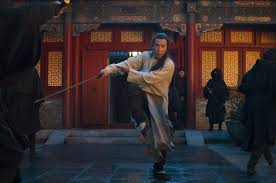
Crouching Tiger, Hidden Dragon: The Green Legend (August 28): Interestingly, this sequel to an immensely popular film will be released on Netflix and IMAX simultaneously. If this were some risky, low-budget film, going straight to Netflix wouldn’t be at all surprising, but this is the sequel to a movie that was (maybe still is) the highest grossing foreign language film playing in America. If this bold move pays off, it could be the beginning of a new paradigm of movie releases. [Also with The Interview going with an unconventional release owing to North Korean threats and intervention, there maybe a great deal learned about alternatives to a traditional film release.]
CTHD2

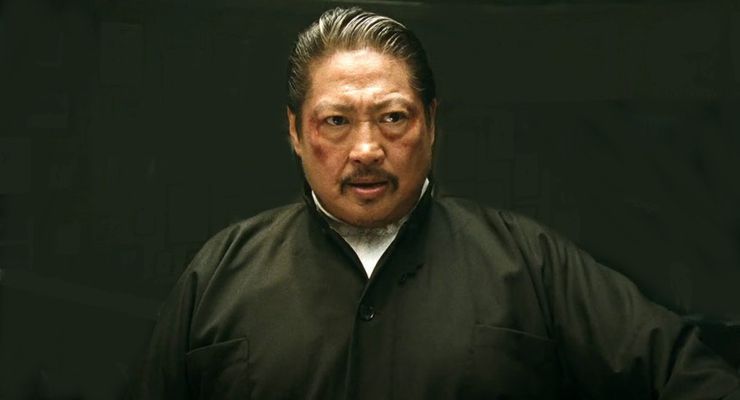
The Bodyguard (undesignated Summer release) [China]: Featuring and directed by Sammo Hung.
sammo-hung-740x400

Movies with unspecified release dates:

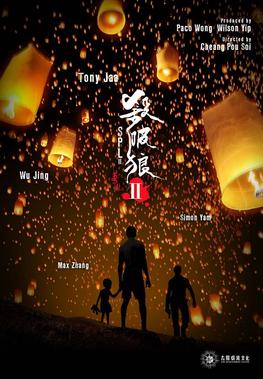
SPL (Sha Po Lang) II / A Time for Consequences / SPL2: Rise of Wong Po [China]: This Hong Kong film will feature Thai superstar Tony Jaa. (Is he in everything? Have they cloned him, or does he not need to sleep, eat, and poop like the rest of us.)
SPL_II_Teaser_Poster,_Apr_2014

The Chemist: A grain of salt on the 2015 release, please. This is an “assasin-who-can’t-bear-to-kill-his-victim-and-ends-up-protecting-her-instead” film.

Pound of Flesh: Jean-Claude Van Damme. The blurb says: “A man’s heroic attempt to help a woman in distress ends up with him waking up the next day without a kidney and plotting his revenge.”
PoundofFleshMovie

Kickboxer: Vengence: Featuring Dave Bautista, Jean-Claude Van Damme, and Gina Carano.

The Martial Arts Kid: As the unimaginative title (generic knock-off of the alliterative “Karate Kid”?) suggests, this is low budget. It features past martial arts competitors like Don Wilson and Cynthia Rothrock.
MartialArtsKid

Ultimate Justice [Germany]: The blurb on IMDb reads: “A team of former elite soldiers are drawn back into action when the family of one of their own is attacked.”
I haven’t seen any publicity for this movie yet.

The Monk (Summer) [China]:This movie is based on a popular Chinese novel entitled Dao Shi Xia Shan (A Monk Comes Down the Mountain.)
I’ve seen no graphic publicity on this one, and the novel has apparently not been translated to English, so I don’t have much to tell you.

Unlikely 2015 Releases:

Stan Lee’s Annihilator: IMDb has it listed for an unspecified 2015 release. If so, those involved are better at keeping secrets than anyone else in Hollywood.

Showdown in Manila: Featuring Mark Dacascos. It’s supposed to begin filming early in February, so a release this year is unlikely. It’s said to be like “The Expendables.” I assume that means that it’s a big cast of past super-stars, but it might just mean that it sucks badly.

Learning to Leap: Why?

IMG_1631Leaping maneuvers are ever-present in martial arts movies and in some martial arts (e.g. Indian Kalaripayattu and some forms of Kung fu). However, these acrobatic techniques are rarely seen–and are even less often successful–in combative encounters (neither in sport nor in the real world–excepting those sports that highly reward such maneuvers and create rules that make them feasible for entertainment value.)


Why leaping, spinning wildness is popular in movies is easy. We thrill to see extremely demanding action that draws ooohs and ahhhhs. It’s the same reason one wants to watch a parkour runner vault over a car (presuming it’s not one’s car), even when it would be infinitely more practical to walk around it. It’s why we want to see gymnasts tumbling and flipping through the air even though walking across the floor is both easier on the joints and less hazardous.


However, the question of why martial arts that aren’t purely for entertainment practice leaping maneuvers. Even a few of the quintessentially pragmatic Japanese martial arts, which follow the motto “eliminate the extraneous” have some leaping techniques. One of the schools I’ve studied, Kotō-ryū Koppōjutsu has a scroll devoted to leaping techniques, despite the fact that it’s otherwise a grounded system–both literally and figuratively. Muay Thai, which also values tried and true winning basics over snazziness, also has leaping knee strikes in its repertoire, though one doesn’t see them a lot in fights. It’s true that the arts that emphasize practicality but have leaping and spinning techniques tend to have a different approach to them. The Kotō-ryū Hichōjutsu (that school’s leaping techniques) emphasize eliminating big wind-ups, and going straight into the leap from a natural posture. This gives one less air, but is much less obvious. It’s particularly useful if you don’t really want air, but you just want to leap as much as you must.  But why leap at all?

Creating this kind of spring loading of the legs may not fly.

Creating this kind of spring loading of the legs may not fly.

This kind of windup would be anathema to schools.

This kind of windup would be anathema to some schools


There are a number answers to this question. First, while it’s hard to make aerial techniques work, when they work, they can be devastatingly effective. There are few ways to put more power into a strike than to literally put all of one’s body-weight in motion under the force of gravity. There’s understandably something unsatisfying about this explanation. I think it mostly has to do with the dearth of second chances in combative encounters. Few second chances make one want to have the highest likelihood of success on the first go.


Second, while tried-and-true, go-to techniques work because they are hard to defeat and /or they minimize one’s risk of a fight-ending counter, some techniques work because they catch the opponent off-guard. Such techniques work because the opponent can’t believe one is actually trying something so wild on them. However, failing to anticipate the unusual, the opponent hasn’t trained a response into themselves. This answer gets us somewhere in cases where either the situation is dire or one knows something about the opponent.


Third–and I would argue most importantly–these techniques produce explosively powerful legs that are beneficial to a martial artist even when he stays on the ground. In other words, maybe they are more important in the role of capacity building than they are as actual techniques to be emulated.

The split kick allows one to kick two opponents at once--as long as they aren't moving and are  perfectly spaced. However, it does require a multidimensional fitness that's beneficial for martial artists. (Which is why I can't do it well.)

The split kick allows one to kick two opponents at once–as long as they aren’t moving and are perfectly spaced. However, it does require a multidimensional fitness that’s beneficial for martial artists. (Which is why I can’t do it well.)


Finally, there’s one more reason that is important but was last because I didn’t even learn this lesson until I was reviewing the photos for this post, and that’s that these techniques require a whole new level of bodily awareness and control. I would generally be considered to have pretty good bodily awareness. I’ve been doing martial arts a long time, have practiced various kinds of yoga and chi gong, and have done my share of other physical training. Still, when I looked at my photos I found that I often had body parts jutting every which way. While one may argue that one doesn’t need that brand of bodily awareness if one is not using that kind of motion, I think that it probably helps with one’s awareness at high-speed in general and that many arts don’t adequately prepare one for keeping one’s body under control when there are those extra forces (e.g. centripetal & centrifugal, and gravity) acting upon it.

In my mind this looked completely different. I didn't have my arms out to the side like I was on a cross and my heel standing leg heel was still up near my buttock.

In my mind this looked completely different. I didn’t have my arms out to the side like I was on a cross and my heel standing leg heel was still up near my buttock.


One aspect of bodily awareness that is particularly important for these maneuvers is control of the eyes. In the arts I’ve studied, there has always been emphasis on the placement of the eyes. However, given all the little details one had to keep in mind, it was a reality easy aspect to half-ass. However, when one is leaping, and particularly if there is a spinning component, wandering eyes translates to crash and burn.

Entering the spin.

Entering the spin.

Mid spin / mid kick

Mid spin / mid kick. I have no idea why my right index finger is pointed down.


I’m not built for leaping. It’s not so much the leaping, but–in the immortal words of Tom Petty–“Coming down is the hardest thing.” I figured that getting to the level of Kalaripayattu training that involves a lot of leaping would be the end of that art for me. As I mentioned, there are some leaping techniques in the martial art I studied, but I was never particularly good at them. When I was young and had the proper body for it, I didn’t have the right mindset, and when I got older I was lacking the physical capacity for them. However, I’ve learned quite a bit about my body through the practice of these techniques, and I’m interested to see what level I can take it to.

IMG_1654


Rewiring the Brain about Pain: All That Isn’t Pleasure Isn’t Pain

IMG_0104

I see people staring at the railing on which they will stretch their hamstrings just like they would look at a side-by-side refrigerator unit that they have to move down a flight of stairs, psyching themselves up for the stretch. Or maybe they are weighing the question of whether they really need to stretch as one might ponder whether it would be better to get an engine overhaul or replace a car altogether. The point is that there seems to be an element of anxiety or dread associated with actions like stretching that aren’t necessarily pleasurable.


I have a theory about why this is the case.

First, people falsely equate discomfort with pain.

Second, the entire point of true pain is to tell one how not to move so as to avoid exacerbating an injury.

Third, this results in a desire to avoid pursuits that cause such physical discomfort.

Fourth, people create a self-fulfilling prophecy in which they tense muscles in the area of the stretch to counteract the aching stretch, but this just increases the discomfort level.


Your body has a clever little device called the myotatic reflex arc (MRA.) That’s when a muscle tenses to avoid injury because the muscle seems to be stretching too fast for comfort. However, that reflex is only relevant to dynamic movement and the fact that it’s a reflex arc means that the signals don’t go through the brain–thus–aren’t consciously controlled. The MRA is different from the tension one holds in a slow and controlled stretch. It’s fun to see people who’ve been encouraged to breath and relax into the stretch realizing that the stretch isn’t as bad as it seems.


Of course, many intense physical activities that cause discomfort may also result in a sufficient endorphin (natural painkillers) inflow and adrenaline / cortisol (stress hormones) outflow to result in net feelings of pleasure. While stretching results in endorphin release, the action of holding the muscle stretched may be too much for our natural painkillers to counteract, particularly when one is breathing easily and thus the body is not under the level of whole-body stress that might encourage the big endorphin dumps desired.


The problem is that one can’t achieve flexibility without pressing against one’s limits any more than one can make strength gains without lifting more or by employing more repetitions. If one just goes to the point at which one is no longer comfortable, you may be able to prevent losing flexibility, but you’re not going to make gains.


Another part of the problem is that people often go into stretching cold, and thus maximize their discomfort. Doing warm-ups and joint articulations before any kind of intense stretching is a good practice. These warm-ups should not test the fullest range of motion, but should move with sufficient quickness to get the muscles and the synovial fluid in the joints warmed up.


The problem with seeing stretching as painful is that it discourages it. Some individuals fail to stretch altogether, and others focus only on the major muscle groups (hamstrings and quads) and miss muscles that adduct, abduct, rotate, and generally stabilize and support the primary agonist or antagonist muscle pairing. The most common injury in the Japanese martial art that I study is a knee injury attributable in part to insufficiently flexible external rotators and abductors and the inability to keep the knee in line with the toes–thus putting too much torque on the joint and too much load on the ligaments.


Wrong: knee is not pointing over toes

Wrong: knee is not pointing over toes


Martial artists, in particular, need to avoid equating discomfort with pain. When discomfort becomes pain, pain becomes agony, and agony become intolerable. There are many factors that can determine the outcome of a combative event, including technical proficiency, physical fitness, and the ability to persevere. The last one may mean the ability to take a licking and keep on ticking as the Timex people used to say.


The good news is that it’s possible to rewire one’s brain to avoid equating the discomfort of stretching with pain.

Step 1: Get a yoga face. In the martial arts, we talk about having a warrior face, which is an expression that conveys one’s intensity and seriousness. For yoga and stretching one should ditch the agony face and replace it with a serene face. My personal recommendation is that you aim to emulate the faces on the Bayon at Angkor.

Yoga face as seen on the Bayon at Angkor

Yoga face as seen on the Bayon at Angkor


Step 2: Keep your mind on your breath, and away from the sensation of the stretch. There’s a reason yoga teachers harp on breath, it will help one reduce one’s overall tension.


Step 3: Stop using the word pain (in your own mind or when speaking out loud) to refer to the feeling of a stretched muscle. You may not be able to replace the word “pain” with something as euphemistic as “stretch bliss,” but try to avoid giving it a name with a negative connotation. It’s simply the sensation of a stretched muscle


Step 4: When you find yourself wearing an agony face and squeezing out the protective muscular tension, ease off the stretch until it’s comfortable. Then ease back into the stretch, keeping the surrounding muscles relaxed and the breath even and deep.  You can visualize expelling the tension with one’s exhalation if that helps.


Step 5: When you experience real pain, have no guilt about heeding it and giving that part of the body time to heal. Of course, this requires an ability to differentiate stretch sensation from true pain.


Now I’ll segue into a discussion of actual pain. When I was having a lot of problems with my lower back–eventually diagnosed as arthritis–I had a bizarro interaction with my healthcare provider. When I first went to the doctor, I faced this unsubtle wall of suspicion because back injuries are a common fraud device for persons addicted to painkillers. That’s because there are many forms of back injury that are hard to witness externally. However, when they x-rayed my back they could see clear indication that something was wrong. Then they were surprised when they tried to foist painkillers on me, and I wasn’t interested.


Here is how I look at painkillers. Imagine the “check-engine” light came on in your car, and you took the vehicle to the mechanic. The mechanic has your car for a brief time and comes back to you with a nominal bill. At first you are thrilled, and then you ask the inevitable question, “So what was the problem?” Your mechanic then says, “Oh, I have no idea, I just disconnected the light. That light won’t be giving you any more trouble.” Needless to say, you are decidedly less thrilled. You wanted the underlying problem fixed.


Don’t get me wrong, I’m not saying that there’s no place for pain-killing medication. If one has pain that is so severe that one cannot rest, one’s body won’t be able to heal itself properly.


However, if you pop painkillers to do away with bodily aches, you should reconsider. Those aches are what being alive feels like, and if they come from exercise or labor they should be welcomed and not be framed in a negative light. If they are an indication of a postural misalignment or some sort of systemic problem, you should look into fixing the underlying problem.


[To be fair to my aforementioned doctor, I think people aren’t conditioned to the notion that they are the key participant in their own healthcare and that fixing problems will often require hard work on their part. So a part of the problem in some places–most notably America–is that healthcare isn’t profitable unless they are pushing surgery or expensive medications. However, another part of the problem is that people just want to go to the doctor and have the expert fix them without requiring the personal effort of fixing postural deficiencies or cutting weight. I can understand why doctors are a bit fed up with suggesting people do the work only to get no response. I saw a statistic recently that only 1 in 8 people threatened with a lethal illness would make a behavioral change recommended by a doctor to reduce the threat of the ailment–e.g. stop smoking, stop drinking, cut weight, etc.]