“On His Blindness” by John Milton [w/ Audio]

When I consider how my light is spent,
 Ere half my days, in this dark world and wide,
 And that one Talent which is death to hide
 Lodged with me useless, though my Soul more bent
To serve therewith my Maker, and present
 My true account, lest he returning chide,
 "Doth God exact day-labour, light denied?"
 I fondly ask. But patience, to prevent
That murmur, soon replies, "God doth not need
 Either man's work or his own gifts; who best
 Bear his mild yoke, they serve him best. His State
Is Kingly. Thousands at his bidding speed
 And post o'er Land and Ocean without rest:
 They also serve who only stand and wait."

NOTE: This poem is sometimes called “Sonnet 19,” sometimes “On His Blindness,” and sometimes “When I Consider How My Light Is Spent.”

“Rooms” by Charlotte Mew [w/ Audio]

I remember rooms that have had their part
  In the steady slowing down of the heart.
The room in Paris, the room at Geneva,
The little damp room with the seaweed smell,
And that ceaseless maddening sound of the tide --
  Rooms where for good or for ill -- things died.
But there is the room where we (two) lie dead,
Though every morning we seem to wake and might just as well seem to sleep again
  As we shall somewhere in the other quieter, dustier bed
  Out there in the sun -- in the rain.

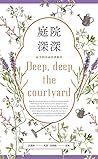
BOOKS: “Deep, Deep the Courtyard” [庭院深深] trans. by Xu Yuanchong

庭院深深:最美的宋詞英譯新詮 (Traditional Chinese Edition)庭院深深:最美的宋詞英譯新詮 by 吳俁陽(賞析)
My rating: 5 of 5 stars

Publisher Website

This is a bilingual (Chinese / English) anthology of Song Dynasty poetry. It features more than 140 poems by almost fifty poets of the Song Dynasty, but a few of the Song poetic rockstars are particularly well represented (e.g. Su Shi, Qin Guan, Ouyang Xiu, and Xin Qiji.) The principal language of the book is Chinese (Mandarin) and so, while the poems themselves appear in English as well as Chinese, the ancillary matter is only in Chinese. Said ancillary matter includes notes, contextual information, bio-blurbs on the poets, and brief front and back matter.

I learned after reading the translations, that the translator was Xu Yuanchong and that he was (i.e. he’s now deceased) a very big deal as a translator, translating classical Chinese poetry into both English and French. All in all, I enjoyed the translations and found them to be sound as poems in their own right. That said, my personal preference would have been to have had less effort put into maintaining rhyme. I suspect a closer transmission of the ideas of the originals could have been achieved without the forced constraint of rhyme. Furthermore, while in many cases metering was attended to, sometimes it was not, leaving those poems to have a doggerel quality. [I come to this conclusion by comparing a few of the poem’s translations to those by other translators as well as to literal translations.] That said, the translator was clearly no slouch, and his stylistic choices were likely informed by what was popular during his career.

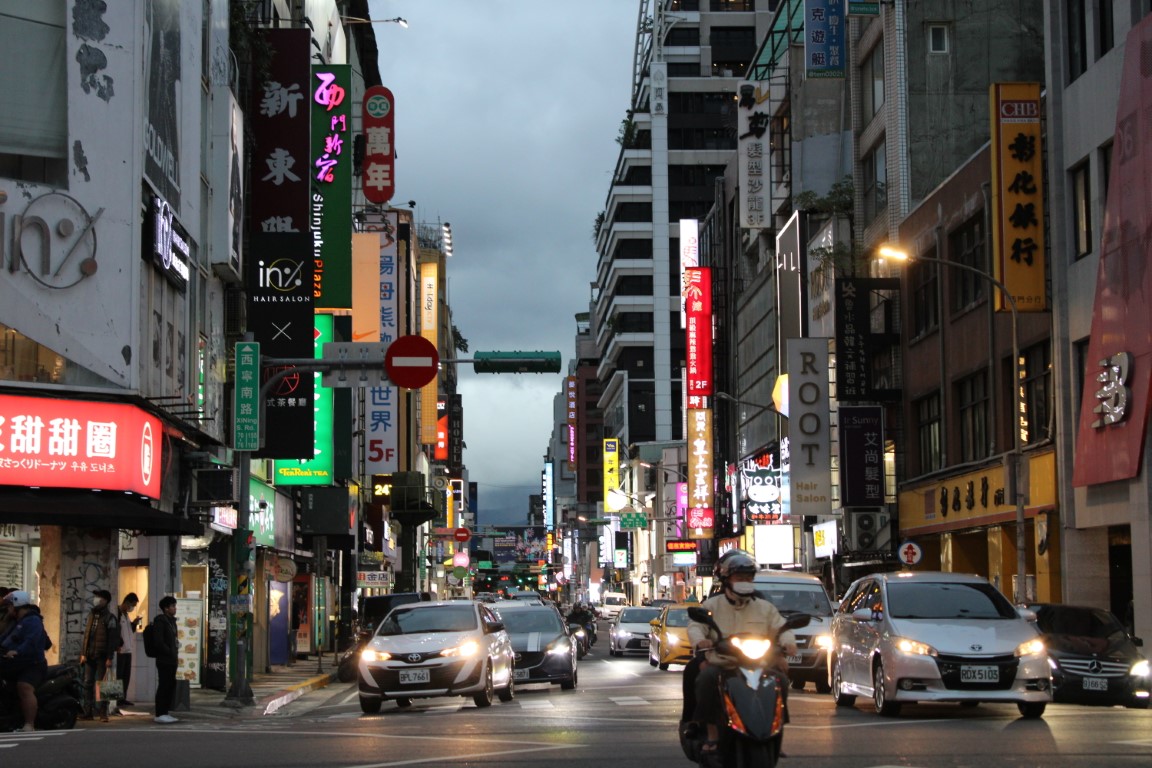
This book is part of a series. Other volumes include: In the Thick Woods a Deer Is Seen at Times (Tang Dynasty poems) and A Pair of Swallows Fly (from The Book of Songs, a.k.a. The Classic of Poetry.) I picked this book up in Taipei’s Zhongshan Book Street (Eslite Bookstore,) and don’t know how widely available the books of this series are outside of Taiwan, but if you are interested in Classical Chinese poetry and can find a copy, I’d recommend it.

View all my reviews

“Curtain” by Paul Laurence Dunbar [w/ Audio]

Villain shows his indiscretion,
Villain's partner makes confession.
Juvenile, with golden tresses,
Finds her pa and dons long dresses.
Scapegrace comes home money-laden,
Hero comforts tearful maiden,
Soubrette marries loyal chappie,
Villain skips, and all are happy.

BOOKS: “Smoke and Ashes” by Amitav Ghosh

Smoke and Ashes: A Writer's Journey through Opium's Hidden HistoriesSmoke and Ashes: A Writer’s Journey through Opium’s Hidden Histories by Amitav Ghosh
My rating: 5 of 5 stars

Amazon.in Page

Release Date: February 15, 2024 [NOTE: for this edition; the book is already out in some markets in some additions.]

Ghosh has written a fascinating exploration of the profound global consequences of that pretty red flower, the opium poppy. I find the events surrounding the Opium Wars to be among the most incredible stories humanity has written. It is mind-blowing that a substance could be so utterly addictive as to spur wars and global social and economic upheavals. That substance is, of course, tea. Ah, you thought I was going to say opium (or its relative, heroin,) didn’t you? But while opium is fantastically addictive, its addicts were by-and-large in peaceful stupors in (or on) their clouds during the time in question. It is the uppity Earl Grey addict who was draining Britain’s treasury of precious metals, and — as addicts do in their impoverished desperation — turned to dealing drugs.

There have been many books written on this subject, but Ghosh carves himself a niche. First, while accounts often focus tightly upon the central adversarial relationship of Britain versus China, Ghosh examines at leisure the roles of two lesser discussed players — India (not only as a subject of Great Britain but also as an autonomous actor) and America. The importance of India’s involvement, from being a major producer and processor of opium to sourcing the sepoys who actually fought the Opium Wars, has been largely ignored, and Ghosh helps to clear up distortions in the historical record. Second, the book investigates questions around America’s opioid crisis and what history can tell us about its drivers. In particular, what does the China’s explosion of addiction tell us about what might have spurred America’s crisis?

This is a readable and compelling nonfiction exploration of the influence of opium from a writer who has produced novels (e.g. the “Sea of Poppies” trilogy) set around these historical events.

I’d highly recommend this book for individuals interested in the influence of Opium, particularly if one is curious about how history relates to the recent crises and what role Indians and Americans played in events.

View all my reviews

“The River Runs Red” by Yue Fei [w/ Audio]

Enraged, I lean on the rail as rain ceases.
I look skyward, and sigh -- then roar.
My grand legacy has crumbled to dust:
A journey of thirty years and 8,000 li.

Young men, don't let regret come with gray hair!
The shame of Jingkang lingers -- a foul taste
We Generals must wash from our mouths.
Let's charge our chariots through Helan Pass
To feast on the flesh of our foes & drink their blood.
 Only then can we return home with honor.

In Chinese, the poem is entitled 滿江紅 (Man Jiang Hong,) “The Whole River, Red”:

怒髮衝冠,憑欄處,瀟瀟雨歇。
抬望眼,仰天長嘯,壯懷激烈。
三十功名塵與土,八千里路雲和月。
莫等閒白了少年頭,空悲切。
靖康恥,猶未雪;
臣子恨,何時滅?
駕長車踏破賀蘭山缺!
壯志飢餐胡虜肉,笑談渴飲匈奴血。
待從頭收拾舊山河,朝天闕。

“The Night Has a Thousand Eyes” by Francis William Bourdillon [w/ Audio]

The night has a thousand eyes,
 And the day but one;
Yet the light of the bright world dies
 With the dying sun.

The mind has a thousand eyes,
 And the heart but one:
Yet the light of a whole life dies
 When love is done.

“I never saw a moor” (1052) by Emily Dickinson [w/ Audio]

I never saw a moor;
I never saw the sea,
 Yet know I how the heather looks
  And what a billow be.

I never spoke with God,
Nor visited in heaven.
 Yet certain am I of the spot
 As if the checks were given. 

“When You Are Old” by W. B. Yeats [w/ Audio]

When you are old and grey and full of sleep,
And nodding by the fire, take down this book,
And slowly read, and dream of the soft look
Your eyes had once, and of their shadows deep;

How many loved your moments of glad grace,
And loved your beauty with love false or true,
But one man loved the pilgrim soul in you,
And loved the sorrows of your changing face;

And bending down beside the glowing bars,
Murmur, a little sadly, how Love fled
And paced upon the mountains overhead
And hid his face amid a crowd of stars.

“When I Was One-and-Twenty” by A.E. Housman [w/ Audio]

When I was one-and-twenty
 I heard a wise man say,
"Give crowns and pounds and guineas
 but not your heart away;
Give pearls away and rubies
 but keep your fancy free."
But I was one-and-twenty,
 No use to talk to me.

When I was one-and-twenty
 I heard him say again,
"The heart out of the bosom
 Was never given in vain;
'Tis paid with sighs a plenty
 And sold for endless rue."
And I am two-and-twenty,
 And oh, 'tis true, 'tis true.