BOOKS: “Smoke and Ashes” by Amitav Ghosh

Smoke and Ashes: A Writer's Journey through Opium's Hidden HistoriesSmoke and Ashes: A Writer’s Journey through Opium’s Hidden Histories by Amitav Ghosh
My rating: 5 of 5 stars

Amazon.in Page

Release Date: February 15, 2024 [NOTE: for this edition; the book is already out in some markets in some additions.]

Ghosh has written a fascinating exploration of the profound global consequences of that pretty red flower, the opium poppy. I find the events surrounding the Opium Wars to be among the most incredible stories humanity has written. It is mind-blowing that a substance could be so utterly addictive as to spur wars and global social and economic upheavals. That substance is, of course, tea. Ah, you thought I was going to say opium (or its relative, heroin,) didn’t you? But while opium is fantastically addictive, its addicts were by-and-large in peaceful stupors in (or on) their clouds during the time in question. It is the uppity Earl Grey addict who was draining Britain’s treasury of precious metals, and — as addicts do in their impoverished desperation — turned to dealing drugs.

There have been many books written on this subject, but Ghosh carves himself a niche. First, while accounts often focus tightly upon the central adversarial relationship of Britain versus China, Ghosh examines at leisure the roles of two lesser discussed players — India (not only as a subject of Great Britain but also as an autonomous actor) and America. The importance of India’s involvement, from being a major producer and processor of opium to sourcing the sepoys who actually fought the Opium Wars, has been largely ignored, and Ghosh helps to clear up distortions in the historical record. Second, the book investigates questions around America’s opioid crisis and what history can tell us about its drivers. In particular, what does the China’s explosion of addiction tell us about what might have spurred America’s crisis?

This is a readable and compelling nonfiction exploration of the influence of opium from a writer who has produced novels (e.g. the “Sea of Poppies” trilogy) set around these historical events.

I’d highly recommend this book for individuals interested in the influence of Opium, particularly if one is curious about how history relates to the recent crises and what role Indians and Americans played in events.

View all my reviews

“The River Runs Red” by Yue Fei [w/ Audio]

Enraged, I lean on the rail as rain ceases.
I look skyward, and sigh -- then roar.
My grand legacy has crumbled to dust:
A journey of thirty years and 8,000 li.

Young men, don't let regret come with gray hair!
The shame of Jingkang lingers -- a foul taste
We Generals must wash from our mouths.
Let's charge our chariots through Helan Pass
To feast on the flesh of our foes & drink their blood.
 Only then can we return home with honor.

In Chinese, the poem is entitled 滿江紅 (Man Jiang Hong,) “The Whole River, Red”:

怒髮衝冠,憑欄處,瀟瀟雨歇。
抬望眼,仰天長嘯,壯懷激烈。
三十功名塵與土,八千里路雲和月。
莫等閒白了少年頭,空悲切。
靖康恥,猶未雪;
臣子恨,何時滅?
駕長車踏破賀蘭山缺!
壯志飢餐胡虜肉,笑談渴飲匈奴血。
待從頭收拾舊山河,朝天闕。

“The Night Has a Thousand Eyes” by Francis William Bourdillon [w/ Audio]

The night has a thousand eyes,
 And the day but one;
Yet the light of the bright world dies
 With the dying sun.

The mind has a thousand eyes,
 And the heart but one:
Yet the light of a whole life dies
 When love is done.

“I never saw a moor” (1052) by Emily Dickinson [w/ Audio]

I never saw a moor;
I never saw the sea,
 Yet know I how the heather looks
  And what a billow be.

I never spoke with God,
Nor visited in heaven.
 Yet certain am I of the spot
 As if the checks were given. 

“When You Are Old” by W. B. Yeats [w/ Audio]

When you are old and grey and full of sleep,
And nodding by the fire, take down this book,
And slowly read, and dream of the soft look
Your eyes had once, and of their shadows deep;

How many loved your moments of glad grace,
And loved your beauty with love false or true,
But one man loved the pilgrim soul in you,
And loved the sorrows of your changing face;

And bending down beside the glowing bars,
Murmur, a little sadly, how Love fled
And paced upon the mountains overhead
And hid his face amid a crowd of stars.

“When I Was One-and-Twenty” by A.E. Housman [w/ Audio]

When I was one-and-twenty
 I heard a wise man say,
"Give crowns and pounds and guineas
 but not your heart away;
Give pearls away and rubies
 but keep your fancy free."
But I was one-and-twenty,
 No use to talk to me.

When I was one-and-twenty
 I heard him say again,
"The heart out of the bosom
 Was never given in vain;
'Tis paid with sighs a plenty
 And sold for endless rue."
And I am two-and-twenty,
 And oh, 'tis true, 'tis true.

“Invictus” by William Ernest Henley [w/ Audio]

Out of the night that covers me,
 Black as the pit from pole to pole,
I thank whatever gods may be
 For my unconquerable soul.

In the fell clutch of circumstance
 I have not winced nor cried aloud.
Under the bludgeonings of chance
 My head is bloody, but unbowed.

Beyond this place of wrath and tears
 Looms but the Horror of the shade,
And yet the menace of the years
 Finds and shall find me unafraid.

It matters not how strait the gate,
 How charged with punishments the scroll,
I am the master of my fate,
 I am the captain of my soul.

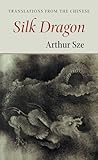
BOOKS: “Silk Dragon II” ed. & trans. by Arthur Sze

Silk Dragon: Translations from the Chinese (Kage-an Books)Silk Dragon: Translations from the Chinese by Arthur Sze
My rating: 5 of 5 stars

Amazon.in Page

Release Date: May 28, 2024

Let me begin with a note of clarification: The edition that I read was the “Silk Dragon II” collection, which is due out in May of 2024. I mention this because there is potential for confusion in that this book looks like a sequel (i.e. a completely new set of poems,) but really it is something between a new edition and a sequel. That is to say, while it has a substantial amount of new material, it is built on the original “Silk Dragon” volume. This edition adds eighteen new poem translations, most of which are from poets of the modern era (I mean that loosely, not technically, so 20th century onwards.) I’d recommend readers get this edition, but not both this and the original.

This collection includes a wide range of poems from ancient times through China’s various dynasties to the modern day. It includes translations that are extremely well-known, such as Li Bai’s “Drinking Alone with the Moon” and Liu Zongyuan’s “Snow on the River.” But it also includes many pieces that are likely to be new to most poetry readers, particularly given they will be reading translations (i.e. Non-specialists in Chinese poetry.) As mentioned, the bulk of the new poems are from recent decades and tend to be free verse. [Though there are four new classical poems, as well.]

I found the translations to be evocative and approachable. I am unable to comment on how well Sze captures the feel of the original, but I can say that the translations of poems I’m familiar with were at least on par with other translations that I’ve read. The translations don’t always display the sparseness one sees in classical Chinese poetry, but the challenge of conveying form and meaning and metaphor through translation is immense and, at some level, impossible.

I’d highly recommend this poetry collection for readers of poetry and translated literature.

View all my reviews

“Poet on a Mountaintop” by Shen Zhou [w/ Audio]

Art and Poem by Shen Zhou, a Ming Dynasty Artist
White clouds engird the mountain.
Stone steps climb to nothingness.
Alone, the poet leans on his staff,
 gazing into the expanse,
 and accompanies the stream:
  bamboo flute joining murmurs
  of unseen flowing water.

“A Red, Red Rose” by Robert Burns [w/ Audio]

O my Luve is like a red, red rose
 That's newly sprung in June;
O my Luve is like the melody
 That's sweetly played in tune.

So fair art thou, my bonnie lass,
 So deep in luve am I;
And I will luve thee still, my dear,
 Till a' the seas gang dry.

Till a' the seas gang dry, my dear,
 And the rocks melt wi' the sun;
I will luve thee still, my dear,
 While the sand o' life shall run.

And fare thee weel, my only Luve!
 And fare thee weel awhile!
And I will come again, my Luve,
 Though it were ten thousand mile.