Four Seasonal Haiku of Sōgi [w/ Audio]

SPRING

Despite the storm,
Spring's herald makes it through:
Scent of plum blossom.

SUMMER

Abundant fireflies
This year, but this morning
None are to be seen.

AUTUMN

Autumn sea:
A boat moves, leaf-like,
In the floating world.

WINTER

Winter rains
Cross the mountains
On rising clouds.

Four Seasonal Haiku of Masaoka Shiki [w/ Audio]

SPRING

on wet feet,
the sparrows hop
down the hall.

SUMMER

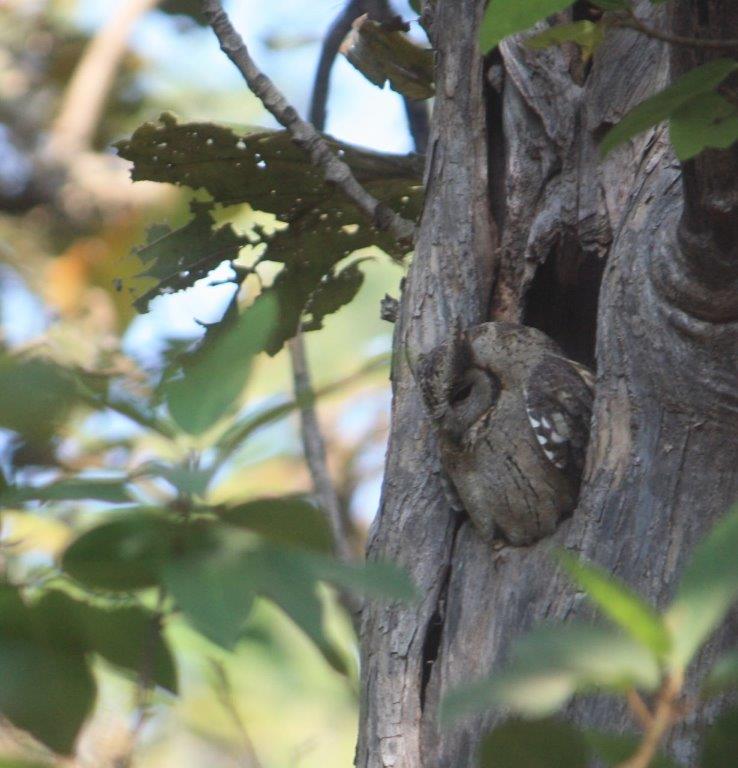
the owl naps,
and dreams of a
summer grove.

AUTUMN

sunny autumn day:
smoke from something burning
rises skyward.

WINTER

a snowy night;
the sound of bamboo
rustling.

Four Seasonal Haiku of Yosa Buson [w/ Audio]

SPRING*

The spring sea;
gently, quietly,
 all day long.

SUMMER

what a joy!
wading through summer rivers,
 sandals in hand.

AUTUMN

vacant teahouse,
atop the mountain:
 a harvest moon.

WINTER

neighbors detest me
for my whistling kettle:
 a cold winter night.

* Translation by: Wilson, William Scott. 2023. A Beginner’s Guide to Japanese Haiku. Tuttle Publishing: North Clarendon, VT.

BOOKS: “Hōjōki” by Kamo no Chōmei; Trans. by Matthew Stavros

Hojoki: A Buddhist Reflection on Solitude: Imperfection and Transcendence - Bilingual English and Japanese Texts with Free Online Audio RecordingsHojoki: A Buddhist Reflection on Solitude: Imperfection and Transcendence – Bilingual English and Japanese Texts with Free Online Audio Recordings by Kamo no Chōmei
My rating: 5 of 5 stars

Amazon.in Page

Release Date: May 7, 2024 [for Tuttle’s bilingual edition]

This is the Japanese Walden, except that it was written several hundred years before Thoreau’s essay and was predominantly philosophically informed by Buddhism rather than Transcendentalism. (Though those philosophical systems do agree on a number of points, most relevantly that materialism is not a sound route to happiness.) Like Walden, Hōjōki is an autobiographical promotion of the hermitic lifestyle. Both works sing the virtues of life in a simple, rustic cabin in a natural setting, a life of minimalism and subsistence living.

There are many translations of this work available, and so I’ll spend the remainder of this review on what differentiates this edition from the two others that I’ve read. First and foremost, the other versions I’m familiar with were presented as prose essays. This edition is presented in verse, which I understand to be the form that the original Japanese work employed. I should say that in some places the work comes across as poetic in the conventional sense, though in others it seems like a versified essay.

Secondly, this edition has a few handy ancillary features. One is that it is bilingual. Romanized Japanese allows the reader to experience the sound quality of the original. This edition also has graphics in the form of maps, artwork, and photographs. Some of the graphics support or expand upon the information delivery while others seem to be more a matter of creating atmospherics. Also, there are explanatory endnotes that help readers unacquainted with Kamakura Period Japan to understand some of the book’s references that might otherwise remain unclear.

I enjoyed and benefited from reading this edition, even having read others. If you are looking for insight into the ascetic life, I’d highly recommend it.

View all my reviews

Four Haiku by Kobayashi Issa [w/ Audio]

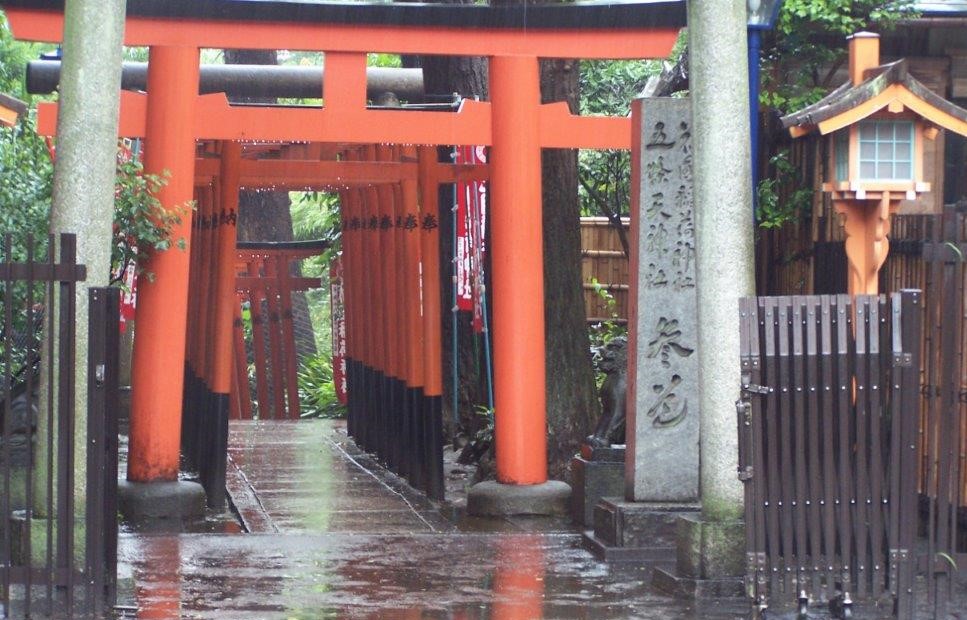
muddy clogs
beside each gate;
Spring is here.
"don't swat!"
the fly rubs its hands,
then rubs its feet.
autumn rain,
a small sumo wrestler
pushes through.
sleeping in a row,
the Shinano mountains:
under snow blanket.
In Japanese:


門門の下駄の泥より春立ちぬ


やれ打つな蠅が手を摺り足をする


秋の雨小さき角力通りけり


寝ならぶやしなのの山も夜の雪


From: Wilson, William Scott. 2023. A Beginners Guide to Japanese Haiku. North Clarendon, VT: Tuttle Publishing, 224pp.

BOOKS: In Praise of Shadows by Jun’ichirō Tanizaki

In Praise of ShadowsIn Praise of Shadows by Jun’ichirō Tanizaki
My rating: 5 of 5 stars

Amazon.in Page

Tanizaki’s essay on Japanese aesthetics doesn’t just show the reader the simple, rustic, and weathered traits of Japanese beauty, it fully submerges them in an otherworldly place ruled by different principles of seeing. So enamored with this pre-modern Japanese aesthetic was Tanizaki that we are convinced he would give up all present-day conveniences to see the world this way (but, alas, he recognizes the impossibility of maintaining a household or business in today’s world that way.)

While the book is principally a tour of this Japanese shadow world, moving from architecture to toilets to lacquerware to Noh plays to skin tones to hotels (with other stops along the way,) it is also a critique of modernity, and particularly a modernity shaped by the West by virtue of Western countries building a lead in a number of key technologies. The most crucial of these technologies, and the one Tanizaki most decries, is electric lighting, which does away with the artistic beauty that derives from the interplay of varied toned shadows (and occasionally a little bit of light.) [I should say, he’s not bashing the Western technology or ways, but rather how poorly they work with maintaining Japanese aesthetic ways.]

I’d highly recommend this book for all readers. If you’re interested in aesthetics, art, architecture, culture, or “things Japanese,” then all the more so, but I can’t remember the last time description pulled me into a book as hard as this one. The essay can be a bit rambling and shifts from euphoria to rant and back, rapidly, but that is part of its magic.

View all my reviews

Summer Grasses by Matsuo Bashō [w/ Audio]

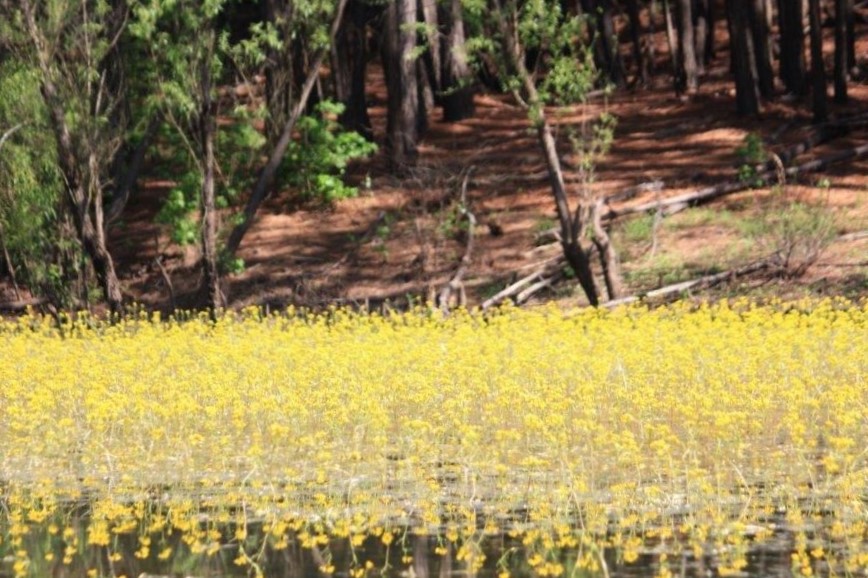
in Summer grass,
 resides the remnants 
  of warrior dreams.

Japanese: 夏草や兵共がゆめの跡; natsugusa ya // tsuwamonodomo ga // yume no ato

BOOKS: MONKEY, Vol. 4: Music ed. by Ted Goossen & Motoyuki Shibata

MONKEY New Writing from Japan: Volume 4: MUSICMONKEY New Writing from Japan: Volume 4: MUSIC by Ted Goossen
My rating: 5 of 5 stars

Amazon.in Page

Release Date: November 14, 2023

This is the fourth volume in a series of translated Japanese short creative writing (mostly poems and short stories.) The series (and this edition, in particular) features some of the best-known Japanese authors (e.g. Haruki Murakami and Meiko Kawakami.) Beyond a few major pieces at the beginning, this edition has a theme of music that runs through it.

Among my favorite pieces were: the novel excerpt Yoshiwara Dreaming about a young girl who is sold into the redlight district and becomes a helper in a brothel; Transformer: Pianos which is a work of surrealist fiction; The Zombie is Haruki Murakami’s fresh take on the zombie story; I also enjoyed many of the inclusions in the section entitled Eight Modern Haiku Poets on Music.

It’s a varied collection of writings. Not only does it include all forms of creative writing — prose and poetic — but the broad selection of writers and translators ensure that there is a diversity of styles and genres. That said, there isn’t a great diversity in quality level. It’s all strong writing, though some works will appeal to any give reader more than others. There’s something for everyone.

I’d highly recommend this volume for readers of literature in translation.

View all my reviews

furu ike ya [Old Pond] by Matsuo Bashō

old pond,
 a frog jumps:
  "plop-splash!"

Original: 古池や蛙飛びこむ水の音; Romanized: furu ike ya kawazu tobikomu mizu no oto

Five Wise Lines from Tsurezuregusa by Kenkō

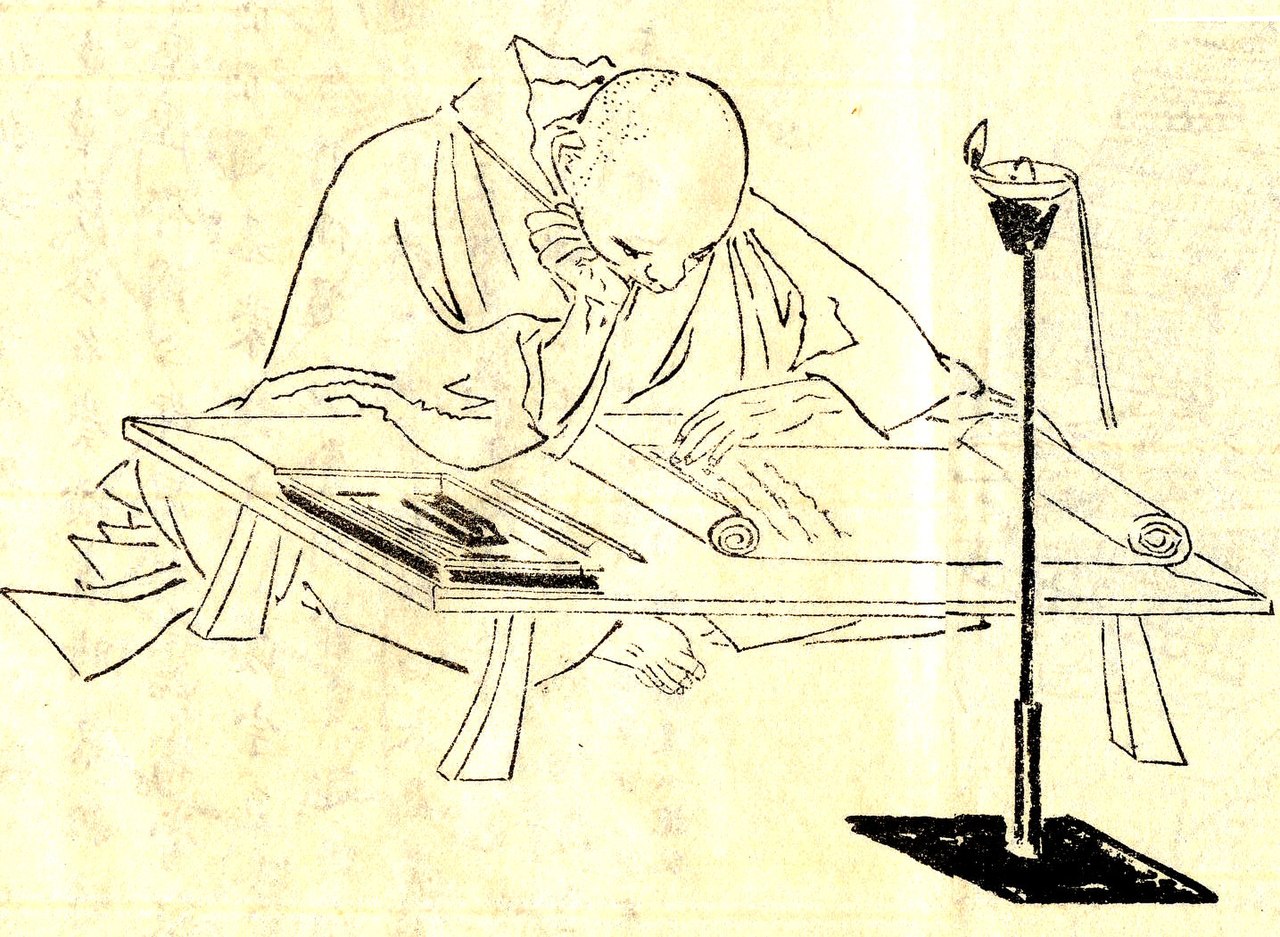
Yoshida Kenkō by Kikuchi Yosai [Date Unknown]

There is much to admire, though, in a dedicated recluse.

Kenkō Yoshida, Essays in Idleness (No. 1)

Going on a journey, whatever the destination, makes you feel suddenly awake and alive to everything.

Kenkō Yoshida, Essays in IdleNess (No. 15)

You can find solace for all things by looking at the moon.

Kenkō Yoshida, Essays in Idleness (no. 21)

Something left not quite finished is very appealing, a gesture toward the future.

Kenkō Yoshida, Essays in Idleness (No. 82)

It’s in easy places that mistakes will always occur.

Kenkō Yoshida, Essays in Idleness (No. 109)

CITATION: Kenkō Yoshida & Kamo no Chōmei. 2013. Kenkō and Chōmei: Essays in Idleness and Hōjōki. London: Penguin. 206pp.