BOOKS: “A Short Stay in Hell” by Steven L. Peck

A Short Stay in HellA Short Stay in Hell by Steven L. Peck
My rating: 5 of 5 stars

Publisher Site: Strange Violin Editions

If you enjoy books like Joseph Heller’s Catch-22 or Douglas Adams’ The Hitchhiker’s Guide to the Galaxy this book will probably be right up your alley. It may not be as unrelentingly (and hilariously) absurd as H2G2, but it’s clever, amusing, and thought-provoking.

The premise is that a devout Christian finds himself in hell because it turns out that Zoroastrianism was actually the one true religion. Fortunately, Zoroastrian hell is neither as grim nor (perhaps, ironically) as fire & brimstone-oriented as the Biblical version, but it is tedious, demoralizing, and — while it might not last forever –it lasts long enough to seem like forever.

Jorge Luis Borges fans (such as myself) will find a nod to his work in the shape of said hell.

I’d highly recommend this book for readers of irreverent and humorous literary fiction. It’s funny. It’s clever. And it’s a quick read.

View all my reviews

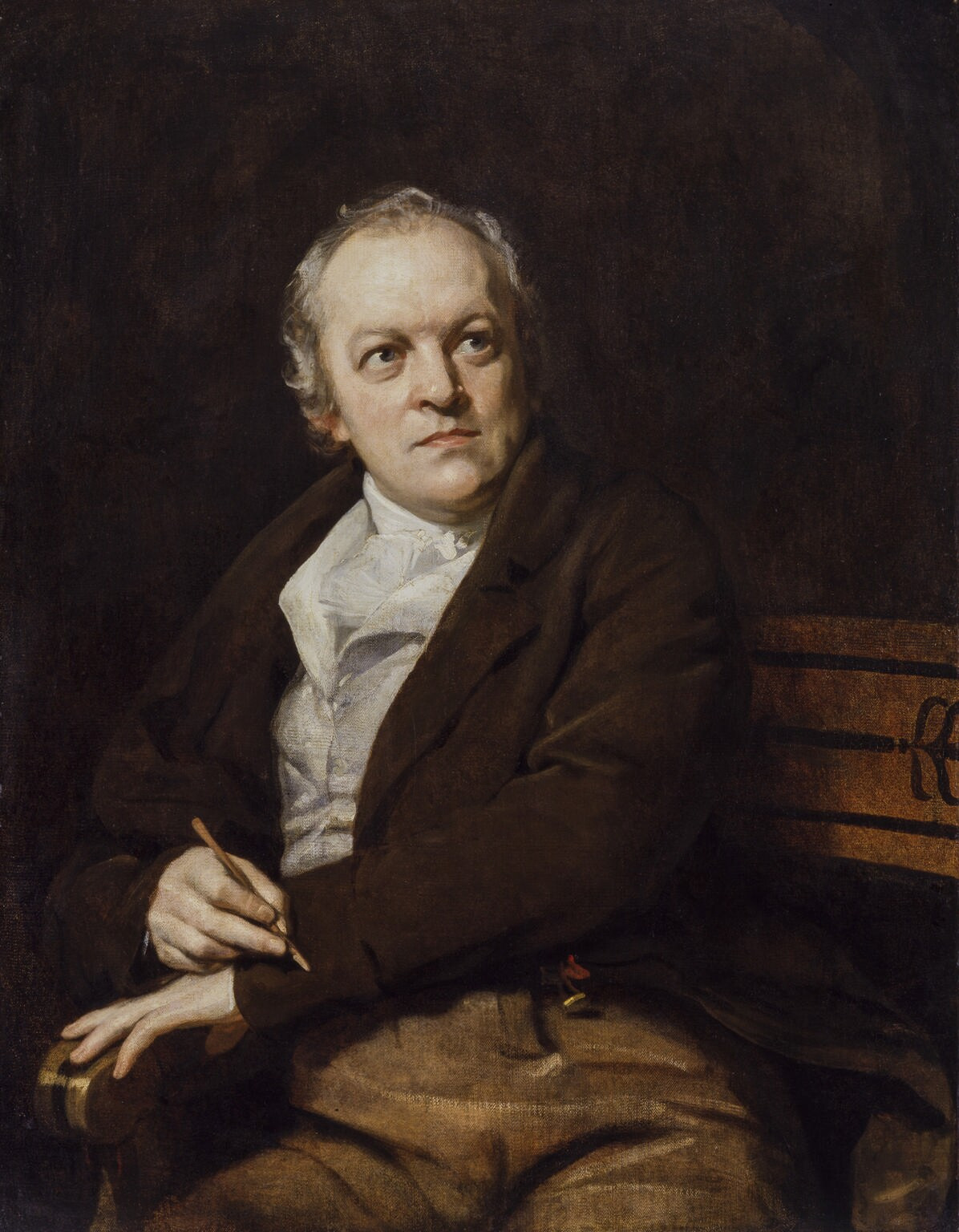
“Proverbs of Hell” [3 of 3] by William Blake [w/ Audio]

The apple tree never asks the beech
how he shall grow, nor the lion the horse
how he shall take his prey.

The thankful receiver bears a plentiful harvest.

If others had not been foolish we should have been so.

The soul of sweet delight can never be defiled.

When thou seest an eagle, thou seest a portion
of Genius. Lift up thy head!

As the caterpillar chooses the fairest leaves
to lay her eggs on, so the priest lays his curse
on the fairest joys.

To create a little flower is the labour of ages.

Damn braces; bless relaxes.

The best wine is the oldest,
the best water the newest.

Prayers plough not; praises reap not; joys laugh not;
sorrows weep not.

The head Sublime, the heart Pathos,
the genitals Beauty, the hands and feet Proportion.

As the air to a bird, or the sea to a fish,
so is contempt to the contemptible.

The crow wished everything was black,
the owl that everything was white.

Exuberance is Beauty.

If the lion was advised by the fox,
he would be cunning.

Improvement makes straight roads,
but the crooked roads without Improvement
are roads of Genius.

Sooner murder an infant in its cradle
than nurse unacted desires.

Where man is not, nature is barren.

Truth can never be told so as to be
understood and not to be believed.

Enough! or Too much.

* * *
The ancient poets animated all sensible
objects with Gods and Geniuses, calling
them by the names and adorning them with
properties of woods, rivers, mountains, lakes,
cities, nations, and whatever their enlarged
and numerous senses could perceive.

And particularly they studied the Genius of each
city and country, placing it under its mental deity.

Till a system was formed, which some took
advantage of and enslaved the vulgar by
attempting to realize or abstract the mental
deities from their objects.

Thus began Priesthood.

Choosing forms of worship from poetic tales.

And at length they pronounced that the Gods
had ordered such things.

Thus men forgot that all deities reside
in the human breast.

“Proverbs of Hell” [1 of 3] by William Blake [w/ Audio]

In seed-time learn, in harvest teach, in winter enjoy.

Drive your cart and your plough over the bones of the dead.

The road of excess leads to the palace of wisdom.

Prudence is a rich ugly old maid courted by Incapacity.

He who desires, but acts not, breeds pestilence.

The cut worm forgives the plough.

Dip him in the river who loves water.

A fool sees not the same tree that a wise man sees.

He whose face gives no light shall never become a star.

Eternity is in love with the productions of time.

The busy bee has no time for sorrow.

The hours of folly are measured by the clock,
but of wisdom no clock can measure.

All wholesome food is caught without a net or a trap.

Bring out number, weight, and measure in a year of dearth.

No bird soars too high if he soars with his own wings.

A dead body revenges not injuries.

The most sublime act is to set another before you.

If the fool would persist in his folly he would become wise.

Folly is the cloak of knavery.

Shame is Pride's cloak.

Prisons are built with stones of law, brothels with bricks of religion.

The pride of the peacock is the glory of God.

The lust of the goat is the bounty of God.

The wrath of the lion is the wisdom of God.

The nakedness of woman is the work of God.

Five Wise Lines from “The Marriage of Heaven and Hell” [Plus Five Lines, More]

No bird soars too high, if he soars with his own wings.

william blake

The road of excess leads to the palace of wisdom.

William blake

Prisons are built with stones of Law, Brothels with bricks of Religion.

William Blake

The fox condemns the trap, not himself.

William Blake

Exuberance is Beauty.

William blake

Without Contraries is no Progression. Attraction and Repulsion, Reason and Energy, Love and Hate, are necessary to Human existence.

William Blake

If the doors of perception were cleansed, everything would appear to man as it is, infinite.

William blake

The man who never alters his opinion is like standing water, and breeds reptiles of the mind.

William Blake

I also asked Isaiah what made him go naked and barefoot three years. He answer’d: ‘The same that made our friend Diogenes, the Grecian.’

William Blake

The most sublime act is to set another before you.

William blake

NOTE: William Blake’s “The Marriage of Heaven in Hell” is available in many collections of his poetry, and is in the public domain and available via Project Gutenberg at: https://www.gutenberg.org/ebooks/45315

A Boy’s Theory of Hell [Free Verse]

The boy pressed his hand
to the cool interior wall,
sitting on the floor
of a dark, empty chapel.

Outside the sun blazed,
and humidity oppressed.

The orphan created
a narrative in his head,
one based on some strange logic.

If hell was an "eternal
torment of flames,"
then the cool interior
of the monk's chapel 
must be the anti-hell --
a place that devoured 
the heat of hell-fire...

but what did that make
that baking place 
that was outside
those thick walls.

BOOK REVIEW: The Inferno [a.k.a. Hell] by Henri Barbusse

The InfernoThe Inferno by Henri Barbusse
My rating: 5 of 5 stars

Amazon.in page


This is a translation of the French novel, L’Enfer, which is alternatively entitled Hell or The Inferno in various English language editions. It’s a short work with a simple premise, but is nevertheless psychologically and philosophically intriguing. An unnamed narrator, lodging at a rooming house, discovers that he can see and hear into an adjacent room. The book describes what this man witnesses, as well as doing some philosophizing about what he sees and the conversations he hears.

While the events of the book are voyeuristic and said voyeur does witness various sexual dalliances, it’s not a graphic – and certainly not a pornographic – work. The author is as much interested in the pillow talk as he is in the acts of intimacy, which it’s not clear how well he can see anyways.

It should also be pointed out that not all of what the narrator witnesses is carnal in nature. It could be argued that the most fascinating scenes involve an old man who is dying. In addition to the non-erotic intimacy of dying, itself, there’s a scene in which a priest comes to offer the dying man last rites. At first the old man is agreeable enough to this, but as the priest’s dogmatism and accusatory tone becomes oppressive, the man has enough and tries to send the priest away. The scene turns expectation on its head as the priest is so fearful for the man that he ultimately tries to just get the man to say the bare minimum needed to ensure his salvation. But, by that time the man — who doesn’t seem fearful at all – is no longer interested.

Another intriguing scene sits toward the end of the book. It’s one in which the story goes meta- on itself. The narrator, this time dining at a restaurant, witnesses a well-known writer who is sitting at a nearby table tell his guests about his new writing project. What he describes is the same as the book one has just read (in subject but not in tone) – i.e. it involves a boarder who is a voyeur, peeking in on an adjacent room. The difference is that the fictitious author wants to make it all humorous. This offends the narrator’s sensibilities. The narrator presumably wishes such a book to be more like the one that one is almost finish reading – deeper and more philosophical.

I found this book to be thought-provoking and evocative. It puts the reader into the voyeur’s seat and shows one people’s behavior when they think they are alone, they think they are only with a loved one, or they are engaged in intimate activities with someone with whom they don’t have a truly intimate relationship. It makes one think about how well one really reads the people one comes in contact with.

If you are interested in the psychology of intimacy and solitary behavior, this book raises some interesting considerations. I’d highly recommend it for individuals not too weirded out by the book’s voyeuristic aspect.

View all my reviews

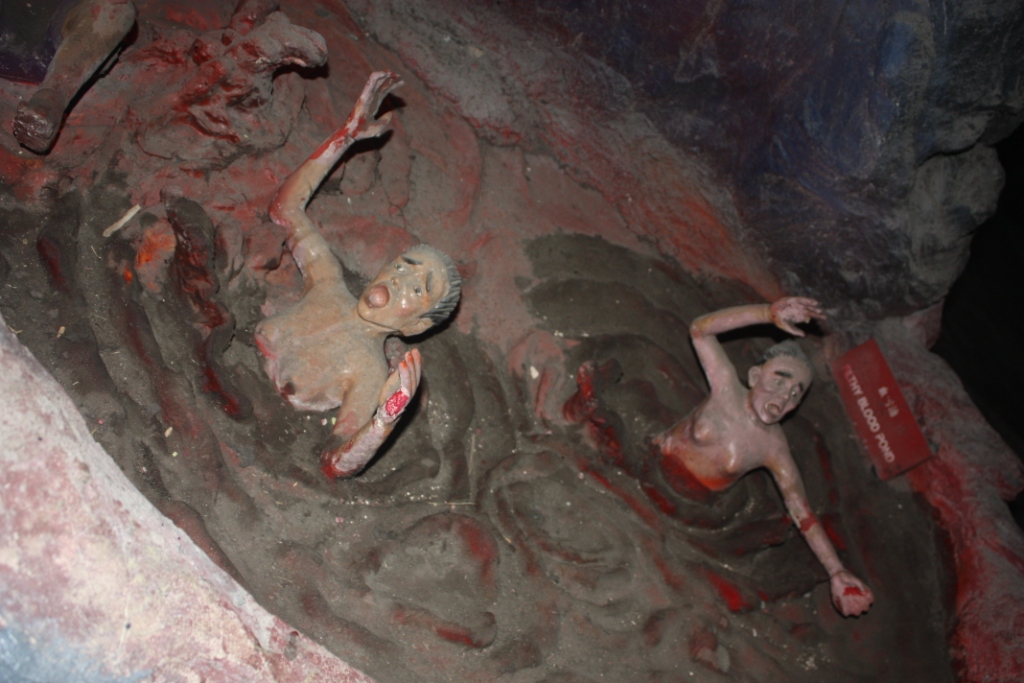
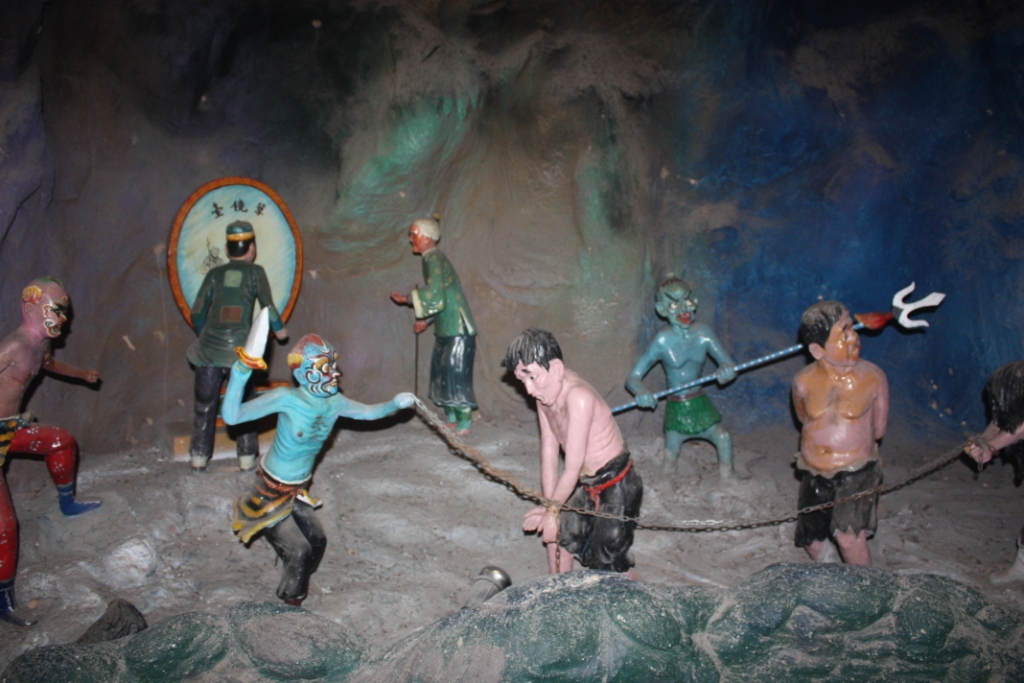
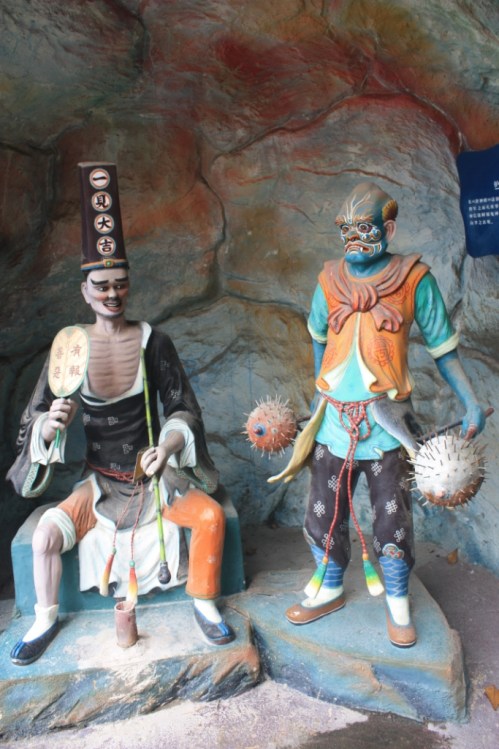
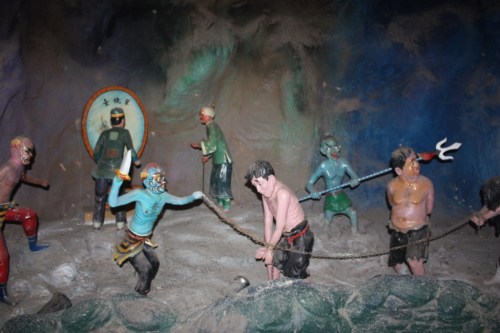
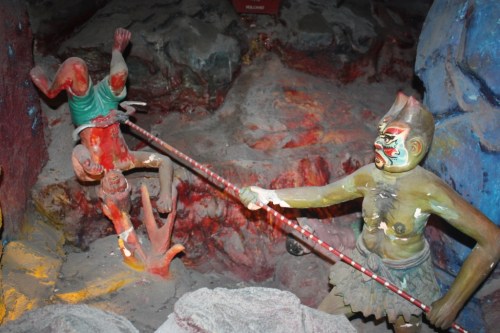
DAILY PHOTO: 10 Courts of Hell: or, Hell House Chinese-Style

Taken on November 1, 2016 at Haw Par Villa in Singapore

Taken on November 1, 2016 at Haw Par Villa in Singapore


img_4289 img_4302

Taken on November 1, 2016 at Haw Par Villa in Singapore