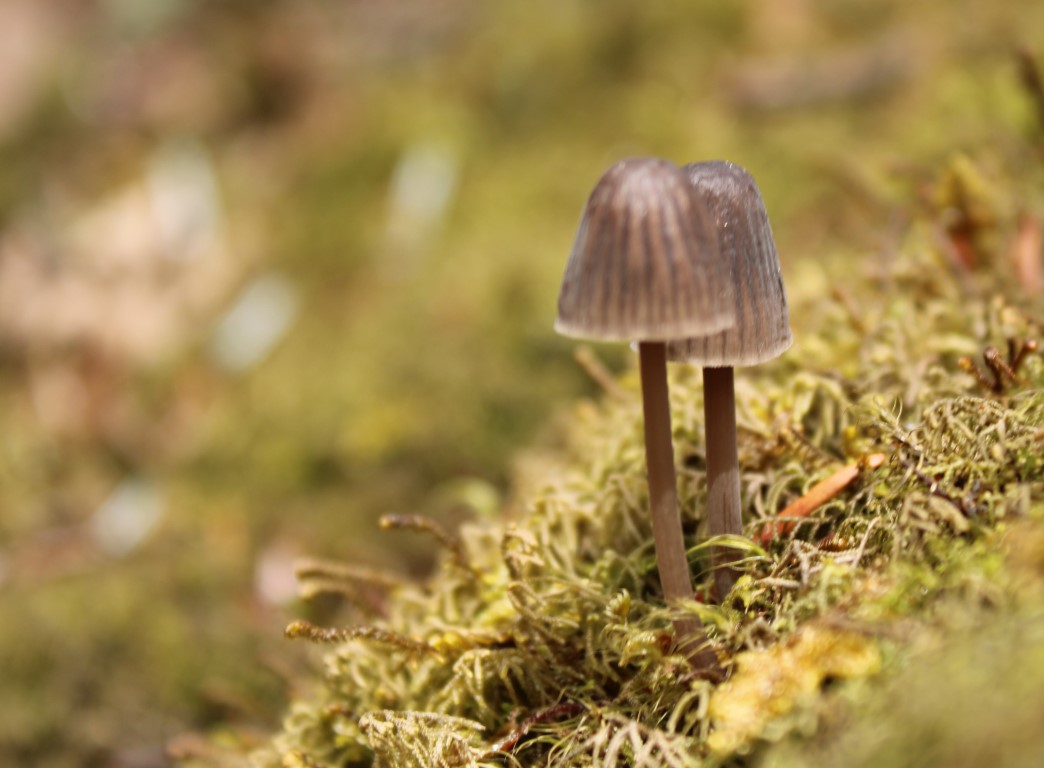
on a dead tree, in the cocoa-colored flood: coveted Reishi
Tag Archives: Fungi
Lump of Color [Haiku]
Fungi Propinquity [Free Verse]
Stinkhorn [Haiku]

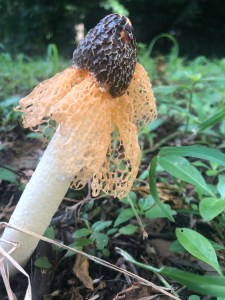
a stinkhorn
drops its gauzy skirt —
no scent, yet
BOOK REVIEW: Nature is Never Silent by Madlen Ziege
Nature Is Never Silent: how animals and plants communicate with each other by Madlen ZiegeMy rating: 4 of 5 stars
Amazon.in Page
Out: Hardcover out February 8, 2021 [e-book is out now]
The central premise of this book is that humans miss the tremendous amount of communication that is going on among and between other species. We miss it because we think of communication in an extremely limited way that revolves around visual and auditory expressions of human style languages. It doesn’t occur to us that different senses (e.g. smell) or other activities (e.g. stinging or passing gases,) could be used to convey messages as overt as, “Don’t touch me!” to as complex as, “There are good flowers to the southeast, roughly four-hundred meters along this line” or “Watch out! Some beetles have started chewing on my bark.”
While one might still dismiss all this communication as extremely simple compared to the infinitely complicated endeavor humans have made communicating, it’s not all just warning signaling. Many species engage in a form of communication that most people would probably attribute to humanity alone, specifically, deception. There are female fireflies who cannot only send a mating signal to males of her species to engage in reproduction, but can send counterfeit signals of other species to attract a male of another species of which she can make a snack.
It’s also important to note that it’s not just the species most similar to us who communicate. There are chapters devoted to both unicellular creatures and plants, species that one might be surprised to learn are quite active communicators.
I found this to be a highly thought-provoking book for the nature-lover, and I’d recommend it for anyone who wants to expand his or her horizons with respect to what is being transmitted in the natural world on those cold and quiet days when it seems like not a creature is stirring, and yet there’s always something.
View all my reviews
Only Up [Haiku]

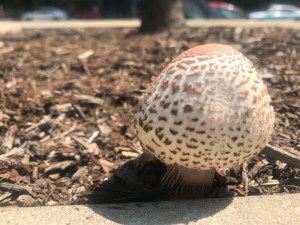
shaggy parasol
sits by the sidewalk,
knowing only up
Stinkhorn [Haiku]

a stinkhorn unfolds,
drops its gauzy skirt,
and soon is gone
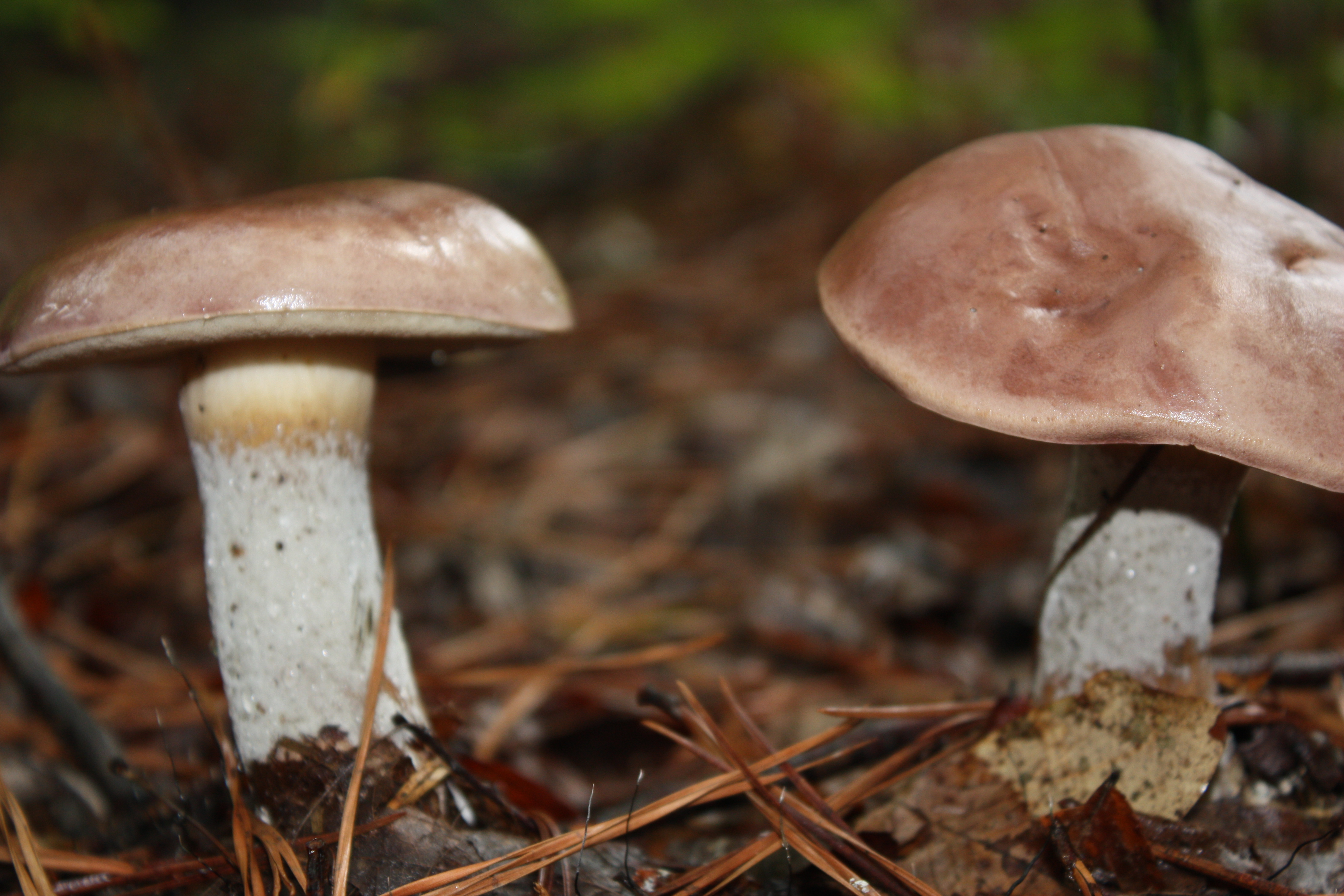
Fungi Mind [Free Verse]
From its perspective, we live in a vacant upside down underworld. It can't understand our terror over death and our obsession with life. Just thinking about it gives it nightmares, heebie-jeebies of being overrun by endless piles of creatures -- endless piles with endless needs. We may wrinkle a nose in disgust at its worldview, but it finds ours positively suffocating. But it forgives us our simple ways, we are just its food, after all.
DAILY PHOTO: Fungi on a Field of Green
BOOK REVIEW: Healing Mushrooms by Richard Bray
Medicinal Mushrooms: Healing Mushrooms for Immune Support – Improve your Memory, Reduce Inflammation, and Fight Cancer by Richard Bray
My rating: 4 of 5 stars
This guide offers a concise overview of the medicinal use of fungi. It’s a soup-to-nuts examination of how to utilize approximately thirty different mushrooms for treatment of a wide variety of ailments.
The book consists of eight chapters. Each of the first three chapters is quite brief and provides simple background information about mushrooms as medicine. The detailed information begins with chapter four, which provides an in-depth overview of fungi and the characteristics by which which some of them derive health and medicinal benefits. Chapters five and six repeat some of the same information, but from opposing angles – making it easier for the reader to find the information they are seeking. Chapter five describes the mushrooms, including a brief mention of the uses of each. Chapter six, on the other hand, introduces a range of ailments and medical conditions, and suggests which of the mushrooms have been studied as remedies. There are endnotes, directing one to the papers in which the scientific results appear. This is also where one finds information on dosages.
Chapter seven shows various approaches to preparing mushrooms for use as medicine. Not all of the mushrooms can be eaten, some require tinctures or other preparations to be made, and this chapter explains how to do that work in a step-by-step fashion. For the mushrooms that can be eaten, it describes the relative merits of different cooking methods. The last chapter discusses where to obtain mushrooms. It offers considerations for foraging mushrooms, but also tips for commercially acquiring them.
The book has many graphics. These include color photos of the various species of mushrooms as well as some drawings and diagrams throughout. The chapter on preparation has graphics interspersed within the textual directions to offer a visual indicator and break up the text. As mentioned, there is a huge set of paper references arranged as endnotes linked to the places (largely in chapter six) where findings are cited.
If one is wondering, the book does not discuss any mushrooms with psychoactive (psychedelic) properties (e.g. psilocybe.) Many of the mushrooms included will be well known to culinary mushroom users (e.g. button, portobello, enoki, lion’s mane, chicken-of-the-woods, shiitake, and oyster mushrooms.) Others were familiar to me [as someone with a minimal knowledge of mushrooms] even though it wasn’t from their culinary use (chaga, reishi, and jelly ear.) And a few of the fungi I was unfamiliar with before reading the book.
I found this to be a useful book. It’s concise and offers attractive and useful graphics. If you are interested in medicinal mushrooms, check it out.