BOOKS: “Teachings of the Christian Mystics” ed. by Andrew Harvey

Teachings of the Christian Mystics (Shambhala Pocket Library)Teachings of the Christian Mystics by Andrew Harvey
My rating: 5 of 5 stars

Acquired at Blossom Bookhouse

This book gathers a collection of short writings (mostly paragraph to a few page excerpts as well as a few poems) on mystic Christianity from the time of the Gospels through the twentieth century. While the bulk of the pieces are (if not from scriptures) the work of clergymen and / or theologians, there are some by individuals known elsewise (e.g. poets William Blake and Gerard Manley Hopkins.) The book is arranged somewhat, but not perfectly, chronologically — enough that all the Biblical excerpts are lumped together at the beginning to form about the first quarter of the selections. While there are a number of one-off contributors, there are several pieces from each of: Gregory of Nyssa, the Desert Fathers, Saint Symeon the New Theologian, Saint Bernard of Clairvaux, Saint Teresa of Avila, and Eckhart von Hochheim.

One nice feature of this book is that it does include selections from a wide range of sources (Roman Catholic, Orthodox Catholic, and Protestant) over a range of time periods, and from scriptures both canonical and “apocryphal.” So, there are many varied ideas of the mystical experience and the path thereto. The flipside of this fact is that there doesn’t seem to be a lot of cohesiveness to the collection. It isn’t always clear why Harvey (the editor) thought a given excerpt was representative of mystic teachings versus of mainstream Christianity. There is a substantial introduction, but otherwise the selections are left to speak for themselves.

Still, it was a quick read, dense with insights, and I found — particularly some of the scriptural selections — to be among the most profound statements of Christian philosophy that I’ve seen.

View all my reviews

The Second Coming by W. B. Yeats [w/ Audio]

Turning and turning in the widening gyre
   The falcon cannot hear the falconer;
 Things fall apart; the centre cannot hold;
   Mere anarchy is loosed upon the world,
 The blood-dimmed tide is loosed, and everywhere
   The ceremony of innocence is drowned;
 The best lack all conviction, while the worst
   Are full of passionate intensity.

Surely some revelation is at hand;
   Surely the Second Coming is at hand.
 The Second Coming! Hardly are those words out
   When a vast image out of Spiritus Mundi
 Troubles my sight: somewhere in sands of the desert
   A shape with lion body and the head of a man,
 A gaze blank and pitiless as the sun,
   Is moving its slow thighs, while all about it
 Reel shadows of the indignant desert birds.
   The darkness drops again; but now I know
 That twenty centuries of stony sleep
   Were vexed to nightmare by a rocking cradle,
 And what rough beast, its hour come round at last,
   Slouches toward Bethlehem to be born?

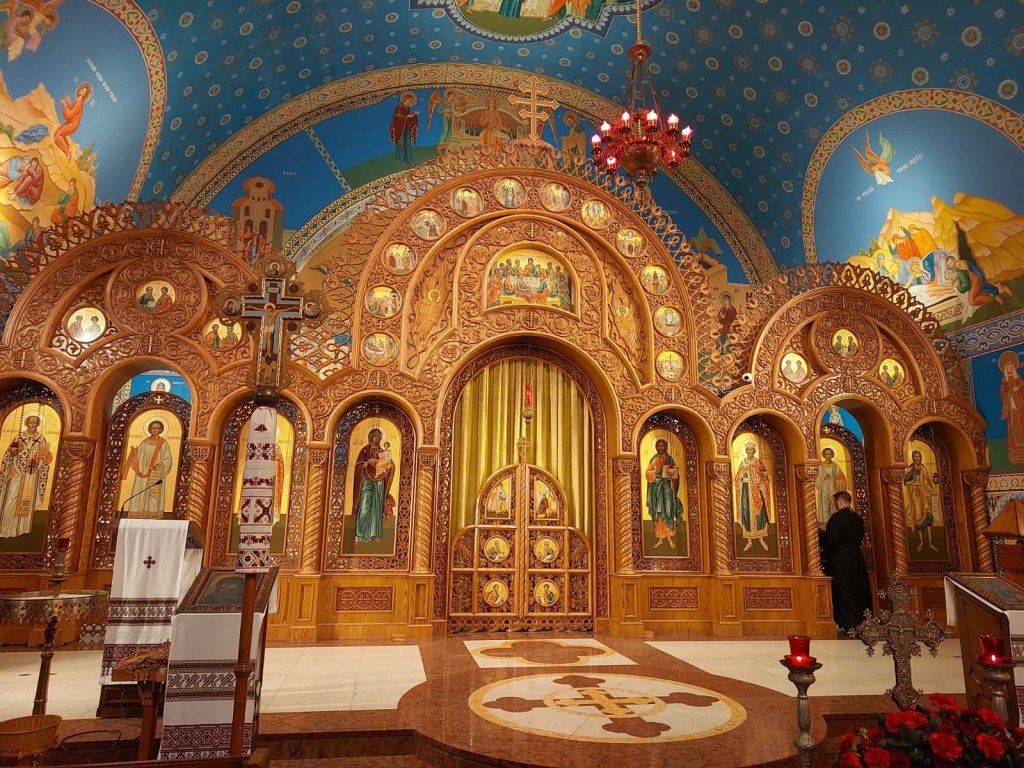
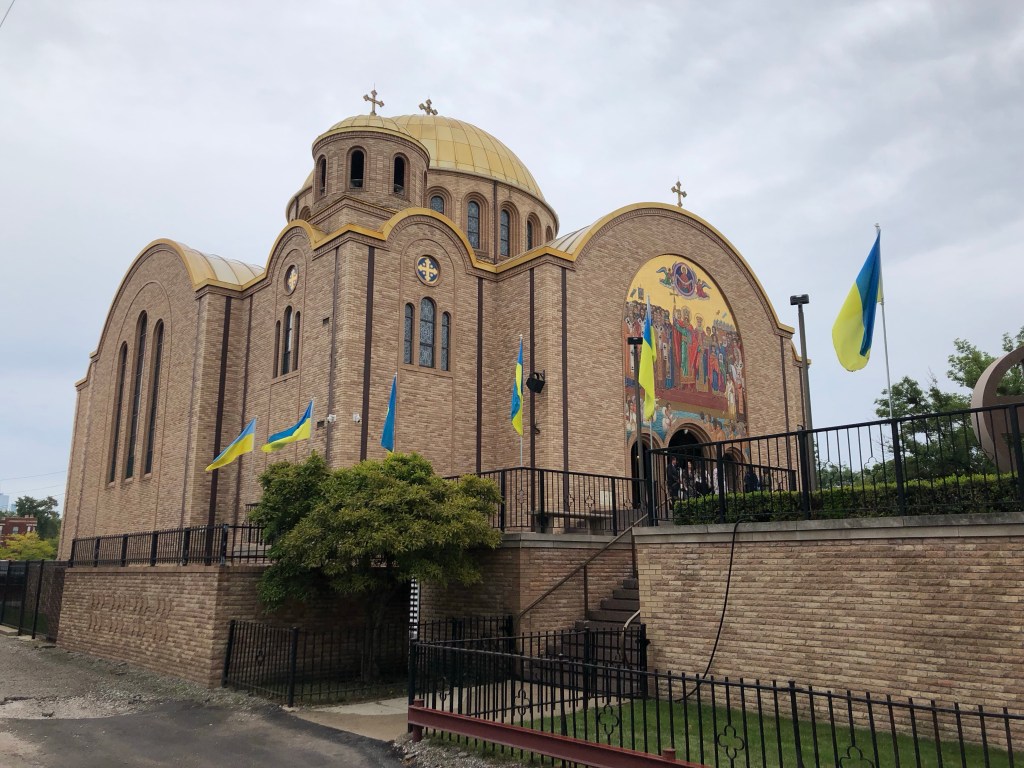
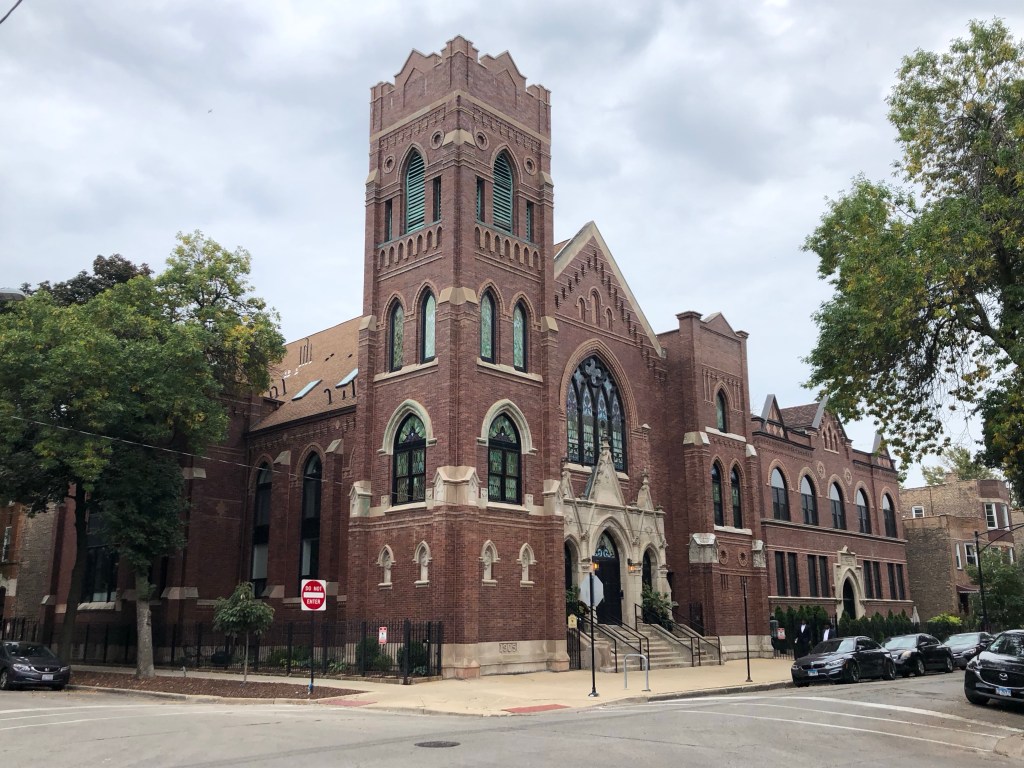
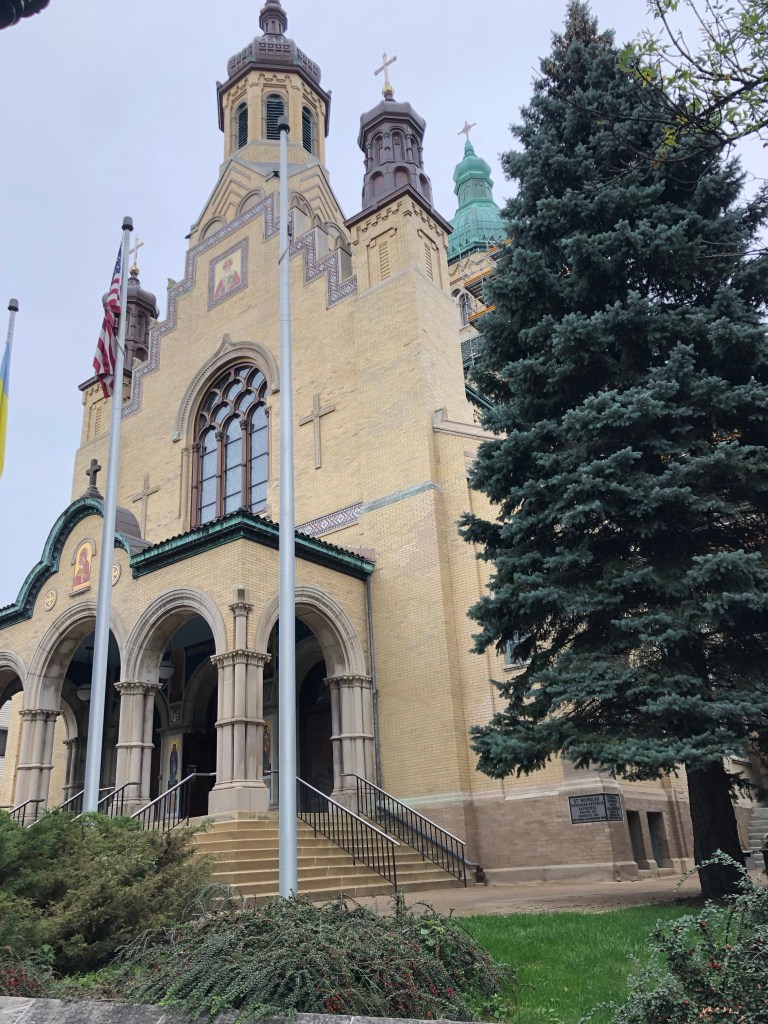
DAILY PHOTO: Churches of Ukrainian Village, Chicago

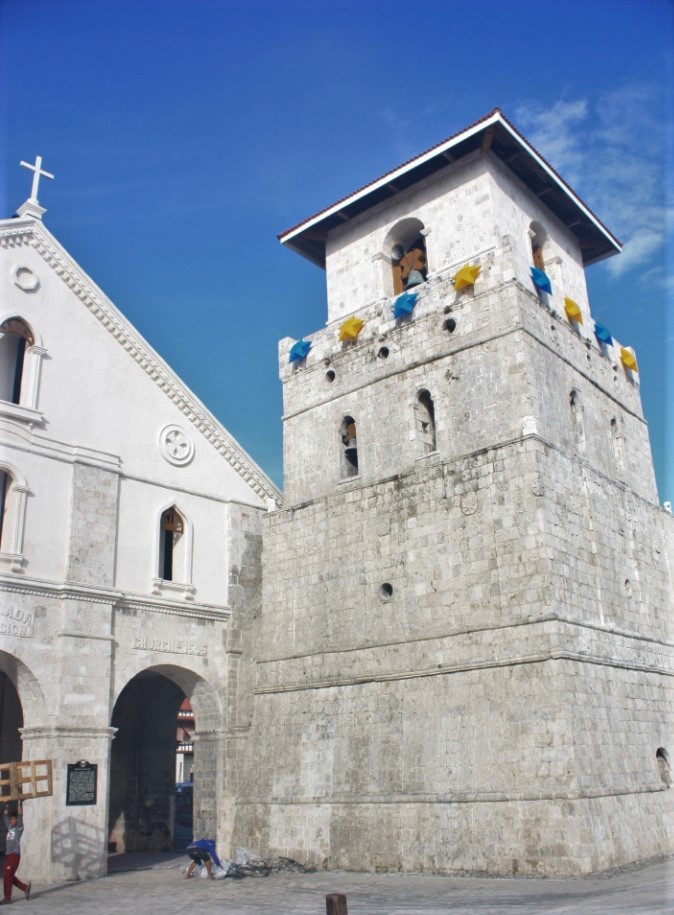
DAILY PHOTO: Baclayon Church Tower

A.K.A. The Immaculate Conception of the Virgin Mary Parish Church, this church in southern Bohol dates to the late sixteenth century.

Ockham’s Clerihew

Friar William of Ockham
thought priestly possessions a scam.
Jailed by the Pope,
he slipped the rope.

Dragon-slayer or Drunkard? [Common Meter]

I see so many statues of
dragon-slayers mid-kill.
The winged serpents pierced by a lance
conjures up such a thrill.

But there're no dragons, never were.
So, what were they slaying.
Dinos went extinct before our time
is all that I'm saying.

So, were they killing geckos, or
maybe a rock lizard?
Maybe chickens, given the wings?
Struck right through the gizzard!

Could it be St. George liked to drink
or was tripping ergot?
To earn so many statues, he'd
a publicist, I bet.

"The dragons were metaphorical!"
OK, that's really swell,
but shouldn't George's heroism
be figurative as well?

BOOK REVIEW: By Water by Jason Landsel & Richard Mommsen

By Water: The Felix Manz StoryBy Water: The Felix Manz Story by Jason Landsel
My rating: 4 of 5 stars

Amazon.in Page

Release Date: March 21, 2023

Get Speechify to make any book an audiobook

This is a graphic novel-style biography of Felix Manz, a Protestant (Anabaptist) reformer from Zurich during the sixteenth century. Manz and his compatriots had a few beefs with the Catholic church, broadly classified. The first (and most religious / doctrinal) grievance was with respect to how the Church handled baptisms; specifically, infant baptism prevented baptism from being a free choice for the baptized. The second set of grievances involved the priesthood and how priests were moved around at the convenience of the Church and how much money they cost the citizenry. (i.e. They wanted local priests and not to be forced to pay a lot of overhead.) The third complaint was more an entire slate of complaints about resources. In that era, Swiss commoners couldn’t just go hunting in the woods or chop firewood as they needed because the land was under the ownership of the powers that be.

The story of Manz and his followers is intriguing, if one is interested in history. It’s kind of a strange topic to read in comic book form, but as history can be tedious in historical / biographic tomes, this makes for a quick and painless way to take in the story. There are a couple points where the book seems to shift into hagiographic territory (i.e. being difficult to swallow for the non-believer.)

The art is clear and neatly rendered, but I wondered how time-accurate it is. Maybe it is, but the inside of the houses looked pretty much like today (e.g. curtains and furnishings) and I found myself wondering whether its anachronistic or not. Ultimately, I have to give the artist the benefit of the doubt as I know virtually nothing about how Swiss commoners lived in the 1500’s. At the end of the book, there are some appendices that provide more information in prose text.

If you’re interested in European and / or Religious History, you may want to read this book.


View all my reviews

DAILY PHOTO: A Church in Bidar

Taken in Bidar in August of 2022

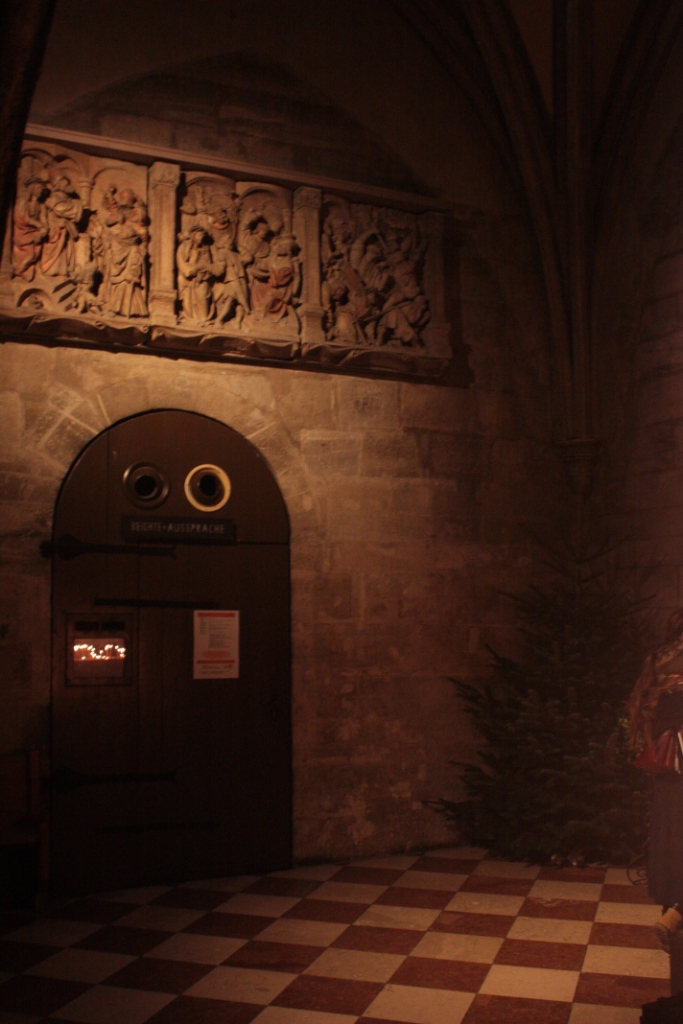
DAILY PHOTO: Confessional in St. Stephen’s

Inside St. Stephen’s Cathedral in Vienna in December of 2016

BOOK REVIEW: Angels: A Very Short Introduction by David Albert Jones

Angels: A Very Short IntroductionAngels: A Very Short Introduction by David Albert Jones
My rating: 5 of 5 stars

Amazon.in Page

This book offers an overview of angels in the Abrahamic religious traditions (i.e. Judaism, Christianity, and Islam.) [It does take a quick dip into angel-like beings from other religious traditions – e.g. Hindu and Parsi – but generally comes down on the side of it doing a disservice to everybody to equate such beings across mythological traditions – with the possible exception of the New Age angel which is predominantly an offshoot from Abrahamic mythology.] The book considers the evolution of theological thinking on angels: how they’ve been portrayed in art; what they are [made of;] what their purposes are (i.e. messengers, healers, guardians, warriors, etc.;) and, occasionally, how they play into popular culture.

I took away a great deal from this book. For example, I learned about the differences between the djinn of Islam mythology and demons of Judeo-Christian mythology, and the theological underpinnings of this difference (i.e. Muslims do not believe angels have free will, and thus angels can’t be fallen, and so the djinn are a separate entity altogether [rather than being fallen angels.]) I found the book to be readable, interesting, and balanced in its approach to the topic. If you’re looking to learn more about how angels (and related beings, e.g. fallen angels / demons) have been treated by thinkers of various ages, without getting deep into the minutiae, this is a fine book to consider.


View all my reviews