Transmigration of Blog

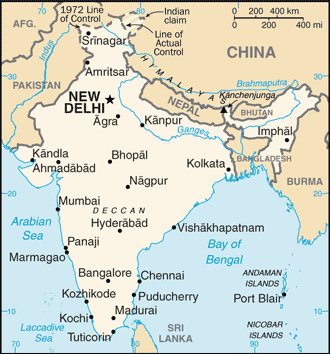
india_sm_2012We’re down to about a month until our move to India.

The house is largely in order with only a few odds and ends remaining.

Most of our worldly possessions are in storage, and I haven’t really missed any of it. (A lot of “moss” collects when your stone stops rolling for a few years.) The house now echoes. Movers will be coming to get the small amount of stuff we’ll ship to India in the next couple weeks. Then we’ll really be living minimalist.

We’ve got all our shots with the exception of the final doses for Hepatitis. We’ll get those in country. With respect to shots, when moving to India, one has to get… well,  all of them.

Visas are in the works though we’ve had some delay on that front. However, fortuitously, the local Indian Consulate is beginning to take applications, and so I won’t have to send my application off to another city and can eliminate the time and risk of postal transit.

My list of things to do consists of fewer large, all-consuming tasks and more quick and easy jobs.

All of this means that I’m getting back to writing.  This is a bit like getting a corroded junk-yard jalopy running again. It’s remarkable how much the creative juices curdle when one spends a few months focusing on home repairs, monitoring contractors, getting shots, and other mundane tasks of international relocation. I worked almost exclusively on drafting two novels for a period of a little over a year, and now–as I resume writing and revisions–I’m having to re-read just to figure out what they’re about. On the bright side, I sometime surprise myself with what I wrote. For me, there’s definitely economy of scale in long writing  projects. Writing eight hours a day yields a lot more than eight times writing for one hour a day. I lose voices, character idiosyncrasies, and plot detail so easily unless I’m immersed in them.

As for this blog, I think a rebirth is in order. Since I’m moving to India, I’ve invoked the concept of transmigration of soul. In Hinduism, some sects of Buddhism, as well as a few lesser known religions, there’s a belief in reincarnation in which the soul may be reborn into an altogether different type of container. For example, if you were good in your last life, you might come back as a lama or a lap cat. If you were bad in your last life, you might come back as a slug or a Congressman. So the question of the moment is what this blog will be reborn as when  it sputters up from out of the ashes.

I would like the site to remain (or, perhaps, become)  humorous, but I’d like the humor to be less curmudgeonly. This presents a challenge because I’m not sure that I know how to be funny without being a curmudgeon. In point of fact, I’m not sure I know how to not be a curmudgeon–funny or otherwise.

I want this site to be reflective of my new life. I’ll continue posting photos, though after the move they will be disproportionately from Bangalore, India, and a few adjacent countries to which I will be traveling. So it’ll remain part travel site. I’m sure I’ll have plenty of lessons learned about travel in India to share.

When I’m not writing or sleeping, I’ll be engaged in a quest of self-improvement. The development of mind and body have been raised to high art in India, and I hope to  find some of those individuals with that knowledge.

Expanding my abilities and understanding of martial arts is one of my goals for this period. It’ll be a challenge to keep from becoming rusty in the jissen kobudō (Japanese old school martial arts that emphasize pragmatic skills) that I have been studying my entire adult life. However, in addition to working on what I know, there are other activities that I think will help expand my understanding while keeping me suitable limber and conditioned. I would like to learn  a little about indigenous Indian martial arts such as kalaripayattu, silambam, and–if time permits–gatka. Furthermore, I would like find a place to train in Bangalore where I can do some training in what I’d call general jissen (practical fighting) skills.

However, my attempts to improve myself will not be limited to martial arts alone. India might be cursed with plagues of poverty, pollution, and–well–plague, but they have no shortage of gurus–whether I can find one that’s reputable and willing is another matter. The older I’ve gotten, the more I’ve realized that I don’t have a firm grasp of my mind. My mind runs and I don’t pay enough attention to what it is telling me; I don’t put enough effort into fixing what is broken. I read a quote recently about people who put great effort into studying the external world, but who remain ignorant of themselves.  This struck close to home, but it’s not just me–it’s widespread. People study psychology in school and learn about cognitive biases, but they don’t put the information to use in becoming more virtuous people. For example, a person might learn about the “self-serving bias” –whereby people claim responsibility for successes but place blame for failures on external factors–and say, “yeah, it’s funny that other people totally do that.”

Part of practicing martial arts is keeping one’s self healthy, against all odds. While I’ve never practiced yoga, I appreciate the belief that mind and body are inseparable. I would like to work on building a body that is less likely to be crippled by the practice of martial arts as I age. I intend to study Thai yoga massage, which incorporates stretching and pressure point massage. There’s an interesting connection between India and Thailand with respect to this form of bodywork. While it’s most closely associated with Thailand, some claim that its roots are in Northern India with a master called Guru Jivaka. While visiting Thailand, I developed an appreciation for the health benefits of this type of massage–particularly for one prone to have things out of whack. However, I didn’t have the time to study it during that visit. There is also the more distinctly indigenous holistic healing system of India, Ayurveda, and I would like to learn more about it as well.

In short, I intend to have a pretty full agenda while living in India, and I hope readers will find my posts about these experiences interesting and worthwhile.

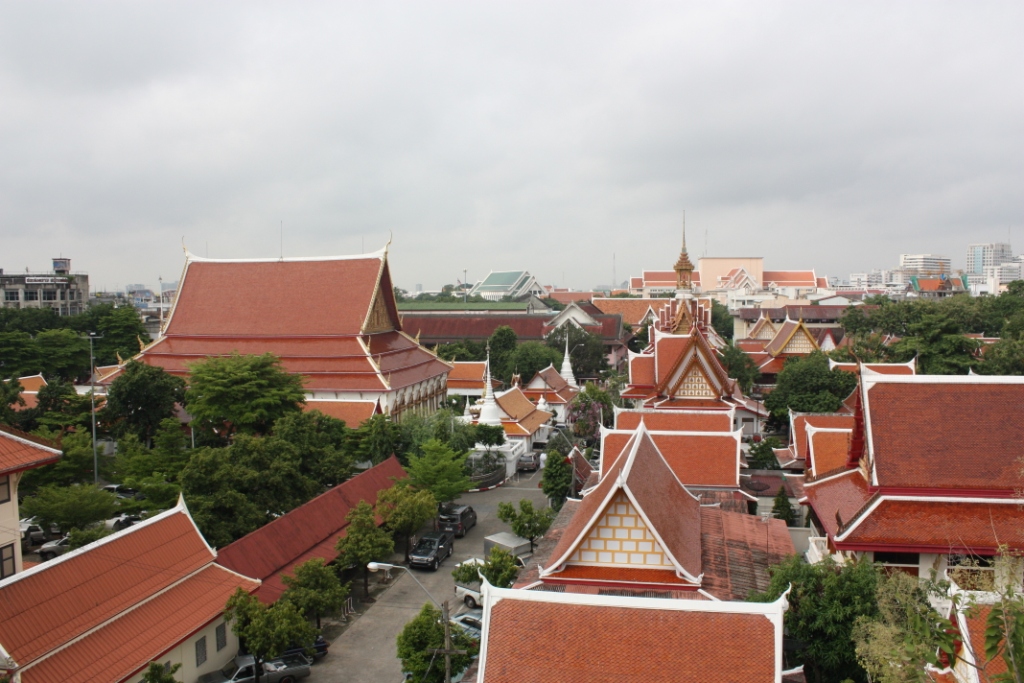
DAILY PHOTO: The Wat Chana Songkhram Complex

Taken October 2012

Taken October 2012 from atop the Rambuttri Village Inn.

Paul Brunton’s Search for Sages in India

Source: Kalyan Kumar by way of Wikipedia

Source: Kalyan Kumar by way of Wikipedia

As I prepare to move to India, I’ve begun to read up on this subcontinent about which I know too little. For example, I’d never heard of Paul Brunton before a week ago, but now I am immersed in his book A Search in Secret India. Brunton was a Brit who, like a number of his contemporaries living in the first half of the 20th century, struck out to experience the mysteries locked in the heart of India. Like many, he wanted to gain access to the country’s treasure, but the treasure he sought had nothing to do with material wealth or ancient artifacts. He sought living sages, and the lessons they could teach him. The book I’m reading tells the story of this search.

Something about India drives internal reflection and the spirituality that often accompanies it. It’s the home of Hinduism, Buddhism, Sikhism, and Jainism, as well as many non-denominational wisemen (and wisewomen) who at once can be seen as followers of no religion and believers in many religions.  Value for the unity of mind and body can be seen in the popular national practice of Yoga, which is the antithesis of mindless exercise in which one jumps on a treadmill with an i-Pod and zones out for an hour as one’s body churns through its paces. Yoga, like Tai Chi, requires one’s full attention, and that one’s movement, one’s breath, and one’s awareness are all working toward the same purpose.

So far, Brunton’s work has appealed to me not only because he is in search of wisdom, but because he goes about this pursuit as a skeptic. In the introduction he tells how he edited out the many meetings with charlatans and frauds. Charlatans always abound in the presence of sages because it’s quite lucrative to convince people that they can achieve self-improvement effortlessly through some patented approach. (I’m here to tell you that self-improvement is a struggle that requires your physical and mental energy all the way–what I cannot yet tell you is whether it is worth it or not.) If one cannot see the cloud-enshrouded destination, it’s easy to sell maps–whether one knows the route oneself or not–and many are all too ecstatic to buy a map that shows a secret route that takes them to the pinnacle by way exclusively downhill paths.  The fact that Brunton enters his quest with a degree of skepticism suggests he didn’t fall for such traps; traps that should be obvious but that appeal to those for whom the force of wanting to believe is stronger than the force of truth. [As I am only a few chapters in, I reserve the right to change this prognosis. At some point, I’ll put up a review with my final thoughts.]

I look forward to discovering whether wisdom is alive and well on the subcontinent. Hopefully, the hucksters haven’t won the war for the mind’s of seekers.

BOOK REVIEW: Buddha by Karen Armstrong

BuddhaBuddha by Karen Armstrong

My rating: 4 of 5 stars

Amazon page

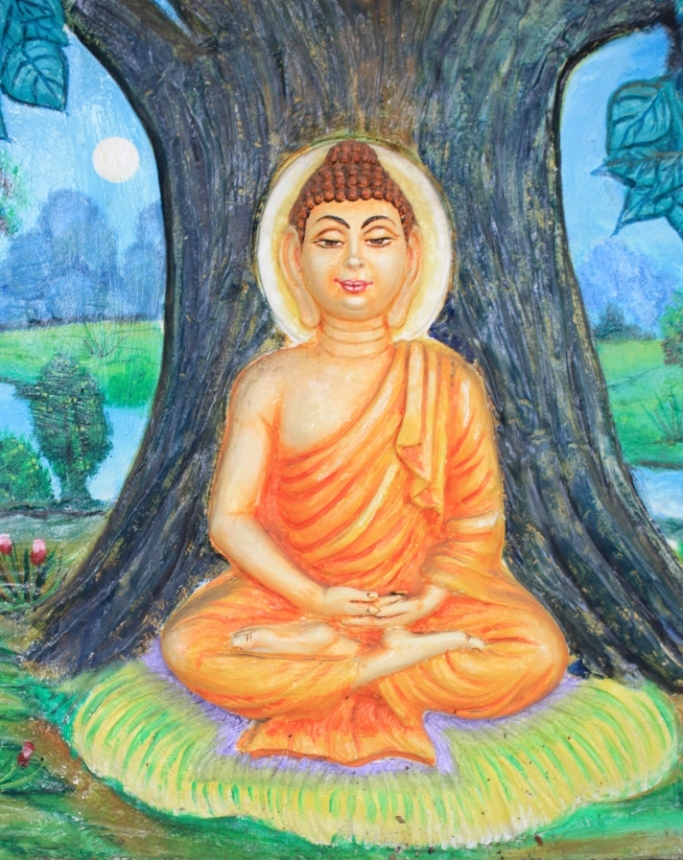
Karen Armstrong’s book is a biography of Siddhatta Gotama (a.k.a. Siddhartha Gautama), the man who became the Buddha. However, in the process of telling this man’s life story, she introduces the reader to the basic tenets of the religion he inspired.

Siddhatta’s story is an interesting one that many non-Buddhists know the gist of from the Herman Hesse novel entitled Siddhartha. As a boy, the Buddha-to-be was the son of a wealthy, high-caste man who attempted to shelter his child from all the ugliness of the world, e.g. poverty, disease, and death. Despite these attempts, the young man eventually sees the true world and realizes that he has been living an illusory life. Ultimately, the young man abandons his comfortable life in search of an enlightened view-point.

The Buddha’s life is what one might call “novel-shaped.” That is, the arc of Siddhatta’s life as we know it is ideally suited to being conveyed as a story. It’s a warrior’s quest tale, but one of the mind rather than physical adventure. Armstrong’s book takes advantage of this arc and is arranged accordingly. The six chapters of the book are:1.) Renunciation; 2.) Quest; 3.) Enlightenment; 4.) Dhamma (the doctrines or teachings); 5.) Mission; 6.) Parinibbana (the final rest.)

Renunciation refers to Siddhatta’s abandonment of the world he knew. The quest describes his life as he strikes out in an attempt to become enlightened. The third chapter outlines how he came upon enlightenment. This might have been the conclusion of the story of the man, but that’s when the story of the Buddhist religion becomes entwined with the story of the Buddha. Chapters 4 and 5 deal largely with how the religion spread.

If one is looking for a good overview of Buddhism, Armstrong’s book is a good place to start. It’s readable, and, by tying teaching into the Buddha’s life story, interesting as well.

View all my reviews

DAILY PHOTO: Buddhist Shops Outside the Lama Temple

Taken in the Summer of 2008 in Beijing, China

Taken in the Summer of 2008 in Beijing, China

BOOK REVIEW: Zen Mind, Beginner’s Mind by Shunryu Suzuki

Zen Mind, Beginner's MindZen Mind, Beginner’s Mind by Shunryu Suzuki

My rating: 5 of 5 stars

Amazon page

This thin volume packs a great deal of knowledge about the Zen approach to the mind. It’s divided into three parts: right practice, right attitude, and right understanding. The first section is technical (e.g. posture, breathing, etc.); the second section is inspirational; and the third section is philosophical. This is consistent with the Zen priority of putting practice first and being cautious about philosophizing.

The core concept is captured by the book’s topic sentence, “In the beginner’s mind there are many possibilities, but in the expert’s there are few.” This sentence contains a valuable truth, but I can’t help but think that the related title probably hurt the book’s sales. Sadly, many people would rather read a book entitled “How to be a Zen Master in 90 Days.” Everybody wants to be an expert, and few are open to the lesson that they must look at the world through the eyes of a novice. I’ve noticed this in the martial arts. Most individuals seem to be much happier as mediocre black belts with only a few years of practice than they would be as a highly competent white belt. This, of course, is the lure of external validation, which is a weak salve for one’s private demons.

At any rate, the value of cultivating shoshin (i.e. beginner’s mind)is to avoid have one’s experience jaded or tarnished by one’s past. It’s about avoiding attachment to what one believes one knows, such that one is incapable of learning something new. It’s like that old, but popular, tale that is told in both the Zen Buddhist and Taoist traditions about a cocky, young student who comes to learn from a master and proceeds to tell the master all he has already learned. The master pours tea for the youth, and when the cup is full he continues to pour until the scalding liquid spills over into the kid’s lap. When the student angrily asks why the teacher did that, he is told, “Your cup is already full. In order to take in more you must first empty your cup.”

I enjoyed this book. It’s very readable. The chapters are concise and not the least bit arcane. The bits on practice are not bogged down in minutiae. As I indicated, this book covers a lot of ground. I would dare say that if you are only going to read one book on Zen in your lifetime, this is a suitable candidate.

View all my reviews

DAILY PHOTO: A Rare Burst of Color at Banteay Kdei

Prayer flags in the ruins

Prayer flags in the ruins

Traveling through the old earth-tone and mossy green temple building, one comes upon a festival of color.

DAILY PHOTO: Cambodian National Museum in Phnom Penh

In the courtyard of the National Museum of Cambodia

In the courtyard of the National Museum of Cambodia

The National Museum of Cambodia is picturesque. The collection is small and simple, but impressive in quality. For those of us who run out of “ooh” and “ahh” stamina after a few hundred artifacts, it’s just the right size.  It’s also not stuffy in the usual way of museums– large barred windows are unshuttered while the museum is open. (This is probably less than ideal from both the perspective of security and artifact preservation, but it gives the place a certain ambiance, and maybe helped the exodus of the bats that took up residence during the museum’s dormant period)

It’s great to see what they’ve done with the place considering the state of disrepair it was said to be in after the Khmer Rouge period. With respect to my comment about it not being a large collection, it’s a wonder that any collection exists at all after the wave of lootings from the French through Vietnamese soldiers that took place in the country.

Be forewarned, once one is inside, one will be confronted by Buddhists from a monument preservation society seeking donations at about half a dozen different Buddhas around the museum. If you aren’t a Buddhist, this can be a bit of an annoyance. If you are a Buddhist, you may find their approach disconcertingly unBuddhist. They will try to press incense into one’s palm in order to corner one into paying homage to the Buddha so they can make some dough for their cause. However, they don’t follow one around once refused (as similar individuals have been known to do at Angkor.) It may be a great cause, but they’d probably do better if they restricted it to one per museum and not one per gallery, and just let people drop cash rather than insisting on the idol worship first. I’m nondenominationally happy-go-lucky myself, but I can imagine this being troublesome for some visitors. At any rate, it’s symptomatic of the country’s  poverty and their inability to support their deity at the level to which he has apparently become accustomed.

BOOK REVIEW: Bones of the Master by George Crane

Bones of the Master: A Journey to Secret MongoliaBones of the Master: A Journey to Secret Mongolia by George Crane

My rating: 4 of 5 stars

I’m a sucker for a tale of the sage next door. In an unwise world, it’s nice to believe that the wise exist, and that they walk among us. That they are not relegated to secluded retreats, but live in suburban subdivisions. In Bones of the Master a quirky Asian man drops in on his neighbor. The neighbor turns out to be the author of this book, poet George Crane. The visitor is Tsung Tsai, a Cha’an monk who trekked from Inner Mongolia to Hong Kong in 1959 in order to ensure the teachings of his monastery would survive.

The two men strike up a friendship, collaborating on poetry translation and eventually making a journey together back to Tsung Tsai’s home. The first part of the book tells of their meeting and describes Tsung Tsai’s 1959 journey to freedom. The second part deals with the two men’s mid-1990’s return trip. The monk’s ambitious plan is to find the bones of his master, cremate them, and relocate them in accord with the dictates of his religious tradition. He also wants to rebuild the temple that was razed by the Red Guard during the cultural revolution. As this is nonfiction, it’s not all happy endings. Not everything works out as they’d like it to. A brief third part tells of their return to the states with an interesting stopover in Hong Kong.

Much of the appeal of the book stems from how the monk’s worldview rubs off on the author. The monk assumes matter-of-factly that they will be able to sell the book for a sufficient advance to pay for the trip and a monument to his teacher. As one can imagine– particularly anyone who knows a bit about publishing– Crane is suitably skeptical, but ultimately buys into the plan. The monk often tells Crane that he worries too much. However, most of us would worry about these daunting challenges. For example, how to get a one ton statue from New York to Inner Mongolia, or–more importantly–whether the aged and ailing monk will be able to complete the trip alive.

There are tidbits of insight as well as poetry scattered throughout the book.

View all my reviews

DAILY PHOTO: Rural Shrine Near Maewang, Thailand

In Thailand, there's a temple everywhere.

In Thailand, there’s a temple everywhere.

If you’ve been to Southeast Asia, you’ve probably seen gleaming golden temples even in remote, impoverished portions of the countryside . However, when it comes to the really off-the-beaten path areas occupied by just a few hill tribe farmers, one might think they’d be forced to hoof it to the nearest big shiny temple. Not so. There are little shrines like this one, marked by saffron cloth tied to trees, out in the middle of the jungle.