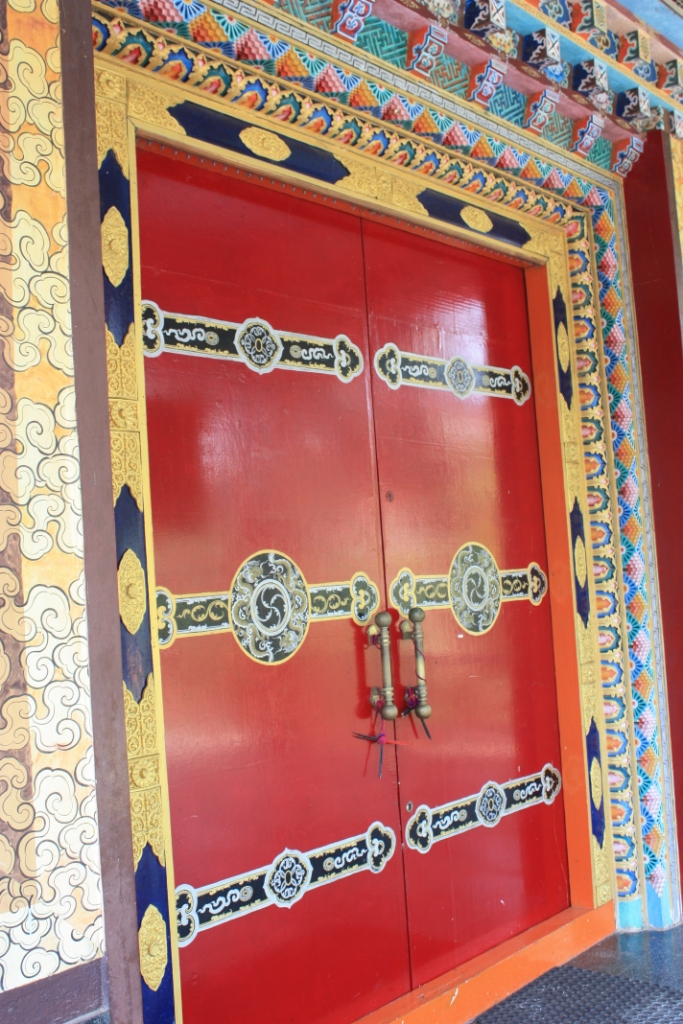
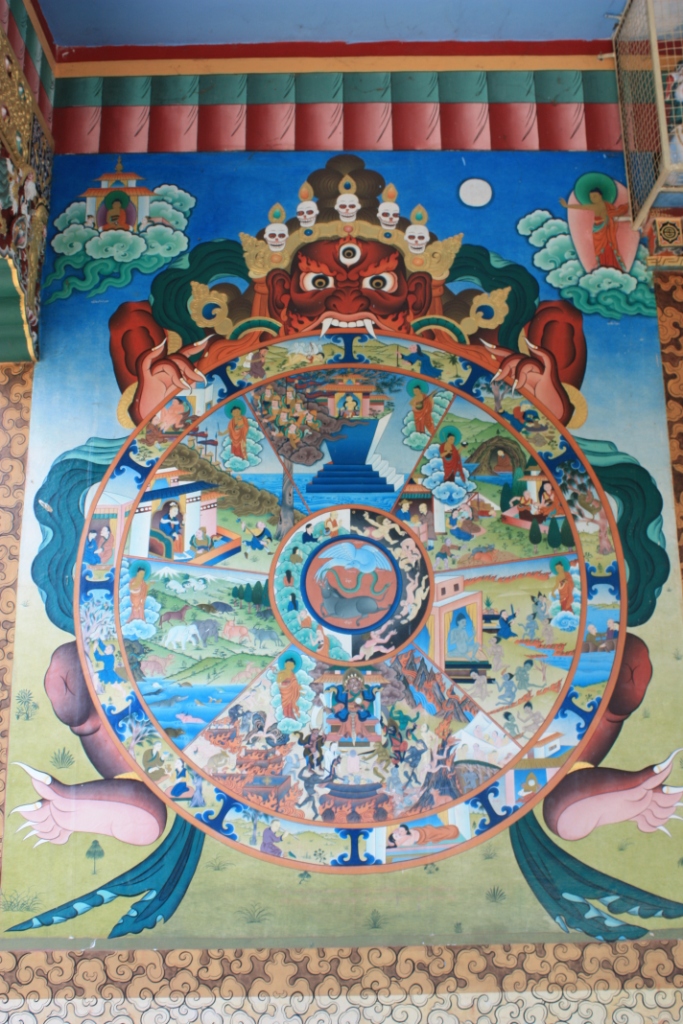
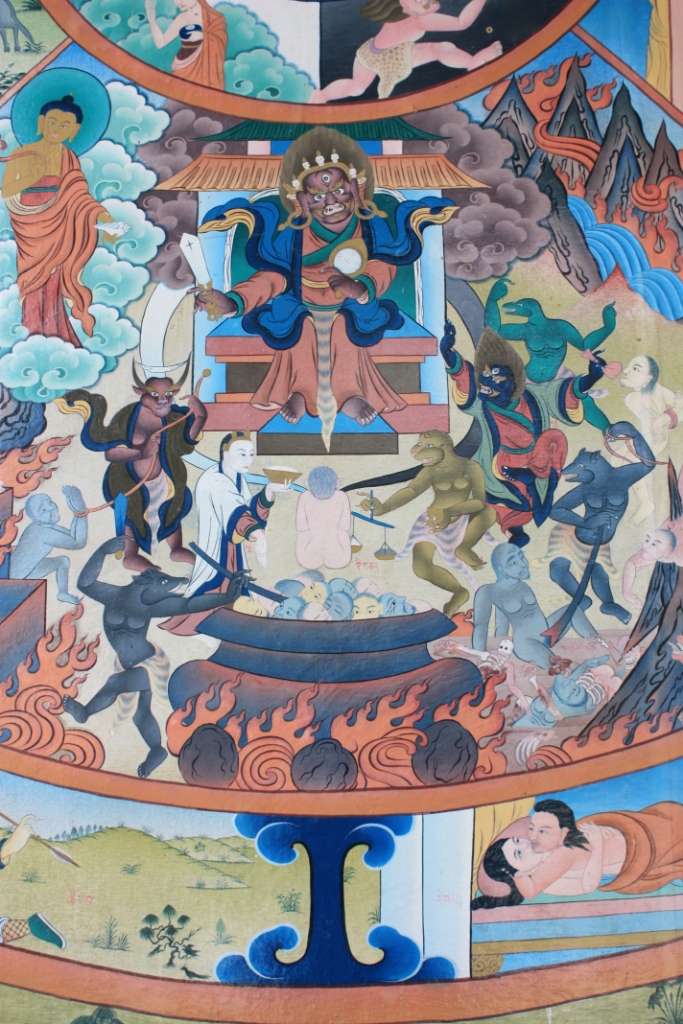
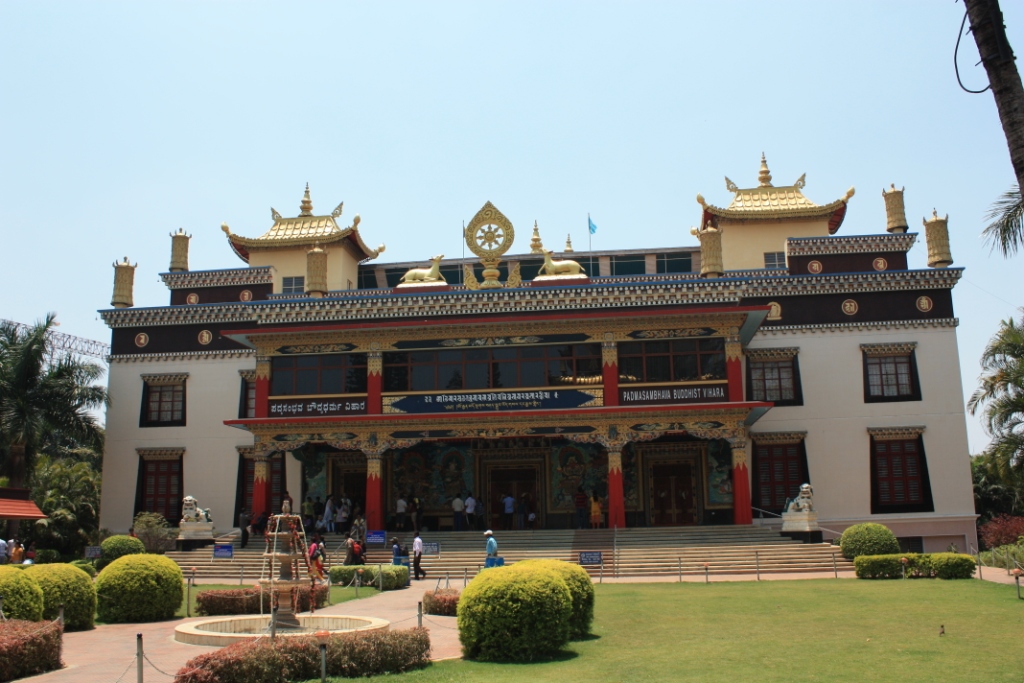
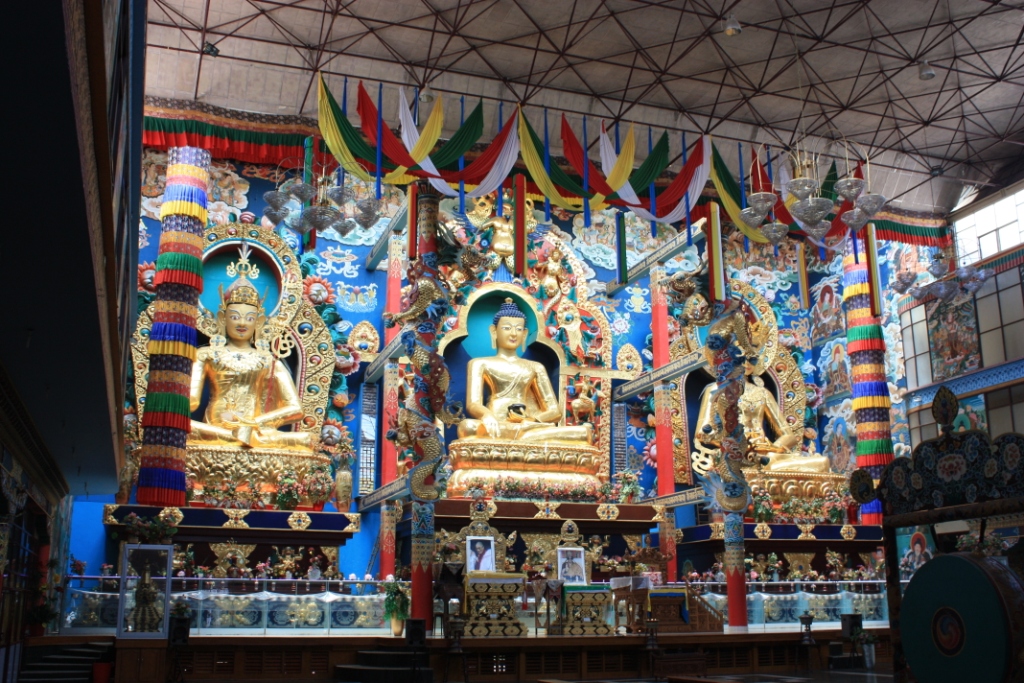
DAILY PHOTO: Padmasambhava Buddhist Vihara

Taken March 29, 2014 at Namdroling Monastery in Bylakuppe.

Taken March 29, 2014 at Namdroling Monastery in Bylakuppe.

IMG_1497

Namdroling Monastery is the largest teaching center of the Nyingmapa sect of Tibetan Buddhism in the world. It is located in Bylakuppe in southern Karnataka. Bylakuppe is a series of settlements that constitute one of the largest collections of Tibetans in Southern India (about 20,000 Tibetans live here.) This monastery was established by the Penor Rinpoche in 1963, after the Tibetan diaspora of 1959. The original monastery was a small bamboo temple, from that it has grown to a large campus of buildings.

This, the “Golden Temple”, is a must stop visit for travelers in southern Karnataka. For those with interest in Tibetan Buddhism, one may want to arrange a longer stay. Be aware that there are certain permitting requirements for visits longer than day visits.

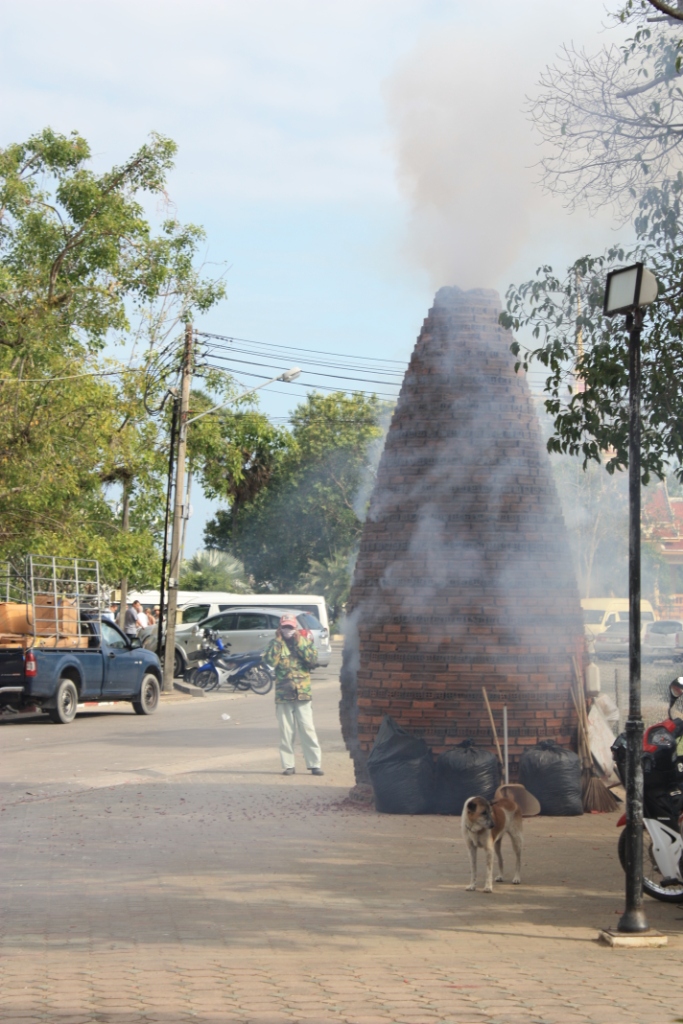
DAILY PHOTO: Driving the Demons Out? No.

Taken in January of 2014 at Wat Chalong.

Taken in January of 2014 at Wat Chalong.

At Wat Chalong there is a big, brick kiln that is shaped somewhat like a beehive. Loud and long strings of fire crackers are frequently set off in it. I had read that this was done to drive demons out. That turns out to be patently false, but it’s such an awesome explanation that I can see why it had traction. The firecrackers are actually set off to signify a prayer has been answered. (That makes much less sense than driving away demons… I know, right?)

True story: When I was there a guy actually stuck his head up into the kiln to see where they kept the fireworks. Natural Selection was not put to work that day, but I wondered what would have happened if a string went off just then.  On the other hand, the dogs seem to be able to completely ignore it. I know they’re probably deaf, but you’d think the falling paper would unnerve them.

BOOK REVIEW: The Miracle of Mindfulness by Thich Nhat Hanh

The Miracle of Mindfulness: An Introduction to the Practice of MeditationThe Miracle of Mindfulness: An Introduction to the Practice of Meditation by Thích Nhất Hạnh

My rating: 4 of 5 stars

Amazon page

This book by the renowned Vietnamese Buddhist monk, activist, and poet, Thich Nhat Hanh, offers pointers on how to live a life of mindfulness. Like most of Hanh’s works, this one is brief, concise, and the front and back matter account for about as much verbiage as the chapters themselves.

The seven chapters that make up the book proper examine mindfulness from various angles, with various approaches, and have a loose organization. The most readable of these chapters–owing to its narrative format–is the last, which retells a Tolstoy story about an Emperor who receives three questions and–unable to find suitable answers by offering a reward to his subjects–dons a disguise and visits a hermit sage. Needless to say, the sage (and life events) enlighten the Emperor, and the answers revolve around the theme of mindfulness. Among the most thought-provoking of the chapters is one that proposes that one take one day of the week to focus on mindfulness. Hanh offers advice on how to best select and structure such a day.

While the appended matter of some of Thich Hhat Hanh’s books can read like filler (intended to reach a page quota), that isn’t so much the case with this book. The most valuable of the appendices gives 32 exercises for building mindfulness. Many of these exercises are variations on a theme, and some are much more extensive than others, but it’s a crucial section and might even be called the heart of the book. Likewise, there are five sutra translations that will be appreciated by readers who are actually Buddhist. (Non-Buddhists may find the sutras to be a less colorful and more repetitive restatement of what Hahn has told them in the chapters. If one pays attention to the chapters and does the exercises, reading the sutra’s isn’t necessary for those who are not students of the religion.)

There is an odd postscript by one of Hanh’s students that is like those I’ve seen in other Hanh books. It’s an odd little testimonial. I put it in the filler category as anyone buying the book knows who Thich Nhat Hanh is and about the accolades he has received and, therefore, they don’t need a prologue telling them how awesome he is. It actually detracts from his persona as a wise man, because it makes one wonder who inspired the little ego trip. I suspect this is more a publisher desired addenda than an author inspired one, but, at any rate, it’s not useful. It can be interesting to hear about the war days, but there’s an outlet for that. Furthermore, I would think the place to tell us how awesome the author is would be at the beginning of the book–not the end. If one gets to the back matter, he must have done something to impress one.

I’d recommend this book for meditators, would-be meditators, and anyone who thinks that life is slipping through his or her fingers because of constant stress and a runaway mind.

View all my reviews

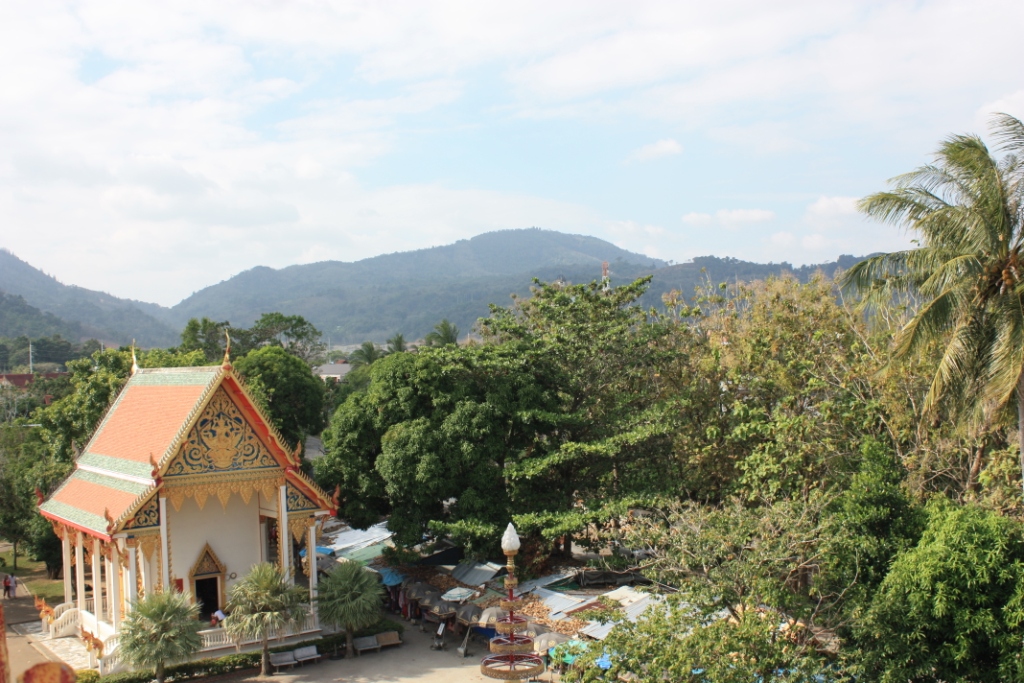
DAILY PHOTO: Temple in the Jungle

Taken in January of 2014 at Wat Chalong on Phuket.

Taken in January of 2014 at Wat Chalong on Phuket.

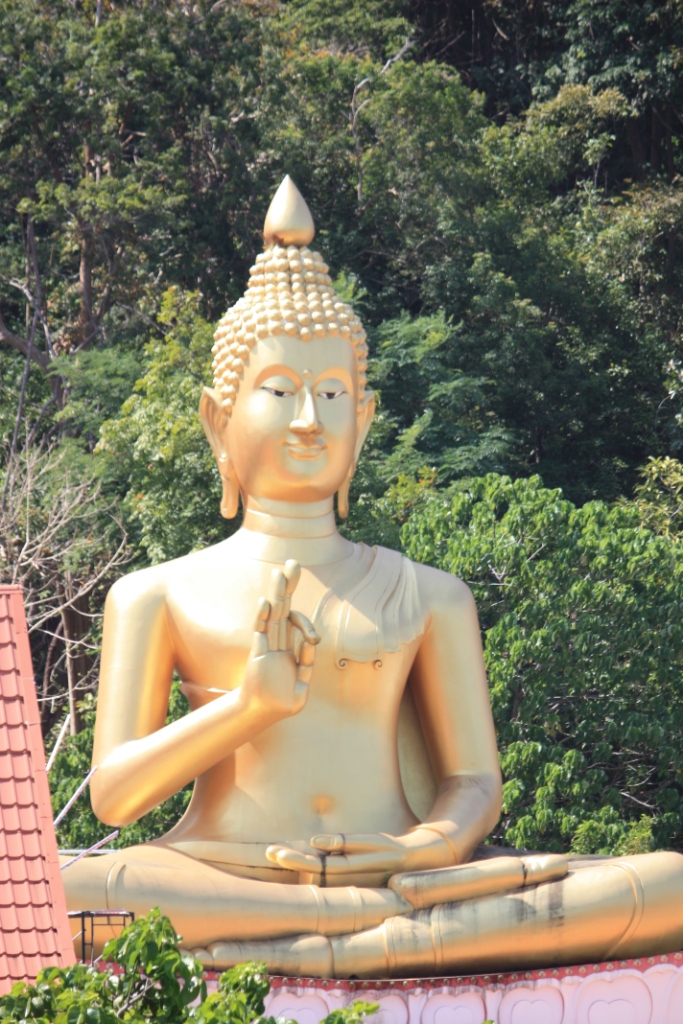
DAILY PHOTO: Golden Buddha of Rang Hill

Taken in January of 2013

Taken in January of 2013

This Buddha is located at Wat Khao Rang on Rang Hill, overlooking Phuket Town. His right hand mudra conveys that the spice is just right–but you may want to verify that with a Buddhist.

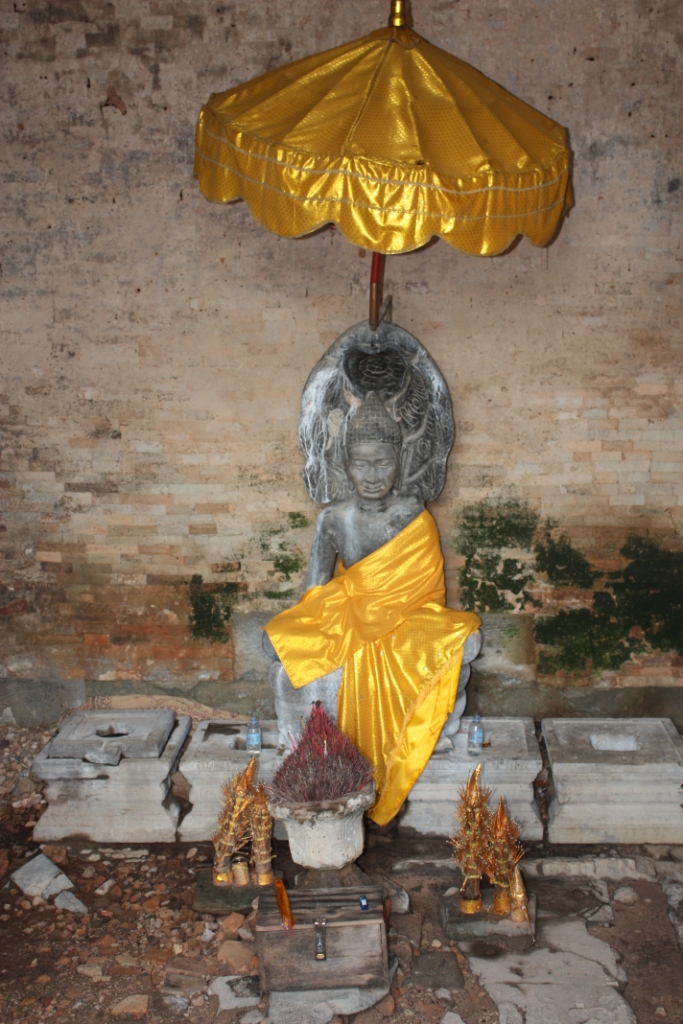
DAILY PHOTO: Buddha with Golden Parasol

Taken in October of 2012 at Angkor, Cambodia.

Taken in October of 2012 at Angkor, Cambodia.

I was just doing some research on 13th century Angkor, and so I figured I’d dig back to 2012 for a photo from my visit there.


BOOK REVIEW: The Novice by Thich Nhat Hanh

The Novice: A Story of True LoveThe Novice: A Story of True Love by Thích Nhất Hạnh

My rating: 5 of 5 stars

Amazon page

The Novice is the retelling of a Vietnamese folk tale about a young monk who is repeatedly wronged, but who always does the virtuous thing. As I read this book, I thought the story seemed familiar, and I realized that I read the same story as The Martyr by Ryūnosuke Akutagawa. Akutagawa does a much better job of story building. The Japanese writer doesn’t reveal to the reader that Lorenzo (his novice and the equivalent of Thich Nhat Hanh’s Kihn Tâm) is a female until the end—thus definitely resolving the claim that the young monk fathered a child out-of-wedlock and in contravention of vows f0r the reader at the same time as the characters in the story learn it.

Thich Nhat Hanh tells us that the novice is a female at the beginning, and he does so via backstory that serves both to give justification for why Kihn Tâm chooses to disguise herself and become a monk and to pile onto the injustice. We learn that Kihn Tâm’s female alter ego had been married, but the marriage ended with a false accusation of attempted murder of her husband. This backstory probably isn’t worth the drag for either of the aforementioned purposes—but the former is more justifiable than the latter.

What Thich Nhat Hanh lacks in gripping narrative structure, he gains in provoking thought. The Zen monk and poet gives the reader insight into how Kinh Tâm manages to be preternaturally virtuous. In The Martyr this is a black box affair. Hanh also encourages the reader to see Kihn Tâm’s accusers as the novice does, i.e. with compassion. Akutagawa does what any writer would do; he vilifies the accusers so as to make the story resonate with the average, petty, martyr-complex prone reader—as opposed to the enlightenment-aspiring reader. Hanh leaves the other monks in Kinh Tâm’s corner, i.e. when everyone else is condemning the novice, they still believe in her. In Akutagawa’s story, monastics are not inherently so perfect.

The book offers some interesting back matter. The most substantial of the appendices is an account by Sister Chan Khong of the works of Thich Nhat Hanh and his followers both during the war and afterword when they tried to establish a monastery in Communist Vietnam. The essay echoes the themes of loving-kindness and compassion that form the core of the novella, as does the essay by Hanh that brings the book to a conclusion. While this back matter is filler to make up for the fact that the story is not novel length, it nevertheless makes for interesting reading.

I’d recommend this book for those with an interested in Zen. If you’re looking for a good story, read Akutagawa’s The Martyr, but if you want to be inspired to compassion, read Thich Nhat Hanh.

View all my reviews

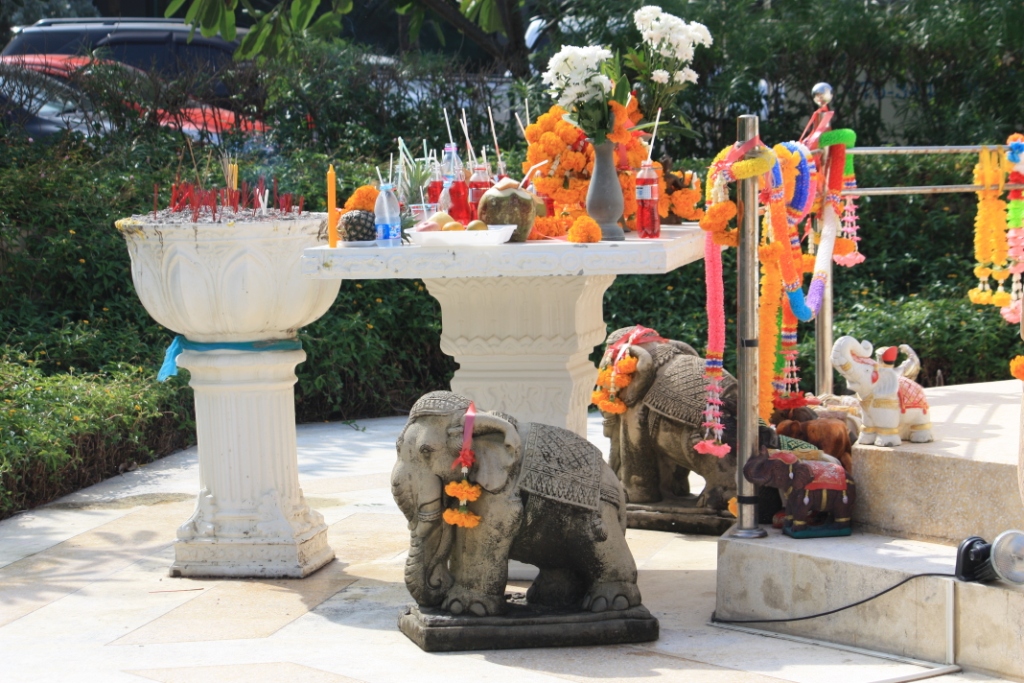
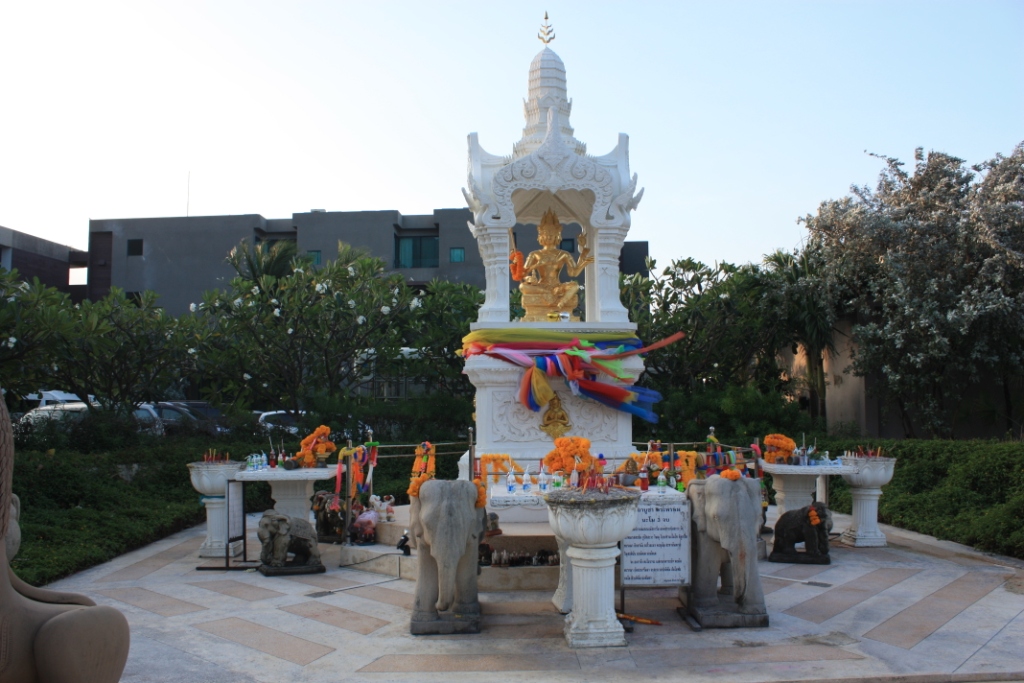
DAILY PHOTO: Seaside Shrine

Taken in January 2014 in Patong.

Taken in January 2014 in Patong.

Taken January 2014 in Patong

Taken January 2014 in Patong.

From this little shrine one could view Patong Beach across Beach Road. It’s a small but very active shrine at the North end of Patong Beach. There was often someone burning incense or making an offering.


BOOK REVIEW: The Equanimous Mind by Manish Chopra

The Equanimous MindThe Equanimous Mind by Manish Chopra

My rating: 4 of 5 stars

Amazon page

Imagine going to a meditation center and living by the following rules:

1. You may not have access to any reading materials.

2. You may not have access to any writing materials.

3. You must leave behind cell phones, tablets, laptops, watches, radios, and other portable electronic devices.

4. While there will be other people around, you are only allowed to talk to your instructor/mentor, and mustn’t acknowledge or interact with others. You will scarcely hear a voice unless you are in meeting with your teacher or listening to the taped lessons in the evening.

5. You will be segregated from the other sex. They will have separate living and meditation spaces.

6. You will eat only the vegetarian meals provided by the center.

7. You will spend your days mostly in meditation—meditation of a rigorously prescribed nature.

8. You have to live by these rules for ten straight days. You are strongly discouraged from attending if you don’t believe yourself capable completing of all ten days.

Could you do it? If your response is, “Sure I can, piece of cake,” you are either an exceptional person or a little deluded. And it’s probably more likely you are like the person who imagines they will be a hero in a bank robbery or mugging, but who ends up catatonically cowering in a puddle of their own piddle. Maybe it shouldn’t be a tough proposition, but it is.

The ten days described are the basic course offered at Vipassana meditation centers around the globe. Except your travel costs, there’s no cost to attend, and you aren’t even allowed to tip the staff–though you can make a donation at the end of the course to assist others. If you happen to be near a center, there’s nothing but will and 10 consecutive days of freedom to keep one from taking the course.

The Equanimous Mind charts Manish Chopra’s personal experience with the course. I bought the book because I intend to attend the course myself, and I craved insight into what the experience is like.

For those who are unfamiliar with Vipassana meditation, it’s nominally a Buddhist method, but practitioners are quick to point out that it’s actually areligious. One need not be Buddhist to attend. One could be a Hindu, a Methodist, or an atheist and get the same value from attendance. Adherents believe that this is the meditation method that Buddha himself taught. For those who thought this sounded awfully cult-like when I described it above, in many ways it’s the antithesis of a cult. There is no central guru to worship. The closest thing to the overarching guru, S.N. Goenka, passed away last year. You don’t have to join a group or swear allegiance. And not only don’t you surrender your life-savings, you don’t have to surrender one, thin dime to have the experience.

Chopra doesn’t write at all about the background of Vipassana, nor much about its philosophy or method. Instead, this book is a retelling of Chopra’s personal experience with the camp. There are many books that deal with those aforementioned topics, and so it’s no loss that this book doesn’t. It does give the reader a first-hand look at what it’s like to live in the camp and what prolonged meditation is like, and thus meets a valuable niche in lending comfort to those who are considering the course–but who are leery of what they will go through.

It’s remarkable that the author had the detailed recollections necessary to construct an entire book. The organization of the book chapters is by day, and so there are ten core chapters. (This is a good way to arrange it as there is apparently some universality to experience day-by-day. Not only are people being taught the same methods, but it seems most people who quit do so on days two or six—indicating many people hit “walls” at the same point.) One will remember that notebooks and writing utensils are prohibited. The last chapter informs the reader that Chopra began frantically outlining the book on his way home. It’s surprising that an entire book sprang from memory. The author does claim that the clarity gained through the course improved his memory.

One can’t help but wonder what the book would have read like if it had been compiled day-by-day as a journal. In other words, how much was the book was framed by the euphoria of just having completed the course? Chopra does mention some low points of the course, but, overall, the picture he paints is rosy. It may be that his experience was just overwhelmingly positive, or he could have been on a high from completing something quite difficult.

Chopra suggests that by the end he had greater mental clarity, decreased vice, increased mental capacity, and was living an idyllic life. I don’t want to sound like I’m treating the account as suspect, and I certainly wouldn’t suggest that Chopra is being blatantly dishonest. However, I worry that Chopra might have oversold the course. It almost reads like he’s been imbued with superpowers (mental, not physical–think Professor Xavier, not superman) at the end of the book. (He doesn’t suggest anything magical, but the claims are pretty impressive.) Maybe this is genuinely his experience, but it sounds a little too good to be true.

I’d definitely recommend this book for people who are considering taking the course. I’m not sure it would be of much interest to a more general reader. As I indicated, one isn’t going to learn a lot about the philosophy or history of Vipassana. One does learn a little about the methods from Chopra’s description, but it is fairly cursory. There is a fair amount of mundane information that people interested in the course will love to know (e.g. what kind of food was served and what it’s like to have to sit through one’s body aches), but which will be less than thrilling for someone who has no interest in taking the course.

View all my reviews

DAILY PHOTO: Incensed at Wat Phnom

Taken October 2012 at Wat Phnom in Phnom Penh.

Taken October 2012 at Wat Phnom in Phnom Penh.

How come the noun “incense” means “a substance that releases a strong fragrance when burned,” but in its adjectival or verbal form it means to be, or make someone, extremely angry.

It’s not a rhetorical question, people. If you’ve got an answer, let me know.