DAILY PHOTO: Cambodian Ganesh

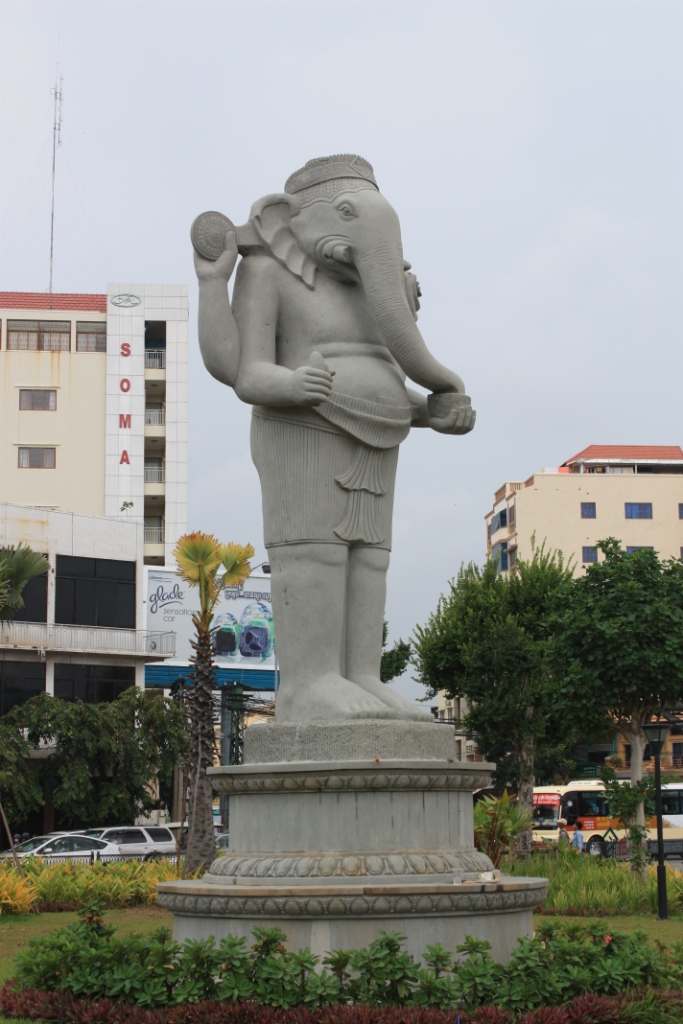
Taken in October of 2012 in Phnom Penh.

Taken in October of 2012 in Phnom Penh.

An estimated 95% of Cambodians are Buddhist, and Buddhism has been the dominant religion since the time of Jayavarman VII (i.e. the late 12th century.) This begs the question, why might one see a statue of a Hindu deity in a public space in Cambodia’s capital city?


If you’ve visited Angkor, you know that Hindu imagery abounds. This is because before Jayavarman, the Khmeris were Hindu. In a great early act of recycling, Vishnu sculptures became Buddha sculptures by decree. (In what is–as far as I know–a coincidence, many Hindus believe that Buddha [Siddhartha Gautama Buddha] was an avatar, or incarnation, of Vishnu.)


This still doesn’t explain why a relatively new sculpture of Ganesha would reside in present-day Phnom Penh (Phnom Penh is not as old as Angkor,  and by the time it was founded Buddhism was dominant.) Just as contemporary taxi and auto-rickshaw (tuk-tuk) drivers in India display Ganesha in appeal to this “remover of obstacles,” 10th century maritime traders did the same. This desire to court the favor of the remover of obstacles has continued on into the modern-day.


It’s an interesting commentary on how cultures never interact without getting some of their chocolate into the other culture’s peanut butter and vice versa (for those who have no idea what I’m talking about, that’s a reference to an old Reese’s commercial and not some dark coded message.)

DAILY PHOTO: Palyul in Miniature

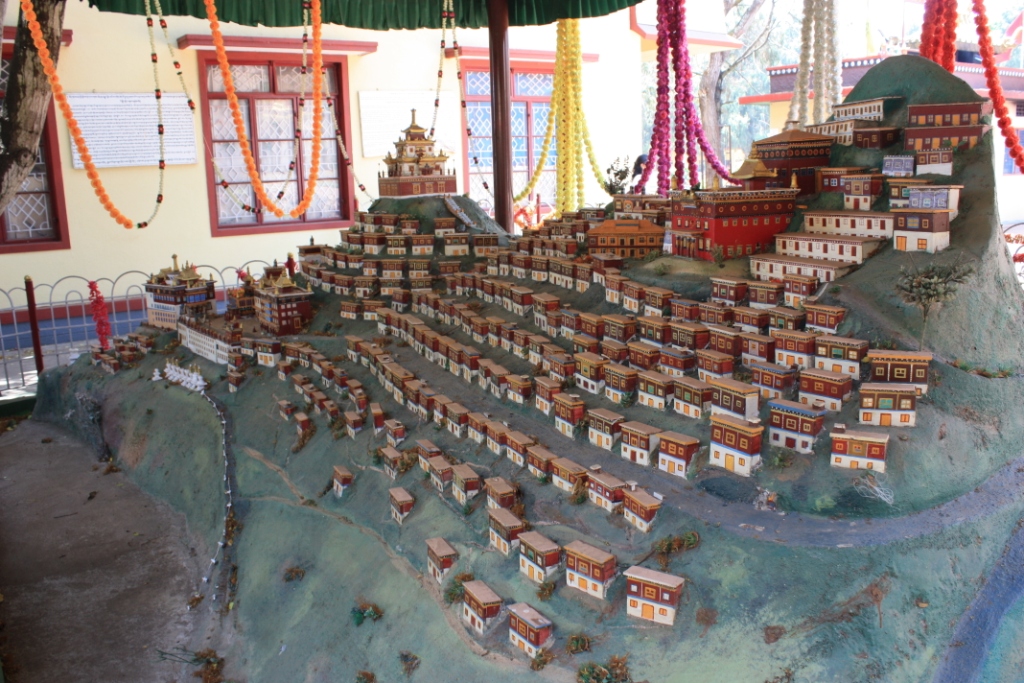
Taken in March of 2014 at the Namdroling Monastery

Taken in March of 2014 at the Namdroling Monastery

This model of the Palyul Monastery and its environs is located at Namdroling Monastery in Bylakuppe, India. Palyul is the parent monastery of Namdroling. It is one of the six major monasteries of the Nyingma branch of Tibetan Buddhism.

DAILY PHOTO: 5 Golden Buddhas

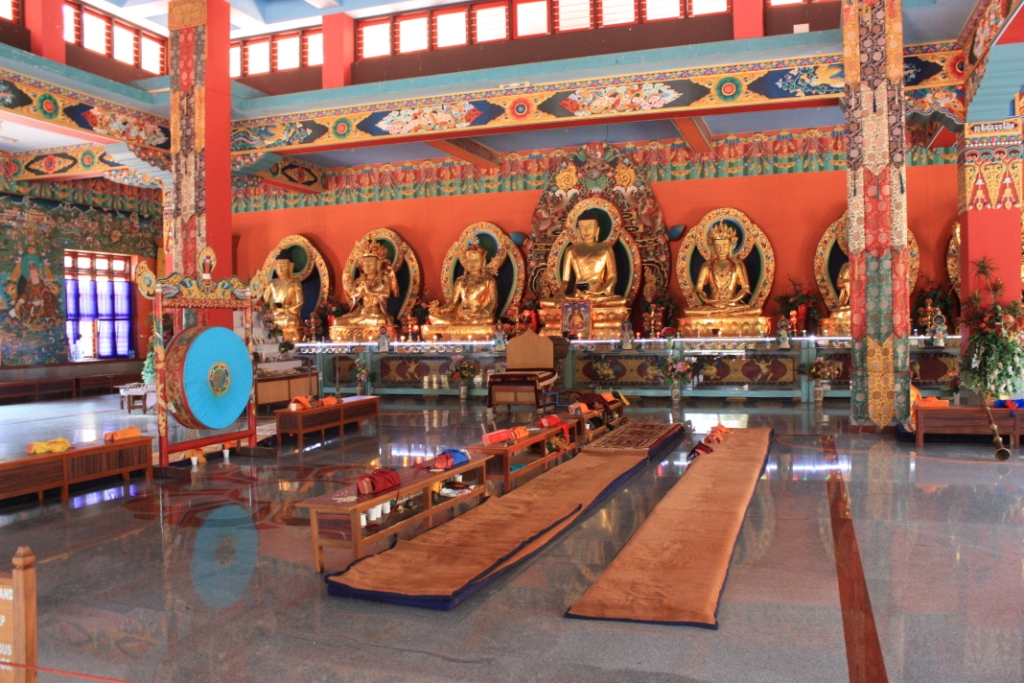
Taken in March of 2014 at Namdroling Monastery.

Taken in March of 2014 at Namdroling Monastery.

DAILY PHOTO: Namdroling Temple

Taken in March of 2014

Taken in March of 2014 at Bylakuppe.

The large photo is of Pema Norbu Rinpoche, the 11th head of the Palyul Nyingma Buddhist tradition. He passed away (achieving Parinirvana in the lingo of Buddhism) in March of 2009. At the end of July of 2014, the new Rinpoche will be enthroned.


DAILY PHOTO: Snow Lion Guardian

Taken March 29, 2014 at Namdroling Monastery.

Taken March 29, 2014 at Namdroling Monastery.

Check out the mustache and dual goatee. This Snow Lion temple guardian is located on the steps of the Padmasambhava Buddhist Vihara at Namdroling Monastery in Bylakuppe, India. Fun fact: Some believe that the milk of a snow lion can restore health to an ailing body… but not the body of the person trying to milk a snow lion.

DAILY PHOTO: The Red Door

Taken March 29, 2014 at Namdroling Monastery in Bylakuppe.

Taken March 29, 2014 at Namdroling Monastery in Bylakuppe.

Doors stir the curiosity. One wonders what’s on the other side–particularly when the door is as pimped out as this one. This isn’t even the main door. It’s a side door, hidden by vegetation and easily missed.

DAILY PHOTO: Tibetan Tanka


Taken on March 29, 2014 at Namdroling Monastery.

Taken on March 29, 2014 at Namdroling Monastery.

IMG_1577

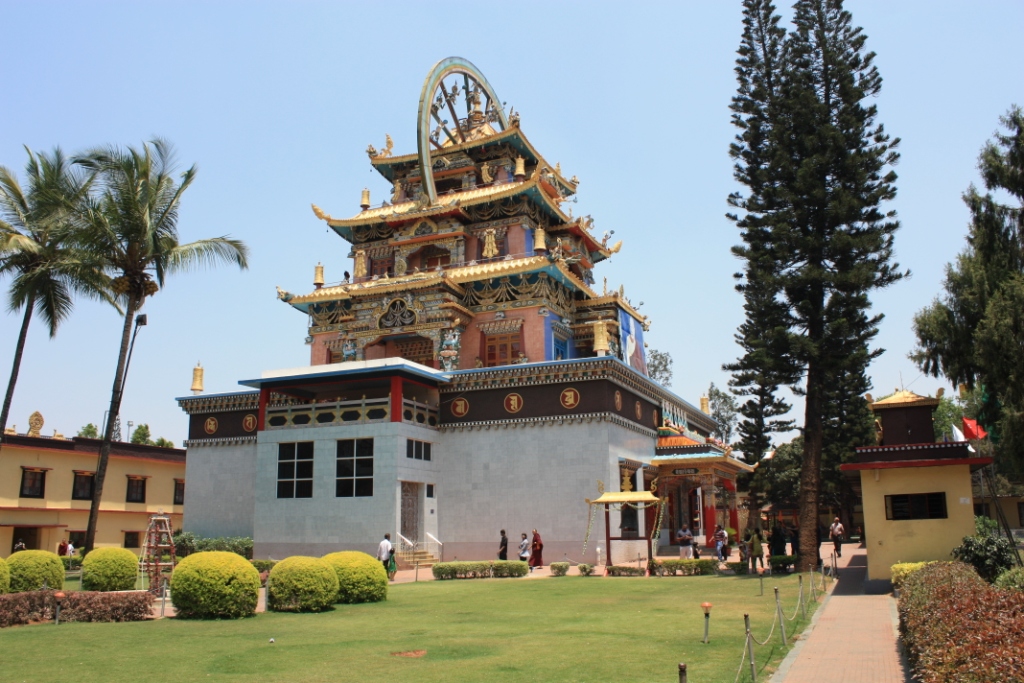
DAILY PHOTO: Padmasambhava Buddhist Vihara

Taken March 29, 2014 at Namdroling Monastery in Bylakuppe.

Taken March 29, 2014 at Namdroling Monastery in Bylakuppe.

IMG_1497

Namdroling Monastery is the largest teaching center of the Nyingmapa sect of Tibetan Buddhism in the world. It is located in Bylakuppe in southern Karnataka. Bylakuppe is a series of settlements that constitute one of the largest collections of Tibetans in Southern India (about 20,000 Tibetans live here.) This monastery was established by the Penor Rinpoche in 1963, after the Tibetan diaspora of 1959. The original monastery was a small bamboo temple, from that it has grown to a large campus of buildings.

This, the “Golden Temple”, is a must stop visit for travelers in southern Karnataka. For those with interest in Tibetan Buddhism, one may want to arrange a longer stay. Be aware that there are certain permitting requirements for visits longer than day visits.

DAILY PHOTO: Driving the Demons Out? No.

Taken in January of 2014 at Wat Chalong.

Taken in January of 2014 at Wat Chalong.

At Wat Chalong there is a big, brick kiln that is shaped somewhat like a beehive. Loud and long strings of fire crackers are frequently set off in it. I had read that this was done to drive demons out. That turns out to be patently false, but it’s such an awesome explanation that I can see why it had traction. The firecrackers are actually set off to signify a prayer has been answered. (That makes much less sense than driving away demons… I know, right?)

True story: When I was there a guy actually stuck his head up into the kiln to see where they kept the fireworks. Natural Selection was not put to work that day, but I wondered what would have happened if a string went off just then.  On the other hand, the dogs seem to be able to completely ignore it. I know they’re probably deaf, but you’d think the falling paper would unnerve them.

BOOK REVIEW: The Miracle of Mindfulness by Thich Nhat Hanh

The Miracle of Mindfulness: An Introduction to the Practice of MeditationThe Miracle of Mindfulness: An Introduction to the Practice of Meditation by Thích Nhất Hạnh

My rating: 4 of 5 stars

Amazon page

This book by the renowned Vietnamese Buddhist monk, activist, and poet, Thich Nhat Hanh, offers pointers on how to live a life of mindfulness. Like most of Hanh’s works, this one is brief, concise, and the front and back matter account for about as much verbiage as the chapters themselves.

The seven chapters that make up the book proper examine mindfulness from various angles, with various approaches, and have a loose organization. The most readable of these chapters–owing to its narrative format–is the last, which retells a Tolstoy story about an Emperor who receives three questions and–unable to find suitable answers by offering a reward to his subjects–dons a disguise and visits a hermit sage. Needless to say, the sage (and life events) enlighten the Emperor, and the answers revolve around the theme of mindfulness. Among the most thought-provoking of the chapters is one that proposes that one take one day of the week to focus on mindfulness. Hanh offers advice on how to best select and structure such a day.

While the appended matter of some of Thich Hhat Hanh’s books can read like filler (intended to reach a page quota), that isn’t so much the case with this book. The most valuable of the appendices gives 32 exercises for building mindfulness. Many of these exercises are variations on a theme, and some are much more extensive than others, but it’s a crucial section and might even be called the heart of the book. Likewise, there are five sutra translations that will be appreciated by readers who are actually Buddhist. (Non-Buddhists may find the sutras to be a less colorful and more repetitive restatement of what Hahn has told them in the chapters. If one pays attention to the chapters and does the exercises, reading the sutra’s isn’t necessary for those who are not students of the religion.)

There is an odd postscript by one of Hanh’s students that is like those I’ve seen in other Hanh books. It’s an odd little testimonial. I put it in the filler category as anyone buying the book knows who Thich Nhat Hanh is and about the accolades he has received and, therefore, they don’t need a prologue telling them how awesome he is. It actually detracts from his persona as a wise man, because it makes one wonder who inspired the little ego trip. I suspect this is more a publisher desired addenda than an author inspired one, but, at any rate, it’s not useful. It can be interesting to hear about the war days, but there’s an outlet for that. Furthermore, I would think the place to tell us how awesome the author is would be at the beginning of the book–not the end. If one gets to the back matter, he must have done something to impress one.

I’d recommend this book for meditators, would-be meditators, and anyone who thinks that life is slipping through his or her fingers because of constant stress and a runaway mind.

View all my reviews