I met a traveller from an antique land
   Who said: Two vast and trunkless legs of stone
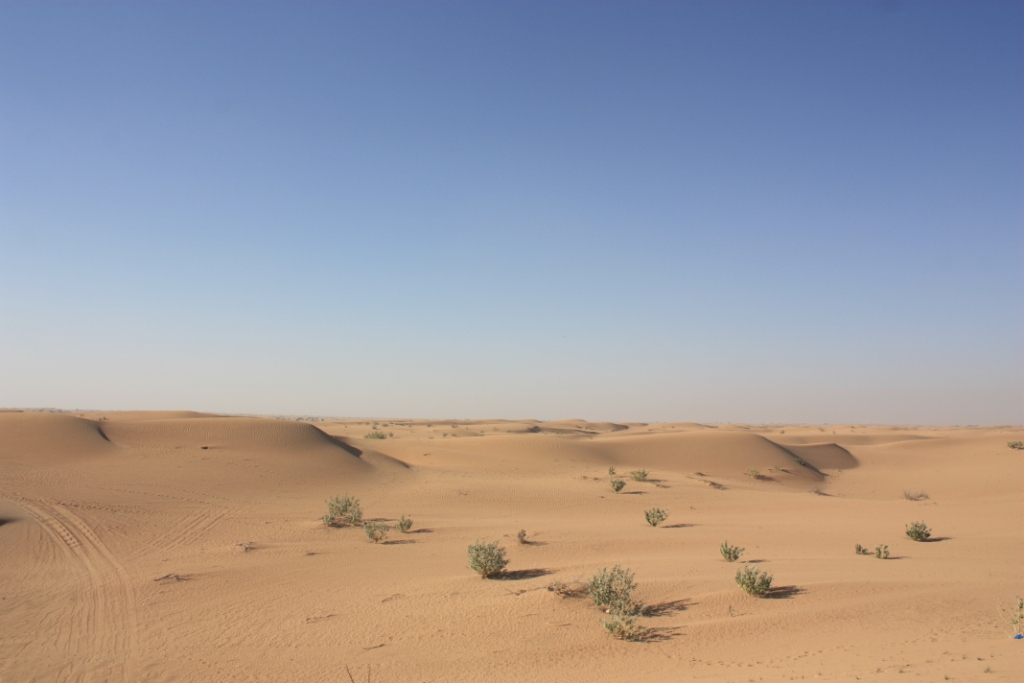
 Stand in the desert... Near them, on the sand,
   Half sunk, a shattered visage lies, whose frown,
 And wrinkled lip, and sneer of cold command,
   Tell that its sculptor well those passions read
 Which yet survive, stamped on these lifeless things,
   The hand that mocked them, and the heart that fed:
 And on the pedestal these words appear:
   "My name is Ozymandias, king of kings:
 Look on my works, ye Mighty, and despair!"
   Nothing beside remains. Round the decay
 Of that colossal wreck, boundless and bare
   The lone and level sands stretch far away.
Shall I compare thee to a summer's day?
   Thou art more lovely and more temperate:
 Rough winds do shake the darling buds of May,
   And summer's lease hath all too short a date:
 Sometimes too hot the eye of heaven shines,
   And often is his gold complexion dimm'd:
 And every fair from fair sometime declines,
   By chance, or nature's changing course untrimm'd;
 But thy eternal summer shall not fade,
   Nor lose possession of that fair thou ow'st,
 Nor shall death brag thou wander'st in his shade,
   When in eternal lines to time thou grow'st;

   So long as men can breathe, or eyes can see,
   So long lives this, and this gives life to thee.
The truth is rarely pure and never simple. Modern life would be very tedious if it were either, and modern literature, a complete impossibility!
Algernon
Oh! it is absurd to have a hard and fast rule about what one should read and what one shouldn’t. More than half of modern culture depends upon what one shouldn’t read.
ALgernon
It is awfully hard work doing nothing. However, I don’t mind hard work where there is no definite object of any kind.
Algernon
One has a right to Bunbury anywhere one chooses. Every serious Bunburyist knows that.
Algernon; [fyi: “Bunburying” is the use of appointments with ficticious individuals to get out of one’s duties and obligations.]
'Twas brillig, and the slithy toves
   Did gyre and gimble in the wabe:
 All mimsy were the borogoves,
    And the mome raths outgrabe.

"Beware the Jabberwock, my son!
   The jaws that bite, the claws that catch!
 Beware the Jubjub bird, and shun
    The frumious Bandersnatch!"

He took his vorpal sword in hand:
   Long time the manxome foe he sought --
 So rested he by the Tumtum tree,
    And stood awhile in thought.

And as in uffish thought he stood,
   The Jabberwock, with eyes of flame,
 Came whiffling through the tulgey wood,
    And burbled as it came!

One, two! One, two! And through and through
   The vorpal blade went snicker-snack!
 He left it dead, and with its head
    He went galumphing back.

"And hast thou slain the Jabberwock?
   Come to my arms, my beamish boy!
 O frabjous day! Callooh! Callay!"
    He chortled in his joy.

'Twas brillig, and the slithy toves
   Did gyre and gimble in the wabe:
All mimsy were the borogoves,
    And the mome raths outgrabe.
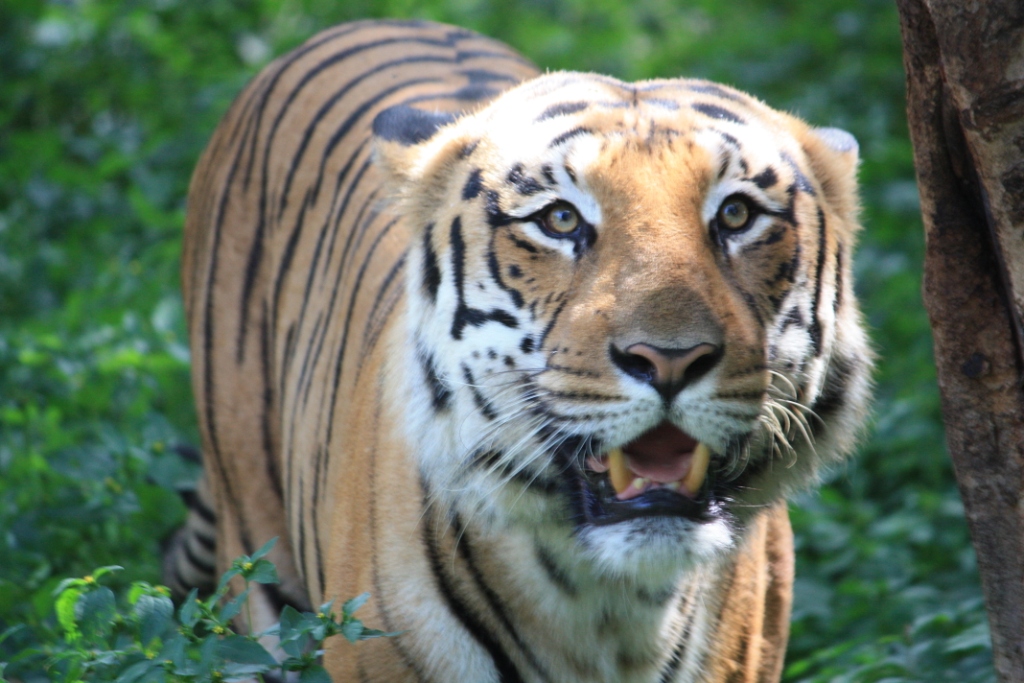
Tiger, tiger, burning bright
 In the forests of the night,
  What immortal hand or eye
 Could frame thy fearful symmetry?

In what distant deeps or skies
 Burnt the fire of thine eyes?
  On what wings dare he aspire?
 What the hand dare seize the fire?

And what shoulder and what art
 Could twist the sinews of thy heart?
  And, when thy heart began to beat,
 What dread hand? and what dread feet?

What the hammer? What the chain?
 In what furnace was thy brain?
  What the anvil? What dread grasp
 Dare its deadly terrors clasp?

When the stars threw down their spears,
 And watered heaven with their tears,
  Did he smile his work to see?
 Did he who made the lamb make thee?

Tiger, tiger, burning bright
 In the forests of the night,
  What immortal hand or eye
 Dare frame thy fearful symmetry?
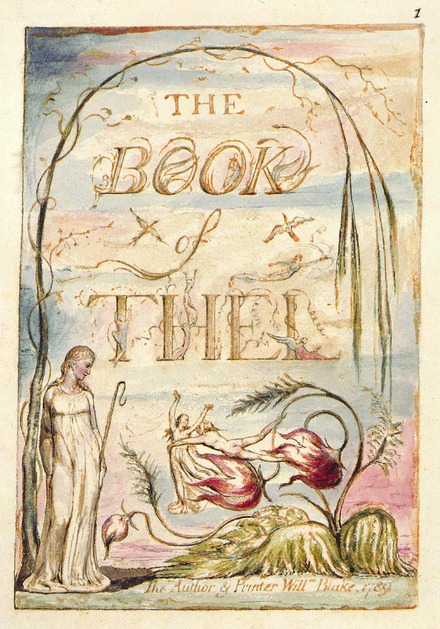
Can Wisdom be put in a silver rod? / Or Love in a golden bowl?
from Thel’s Motto
I am a watery weed, / And I am very small and love to dwell in lowly vales: / So weak the gilded butterfly scarce perches on my head. / Yet I am visited from heaven and he that smiles on all / Walks in the valley.
from Part I
Then if thou art the food of worms, O virgin of the skies, / How great thy use, how great thy blessing
from Part II
every thing that lives. / Lives not alone nor for itself
from Part II
Why cannot the Ear be closed to its own destruction? / Or the glistening Eye to the poison of a smile!
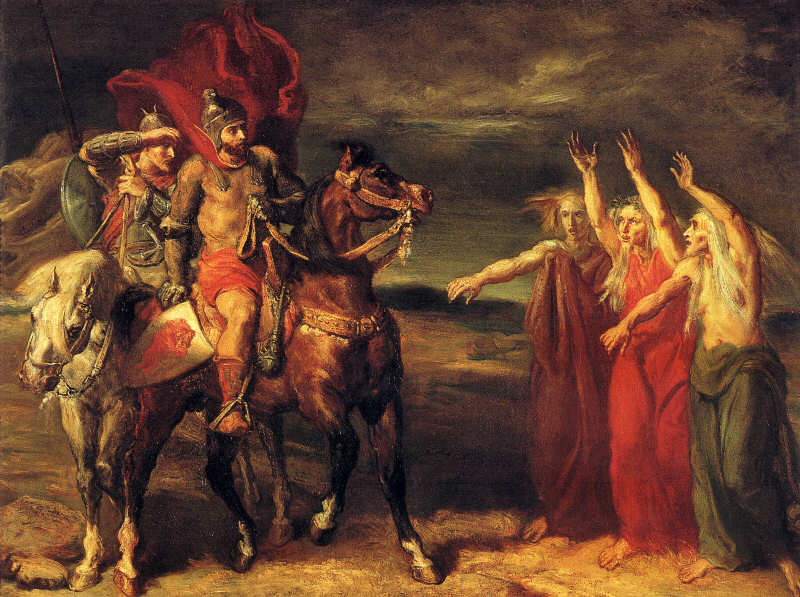
Macbeth & Banquo Encounter the Witches by Theodore Chasseriau
“There’s no art to find the mind’s construction in the face.”
Duncan in Act I, Scene 4
“Bloody instructions, which, being taught, return to plague the inventor.”
Macbeth in Act I, Scene 7
“when our actions do not, our fears do make us traitors”
Wife of Macduff in Act IV, Scene 2
“Then the liars and swearers are fools, for there are liars and swearers enough to beat up the honest men and hang them up.”
Son of Macduff in Act IV, Scene 2
“Life ‘s but a walking shadow, a poor player, that struts and frets his hour upon the stage and then is heard no more. It is a tale told by an idiot, full of sound and fury signifying nothing.
It’s been said that Blake’s poetry is nearly impenetrable. When people say this, they’re referring to a series of long poems that are often called Blake’s “prophetic books.” It’s not that people struggle much with Songs of Innocence, Songs of Experience, or The Marriage of Heaven and Hell. I doubt anyone is stumbling their way through “The Lamb” or “The Tyger.” In fact, some of Blake’s poetry is highly readable for eighteenth century work.
The challenge is that Blake created his own mythology and he launches in with all these characters that have no sticking power for a reader. This is unfortunate as Blake remains well worth reading for his ideas, his language, and his sui generis worldview. [Even if he doesn’t win you over, Blake will give you something to think about that you’ve probably never considered before.] Blake’s mythology forces the reader to choose between a painstaking read (making notes, re-reading sections multiple times, stopping dead to make connections, etc.) or a casual read that misses most of what Blake is saying because it floats over the connections he is making.
As I’m re-reading Blake, I constructed a chart that helps me track who’s who and what each major character is about. I won’t claim it makes Blake’s prophetic work completely simple and transparent, but it has made reading it more productive and insightful. If you’re reading “Valas,” “Milton,” “Jerusalem” or any of the other prophetic books, I hope it will benefit you as well.
Em/F: these are emanations (i.e. characters that flow from the character from which the pointer originates.) Some refer to these as the feminine forms, hence the “F.”
No bird soars too high, if he soars with his own wings.
william blake
The road of excess leads to the palace of wisdom.
William blake
Prisons are built with stones of Law, Brothels with bricks of Religion.
William Blake
The fox condemns the trap, not himself.
William Blake
Exuberance is Beauty.
William blake
Without Contraries is no Progression. Attraction and Repulsion, Reason and Energy, Love and Hate, are necessary to Human existence.
William Blake
If the doors of perception were cleansed, everything would appear to man as it is, infinite.
William blake
The man who never alters his opinion is like standing water, and breeds reptiles of the mind.
William Blake
I also asked Isaiah what made him go naked and barefoot three years. He answer’d: ‘The same that made our friend Diogenes, the Grecian.’
William Blake
The most sublime act is to set another before you.
William blake
NOTE: William Blake’s “The Marriage of Heaven in Hell” is available in many collections of his poetry, and is in the public domain and available via Project Gutenberg at: https://www.gutenberg.org/ebooks/45315










 Tiger Riding for Beginners