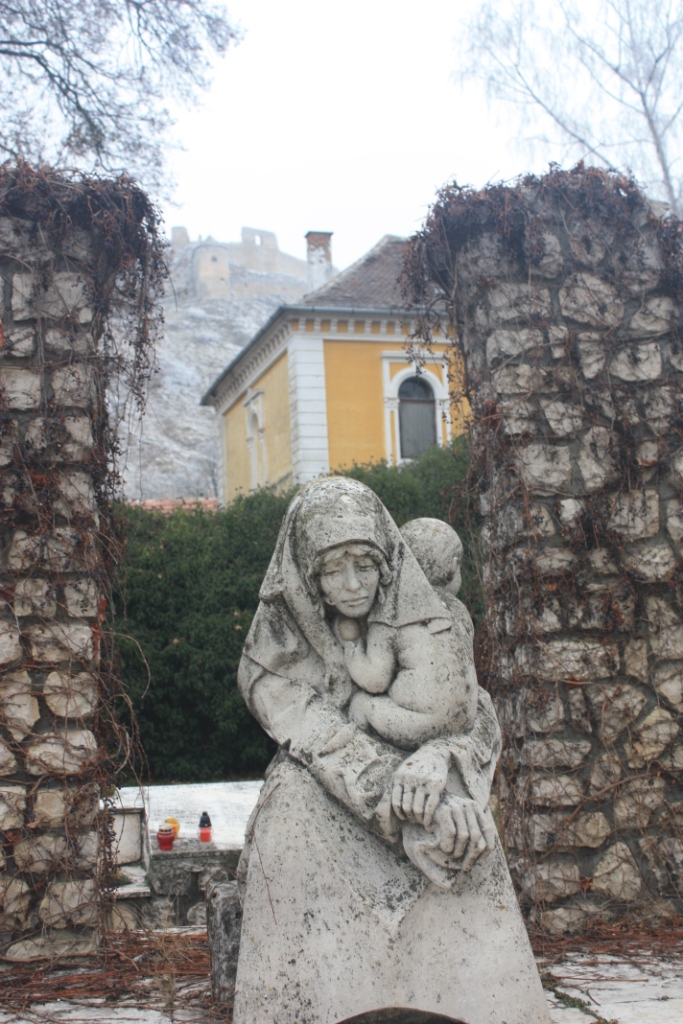
“Anguish” [Haiku]

“Anguish” by August Friedrich Albrecht Schenck (1878)
mother bleats a cloud,
standing over its dead lamb --
ringed by a murder 

BOOK REVIEW: The Art of Darkness by S. Elizabeth

The Art of Darkness: A Treasury of the Morbid, Melancholic and MacabreThe Art of Darkness: A Treasury of the Morbid, Melancholic and Macabre by S. Elizabeth
My rating: 5 of 5 stars

Amazon.in Page

Release: September 6, 2022

As the title suggests, this book collects a diverse group of artworks that share the common theme of the macabre. While most of these works are paintings, a few photos and sculptures are included. It’s also predominantly Western (European and North American) art, but some exceptions exist, notably several Japanese works are included. Where the collection really shows its breadth is in the styles of art and eras included. The works range from more than half-a-millennium old to some produced within the last couple years, with the expected variations in styles and media, given the centuries covered. The collection is also varied with respect to the popularity of the pieces and artists. You’ll likely see some familiar works (e.g. Fuseli’s “The Nightmare,” Bosch’s “The Garden of Earthly Delights,” and Dalí’s “The Face of War.”) However, most of the works were new to me. (Granted, I’m a visual arts neophyte.)

The pieces are arranged into four topical divisions, each containing three chapters. The subjects include realist content such as: bodily ailments, crime, dark takes on nature, and architectural ruins. However, much of the book delves into surreal and supernatural subject matter, including: nightmares, hallucinations, gods, monsters, ghosts, and magic.

The book lets the art do the heavy lifting, but it does have brief chapter introductions and captions for each piece that includes not only the title, artist, and (if known) the year the art was released, but also some interesting tidbits about artwork and / or artist. These write ups are concise, intriguing, and well-written, and offer some fascinating insights. The book also presents numerous quotes from poets, artists, and other intellectuals.

I learned a great deal from reading this book and discovered some new favorite artworks, art that is beautiful or grotesque but often a combination of both — but always evocative. If you’re interested in how artists depict the darkness in the lives and souls of humanity, you should definitely give this book a looksie.


View all my reviews
Cold Stone [Haiku]

winter: stone sculpture
of snuggled infant & mother;
my bones grow cold

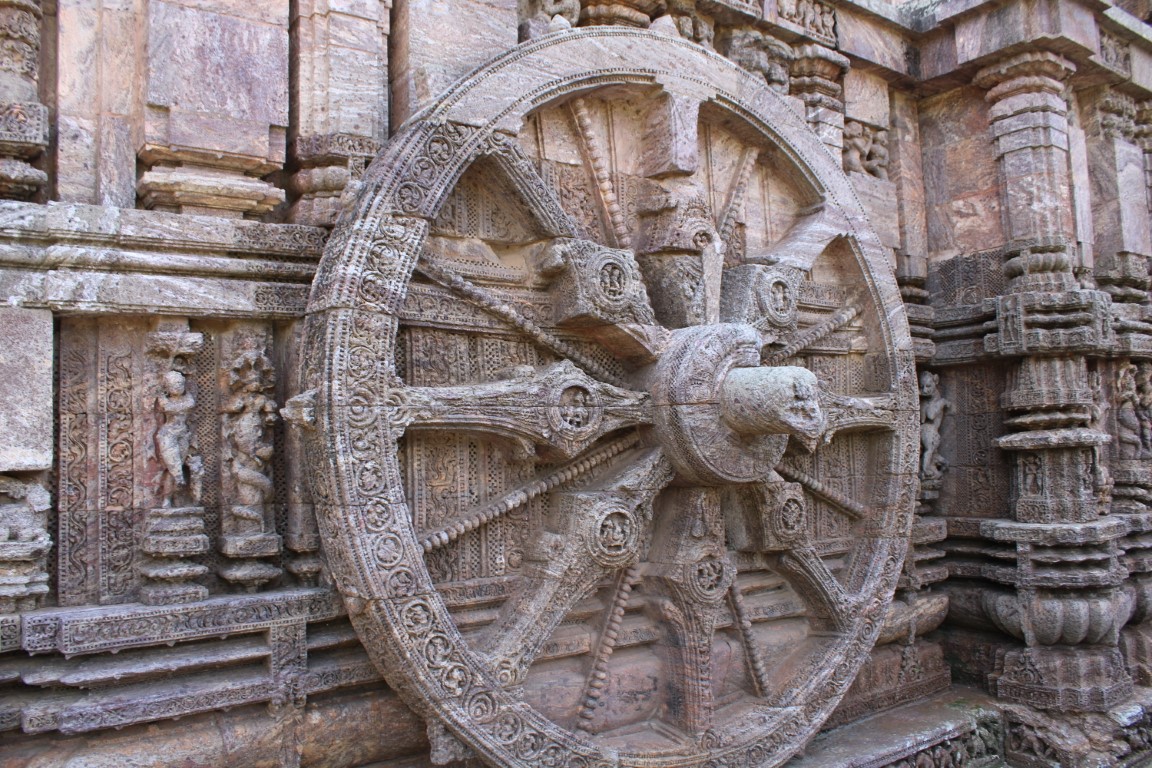
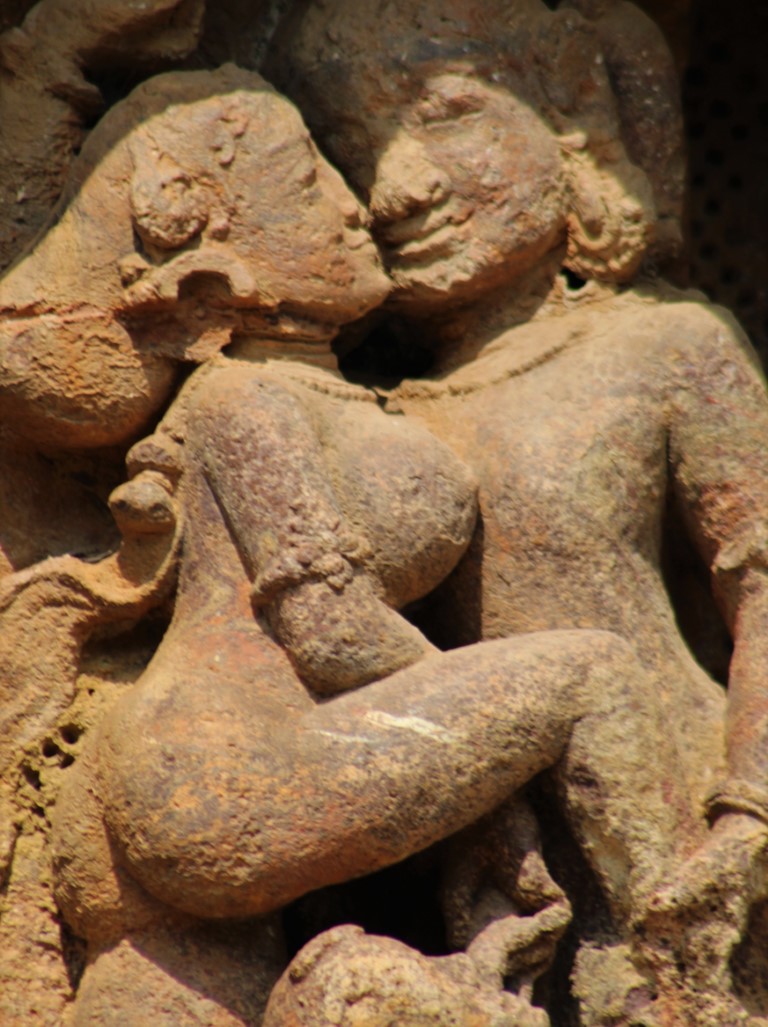
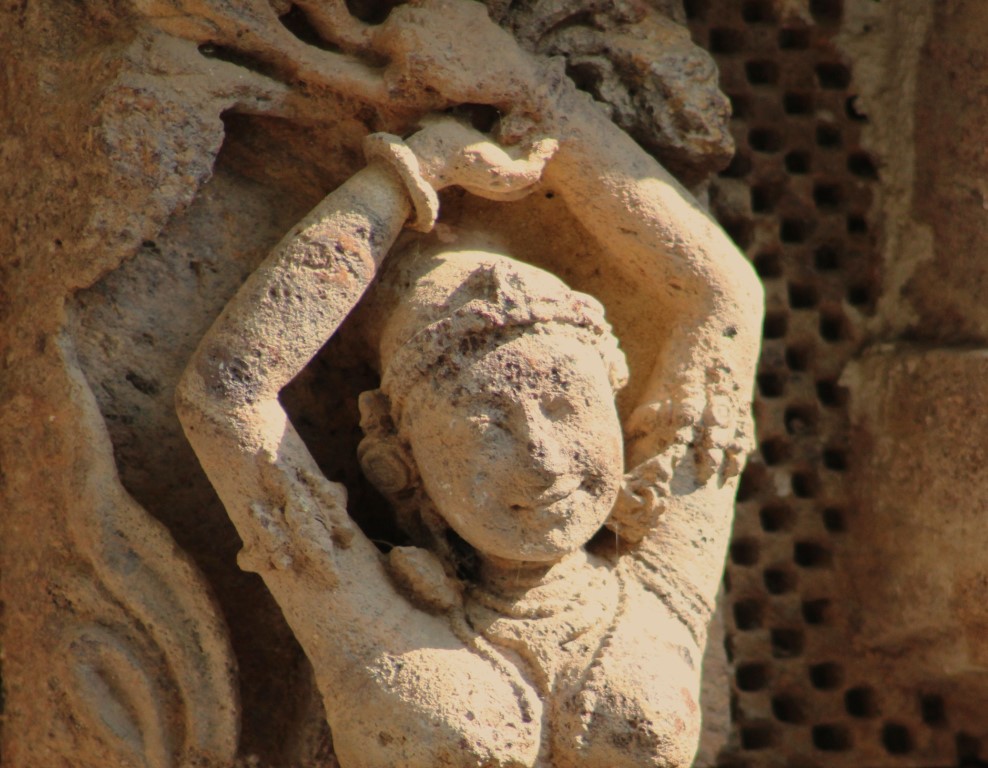
DAILY PHOTO: Konark Carvings

Taken in December of 2021 at the Konark Sun Temple

BOOK REVIEW: Pulp: The Process Edition by Ed Brubaker

Pulp: The Process EditionPulp: The Process Edition by Ed Brubaker
My rating: 5 of 5 stars

Amazon.in Page

Out: July 26, 2022

This is the “how the sausage gets made” edition of a popular standalone graphic novel, “Pulp.” It takes the reader through the various stages of the book’s development from conception through book “trailer,” drafting, penciling, coloring, and on to the final product. It offers explanatory notes by the author and artist at each stage along the way, in addition to showing the work at that stage of development. For the more substantial stages (e.g. drafting and final edition) it shows the full product, but for intermediary stages (e.g. inking and coloring) it just shows a few representative pages to give one the idea.

If you’re just looking to be entertained by a story, this isn’t the edition you want. Which isn’t to say that it’s not the book you want, “Pulp” offers a well-crafted and intriguing tale of a man, Max, who lived the gangster life in the wild west in the prime of his life (late 1800’s) and then “went straight” to become a pulp fiction writer in 1930’s New York during his senior years. The action of the story takes place in 1930’s New York, with flashbacks to violent episodes of Max’s past out west. It’s a take on “the life sucks you back in” storyline.

The main market for this edition is artists and writers interested in the comic writing / drawing tricks and techniques of seasoned professionals. I can also imagine actors, filmmakers, and those with cinematic interests benefiting from learning how choices are made with respect to how scenes are set and framed – i.e. to learn from the economy of the graphic novel format.

If you’re a creative type looking to work with comics or wanting to learn about how scene choices are made, give this book a look. If you’re just looking for an action-packed story, pick up the original edition of “Pulp.”


View all my reviews
BOOK REVIEW: Better Living Through Criticism by A.O. Scott

Better Living Through Criticism: How to Think about Art, Pleasure, Beauty and TruthBetter Living Through Criticism: How to Think about Art, Pleasure, Beauty and Truth by A.O. Scott
My rating: 4 of 5 stars

Amazon.in Page

There’s a chasm between title and book. The title, which is clearly meant to play on the Dupont motto turned recreational drug user motto that substitutes the word “chemistry” in place of “criticism,” suggests a book that will be directed toward a reader, teaching said individual how to hone his or her skills of art criticism. This book, on the other hand, reads more like a review of the criticism industry that is meant to be received by an audience. In other words, it feels more like you’re in a Ted Talk than that you’re having a private lesson or conversation. It’s a fine book, witty, thought-provoking, and insightful by turns, but not the book one would expect from the title, subtitle, and blurb.

This essay (or collection of six shorter essays – if you prefer) examines the life and livelihood of art critics and how the endeavor has ebbed and flowed over the years. While the author is a film critic, he adeptly uses examples and stories from across the arts: poetry, paintings, music, theater, etc. In addition to the six chapters, there are three dialogues that are presumably meant to be reminiscent of Oscar Wilde’s essay / dialogue “The Critic as Artist,” a piece that is referenced and quoted in the book.

While the book is generally readable, it would probably benefit from more clarity of message while dialing down attempts to be witty and interesting. It seems like the author may have aimed to do what the films that film critics tend to love do, leave one walking away wondering what it is that one just consumed.

If you want to know more about the criticism “business,” i.e. who does it and how the job has changed (and continues to change,) you’ll enjoy this book. On the other hand, if you’re looking for a book that (as this book’s subtitle suggests) will help you better understand “how to think about art, pleasure, beauty, and truth,” then this might not be the book for which you’re looking.


View all my reviews

BOOK REVIEW: The Critic as Artist by Oscar Wilde

The Critic as Artist: With Some Remarks Upon the Importance of Doing NothingThe Critic as Artist: With Some Remarks Upon the Importance of Doing Nothing by Oscar Wilde
My rating: 5 of 5 stars

Amazon.in Page

Free to Read Online

In this dialogue, the characters of Ernest and Gilbert reflect upon the value, nature, and limits of artistic criticism. Ernest serves largely as foil and questioner, taking the everyman view that critics are failed artists and that criticism is a puny endeavor that isn’t good for much. Gilbert, on the other hand, defends criticism of art as an art unto itself, and a difficult one at that, one that requires revealing elements and ideas of the artistic piece that the artist didn’t put in the piece in the first place. Throughout, Gilbert lays down his counterintuitive bits of wisdom about the job of the critic, the characteristics of good critics, and – also – about artists and art, itself. [Ideas such as that all art is immoral.]

Oscar Wilde was famed for his wit, quips, and clever – if controversial – turns of phrase, and this dialogic essay is packed with them. A few of my favorites include:

“The one duty we owe to history is to re-write it.”

“Conversation should touch everything, but should concentrate itself on nothing.”

“If you wish to understand others you must intensify your own individualism.”

“Let me say to you now that to do nothing at all is the most difficult thing in the world, the most difficult and the most intellectual.”

“Ah! don’t say that you agree with me. When people agree with me I always feel I must be wrong.”

“…nothing worth knowing can be taught.”

This is an excellent essay, and I’d highly recommend it for anyone who’s interested in art, criticism, or who just likes to noodle through ideas. You’re unlikely to complete the essay as a convert to all of Gilbert’s tenets, but you’ll have plenty to chew on, mentally speaking.


View all my reviews

DAILY PHOTO: Gompa Art, Ravangla

Taken at the Bon Monastery near Ravangla, Sikkim

Taken at the Ravangla Gompa in May of 2022

Clouds & Bamboo [Haiku]

cliffside bamboo
becomes a sumi-e
when clouds roll in

BOOK REVIEW: Genius: A Very Short Introduction by Andrew Robinson

Genius: A Very Short IntroductionGenius: A Very Short Introduction by Andrew Robinson
My rating: 4 of 5 stars

Amazon.in Page

This book examines the myths and realities of that state of capability we call genius. It’s not about “geniuses” as individuals who test well on IQ exams, or who are eligible for Mensa membership, but rather about those luminaries who’ve made breakthroughs that changed the course of their discipline. It considers artistic and literary type geniuses (Shakespeare and Picasso) as well as scientific geniuses (e.g. Einstein and Darwin,) as well as discussing the differences (perceived and real) between these groups and the intriguing rarity of crosscutting figures (e.g. Da Vinci.)

The bulk of the book evaluates characteristics that are (rightly or wrongly) commonly associated with genius, including: heredity, education, intelligence, creativity, madness, personality traits, and discipline. Don’t expect clear and straightforward connections. That’s not the author’s fault. There just aren’t any traits unambiguously linked to genius in an uncomplicated way. One might expect education would be an unequivocal boon to genius, but it can be a hindrance to genius in its training of conformity. There may be a disproportionate number of geniuses with mental health issues, but there are even more without them. Hard work maybe a necessary condition, but it’s clearly not a sufficient one.

The book addresses a few other related subjects, beyond the traits associated with geniuses. For example, the degree to which genius can be defined and what it means if we can (or can’t) do so. Few individuals would be unanimously judged geniuses, and to the degree some are, mightn’t that say more about the public’s role in bestowing genius rather than the individual’s earning the designation. There is also discussion about eureka moments versus slow-builds.

This book is thought-provoking and raises intriguing and counter-intuitive debates. If you’re interested in the perception, the reality, and the interplay between the two with regard to genius, check it out.

View all my reviews