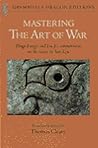
BOOK: “Mastering the Art of War” by Zhuge Liang & Liu Ji [Trans. & Ed. by Thomas Cleary

Mastering the Art of War: Commentaries on Sun Tzu's Classic (Shambhala Dragon Editions)Mastering the Art of War: Commentaries on Sun Tzu’s Classic by Zhuge Liang
My rating: 5 of 5 stars

Publisher Site — Shambhala

This book combines the writings of two prominent Chinese strategists, Zhuge Liang and Liu Ji. Both men came after Sunzi, author of The Art of War, and Cleary describes these two works as commentaries on the work of Sunzi.

Zhuge Liang’s piece is called The Way of the General and it collects short essays from Records of the Loyal Lord of Warriors. Like many, I first became acquainted with Zhuge Liang from his novelized personage in the Chinese classic, Romance of the Three Kingdoms, in which he is called “Kongming” and is a force to be reckoned with in service to Liu Bei of the Shu Kingdom. Zhuge Liang’s ideas are conveyed as short topical discussions, not unlike Sunzi’s work.

Liu Ji’s manual, Lessons of War, is a bit different in that the explanation of the strategy is briefer than in the works of Sunzi or Zhuge Liang, but Liu Ji always includes an exemplary story from history. This makes Liu Ji’s work a little more narrative. It is interesting to see the varied approach to conveyance of the concepts under consideration.

Because the works of Zhuge Liang and Liu Ji are thin, the book has a fair amount of padding in the form of Translator’s Introductions, both an overall Introduction and one per included work. I was happy with how these were done. They do not drone on but rather give some background that will be useful to the average reader without getting lost in the weeds.

If you’re interested in strategy, be it applicable to war or otherwise, I’d highly recommend this book.

View all my reviews

BOOKS: 孙子兵法 [Sunzi’s Art of War] by Sunzi

孙子兵法白话全译孙子兵法白话全译 by 史哲 文
My rating: 5 of 5 stars

Available online – YellowBridge

In thirteen short chapters, Sunzi lays out a masterclass in strategy. One sees in Sunzi’s work the mark of a Taoist mindset, seeing it in the book’s emphasis on engaging in warfare only when necessary, doing things the easy way whenever possible, and never letting one’s ego write checks one isn’t able to cash in lives.

There is good reason that this is one of the world’s most well-known (if not the most well-known) treatise on warfare. Far from being complicated and technical, this guide is full of pithy teachings such as: “War is the way of deception.” “No country ever benefited from a long war.” “Defeating the enemy without fighting is supreme excellence.” “To be undefeated lies in oneself, to be victorious lies in the enemy.” “Know the enemy and yourself and victory is assured; know heaven and earth and victory is complete.” (And these teachings are even more concise in the original Chinese.)

In addition to basics like leadership, maneuver, and terrain, the book devotes chapters to both the use of fire and spies in warfare. (One’s level of understanding is central to strategic victory throughout Sunzi’s teachings.)

I’d highly recommend this book for anyone interested in strategy, martial arts, or other strategic pursuits. The book may be ancient, but it’s not obsolete by any means.

View all my reviews

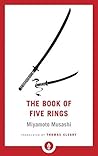
BOOKS: “The Book of Five Rings” by Miyamoto Musashi [trans. by Thomas Cleary] [w/ Yagyu Munenori’s “Book of Family Traditions”]

The Book of Five Rings: A Classic Text on the Japanese Way of the Sword (Shambhala Pocket Library)The Book of Five Rings: A Classic Text on the Japanese Way of the Sword by Miyamoto Musashi
My rating: 5 of 5 stars

Publisher Site – Shambhala Publications

This edition, i.e. The Shambhala Pocket Library edition, contains two guides to strategy, tactics, and philosophy of combat by famous early Edo Period swordsmen. The titular work is Miyamoto Musashi’s The Book of Five Rings, but the volume also contains Yagyu Munenori’s The Book of Family Traditions. The naming of the book is meant to capitalize on the continuing popularity of Musashi, who remains well-known to this day not only because of his own works and legend, but because of an afterlife in pop culture that ranges from Eiji Yoshikawa’s novel to a recent Netflix animated series. That said, one shouldn’t conclude Yagyu Munenori was some sort of slouch. He was, in fact, a martial arts teacher to the Shogun’s son, and he founded a branch of his family’s martial arts school that continues to this day.

It is interesting to see these two guides back-to-back, being by authors whose lifespans largely overlapped, though – in other ways – their lives were quite different. While there is some conceptual overlap in these guides, the two definitely show two very different minds at work, Musashi the pragmatic eccentric and Yagyu the Zen philosopher of noble standing.

Miyamoto Musashi is probably the most famous swordsman in Japan’s history. Oddly enough, he’s not known for his experience in battle (he lived at the tail end of the Warring States period and was only in a couple battles), but – rather – for his 62 duels. The Book of Five Rings and other works he left behind are certainly important factors in his continuing fame. Musashi was a bit of a renaissance man: painter, poet, and sculptor in addition to a swordsman. He also left behind a school of swordsmanship, Niten Ichi-ryū.

The Book of Five Rings is divided into five parts: earth scroll, water scroll, fire scroll, wind scroll, and void scroll.

The earth scroll provides an overview of martial science and an introduction to Musashi’s school, which is noted for its simultaneous use of both the large and short sword. A section is devoted the rhythm of martial arts, a crucial topic. It also includes what might be considered Musashi’s 9-point budō kun (a list of warrior precepts.)It’s worth mentioning a couple of these:
#7 Become aware of what is not obvious.
#9 Do not do anything useless.

The Water scroll describes Musashi’s approach to swordsmanship. It covers a range of elements of a martial art including footwork, the focus of one’s eyes, physical posture, mental posture, techniques, and approaches to cutting and thrusting.

The Fire scroll deals with the strategic or interactive aspects of the battle.

The Wind scroll explores other martial arts. Musashi discusses martial arts that use an unusually long sword, an atypically short sword, that focus on powerful strikes, and those that focus on many rapid strikes. He contrasts other martial arts with his own on subjects such as their focus with the eyes and their footwork.

The void scroll deals with, well, emptiness. It’s actually a short wrap-up.

Yagyu’s guide is much more philosophical and mind-centric. It’s not that Musashi doesn’t deal with such topics, but he also devotes considerable space to more practical nuts and bolts of swordsmanship and strategy. It’s also true that Yagyu gets into technical considerations such as control of distancing (if in a bit more poetic way than Musashi.) One can get a feel for the nature of Yagyu’s Book of Family Traditions [on the Art of War] by seeing how it is organized into three parts: “The Killing Sword,” “The Life-Giving Sword,” and “No Sword.” The latter two indicating the author’s belief in the importance of not equating warrior and killer (nor winning with killing) as well as not fixating on the sword.

These two men had great insight into strategy and the tactics of swordsmanship, their guides are worth being read and reread. And the two authors do offer two intriguingly different approaches to a similar subject.

View all my reviews

FIVE WISE LINES [October 2024]

If any thing is sacred the human body is sacred

walt whitman; Leaves of grass; “I sing the body electric”

Strong in their softness are the sprays of the wisteria creeper;
The pine in its hardness is broken by the weak snow.

Saying of Master Jukyo as Translated by Trevor Leggett in Zen and the Ways

When there is mutual ignorance, confidence indeed is king.

Trevor leggett; Zen and the Ways

Do not see the gate and think it is the house. The house is something which is reached by passing through and going beyond the gate.

YAgyu Munenori’s Art of War (As translated by trevor leggett in Zen and the ways)

Students of the Ways must see clearly that in an untrained man the intellect is like a barrister. It argues clearly and logically, but the aim is not truth, but to reach a predetermined conclusion.

Trevor Leggett; Zen and the Ways

Five Wise Lines [September 2024]

No country has ever benefited from a long war.

Sūnzi’s art of war (孙子兵法,) ch. 2

Humans are good intuitive grammarians but poor intuitive statisticians.

Daniel kahneman in Thinking, fast and slow

The highest form of leadership is to attack the enemy’s plans; the next highest is to attack the cohesion of their forces; the next is to attack their troops, and the worst is to besiege their cities.

Sūnzi’s Art of war (孙子兵法,) Ch.3

Laziness is built deep into our nature.

Daniel Kahneman in Thinking, Fast and Slow

War is the Way of deception.

Sūnzi’s Art of war (孙子兵法), Ch. 1